
德勤

Search documents
2025年产品运营必备的职场通用能力全解析与进阶指南
Sou Hu Cai Jing· 2025-08-11 10:24
Core Insights - The article emphasizes that data analysis skills are essential for product operations professionals, as their decisions can directly impact GMV growth by 10% [1] - The shift from experience-driven to data-driven decision-making is highlighted as a critical transformation for product operators in the face of AI technology advancements [1] Group 1: Core Competencies in Product Operations - The foundational skills for product operations include data sensitivity, user empathy, and execution efficiency, with a focus on using tools like Excel and SQL to identify issues through data [4] - Understanding key metrics such as DAU, conversion rates, and user segmentation is crucial for identifying data anomalies and driving improvements [4] - User empathy is developed through qualitative and quantitative research methods, enabling operators to uncover real user needs [4] Group 2: Growth Path Planning - The growth path for product operations is divided into three stages: novice (0-1 year), backbone (1-3 years), and expert (3-5 years+) [8][9] - In the novice stage, operators should focus on validating actions through data and user feedback, mastering SQL, and using visualization tools like Tableau [8] - The backbone stage emphasizes leading complex projects and transforming user behavior data into growth strategies, with a recommendation to obtain the CDA Level 1 certification [9] Group 3: Importance of CDA Certification - The CDA data analyst certification is recognized as one of the most valuable credentials in the data field, comparable to CPA and CFA certifications [12] - Many companies prioritize CDA certification in their hiring processes, particularly in technical roles within banks and financial institutions [14] - The certification significantly enhances job prospects, with CDA holders experiencing a threefold increase in resume pass rates and an average salary increase of 28% [9][14] Group 4: Evolving Competencies - The article outlines a spiral of growth in competencies and certifications, indicating that the ultimate competitive edge in product operations will be the ability to leverage data to create business value [19] - Each stage of career development is marked by specific certifications that enhance decision-making capabilities and strategic influence within organizations [19]


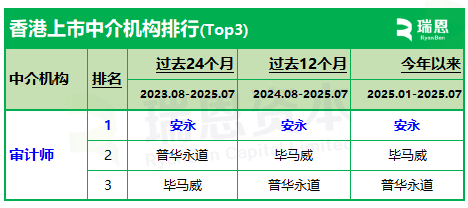
从第二到第一!安永香港IPO审计业务24个月反超普华永道 领跑市场
智通财经网· 2025-08-08 06:11
在过去的12个月(2024年8月至2025年7月)香港新上市公司 84家; 在今年前7个月(2025年1月至2025年7月)香港新上市公司 53家。 | 香港上市中介机构排行(Top3) | | | | >瑞恩 | | --- | --- | --- | --- | --- | | 中介机构 | 排名 | 过去24个月 | 过去12个月 | 今年以来 | | | | 2023.08-2025.07 | 2024.08-2025.07 | 2025.01-2025.07 | | 宙忧师 | 1 | 安永 | 安永 | 安永 | | 2 | | 普华永道 | 四年四成 | 毕马威 | | 3 | | 毕马威 | 普华永道 | 普华永道 | 根据统计,在过去的24个月,共有 13间审计师参与 158家新上市公司的审计业务。 | | 香港IPO审计师排行榜 | | | | | | --- | --- | --- | --- | --- | --- | | 序号 | 审计师 | | 过去24个月 2023年8月- | 过去12个月 2024年8月- | 今年川来 2025年1月- | | | | 排名 | 2025年7 ...
中裕能源(03633.HK)委任毕马威为核数师
Ge Long Hui· 2025-08-07 12:46
格隆汇8月7日丨中裕能源(03633.HK)发布公告,德勤已辞任公司核数师,自2025年8月4日起生效,此乃 由于公司与德勤未能就审核公司及其附属公司截至2025年12月31日止年度的综合财务报表的核数费用达 成共识。 董事会进一步宣布,经审核委员会推荐,其已议决委任毕马威会计师事务所为新核数师,自2025年8月7 日起生效,以填补德勤辞任后的临时空缺,任期直至下届公司股东周年大会结束为止。 ...
德勤:将ESG战略与业务深度融合及精准传播 为企业价值增长提供新引擎
Xin Hua Cai Jing· 2025-08-05 12:40
她列举了三家公司的案例来说明这一观点。其中,一家马来西亚可再生能源公司通过战略性品牌升级, 成功实现从传统工程、采购和施工与调试(EPCC)专家,向"可信赖的可再生清洁能源专家"转型。该 企业以"地球、人类和发展"为核心叙事重塑品牌价值体系,在品牌重塑后市场反馈积极,助力公司实现 了股价增长。 另一案例为马来西亚种植业企业,该公司在首次公开募股前,以"中型规模种植园"的精准定位切入市 场,通过构建系统化的品牌传播体系,深度挖掘其可持续发展实践与数字化转型的协同价值。这一战略 有效凸显了企业"长期价值创造"的核心主张,成功塑造了区别于同业的差异化竞争优势。该企业通过 讲好"可持续发展+数字化"的双轮驱动故事,不仅完善了IPO阶段的价值传播链条,更显著提升了投 资者的认购意愿。其创新性的沟通策略,为行业领域拟上市企业提供了可借鉴的品牌建设范式。 新华财经新加坡8月5日电 德勤东南亚ESG可持续发展合伙人苏佩文近期在新加坡一场分享会上表示, 将环境、社会及治理(ESG)理念有效融入核心业务战略,并通过价值导向的沟通方式清晰地传递给市 场,是企业在当前投资环境中脱颖而出,实现可持续价值的关键之一。 她在分享中指出,从 ...
投融资经理如何通过能力跃迁实现职场晋升?用数据分析撬动下一个职业台阶
Sou Hu Cai Jing· 2025-08-05 06:47
Core Insights - The financial industry is navigating a challenging environment, with top investment managers leveraging data analysis throughout the investment process to maintain a balance between risk and return [1] Group 1: Skills Development - The first step in skill enhancement involves solidifying foundational modules, with top managers moving beyond Excel to dynamic data dashboards, emphasizing the importance of continuous learning and analysis of financial reports [2] - The second step focuses on building a comprehensive resource network, where top professionals convert social activities into data management, utilizing CRM strategies to manage relationships with limited partners and industry peers [3] - The third step is the intelligent decision-making system, where advanced tools like self-developed due diligence systems are used to generate risk indicators efficiently, highlighting the importance of data cleaning and algorithm optimization [4] Group 2: Data-Driven Era Benefits - Recent research indicates that 82% of VC firms require data analysis reports at the project initiation stage, with top brokerage firms mandating data analysis certification for project managers, underscoring the growing importance of data skills in investment roles [5] - The CDA data analysis certification is becoming a key credential in the investment community, covering essential modules that align with equity investment due diligence, and is preferred by leading firms like Deloitte and Sequoia Capital [5] Group 3: Career Advancement Strategies - Suggested pathways for skill enhancement include starting with financial modeling and industry research, progressing to data scraping and business analysis, and ultimately advancing to strategic decision-making and ecosystem building [6] - A case study of a city investment director illustrates the exponential impact of acquiring the CDA Level II certification, leading to significant career advancement and recognition [6] - The ability to harness intelligent tools in the face of big data is reshaping industry competition, indicating a shift from traditional methods to data-driven approaches in investment management [6] Group 4: Personal Development - Investment professionals are encouraged to create their own "capability investment portfolio," incorporating certifications like CDA as essential assets in the evolving quantitative capital market [7]
瞭望·治国理政纪事|示范先行开创服务贸易新局
Sou Hu Cai Jing· 2025-08-02 02:57
Core Viewpoint - Beijing is positioned as a national leader in the service industry opening up, with a focus on creating a comprehensive demonstration zone for expanding service industry openness and establishing a free trade pilot zone characterized by technological innovation, service industry openness, and digital economy [1][3][4]. Group 1: Economic Performance - Over the past five years, Beijing's open economy has shown resilience and vitality, with actual foreign investment reaching $66.18 billion, accounting for 8.4% of the national total, and over 90% of this investment coming from the service sector [5]. - The import and export volume is expected to exceed 3.6 trillion yuan for three consecutive years from 2022 to 2024, with the service trade scale ranking among the top three in the country, achieving an average annual growth rate of 9.4% since 2021 [5]. - The proportion of actual foreign investment in free trade pilot zones has increased from less than 10% to over 20% [5]. Group 2: Policy and Institutional Innovation - Beijing has implemented over 70 national breakthrough policies and promoted more than 80 innovative achievements, forming a virtuous cycle of pilot—breakthrough—promotion [2][15]. - The city is planning to deepen systematic and integrated institutional innovation, focusing on key areas to strive for early trials and promote international cooperation in industrial and supply chains [2][16]. - The service industry accounts for over 85% of Beijing's economy, with a focus on transforming abstract concepts of "institutional openness" into tangible, replicable institutional results [15][18]. Group 3: Infrastructure and Ecosystem Development - Beijing has constructed a multi-dimensional matrix connecting exhibition economy, high-end manufacturing, digital trade, and biomedicine, creating a three-dimensional open ecosystem [11][20]. - The city has established a permanent venue for the China International Fair for Trade in Services (CIFTIS) at Shougang Park, which has attracted over 1.2 million visitors and facilitated nearly a thousand cooperation agreements in various fields [8][9]. - The comprehensive bonded zones have expanded from 1 to 4, focusing on core industries and achieving significant growth in import and export values [10][11]. Group 4: Foreign Investment Attraction - In the past five years, nearly 7,900 new foreign-funded enterprises have been established in Beijing, reflecting the success of the "two zones" initiative [20][21]. - The city has optimized its business environment, focusing on the core demands of foreign enterprises to ensure they are willing to come, stay, and develop [20][21]. - The stable policy environment has significantly enhanced foreign investment confidence, with 2,012 new foreign-funded enterprises established in 2024, a year-on-year increase of 16.4% [21][22].

2025年金融行业数字化转型白皮书
Sou Hu Cai Jing· 2025-08-01 10:24
Core Insights - The financial industry is undergoing an unprecedented digital transformation driven by economic shifts and technological advancements, emphasizing a new paradigm where technology is the backbone and ecosystems are the flesh [1][2]. Group 1: Global Economic Landscape and Financial Digitalization - Global economic growth is projected between 2.3% and 2.8% for 2025, with emerging Asia leading at 3.7% while mature economies lag at 1.4% [2][20]. - The divergence in economic growth is prompting distinct digital strategies, with Asian banks focusing on mobile-first services and Western institutions enhancing wealth management efficiency [2][23]. - Inflation is expected to decline to 4.2% in 2025, influencing financial institutions to adapt their risk models and operational frameworks to navigate varying regional policies [2][27][29]. Group 2: Technological Innovations in Finance - Financial technology is evolving from isolated innovations to a stage where technology integration drives ecosystem reconstruction, with AI and blockchain playing pivotal roles [3]. - AI applications in risk management have shown significant results, such as a platform predicting supply chain disruptions with 89% accuracy, reducing potential credit losses by 45% [3][33]. - Cloud-native architectures are enhancing transaction processing speeds by an average of 80%, allowing for rapid deployment and compliance monitoring [3][34]. Group 3: Regional Market Dynamics - The Asia-Pacific region is identified as a hub for financial digitalization, with the fintech market expected to grow from $46.82 billion in 2024 to $325.95 billion by 2032, driven by mobile payments and digital banking [4]. - In Africa and Latin America, mobile payment systems are leading the way, with Kenya extending financial services to remote areas and Mexico establishing a regulatory framework for fintech [4]. - The diverse growth trajectories in the Asia-Pacific region highlight the importance of tailored digital strategies, with countries like Indonesia leveraging demographic advantages for rapid digital payment adoption [4][25]. Group 4: Compliance and Security in Digital Finance - The shift towards online financial services necessitates a robust compliance and security framework, moving from reactive to proactive monitoring systems [5]. - Regulatory frameworks are evolving to require real-time risk management, with institutions implementing AI-driven compliance platforms to streamline processes and reduce error rates [5][35]. - The adoption of zero-trust security architectures and blockchain technology is enhancing the efficiency of KYC processes, significantly reducing the time required for compliance [5]. Group 5: Future Trends in Financial Digitalization - The future of financial digitalization is characterized by three main trends: ecosystem integration, intelligent services, and sustainability [6]. - Financial institutions are transitioning from service providers to ecosystem orchestrators, utilizing APIs to connect various sectors [6]. - The integration of ESG factors into financial services is becoming increasingly important, with banks using technology to track environmental impacts and incorporate them into credit assessments [6].

美国相信“学历无用论”的人变多了?
Hu Xiu· 2025-07-30 06:35
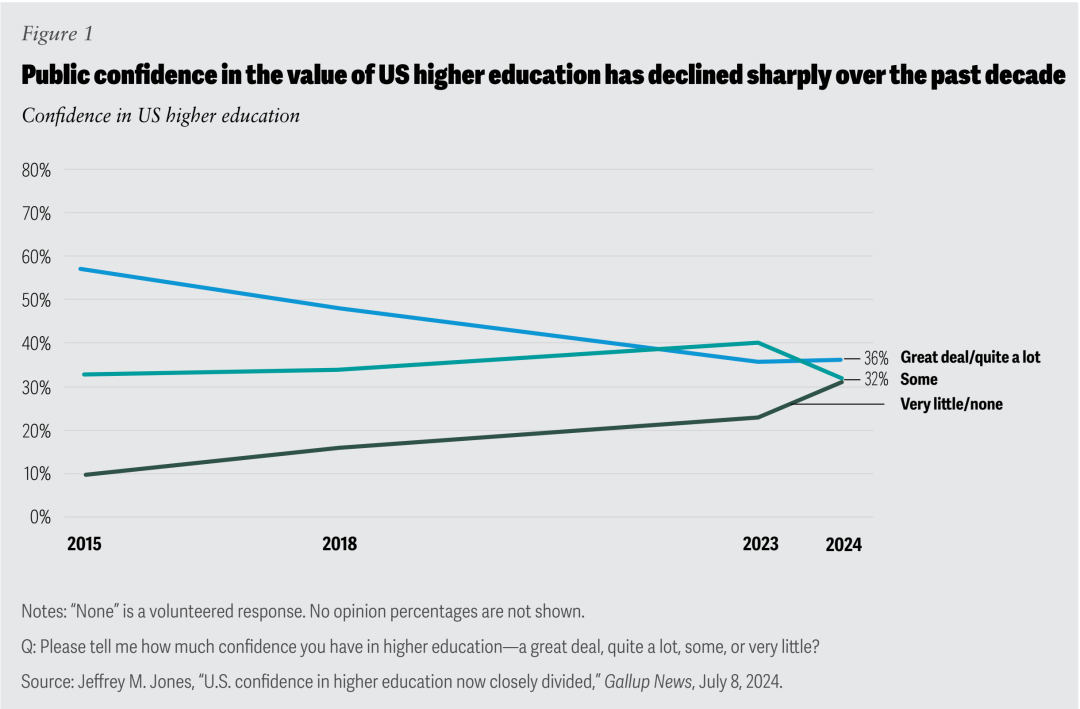
Core Insights - The article discusses the ongoing financial crisis in American higher education, highlighted by Harvard's willingness to spend up to $500 million to resolve disputes with the government, which is significantly higher than Columbia's $200 million fine [2][3]. - A Deloitte report indicates a growing skepticism among Americans regarding the value of higher education, with trust in its worth dropping from 57% in 2015 to 36% in 2024, a decrease of 21% [5][6]. Financial Challenges - Over 40 U.S. universities have closed since 2020, with 20 closures reported in 2024 alone, averaging one closure or merger per week [16][18]. - The Big Ten Conference, known for its rich resources, has reported significant operational deficits at several member institutions [17]. - A financial stress test suggests that up to 80 colleges and universities may permanently close by the end of the 2025-26 academic year [18][19]. Enrollment Trends - The decline in college enrollment is attributed to fewer students attending, particularly among white males, whose enrollment rates have dropped from 58% in 1970 to around 40% in the early 2020s [23][24]. - Total enrollment in U.S. colleges decreased from 18.1 million in 2010 to 15.4 million in 2021, with a slight increase to 15.9 million in 2024, insufficient to counteract the trend of closures and mergers [25]. Rising Costs and Spending Issues - Many universities face financial strain due to excessive spending, with nearly half of college presidents indicating that their institutions have too many academic programs [29]. - Rising operational costs limit universities' ability to innovate and adapt, leading to budget cuts in various areas, including academic programs and staff salaries [33][31]. Shift Towards Vocational Education - Only 47% of Americans believe a four-year degree is worth pursuing without loans, dropping to 22% when loans are involved [37]. - Enrollment in vocational community colleges increased by 16% from 2022 to 2023, indicating a shift towards practical skills training [39]. - The number of apprentices in the U.S. has more than doubled in the past decade, with significant income growth for skilled trades [41]. Institutional Collaboration - The concept of "systemness" is emerging, emphasizing collaboration among universities to share resources and improve financial health [60][62]. - Examples include cross-registration programs and shared resources among institutions, which have increased student participation in collaborative courses by 21.5% [68]. Leadership and Resilience - The leadership turnover rate in U.S. universities has reached over 20%, reflecting the challenges faced in maintaining stability during financial crises [72]. - Harvard's president has shown resilience in navigating financial pressures while advocating for academic freedom and institutional integrity [74][76].
喝点VC|BV百度风投:数据治理即生产力,现在是Data Agent的时刻
Z Potentials· 2025-07-30 03:37
Core Insights - The article emphasizes the transformative role of Data Agents in the era of Generative AI, highlighting their ability to compress the data lifecycle into a rapid "data → insight → action" loop, achieving over 60% efficiency gains and significant cost savings in the millions of dollars [3][4][10]. Industry Trends - Data Agents redefine "Data" as any digital asset that can be accessed and utilized in real-time, moving away from traditional static databases [5][7]. - The global data volume is projected to reach 149 ZB in 2024 and exceed 181 ZB in 2025, with approximately 80% being unstructured data that requires immediate structuring for algorithmic use [5][7]. - Generative AI is expected to contribute an additional $2.6 to $4.4 trillion in value annually, with nearly 75% of this value coming from functions heavily reliant on structured data [5][7]. Data Agent Definition and Functionality - Data Agents are AI entities that automate the entire data lifecycle, capable of planning, executing, and verifying tasks based on natural language inputs [7][8]. - They are positioned as core infrastructure rather than mere BI tools, directly impacting business KPIs and productivity [7][8]. Efficiency Gains and Market Acceptance - Early adopters of Data Agents have reported productivity increases of over 60% and annual savings of millions of dollars [7][8]. - The cost of LLM inference has dramatically decreased from $60 per million tokens to $0.06, indicating a significant technological shift [10][13]. - AI search and query traffic in the U.S. has reached 5.6%, reflecting a growing acceptance of natural language interactions for structured answers [13][14]. Market Demand and Investment Trends - The demand for Data Agents has surged, with a 900% increase in global search interest for "AI agent" and a tripling of investment in the AI Agent sector, reaching $3.8 billion in 2024 [45][46]. - Major acquisitions by companies like Databricks and Snowflake indicate a strong focus on data-driven AI platforms [13][14]. Development Stages of Data Agents - The evolution of Data Agents is expected to occur in three stages: 1. Human-led with AI empowerment, transforming data interaction and decision-making processes [36][37]. 2. Scenario-driven applications that allow for rapid development of customized systems based on existing data [38][40]. 3. Autonomous intelligence where Data Agents manage data collection, governance, and analysis, acting as a digital COO [41][42]. Conclusion and Future Outlook - The current landscape presents a unique opportunity for Data Agents to become the default interface for digital work, akin to the Office suite in the 1990s [45][46]. - The integration of Data Agents into business processes is anticipated to enhance organizational efficiency and responsiveness, marking a significant shift in how data is utilized across industries [48][49].

21专访丨德勤孙晓臻:抢占“AI+健康”制高点 寻找差异化生死时速
2 1 Shi Ji Jing Ji Bao Dao· 2025-07-29 23:11
Core Insights - The AI sector in healthcare and pharmaceuticals is experiencing rapid growth, with significant investments and advancements in technology [1][4][6] - The AI healthcare market in China is projected to exceed 20 billion yuan by 2025 and 100 billion yuan by 2030, with a compound annual growth rate of 43.2% [1][3] - Global AI in pharmaceuticals is expected to surpass $50 billion, with a focus on drug discovery and medical imaging, which together account for over 50% of the market [3][4] Market Trends - The World Artificial Intelligence Conference showcased over 800 companies and 3,000 cutting-edge exhibits, indicating a robust interest in AI applications [1] - Major internet companies are accelerating the development of "smart healthcare" ecosystems, driving demand in areas like medical imaging and AI-assisted diagnostics [1][4] - The investment landscape is shifting from early-stage speculation to a focus on platform capabilities and commercial viability [4][6] AI Applications - AI significantly enhances efficiency in target discovery and drug development, reducing the time from concept to validation [2][6] - The integration of AI in drug discovery is expected to improve the success rates of clinical trials, particularly in early phases [6][7] - AI's role in optimizing resource allocation and identifying viable drug candidates is becoming increasingly critical [2][6] Competitive Landscape - The relationship between traditional pharmaceutical companies and AI startups is evolving into a collaborative model, blurring the lines between the two [7][8] - Companies are now prioritizing the learning capabilities and sustainable output of AI platforms over mere pipeline quantity [8][9] - The focus on closed-loop validation systems and automated experimental platforms is becoming a key metric for assessing the long-term value of AI partnerships [9]