
SK Hynix

Search documents
1 Reason Why Now Is a Great Time to Buy Micron Technology
The Motley Fool· 2026-01-24 03:31
Group 1 - Micron Technology has experienced a significant share price increase of 39% as of January 22, 2026, driven by strong financial results, including record revenue of $13.6 billion, a 57% year-over-year increase in Q1 of fiscal year 2026 [1][4][5] - The demand for high-bandwidth memory (HBM) is surging due to the growth of artificial intelligence (AI) technology, positioning Micron as one of the top three HBM providers alongside SK Hynix and Samsung Electronics [4][5] - Micron has established partnerships with leading AI companies, including Nvidia, Advanced Micro Devices, and Intel, enhancing its role as a crucial AI memory supplier [4][5] Group 2 - Due to high demand from AI companies, Micron has decided to discontinue its Crucial consumer business, with product shipments set to end next month, indicating a strategic shift towards serving the AI market [5] - Micron's stock is currently trading at 12 times forward earnings, which is considered a reasonable valuation, especially given its recent performance and strong order backlog [7] - The company's market capitalization stands at $447 billion, with a gross margin of 45.53% and a dividend yield of 0.12%, reflecting its financial health and growth potential [6][7]


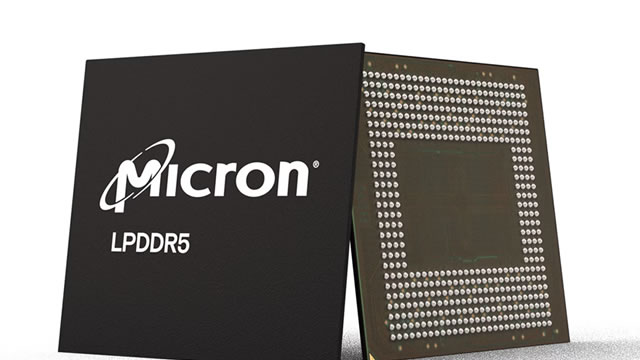
This Semiconductor Stock Could Be at the Center of the Artificial Intelligence Spending Boom
Yahoo Finance· 2026-01-23 17:05
Group 1: AI Infrastructure and Capital Expenditure - The artificial intelligence (AI) infrastructure boom is ongoing, with Taiwan Semiconductor Manufacturing (TSMC) significantly increasing its capital expenditure budget, indicating early stages of growth [1] - TSMC faces risks of overbuilding, which could lead to underutilized facilities, crushing gross margins and resulting in unprofitable operations [1] Group 2: Memory Component Demand - Micron Technology is positioned to benefit from the AI infrastructure boom, as the demand for high-bandwidth memory (HBM) is rising due to the need for optimal GPU performance [3][4] - The HBM market is expected to grow at a 40% compound annual growth rate (CAGR) through 2028, with Micron's current HBM supply already booked for the year [5] - Approximately 80% of Micron's revenue comes from the DRAM market, with the remaining 20% from NAND flash memory, both of which are currently in short supply [6]
Micron’s Taiwan deal looks routine until you zoom out
Yahoo Finance· 2026-01-22 17:03
Micron Technology is making a very “tell me you think demand stays hot without telling me” kind of move. The U.S. memory chip producer signed a letter of intent to buy Powerchip Semiconductor Manufacturing's P5 production plant in Tongluo, Taiwan, for $1.8 billion in cash, Reuters reported, causing Powerchip's stock price to rise dramatically. This isn't Micron "adding a little capacity." Micron is spending $1.8 billion to get ready for a memory market that it thinks will continue to be structurally tigh ...
Taiwan's Compal warns rising memory prices to impact industry into 2027
Yahoo Finance· 2026-01-22 09:17
Core Viewpoint - Compal anticipates that rising memory prices will significantly impact the notebook and personal computer industry, with expectations of a low-single-digit percentage decline in global shipments in 2026 [1][2]. Group 1: Industry Impact - The CEO of Compal, Anthony Peter Bonadero, stated that the entire market will be affected by the memory price surge, although Compal's own notebook and PC business may remain flat or see slight growth due to its customer mix [2]. - The top three memory chip producers, Samsung Electronics, SK Hynix, and Micron, are struggling to meet demand, particularly due to the increase in artificial intelligence data center deployments, which has tightened memory chip supply [3]. Group 2: Memory Chip Cost Dynamics - Memory chips typically account for 15% to 18% of a PC's material costs, but this share is expected to rise to 35% to 40% due to the current market conditions [4]. - Compal expects pricing volatility in the memory space to continue, with major manufacturers prioritizing high-bandwidth memory for AI servers [3]. Group 3: Company Strategy and Expansion - Compal is restructuring to enhance its AI-related and AI server business, with a $500 million investment approved for expanding operations in the U.S. [4]. - A factory in Texas is expected to be completed by the second quarter of this year, which will begin producing AI servers later in the year [4]. - The company is also diversifying its supply chain geographically, expanding capacity in the U.S., Taiwan, and Vietnam to meet customer demands [5].
Asian shares rise, tracking Wall Street gains
Michael West· 2026-01-22 08:55
Market Overview - Asian shares have mostly advanced, influenced by Wall Street's performance following US President Trump's decision to retract tariffs on eight European countries regarding Greenland [1][4] - The S&P 500 and Dow Jones Industrial Average futures showed minimal changes, indicating a stable market outlook [1] Regional Performance - Tokyo's Nikkei 225 increased by 1.7% to 53,688.89, driven by technology stocks, with SoftBank Group rising 11.6% and Disco Corp. soaring 17.1% [2] - South Korea's Kospi closed 0.9% higher at 4,952.44, marking a significant milestone by crossing the 5,000 mark for the first time [2] - Technology stocks in South Korea saw gains, with SK Hynix up 2% and Samsung Electronics up 1.9% [3] - The S&P/ASX 200 in Australia gained nearly 0.8% to 8,848.70, while Taiwan's Taiex rose 1.6% and India's Sensex added 0.2% [3] US Market Reaction - US markets experienced their largest losses since October due to Trump's initial tariff threats, which raised concerns about US-European relations [4] - Following Trump's reversal on the Greenland issue, the S&P 500, Dow Jones Industrial Average, and Nasdaq composite all rose by 1.2% [6] Company-Specific Developments - Halliburton's stock jumped 4.1% after reporting stronger-than-expected quarterly profits [7] - United Airlines shares rose 2.2% following better-than-expected quarterly results, while Netflix fell 2.2% despite reporting stronger profits due to concerns over subscriber growth [7] Commodity and Currency Movements - The price of gold fell 0.2% to $4,828.70 per ounce, reflecting reduced investor anxiety [8] - US Treasury yields eased, with the 10-year Treasury yield dropping to 4.25% from 4.30% [8] - The US dollar strengthened against the Japanese yen, rising to 158.75 from 158.27, while the euro increased to $1.1692 from $1.1687 [9]


Surging memory chip prices dim outlook for consumer electronics makers
The Economic Times· 2026-01-22 02:52
Core Insights - The rapid expansion of artificial intelligence infrastructure by U.S. tech firms is significantly impacting the global memory chip supply, leading to increased prices as manufacturers prioritize data center components over consumer devices [1][12] Industry Overview - Samsung, SK Hynix, and Micron, the top three memory chip producers, are struggling to meet demand, reporting strong quarterly earnings due to rising semiconductor prices [2][12] - Research firms IDC and Counterpoint predict a decline in global smartphone sales by at least 2% this year, marking the first annual drop since 2023 [3][12] - The PC market is expected to contract by at least 4.9% in 2026, following an 8.1% growth last year, while console sales are projected to decrease by 4.4% this year after a 5.8% growth in 2025 [4][12] Manufacturer Challenges - Manufacturers like Apple and Dell face difficult decisions regarding whether to absorb rising costs or pass them onto consumers, risking demand suppression [5][12] - Analysts expect that the ongoing price increases will lead to weaker consumer device sales in 2026, compounded by broader inflationary pressures [6][12] - Counterpoint estimates memory prices could rise by 40% to 50% in Q1, following a 50% surge last year [6][12] Price Inflation Impact - Some products have experienced a staggering 1,000% price inflation over the last two quarters, with consumers likely to see significantly higher prices for laptops, mobile phones, wearables, and gaming devices soon [7][12] - The impact of rising prices is expected to be most severe for low- and mid-range device manufacturers, including Chinese smartphone makers like Xiaomi and PC firms like Lenovo [7][12] Stock Market Reactions - Shares of companies such as Raspberry Pi, Xiaomi, Dell, HP Inc., and Lenovo fell in the last quarter of 2025, with Xiaomi experiencing a notable 27.2% decline [8][12] - HP has announced plans to raise PC prices due to significant memory chip costs, while Raspberry Pi's CEO described the cost surge as "painful" [8][12] Retail Sector Implications - The weaker demand outlook may negatively affect sales at electronics retailers like Best Buy, which had previously warned that tariff-driven price increases could deter potential buyers [9][12] Company-Specific Insights - Apple is considered better positioned to handle the memory chip price surge due to its scale, pricing power, and supplier network, typically maintaining stable prices for its flagship iPhone lineup [11][12] - Apple has absorbed substantial tariff-related costs in the past without passing them on to customers, although it may need to raise prices to cover higher input costs [11][12]

Jim Cramer Says AI Stocks Micron and Sandisk (Up Over 600% Since January 2023) Can Go Even Higher
The Motley Fool· 2026-01-21 08:59
Core Viewpoint - The unprecedented memory chip supply shortage is driving significant stock price increases for Micron Technology and Sandisk, with expectations for continued momentum due to ongoing demand, particularly from AI applications [1][2]. Micron Technology - Micron has seen a stock price increase of 625% since January 2023, indicating strong market performance [2]. - The company develops memory and storage solutions, including DRAM and NAND flash memory products, and is gaining market share in both categories [3][4]. - Micron reported a 20% revenue increase to $13.6 billion in Q1 fiscal 2026, with adjusted earnings rising 167% to $4.78 per diluted share [5]. - The CEO highlighted that the supply shortage is driven by increased demand for AI data centers, with expectations that industry supply will remain short of demand for the foreseeable future [6]. - Wall Street anticipates Micron's earnings to grow at 37% annually through fiscal 2029, making its current valuation of 32 times earnings appear reasonable [6]. Sandisk - Sandisk's stock has surged 1,050% since its spin-off from Western Digital in February 2025, reflecting strong market interest [2][11]. - The company designs and manufactures NAND flash-based data storage devices, which are critical for AI workloads [7]. - Sandisk reported a 23% revenue increase to $2.3 billion in Q1 fiscal 2026, although non-GAAP earnings dropped 33% to $1.22 per diluted share [9]. - Management expects non-GAAP earnings to nearly triple sequentially in the second quarter, indicating potential for recovery [10]. - Wall Street projects Sandisk's adjusted earnings to increase at 79% annually through fiscal 2029, although its current valuation of 170 times earnings is considered very high [11].
半导体 - 存储_南亚科技 2025 年第四季度联动分析_主要厂商 DRAM 利润率显著改善-Asia Pacific Technology_ Semiconductors - Memory_ Nanya Tech 4Q25 read-across_ Significant DRAM margin improvement for all major
2026-01-21 02:58
20 January 2026 | 9:21PM KST Equity Research Asia Pacific Technology: Semiconductors - Memory: Nanya Tech 4Q25 read-across: Significant DRAM margin improvement for all major On January 19, Taiwanese DRAM producer Nanya Technology (Nanya; Not Covered) reported its 4Q25 earnings (December quarter), and we provide a read-across to our covered Korean Memory suppliers, SK Hynix (Hynix) and Samsung Electronics (SEC). Key takeaways were: 1) Significant DRAM margin improvement for all major players, 2) 1Q26 ASP out ...
最新 DRAM 问题_反馈 -问题愈发凸显-The latest DRAM questions _ feedback – issue becoming more magnified
2026-01-20 01:50
Summary of U.S. Autos & Mobility DRAM Insights Industry Overview - The focus is on the automotive industry, specifically regarding the supply and pricing of DRAM (Dynamic Random Access Memory) chips, which are critical for vehicle electronics and advanced features [1][5][18]. Key Insights 1. **DRAM Pricing and Supply Concerns** - Current spot pricing for Auto DDR4 DRAM has increased by approximately 500% compared to the average price in 2025, leading to a projected increase in cost of goods sold (COGS) by $200-300 per vehicle [1][8]. - The main concern for suppliers is whether they can pass these increased costs onto automotive manufacturers [1][5]. 2. **Impact on Automotive Manufacturers** - Major automotive companies exposed to DRAM pricing fluctuations include VC, APTV, MBLY, TSLA, and RIVN [1]. - The automotive sector accounts for less than 5% of revenue for major DRAM suppliers like Samsung, SK Hynix, and Micron, which limits their incentive to prioritize automotive DRAM production [5][19]. 3. **Projected Price Increases** - DRAM prices are expected to rise significantly, with DDR4 projected to increase by 540% from 2025 to 2026, and DDR5 by 258% [6][21]. - The average U.S. vehicle is estimated to have about $50 of DRAM content, which could rise to $300 under current pricing trends [9][23]. 4. **Supply Chain Dynamics** - The shift in DRAM production towards higher-margin products for data centers is constraining the supply of automotive DRAM [18][19]. - Panic buying by OEMs and Tier 1 suppliers is anticipated to create supply shortages starting in Q1 2026 [20]. 5. **Comparison to Previous Chip Crisis** - The potential DRAM shortage is not expected to disrupt production as broadly as the 2021 chip crisis, as DRAM is used in fewer vehicle systems compared to other chips [12][13]. 6. **Cost Absorption Challenges** - OEMs typically do not fully pass on increased commodity costs to consumers, with compensation levels for DRAM price increases expected to be around 70-90% [11][21]. - This could lead to margin pressures for companies like VC and APTV, with potential margin drags of around 1 percentage point due to increased DRAM costs [11][29]. Additional Considerations - **Technological Transition** - By 2027, the automotive industry may need to redesign systems to accommodate newer DRAM technologies, as older generations will be phased out [22]. - **Regional Variations** - China has the highest DRAM content per vehicle due to advanced cockpit technologies, with EVs from companies like Tesla and Rivian having significantly higher DRAM content compared to traditional vehicles [24][29]. - **Mitigation Strategies** - OEMs may consider reducing DRAM usage by decontenting advanced features, but this could impact their competitive positioning in the market [26][29]. Conclusion - The automotive industry is facing significant challenges related to DRAM supply and pricing, which could impact production costs and margins. Companies must navigate these dynamics carefully to maintain competitiveness while managing increased costs.
Memory Bottlenecks Cloud NVIDIA’s (NVDA) Latest China Export Approval
Yahoo Finance· 2026-01-19 11:59
Core Viewpoint - NVIDIA Corporation (NASDAQ:NVDA) is highlighted as a top debt-free stock to consider, particularly in light of recent export approvals for H200 AI processors to China, despite concerns regarding supply constraints of dynamic random-access memory (DRAM) [1][2]. Group 1: Export Approval and Supply Constraints - The recent export approval for H200 AI processors to China has positioned NVIDIA favorably, although concerns have been raised about the shortage of DRAM, which is critical for these processors [1]. - House Representative John Moolenaar has alerted Commerce Secretary Howard Lutnick about the immediate challenges posed by DRAM supply constraints, indicating that the chips destined for China could represent an opportunity cost for American customers [1]. - The three main manufacturers of high-bandwidth memory (HBM) — Samsung Electronics, SK Hynix, and Micron Technology — have warned of supply constraints and potential shortages, which could impact NVIDIA's ability to fulfill orders [2]. Group 2: Analyst Sentiment and Company Fundamentals - Analysts at Jefferies have maintained a bullish outlook on NVIDIA, raising their price target from $250 to $275, citing that the stock remains relatively cheap compared to 2027 estimates [4]. - NVIDIA designs and manufactures a range of products including graphics processing units (GPUs), system-on-a-chip (SoC) units, and AI hardware and software, which are utilized across various sectors such as gaming, data centers, and autonomous vehicles [4].
