高通

Search documents
芯片,重大突发!特朗普,传出大消息
Zheng Quan Shi Bao Wang· 2025-09-28 07:14
特朗普政府,又想出了新的征税方式? 针对上述消息,美国商务部没有立即回应。不过,当被问及相关细节时,白宫发言人库什·德赛回应 称,美国不能依赖外国进口来获取对国家和经济安全至关重要的半导体产品。"特朗普政府正采取细 致、多方面的策略,通过关税、减税、放松监管和充足能源供应,推动关键制造业回流美国本土。"库 什·德赛说道。 报道指出,若上述计划得以实施,将表明特朗普政府正寻求对从牙刷到笔记本电脑等各类消费品施加影 响。在努力扩大美国制造业规模的同时,这一举措可能会推高通货膨胀。 保守派智库、美国企业研究所的经济学家迈克尔·斯特莱恩表示:"目前美国正面临通胀问题,通胀率明 显高于美联储目标(通胀率2%)且仍在上升,而该计划可能会在此时推高消费品价格。" 他补充道,由于生产这些商品所需的关键投入品被征收新关税,即便美国本土生产的产品也可能变得更 加昂贵。 据环球网援引路透社报道,消息人士透露,为推动企业将制造业转移至美国,特朗普政府正在考虑根据 每台外国电子设备中的芯片数量征收关税。根据该计划,美国商务部将对产品芯片价值的估算部分按一 定比例征收关税。 特朗普8月份曾表示,美国将对进口半导体征收约100%的关税,但 ...
芯片重大突发!特朗普传出大消息!
天天基金网· 2025-09-28 01:27
Core Viewpoint - The Trump administration is considering imposing tariffs based on the number of chips in foreign electronic devices to encourage domestic manufacturing and reduce reliance on imports [3][4][5]. Group 1: Tariff Implementation - The proposed tariff plan would involve estimating the value of chips in products and applying tariffs accordingly [4][5]. - If implemented, this plan could affect a wide range of consumer goods, potentially increasing inflation as production costs rise due to new tariffs on essential inputs [5][6]. - The administration has previously indicated a willingness to impose significant tariffs on semiconductor imports, with rates potentially reaching 100% for certain products [6][7]. Group 2: Economic Implications - The plan aims to boost U.S. manufacturing while also posing risks of higher consumer prices, as the inflation rate is already above the Federal Reserve's target of 2% [5][6]. - The complexity of the proposed tariff system could create challenges for major tech companies like Apple and Dell, which rely on global supply chains [7][8]. - The administration's strategy includes a mix of tariffs, tax cuts, and regulatory relief to promote domestic production [4][5]. Group 3: Challenges and Considerations - Achieving a balance between domestic production and imports is expected to be difficult, as overseas products are often cheaper and supply chain adjustments take time [7][8]. - The actual implementation of tariffs based on chip counts raises questions about how these tariffs will be calculated and enforced [7][8]. - There are concerns that the proposed tariffs could complicate the already intricate U.S. tariff system, making compliance more challenging for companies [7][8].


芯片,重大突发!特朗普,传出大消息!
券商中国· 2025-09-27 12:43
Core Viewpoint - The Trump administration is considering imposing tariffs based on the number of chips in foreign electronic devices to encourage domestic manufacturing [1][2][5] Group 1: Tariff Implementation - The proposed plan involves estimating the value of chips in products and imposing tariffs accordingly [1][2] - Trump previously indicated a potential 100% tariff on imported semiconductors, with exemptions for companies manufacturing in the U.S. [1][5] - The administration is also contemplating a requirement for chip companies to maintain a 1:1 ratio of domestically produced chips to imported chips, with penalties for non-compliance [1][5][6] Group 2: Economic Implications - The implementation of these tariffs could lead to increased consumer prices, exacerbating existing inflation issues in the U.S. [2][5] - Economic experts warn that the tariffs may complicate the already intricate U.S. tariff system and could challenge major tech companies that rely on global supply chains [6] Group 3: Broader Tariff Measures - In addition to semiconductor tariffs, Trump announced new tariffs on various imported goods, including a 50% tariff on kitchen cabinets and a 30% tariff on furniture [3] - The administration's strategy includes a mix of tariffs, tax cuts, deregulation, and energy supply enhancements to boost domestic manufacturing [2][5]

50多岁还在闯,雷军硬刚iPhone 17
Xin Lang Cai Jing· 2025-09-26 12:03
Core Insights - The annual speech by Lei Jun emphasized Xiaomi's commitment to high-end transformation, showcasing the launch of the Xiaomi 17 series alongside the company's strategic shift towards becoming a "hardcore technology company" [1][3][12] - Xiaomi's recent challenges include a recall of 117,000 SU7 vehicles and a decline in smartphone shipments, indicating a critical turning point in the company's development [1][2][12] Group 1: High-End Strategy - Lei Jun's speech highlighted Xiaomi's focus on high-end products, directly competing with Apple and Tesla, and underscored the importance of core technology investment [3][4][12] - The company has committed to investing 50 billion yuan annually in chip development over the next decade, aiming to establish a strong technological foundation [4][5][12] Group 2: Product Launch and Features - The Xiaomi 17 series was introduced with a starting price of 4,499 yuan, positioning it as a direct competitor to the iPhone 17, with significant emphasis on performance and features [10][11] - The Xiaomi 17 Pro features a unique back screen design and advanced camera technology, showcasing the company's innovative approach to smartphone design [9][10] Group 3: Market Position and Challenges - Xiaomi's smartphone shipments fell to 10.4 million units in Q2 2025, marking a decline in market position, with the company dropping from first to fourth place in the domestic market [12][13] - The overall smartphone market in China saw a 4.1% year-on-year decline, highlighting the competitive pressures Xiaomi faces [12][13] Group 4: Future Directions - Xiaomi aims to enhance its brand competitiveness through technological advancements and is under pressure to deliver more innovative products, particularly in AI and smart hardware [15] - The company is also focusing on expanding its automotive business, with a recent introduction of customization options for its vehicles, indicating a strategy to attract a broader customer base [14]
小米集团-W涨超4% 小米17系列今晚首发第五代骁龙8至尊版
Zhi Tong Cai Jing· 2025-09-25 06:00
Core Viewpoint - Xiaomi Group's stock rose over 4% following the announcement of the Snapdragon 8 Gen 2 mobile platform, which is touted as the "world's fastest mobile CPU" [1] Group 1: Product Launch - Xiaomi's founder and CEO Lei Jun confirmed that the Xiaomi 17 series will be the first to feature the new Snapdragon platform, with the official launch scheduled for tonight [1] - The Xiaomi 17 series will include three models: Xiaomi 17 Standard, Xiaomi 17 Pro, and the compact imaging flagship Xiaomi 17 Pro Max, all running on Xiaomi's own operating system, MIUI 3 [1] Group 2: Financial Goals - Daiwa reported that during a non-deal roadshow with Xiaomi's management, the company set a revenue target of 700 billion RMB within three years [1] - Xiaomi aims to increase its annual smartphone shipments by 10 million units to reach 200 million units, contributing 250 billion RMB to mobile business revenue [1] - The company plans to double its IoT revenue to 200 billion RMB and achieve annual electric vehicle deliveries of 1 million units, contributing an additional 250 billion RMB in revenue over the next three years [1]

港股异动 | 小米集团-W(01810)涨超4% 小米17系列今晚首发第五代骁龙8至尊版
智通财经网· 2025-09-25 05:55
Core Viewpoint - Xiaomi Group's stock price increased by over 4% following the announcement of the Snapdragon 8 Gen 2 mobile platform, which is touted as the fastest mobile CPU globally, and the upcoming launch of the Xiaomi 17 series smartphones [1] Group 1: Product Launch - Qualcomm officially launched the Snapdragon 8 Gen 2 mobile platform on September 25, which Xiaomi's CEO Lei Jun praised as "indeed strong" [1] - The Xiaomi 17 series will be globally launched tonight, featuring three models: Xiaomi 17 Standard, Xiaomi 17 Pro, and the compact imaging flagship Xiaomi 17 Pro Max, all equipped with Xiaomi's own OS, MIUI 3 [1] Group 2: Financial Goals - Daiwa reported that during a non-deal roadshow with Xiaomi's management, the company set a revenue target of 700 billion RMB within three years [1] - Xiaomi aims to increase its annual smartphone shipments by 10 million units to reach 200 million units, contributing 250 billion RMB to mobile business revenue [1] - The company plans to double its IoT revenue to 200 billion RMB and achieve annual electric vehicle deliveries of 1 million units, contributing 250 billion RMB in revenue over the next three years [1]
国内晶圆制造及配套产业加速半导体行业发展,数字经济ETF(560800)涨近1%
Xin Lang Cai Jing· 2025-09-25 03:33
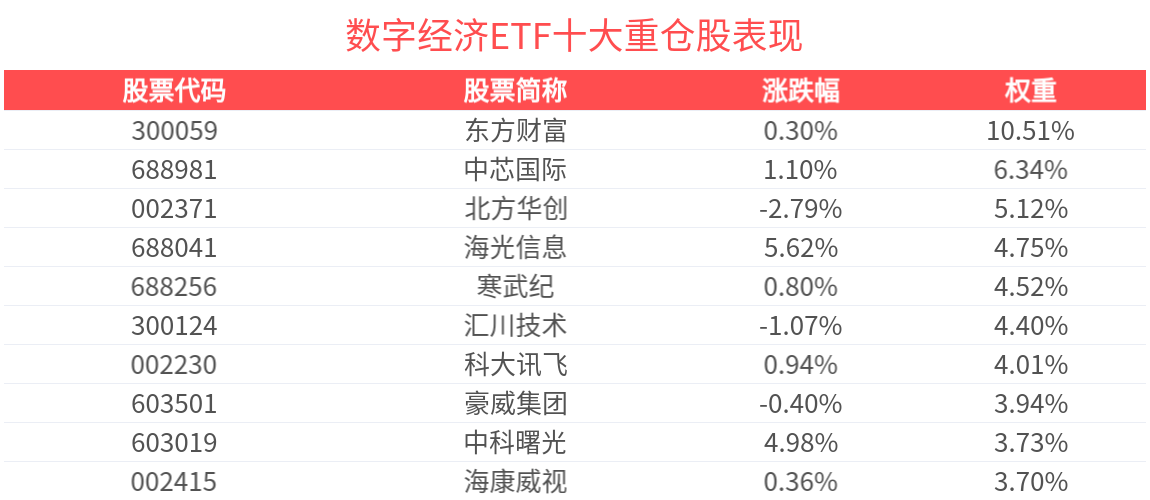
Core Viewpoint - The digital economy theme index and related ETFs are showing positive performance, driven by strong stock price movements in semiconductor companies and the growing demand for advanced manufacturing processes in the semiconductor industry [1][2][3]. Group 1: Digital Economy Index Performance - As of September 25, 2025, the CSI Digital Economy Theme Index (931582) increased by 0.98%, with notable gains from stocks such as Jinghe Integrated (688249) up 11.03%, and Yonyou Network (600588) up 8.63% [1]. - The Digital Economy ETF (560800) also saw an increase of 0.93% [1]. Group 2: Market Liquidity and Trading Activity - The Digital Economy ETF had a turnover rate of 1.67% during the trading session, with a total transaction value of 11.9467 million yuan [2]. - Over the past month, the average daily trading volume for the Digital Economy ETF was 37.0221 million yuan [2]. Group 3: Semiconductor Industry Insights - There is a rising expectation of price increases in the semiconductor wafer market, with significant stock price increases observed among major international suppliers [2]. - TSMC is reportedly adjusting its pricing for advanced processes, with a 24% increase for the 3nm process node charged to MediaTek, and a 16% cost increase for Qualcomm's upcoming Snapdragon 8 Elite Gen 5 chip [2]. - Long-term demand for advanced logic chip foundry capacity in China is projected to reach 34,000 wafers per month, with actual demand likely exceeding this estimate due to capacity ramp-up and R&D needs [2]. Group 4: Domestic Semiconductor Development - The push for domestic semiconductor manufacturing is accelerating, driven by trade tensions highlighting the importance of supply chain security and self-sufficiency [3]. - The penetration of semiconductors in sectors such as automotive electronics, new energy, IoT, big data, and artificial intelligence is becoming a significant growth driver for the semiconductor sector [3]. Group 5: Index Composition - As of August 29, 2025, the top ten weighted stocks in the CSI Digital Economy Theme Index accounted for 53.36% of the index, with companies like Dongfang Caifu (300059) and Cambricon (688256) being the most significant contributors [3].
凌晨重磅!中国资产,大爆发
Zhong Guo Ji Jin Bao· 2025-09-25 00:57
Market Performance - The three major U.S. stock indices closed lower, with the Dow Jones down 0.37%, S&P 500 down 0.28%, and Nasdaq down 0.33% [2] - Despite the overall market decline, Intel and Tesla saw gains, with Intel's stock price increasing by 6.41% to $31.22 per share [3] Chinese Stocks - The Nasdaq China Golden Dragon Index rose by 2.83%, led by Alibaba's significant increase of 8.21% [5][6] - Other Chinese stocks such as JD and Baidu also experienced gains of over 5% [5] Federal Reserve and Interest Rates - The probability of a 25 basis point rate cut by the Federal Reserve in October has risen to 91.9% [9][12] - Divergence among Federal Reserve officials regarding future rate cuts has increased, with some supporting further cuts while others express caution [11][12] Trade Policy - The U.S. has officially reduced tariffs on EU automobiles to 15%, effective from August 1, 2025 [16][17] - This adjustment is part of a broader trade agreement and includes various product exemptions [17]


今夜!利好,大涨,创新高
Sou Hu Cai Jing· 2025-09-23 16:19
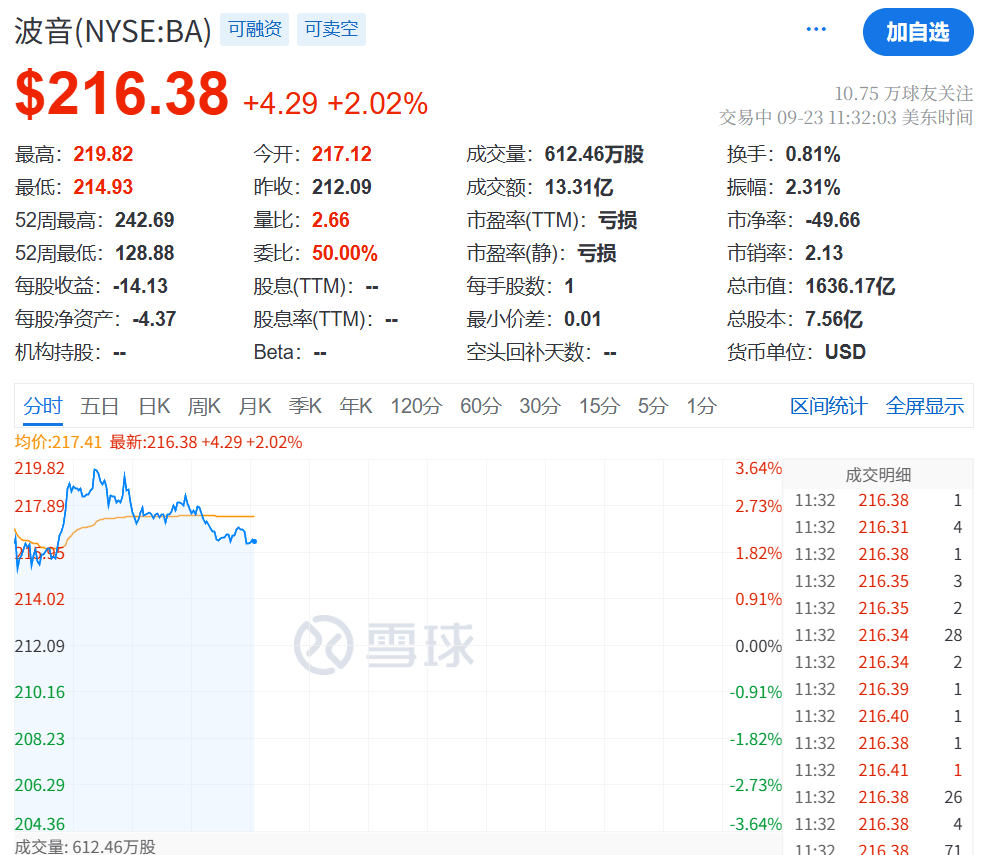
Market Overview - US stock markets showed mixed performance with the Dow Jones initially rising by approximately 200 points before narrowing its gains, while the Nasdaq and S&P 500 experienced slight declines [1][2] - The Dow's rise was bolstered by Boeing's strong performance following a significant deal with Uzbekistan valued at over $8 billion [2] Federal Reserve Insights - Traders are awaiting Federal Reserve Chairman Jerome Powell's speech for clues on interest rate direction, as the market remains near historical highs [5] - Analysts express a cautiously optimistic sentiment among investors, despite high valuations and concerns regarding the labor market [5] - The upcoming release of the core PCE price index, a key inflation indicator for the Fed, is anticipated [5] Semiconductor Industry - TSMC's stock price surged over 3%, reaching a new high, driven by the launch of Apple's iPhone 17 series featuring the A19 chip manufactured using TSMC's latest 3nm N3P process [6][8] - The semiconductor inflation is reportedly escalating, with the price of the last generation of 3nm CPUs increasing by approximately 20%, and the upcoming 2nm process expected to see price hikes of over 50% [8] - Major players in the Android ecosystem, such as MediaTek and Qualcomm, are set to release flagship chips that also utilize TSMC's latest process, with price increases of 16% to 24% compared to previous generations [8]
今夜!利好,大涨,创新高
中国基金报· 2025-09-23 16:13
Group 1 - The U.S. stock market showed mixed performance with the Dow Jones initially rising by about 200 points before narrowing its gains, while the Nasdaq and S&P 500 experienced slight declines [3][4] - Boeing's stock price surged following a significant deal worth over $8 billion with Uzbekistan, which was praised by former President Trump [4] - The market is awaiting comments from Federal Reserve Chairman Jerome Powell, which are expected to provide insights into future interest rate paths [7] Group 2 - TSMC's stock price increased by over 3%, reaching a new high, driven by the launch of Apple's iPhone 17 series featuring the latest A19 chip manufactured using TSMC's 3nm N3P process [10][12] - The semiconductor industry is experiencing inflation, with prices for the latest 3nm chips rising by approximately 20% compared to previous generations, and projections indicate a further increase of over 50% for the upcoming 2nm chips [12][14] - Major chip manufacturers like MediaTek and Qualcomm are set to release their flagship chips, which also utilize TSMC's latest process, with price increases expected [13][14]