Neuralink

Search documents
蓝思科技联手强脑科技 一场“穿越颅骨”的工业突围
Xin Lang Cai Jing· 2026-01-09 06:43
Core Insights - The brain-computer interface (BCI) sector in China's A-share market has experienced a significant surge, driven by a major funding round of approximately 2 billion RMB for BrainCo, a leading player in the field, marking it as the second-largest single financing in the global BCI sector after Neuralink [2][23][25] - The partnership between BrainCo and Lens Technology signifies a transformative shift in the BCI industry from experimental research to large-scale industrial production, indicating a convergence of soft neural signals and hard manufacturing capabilities [4][26] Company Developments - Lens Technology has positioned itself as a strategic investor and the exclusive manufacturer of core hardware modules for BrainCo, highlighting its ambition to transition from a consumer electronics supplier to a key player in the BCI market [5][27] - The collaboration between Lens Technology and BrainCo is seen as a critical move for Lens, as it seeks new growth avenues amid declining returns from traditional consumer electronics [5][27][30] Market Dynamics - The BCI market in China is projected to reach 3.83 billion RMB by 2025, with non-invasive products accounting for approximately 82% of the market share, indicating a strategic focus on safer, less invasive technologies [9][30] - BrainCo's proprietary dry electrode sensor technology has eliminated the need for conductive gels, facilitating high-precision brain signal acquisition and enabling a wide range of applications from medical to consumer products [9][30][31] Technological Advancements - BrainCo has developed a diverse product matrix, including a brain-machine interface for social communication aimed at children with autism and a sleep aid device that has received FDA certification, showcasing its commercial viability [10][31] - The collaboration between BrainCo and Lens Technology is expected to accelerate the commercialization of BCI technologies, moving beyond research to practical applications that address real-world issues [10][31] Industry Landscape - The BCI industry in China is characterized by a dual-core structure, with significant contributions from institutions in Beijing and Shanghai, fostering a competitive environment for technological advancements [11][32] - Beijing's Brain Science and Brain-like Research Institute is leading in high-throughput semi-invasive wireless brain-machine systems, while Shanghai focuses on brain mapping and clinical applications, creating a robust ecosystem for BCI development [13][35] Future Outlook - The Chinese government aims to establish a reliable BCI industry system by 2030, with plans to cultivate leading global enterprises, indicating strong institutional support for the sector [19][41] - The next three to five years are anticipated to be a period of significant industry reshuffling, with potential volatility in stock prices and technological pathways, as the market matures [20][41]



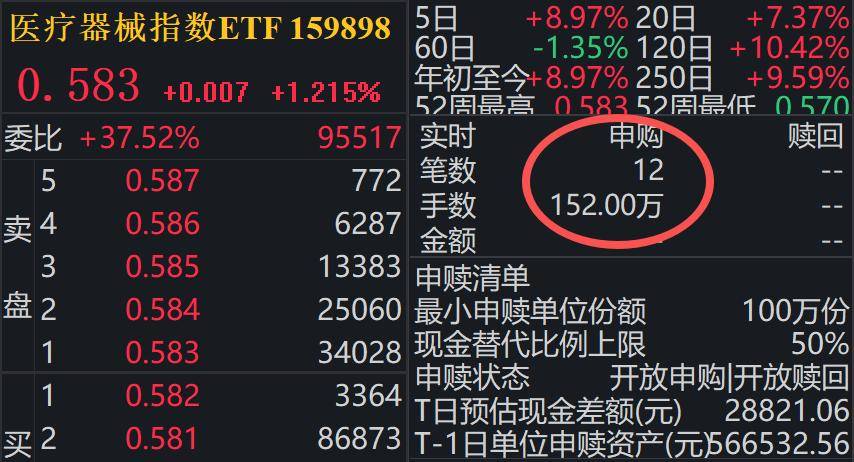
国内首张非侵入式脑机接口证出炉!医疗器械指数ETF(159898)午后拉升、标的指数“含脑量”约24%
Sou Hu Cai Jing· 2026-01-09 06:21
Group 1 - The medical device sector is experiencing a significant rally, with the Medical Device Index ETF (159898) seeing a net inflow of over 88 million yuan during intraday trading on January 8, following a previous inflow of over 116 million yuan [1] - Key stocks such as Di'an Diagnostics and Kingmed Diagnostics reached their daily limit, while others like Anbiping and Xiangsheng Medical saw gains exceeding 10% and 9% respectively [1] - The Medical Device Index ETF (159898) has a current scale of 659 million yuan, with approximately 24% of its holdings related to the brain-computer interface (BCI) concept [2][3] Group 2 - The brain-computer interface industry is highlighted as a key development area in the new five-year plan, with supportive policies for clinical trials, registration, and pricing [1] - Strong Brain Technology, a leading BCI company, recently completed a financing round of about 2 billion yuan, marking it as the second-largest financing in the BCI field globally, after Neuralink [2] - The Medical Device Index ETF (159898) includes several companies with substantial involvement in the BCI sector, making it a convenient and efficient tool for investment in this emerging field [3]
脑机接口技术已进入“临床价值验证与早期产业化”的关键期
Zhong Guo Jing Ji Wang· 2026-01-09 06:15
Core Viewpoint - Brain-computer interface (BCI) technology is a critical area at the intersection of life sciences and information technology, with significant global competition and potential applications in medical fields, particularly in disease prevention, diagnosis, treatment, and management [1] Group 1: Current Applications and Progress - BCI technology is primarily applied in clinical settings for the rehabilitation of motor and speech functions, with motor function recovery being the most advanced area [2] - Notable examples include Neuralink's successful implantation in over ten patients and the clinical validation of products like Synchron's Stentrode and Onward Medical's ARC-BCI [2] - In speech function, the "Beijing Brain No. 1" system has made significant progress in decoding speech for patients with severe speech disorders due to conditions like ALS [2] Group 2: Technology Maturity and Challenges - The current stage of BCI technology is characterized as a critical period for clinical value verification and early industrialization, facing both unprecedented policy support and intense international competition [3] - Key evaluation metrics include safety and reliability, effectiveness and stability, and usability, with ongoing challenges in long-term safety, performance stability in real-life scenarios, and maintenance issues [4] Group 3: Technical Challenges and Breakthrough Directions - Major technical challenges include balancing high-resolution signal acquisition with low invasiveness, and developing systems that ensure low power consumption while maintaining real-time performance [5][6] - The need for "plug-and-play" capabilities in decoding algorithms and addressing individual variability and time drift are also critical areas for future breakthroughs [6] Group 4: Barriers to Large-Scale Clinical Application - Key barriers to large-scale clinical application include the need for rigorous clinical trials to establish safety and efficacy, the development of reliable manufacturing processes, and the establishment of ethical and legal frameworks [7] - Predictions suggest that semi-invasive BCIs may take 1-2 years for approval in rehabilitation applications, while invasive BCIs may require around 5 years [7] Group 5: Future Development Possibilities - Future applications of BCI technology are expected to extend beyond motor rehabilitation to include speech function restoration and treatment for severe neurological disorders, with aspirations for merging biological intelligence with artificial intelligence to enhance human capabilities [8]
卫星翻倍、有色称王、脑机顶流,三大赛道起爆!谁是真王者?
Jin Rong Jie· 2026-01-09 05:32
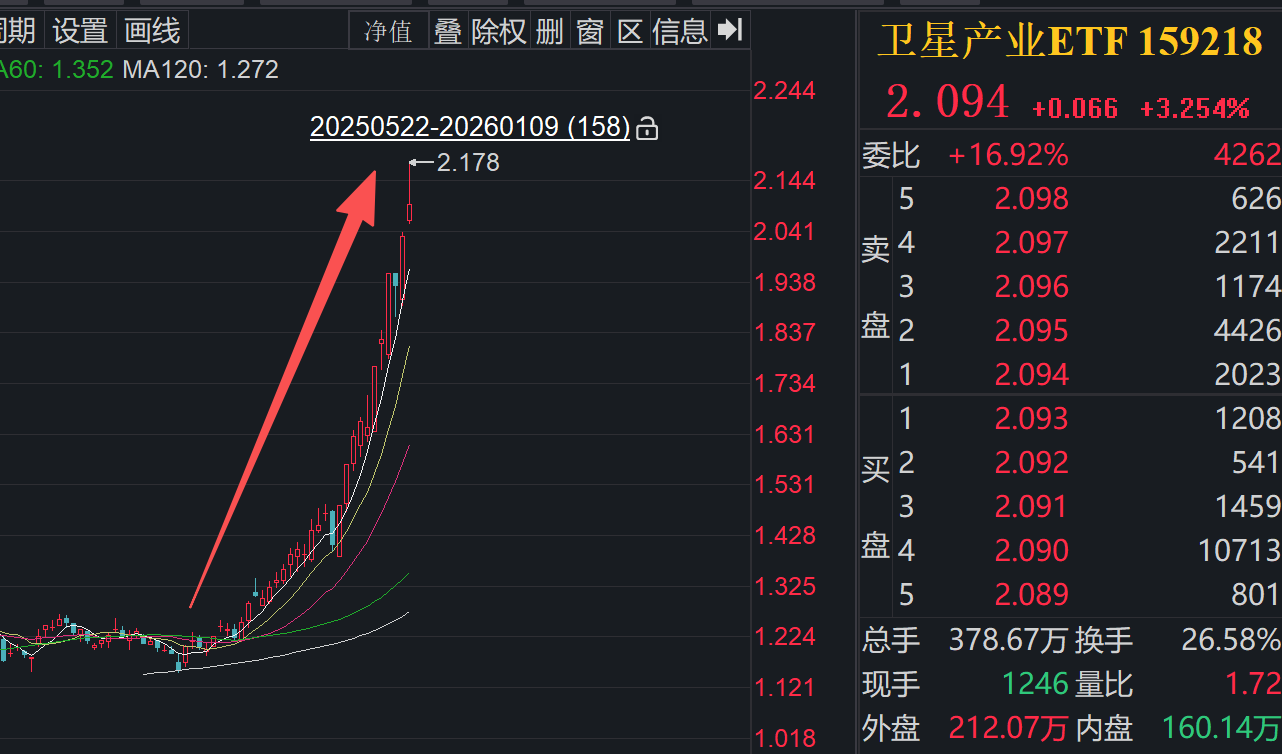
Core Viewpoint - The years 2025 and 2026 are expected to witness significant historical milestones in the Chinese stock market, particularly with the Shanghai Composite Index breaking records and sectors like aerospace, non-ferrous metals, and brain-computer interfaces experiencing rapid growth [1]. Group 1: Satellite Industry - The satellite industry is currently in an unprecedented acceleration phase, with the satellite industry ETF (159218) being the first in the commercial aerospace sector to double in value this year [1]. - The International Telecommunication Union (ITU) has submitted an application for an additional 203,000 satellites, covering 14 satellite constellations, which indicates a potential doubling of satellite launches in 2026 compared to 2025 [4]. Group 2: Non-Ferrous Metals - The non-ferrous metals sector is poised for a new bull market in 2026, driven by the weakening of the US dollar and the increasing demand for materials like copper and rare earths, which are essential for electric vehicles, AI data centers, and high-end manufacturing [5]. Group 3: Brain-Computer Interfaces - The brain-computer interface sector is gaining attention due to its inclusion in the "14th Five-Year Plan" and significant advancements such as Neuralink's announcement of mass production in 2026 and successful clinical trials of domestic products [6]. - The most immediate application of brain-computer interfaces is in medical rehabilitation for patients with spinal injuries and strokes, highlighting the importance of practical applications over speculative concepts [8]. - The focus on brain-computer interfaces should be on high-end medical devices, as the sector is currently experiencing a policy and innovation cycle that supports its growth [8].
战略投资强脑科技,蓝思科技大涨超18%
Sou Hu Cai Jing· 2026-01-09 03:59
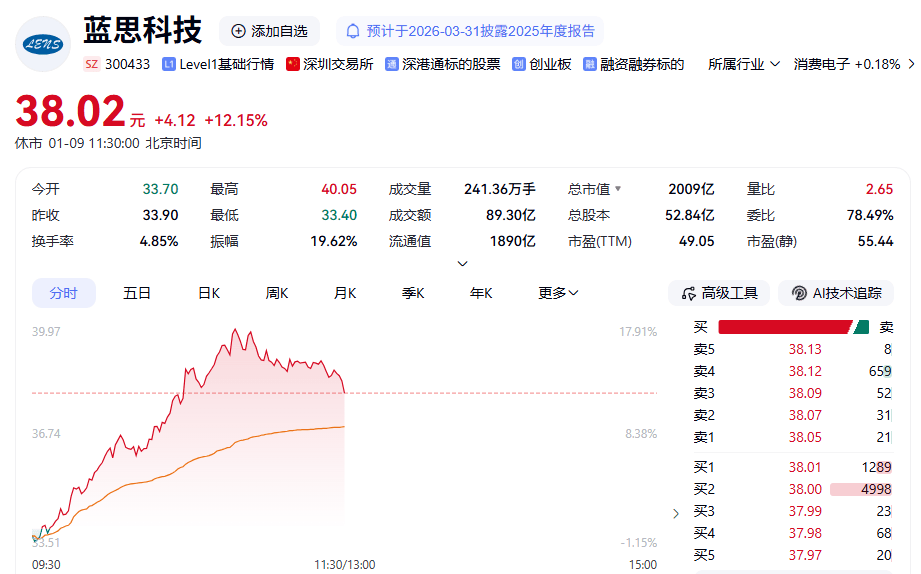
Group 1 - Bluefin Technology's stock surged over 18% on January 9, closing at 38.02 CNY per share, with a trading volume of 8.93 billion CNY and a turnover rate of 4.85% [1] - Strong Brain Technology, a leading player in the brain-computer interface (BCI) sector, completed approximately 2 billion CNY in financing, marking it as the second-largest financing in the global BCI field after Neuralink [4] - Bluefin Technology is a strategic investor in Strong Brain Technology and has exclusively undertaken the mass production of its core hardware modules [4] Group 2 - The brain-computer interface industry is experiencing a high growth phase driven by technological breakthroughs, policy support, and expectations of robotic ecosystem collaboration, with a projected market size of approximately 12.4 billion USD by 2034 and a CAGR of 17% from 2025 to 2034 [5] - The recent expectations for mass production and technological breakthroughs from Neuralink are likely to benefit A-share companies related to the brain-computer interface sector [5]
脑机接口量产临界,医疗器械指数ETF(159898)连续4日获资金净流入、规模站上新高
Sou Hu Cai Jing· 2026-01-09 03:24
Group 1 - The core viewpoint of the article highlights the increasing market and funding attention towards brain-computer interfaces (BCIs), which are seen as a cutting-edge technology with significant future industry potential [2] - The medical device index ETF (159898) has seen a net inflow of over 170 million yuan in the last four trading days, with a single-day inflow exceeding 116 million yuan on January 8, marking a new high in its scale [2] - The medical device index ETF (159898) includes approximately 24% of companies with substantial involvement in the BCI sector, making it a convenient and efficient tool for investment in this emerging field [2][3] Group 2 - BCIs are interdisciplinary technologies that integrate neuroscience, computer science, and medicine, enabling direct communication between the brain and external devices [4] - Current applications of BCI technology are primarily in medical rehabilitation, particularly for patients recovering from strokes and spinal cord injuries, with potential future applications in education, entertainment, and industry [4] - The BCI sector is expected to experience strong growth driven by simultaneous advancements in policy, industry, and technology, with significant milestones anticipated by 2026 [7] Group 3 - The domestic BCI "unicorn" company, Qiangnao Technology, recently completed approximately 2 billion yuan in financing, becoming the second-largest financing in the BCI field globally, following Neuralink [7] - The Chinese government is actively supporting the BCI industry through various policies, emphasizing its importance as a key development area in the new five-year plan [7] - Recent breakthroughs in domestic BCI technology include successful clinical trials of fully implanted, wireless BCI products, indicating rapid advancements in the field [9] Group 4 - China's BCI market size grew from approximately 1 billion yuan in 2020 to about 1.73 billion yuan in 2023, representing a 12.5% share of the global BCI market [10] - Different institutions have varying growth forecasts for the BCI industry, with estimates suggesting the global market could reach 7.63 billion USD by 2029 [11] - The global BCI market is projected to grow to approximately 12.4 billion USD by 2034, with a compound annual growth rate (CAGR) of 17% from 2025 to 2034 [14] Group 5 - BCIs are considered a potential key catalyst for driving upward trends in the medical device sector, supported by innovation and policy backing [15] - The medical device index ETF (159898) tracks the entire A-share medical device sector, with a pure representation of the industry and a 24% inclusion of BCI concepts, making it suitable for capturing opportunities in this emerging market [15]
脑机接口虚火?但再不下手就晚了
3 6 Ke· 2026-01-09 02:14
Core Insights - The brain-computer interface (BCI) sector is experiencing a surge in investment and interest, particularly following the announcement from Neuralink about plans for large-scale production by 2026 [1][2] - Strong Brain Technology has successfully raised 2 billion yuan to accelerate the development of core technologies and product scaling in the BCI field [1] - The Chinese government has recognized BCIs as a key future industry, with significant funding allocated to support research and development [1] Investment Trends - Major venture capital firms such as Sequoia China, IDG, and Baidu Ventures are investing in various BCI companies, indicating a potential boom in financing for the sector in 2026 [2] - The investment landscape is shifting from primarily medical-focused investors to include those from technology and consumer sectors, highlighting the broader applications of BCIs [2] Non-Invasive BCI Developments - Non-invasive BCIs, led by Strong Brain Technology, are gaining traction with applications in various fields including healthcare and entertainment [2][4] - Despite previous challenges in the non-invasive BCI market, advancements in technology are leading to improved signal quality and broader applications [4][5] - The current focus is on developing smart prosthetics and other applications rather than pure brain control, utilizing muscle signals and AI algorithms for better accuracy [4] Invasive BCI Innovations - Invasive BCIs are facing stringent regulatory and safety challenges but are still attracting investment due to their high technical barriers and clinical value [6][7] - Companies like Borycon and Ladder Medical are making significant strides in clinical trials and product development, with Borycon's system showing promising results in patient rehabilitation [9][10][12] - The competitive landscape includes several players in Beijing and Shanghai, with a focus on developing comprehensive systems that integrate electrodes, algorithms, and neural chips [7][15] Future Outlook - 2026 is anticipated to be a pivotal year for the BCI industry, with advancements in technology and regulatory support paving the way for broader adoption [17][18] - The establishment of independent billing for BCI services by the National Medical Insurance Administration reflects a commitment to supporting the industry's growth [17]
2026年可能出现的10个惊喜
Sou Hu Cai Jing· 2026-01-09 02:10
Core Insights - The article discusses the release of "10 Surprises for 2026" by TBS and Bloomberg, continuing the legacy of Byron Wien, who was known for his contrarian market insights and predictions [1][2] Group 1: Predictions Overview - The predictions cover six key areas: autonomous driving, real estate, technology capital, monetary policy, trade policy, and cryptocurrency, each challenging market expectations [4] - Waymo's autonomous taxis are expected to expand into more U.S. cities by 2026, leading to discussions about banning human driving in urban centers [4] - New York City's rental policies are shifting towards taxing vacant properties, which is anticipated to slightly reduce rental prices amid housing supply challenges [5] - SpaceX's IPO is projected to significantly increase the valuation of Elon Musk's business empire, potentially making him the world's first trillionaire [6] Group 2: Monetary and Trade Policies - The Federal Reserve is expected to maintain its current interest rate policy in 2026, resisting calls from former President Trump for rate cuts, emphasizing a focus on long-term economic stability [8] - The U.S. Supreme Court is likely to uphold Trump's tariff measures, which are not expected to have a significant impact on inflation, alleviating concerns about tariffs driving up prices [9] Group 3: Cryptocurrency Insights - Bitcoin is projected to attempt to reach its historical high from October 2025 but is unlikely to succeed, with its volatility expected to decrease, enhancing its perception as a store of value [10] - Financial products linked to Bitcoin are set to be introduced, targeting the baby boomer generation, which may broaden the appeal of cryptocurrency investments [10] Group 4: Anticipation for Remaining Predictions - The remaining four predictions have yet to be disclosed, generating significant interest among global investors and policy researchers, highlighting the value of contrarian thinking in identifying overlooked risks and opportunities [11]
蓝思科技早盘飙升逾9% 强脑科技确认完成约20亿元融资
Xin Lang Cai Jing· 2026-01-09 02:06
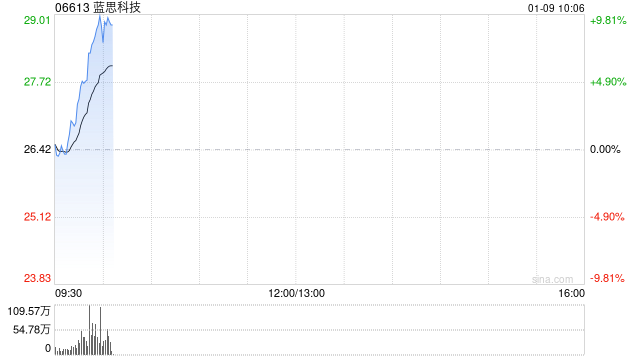
Core Viewpoint - Lens Technology (06613) experienced a 9.24% increase in stock price, reaching HKD 28.86, with a trading volume of HKD 323 million [6]. Group 1: Financing and Investment - Qiang Brain Technology, one of the "Six Little Dragons" of Hangzhou, has completed approximately RMB 2 billion (around HKD 2.6 billion) in financing, marking the second-largest financing record globally in the brain-computer interface sector, following Neuralink [6]. - The funds raised by Qiang Brain Technology will be used to accelerate the research and development of core technologies in brain-computer interfaces, achieve breakthroughs in extreme engineering, and scale up product production [6]. Group 2: Strategic Partnerships - Lens Technology is a strategic investor in Qiang Brain Technology and is exclusively responsible for the mass production of Qiang Brain's core hardware modules [6]. - In November 2025, Lens Technology plans to donate a large number of intelligent bionic limbs to the Hunan Provincial Disabled Persons' Federation, with all core modules sourced from Lens Technology's production line [6]. - The company has over 10 years of deep cooperation with major North American clients and serves as a primary core supplier [6].
最神秘“六小龙”,完成20亿融资
投中网· 2026-01-09 01:50
将投中网设为"星标⭐",第一时间收获最新推送 脑机接口行业史上的第二大融资纪录。 作者丨 蒲凡 来源丨 投中网 我们的手指是怎么动起来的? 乍看上去,这是个很傻的问题。无论我们是想挖鼻孔、挠痒痒、薅白头发,还是开车、看报、读书写字,再复杂的手指动作,准备工作也只有一个:动 动脑子。但对于科学家们而言,"动手指"却堪称人类未解之谜,因为人类的双手其实是世界上最精巧的机器,手部的每一寸肌肉和关节都拥有极大的活 动范围和精准度,确保每次发力能以最佳方式分散,仅手掌一个区域就有17000个触觉感受器和游离神经末梢。 另一方面,我们脑海中一闪而过的"念头"却是一个极其抽象的概念。人们虽然知道大脑通过神经元产生的电信号和化学信号,将"动一动"的想法传递给 手指。但人类在产生想法的过程中,"活跃"的脑区是不固定的。感觉皮层、前额叶皮层、边缘系统都有可能是发出指令的起点。更重要的是,人们的主 观意识仅仅是大脑决策的其中一个参考因素。在无意识状态下,大脑会通过视觉、听觉、味觉、嗅觉、触觉不断收集信息,同样做出动一动的决策,比 如闻到炸臭豆腐就下意识捂鼻子。 那么两套异常紧密的系统是如何衔接上的?具体是哪些信号精准地控制了我们的 ...