
邮储银行

Search documents
管控成本、做活App,银行免费动账短信加速“退场”
第一财经· 2026-02-10 14:46
Core Viewpoint - The article discusses the increasing threshold for free transaction SMS notifications by banks, indicating a shift from universal service to tiered offerings due to cost pressures and a push towards digital channels [3][4][10]. Group 1: Changes in SMS Notification Services - Since 2025, multiple banks have raised the minimum amount for free transaction SMS notifications, with China Merchants Bank increasing the threshold to 5000 yuan [3][4]. - Other banks, including China Bank and Minsheng Bank, have also adjusted their thresholds, generally ranging from 100 to 500 yuan for free SMS notifications [5][6]. - Smaller banks, such as Guangxi Pingguo Rural Bank, have set their thresholds at 200 yuan, aligning with the trend towards financial technology [5][6]. Group 2: Cost Implications of SMS Services - The cost of providing free SMS services is significant, with banks incurring substantial expenses due to high customer volumes and frequent usage [6][8]. - For instance, a bank with 100 million customers sending one free SMS per month could face operational costs exceeding 36 million yuan annually [8]. - Banks are now charging fees for SMS notifications, typically around 2 to 3 yuan per month per card, which helps cover the costs of SMS procurement [8][10]. Group 3: Digital Transformation and Customer Engagement - The increase in SMS notification thresholds is not solely driven by cost but also reflects banks' digital transformation strategies [10]. - Banks are encouraging customers to use digital channels like apps and WeChat for notifications, which have lower marginal costs compared to SMS [10][11]. - The shift aims to enhance service efficiency and customer engagement, with a potential future model of "large transactions free, small transactions paid" emerging in the industry [10][11].






中国银行迎来新高管,中央汇金黄学玲履新
2 1 Shi Ji Jing Ji Bao Dao· 2026-02-10 14:04
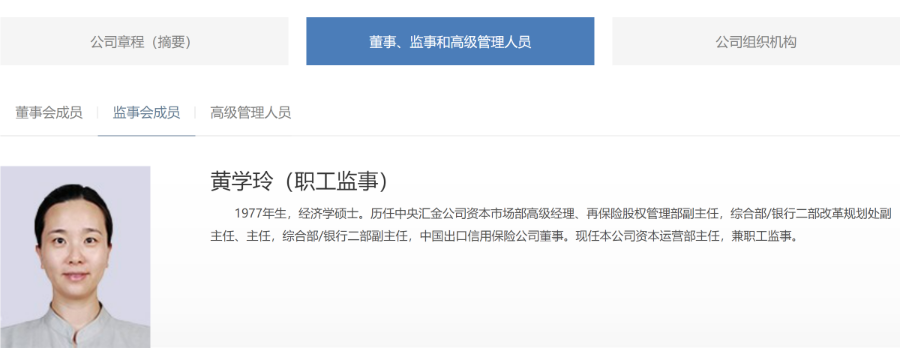
21世纪经济报道记者冯紫彤 唐婧 股权信息显示,汇金公司是中国银行第一大股东,截至2025年三季度末,持股比例为58.59%;其全资子公司中央汇金资产管理有限责任公司(下称"汇金资 管")亦持有中国银行0.56%股份。 而据天眼查,黄学玲自2022年6年起任汇金资管法人代表。该公司在2015年股市异常波动期间成立,通过受让中国证券金融股份有限公司部分上市公司股票 并进行专项管理,创新股票资产管理模式,旨在维护证券市场稳定。 2月10日,21世纪经济报道记者获悉,中央汇金投资有限责任公司(下称"汇金公司")资本运营部主任兼职工监事黄学玲目前已到任中行,在走完相关程序 后,有望出任该行副行长。 | 公司章程(摘要) 董事、监事和高级管理人员 公司组织机构 | | --- | | 董事会成员 监事会成员 高级管理人员 | | 黄学玲(职工监事) 1977年生,经济学硕士。历任中央汇金公司资本市场部高级经理、再保险股权管理部副主任,综合部/银行二部改革规划处副 | | 主任、主任,综合部/银行二部副主任,中国出口信用保险公司董事。现任本公司资本运营部主任,兼职工监事, | 公开资料显示,黄学玲出生于1977年,拥有经 ...
春节新钞兑换热度攀升 银行提示提前预约“不跑空”
Xin Lang Cai Jing· 2026-02-10 12:50
Core Viewpoint - The upcoming Chinese New Year has led to a surge in demand for new banknotes, particularly small denominations, as many citizens engage in traditional practices of exchanging money and giving red envelopes [1][3]. Group 1: Demand for New Banknotes - There is a significant increase in the demand for new banknotes, especially 5 yuan, 10 yuan, and 20 yuan denominations, which are described as "hard to find" [1][3]. - Citizens express that the value of the red envelopes is not in the monetary amount but in the sentiment and tradition of giving [1][3]. - Many retirees are exchanging their pensions for new banknotes to give to children as a symbol of good fortune for the new year [1][3]. Group 2: Bank Inventory and Services - The availability of new banknotes varies by bank, with some branches reporting that they have run out of small denominations and suggesting that customers make reservations in advance [2][4]. - Some banks, such as Minsheng Bank and Beijing Bank, have limited stocks of small denomination notes, with only a few hundred available [2][4]. - Several banks have introduced online and offline reservation services for new banknote exchanges, encouraging customers to book in advance to ensure availability [2][4].
——从2025Q4前五大持仓看债基信用策略:震荡行情中的债基超额收益由何主导?
Huachuang Securities· 2026-02-10 12:17
Core Insights - The report analyzes the factors influencing bond fund returns in Q4 2025, highlighting the impact of credit strategies on yields [7] - It identifies a recovery in credit bond allocation sentiment compared to Q3, with a notable preference for mid-term credit varieties [12][34] - The report emphasizes the importance of leveraging strategies and the contribution of credit downgrades to overall portfolio returns [23][27] Group 1: Performance of Bond Funds - The average return rate for bond funds in Q4 2025 was 0.55%, a significant improvement from -0.32% in Q3 [12] - Credit bond allocation's contribution to returns increased, with a correlation coefficient of 0.0027 in Q4, up from 0.0024 in Q3 [12] - Mid-term bonds (3-5 years) showed a strong contribution to portfolio returns, with a U-shaped relationship between return rates and the average remaining maturity of heavy holdings [17][20] Group 2: Bond Fund Holdings Overview - By the end of Q4 2025, the total scale of credit bonds held by bond funds reached 5.27 trillion yuan, an increase of 303.2 billion yuan from the previous quarter [34] - The proportion of credit bonds in bond fund holdings rose to 63.21%, up from 61.00% in the previous quarter [34] - The average yield of heavy holdings in various bond categories generally declined, indicating a shift in investment strategy towards more liquid varieties [2][3] Group 3: Credit Bond Strategy Analysis - The report notes an increase in the frequency of holdings in government and financial bonds, while credit bond holdings decreased, suggesting a strategy shift towards more liquid assets [2] - The average remaining maturity of heavy credit bond holdings slightly lengthened, indicating a flexible adjustment in duration structure [2] - The report categorizes heavy credit bond holdings by yield ranges, identifying specific opportunities for investment based on implied ratings [4][8]
管控成本、做活App,银行免费动账短信加速“退场”
Di Yi Cai Jing· 2026-02-10 10:51
Core Viewpoint - The traditional free SMS notification service for bank account transactions is undergoing significant changes, with banks raising the threshold for free notifications, prompting customers to pay for services if they wish to continue receiving them [1][2][6] Group 1: Changes in SMS Notification Services - Starting from March 16, 2025, China Merchants Bank will raise the threshold for free SMS notifications to transactions of 5000 yuan or more, with a monthly fee of 3 yuan for those who wish to continue receiving notifications [2][3] - Other banks, including China Bank and Minsheng Bank, have also increased their thresholds for free SMS notifications, with ranges between 100 yuan and 500 yuan [3][4] - Smaller banks, such as Guangxi Pingguo National Village Bank, have set their thresholds at 200 yuan, indicating a trend towards higher thresholds across the industry [2][3] Group 2: Cost Implications - The cost of providing SMS services is significant, with banks paying per message sent, leading to substantial operational costs due to the large customer base [4][5] - For instance, if a bank with 100 million customers sends one free SMS per customer per month at an average cost of 0.03 yuan, the monthly cost would be approximately 3 million yuan, totaling over 36 million yuan annually [5][6] - Banks are adjusting their free SMS thresholds as part of a strategy to manage costs amid narrowing net interest margins, with many banks charging between 2 to 3 yuan per month for SMS services [6][7] Group 3: Digital Transformation and Customer Engagement - The increase in SMS notification thresholds is not solely a cost-saving measure but also aligns with banks' digital transformation strategies, encouraging customers to use digital channels like apps and WeChat for notifications [7][8] - This shift aims to enhance service efficiency and reduce the frequency of SMS notifications, which are considered value-added services rather than mandatory ones [7][8] - Industry experts predict a future trend where large transactions continue to receive free SMS notifications, while small transactions will default to app or WeChat notifications, with paid SMS services available for those who opt for them [8]
贵金属风控升级!金店暂停节假日回购,银行清退“三无”客户
2 1 Shi Ji Jing Ji Bao Dao· 2026-02-10 10:33
Core Viewpoint - The recent volatility in gold prices has led to significant adjustments in the gold repurchase policies of various companies, including China Gold and Beijing Caishikou Department Store, to manage risks and improve operational efficiency [3][4]. Group 1: Company Adjustments - China Gold will suspend its gold repurchase business on weekends and public holidays starting February 7, 2026, due to increased price volatility and uncertainty in the precious metals market [3][4]. - Beijing Caishikou Department Store has also updated its repurchase rules, halting operations on non-trading days and reducing the daily gold repurchase limit from 200 kilograms to 100 kilograms [3][4]. - The adjustments include limits on repurchase amounts for individual customers, requiring prior appointments, and these limits will be dynamically adjusted based on market conditions [3][4]. Group 2: Market Conditions - The gold market has experienced significant price fluctuations, with daily price changes exceeding 10% to 30%, which has surpassed market expectations [4]. - The suspension of repurchase activities on non-trading days is intended to align with market pricing mechanisms and avoid disputes over pricing due to the lack of fair market quotes [4]. - The overall industry is facing increased pressure from risk management and operational costs, with expectations that more gold retailers will follow suit in tightening their repurchase policies [4]. Group 3: Banking Sector Response - Several banks have begun to limit services for "three no" clients (no holdings, no inventory, no debts) in response to the heightened market risks associated with gold trading [5][6]. - Banks such as Industrial Bank and others have announced the closure of personal gold trading channels and the transfer of margin account balances for inactive clients [6][7]. - The banking sector's adjustments reflect a growing trend of risk management, transitioning from initial risk warnings to the orderly exit of existing clients [8].







金价高位巨震,多家银行、金店收缩贵金属业务
第一财经· 2026-02-10 10:20
Core Viewpoint - The article discusses the tightening of gold trading operations by banks and gold retail stores in China due to significant fluctuations in gold prices and increased risk management pressures [3][4][7]. Group 1: Business Adjustments - Nearly half of the banks with financial membership qualifications at the Shanghai Gold Exchange have tightened their personal precious metal trading operations by closing channels, suspending new positions, and limiting purchases [3][5]. - Major gold retailers, including Cai Bai Co. and China Gold, have announced the suspension of gold buyback services during weekends and holidays, along with implementing limits on buyback transactions [4][8]. - Banks such as Postal Savings Bank and Ningbo Bank have already ceased personal precious metal trading operations, with at least 11 banks making similar announcements since September of the previous year [4][5]. Group 2: Market Conditions - The recent volatility in gold prices has been attributed to significant fluctuations, with London gold prices dropping from a peak of $5,598 per ounce to below $5,000, reflecting a 9.25% drop in one day [7][11]. - Analysts indicate that the surge in investor interest in gold has led to increased risk, as many new investors may not fully understand the market's volatility [7][8]. Group 3: Regulatory and Compliance Factors - The introduction of a new gold trading tax policy in November 2025 has increased the compliance costs for banks, leading some to adjust or exit related businesses [8][9]. - The regulatory requirement for financial institutions to enhance investor suitability management has also contributed to banks' cautious adjustments in their operations [7][8]. Group 4: Future Price Outlook - Analysts predict that gold prices will experience short-term volatility but maintain a long-term bullish outlook, with potential price targets between $5,400 and $6,800 per ounce if the investment allocation in gold increases [12][11]. - The market is expected to see continued fluctuations due to policy uncertainties and geopolitical risks, with gold retaining its value as a non-credit asset [12][11].

金价高位巨震,多家银行、金店收缩贵金属业务
Di Yi Cai Jing· 2026-02-10 09:47
Core Viewpoint - Domestic banks and gold retail terminals are tightening their gold trading operations amid volatile international gold prices, reflecting increased risk management pressures and regulatory compliance costs [1][4][5]. Group 1: Business Adjustments - Nearly half of the banks with financial membership qualifications at the Shanghai Gold Exchange have restricted personal precious metal trading by closing channels, suspending new positions, and limiting purchases [1][3]. - Major gold retailers, including Cai Bai Co. and China Gold, have announced the suspension of gold buyback services on weekends and holidays, implementing limits on transaction volumes [2][4]. - Banks such as Postal Savings Bank and Ningbo Bank have announced plans to cease personal gold trading services, with at least 11 banks adjusting their trading rules since September of the previous year [2][3]. Group 2: Market Volatility - The significant fluctuations in gold prices have been cited as a primary reason for the tightening of business rules by banks and gold retailers, with prices experiencing sharp declines after reaching a peak of $5,598 per ounce [4][5]. - The volatility has led to increased risk for banks, particularly concerning leveraged trading, which can result in substantial losses and customer disputes [4][6]. Group 3: Regulatory and Compliance Factors - New tax regulations on gold trading, effective from November 2025, have increased the compliance complexity and operational costs for banks, prompting some to adjust or exit related businesses [5][6]. - Regulatory bodies have emphasized the need for financial institutions to enhance investor suitability management, further influencing banks' cautious approach to gold trading [4][5]. Group 4: Future Price Outlook - Analysts suggest that while short-term fluctuations are expected, the long-term outlook for gold remains bullish due to ongoing geopolitical risks and the potential for increased investment in gold as a non-credit asset [8][9]. - Predictions indicate that if the proportion of investable gold exceeds historical peaks, gold prices could rise significantly, potentially reaching between $5,400 and $6,800 per ounce by 2026-2028 [8][9].
10家银行跨入10万亿俱乐部
21世纪经济报道· 2026-02-10 09:08
Core Viewpoint - A-share listed banks have shown positive growth in net profit for 2025, with all 11 banks reporting an increase, and four banks achieving double-digit growth, led by Qingdao Bank at 21.66% [1][5]. Group 1: Financial Performance - Qingdao Bank reported a net profit of 518.77 million yuan, up from 426.41 million yuan, marking a growth rate of 21.66% [2]. - Qilu Bank and Hangzhou Bank followed with net profit growth rates of 14.58% and 12.05%, respectively [5]. - In terms of total assets, China Merchants Bank leads with 13.07 trillion yuan, a year-on-year increase of 7.56% [4]. - The overall asset quality of the banks remains stable, with most banks reporting a decrease or stability in non-performing loan ratios [5][6]. Group 2: Revenue Trends - Revenue growth among the banks is varied, with only CITIC Bank experiencing a slight decline of 0.55% [4]. - Nanjing Bank led in revenue growth with a 10.48% increase, while Ningbo Bank and Qingdao Bank reported increases of 8.01% and 7.97%, respectively [4][5]. - The overall revenue growth for A-share listed banks is expected to improve in 2025, driven by narrowing interest margins and increased impairment contributions [9]. Group 3: Market Outlook - Analysts are cautiously optimistic about the banking sector's performance in 2026, with expectations of stable credit growth and improved profitability [9][10]. - The investment focus for 2026 includes identifying banks with potential for growth, particularly Ningbo Bank and China Merchants Bank, and those with convertible bond expectations like Industrial Bank [10]. - The overall market capitalization of the banking sector has surpassed 15 trillion yuan, reflecting a significant increase from the previous year [6].




微信信用卡账单分期还款可享“国补”贴息,首批接入七家银行
Bei Jing Shang Bao· 2026-02-10 08:32
据了解,微信信用卡还款平台已与超100家银行达成合作,为用户提供查账还款、账单分期、场景分期 等服务。 通过微信信用卡还款平台,用户可以同时申请多家银行的账单分期"国补"贴息,不同银行的贴息额度互 不占用。根据财政部近期发布的《关于优化实施个人消费贷款财政贴息政策有关事项的通知》,信用卡 账单分期还款已纳入财政贴息政策支持范围,每人在单个银行机构可享受的累计财政贴息金额上限为 3000元,年贴息比例为1个百分点,政策实施期限延长至2026年底。 北京商报讯(记者 董晗萱)2月10日,北京商报记者获悉,微信信用卡还款平台正式上线信用卡账单分 期"国补"贴息服务。农业银行、邮储银行、浦发银行、招商银行、民生银行、光大银行、建设银行共七 家银行首批接入,用户办理上述银行信用卡的账单分期还款时,可享受1个百分点的"国补"贴息,更多 银行正在陆续接入中。 对于符合贴息条件的分期订单,银行将自动调整分期手续费或将贴息返还至账户,用户无需额外申请操 作。以10000元分12期为例,在银行分期利率折扣优惠的基础上,叠加"国补"再减免1%利率,用户可节 省利息约50元。 ...

