
金山软件

Search documents
游戏行业赚快钱的时代结束了
第一财经· 2025-12-30 05:30
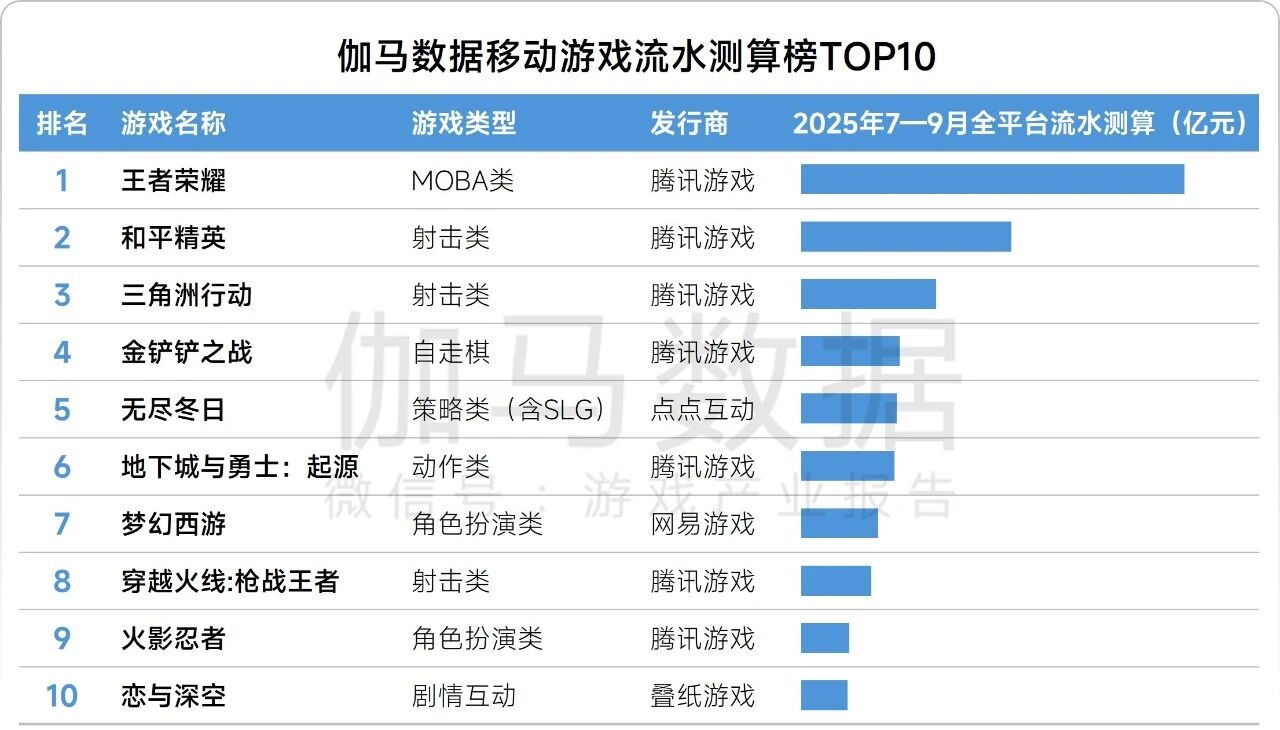
Core Viewpoint - The Chinese gaming industry in 2025 is characterized by a complex landscape of "recovery" and "internal competition," with market revenue exceeding 350 billion yuan and user base surpassing 680 million, yet competition remains fierce and profitability increasingly challenging [3][4]. Market Overview - The domestic gaming market revenue for 2025 is approximately 350.8 billion yuan, reflecting a year-on-year growth of 7.7%, while the user base has grown by about 1.4% to over 680 million [4]. - Self-developed games have generated overseas revenue of approximately 20.46 billion USD, maintaining a scale exceeding 100 billion yuan for six consecutive years [4]. - The industry has entered a phase of stock competition, with a saturated user base and a significant increase in self-developed game output, leading to heightened competition among companies [4][5]. Industry Trends - The gaming industry is experiencing a trend of increasing investment in research and development, particularly in art and quality, but the risk of failure for new games is rising due to intense competition in the stock market [4][5]. - The "winner-takes-all" phenomenon is intensifying, with top companies capturing a larger market share, leading to a shift from the "80/20 rule" to a potential "90/10 rule" in the industry [8][12]. Company Performance - Tencent's gaming revenue for Q3 2025 exceeded 63.6 billion yuan, marking a significant milestone, while NetEase's gaming revenue surpassed 70 billion yuan in the same period, indicating stable growth [10][11]. - The top ten mobile games in terms of revenue are dominated by Tencent, which has seven titles in the list, showcasing its strong market position [9][10]. New Opportunities - The rise of single-player games is a notable trend, with companies increasingly investing in AAA titles following the success of "Black Myth: Wukong," indicating a structural opportunity in the gaming industry [12][13]. - AI-native games are emerging as another exploration direction, with companies like miHoYo leading the way in integrating AI into game narratives, suggesting a potential shift in game development dynamics [14][15]. Future Outlook - The gaming industry is expected to enter a new "golden decade" of growth, driven by improved game quality, expanded overseas market pathways, and supportive policies, marking a transition from rapid growth to a focus on creativity and technology [15][16].



单机崛起、AI破局,游戏行业赚快钱的时代结束了
Di Yi Cai Jing· 2025-12-30 03:24
Core Insights - The Chinese gaming industry in 2025 is characterized by a complex landscape of "recovery" and "internal competition," with market revenue exceeding 350 billion yuan and user base surpassing 680 million, indicating a year of continued recovery despite intense competition [1][2] - The industry is experiencing a significant market divide, with the "winner-takes-all" trend intensifying, leading to a shift from the "80/20 rule" to a "90/10 rule," where a few dominant players capture most of the market share [1][6][8] - The industry is transitioning from a focus on quantity to quality, with an emphasis on creativity and innovation, marking the beginning of a new growth cycle for the Chinese gaming sector [1][9][10] Market Performance - In 2025, the domestic gaming market revenue is approximately 350.8 billion yuan, reflecting a year-on-year growth of 7.7%, while the user base has grown by 1.4% [2] - Self-developed games have generated overseas revenue of about 20.46 billion USD, maintaining a scale exceeding 100 billion yuan for six consecutive years [2] - Tencent and NetEase dominate the market, with their combined revenue exceeding 250 billion yuan in the first three quarters of 2025, solidifying their "duopoly" status [7] Industry Challenges - The gaming industry is facing heightened competition in a saturated market, with many new products vying for limited user attention, leading to increased failure rates for new game launches [2][3] - Major companies are investing heavily in R&D to meet rising player expectations, but the intense competition in the existing market makes success increasingly difficult [2][4] - Notable failures include NetEase's "The Legend of the Condor Heroes" mobile game, which was shut down after only 600 days of operation, highlighting the risks associated with high-budget projects [3] Trends and Opportunities - The rise of single-player and AI-native games presents new opportunities for smaller teams to break through in the competitive landscape [1][10] - The success of titles like "Black Myth: Wukong" has catalyzed a shift towards high-quality, creative gaming, with increased investment in AAA games from both startups and established companies [9][10] - AI technology is emerging as a significant factor in game development, potentially lowering costs and enhancing creativity, which could benefit smaller developers [8][11] Future Outlook - The Chinese gaming industry is poised for a new "golden decade" of growth, driven by improved game quality, expanded overseas opportunities, and supportive government policies [1][10] - The market is expected to evolve from rapid growth to a focus on creative and technological advancements, moving away from quick profits to sustained endurance [12]
年终盘点|单机崛起、AI破局,游戏行业赚快钱的时代结束了
Di Yi Cai Jing· 2025-12-30 03:14
Core Insights - The Chinese gaming industry is experiencing a complex landscape of "recovery" and "internal competition," with market revenue surpassing 350 billion yuan and user base exceeding 680 million, indicating a year of continued recovery despite intense competition [2][3] - The industry is shifting from "Chinese production" to "Chinese creation," focusing on creativity rather than just sales, suggesting a new growth cycle for the gaming sector [2][12] Market Performance - In 2025, the domestic gaming market revenue is approximately 350.8 billion yuan, a year-on-year increase of 7.7%, while the user base has grown by 1.4% [3] - The self-developed games' overseas revenue reached approximately 20.46 billion USD, maintaining a scale exceeding 100 billion yuan for six consecutive years [3] Competitive Landscape - The gaming industry has entered a phase of stock competition, with a saturated user base and an exponential increase in self-developed game output, leading to heightened competition among companies [3][6] - The "80/20 rule" is evolving into a "90/10 rule," indicating that a small number of companies are capturing most of the market share, while many smaller firms struggle to survive [11] Major Players - Tencent continues to dominate the market, with its gaming revenue exceeding 636 billion yuan in Q3, and its total revenue for the first three quarters surpassing 1.8 trillion yuan [9][10] - NetEase's gaming revenue for the first three quarters is over 700 billion yuan, maintaining stable growth, but still lagging behind Tencent [10] Project Failures - High-profile game failures, such as NetEase's "射雕" and Kingsoft's "解限机," highlight the increasing difficulty of achieving success in the gaming market, even for major companies [4][5] - Kingsoft's gaming business revenue fell by 47% year-on-year to 900 million yuan, marking the largest decline since 2019 [4] Future Trends - The rise of single-player and AI-native games presents new opportunities for smaller teams to break through in the competitive landscape [2][12] - The success of "黑神话:悟空" has catalyzed a shift towards high-quality game development, with increasing investment in AAA titles [12][13] - AI technology is expected to lower development costs and enhance creativity, potentially leveling the playing field between large and small developers [11][14] Government Support - The Shanghai government is set to release policies to support the esports industry, which may further stimulate growth in the gaming sector [14]
55家港股公司出手回购(12月29日)
Zheng Quan Shi Bao Wang· 2025-12-30 01:59
Summary of Key Points Core Viewpoint - On December 29, 55 Hong Kong-listed companies conducted share buybacks, totaling 37.9 million shares and an aggregate amount of HKD 999 million [1][2]. Group 1: Major Companies Involved in Buybacks - Tencent Holdings repurchased 1.057 million shares for HKD 636 million, with a yearly total buyback amount of HKD 78.765 billion [1][2]. - Xiaomi Group-W bought back 3.9 million shares for HKD 151 million, with a total buyback amount of HKD 6.136 billion for the year [1][2]. - China COSCO Shipping Holdings repurchased 3.46 million shares for HKD 47.9 million, with a total buyback amount of HKD 6.866 billion for the year [1][2]. Group 2: Buyback Statistics - The highest buyback amount on December 29 was from Tencent Holdings at HKD 636 million, followed by Xiaomi Group-W at HKD 151 million [1][2]. - The largest number of shares repurchased on December 29 was by Four Seasons Medicine, with 8 million shares, followed by Xiaomi Group-W and China COSCO Shipping Holdings with 3.9 million and 3.46 million shares, respectively [1][2]. Group 3: Additional Companies and Their Buyback Data - Kingsoft repurchased 713,600 shares for HKD 20 million, with a total buyback amount of HKD 33.465 million for the year [2]. - Kuaishou-W bought back 310,000 shares for HKD 20 million, with a total buyback amount of HKD 306.840 million for the year [2]. - Other notable companies include Miniso Group, which repurchased 320,600 shares for HKD 1.195 million, and Four Seasons Medicine, which had a total buyback amount of HKD 15.332 million for the year [2][3].
格隆汇港股回购榜 | 12月29日





Jin Rong Jie· 2025-12-30 00:39
Group 1 - The article highlights the stock buybacks conducted by various companies on December 29, 2025, with Tencent Holdings (00700) leading in both the number of shares repurchased and the total amount spent [1][2] - Tencent Holdings repurchased 1.057 million shares for a total of 636 million, representing 1.087% of its total share capital [2] - Other notable companies involved in buybacks include Xiaomi Group-W (01810) with 3.9 million shares repurchased for 151 million, and China Merchants Industry Holdings (01919) with 3.46 million shares for 47.9 million [2] Group 2 - The total number of shares repurchased by various companies in 2025 includes 9.987 million for Tencent, 1.42 million for Xiaomi, and 1.19 million for China Merchants Industry [2] - The buyback amounts for other companies vary, with notable figures such as Kuaishou-W (01024) repurchasing 310,000 shares for 19.97 million and Sihuan Pharmaceutical (00460) repurchasing 8 million shares for 10.01 million [2] - The data indicates a trend of companies engaging in share buybacks as a strategy to enhance shareholder value [1][2]
金山软件(03888.HK)12月29日回购71.36万股,耗资1999.66万港元
Zheng Quan Shi Bao Wang· 2025-12-29 15:11
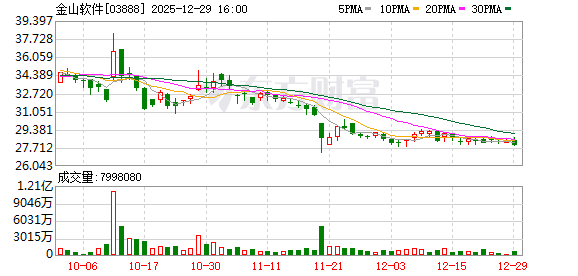
| 日期 | 回购股数(万股) | 回购最高价(港元) | 回购最低价(港元) | 回购金额(万港元) | | --- | --- | --- | --- | --- | | 2025.12.29 | 71.36 | 28.160 | 27.880 | 1999.66 | | 2025.12.24 | 35.22 | 28.460 | 28.260 | 999.62 | | 2025.12.23 | 70.84 | 28.380 | 28.140 | 1999.67 | | 2025.12.22 | 35.40 | 28.320 | 28.160 | 999.70 | | 2025.12.18 | 17.68 | 28.400 | 28.120 | 499.86 | | 2025.12.17 | 22.84 | 28.440 | 27.940 | 642.72 | | 2025.12.16 | 71.24 | 28.200 | 27.920 | 1999.81 | | 2025.12.15 | 70.28 | 28.620 | 28.260 | 1999.94 | | 2025.12.11 | 35.22 | ...
金山软件:金山办公授出合共66.9万股限制性股票
智通财经网· 2025-12-29 11:13
Core Viewpoint - Kingsoft Software (03888) announced a stock incentive plan to grant a total of 669,000 restricted shares to 47 participants, including key management and technical personnel, to recognize their contributions and retain talent within the company [1] Group 1 - The stock incentive plan is set to be executed on December 29, 2025 [1] - The grant price for each restricted share is set at RMB 150.56 [1] - The plan aims to reward and retain outstanding talents hired by Kingsoft Office Group [1]

金山软件(03888):金山办公授出合共66.9万股限制性股票
智通财经网· 2025-12-29 11:11
Core Viewpoint - Kingsoft Software (03888) announced a stock incentive plan to grant a total of 669,000 restricted shares to 47 participants, including key management and technical personnel, to recognize their contributions and retain talent [1] Group 1 - The stock incentive plan is set to be executed on December 29, 2025 [1] - The grant price for each restricted share is set at RMB 150.56 [1] - The plan aims to reward and retain outstanding talents within Kingsoft Office Group [1]
金山软件(03888.HK)根据2025年股票激励计划授予合共66.9万股限制性股票
Ge Long Hui· 2025-12-29 11:08
格隆汇12月29日丨金山软件(03888.HK)宣布,于2025年12月29日,金山办公董事会已决议根据金山办公 2025年股票激励计划预留授予,向47名激励参与者(包括金山办公多名核心管理人员及技术骨干)授予合 共669,000股限制性股票,授予价格为每股限制性股票人民币150.56元,以在表扬激励参与者所作的贡献 并留住金山办公集团所聘的优秀人才。 ...
金山软件(03888) - 按照金山办公二零二五年股票激励计划授予限制性股票
2025-12-29 11:02
香港交易及結算所有限公司及香港聯合交易所有限公司對本公告之內容概不負責,對其準確性或完整性亦不發表 任何聲明,並明確表示,概不對因本公告全部或任何部分內容而產生或因依賴該等內容而引致之任何損失承擔任 何責任。 根據金山辦公二零二五年股票激勵計劃授予的限制性股票 董事會宣佈,於二零二五年十二月二十九日,金山辦公董事會已決議根據金山辦公二 零二五年股票激勵計劃預留授予,向47名激勵參與者(包括金山辦公多名核心管理人員 及技術骨幹)授予合共669,000股限制性股票,授予價格為每股限制性股票人民幣150.56 元,以在表揚激勵參與者所作的貢獻並留住金山辦公集團所聘的優秀人才。 1 Kingsoft Corporation Limited 金山軟件有限公司 (於開曼群島持續經營的有限公司) (股份代號:03888) 按照金山辦公二零二五年股票激勵計劃 授予限制性股票 本公告乃由金山軟件有限公司(「本公司」,連同其附屬公司,統稱「本集團」)根據香港聯 合交易所有限公司證券上市規則(「上市規則」)第17.13及17.06A條而作出。 茲提述(i)本公司日期為二零二五年四月三十日的通函(「該通函」);(ii)本公司日期為二 ...