AI原生游戏

Search documents
中金 | AI文娱观察:从世界模型出发,再论AI对游戏行业的影响
中金点睛· 2026-03-25 10:43
Core Viewpoint - The market has overestimated the short-term disruptive power of AI models on the gaming industry while underestimating their long-term empowering value as tools [1][4]. Group 1: AI Models and Their Impact on Gaming - Current world models like Genie3 are still in early application stages, providing localized empowerment primarily in pre-research and 3D asset production, rather than serving as comprehensive game foundations [2][7]. - The most immediate impact of AI technology will be on standardized outsourcing services within the gaming industry, such as art asset production and basic audio recording [2][33]. - Head gaming companies maintain strong content moats, and those adept at leveraging AI for creative processes and IP management are likely to sustain competitive advantages in the ongoing transformation [2][36]. Group 2: Commercialization Pathways - AI models like Genie3 could be commercialized directly to consumers as "AI Native Games," or integrated as "super engine plugins" within existing frameworks like Unreal and Unity [5][29]. - The market should not be overly concerned about "disruption," as the fundamental logic of game production remains unchanged; human creativity will continue to determine content value [5][29]. Group 3: Development Directions for World Models - World models are expected to evolve into single-scene generation tools rather than comprehensive game bases, with their application likely to improve over time [15][20]. - The technology has reached a usable threshold, but further enhancements in functionality and usability are necessary for broader application in gaming [20][21]. Group 4: Industry Dynamics and Profit Pools - The gaming industry's profit pools are likely to shift towards upstream creative and management segments, with standardization in outsourcing facing pressure from AI capabilities [33][34]. - Companies that can effectively integrate AI tools into their creative processes and maintain strong IP and gameplay advantages are expected to thrive [36][37]. Group 5: Opportunities and Challenges for Smaller Developers - Smaller developers may benefit from reduced barriers to entry and increased creative potential due to AI tools, but they also face challenges from intensified competition and content homogenization [45][46]. - The essence of the gaming industry remains creativity-driven, and smaller firms that can respond quickly and leverage unique user insights may find structural opportunities [46].


不卷通用大模型,网易AI的“错位”生存法则
Sou Hu Cai Jing· 2026-02-12 20:08
Core Viewpoint - The article discusses how NetEase has chosen a pragmatic approach in the AI era, avoiding the costly competition of developing general-purpose AI models while focusing on application-level innovations and maintaining a strong R&D investment [3][20]. Group 1: Market Context - During the recent Spring Festival, major tech companies like Alibaba, Tencent, ByteDance, and Baidu spent over 4.5 billion yuan on "red envelopes," marking one of the most expensive tech competitions in history [2]. - NetEase, however, did not participate in this "red envelope war" or the race for large AI models, leading to questions about whether it is falling behind in the AI era [2][3]. Group 2: Business Strategy - NetEase's strategy is characterized by a focus on practical applications rather than competing in the foundational AI model space, which is seen as a more sustainable approach for most companies [3][20]. - The company has maintained a consistent R&D expenditure of over 15% of its revenue, with a projected R&D budget of 17.7 billion yuan for 2025, focusing on application layers rather than general model training [4][20]. Group 3: AI Integration in Products - NetEase has developed thousands of AI production pipelines that enhance various aspects of game development, achieving significant efficiency improvements, such as a 70% increase in design efficiency and a 50% boost in development efficiency through AI tools [6][8]. - The company has also applied AI in its educational and music platforms, enhancing user experience and operational efficiency without pursuing a general-purpose model [6][8]. Group 4: Financial Performance - In 2025, NetEase's total revenue is expected to reach 112.6 billion yuan, with operating profit at 35.8 billion yuan, driven primarily by its gaming segment, which saw a net revenue increase of 11% year-on-year [13][20]. Group 5: Future Growth Potential - The potential for growth in the gaming industry is seen in AI-native games, which are expected to generate over 30 billion yuan by 2027, contributing to a 10% market increase [13][20]. - NetEase's focus on integrating AI into its gaming products positions it well to capitalize on this emerging market, as it transitions from traditional gaming to AI-driven experiences [13][20].

游戏ETF(516010)上一交易日资金净流入超5000万元,市场关注行业多重机遇
Mei Ri Jing Ji Xin Wen· 2025-12-31 04:51
Group 1 - The core viewpoint indicates that the domestic gaming market in China is expected to grow by 7.68% year-on-year by 2025, with the industry entering a phase of refined operations under the normalization of license issuance [1] - The gaming landscape is characterized by a dominance of leading companies alongside emerging players in niche segments, with a focus on lightweight casual products, while mid-to-heavyweight and AI-native games still require breakthroughs [1] - The integration of virtual reality technology with the film industry is accelerating, exemplified by the establishment of China's first virtual reality cinema, which promotes content creation and the construction of an industry closed loop [1] Group 2 - The gaming ETF (516010) tracks the anime and gaming index (930901), which selects listed companies involved in game development, operation, anime production, and derivative product development from the Shanghai and Shenzhen markets to reflect the overall performance of these securities [1] - This index focuses on the anime and gaming industry chain, fully reflecting the high growth and innovative characteristics of the industry [1]
游戏行业赚快钱的时代结束了
Di Yi Cai Jing· 2025-12-30 05:45
Core Insights - The Chinese gaming industry in 2025 is characterized by a complex landscape of "recovery" and "internal competition," with market revenue exceeding 350 billion yuan and user base surpassing 680 million, indicating a year of continued recovery despite intense competition [3][4][12] - The industry is experiencing a significant market divide, with the "winner-takes-all" trend intensifying, leading to a situation where a few leading companies dominate the market, while smaller teams find new opportunities in single-player and AI-native games [3][10][12] Market Performance - In 2025, the domestic gaming market revenue is approximately 350.8 billion yuan, reflecting a year-on-year growth of 7.7%, while the user base has grown by 1.4% to over 680 million [4][5] - Self-developed games have generated overseas revenue of about 20.46 billion USD, maintaining a scale exceeding 100 billion yuan for six consecutive years [4][5] - Despite the overall upward trend in the gaming and esports industry, the market has entered a phase of stock competition, with a saturated user base and increased self-developed game output [4][5] Industry Challenges - The competition among gaming companies has intensified, with many projects failing despite significant investments, as seen with NetEase's "射雕" and Kingsoft's "解限机," which faced substantial player drop-off and negative feedback [5][6] - The cost of developing successful mobile games has increased significantly, making it harder for companies to achieve profitability [6][9] Market Dynamics - The market recovery is largely driven by a few top-tier games from leading companies like Tencent and NetEase, which dominate the revenue charts [7][9] - Tencent's gaming revenue reached 636 billion yuan in Q3 2025, with total revenue for the first three quarters exceeding 1.8 trillion yuan, solidifying its position in the market [9][10] Future Trends - The rise of single-player games is a notable trend, with companies increasingly focusing on high-quality, creative content rather than just marketing [12][13] - AI technology is emerging as a potential game-changer, offering new opportunities for smaller developers to compete by lowering development costs and enhancing creativity [11][15] - The industry is expected to enter a new "golden decade" of growth, driven by improved game quality, expanded overseas markets, and supportive policies [12][15]

游戏行业赚快钱的时代结束了
第一财经· 2025-12-30 05:30
Core Viewpoint - The Chinese gaming industry in 2025 is characterized by a complex landscape of "recovery" and "internal competition," with market revenue exceeding 350 billion yuan and user base surpassing 680 million, yet competition remains fierce and profitability increasingly challenging [3][4]. Market Overview - The domestic gaming market revenue for 2025 is approximately 350.8 billion yuan, reflecting a year-on-year growth of 7.7%, while the user base has grown by about 1.4% to over 680 million [4]. - Self-developed games have generated overseas revenue of approximately 20.46 billion USD, maintaining a scale exceeding 100 billion yuan for six consecutive years [4]. - The industry has entered a phase of stock competition, with a saturated user base and a significant increase in self-developed game output, leading to heightened competition among companies [4][5]. Industry Trends - The gaming industry is experiencing a trend of increasing investment in research and development, particularly in art and quality, but the risk of failure for new games is rising due to intense competition in the stock market [4][5]. - The "winner-takes-all" phenomenon is intensifying, with top companies capturing a larger market share, leading to a shift from the "80/20 rule" to a potential "90/10 rule" in the industry [8][12]. Company Performance - Tencent's gaming revenue for Q3 2025 exceeded 63.6 billion yuan, marking a significant milestone, while NetEase's gaming revenue surpassed 70 billion yuan in the same period, indicating stable growth [10][11]. - The top ten mobile games in terms of revenue are dominated by Tencent, which has seven titles in the list, showcasing its strong market position [9][10]. New Opportunities - The rise of single-player games is a notable trend, with companies increasingly investing in AAA titles following the success of "Black Myth: Wukong," indicating a structural opportunity in the gaming industry [12][13]. - AI-native games are emerging as another exploration direction, with companies like miHoYo leading the way in integrating AI into game narratives, suggesting a potential shift in game development dynamics [14][15]. Future Outlook - The gaming industry is expected to enter a new "golden decade" of growth, driven by improved game quality, expanded overseas market pathways, and supportive policies, marking a transition from rapid growth to a focus on creativity and technology [15][16].


单机崛起、AI破局,游戏行业赚快钱的时代结束了
Di Yi Cai Jing· 2025-12-30 03:24
Core Insights - The Chinese gaming industry in 2025 is characterized by a complex landscape of "recovery" and "internal competition," with market revenue exceeding 350 billion yuan and user base surpassing 680 million, indicating a year of continued recovery despite intense competition [1][2] - The industry is experiencing a significant market divide, with the "winner-takes-all" trend intensifying, leading to a shift from the "80/20 rule" to a "90/10 rule," where a few dominant players capture most of the market share [1][6][8] - The industry is transitioning from a focus on quantity to quality, with an emphasis on creativity and innovation, marking the beginning of a new growth cycle for the Chinese gaming sector [1][9][10] Market Performance - In 2025, the domestic gaming market revenue is approximately 350.8 billion yuan, reflecting a year-on-year growth of 7.7%, while the user base has grown by 1.4% [2] - Self-developed games have generated overseas revenue of about 20.46 billion USD, maintaining a scale exceeding 100 billion yuan for six consecutive years [2] - Tencent and NetEase dominate the market, with their combined revenue exceeding 250 billion yuan in the first three quarters of 2025, solidifying their "duopoly" status [7] Industry Challenges - The gaming industry is facing heightened competition in a saturated market, with many new products vying for limited user attention, leading to increased failure rates for new game launches [2][3] - Major companies are investing heavily in R&D to meet rising player expectations, but the intense competition in the existing market makes success increasingly difficult [2][4] - Notable failures include NetEase's "The Legend of the Condor Heroes" mobile game, which was shut down after only 600 days of operation, highlighting the risks associated with high-budget projects [3] Trends and Opportunities - The rise of single-player and AI-native games presents new opportunities for smaller teams to break through in the competitive landscape [1][10] - The success of titles like "Black Myth: Wukong" has catalyzed a shift towards high-quality, creative gaming, with increased investment in AAA games from both startups and established companies [9][10] - AI technology is emerging as a significant factor in game development, potentially lowering costs and enhancing creativity, which could benefit smaller developers [8][11] Future Outlook - The Chinese gaming industry is poised for a new "golden decade" of growth, driven by improved game quality, expanded overseas opportunities, and supportive government policies [1][10] - The market is expected to evolve from rapid growth to a focus on creative and technological advancements, moving away from quick profits to sustained endurance [12]
复盘三体CEO投毒案:每个细节都比小说更令人震惊
首席商业评论· 2025-11-26 04:08
Core Viewpoint - The legal case surrounding the poisoning incident involving Xu Yao, former CEO of SanTi Company, has concluded with the Shanghai High People's Court upholding the death sentence for Xu Yao, marking the end of a five-year legal saga that has captivated public attention [2][6]. Case Details - Xu Yao meticulously planned the poisoning, utilizing forged seals and renting secret storage to acquire various toxic substances, spending hundreds of thousands on these materials [4][8]. - The case began in December 2020, but preparations started as early as May 2020, when Xu began researching lethal toxins and their effects, indicating a premeditated approach to his crime [7][8]. - Xu's actions escalated to the point where he created a fully equipped "toxic laboratory" in a warehouse, where he conducted experiments with various poisons [8][9]. Background of Xu Yao - Xu Yao, originally from Guiyang, graduated from prestigious law schools in France and the United States, and had a successful career in law before joining Youzu Network [10][12]. - His aggressive ambition led to conflicts within the company, ultimately resulting in his dismissal and subsequent resentment towards the company's chairman, Lin Qi [12][15]. Impact on Youzu Network - Following Lin Qi's death from poisoning, Youzu Network's stock price plummeted, and the company faced significant financial losses, with a reported 11.75% decline in revenue and a staggering 522% drop in net profit in 2024 [18][19]. - The company underwent a major restructuring, with new leadership and a focus on revitalizing its operations, leading to a remarkable recovery in profits by 989% in the first half of 2025 [20][21]. Future of the "Three-Body" IP - The "Three-Body" IP, which had been a focal point for Youzu, is now being developed through partnerships and licensing, with successful adaptations like the Chinese and English series gaining popularity [22][24]. - Youzu is also exploring innovative gaming experiences, such as "My Three-Body: 2277," which incorporates AI to enhance player engagement [24]. - The company is attempting to shed its negative reputation while leveraging the "Three-Body" IP to establish a more robust market presence, emphasizing the need for a shift in corporate values alongside business transformation [27].

发力“游戏+脑机”三七互娱再出手投资
Xin Lang Cai Jing· 2025-11-21 00:13
Core Insights - Sanqi Interactive Entertainment has made a strategic investment of $20 million in BrainCo, aiming to explore the commercialization of brain-computer interface (BCI) technology in entertainment and XR fields [1] - The partnership is expected to enhance the application of BCI technology, which has a potential market size reaching trillions [1] - Sanqi Interactive has previously invested in the BCI sector, indicating a long-term commitment to this technology as a new generation of human-computer interaction [1][2] Investment Details - The investment in BrainCo is part of Sanqi Interactive's broader strategy to integrate technology into its core gaming business [1] - BrainCo specializes in non-invasive BCI technology and has developed various smart products, including bionic limbs and sleep aids [1] - The collaboration aims to enrich the consumer application matrix, enhancing user interaction in gaming and entertainment [1] Market Trends - The BCI technology is transitioning from laboratory research to industrial application, with significant policy support in China [2] - The market is witnessing a shift towards non-invasive BCI solutions, contrasting with the invasive approaches seen in companies like Neuralink [2] - The gaming industry is poised to leverage BCI technology to create new interactive experiences and potentially new game genres [2]

独家丨原生AI游戏《遥远行星:建造师》将于2025Q4上线试玩版,制作人系原腾讯极光计划发行制作人
雷峰网· 2025-10-29 00:40
Core Viewpoint - The article discusses the emergence of AI-native games, highlighting the upcoming release of "Distant Planet: Builder" by Guangzhou Gedao Technology, which is set to launch a beta version in Q4 2025. The game represents a significant step in the gaming industry's "AI revolution" [2][5]. Group 1: AI in Gaming - The gaming industry is experiencing a dual approach to AI integration: enhancing efficiency and decision-making on the supply side, and exploring gameplay innovations through generative AI models [2]. - Major gaming companies are leveraging AI tools to improve efficiency in game development, transitioning from single models to mature platforms [2]. - Independent game teams are primarily focused on exploring unique gameplay experiences based on AI, as large companies have not yet established successful precedents in this area [2]. Group 2: Company Background - Liu Han, the head of Guangzhou Gedao Technology, has a background in developing popular games like "Invisible Guardian" and "My Hero" while working with Tencent's Aurora Plan before founding Gedao Technology in 2024 [3]. - The parent company, Superparameter Technology, established in 2019, focuses on game AI-related businesses and aims to empower more game developers through AI technology [5]. Group 3: Game Features - "Distant Planet: Builder" is a simulation game centered on space exploration and civilization building, featuring over 600 AI NPCs that interact with players in an AI-generated world [5]. - The AI in the game is designed to have autonomous goals, memory, and emotions, differentiating it from traditional scripted programs [5]. - Liu Han envisions AI transitioning from a "production tool" to a "service tool" in gaming, enhancing gameplay and content to provide new experiences for players [7]. Group 4: Market Outlook - The gaming industry is expected to see multiple AI-native games launched between late 2023 and mid-2024, aiming to replace some manually created gameplay elements and narratives with AI capabilities [7]. - "Distant Planet: Builder" is anticipated to be one of the first AI-driven game projects to launch, marking a new beginning in the exploration of AI-driven gameplay and development paradigms [7].

2025倒计时100天,腾网米都押注的赛道咋就火不起来?
3 6 Ke· 2025-09-23 09:59
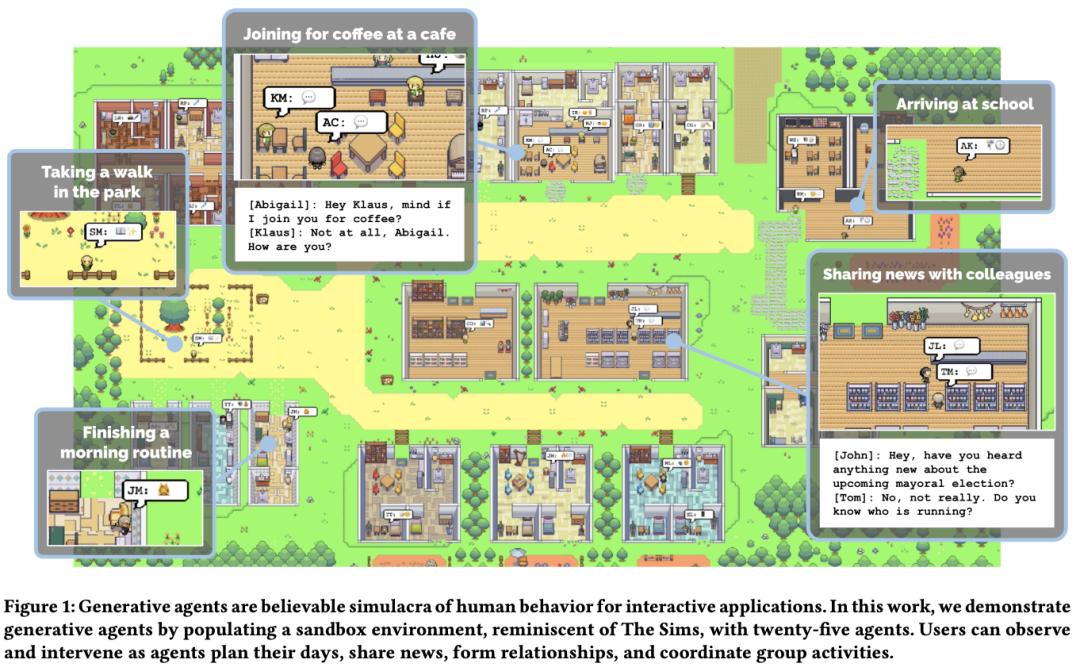
Core Insights - In 2023, generative AI began to gain traction in the gaming market, with major domestic companies establishing independent AI departments to enhance 3D asset production and development efficiency [1] - By 2024, the gaming industry recognized AI as a clear monetization path, with 49% of game developers admitting to using generative AI in their daily work [3] - The emergence of AI-native games and the integration of AI features into existing products are expected to accelerate by 2025, with significant advancements in AI technology [3][4] Group 1: AI Development in Gaming - Major companies like Tencent and NetEase have set up dedicated AI labs to explore AI applications in gaming [1] - Smaller firms are forming AIGC research teams, often consisting of fewer than 10 members, to experiment with AI technologies [1] - The academic community contributed to the concept of AI-native games, exemplified by Stanford's "Smallville" project, which showcased AI-driven NPCs in a virtual community [1] Group 2: Market Trends and Future Projections - The gaming industry is expected to see a significant shift towards AI-native games and AI-enhanced gameplay by 2025, with new tools and engines being developed [3][4] - The introduction of AI tools is anticipated to improve efficiency in game development, with reports of up to 50% efficiency gains in art production and community management [18][22] - The integration of AI into user-generated content (UGC) platforms is seen as a way to enhance player creativity and extend game lifecycles [20][25] Group 3: Emotional Companionship and Player Engagement - AI-driven emotional companionship is viewed as a promising direction for game development, though challenges remain regarding technology and compliance [5][7] - The market for AI companionship products is divided, with male-oriented products facing regulatory challenges, leading to a predominance of small companies in this space [8][11] - AI companionship products are still largely in the testing phase, with no clear commercial model established yet [17][18] Group 4: Perspectives from Industry Professionals - Industry professionals express optimism about AI's potential in gaming, with larger companies taking a cautious approach while smaller teams are more willing to experiment [26][28] - There is a divide in opinions regarding the concept of AI-native games, with some believing in its potential while others view it as a challenging proposition [32][33] - The future of AI in gaming is seen as a blend of creativity and technology, with the possibility of creating dynamic, evolving game worlds driven by AI [28][34]