
AWS

Search documents
X @mert | helius.dev
mert | helius.dev· 2025-10-22 13:37
RT The Chopping Block (@_choppingblock)zcash up 5x and suddenly everyone’s a privacy expert.@0xMert_ joins to discuss:🤑 Tempo’s ~$5B val; Dankrad exit⚖️ public-goods vs profit🔌 AWS/Base outageTimestamps00:00 Intro01:22 Mert: Madman of Solana & Now Zcash05:20 Bitcoin vs. Zcash: A Philosophical Clash14:35 Tempo Fundraise & Ethereum's Talent Exodus33:05 Ethereum's Social Layer & Public Goods34:45 Religious Priesthood in Crypto41:01 USDmanlet Proposal & Stablecoin Coordination49:32 AWS Outage & Its Impact on Cr ...
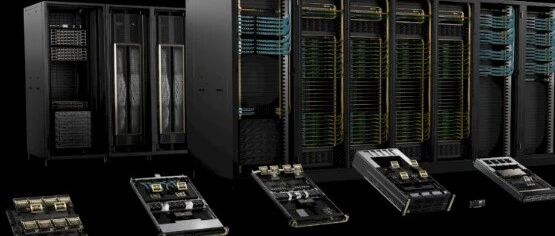
OCP大会焦点:制造和封装已大幅扩产,AI芯片瓶颈转向下游,包括内存、机架、电力等
美股研究社· 2025-10-22 10:09
Core Insights - The AI semiconductor industry is expected to experience significant growth in 2026, with a shift in investment logic from upstream to downstream infrastructure [2][10] - The bottleneck in AI development has transitioned from chip manufacturing and packaging to downstream components such as data center space, power supply, and cooling systems [2][5] Upstream Capacity No Longer the Sole Bottleneck - Chip manufacturing and packaging have significantly expanded, alleviating previous supply concerns [4] - TSMC reported stronger-than-expected AI demand and a quick ramp-up in CoWoS capacity, indicating flexibility in the supply chain [4] - Despite ongoing tightness in advanced node wafer front-end capacity, AI semiconductors are prioritized over other applications like cryptocurrency ASICs [4] Bottleneck Shift - The current constraints are now focused on data center space, power availability, and supporting infrastructure, which have longer construction cycles than chip manufacturing [6] - The deployment of large-scale GPU clusters presents challenges in power consumption and heat dissipation, leading to a shift towards liquid cooling and high-voltage direct current (HVDC) solutions [6] Storage and Memory - AI workloads demand high-speed data storage and access, with companies like Meta opting for QLC NAND flash for cost efficiency [8] - The global demand for HBM (High Bandwidth Memory) is projected to surge, with NVIDIA expected to consume 54% of the total HBM by 2026 [8] Racks and Networking - OCP has introduced standardized blueprints for "AI Open Data Centers" and "AI Open Cluster Designs" to facilitate large-scale deployments [9] - Companies like Alibaba are focusing on pluggable optics for their cost-effectiveness and flexibility, while new technologies like CPO/NPO are gaining attention [9] Demand Forecast Indicates Explosive Growth for Downstream Components - Global cloud service capital expenditure is expected to grow by 31% in 2026, reaching $582 billion, significantly exceeding market expectations [11] - AI server capital expenditure could see approximately 70% year-over-year growth if its share in overall capital spending increases [11] AI Chip Demand Breakdown - NVIDIA is projected to dominate the CoWoS capacity consumption with a 59% share, followed by Broadcom, AMD, and AWS [12] - In AI computing wafer consumption, NVIDIA leads with a 55% share, followed by Google, AMD, and AWS [12] Investment Focus Shift - The signals from the OCP conference and industry data indicate a new direction for AI hardware investment, emphasizing the importance of downstream infrastructure [13] - Investors are encouraged to broaden their focus from individual chip companies to the entire data center ecosystem, identifying key players in power, cooling, storage, memory, and networking [13]



Bloom Energy: From Clean Tech To AI Titan (NYSE:BE)
Seeking Alpha· 2025-10-22 06:59
Core Insights - Bloom Energy is positioned as a leading player in AI infrastructure, particularly due to its solid oxide fuel cells that provide clean, modular, and deployable power, catering to the needs of hyperscalers like Oracle and AWS [1] Group 1: Investment Strategy - Pythia Research focuses on identifying multi-bagger stocks in the technology sector, utilizing a blend of financial analysis, behavioral finance, psychology, social sciences, and alternative metrics to evaluate companies with high conviction and asymmetric risk-reward potential [1] - The approach emphasizes uncovering breakout opportunities before they gain mainstream attention, navigating market sentiment, and identifying emerging trends [1] - The strategy acknowledges that market movements are influenced by perception, emotion, and bias, rather than solely on fundamentals [1] Group 2: Market Behavior Analysis - Investor behavior, such as anchoring to past valuations and herd mentality, creates persistent inefficiencies that can signal the start of a breakout [1] - The analysis of psychological noise is crucial; when volatility arises, it is important to determine if it is driven by emotion or fundamentals [1] - Status quo bias and fear of uncertainty can hinder recognition of companies that are redefining their categories and have unconventional growth paths [1] Group 3: Research Methodology - The research process involves deep analysis and signals that others may overlook, such as shifts in narrative, early social traction, founder-driven vision, or underappreciated momentum in user adoption [1] - These signals are often precursors to exponential growth if identified early [1] - The focus is on conviction plays with a favorable risk/reward profile, aiming for limited downside and explosive upside [1]


当前Agent赛道:热度之下隐现落地难题,如何破局?
雷峰网· 2025-10-22 00:51
Core Viewpoint - The article discusses the rapid development and challenges of the Agent application market, highlighting the divergence of leading players into two distinct paths: full-stack AI service providers and specialized players focusing on vertical markets [1][4][11]. Group 1: Market Overview - The Agent application market is predicted to reach $27 billion in China by 2028 according to IDC [3]. - The current landscape shows a surge in investment and competition among companies eager to adopt Agent technology [2]. Group 2: Player Strategies - Major players in the Agent space include AI giants and cloud service providers, who are lowering the barriers for enterprises to adopt Agent technology [6][7]. - AI giants like OpenAI leverage their foundational model capabilities to gain a first-mover advantage, while cloud providers like Google and AWS are focusing on comprehensive solutions for enterprise Agent development [8][9]. Group 3: Application Scenarios - The primary application scenarios for Agents in enterprises include processing complex multi-modal content, interactive scenarios like chatbots, and high-value intelligent inspection and risk control [15]. - The consumer electronics industry has been the first to adopt Agent technology, with traditional sectors like agriculture gradually following suit [15]. Group 4: Technical Challenges - There are significant technical challenges in the deployment of Agents, including issues with model hallucination, multi-modal integration, and memory management [16]. - The integration of Agents with existing enterprise systems like ERP and CRM is complex, and the need for multi-Agent collaboration is becoming increasingly important [17][18]. Group 5: Solutions for Implementation - To overcome the challenges of Agent deployment, continuous technological innovation is essential, focusing on enhancing model capabilities and system engineering [22]. - The industry is exploring new development paradigms to improve the breadth and depth of Agent tasks, with protocols like MCP and A2A being tested to facilitate communication between different Agents [23][24]. Group 6: Industry Collaboration - Collaboration between vendors and enterprises is crucial for successful Agent implementation, with a focus on aligning business needs with Agent technology [25]. - The sharing of experiences and best practices among developers is encouraged to address complex scenarios and improve Agent development [26].

大摩上调中芯国际、目前瓶颈不在台积电
傅里叶的猫· 2025-10-21 15:34
Group 1 - Morgan Stanley upgraded SMIC's rating, raising the target price from HKD 40 to HKD 80, anticipating an expansion in leading edge capacity and resolution of equipment bottlenecks [2] - Chinese mobile announced plans to deploy 100,000 local GPU networks by 2028, leading to an updated revenue forecast for China's AI GPU market, projected to reach RMB 113 billion in 2026 and RMB 180 billion in 2027, with a compound annual growth rate of 62% [2] - The report indicates that while NVIDIA's market share in China is nearly zero, there are still opportunities for local suppliers to fill the gap, particularly in AI high-performance computing and other semiconductor demands [2] Group 2 - The bottleneck in the semiconductor market is not expected to be TSMC's capacity but rather specific memory or server rack components, with TSMC reporting stronger-than-expected AI demand [3] - AI cluster sizes are moving towards over 100,000 GPUs, driving new standards in Ethernet design and liquid cooling for AI racks [3] - The semiconductor supply chain is projected to expand significantly by 2026, with a focus on CPO and NAND module manufacturers [4] Group 3 - Global CoWoS consumption is expected to reach 1,154k wafers in 2026, with NVIDIA holding a 59% market share, and HBM consumption projected at 2.6 billion GB [5] - AI capital expenditures remain strong, with cloud capex expected to reach USD 582 billion in 2026, reflecting a 31% annual growth [5] - AI GPU and ASIC rental prices have seen slight declines, but demand for AI inference in China remains robust, indicating a positive outlook for the AI supply chain [5]

CoreWeave CEO says AI right now is not what a bubble looks like
Youtube· 2025-10-21 13:52
Core Insights - The demand for computing services remains strong and is expected to continue growing, with companies struggling to keep up with this demand [2][3] - Concerns about an AI bubble are being discussed, but the influx of investment from major companies like Microsoft, OpenAI, Google, and AWS indicates a healthy market rather than a bubble [4][6] - The narrative around circular investing is viewed as misleading; while there are choke points in the industry, they do not equate to systemic issues [9][10] Company-Specific Analysis - CoreWeave has raised over $25 billion, and its debt structure is designed to support its business model, where clients sign contracts that back the debt incurred [11][15] - The company is experiencing rapid revenue growth but is currently operating at a loss, raising questions about the sustainability of its debt load [12][14] - The long-term strategy involves hyperscalers building some of their infrastructure in-house while still relying on third-party services like those provided by CoreWeave [17][18]


Miller: Bad news is good news and good news is good news for the cyber sector
CNBC Television· 2025-10-21 11:42
Nathan Miller, Vice President at Amplify ETFs, says outages spotlight cybersecurity’s importance, boosting sector demand while cloud contracts remain sticky despite AWS disruptions. ...

OCP大会焦点:制造和封装已大幅扩产,AI芯片瓶颈转向下游,包括内存、机架、电力等
硬AI· 2025-10-21 10:26
Core Insights - The core argument of the article is that the bottleneck in AI development has shifted from chip manufacturing and packaging to downstream infrastructure, including data center power supply, liquid cooling, high bandwidth memory (HBM), server racks, and optical modules [2][4][9]. Upstream Capacity Expansion - Chip manufacturing and packaging have significantly expanded, alleviating previous concerns about supply shortages [5][6]. - TSMC has reported strong AI demand and is working to close the supply-demand gap, with a lead time of only six months for expanding CoWoS capacity [6][9]. - The report predicts that global CoWoS demand will reach 1.154 million wafers by 2026, a 70% year-on-year increase, indicating a robust supply response [6][12]. Downstream Infrastructure Challenges - As chip supply is no longer the main issue, the focus has shifted to the availability of data center space, power, and supporting infrastructure, which have longer construction cycles than chip manufacturing [9][12]. - The deployment of large-scale GPU clusters presents significant challenges in power consumption and heat dissipation, leading to a preference for liquid cooling solutions and high-voltage direct current (HVDC) power supply systems [9][12]. - The demand for HBM is expected to explode, with global consumption projected to reach 26 billion GB by 2026, with NVIDIA alone accounting for 54% of this demand [9][12]. Investment Opportunities - The shift in focus towards downstream infrastructure opens new investment opportunities beyond traditional chip manufacturers, emphasizing the importance of companies that excel in power, cooling, storage, memory, and networking [12][13]. - Global cloud service capital expenditure is expected to grow by 31% to $582 billion by 2026, significantly higher than the market's general expectation of 16% [12]. - AI server capital expenditure could see approximately 70% year-on-year growth if AI servers' share of capital expenditure increases [12][13].

X @Wendy O
Wendy O· 2025-10-20 19:39
BREAKING:HEDERA DID NOT GO DOWN WITH THE LATEST AWS ATTACK!brady 🌴 (@bmgentile):major @awscloud outage observed today — where “decentralized” L1/L2 networks with an over-reliance on AWS for node ops experienced downtime🌐 the @hedera network did not have this problem… check out this blog I wrote in 2023 as to “why”🔗https://t.co/ApXBXV74T3 https://t.co/Maf7ehw2CG ...
X @ShapeShift
ShapeShift· 2025-10-20 17:58
ShapeShift unaffected by AWS outage.Decentralized frontends ftw.DAOs still work 🦊Heidi (@blockchainchick):AWS going down is showing which projects are actually decentralized 😆 ...