GE HealthCare Technologies Inc.

Search documents
GPS,集体失速!
第一财经· 2025-07-10 15:35
Core Viewpoint - The article discusses the challenges faced by major medical device companies, specifically Philips, GE Healthcare, and Siemens Healthineers (collectively referred to as GPS), in the Chinese market and globally due to trade wars and increasing competition. The companies are focusing on localization and adapting their strategies to navigate these challenges effectively [1][3][5]. Group 1: Market Challenges - In 2024, Philips experienced a double-digit revenue decline in the Chinese market, a trend mirrored by GE Healthcare and Siemens Healthineers [1][5]. - The trade war has significantly impacted GPS, with GE Healthcare estimating a loss of approximately $380 million due to tariffs by 2025, while Philips anticipates losses between €250 million to €300 million [4][5]. - The overall market environment is characterized by intensified competition, price pressures, and the need for strategic adaptation in response to new tariffs [5][14]. Group 2: Localization Efforts - Philips has achieved over 95% of its products being manufactured locally in China, positioning the country as a key supply chain and manufacturing hub [7][8]. - GE Healthcare emphasizes the importance of localizing every component, not just the equipment, to enhance supply chain resilience and quality [9][10]. - Both companies recognize the necessity of building local ecosystems and training talent to support their localization strategies [10][11]. Group 3: Competitive Landscape - Local Chinese companies like United Imaging, Neusoft, and Mindray are emerging as strong competitors, moving beyond imitation to innovation and price competition [14]. - The growing demand for healthcare solutions in China, driven by an aging population and increasing chronic diseases, presents ongoing market opportunities for GPS [14][15]. - The companies are adapting their strategies to focus on specific market segments rather than attempting to cover all areas, indicating a more targeted approach to competition [15].




全球贸易版图重构,GPS失灵了吗? | 海斌访谈
Di Yi Cai Jing· 2025-07-10 13:20
Core Insights - Philips is facing significant challenges in the Chinese market, with a double-digit revenue decline reported in 2024, coinciding with the appointment of a new president for the Greater China region [1][4] - The global medical device market, particularly for major players like GE Healthcare, Siemens Healthineers, and Philips (collectively referred to as GPS), is under pressure due to trade wars and tariffs, impacting their financial performance [3][6] - The need for localization and supply chain resilience is emphasized, with Philips aiming for over 95% of its products to be manufactured locally in China, despite some core components still being imported [8][9] Market Performance - In 2024, GE Healthcare's revenue in China declined by 15%, while Siemens Healthineers reported a 14% drop in the same period, indicating a broader trend of revenue challenges among GPS companies in the region [5][12] - Philips anticipates continued revenue decline in the Chinese market into 2025, projecting a mid-single-digit percentage drop [4][12] Strategic Responses - Philips is focusing on increasing localization and integrating into the Chinese ecosystem, with plans to enhance local production capabilities and reduce reliance on imports [8][10] - The company has appointed a new Chief Competitiveness Officer to drive innovation and improve product competitiveness in response to local market dynamics [12][14] Competitive Landscape - Local Chinese medical device companies are emerging as strong competitors, with firms like United Imaging, Neusoft Medical, and Mindray gaining traction and challenging established players [12][14] - The competitive environment is expected to intensify, with price pressures and increased competition being common challenges faced by all GPS companies [6][12] Future Outlook - The Chinese market is viewed as a significant growth opportunity due to its large population and increasing healthcare demands, particularly in chronic disease management [12][13] - Despite current challenges, the long-term outlook for the medical device industry in China remains positive, with companies encouraged to adapt and innovate to meet evolving market needs [13][14]
"灯塔"领航:全球制药和医疗器械企业的领先实践及启示
麦肯锡· 2025-07-10 01:52
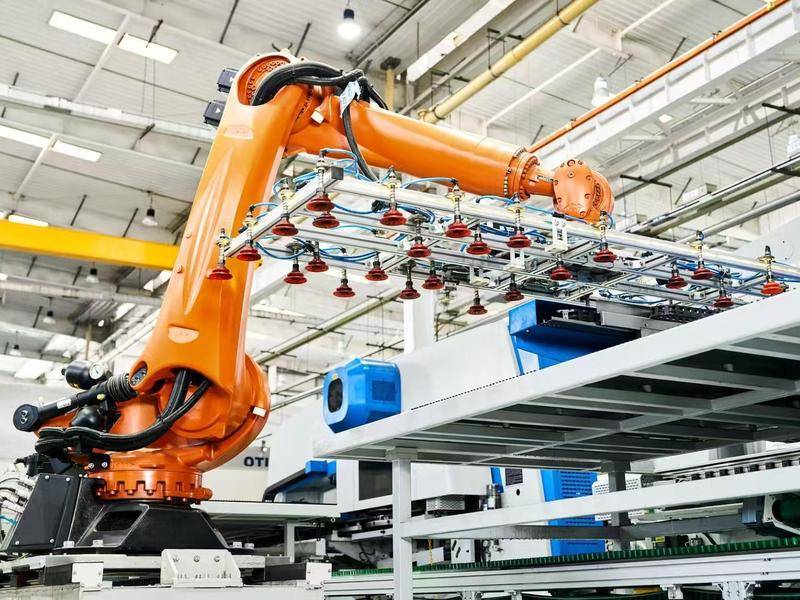
Core Viewpoint - The global lighthouse network initiative represents the highest level of intelligent manufacturing and digitalization in today's global manufacturing industry, with "lighthouse factories" serving as exemplary models for digital manufacturing and Industry 4.0, supported by policies at national and local levels for smart manufacturing upgrades and high-quality development [1]. Group 1: Trends in Lighthouse Factories - Trend 1: "The Stronger Get Stronger" - Companies that already possess "lighthouses" can rapidly deploy new digital use cases at scale due to their established production operation networks and systematic capabilities [2]. - Trend 2: AI Empowerment - The integration of analytical and generative AI in lighthouse factories has become more significant, enhancing value creation across the entire value chain, including asset management, resource management, quality management, workforce empowerment, product development, and supply chain planning [3]. - Trend 3: Internal and External Learning - Lighthouse factories learn from the successful experiences of other factories while also enhancing their internal capabilities for deploying digital and AI solutions, leading to long-term digital transformation [4]. Group 2: Lighthouse Factories in the Pharmaceutical Industry in China - There are currently 189 lighthouse factories globally, with 23 in the pharmaceutical and medical device sector, accounting for 12%. In the past two years, three new lighthouse factories in this sector have been certified in China [5]. - Case Study 1: Johnson & Johnson's Xi'an Factory - This factory, which serves the Chinese and Asian markets, has implemented advanced technologies to enhance agility, quality standards, and competitiveness, resulting in a 64% reduction in product transfer time, a 60% decrease in non-conforming products, a 40% increase in productivity, and a 24% reduction in operational costs [6][7]. - Case Study 2: AstraZeneca's Wuxi Factory - This factory has achieved a 55% increase in overall output, a 44% reduction in delivery cycles, and an 80% decrease in non-perfect batches through the deployment of over 30 digital use cases, including AI and computer vision [11]. - Case Study 3: GE Healthcare's Beijing Factory - This factory has successfully implemented 45 digital solutions, resulting in a 66% reduction in production cycles, a 66% decrease in scrap rates, and a 73% reduction in customer complaints [14]. Group 3: Insights for Chinese Pharmaceutical and Medical Device Companies - High-quality manufacturing is crucial for the sustainable development of Chinese pharmaceutical and medical device companies amid intense market competition and complex macro environments. The rapid development of AI presents new opportunities for enhancing production and supply chain performance [17]. - Recommendations for Chinese companies include: 1. Clarifying business value orientation to prioritize digital transformation areas with the highest return on investment [18]. 2. Deepening AI application by exploring deployment opportunities and ensuring data is systematically collected and governed [18]. 3. Restructuring organizations to enhance collaboration between business and digital teams, ensuring that digital transformation is business-driven [18].



Magnificent 7 Now The Troubling 3, Underscores Market Weakness
Seeking Alpha· 2025-07-02 22:00
Market Overview - The market recovery in the first half of the year has been surprising, with many stocks returning to or exceeding pre-crisis levels despite ongoing uncertainties [5][12] - The focus has shifted from the "Magnificent Seven" to the "Troubling Three," which includes NVIDIA, Microsoft, and Meta as the primary drivers of market performance [10][11] NVIDIA and AI Sector - NVIDIA's performance is seen as a key indicator for the S&P 500, with its stock movements significantly influencing broader market trends [7][52] - Concerns are raised about the sustainability of NVIDIA's high valuations and the potential for commoditization in the AI space, which could lead to lower profit margins [19][20][33] Technology Sector Dynamics - The technology sector is experiencing high concentration, with a few stocks dominating market performance, reminiscent of historical trends seen in the past 40-50 years [12] - The liquidity in the marketplace is poor, with fewer buyers and sellers, leading to exaggerated market movements [53][54] Economic Indicators - The health of the US economy, particularly employment rates, is critical for market stability; rising unemployment could lead to significant shifts in bond yields and equity valuations [64][70] - Monitoring continuing claims for unemployment benefits is essential, as an increase could signal a downturn in consumer spending and economic health [71][72] AI in Healthcare - There is a growing belief that AI will have a more significant impact in healthcare and drug discovery than in consumer-facing applications, with potential for rapid advancements in diagnostics and treatment [38][41][45]



五家外企诠释为何依然青睐中国
Sou Hu Cai Jing· 2025-06-28 15:16
Group 1 - Foreign enterprises continue to favor China despite international trade frictions, attracted by its status as the world's second-largest consumer market [2][4] - Otis Elevator Company highlights the significant growth potential in China, with over 11 million elevators in use, and government support for upgrading old elevators [2][4] - The report from the Ministry of Commerce indicates that profits of foreign-invested industrial enterprises in China are expected to rise from 1.6 trillion RMB to 1.8 trillion RMB from 2019 to 2024, maintaining a profit margin above the national average [4] Group 2 - China possesses a complete industrial supply chain, which is a unique advantage for foreign companies like Boeing, where 50% of production materials are sourced locally [4] - Schneider Electric has established a robust green supply chain in China, with over 1,600 suppliers and 30 factories, making it a crucial market for the company [4] - The investment in R&D in China is projected to reach 36.13 billion RMB in 2024, reflecting an 8.3% increase from the previous year, supporting foreign enterprises in building efficient supply networks [5] Group 3 - Companies like West Superconducting Materials have successfully collaborated with multinational firms, enhancing their product quality and establishing themselves as global leaders [6] - The trend of "Chinaization" in investment strategies is shifting from manufacturing to include R&D and design, as companies adapt to local market needs [8] - The Chinese government's commitment to reform and opening up is instilling confidence in foreign investments, with a reported 10.4% increase in new foreign-invested enterprises in early 2025 [9]
全球及中国无液氦超导磁共振行业深度评估及发展前景研判报告2025-2031年
Sou Hu Cai Jing· 2025-06-28 03:18
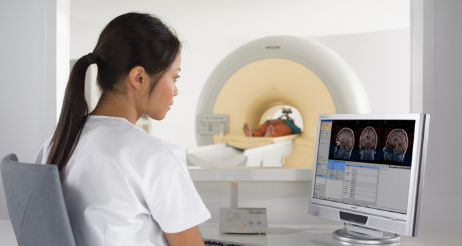
Market Overview - The global and Chinese liquid helium-free superconducting magnetic resonance imaging (MRI) market is projected to grow significantly from 2020 to 2031, with various product types and applications showing distinct growth trends [3][4]. - The market is segmented into different product types, including 1.5T, 3T, and 7T MRI systems, each exhibiting unique growth trajectories [3][4]. Industry Development Status - The liquid helium-free superconducting MRI industry is characterized by specific development trends and challenges, including favorable and unfavorable factors impacting growth [4][5]. - The industry faces entry barriers that could affect new entrants and competition levels [4][5]. Supply and Demand Analysis - Global supply and demand dynamics for liquid helium-free superconducting MRI systems are analyzed, with forecasts indicating trends in production capacity, output, and utilization rates from 2020 to 2031 [4][5]. - The Chinese market's production capacity and output are expected to play a significant role in the global landscape, with projections showing its share of global production and demand [4][5]. Regional Market Analysis - The market analysis includes a breakdown of sales revenue and volume across major regions, including North America, Europe, Asia-Pacific, Latin America, and the Middle East & Africa, with forecasts extending to 2031 [5][6]. - Each region's market share and growth potential are evaluated, highlighting the competitive landscape and key players in each area [5][6]. Competitive Landscape - The competitive landscape of the liquid helium-free superconducting MRI market is assessed, focusing on market share, production capacity, and sales revenue of leading manufacturers [6][7]. - Key players include Philips, GE HealthCare, Siemens Healthineers, and others, with detailed profiles on their market positions and product offerings [6][7]. Product and Application Analysis - The report provides insights into the sales and revenue trends for different product types and applications, including neurology, cardiology, oncology, orthopedics, and sports medicine [6][7]. - Forecasts for sales volume and revenue for various applications are presented, indicating the market's diversification and growth opportunities [6][7]. Industry Trends and Drivers - The report identifies key trends and drivers influencing the liquid helium-free superconducting MRI industry, including technological advancements and regulatory factors [6][7]. - A SWOT analysis of Chinese enterprises in the industry is included, providing insights into strengths, weaknesses, opportunities, and threats [6][7].

融资近亿元!国产心腔内超声领跑者完成B+轮
思宇MedTech· 2025-06-26 10:04
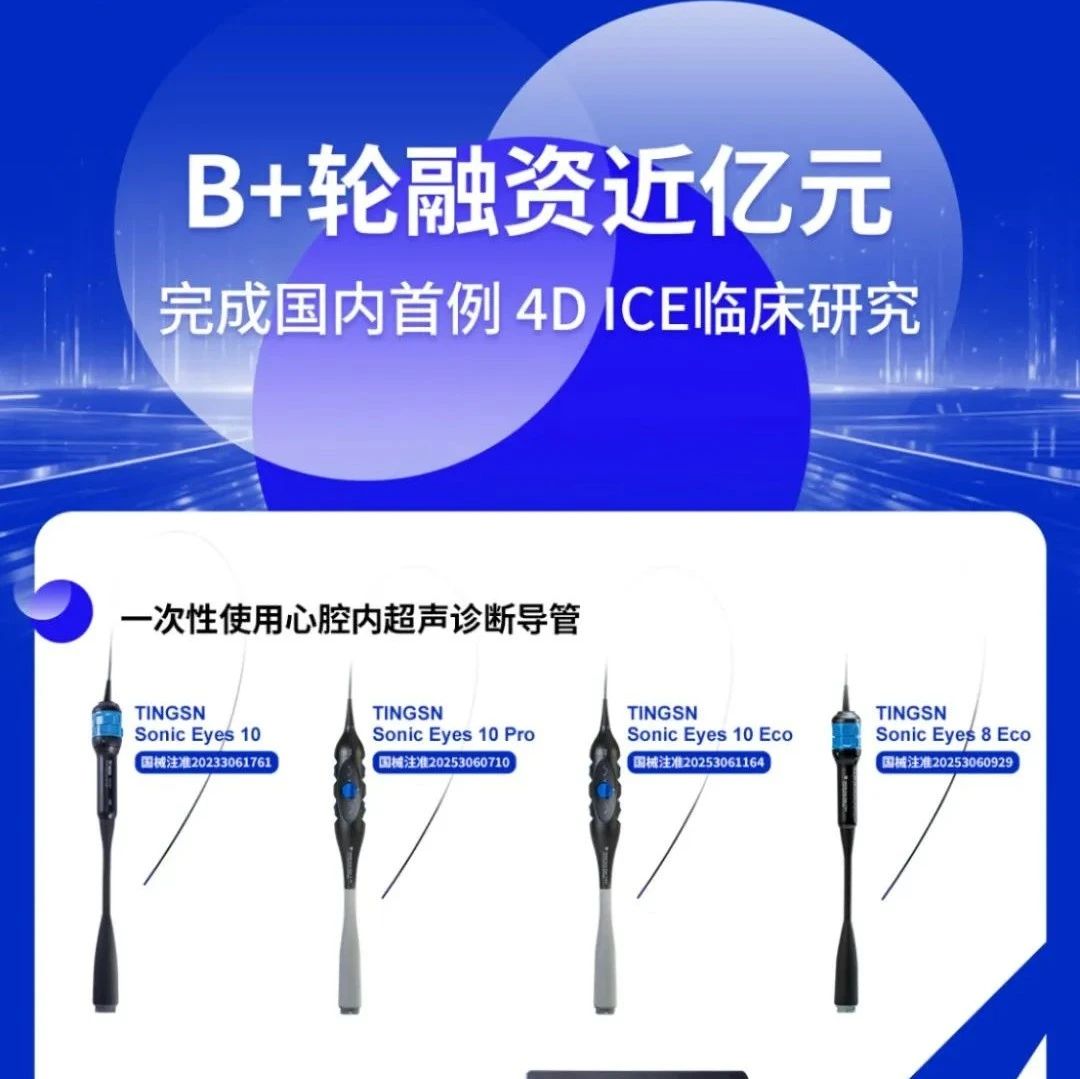
Core Viewpoint - The article highlights the advancements and market potential of the 4D intracardiac echocardiography (ICE) technology, particularly focusing on Jiangsu Tingsheng Technology Co., Ltd. and its recent achievements in the field of cardiovascular imaging [1][2][10]. Company Overview - Jiangsu Tingsheng Technology, established in 2017, specializes in cardiac electrophysiology and structural heart disease, with a focus on ultrasound technology innovations [28]. - The company has recently completed a nearly 100 million RMB Series B+ financing round, led by Yifeng Capital, to further develop its 4D ICE technology [1][2]. Product Development - Tingsheng Technology's 4D ICE system has achieved significant milestones, including the successful completion of China's first 4D ICE human clinical study on April 29, 2025, marking a new phase in the country's cardiovascular intervention imaging [2][4]. - The 4D ICE system integrates advanced technologies, enabling high-resolution dynamic 3D cardiac modeling and real-time imaging, which enhances surgical precision and reduces risks [9][22]. Clinical Impact - The 4D ICE technology has demonstrated a 62% reduction in radiation exposure time and a 30-minute decrease in total surgical time compared to traditional X-ray fluoroscopy methods [6][7]. - The system's ability to provide comprehensive imaging and measurement capabilities significantly improves procedural efficiency and reduces complication rates during cardiac interventions [7][9]. Market Landscape - The global ICE market was valued at approximately $81.35 million in 2021 and is projected to reach $130 million by 2028, with a CAGR of 6.61% [12]. - In China, the ICE market is rapidly evolving, with a projected growth from $4.43 million in 2021 to $7.69 million by 2028, increasing its global market share from 5.45% to 5.89% [12]. Competitive Environment - The ICE catheter market is competitive, with major international players like Siemens, Johnson & Johnson, and Philips, while domestic companies such as Tingsheng Technology, Suzhou Ice Crystal, and Shenzhen Xinhui Technology are also emerging [13][11]. - Tingsheng Technology's TINGSN Sonic Eyes 10 is the first domestically produced ICE diagnostic catheter approved in China, showcasing the company's commitment to innovation and local manufacturing [16][17]. Future Prospects - The successful development and clinical application of the 4D ICE technology position Tingsheng Technology to enhance its competitiveness in the global market and contribute to the advancement of cardiac intervention techniques [10][28]. - The company aims to leverage its technological advancements to fulfill its vision of becoming a significant player in the medical device industry, particularly in the field of cardiac imaging [10][28].
SNN vs. GEHC: Which Stock Is the Better Value Option?
ZACKS· 2025-06-25 16:41
Core Insights - The article compares Smith & Nephew (SNN) and GE HealthCare Technologies (GEHC) to determine which stock is more attractive to value investors [1] Group 1: Zacks Rank and Earnings Outlook - Smith & Nephew has a Zacks Rank of 2 (Buy), indicating a positive earnings estimate revision trend, while GE HealthCare Technologies has a Zacks Rank of 5 (Strong Sell) [3] - The improving analyst outlook for SNN suggests a more favorable investment opportunity compared to GEHC [3][7] Group 2: Valuation Metrics - SNN has a forward P/E ratio of 15.21, while GEHC has a forward P/E of 17.91, indicating SNN may be undervalued [5] - The PEG ratio for SNN is 0.92, compared to GEHC's PEG ratio of 2.43, further suggesting SNN's better valuation relative to its expected EPS growth [5] - SNN's P/B ratio is 2.48, while GEHC's P/B ratio is 3.58, reinforcing SNN's position as a more attractive value option [6] Group 3: Value Grades - SNN has a Value grade of A, while GEHC has a Value grade of C, highlighting SNN's stronger valuation metrics [6]


GE HealthCare's Flyrcado Sets New Benchmark in Cardiac PET Imaging
ZACKS· 2025-06-24 16:00
Core Insights - GE HealthCare (GEHC) introduced Flyrcado, an FDA-approved PET imaging agent for myocardial perfusion imaging, at the 2025 SNMMI annual meeting, highlighting its importance in precision cardiac care as cardiovascular disease rates rise globally [1][8] - Flyrcado aims to enhance early disease detection, personalize treatment strategies, and monitor therapy responses, reinforcing GEHC's commitment to improving outcomes for patients at risk of cardiovascular disease [2][6] Product Details - Flyrcado (flurpiridaz F 18) is designed for patients with known or suspected coronary artery disease, featuring a half-life of approximately 110 minutes, which facilitates centralized production and distribution [3] - The agent integrates exercise stress testing with cardiac PET imaging and is compatible with GEHC's Omni Legend PET/CT and other systems, enabling detailed assessments of myocardial perfusion and related conditions [3] Market Position and Coverage - Flyrcado has recently launched in select U.S. markets, receiving CMS pass-through status and a specific HCPCS billing code, with coverage from all seven Medicare Administrative Contractors and over 50% of commercial insurers [4][8] - The expansion of coverage beyond hospital outpatient settings and the establishment of a Flyrcado Support Center for providers indicate a strategic move to enhance accessibility and support for the new imaging agent [4] Financial Performance and Stock Trends - Following the announcement, GEHC shares closed flat at $71.16, with a year-to-date decline of 9%, contrasting with the industry's 4% growth and the S&P 500's 0.8% increase [5][7] - GEHC's market capitalization stands at $32.64 billion, and the company reported a 10.9% earnings surprise in the last quarter, indicating potential for future growth despite current stock performance [7] Strategic Implications - Flyrcado positions GEHC for long-term growth in the high-value molecular imaging market, addressing the rising demand for precision cardiac diagnostics [6] - With broad payer coverage and compatibility with existing systems, Flyrcado is expected to facilitate a shift from SPECT to PET imaging, generating recurring revenue from both radiopharmaceutical sales and imaging hardware [6]


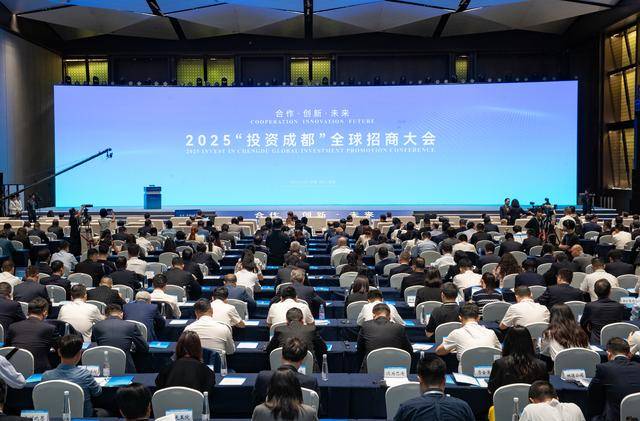
2025“投资成都”全球招商大会开幕 向世界发出“投资成都”邀约
Sou Hu Cai Jing· 2025-06-18 06:50
Group 1 - The "Investment Chengdu" Global Investment Conference was held on June 18, 2025, showcasing Chengdu's development advantages and investment potential, resulting in the signing of 16 cooperation projects with a total amount of 82.53 billion yuan [1][3] - The conference attracted nearly 400 guests from Fortune 500 companies, multinational enterprises, and industry leaders, emphasizing the theme of "Cooperation, Innovation, Future" [1][3] - A series of follow-up activities, including 6 industry matchmaking events and 6 overseas investment promotion activities, will continue until June 20, 2025, to facilitate global industrial cooperation [1] Group 2 - The signed projects cover various emerging industries such as commercial aerospace, artificial intelligence, advanced energy, new materials, and intelligent connected vehicles, with a total of 310 cooperation projects signed [3][4] - Notable projects include a 15 billion yuan investment by New Media Group to establish a global micro-short drama headquarters in Chengdu, and a 9.2 billion yuan clean energy utilization demonstration project by China Coal Energy Group [3][4] Group 3 - Chengdu launched the "Investment Chengdu" policy package, addressing investor needs in areas such as industrial funds, innovation, and talent introduction, covering 11 aspects [7] - The "Chain Master Fund Action Plan" was also introduced, aiming to create 12 chain master funds with a total scale exceeding 60 billion yuan by 2030, focusing on industries like integrated circuits and aerospace [8] Group 4 - Global industry leaders, including GE Healthcare and Siemens, expressed their commitment to investing in Chengdu, highlighting the city's advantages in the aerospace and hydrogen energy sectors [10] - The conference featured various investment scenarios, showcasing Chengdu's extensive investment space and high-quality industrial ecosystem [11]