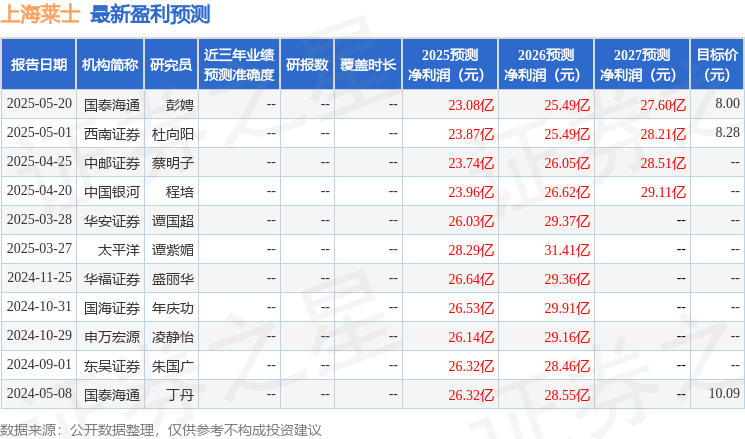
上海莱士

Search documents
上海莱士: 关于控股股东增持公司股份计划实施期限过半的进展公告
Zheng Quan Zhi Xing· 2025-08-21 10:19
Core Viewpoint - The controlling shareholder, Haiyingkang (Qingdao) Medical Technology Co., Ltd., is actively increasing its stake in Shanghai Laishi Blood Products Co., Ltd. to enhance investor confidence and demonstrate long-term investment value [1][2]. Group 1: Shareholding Increase Plan - Haiyingkang plans to increase its shareholding in Shanghai Laishi by investing between RMB 250 million and RMB 500 million within a six-month period through centralized bidding [1][2]. - As of August 21, 2025, Haiyingkang has acquired 26,440,800 shares, representing 0.40% of the total share capital of 6,637,984,837 shares, with an investment amount of RMB 180.5459 million (excluding transaction fees) [2][3]. Group 2: Current Shareholding Status - As of August 21, 2025, Haiyingkang holds 1,501,018,852 shares, accounting for 22.61% of the total share capital [3]. - Including the voting rights delegated from Grifols, S.A., Haiyingkang controls a total of 1,938,088,508 shares, which is 29.20% of the total voting rights [3].

上海莱士(002252) - 关于控股股东增持公司股份计划实施期限过半的进展公告
2025-08-21 09:49
关于控股股东增持公司股份计划实施期限过半的进展公告 公司控股股东海盈康(青岛)医疗科技有限公司保证向本公司提 供的信息内容真实、准确、完整,没有虚假记载、误导性陈述或重大 遗漏。 本公司及董事会全体成员保证公告内容与信息披露义务人提供 的信息一致。 特别提示: 证券代码:002252 证券简称:上海莱士 公告编号:2025-057 上海莱士血液制品股份有限公司 三、其他相关说明 1、本次增持计划实施符合《中华人民共和国证券法》《上市公司收购管理 办法》及《深圳证券交易所上市公司自律监管指引第 10 号——股份变动管理》 等法律法规、部门规章及规范性文件的规定。 1、增持计划:上海莱士血液制品股份有限公司("上海莱士"、"公司") 于2025年5月22日披露了《关于控股股东增持股份计划的公告》(公告编号: 2025-043),公司控股股东海盈康(青岛)医疗科技有限公司("海盈康")计 划自本次增持计划公告披露之日起6个月内(除法律、法规及深圳证券交易所业 务规则等有关规定不准增持公司股票的期间之外),通过集中竞价方式增持公司 股份,拟增持金额不低于人民币25,000万元,且不超过人民币50,000万元(均含 本 ...
神州细胞收盘下跌2.19%,滚动市盈率313.20倍,总市值317.97亿元
Jin Rong Jie· 2025-08-19 12:07
Group 1 - The core viewpoint of the articles highlights the financial performance and market position of Shenzhou Cell, which has a high PE ratio compared to its industry peers [1][2] - As of August 19, Shenzhou Cell's stock closed at 71.4 yuan, down 2.19%, with a rolling PE ratio of 313.20 and a total market capitalization of 31.797 billion yuan [1] - The average PE ratio for the biopharmaceutical industry is 73.41, with a median of 45.28, placing Shenzhou Cell at the 72nd position among its peers [1][2] Group 2 - As of the first quarter of 2025, 17 institutions hold shares in Shenzhou Cell, with a total of 2.7733 million shares valued at 166 million yuan [1] - The company specializes in the research and commercialization of biopharmaceutical products for various diseases, including cancer and autoimmune diseases, with key products such as SCT800 and SCT400 [1] - In the latest financial report for the first quarter of 2025, Shenzhou Cell reported a revenue of 520 million yuan, a year-on-year decrease of 15.15%, and a net profit of 63.768 million yuan, down 14.06%, with a gross margin of 94.88% [1]

一年42单并购交易!青岛“买买买”出的“热词”:不贪大、专买精、强补链
Da Zhong Ri Bao· 2025-08-15 09:40
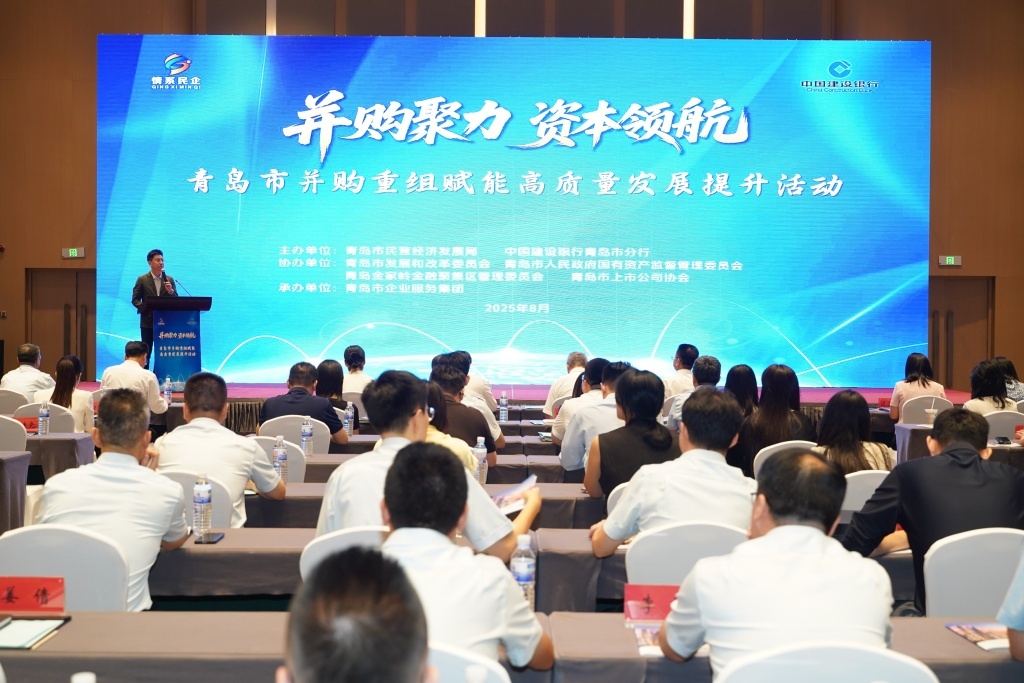
Group 1 - The core viewpoint of the article highlights the transformation of Qingdao enterprises through mergers and acquisitions (M&A) as a strategic tool for industrial upgrading and creating new growth avenues [1][8] - Qingdao enterprises are focusing on precise acquisitions that strengthen key links in the industrial chain rather than pursuing large-scale expansions, exemplified by Sailun Tire's acquisition of Bridgestone's Shenyang factory for 265 million yuan, enhancing its market presence in Northeast China [3][4] - The "10+1" industrial system in Qingdao is driving M&A from mere scale expansion to strategic industrial advancement, as seen in DeGute's acquisition of Haowei Technology, which allows it to diversify into telecommunications and AI software services [4][6] Group 2 - Major companies in Qingdao, such as Haier and Hisense, have made significant M&A moves, with Haier investing 12.5 billion yuan in Shanghai Laishi to enhance its health ecosystem, resulting in substantial revenue growth across its new business segments [6][7] - The M&A activities in Qingdao are expanding beyond traditional sectors, indicating a diversification in the approach to industrial upgrading, with companies actively exploring new paths for growth [6][7] - The government and financial institutions play a crucial role in facilitating M&A activities, providing platforms and financial services to support enterprises in their acquisition endeavors, thereby reducing trial-and-error costs [7][8]

上海莱士:8月14日融资净买入417.8万元,连续3日累计净买入2100.68万元
Sou Hu Cai Jing· 2025-08-15 02:15
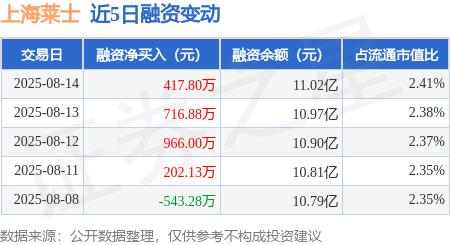
Financing Activities - On August 14, Shanghai Laishi (002252) had a financing buy of 32.32 million yuan and a financing repayment of 28.14 million yuan, resulting in a net financing buy of 4.18 million yuan, with a financing balance of 1.10 billion yuan [1] - Over the past three trading days, the cumulative net financing buy reached 21.01 million yuan, with 14 out of the last 20 trading days showing net financing buys [1] Margin Trading - On the same day, the margin trading saw a short selling of 11,500 shares, with a repayment of 1,200 shares, leading to a net short selling of 10,300 shares and a remaining short selling volume of 498,000 shares [2] - In the last 20 trading days, there were 11 days with net short selling [2] Margin Balance - The total margin balance reached 1.11 billion yuan on August 14, reflecting an increase of 4.23 million yuan or 0.38% from the previous day [4] - The margin balance has shown a consistent upward trend over the past few days, with notable increases on August 13 and August 12 as well [4]
上海莱士(002252)8月13日主力资金净流出3661.80万元
Sou Hu Cai Jing· 2025-08-13 13:47
Group 1 - The core stock price of Shanghai Laishi (002252) closed at 6.94 yuan, with a slight increase of 0.14% and a turnover rate of 0.69% as of August 13, 2025 [1] - The company experienced a net outflow of main funds amounting to 36.62 million yuan, accounting for 11.54% of the total transaction amount, with significant outflows from large orders [1] - The latest financial report indicates that the total operating revenue for the first quarter of 2025 was 2.006 billion yuan, a year-on-year decrease of 2.45%, while the net profit attributable to shareholders was 566 million yuan, down 25.20% year-on-year [1] Group 2 - Shanghai Laishi Blood Products Co., Ltd. was established in 1988 and is primarily engaged in the pharmaceutical manufacturing industry, with a registered capital of approximately 663.80 million yuan [1] - The company has made investments in 25 enterprises and participated in 690 bidding projects, holding 40 trademark registrations and 38 patents, along with 362 administrative licenses [2]
A股并购新图景:助力新质生产力发展 开辟增长新航道
2 1 Shi Ji Jing Ji Bao Dao· 2025-08-12 14:55
Core Insights - The "Six Merger Guidelines" have laid the foundation for a new prosperous phase in the A-share merger and acquisition market, with expectations for increased activity by the second half of 2025 [1][2] Group 1: Market Characteristics - The current M&A market is characterized by innovative transaction models, active technology-driven mergers, and a notable increase in acquisitions of quality unprofitable assets [1] - Innovative transaction models such as targeted convertible bonds, differentiated pricing, and flexible performance commitment arrangements are emerging, effectively meeting the needs of different parties and reducing acquisition costs [1] - Strategic emerging industries like semiconductors, high-end equipment manufacturing, and biomedicine are becoming hotspots for M&A activity, driving industrial upgrades and accelerating the transformation of technological achievements [1] Group 2: Market Activity - From 2024 to mid-July 2025, the total number of listed company acquisitions exceeded 250, indicating a significant increase in market activity [2] - The motivations for current listed company acquisitions are diverse, including strategic integration by industrial groups, local state-owned capital expansion, and private equity fund investments aimed at promoting industrial consolidation [2] - Notable examples include Haier Group acquiring control of Shanghai Laishi, China Resources Group acquiring Changdian Technology, and Qiming Venture Partners acquiring Tianmai Technology, showcasing strategic foresight in business layout [2] Group 3: Policy Impact - The "Six Merger Guidelines" continue to release policy dividends, driving breakthroughs in the A-share M&A market in terms of activity, innovative models, and industry orientation [2] - As the effects of these policies become more pronounced, M&A restructuring is expected to become a crucial engine for optimizing resource allocation and enhancing the quality and efficiency of real enterprises, contributing to sustainable growth in the capital market [2]
A股并购新图景:助力新质生产力发展,开辟增长新航道
2 1 Shi Ji Jing Ji Bao Dao· 2025-08-12 11:21
Core Viewpoint - The "Six Merger Guidelines" have laid the foundation for a new prosperous phase in the A-share merger and acquisition market, with expectations for significant activity by the second half of 2025 [1][2] Group 1: Market Characteristics - The current M&A market is characterized by innovative transaction models, active technology-driven mergers, and a notable increase in the acceptance of high-quality unprofitable assets [1] - Innovative transaction models such as targeted convertible bonds, differentiated pricing, and flexible performance commitment arrangements are emerging, effectively meeting the needs of different parties and reducing acquisition costs [1] - Mergers in strategic emerging industries like semiconductors, high-end equipment manufacturing, and biomedicine are thriving, injecting strong momentum into industrial upgrades and accelerating the transformation of technological achievements [1] - There is a significant increase in the acceptance of unprofitable assets in the M&A market, supporting diverse evaluation methods for loss-making assets and facilitating their entry into the capital market [1] Group 2: Recent Trends in Acquisitions - The acquisition market has seen over 250 transactions from 2024 to July 2025, indicating a significant increase in market activity [2] - The motivations for acquisitions are diverse, including strategic integration by industrial groups, local state-owned enterprises enhancing regional industrial planning, and private equity funds promoting industry consolidation [2] - Notable examples include Haier Group acquiring control of Shanghai Laishi, China Resources Group acquiring Changdian Technology, and Qiming Venture Partners acquiring Tianmai Technology, showcasing strategic foresight in business layout [2] Group 3: Policy Impact - The "Six Merger Guidelines" continue to release policy dividends, driving breakthroughs in market activity, innovative models, and industry orientation in the A-share M&A market [2] - As the effects of these policies become more pronounced, M&A is expected to become a crucial engine for optimizing resource allocation and enhancing the quality and efficiency of real enterprises, contributing to the sustainable development of the capital market [2]
趋势研判!2025年中国生物制药行业政策、发展历程、产业链、市场规模、竞争格局及行业发展趋势分析:行业增长非常强劲,市场规模有望达到4600亿元[图]
Chan Ye Xin Xi Wang· 2025-08-08 01:36
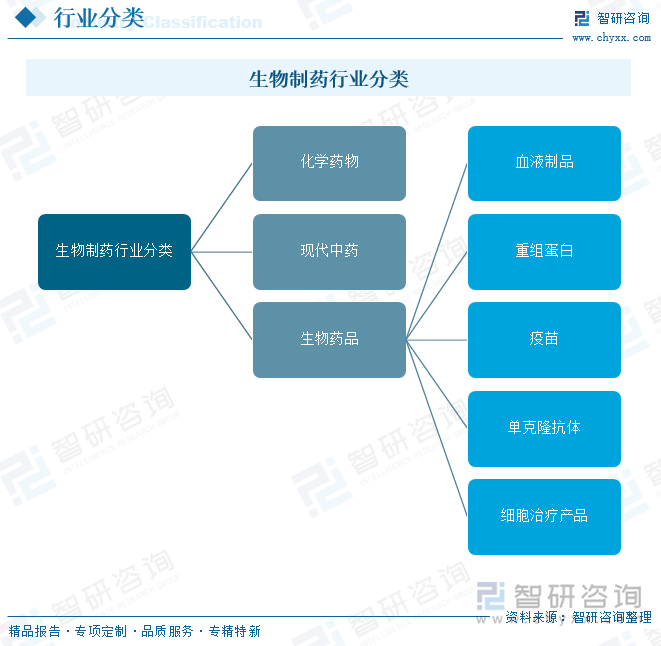
Core Viewpoint - The biopharmaceutical industry in China is rapidly developing, with significant growth expected in market size from 257.65 billion yuan in 2018 to 454.17 billion yuan in 2024, and projected to reach 460 billion yuan by 2025 [1][6][4]. Group 1: Definition and Classification - Biopharmaceuticals are products used for prevention, treatment, and diagnosis, developed using principles from microbiology, biology, medicine, biochemistry, and biotechnology [2][4]. - The biopharmaceutical industry can be categorized into biopharmaceuticals, chemical drugs, and modern traditional Chinese medicine, with biopharmaceuticals further divided into blood products, recombinant proteins, vaccines, monoclonal antibodies, and cell therapy products [2]. Group 2: Current Development Status - The development of the biopharmaceutical industry is closely linked to innovations in biotechnology, with significant advancements since the 20th century [4][6]. - China's biopharmaceutical market is still in its early stages but is experiencing strong growth, with biopharmaceuticals becoming a crucial part of the pharmaceutical sector [6][4]. Group 3: Industry Chain - The upstream of the biopharmaceutical industry consists of raw materials, pharmaceutical equipment, and biotechnology, with raw materials primarily sourced from natural biological materials [8]. - The midstream involves the research and production of biopharmaceutical products, while the downstream focuses on sales channels to medical institutions, diagnostic agencies, research units, and consumers [8]. Group 4: Development Environment and Policies - Recent policies have supported and regulated the development of the biopharmaceutical industry, focusing on improving new drug pricing mechanisms, drug price governance, centralized procurement, and medical service standardization [10][12]. Group 5: Competitive Landscape - The biopharmaceutical industry is a strategic emerging industry in China, with notable companies including WuXi AppTec, HengRui Medicine, and BeiGene, among others [13][15]. - Various segments within the biopharmaceutical industry have seen the emergence of leading companies, such as vaccine producers and diagnostic reagent manufacturers [15][20]. Group 6: Development Trends - There is a strong emphasis on developing new vaccines and improving traditional vaccines to meet global health challenges [25]. - The industrialization of antibody drugs and protein drugs is advancing, with significant roles in treating various diseases [26][27]. - Research and product development in diagnostic and detection technologies for major diseases are increasingly utilizing nanomaterials for enhanced sensitivity and specificity [28].

上海莱士:银河证券、博时基金等多家机构于8月7日调研我司
Zheng Quan Zhi Xing· 2025-08-07 15:08
Company Overview - The company, Shanghai Laishi, was established in 1988 and listed on the Shenzhen Stock Exchange in 2008. In 2024, Haier Group acquired a 20% stake in the company, changing the controlling shareholder to Haier Group's subsidiary, Haiyingkang [2] Industry Situation - The blood products industry is a sub-sector of the biopharmaceutical industry, characterized by high technical barriers and strict regulatory requirements. Since 2001, no new blood product manufacturing enterprises have been approved in China, resulting in fewer than 30 operational companies in the domestic market [3] - In 2024, there were over 300 plasma collection stations in China, with a total plasma collection volume exceeding 13,000 tons, showing significant growth compared to 2023, although there remains a gap between supply and actual demand [3] - Blood products mainly include albumin, immunoglobulin, and coagulation factor products, with human albumin having a relatively high market share. The domestic market includes both domestic and imported human albumin, with a significant proportion being imported [3] Company Financials - In Q1 2025, the company reported a main revenue of 2.006 billion yuan, a year-on-year decrease of 2.45%. The net profit attributable to shareholders was 566 million yuan, down 25.2% year-on-year, and the net profit after deducting non-recurring gains and losses was 570 million yuan, a decrease of 3.52% [10] - The company's debt ratio stands at 6.25%, with investment income of 90.35 million yuan and financial expenses of -25.88 million yuan. The gross profit margin is reported at 38.75% [10] Product Sales and Market Dynamics - The sales of human albumin in China have slightly slowed due to medical insurance policies and supply-demand dynamics. However, there is a rigid demand for human albumin, which is used in various medical conditions [5] - The blood products market has seen some price adjustments since the second half of the previous year, influenced by policy factors and supply-demand relationships [7] Innovation and R&D - The company is advancing its "plasma expansion" and "plasma extraction" strategies, focusing on safety, quality, and efficiency. It is increasing investments in basic research, clinical translation, and industrial upgrades [9] - The company is conducting clinical research on SR604 injection, which is in Phase IIb trials. This product is a monoclonal antibody intended for the prevention and treatment of hemophilia and coagulation factor deficiencies [9][10]