Waymo

Search documents
“木头姐”年度重磅:ARK 2026 Big Idea
华尔街见闻· 2026-01-24 12:15
Core Insights - The article discusses Cathie Wood and ARK Invest's focus on long-term technological transformations, emphasizing the report "ARK Big Ideas 2026" which highlights the concept of "The Great Acceleration" driven by AI and other technologies [2][3][6]. Group 1: Major Innovations and Economic Impact - The report identifies 13 significant innovation areas, asserting that five key platforms centered around AI are accelerating and will lead to a substantial increase in global economic growth, with a projected GDP growth rate of 7.3% by 2030, significantly higher than the IMF's forecast of 3.1% [8][12]. - ARK predicts that the market share of innovative assets will rise from approximately 20% in 2025 to about 50% by 2030, with a market value expansion from around $5 trillion to approximately $28 trillion [13]. - Investment in data center systems is expected to grow from about $500 billion in 2025 to approximately $1.4 trillion by 2030, reflecting a compound annual growth rate of 30% [14][26]. Group 2: AI and Technological Convergence - The report emphasizes that AI acts as a "Central Dynamo," driving multiple technological curves simultaneously, leading to a convergence of technologies that enhances their interdependencies [8][10]. - The "Convergence Network Strength" metric is projected to increase by 35% by 2025, indicating a significant acceleration in the mutual catalysis of different technologies [10]. - AI's demand is driving a surge in investment, with the annualized growth rate of data center investments increasing from 5% to 29% since the launch of ChatGPT [24][29]. Group 3: Market Opportunities and Consumer Behavior - AI agents are expected to transform online consumer spending, with ARK forecasting that their contribution to global online sales will grow from about 2% in 2025 to approximately 25% by 2030, potentially exceeding $8 trillion [35]. - The share of AI-related search traffic is anticipated to rise from 10% in 2025 to 65% by 2030, with search advertising spending growing at an annual rate of about 50% [38]. - By 2030, AI agents could generate around $900 billion in business and advertising revenue, primarily driven by lead generation and advertising [40]. Group 4: Robotics and Automation - Robotics is highlighted as a critical GDP engine, with the global robotics market opportunity estimated at $26 trillion, split between manufacturing and household services [42][44]. - The report suggests that the adoption of humanoid robots could significantly convert non-market activities into market activities, potentially increasing GDP growth rates from 2-3% to 5-6% if 80% of U.S. households adopt such technology [49]. - Autonomous driving is projected to create approximately $34 trillion in enterprise value by 2030, with significant implications for the ride-hailing market [53]. Group 5: Biotechnology and Healthcare - The integration of multiomics and AI is expected to revolutionize biology, with the cost of whole genome sequencing projected to drop to $10 by 2030, driving demand for molecular diagnostics [59][61]. - AI-driven drug development could reduce the time to market by 40% and lower total drug costs from $2.4 billion to $700 million, indicating a substantial shift in the pharmaceutical landscape [64]. - The potential market opportunity for extending healthy lifespan is estimated at $1.2 quadrillion, highlighting the vast economic implications of advancements in biotechnology [65]. Group 6: Space Economy and Energy Efficiency - SpaceX's reusable rocket technology is set to propel the economy into the space age, with launch costs decreasing significantly, potentially below $100 per kilogram [68][70]. - The report indicates that energy efficiency is improving, with a projected doubling of capital expenditure in the global power sector to meet rising electricity demands by 2030 [75]. - The anticipated growth in energy storage and distributed energy systems is crucial for the next generation of cloud infrastructure [12].

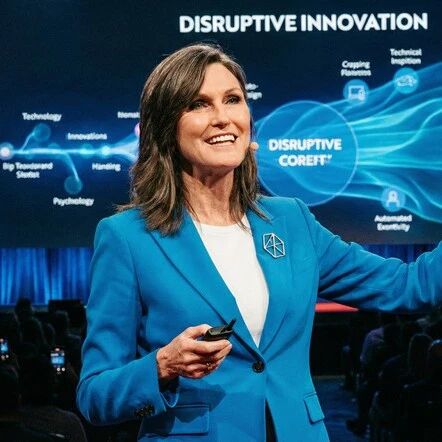
“木头姐”年度重磅:ARK 2026 Big Idea
Hua Er Jie Jian Wen· 2026-01-24 07:09
Core Insights - The central theme of the report is "The Great Acceleration," highlighting the rapid convergence of five major innovation platforms centered around artificial intelligence (AI) that are expected to drive significant global economic growth by the end of the decade [1][4]. Group 1: Economic Growth Projections - The report predicts that the global GDP growth rate could reach 7.3% by 2030, significantly higher than the International Monetary Fund's forecast of 3.1% [4]. - Capital investment in innovation assets is expected to increase from approximately $5 trillion in 2025 to around $28 trillion by 2030, with the market share of innovation assets rising from about 20% to 50% [9][14]. Group 2: Technological Convergence - ARK identifies a 35% increase in the "Convergence Network Strength" by 2025, indicating a significant acceleration in the inter-catalysis of different technologies [7]. - AI is described as a "Central Dynamo" that drives multiple technology curves simultaneously, leading to a shift from linear to highly coupled technological relationships [4][12]. Group 3: Investment in Data Centers - Investment in data center systems is projected to grow from approximately $500 billion in 2025 to about $1.4 trillion by 2030, with a compound annual growth rate of 30% [20][17]. - The demand for AI is driving this investment surge, with the cost of inference dropping over 99% in the past year, leading to exponential growth in AI usage [22]. Group 4: AI and Consumer Behavior - AI is reshaping consumer interaction with digital platforms, with AI chatbots achieving a 25% penetration rate among smartphone users within seven years, faster than the internet's adoption rate [23]. - The share of AI-related search traffic is expected to increase from 10% in 2025 to 65% by 2030, with a projected annual growth rate of 50% in AI-related search advertising spending [26]. Group 5: Robotics and Automation - The global robotics market is estimated to present a revenue opportunity of approximately $26 trillion, with significant potential in both manufacturing and household services [32]. - The report emphasizes the transformative potential of humanoid robots, which could convert significant amounts of unpaid household labor into measurable GDP contributions [34]. Group 6: Autonomous Vehicles - The market for autonomous taxis is projected to create about $34 trillion in enterprise value by 2030, with autonomous technology providers capturing approximately 98% of the EBIT [37]. - The cost of autonomous taxi services is expected to drop significantly, with projections suggesting a price of $0.25 per mile by 2035 [35]. Group 7: Multiomics and AI in Healthcare - The integration of multiomics with AI is expected to revolutionize biology, with the cost of whole genome sequencing potentially dropping to $10 by 2030 [41]. - AI-driven drug development could reduce time to market by 40%, from 13 years to 8 years, while significantly lowering overall drug costs [45]. Group 8: Space Economy - The use of reusable rockets is anticipated to propel the economy into the space age, with SpaceX leading the market and significantly reducing launch costs [50][52]. - The market opportunity for satellite connectivity is projected to exceed $160 billion annually by 2030, driven by cost reductions and performance improvements [55]. Group 9: Energy and Infrastructure - The report highlights the need for a substantial increase in capital investment in the energy sector, estimating a requirement of about $10 trillion by 2030 to meet global electricity demand [60]. - Distributed energy systems are becoming crucial for supporting the energy needs of AI data centers, with ongoing declines in energy intensity across major economies [57].

X @Bloomberg
Bloomberg· 2026-01-23 22:52
US transportation safety investigators are probing a series of incidents in which self-driving cars operated by Alphabet’s Waymo unit drove improperly near parked school buses in Austin https://t.co/OEP1UbFTuK ...
US safety board opens probe into Waymo robotaxis passing stopped school buses
Reuters· 2026-01-23 22:04
Core Viewpoint - The National Transportation Safety Board (NTSB) is initiating an investigation into Waymo due to incidents where its robotaxis illegally passed stopped school buses in Austin, Texas [1] Group 1 - The investigation by the NTSB highlights regulatory concerns regarding the safety and compliance of self-driving technology in urban environments [1] - Waymo's actions raise questions about the operational protocols and safety measures in place for autonomous vehicles, particularly in relation to school zones [1]


X @TechCrunch
TechCrunch· 2026-01-23 21:52
Waymo probed by National Transportation Safety Board over illegal school bus behavior https://t.co/5xN9V2dqvQ ...
Waymo probed by National Transportation Safety Board over illegal school bus behavior
TechCrunch· 2026-01-23 21:50
Core Viewpoint - The National Transportation Safety Board (NTSB) has initiated an investigation into Waymo due to multiple incidents of its robotaxis illegally passing stopped school buses in at least two states, with a significant focus on over 20 occurrences in Austin, Texas [1][2]. Investigation Details - This marks the first investigation by the NTSB into Waymo, although it is the second inquiry regarding the company's school bus issues, following a similar probe by the National Highway Traffic Safety Administration (NHTSA) that began in October [2]. - Waymo had previously issued a software recall in December to address the school bus problem, but earlier updates have not resolved the issue, leading the Austin school district to request a suspension of operations during school pickup and drop-off times [3]. Company Operations - The investigation coincides with Waymo's rapid expansion across the United States, including the recent launch of a robotaxi service in Miami, adding to its existing operations in cities like Atlanta, Austin, Los Angeles, Phoenix, and the San Francisco Bay Area [4]. Safety Performance - Waymo's chief safety officer stated that the company safely navigates thousands of school bus encounters weekly and believes its safety performance around school buses is superior to that of human drivers, emphasizing a commitment to transparency with the NTSB [5]. - The NTSB's role differs from the NHTSA as it does not impose fines but conducts in-depth investigations to identify root causes of transportation issues, often leading to hearings and non-binding recommendations [5]. Incident Examples - The first notable incident involving a Waymo vehicle passing a stopped school bus occurred in September in Atlanta, where the vehicle failed to recognize the stop sign and flashing lights, prompting a software update to address this scenario [8][9]. - Despite addressing the Atlanta incident, Waymo vehicles were subsequently recorded making illegal maneuvers around stopped school buses in Austin, as evidenced by videos from school bus cameras [10].

Waymo, Uber, the real robotaxi players, not Tesla: Ross Gerber
Yahoo Finance· 2026-01-23 19:57
as Tesla's rolled out sort of robo taxi service in a few cities and be very very widespread by the end of this year. >> Every goal from Elon is by the end of the year. Every year he has a bunch of goals that are by the end of the year that never happens.The proof is in the pudding. This idea that Tesla is going to be able to rapidly scale robo taxi on hardware for cars I think has not been proven. It's solved by Whimo.Take Whimos left and right. They're everywhere. They're very successful and they're scalin ...


Tesla Begins Robotaxi Rides in Austin Without Safety Drivers
Bloomberg Technology· 2026-01-23 18:37
Is this a big feat. This is a definitely a significant development. It's another major player in the autonomous vehicle space, and it shows more confidence in the technology, but it's still pretty limited.And it's definitely an experiment. It's an experiment. I'm just going to jump in.People on the Tesla side of the camp say this is a notable moment because it's a first for a vision only based platform to be on public roads, not just with no one in the driver's seat, but no supervising attendant in the pass ...
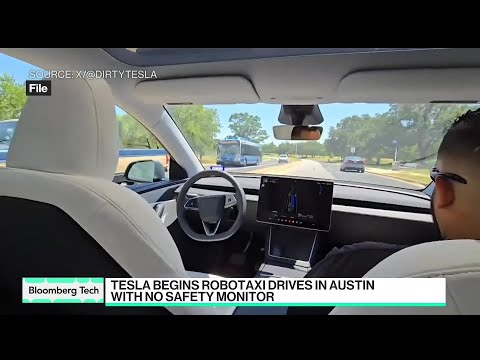
Tesla Begins Robotaxi Rides in Austin Without Safety Drivers
Youtube· 2026-01-23 18:37
Core Insights - The development of autonomous vehicles is gaining momentum, with multiple players entering the market, indicating increased confidence in the technology [1][4] - Tesla's vision-only platform is now operating on public roads without human supervision, marking a significant milestone in the autonomous vehicle sector [2][3] - Waymo is currently leading in commercial ride-hailing services, aiming to reach one million rides per week by the end of the year, while Tesla's presence remains limited [5][6] Industry Landscape - The regulatory environment has not hindered competitors, and the rapid entry of new players is reshaping the market dynamics [5][6] - Waymo's deployment in multiple cities without human supervision is a key factor in its competitive advantage [6][7] - Consumer acceptance of autonomous vehicles is growing, with data suggesting that users in San Francisco are increasingly comfortable with Waymo's services [8][10] Global Context - The global readiness for autonomous vehicles is on the rise, with various countries allowing more operators to experiment with these technologies [10] - Partnerships between companies like Uber and Waymo in different regions, including Austin and China, indicate a collaborative approach to expanding autonomous ride-hailing services [8][9]
美洲互联网:共享出行与配送行业 2025 年第四季度前瞻 —— 行业争议与预期分析-Americas Technology_ Internet_ Ridesharing & Delivery Q4'25 Preview_ Analyzing the Industry Debates & Estimates
2026-01-23 15:35
Summary of Key Points from the Earnings Call Transcript Industry Overview - The Mobility/Delivery Internet sub-sector is expected to report results in line with investor expectations, supported by a healthy consumer backdrop across the industry [1][2] - Rideshare and food delivery are identified as two of the fastest-growing verticals in the US Internet, with projected CAGRs of +13% and +11% from 2025 to 2030, respectively [1][2] Rideshare Industry Insights - The mobility landscape benefits from rising utility trends among upper-banded users, despite upward pricing dynamics [2] - The impact of Autonomous Vehicles (AV) on demand and supply remains a key debate, with investors closely monitoring upcoming market launches [2][10] - Uber's operating estimates have been raised, with expectations of increased trip frequency per rider and a low double-digit percentage (LDD) bookings CAGR through 2030 [10] - Lyft's acquisition of FREENOW allows it to operate a multimodal transportation network, with expectations of sustaining a LDD % bookings CAGR over the next five years [10] - The rise of AVs could represent a mid-single-digit percentage (MSD) of total rideshare industry bookings by 2030 [10] Food Delivery Industry Insights - The food delivery landscape is expanding from food to grocery delivery and local commerce, presenting significant growth opportunities [3][19] - The US food delivery market is segmented into first-party online, third-party online, and offline delivery, with 3P delivery expected to grow at a faster rate (11% CAGR) than overall delivery (10% CAGR) [28] - DoorDash is projected to grow inline with the broader industry, maintaining a 66% share of 3P delivery sales [28] Company-Specific Updates Uber (UBER) - Q3 Mobility gross bookings (GBs) grew +20% YoY, driven by trip growth (+22% YoY) and strong platform engagement [29] - Q3 Delivery GBs grew +25% YoY, with significant contributions from Grocery & Retail, achieving a $12 billion annualized GBs run-rate [29] - The company announced a $1.5 billion share buyback in Q3 as part of a $20 billion repurchase program [29] DoorDash (DASH) - Marketplace gross order value (GOV) accelerated +25% YoY in Q3, driven by strong growth in monthly active users and increasing order frequency [29] - The company plans significant investments in 2026 towards a single integrated global platform and new initiatives [29] Instacart (CART) - Q3 gross transaction value (GTV) grew +10% YoY, driven by order growth (+14% YoY) [30] - The company continues to focus on advertising as a growth driver, despite macro uncertainties affecting ad revenues [30] Lyft (LYFT) - Gross bookings rose +16% YoY in Q3, supported by record rides and expansion in Europe [30] - The company is developing partnerships for AVs and expects to generate over $1 billion in free cash flow per year through 2026 and 2027 [30] Financial Estimates and Projections - Uber's gross bookings are projected to reach $354.9 billion by 2030, with a YoY growth trend of 10% [32] - DoorDash's gross bookings are expected to grow to $235.9 billion by 2030, with a 15% YoY growth trend [32] - Lyft's gross bookings are projected to reach $33.5 billion by 2030, with a 10% YoY growth trend [32] Consumer Trends and Market Dynamics - The overall health of the consumer and durability of current operating trends are under scrutiny, with household income cohort trends analyzed to frame purchase intent [6] - Monthly active users (MAUs) for Uber grew +16% YoY in international markets, while Lyft's MAUs grew +1% YoY [43][50] Conclusion - The rideshare and food delivery industries are poised for significant growth, driven by consumer trends, technological advancements, and strategic company initiatives. Investors should remain vigilant regarding competitive dynamics and market developments as these sectors evolve.