东航物流

Search documents
东航物流(601156) - 东航物流2025年第一次临时股东大会会议资料
2025-09-09 09:45
东方航空物流股份有限公司 2025 年第一次临时股东大会 会议资料 二〇二五年九月十六日 中国 · 上海 1 | 会议议案 7 | | --- | 会议须知 为维护全体股东的合法权益,确保股东大会的正常秩序和 议事效率,保证大会顺利进行,东方航空物流股份有限公司(以 下简称"公司")根据《中华人民共和国公司法》(以下简称《公 司法》)、《中华人民共和国证券法》(以下简称《证券法》)、 《上市公司股东会规则》《东方航空物流股份有限公司章程》 (以下简称《公司章程》)等文件的有关要求,制定本须知。 一、会议按照相关法律法规和《公司章程》的规定进行, 股东及股东代理人参加股东大会依法享有发言权、质询权、表 决权等权利。股东及股东代理人参加股东大会应认真履行其法 定义务,不得侵犯公司和其他股东及股东代理人的合法权益, 不得扰乱股东大会的正常秩序。 二、参会股东及股东代表须携带身份证明(身份证、法人 营业执照复印件(加盖公章)等)及授权委托书办理会议登记 手续。 三、本次会议谢绝个人进行录音、拍照及录像。 四、会议表决采用现场投票与网络投票相结合的表决方 式,公司通过上海证券交易所网络投票系统向公司股东提供网 3 络形 ...

险资入市全拆解:连续五个季度大幅增配股票,二季度整体增配红利,整体仍增配科技
Xin Lang Cai Jing· 2025-09-06 07:29
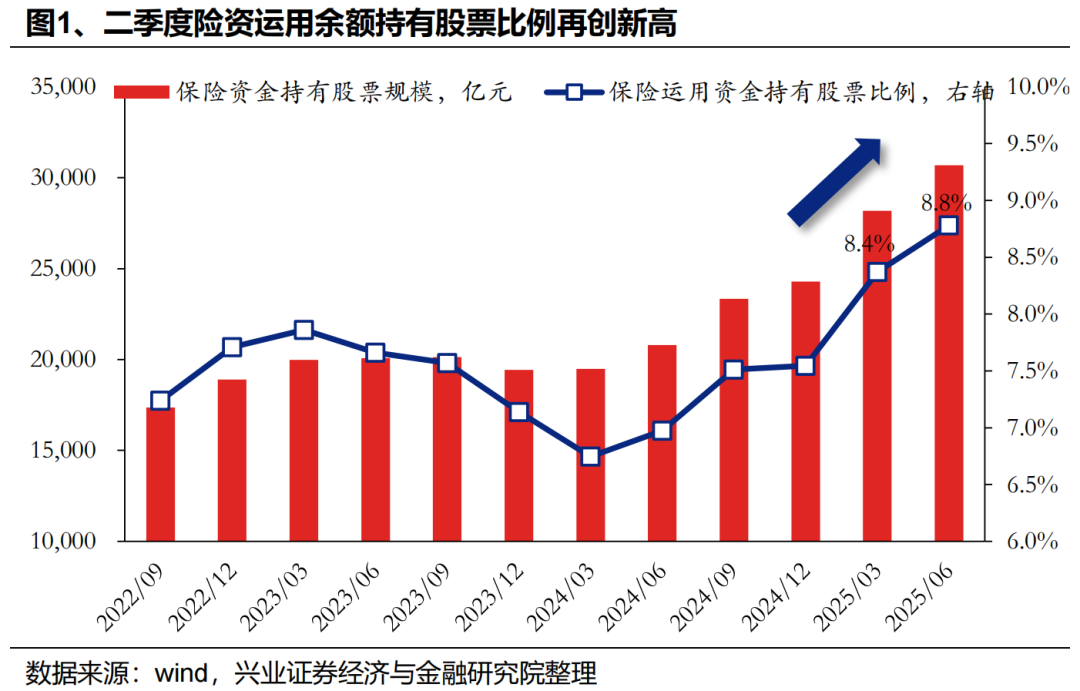
Group 1 - The performance evaluation methods for state-owned insurance companies have been continuously optimized since the beginning of the year, leading to an improved policy environment for insurance fund equity investments, which has accelerated the entry of insurance capital into the market [1] - In the second quarter, insurance companies further increased their stock allocations by approximately 200 billion yuan, with the proportion of stocks held rising by 0.4 percentage points to 8.8% compared to Q1 [1] - It is estimated that insurance capital will continue to increase allocations to A+H stocks by 300 to 400 billion yuan in the second half of the year, based on a 30% investment of new premium income [5] Group 2 - Insurance capital's participation in equity assets is gradually shifting from external management to direct investment, with a notable increase in stock holdings since Q4 2024, while fund holdings have decreased [8] - In the second quarter, insurance capital increased allocations to dividend-paying stocks while reducing holdings in energy sectors, with a focus on technology and high-end manufacturing [11] - The average dividend yield of the top 20 stocks increased to 3.80%, indicating a preference for high-dividend assets [13] Group 3 - Insurance capital has accelerated its stake acquisitions in listed companies, particularly in Hong Kong stocks, with 28 stake acquisitions recorded by August 31, surpassing the total for the previous year [16] - The preference for Hong Kong assets has made insurance capital a core driver of the rise in Hong Kong dividend assets [19] Group 4 - In the first half of 2025, insurance capital's holdings in ETFs saw a slowdown, with a total of 214.9 billion yuan held, reflecting a shift towards direct investments [23] - Despite the slowdown in total ETF allocations, there has been a significant internal structural adjustment, with increased allocations to TMT, manufacturing, and financial real estate sector ETFs [29] Group 5 - The five listed insurance companies in A-shares increased their stock holdings by 411.9 billion yuan in the first half of the year, representing a 28.7% increase [33] - The proportion of FVOCI stocks held by listed insurance companies has significantly increased, with a 62.2% rise in holdings [36]




中国东方航空股份拟9月12日召开“中国东航、东航物流2025年度中期联合业绩说明会”
Ge Long Hui· 2025-09-05 12:31
Core Viewpoint - China Eastern Airlines Corporation Limited has announced the release of its 2025 semi-annual report on August 29, 2025, and will hold a joint performance briefing with its subsidiary, Eastern Air Logistics Co., Ltd., on September 12, 2025, to address investor concerns [1] Group 1 - The company aims to provide a comprehensive understanding of its 2025 semi-annual performance and operational status to investors [1] - The joint performance briefing will take place from 11:00 to 12:00 on September 12, 2025 [1] - The briefing will focus on enhancing investor knowledge about the cargo logistics segment under China Eastern Airlines Group [1]

中国东航:关于与东航物流联合召开2025年中期业绩说明会的公告
Zheng Quan Ri Bao Zhi Sheng· 2025-09-05 12:10
Core Viewpoint - China Eastern Airlines announced a joint mid-term performance briefing with its subsidiary, Eastern Air Logistics, scheduled for September 12, 2025 [1] Group 1 - The performance briefing will take place from 11:00 to 12:00 on the specified date [1]
中国东方航空股份(00670.HK)拟9月12日召开“中国东航、东航物流2025年度中期联合业绩说明会”
Ge Long Hui· 2025-09-05 11:33
Core Viewpoint - China Eastern Airlines Corporation Limited has announced the release of its 2025 semi-annual report on August 29, 2025, and will hold a joint performance briefing with its subsidiary, Eastern Air Logistics Co., Ltd., on September 12, 2025, to address investor concerns [1]. Group 1 - The company disclosed its 2025 semi-annual report on the Shanghai Stock Exchange and its official website [1]. - The joint performance briefing aims to enhance investor understanding of the company's performance and operations, particularly in the cargo logistics sector [1]. - The briefing is scheduled for September 12, 2025, from 11:00 to 12:00 [1].
东航物流(601156) - 东航物流关于与中国东航联合召开2025年中期业绩说明会的公告
2025-09-05 10:30
证券代码:601156 证券简称:东航物流 公告编号:临 2025-033 东方航空物流股份有限公司 关于与中国东航联合召开 2025 年中期业绩说明会的公告 本公司董事会及全体董事保证本公告内容不存在任何虚假记载、误导性陈述或 者重大遗漏,并对其内容的真实性、准确性和完整性承担法律责任。 重要内容提示: 会议召开时间:2025 年 9 月 12 日(星期五)11:00-12:00 本次业绩说明会以网络互动的方式召开,公司将针对 2025 年半年度业绩、经 营情况以及投资者普遍关注的问题与投资者进行交流。 二、说明会召开的时间、地点 (一)会议召开时间:2025 年 9 月 12 日(星期五)11:00-12:00 ( 二 ) 会 议 召 开 地 点 : 上 海 证 券 交 易 所 上 证 路 演 中 心 ( 网 址 : http://roadshow.sseinfo.com/) (三)会议召开方式:上证路演中心网络互动 会 议 召 开 地 点 : 上 海 证 券 交 易 所 上 证 路 演 中 心 ( 网 址 : http://roadshow.sseinfo.com/) 会议召开方式:上证路演中心网络互动 ...
中国东航: 中国东方航空股份有限公司关于与东航物流联合召开2025年中期业绩说明会的公告
Zheng Quan Zhi Xing· 2025-09-05 09:16
Core Viewpoint - China Eastern Airlines Co., Ltd. is set to hold a mid-year performance briefing on September 12, 2025, in collaboration with its subsidiary, Eastern Air Logistics Co., Ltd., to enhance investor understanding of its performance and operations [1][2]. Group 1: Performance Briefing Details - The performance briefing will take place on September 12, 2025, from 11:00 to 12:00 [2][3]. - The event will be held at the Shanghai Stock Exchange Roadshow Center and will be conducted in an interactive online format [2][3]. - Investors can submit questions from September 6 to September 11, 2025, via the Roadshow Center website or through email [3]. Group 2: Participants and Contact Information - Key participants in the briefing will include the Chairman, independent directors, and senior management of China Eastern Airlines and Eastern Air Logistics [2]. - Contact information for inquiries includes phone numbers and an email address for investor relations [3]. Group 3: Additional Information - After the briefing, investors can access the main content and details of the event through the Shanghai Stock Exchange Roadshow Center [4]. - The company expresses gratitude for the support and attention from investors [4].
东航物流(601156):关税波动不改经营韧性
Changjiang Securities· 2025-09-05 05:14
Investment Rating - The report maintains a "Buy" rating for the company [5] Core Views - In the first half of 2025, the company experienced fluctuations in its comprehensive logistics solutions segment due to tariff policies, but overall revenue and gross profit saw a slight year-on-year decline. However, the net profit attributable to shareholders increased by 0.9% year-on-year, demonstrating operational resilience [1][3] - The company effectively managed its operating expenses and benefited from special subsidies and increased revenue from cooperative routes, which contributed to the growth in net profit [7] - The company is expected to maintain steady growth in performance due to proactive adjustments in route structure and the introduction of additional capacity [1][3] Summary by Sections Financial Performance - In the first half of 2025, the company achieved revenue of 11.26 billion yuan, a year-on-year decrease of 0.3%, and a net profit of 1.29 billion yuan, a year-on-year increase of 0.9%. In Q2 2025, revenue was 5.77 billion yuan, down 4.8% year-on-year, while net profit grew by 8.0% year-on-year [3][7] - The revenue breakdown shows that air express, ground comprehensive services, and comprehensive logistics solutions had year-on-year changes of +8.5%, +5.4%, and -8.3%, respectively [7] Cost Management - The company reported a reduction in financial expenses by 100 million yuan year-on-year, leading to a decrease in total expenses by 50 million yuan year-on-year, with the expense ratio declining by 0.4 percentage points to 3.4% [7] - The gross profit margin for the air express, ground comprehensive services, and comprehensive logistics solutions segments saw year-on-year changes of +7.4%, -10.1%, and -2.5%, respectively, indicating a stable overall gross profit [7] Future Outlook - The company is expected to see net profits of 2.65 billion yuan, 2.95 billion yuan, and 3.35 billion yuan for the years 2025, 2026, and 2027, respectively, with corresponding price-to-earnings ratios of 9.3, 8.3, and 7.4 times [7] - The report highlights the potential for continued improvement in cross-border air transport demand, supported by the recovery of TEMU's full management in the U.S. by the end of July [7]
127只个股连续5日或5日以上获融资净买入
Zheng Quan Shi Bao Wang· 2025-09-05 03:35
Group 1 - As of September 4, a total of 127 stocks in the Shanghai and Shenzhen markets have experienced net financing inflows for five consecutive days or more [1] - The stocks with the longest consecutive net inflows are Meishuo Technology and China Steel International, both achieving net inflows for 17 consecutive trading days [1] - Other stocks with significant consecutive net inflows include Eastern Airlines Logistics, Shanghai Port Group, Yunnan Energy Investment, CNOOC Engineering, Yanjinpuzi, Hualan Biological Engineering, Zhendemedical, and Agricultural Products [1]
129只个股连续5日或5日以上获融资净买入
Zheng Quan Shi Bao Wang· 2025-09-04 03:35
Core Viewpoint - As of September 3, a total of 129 stocks in the Shanghai and Shenzhen markets have experienced net financing inflows for five consecutive days or more, indicating strong investor interest in these stocks [1] Group 1: Stocks with Longest Net Inflows - The stocks with the longest consecutive net inflows are Meishuo Technology and China Steel International, both having recorded net inflows for 16 consecutive trading days [1] - Other stocks with significant consecutive net inflows include Yanjinpuzi, Sanwei Co., Eastern Airlines Logistics, Lante Optics, Lude Environment, Hualan Biological Engineering, Yunnan Energy Investment, and Information Development [1]