
南方电网

Search documents
对话原海南省大数据管理局局长董学耕:数据要素市场化破冰,央国企领航数据要素价值释放
证券时报· 2025-12-09 09:26
数据确权、入表、定价均应围绕数据产品展开。 近期,国家数据局组织12家央企牵头开展首批国有企业数据资源开发利用试点工作,标志着数据要素市场化正式从"政策框架搭建"迈入"实体实践破冰"关键阶段。 作为国民经济关键领域核心数据持有者、产业链供应链枢纽,央国企牵头试点不仅关乎自身数据价值释放,更对全行业确立数据治理规范、打通资产化路径具有全 局示范意义。 面对数据要素价值释放中"不敢开放、不愿流通"的核心堵点,以及数据汇聚、价值挖掘等现实难题,证券时报记者专访了拥有丰富地方大数据治理实践经验的原海 南省大数据管理局局长董学耕,深度剖析央国企试点的独特价值、破局路径与数据要素市场的长远发展方向。 央国企为何成为数据要素市场"先锋队"? 证券时报:数据要素市场化从政策走向实践,央国企作为试点主力,在核心数据禀赋、产业链枢纽地位上的独特价值是什么?"国家队"引领模式对全国数据资源有 序释放有哪些基础作用? 董学耕: 在数据要素市场化从政策走向实践的关键转折期,央国企作为试点主力,其独特价值源于我国经济体制的核心特征,在能源、电力、通信等国民经济关键 基础领域,央国企占据主导地位,核心数据资源也主要由其掌握。因此,由央国企 ...


专注PCS,英博智储连中多标!
中关村储能产业技术联盟· 2025-12-09 08:42
Core Viewpoint - The article highlights the recent successes of Yingbo Electric in securing significant contracts in the energy storage sector, showcasing its competitive edge in technology and project execution [2]. Group 1: Project Wins - Yingbo Electric has successfully won the bid for the centralized procurement project of energy storage PCS (1250kW—3450kW) from China Electric Equipment Group [2]. - The company also secured the 200MW/200MWh independent energy storage frequency modulation station project located in Shanwei City, which utilizes an innovative 450kW liquid-cooled modular PCS solution [2][5]. Group 2: Technological Advancements - The 450kW modular PCS features a design that enhances system flexibility and fault tolerance, allowing for precise power distribution to reduce the load on individual units, thereby extending the lifespan of the equipment [6][7]. - The PCS series includes various specifications (400kW, 430kW, 450kW) and is designed for high power integration, supporting high voltage box options and efficient outdoor operation under harsh conditions [9]. Group 3: Industry Context - The energy storage industry is experiencing rapid growth, with Guangdong's new energy sector projected to reach a trillion yuan by 2025, positioning Shanwei as a key player in clean energy supply and a model for new power systems [5]. - Yingbo Electric aims to leverage its recent contract wins to focus on continuous technological innovation and product upgrades, expanding its market presence both domestically and internationally [10].

百度回应昆仑芯分拆上市传闻:评估中 不保证最终落地
Zheng Quan Ri Bao Zhi Sheng· 2025-12-08 17:08
Group 1 - Baidu's AI chip subsidiary Kunlun Core is preparing for a Hong Kong IPO with a post-financing valuation of approximately 21 billion RMB (about 3 billion USD) [1] - Baidu has clarified that it is evaluating the proposed spin-off and listing of Kunlun Core, which requires regulatory approval, and there is no guarantee that the spin-off will proceed [1] - Kunlun Core, which was established as an independent entity in April 2021, is currently 59.45% owned by Baidu and has launched two generations of AI chips, with the second generation achieving nearly three times the computing power of the first [1] Group 2 - Successful spin-off of Kunlun Core could enhance its technological iteration and market expansion, boosting the influence of domestic AI chips [2] - Baidu's smart cloud revenue reached 6.4 billion RMB in Q3 2025, a 12% year-on-year increase, indicating the profitability of the segment supported by Kunlun Core's self-developed chips [2] - Kunlun Core has made significant commercial progress, winning a major AI computing device procurement project from China Mobile and serving over a hundred clients, including major companies like China Merchants Bank and Vivo [2] Group 3 - Morgan Stanley predicts Kunlun Core's revenue could increase from approximately 1.3 billion RMB in 2025 to 8.3 billion RMB in 2026, representing a nearly sixfold growth [3] - The potential spin-off may allow Kunlun Core to secure independent financing and accelerate expansion, but it could also weaken Baidu's control over its core computing infrastructure [3] - Future developments will depend on regulatory attitudes and strategic considerations by the company [3]

国家队开挖数据金矿
经济观察报· 2025-12-07 04:31
Core Viewpoint - The new round of state-owned enterprise reform is enhanced by the integration of data as a key resource, aiming to break down industry barriers through data circulation and drive deep changes in corporate governance and business models [1][3][19]. Group 1: Data Utilization and Collaboration - The National Pipeline Corporation is focusing on utilizing over 10 billion core data points accumulated over five years to enhance operational efficiency and safety [2]. - A pilot program initiated by the National Data Bureau and the State-owned Assets Supervision and Administration Commission aims to explore the transition of data from resources to assets and capital, involving 12 central enterprises [3][5]. - The pilot program emphasizes collaboration between state-owned enterprises and private companies to create a "cooperative ecosystem" for data utilization [3][5]. Group 2: Challenges in Data Ownership and Valuation - The primary challenges in the data element process include difficulties in ownership confirmation, pricing, and circulation, which are critical for the marketization of data [3][11]. - The ambiguity surrounding data ownership complicates its classification as an asset, as seen in the case of pipeline pressure data and user consumption data [10][11]. - The lack of clear ownership leads to difficulties in fair market valuation and internal conflicts regarding data sharing within enterprises [11][12]. Group 3: Technological Solutions and Innovations - Companies are adopting technologies like blockchain and privacy computing to create "trusted data spaces" that allow for secure data circulation without transferring ownership [14]. - The establishment of data-sharing ecosystems, such as China Mobile's "Renew Community," aims to facilitate collaborative development and revenue sharing among partners [14]. - The first successful registration of data assets at the Beijing International Big Data Exchange highlights the potential for data to be recognized as intangible assets, opening avenues for financing [14][15]. Group 4: Emerging Industry Chains and Market Dynamics - The pilot program is expected to stimulate a new industry chain driven by data elements, with increased interest from market players in data asset registration and trading [17]. - Small and medium-sized enterprises are benefiting directly from data-driven credit support initiatives, showcasing the practical impact of data resource development [17]. - The evolving landscape of data utilization is prompting a shift in regulatory focus from traditional asset management to capital and data management [18].


数据资产之战开启 国家队开挖数据金矿了
Jing Ji Guan Cha Wang· 2025-12-06 06:32
Core Insights - The National Petroleum and Natural Gas Pipeline Group (referred to as "National Pipeline") is focusing on utilizing over 10 billion core data points accumulated over five years of operation to enhance efficiency and safety in data usage and potential trading [2][3] - The initiative is part of a broader effort to integrate data resource development within state-owned enterprises, aiming to transform data into a marketable asset and address challenges related to data ownership, pricing, and circulation [3][12] Group 1: Data Utilization and Collaboration - National Pipeline is engaged in discussions to facilitate the use of its extensive data network, which includes production, transportation, and transaction information, to break market barriers and activate the industrial chain [2][3] - The State Data Bureau and the State-owned Assets Supervision and Administration Commission have initiated a pilot program involving 12 central enterprises, including National Pipeline, to explore collaborative data utilization with private enterprises and research institutions [2][4] Group 2: Challenges in Data Ownership and Valuation - A significant challenge identified is the ambiguity surrounding data ownership, which complicates the ability to classify data as an asset, particularly in relation to national energy security and user privacy [10][12] - The lack of clear ownership leads to difficulties in pricing and circulation of data, as companies struggle to establish fair market valuations without defined rights [12][13] Group 3: Technological Innovations and Solutions - Companies are adopting technologies such as blockchain and privacy computing to create "trusted data spaces" that allow for secure data circulation without transferring ownership [15] - The establishment of collaborative platforms, like China Mobile's "Huanxin Community," aims to create a closed-loop ecosystem for data sharing, joint research, and scenario co-creation [6][15] Group 4: Emerging Market Opportunities - The pilot program is expected to stimulate a new industry chain driven by data elements, with increased interest from enterprises in data asset registration and trading processes [17][18] - Small and medium-sized enterprises are benefiting directly from data-driven initiatives, such as credit support facilitated by large energy companies using consumer data [17][18] Group 5: Regulatory and Strategic Implications - The integration of data as a measurable and tradable asset poses new regulatory challenges, necessitating a shift in oversight from traditional asset management to include data capital management [18][20] - The evolving landscape of state-owned enterprise reform is being influenced by the potential of data to penetrate industry barriers and enhance operational efficiency [19][20]

十五运会保供电背后的故事
Xin Hua Cai Jing· 2025-12-04 11:57
Core Viewpoint - The article highlights the advancements in power supply and management for the 15th National Games, showcasing a transition to a more reliable and sustainable energy model, emphasizing the use of 100% green electricity and innovative technologies in power supply management [1][4]. Group 1: Power Supply Innovations - The power supply model for the event combines "high-reliability grid electricity + new energy storage online," which has been recognized as a benchmark in the industry [2]. - The Guangzhou Power Supply Bureau collaborated with top institutions to overcome core technologies in online energy storage, providing a "China solution" for large-scale event power supply [2][4]. - A "three-end four-level" smart power supply platform was established, utilizing 300,000 intelligent terminals for real-time monitoring, significantly improving efficiency compared to manual inspections from previous events [2][6]. Group 2: Technological Advancements - Various intelligent devices, including autonomous vehicles and robots, were deployed for maintenance and monitoring, marking a shift from manual to automated operations [3]. - The introduction of hydrogen-powered inspection robots and mechanical exoskeletons has enhanced operational efficiency and reduced labor intensity [3][4]. Group 3: Environmental Sustainability - All venues and hotels for the event utilized 100% green electricity, significantly reducing carbon emissions by several tens of thousands of tons [4]. - The implementation of energy-efficient technologies and the establishment of near-zero carbon demonstration zones reflect a commitment to sustainability [4][6]. Group 4: Team Dynamics and Experience - The power supply team for the event consists of younger professionals, indicating a generational shift in expertise while maintaining high standards of performance [5][8]. - The reliability of the power grid has improved significantly, with the number of substations increasing from 246 in 2010 to 441 in 2025, leading to a drastic reduction in average power outage times [6][8]. Group 5: Operational Philosophy - The event's operational philosophy emphasizes "green, shared, open, and clean" principles, focusing on resource conservation and efficient use of existing equipment [7]. - The successful implementation of these principles demonstrates a balance between innovation and practicality, ensuring effective power supply management [7][9].
在一起,就可以!开源鸿蒙生态破局
华尔街见闻· 2025-12-04 09:30
Core Viewpoint - The article emphasizes the successful development of the HarmonyOS ecosystem over five years, highlighting its role as a self-developed and controllable infrastructure for various industries in China [1][20]. Group 1: Development and Impact - A short film titled "Together" showcases the inspiring stories of the HarmonyOS ecosystem, demonstrating its integration into critical sectors such as energy, education, and healthcare [2][4]. - The codebase of the open-source HarmonyOS community has surged from 7 million lines to 130 million lines, with over 9,700 contributors, reflecting a collective effort towards innovation and sustainable development [5][6]. - The HarmonyOS has become a foundational element in China's software landscape, facilitating significant advancements in various industries, including transportation and energy [8][24]. Group 2: Industry Applications - In the transportation sector, the Hebei Expressway Group has implemented the "Jihong" smart tunnel solution using HarmonyOS, enhancing operational efficiency and safety while reducing maintenance costs by automating 80% of manual tasks [10][11]. - The energy sector has seen the development of the "Mine Hong" smart mining solution, allowing remote control of underground equipment, significantly reducing risks associated with high-risk operations [12][14]. - In healthcare, HarmonyOS is transforming patient monitoring systems, enabling real-time health data tracking in hospitals, thereby improving response times and patient care [16][17]. Group 3: Ecosystem and Security - The HarmonyOS ecosystem is characterized by its open-source nature, promoting collaboration among various industry partners and developers, which is crucial for its rapid adoption across multiple sectors [24][25]. - The system's full-stack self-research ensures technological autonomy, mitigating risks associated with external dependencies, while its open code allows for community-driven security enhancements [26]. - The ecosystem's growth is symbolized by the emergence of 84 industry-specific versions and over 1,400 hardware and software products, expanding its reach and fostering a truly interconnected environment [25].

建行广东分行:执绿色金融之笔 绘绿美广东新图景
Zhong Guo Jin Rong Xin Xi Wang· 2025-12-03 13:17
Core Viewpoint - Guangdong's green finance has rapidly developed, becoming a crucial force in supporting the "dual carbon" goals and the green transformation of the economy, with China Construction Bank's Guangdong branch playing a significant role in this transformation [1][5]. Group 1: Empowering Green Manufacturing - Guangdong's industrial green transformation is vital, with companies like Guanxu Electronics leading the way in producing zero-carbon headphones certified by Sullivan and Beijing Saixi, showcasing technological advantages [1]. - The Construction Bank's Zhaoqing branch quickly formed a service team to address financing needs, providing preferential loans that helped companies meet production demands and enhance growth [2]. Group 2: Supporting Green Infrastructure - Green upgrades in infrastructure are essential for sustainable regional development, exemplified by the Zhuhai Hengqin energy company's project that utilizes waste heat from natural gas power generation for cooling, significantly improving energy efficiency [3]. - The Construction Bank's Zhuhai branch provided 1.8 billion yuan in comprehensive credit to support the energy project, contributing to the development of a low-carbon, efficient "Smart Hengqin" [3]. Group 3: Innovative Green Financing - The Construction Bank's Guangdong branch is expanding financing channels and supporting green transformation through diverse financial tools, including digital RMB green bonds and twin green bonds [4]. - The bank played a leading role in the issuance of the first "green + digital RMB" dual-attribute bond, enhancing the application of digital RMB in green finance [4]. Group 4: Achievements in Green Finance - As of September, the Construction Bank's green loan balance reached 509.7 billion yuan, with an increase of 72.3 billion yuan since the beginning of the year, and green loans now account for 21.6% of total loans [5]. - The bank's systematic strategic layout and effective measures have led to recognition as an excellent performer in green finance services in Guangdong [5][6]. Group 5: Commitment to Green Development - The Construction Bank is integrating green concepts into its operations, establishing green branches and innovation centers, and evolving from a "financial supporter" to a "green practitioner" [6]. - The bank aims to continue enhancing financial service innovation and expanding green investment channels to support the comprehensive green transformation of Guangdong's economy and society [6].
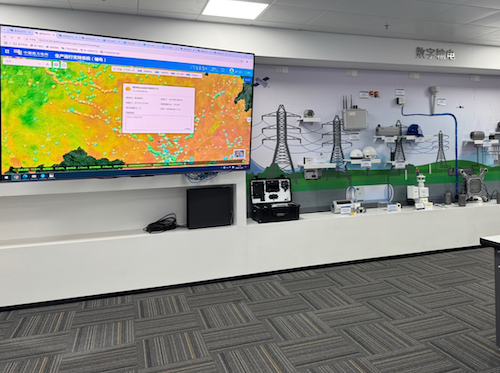
国产物联操作系统电鸿登上“电力杆”,它正在改变电力行业
Di Yi Cai Jing· 2025-12-02 10:04
Core Viewpoint - The deployment of the "Dianhong" power IoT operating system by Southern Power Grid is transforming the fundamental working methods in the electricity industry, significantly improving efficiency and safety in operations [1][3][4]. Group 1: System Efficiency and Operational Changes - The "Dianhong" system connects over ten thousand devices across generation, transmission, distribution, and consumption, allowing for remote management and monitoring, which reduces the time for equipment installation and debugging from 4 hours to 30 minutes [1][3][4]. - The system enables workers to complete tasks that previously required a full day in just a few minutes using mobile devices, thus eliminating the need for dangerous climbing operations [4][6]. - The time for equipment upgrades has been reduced from 3 hours to 20 minutes, showcasing significant operational efficiency improvements [4][6]. Group 2: Technological Advancements - The "Dianhong" system incorporates a three-dimensional monitoring system that utilizes satellite, drone, and ground terminal technologies to identify risks such as wildfires and debris [6][9]. - The system has achieved compatibility with 96 types of chips and 82 categories of grid equipment, covering nearly 80% of critical smart device types [9][11]. - The development of "Dianhong" is based on open-source projects, aiming to resolve the "island" problem of traditional grid devices and enhance interoperability [6][10]. Group 3: Industry Collaboration and Ecosystem Development - Over 500 industry chain manufacturers have joined the "Dianhong" ecosystem, with more than 3,000 terminals undergoing adaptation [11]. - The establishment of an open-source community aims to promote the application of "Dianhong" across various industries, potentially extending its benefits beyond the electricity sector [10][12]. - The system is being positioned to support new intelligent terminals and is expected to evolve into version 4.0, which will enhance features related to AI and security [12].
荣信汇科盈亏交替二闯IPO临考 客户集中存货17亿占总资产60%
Chang Jiang Shang Bao· 2025-12-01 01:08
Core Viewpoint - Rongxin Huike Electric Co., Ltd. is making a second attempt to go public on the Sci-Tech Innovation Board, increasing its fundraising target from 600 million to 977 million yuan, despite ongoing issues with revenue volatility and customer concentration [1][2]. Financial Performance - From 2018 to 2020, Rongxin Huike's revenue was 68.03 million, 236 million, and 807 million yuan, with net profits of -44.87 million, 12.99 million, and 83.19 million yuan respectively. For the period from 2022 to the first half of 2025, revenues were 1.942 billion, 233 million, 508 million, and 234 million yuan, with net profits of 182 million, -56.28 million, 35.42 million, and -5.37 million yuan, indicating alternating profit and loss [5][6]. Customer Concentration - The company has a high customer concentration, with the top five clients contributing 96.55%, 70.84%, 71.27%, and 92.96% of total revenue from 2022 to the first half of 2025. This raises concerns about customer stability as the primary clients vary across periods [7]. Inventory and Cash Flow - As of the end of the reporting periods, the company's inventory was valued at 400 million, 747 million, 1.173 billion, and 1.704 billion yuan, representing 70.09% of current assets and 60.52% of total assets by mid-2025. The net cash flow from operating activities totaled -397 million yuan over the reporting periods [6][8]. Regulatory Issues - After withdrawing its previous IPO application, the company received a warning from the Shanghai Stock Exchange for failing to timely report the detention of its actual controller, which raises concerns about its compliance and governance practices [3][4].