
中国船舶集团有限公司

Search documents
2025年中国科学院、中国工程院院士增选当选院士名单公布
机器人圈· 2025-11-21 01:59
Group 1 - The Chinese Academy of Sciences elected 73 new academicians and 27 foreign academicians in 2025 [2][12] - The announcement was made on November 21, 2025 [2][15] - The new academicians represent various research fields including mathematics, physics, chemistry, and life sciences [3][4][5][6][7][8] Group 2 - The Chinese Academy of Engineering elected 71 new academicians and 24 foreign academicians in 2025 [14][16] - The announcement was also made on November 21, 2025 [15][32] - The new foreign academicians come from diverse countries and fields such as mechanical engineering, data science, and biomedical engineering [34][35][38][39][42]


中国工程院公布2025年院士增选结果,71人当选
Xin Jing Bao· 2025-11-21 01:54
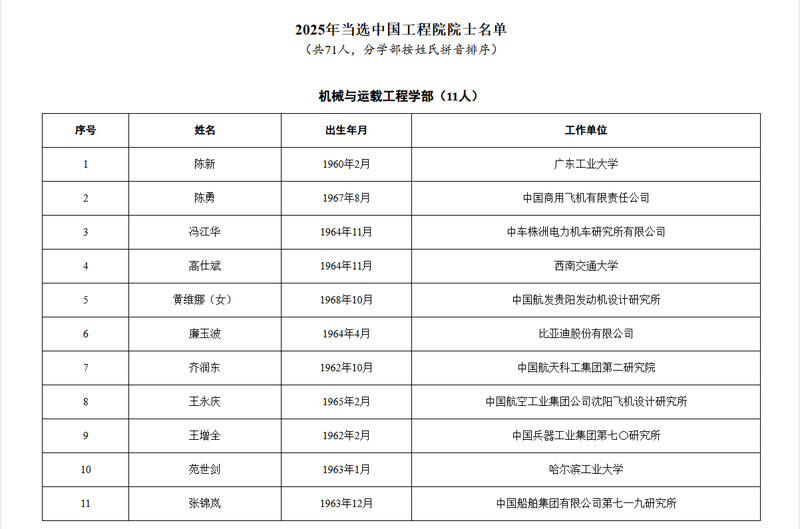
新京报讯(记者张璐)11月21日,中国工程院公布了2025年院士增选当选院士名单、当选外籍院士名单。共有71 位来自工程科技各领域的专家当选中国工程院院士,其中机械与运载工程学部11位,信息与电子工程学部9位,化 工、冶金与材料工程学部10位,能源与矿业工程学部12位,土木、水利与建筑工程学部7位,环境与轻纺工程学部 6位,农业学部8位,医药卫生学部8位。共有24位外籍专家当选中国工程院外籍院士。 本次院士增选,中国工程院坚持党的领导、坚持"四个面向"、坚持质量第一,突出国家战略需求导向,突出以科 技创新引领新质生产力的发展要求,紧密结合国家战略需求和学科发展布局制定了院士增选指南。 一批国防和国家安全领域担纲重大工程、承担重大科研任务的优秀专家当选,来自宁德时代(300750)、比亚迪 (002594)等民营科技领军企业的优秀专家当选,6位扎根西部边远地区的优秀专家当选,8位优秀的女性科学家 当选。通过本次院士增选,进一步优化了院士队伍的年龄结构、学科、地区和行业布局。 | 序号 | 姓名 | 出生年月 | 工作单位 | | --- | --- | --- | --- | | 1 | 戴圣龙 | 1966年 ...
最新“双一流”高校重点实验室名单
仪器信息网· 2025-09-23 03:58
Core Insights - Over 500 national key laboratories have been approved or restructured as of September 13, 2025, with a significant number led or participated in by "Double First Class" universities, particularly top 985 institutions like Tsinghua University and Peking University [2][3]. Summary by Sections National Key Laboratories - A total of more than 500 national key laboratories have been established or restructured, with over 100 "Double First Class" universities involved in their approval [3]. - Peking University currently has 22 national key laboratories, leading in the number of high-level research platforms [3]. Leading Universities - The majority of the national key laboratories are led or co-built by top universities, with Tsinghua University, Peking University, Shanghai Jiao Tong University, and Zhejiang University being the most prominent [2][3]. Specific Laboratories - A list of some notable national key laboratories includes: - Dark Matter Physics National Key Laboratory at Shanghai Jiao Tong University - Explosive Science and Safety Protection National Key Laboratory at Beijing Institute of Technology - Materials Forming and Molding Technology National Key Laboratory at Huazhong University of Science and Technology [4][5][6]. Future Projections - By 2025, the restructuring of national key laboratories is expected to continue, with new approvals anticipated in various fields, including extreme environment optoelectronic dynamic testing technology and wide bandgap semiconductor materials [3].

趋势研判!2025年中国深海资源开发行业政策、发展现状、细分市场、企业布局及战略前景分析:深海资源开发技术迭代加速,万亿产业蓝海正待深度掘金[图]
Chan Ye Xin Xi Wang· 2025-09-17 01:11
Core Insights - Deep-sea resource development focuses on areas deeper than 200 meters, encompassing strategic resources such as minerals, energy, and biological resources, which are crucial for overcoming land resource limitations and ensuring national security [1][2] - The Chinese government has integrated deep-sea development into its national security strategy, designating it as a strategic emerging industry in the 2025 government work report, supported by a special fund of 50 billion yuan for marine economy [1][5] - The industry is projected to reach a scale of 3.25 trillion yuan by 2025 and exceed 5 trillion yuan by 2030, driven by significant growth in oil and gas development, mining, and biopharmaceutical sectors [1][9] Industry Overview - Deep-sea resource development involves exploration, extraction, and utilization of resources in deep-sea areas, aiming to acquire strategic resources through advanced technologies [2][3] - The sector is categorized into five main types: deep-sea mineral resources, oil and gas resources, biological resources, energy resources, and spatial resources [3] Development Drivers - National strategy and policy support are key drivers, with deep-sea development included in China's national security framework and significant funding allocated to support technological advancements [5][6] - The high dependency on foreign oil and gas, with over 70% reliance, necessitates deep-sea oil and gas development as a strategic solution to energy security [5][6] - Technological breakthroughs and domestic equipment manufacturing have positioned China to lead in deep-sea resource development, enhancing its global competitiveness [6][7] Current Industry Status - The deep-sea economy is rapidly growing, with the marine economy reaching 10.54 trillion yuan in 2024, driven by significant demand in deep-sea oil and gas and biological resource development [8][9] - The deep-sea oil and gas sector has seen substantial advancements, with the first ultra-deepwater gas field "Deep Sea No. 1" entering production, marking China's entry into the global first tier of deep-sea oil and gas development [10][11] Corporate Landscape - Major companies in the deep-sea resource development sector include China National Offshore Oil Corporation, China Shipbuilding Industry Corporation, and others, forming a comprehensive ecosystem from resource development to equipment manufacturing [13][14] - The industry is characterized by a full-chain ecosystem that integrates resource development, equipment manufacturing, technological innovation, and regional collaboration [13][14] Future Trends - The industry is expected to evolve towards technological integration and intelligence, with AI and quantum sensing driving automation and efficiency in exploration and extraction processes [15][16] - Environmental sustainability will become a core focus, with the adoption of eco-friendly technologies and the establishment of monitoring systems to minimize ecological impact [16][17] - Expansion into ultra-deepwater and polar regions will reshape the competitive landscape, necessitating international cooperation and standard-setting to address high costs and technical challenges [17][18]







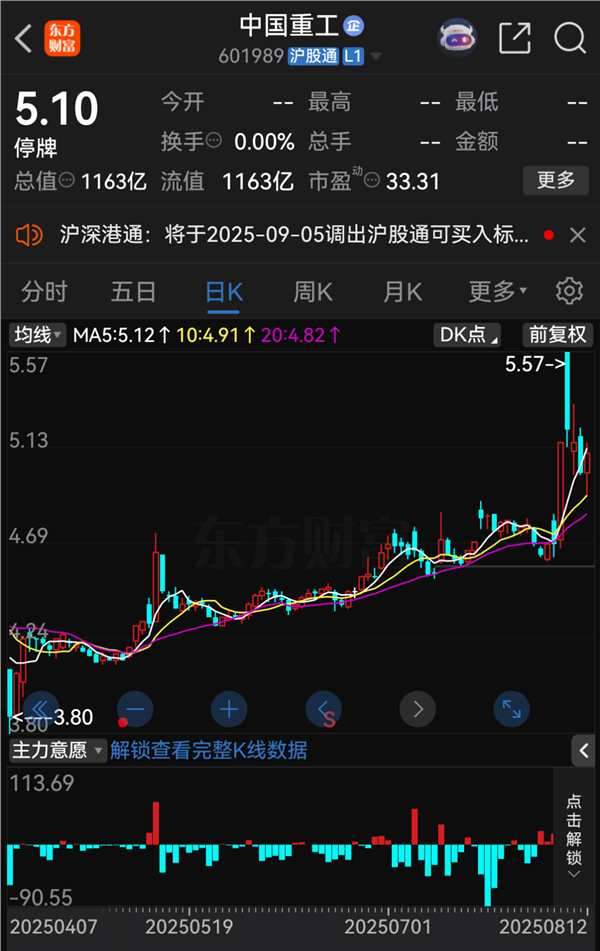
明确交易换股比例 “全球最大上市船企”来了 中国重工计划自9月5日起终止上市
Zhong Guo Ji Jin Bao· 2025-09-04 00:22
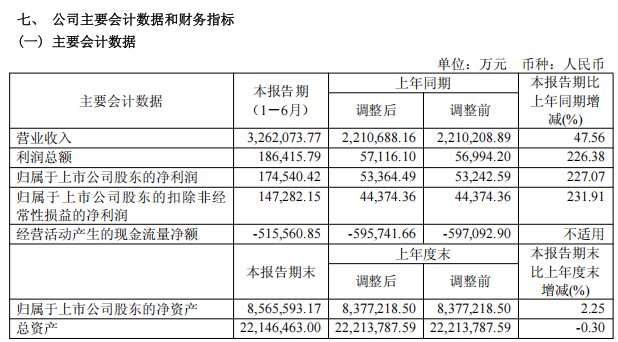
Core Viewpoint - China Shipbuilding Industry Corporation is set to absorb China Shipbuilding Heavy Industry Company through a share swap, which will result in the latter becoming the largest listed shipbuilding company globally. The transaction is expected to be completed by September 5, 2024, with a share exchange ratio of 1:0.1339 [1][3][10]. Group 1: Transaction Details - China Shipbuilding plans to issue A-shares to all shareholders of China Shipbuilding Heavy Industry as part of the share swap [1][3]. - The exchange ratio is confirmed as 1 share of China Shipbuilding Heavy Industry converting to 0.1339 shares of China Shipbuilding [1][3]. - The transaction has received approval from the China Securities Regulatory Commission and the Shanghai Stock Exchange [3]. Group 2: Financial Data - As of June 30, 2025, the total assets of China Shipbuilding Heavy Industry and China Shipbuilding are reported at 2214.65 billion and 1819.77 billion respectively, with net assets of 856.56 billion and 527.48 billion [8][10]. - Following the merger, China Shipbuilding's total assets will reach 4034.42 billion, and net assets will be 1384.04 billion [10]. - For the first half of 2025, the net profit attributable to shareholders for China Shipbuilding Heavy Industry and China Shipbuilding was 17.45 billion and 29.46 billion, reflecting year-on-year growth of 227.07% and 108.59% respectively [10]. Group 3: Strategic Implications - The merger is expected to enhance focus on national strategic priorities and improve the quality of operations within the shipbuilding sector [10]. - Both companies aim to accelerate high-quality development in shipbuilding and streamline competition within the industry [10].

“全球最大上市船企”,来了
中国基金报· 2025-09-03 14:11
Core Viewpoint - China Shipbuilding Industry Corporation (CSIC) plans to absorb China Shipbuilding Heavy Industry Company (CSHC) through a share swap, with the share exchange ratio set at 1:0.1339, effective from September 5, 2025, when CSHC will cease to be listed [4][12][18]. Group 1: Transaction Details - The share swap will allow shareholders of CSHC to exchange each share for 0.1339 shares of CSIC [4][11]. - Following the completion of the transaction, CSHC will terminate its corporate status, and all assets and liabilities will be inherited by CSIC [18][12]. - The transaction has received approval from the China Securities Regulatory Commission and the Shanghai Stock Exchange [12]. Group 2: Financial Data - As of June 30, 2025, CSHC and CSIC reported total assets of CNY 2214.65 billion and CNY 1819.77 billion, respectively [19]. - The net profit for CSHC and CSIC in the first half of 2025 was CNY 17.45 billion and CNY 29.46 billion, reflecting year-on-year growth of 227.07% and 108.59% [23]. - After the merger, CSIC's total assets will reach CNY 4034.42 billion, with net assets of CNY 1384.04 billion [22]. Group 3: Strategic Implications - The merger aims to enhance focus on national strategic priorities and improve the quality of operations within the shipbuilding industry [25]. - Both companies emphasize the importance of this transaction in accelerating high-quality development in shipbuilding and reducing competition within the industry [25].


“全球最大上市船企”,来了
Zhong Guo Ji Jin Bao· 2025-09-03 14:10
Core Viewpoint - China Shipbuilding Industry Corporation (CSIC) is set to absorb China Shipbuilding Heavy Industry Company (CSHC) through a share swap, with the exchange ratio established at 1:0.1339, effective from September 5, 2024, leading to CSHC's termination of listing and the creation of the world's largest publicly listed shipbuilding company [1][4][11]. Group 1: Transaction Details - The share swap ratio is confirmed as 1:0.1339, meaning each share of CSHC will convert into 0.1339 shares of CSIC [2][3]. - The transaction has received approval from the China Securities Regulatory Commission, and the Shanghai Stock Exchange has issued a decision regarding the termination of CSHC's listing [4]. - Following the completion of the transaction, CSHC will cease to exist as a listed entity and will transfer all assets, liabilities, and rights to CSIC [6]. Group 2: Financial Data - As of June 30, 2025, the total assets of CSHC and CSIC are reported at 2214.65 billion and 1819.77 billion respectively, with net assets of 856.56 billion and 527.48 billion [7]. - After the merger, CSIC's total assets will reach 4034.42 billion, and net assets will amount to 1384.04 billion [11]. - For the first half of 2025, the net profit attributable to shareholders for CSHC and CSIC is reported at 17.45 billion and 29.46 billion, reflecting year-on-year growth of 227.07% and 108.59% respectively [11]. Group 3: Business Focus - CSHC's primary operations include shipbuilding (military and civilian), ship repair, marine engineering, and electromechanical equipment [12][13]. - The merger aims to enhance focus on national strategic priorities, accelerate high-quality development in shipbuilding, and improve operational quality of the listed companies [13]. - Both companies are ultimately controlled by China Shipbuilding Group Co., Ltd., a major state-owned enterprise with total assets of 10066.16 billion [13].
研判2025!中国风电运维船行业发展历程、产业链、发展现状、企业分析及发展趋势分析:海上风电的蓬勃发展,为风电运维船带来广阔的需求空间[图]
Chan Ye Xin Xi Wang· 2025-08-29 01:28
Core Viewpoint - The offshore wind operation and maintenance vessels are becoming increasingly vital in the offshore wind power industry, ensuring stable operations and playing an indispensable role in future energy layouts. The global demand for these specialized vessels is surging due to the rapid growth of offshore wind power installation capacity [1][6]. Group 1: Industry Overview - Offshore wind operation and maintenance vessels are specialized ships used for the operation and maintenance of offshore wind turbines, characterized by good motion performance in waves and the ability to safely transport personnel and equipment [2]. - The vessels are mainly categorized into two types: Service Operation Vessels (SOV) and Commissioning Service Operation Vessels (CSOV). SOVs are designed for storing, lifting, and replacing large components of offshore wind turbines, while CSOVs are more flexible and used during the construction and commissioning phases [2][3]. Group 2: Industry Development History - The development of China's offshore wind operation and maintenance vessels can be divided into three stages: early exploration, professional upgrade, and rapid development. The first offshore wind project in China was completed in 2007, marking the beginning of offshore wind maintenance [4]. - By 2021, the industry entered a rapid development phase, with the first batch of SOVs delivered in 2023, significantly enhancing operational efficiency and safety for offshore projects [5]. Group 3: Industry Chain - The industry chain consists of upstream raw materials and equipment supply, midstream production and manufacturing of the vessels, and downstream application in the offshore wind sector. The demand for operation and maintenance vessels is increasing as offshore wind farms enter the maintenance phase [5]. Group 4: Current Market Situation - The global delivery of wind operation and maintenance vessels is projected to reach 58 units in 2024, an increase of 18 units from 2023. China's share of this market has surged from 10% in 2019 to 50% in 2024, indicating rapid growth in this sector [1][6]. Group 5: Competitive Landscape - European companies like Royal IHC and Cadeler dominate the high-end market due to their technological expertise, while Chinese shipbuilders like China Merchants Heavy Industry and Zhenhua Heavy Industries lead the mid-tier market with significant orders for offshore wind operation vessels [8]. - Companies such as Jianglong Shipbuilding and Yinghui Southern Shipbuilding are notable for their advanced designs and construction capabilities in the field of offshore wind operation vessels [9][11]. Group 6: Future Trends - The demand for wind operation and maintenance vessels is expected to continue growing, driven by the push for carbon neutrality and the expansion of offshore wind projects [13]. - The vessels are evolving towards greater specialization and larger sizes to meet the operational demands of deep-sea wind projects, with a focus on safety, adaptability, and economic efficiency [14]. - Future vessels will incorporate smart technologies and automation, enhancing operational efficiency and safety while reducing labor costs and operational risks [15].






同舱容“姊妹船”同日突破 我国自研两艘亚洲超大型耙吸挖泥船成功下水
Xin Hua She· 2025-08-26 15:21
Core Viewpoint - The launch of two large-scale dredging vessels, "Tongjun" and "Junguang," marks a significant advancement for China in the field of large dredging equipment, establishing an international leading position in this sector [1][2]. Group 1: Vessel Specifications and Features - Both vessels have a design length of 198 meters, a width of 38.5 meters, and a depth of 18 meters, with a maximum dredging depth of 120 meters and a hold capacity of 35,000 cubic meters [1]. - The vessels are characterized by their intelligence, efficiency, versatility, and environmental friendliness, featuring a smart operation mode that covers the entire dredging process from excavation to transportation [1][2]. Group 2: Construction Innovations and Efficiency - The construction of the vessels utilized "digital dock + modular construction," resulting in a 20% increase in building efficiency [2]. - The vessels can operate in wind and wave conditions up to level 8, and with the self-developed "one-click dredging" and "dredging driving integration" systems, a single crew member can manage all navigation and construction tasks, achieving full automation in dredging operations [2]. Group 3: Future Implications for the Industry - The introduction of these vessels is expected to enhance the series, specialization, and internationalization of China's dredging fleet, propelling the country from a major dredging nation to a strong dredging power [2].
中国船舶集团总经理王国强与沙特投资大臣法力赫会谈
Xin Lang Cai Jing· 2025-08-26 12:21
Core Viewpoint - China Shipbuilding Group Co., Ltd. is actively seeking to expand cooperation with Saudi Arabia in the shipbuilding sector, indicating a strategic move towards enhancing bilateral trade and investment opportunities [1] Group 1 - On August 25, a meeting took place in Shanghai between Wang Guoqiang, the General Manager of China Shipbuilding Group, and Khalid Al-Falih, the Saudi Minister of Investment [1] - The discussions focused on further expanding cooperation areas and promoting higher-level practical collaboration between the two nations [1] - Multiple consensus agreements were reached during the Saudi-China shipbuilding supply chain roundtable meeting [1]