赢创

Search documents
卡脖子:中国哪些新材料高度依赖日本进口及国外进口?




材料汇· 2025-11-24 15:58
Core Viewpoint - The article highlights the significant dependency of China's high-end manufacturing on Japan for critical strategic new materials, particularly in the semiconductor and advanced manufacturing sectors, emphasizing the risks posed by geopolitical tensions and supply chain vulnerabilities [2][4]. Group 1: Dependency on Japanese Core New Materials - Japan holds a monopolistic position in semiconductor materials, high-end polymers, and electronic chemicals, with China's dependency exceeding 50% in several key categories, and nearly 100% in some high-end areas [4][6]. - The complexity of semiconductor manufacturing processes means that Japan dominates the supply of critical materials like photoresists and silicon wafers, with global market shares consistently above 60% [6][9]. Group 2: Semiconductor Core Materials - **Photoresists**: China has an overall import dependency of about 90%, with high-end photoresists being 100% reliant on Japan. Major suppliers include JSR, Tokyo Ohka, Shin-Etsu Chemical, and Fujifilm, which control 92% of the high-end market [7]. - **12-inch Silicon Wafers**: The import dependency is around 90%, with Japan supplying 58%. Key players like Shin-Etsu Chemical and SUMCO dominate over 60% of the market [9]. - **High-Purity Ruthenium Targets**: The import dependency is 98%, with Japan's JX Metals and TOSOH holding a significant market share. Domestic production is limited to lower purity levels [12]. Group 3: High-End Polymer Materials - Japan leads the high-end market for electronic-grade polyimide films, with an import dependency of 85% for overall polyimide materials, and 90% for high-end applications [19]. - **Optical-grade PET Films**: The import dependency is 75%, with Japan supplying 100% of high-end films used in MLCCs [23]. Group 4: Other Key Materials in Electronics - **Sputtering Targets**: The import dependency is approximately 95%, with Japan's JX Metals and Nippon Mining controlling 60% of the market [27]. - **High-Purity Electronic Gases**: The import dependency is 70%, with Japan's Taiyo Nippon Sanso holding a 40% market share [31]. Group 5: Hydrogen Energy and Fuel Cell Key Materials - **High-End Carbon Carrier Materials**: The overall import dependency is 85%, with Japan's TOSOH dominating the market [35]. - **Fuel Cell Platinum-based Catalysts**: The import dependency is 78%, with significant reliance on European suppliers [107]. Group 6: Aerospace and High-End Manufacturing Key Materials - **High-Temperature Alloys**: The import dependency is 90%, with major suppliers from the US and Europe completely dominating the market [80]. - **Carbon Fiber**: The import dependency is 85%, with Japan and the US leading the high-end market [86]. Group 7: New Energy and Electronics Key Materials - **High-End Lithium-Ion Battery Separators**: The import dependency is 70%, with Japan's Asahi Kasei and Toray leading the market [94]. - **Ultra-Thin Copper Foils**: The import dependency is 80%, with Japan's JX Copper and Mitsui Mining dominating the supply [98].


欧洲化工企业三季度盈利受挫
Zhong Guo Hua Gong Bao· 2025-11-20 01:11
Group 1: Core Insights - European chemical companies reported significant profit declines and even net losses in Q3, with sales also plummeting due to overcapacity, price drops, and currency fluctuations [1] - BASF's Q3 profits and sales both fell, with a report indicating that profit margins are under pressure and showing no signs of improvement, as nearly all indicators are at cyclical lows [1] - Bayer continued to report net losses in Q3, but adjusted EBITDA increased by 21% year-on-year to €1.51 billion, exceeding analyst expectations, primarily driven by its crop science business [1] Group 2: Company-Specific Performance - Evonik transitioned from profit to a net loss of €106 million in Q3, with adjusted EBITDA down 22% year-on-year to €448 million, and revenue decreased by 12% to €3.4 billion [2] - Covestro faced a loss of €150 million due to ongoing plant shutdowns, with Q3 sales down 12% and EBITDA guidance for the year lowered to €700 million to €800 million [2] - AkzoNobel reported a Q3 adjusted EBITDA of €385 million, below expectations, and lowered its annual profit guidance, anticipating an adjusted EBITDA of €1.48 billion for 2025 [3] Group 3: Market Trends and Challenges - The chemical industry is facing a challenging market environment with persistent price pressures and declining demand, leading to significant adjustments in profit forecasts across multiple companies [1][2][3] - Arkema lowered its full-year EBITDA guidance to €1.25 billion to €1.3 billion due to macroeconomic pressures and weaker-than-expected demand in the U.S. [3] - Lanxess experienced a 16.3% year-on-year decline in sales in Q3, with varying performance across its business segments, highlighting the impact of market pressures on profitability [3]
欧洲化企三季度盈利受挫
Zhong Guo Hua Gong Bao· 2025-11-19 02:40
Group 1: Overall Industry Performance - European chemical companies reported significant profit declines and even net losses in Q3, with sales also plummeting due to overcapacity, price drops, and currency fluctuations, overshadowing slight improvements in sales volume [1] - The market environment remains highly challenging for the chemical industry, with multiple pressures affecting profitability and cash flow [1] Group 2: Company-Specific Performance - BASF experienced declines in both profit and sales in Q3, with profit margins under pressure and no signs of improvement, as nearly all indicators are at cyclical lows; high capital expenditures expected in 2025 will continue to impact profitability and cash flow [1] - Bayer continued to report net losses in Q3, but adjusted EBITDA increased by 21% year-on-year to €1.51 billion, exceeding analyst expectations, driven mainly by its crop science business, despite a 3.2% decline in revenue [1] - Evonik turned from profit to a net loss of €106 million in Q3, with adjusted EBITDA down 22% year-on-year to €448 million, and revenue decreased by 12% to €3.4 billion, primarily due to declining sales volume [2] - Covestro reported a loss of €150 million in Q3 due to ongoing production stoppages, with sales down 12% and EBITDA guidance for the year lowered to €700 million to €800 million [2] - AkzoNobel turned from profit to loss in Q3, with adjusted EBITDA of €385 million, below expectations, and a 2% year-on-year decline; the company lowered its annual profit guidance [3] - Arkema adjusted its full-year EBITDA guidance down to €1.25 billion to €1.3 billion, with Q3 EBITDA down 24% year-on-year to €310 million, still exceeding market expectations [3] - Lanxess reported a 16.3% year-on-year decline in sales in Q3, with EBITDA down 27.7%, although its consumer protection business showed resilience with a 1.4% increase in EBITDA [3]
聚焦三大领域 做绿色转型赋能者——赢创大中华区总裁夏赋良谈进博会溢出效应
Zhong Guo Hua Gong Bao· 2025-11-17 02:48
Core Insights - The company showcased its commitment to sustainable development and innovation at the 8th China International Import Expo, emphasizing the theme "Beyond Chemical Boundaries, Driving a Green Future" [1] - The company launched 11 innovative products at the expo, with 4 being global debuts and 2 being both global debuts and locally developed, highlighting the alignment of global R&D resources with local market needs [2] - The company signed multiple strategic agreements during the expo, including partnerships to establish innovation centers and funds, reflecting a shift towards high-quality development and collaborative business models in the Chinese market [2] Sustainable Development Initiatives - The company released the 2025 edition of its "Sustainable Development Practice Report" in China, marking it as the only market outside of its global operations to have a dedicated local report, showcasing its commitment to local sustainable practices [3] - The company positions itself as an enabler of green transformation, exemplified by its collaboration with 361° to produce running shoes from recycled tires, achieving a 70% reduction in carbon emissions [3] - In the biobased sector, the company focuses on reducing carbon at the raw material level, utilizing by-products and fermentation technology to achieve a 100% reduction in CO2 footprint compared to traditional chemical processes [3] Market Confidence and Growth Strategy - Despite challenges in the global chemical industry, the company maintains strong confidence in the Chinese market, which accounts for 42% of global chemical production and is seen as a core growth engine [4] - The company's sales in China currently represent 10% of its global revenue, with a target to increase this to 15% by 2032, indicating a strategic focus on expanding its market share [4] - The company plans to increase investments in China over the next 3-5 years, focusing on biobased solutions, circular economy, and renewable energy to capitalize on opportunities arising from China's economic upgrade and industrial transformation [4]
进博会勾勒化工未来图景
Zhong Guo Hua Gong Bao· 2025-11-11 03:06
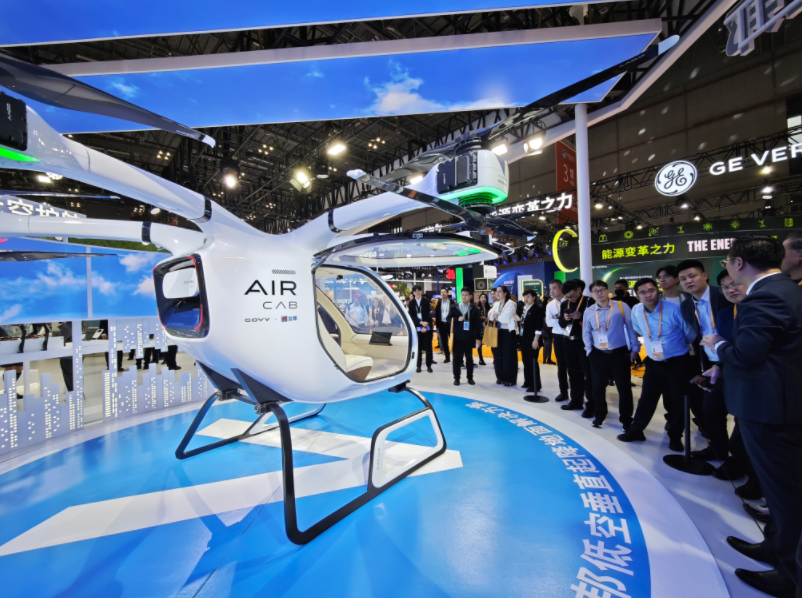
Core Insights - The 8th China International Import Expo (CIIE) showcased 461 new products, technologies, and services across various sectors, emphasizing innovation and sustainability [1] Group 1: Innovative Technologies - Dow's self-healing tire technology can automatically seal punctures, reducing vehicle weight and fuel consumption [2] - Nippon Paint's low-altitude flying vehicle features a coating solution that reduces weight by 20% compared to traditional aviation paints while enhancing heat and UV resistance [2] - 3M introduced an automated sealing device for electric vehicle battery packs, achieving a sealing speed of 200 mm per second and meeting both sealing and flame-retardant requirements [2] - DuPont showcased a vehicle body using adhesive solutions to replace traditional welding, improving structural strength and safety [2] - Toray presented a new water treatment membrane designed for ultra-pure water preparation in the semiconductor industry, enhancing impurity removal rates [2] Group 2: Sustainable Development - The expo highlighted "green sustainable development," with numerous low-carbon products and technologies on display [4] - Dow's sustainable development area featured over 40 green innovation products, including a shoulder bag made from artificial grass fibers containing recycled resin [4] - Asahi Kasei displayed biodegradable and marine-degradable materials in their colorful food packaging [3][5] - Honeywell promoted its UpCycle plastic recycling process, converting plastic waste into recycled polymer materials [5] - Evonik introduced a plastic recycling additive to remove contaminants from waste plastics, facilitating recycling [6] Group 3: Strategic Partnerships - Sinopec signed procurement agreements worth over $40.9 billion with 34 partners from 17 countries, covering various products [6] - CNOOC held a global procurement signing ceremony for crude oil, natural gas, and advanced technology services [6] - Dow and Hisense Group signed a procurement letter of intent for key polyurethane materials for high-end home appliances [6] - 3M China and China Resources Environmental signed a cooperation agreement to enhance safety solutions across multiple scenarios [6] - Evonik and Hebei Yadong Chemical Group signed a strategic cooperation memorandum to develop high-performance polyurethane solutions tailored to the Chinese market [7]
进博会勾勒化工未来图景
Zhong Guo Hua Gong Bao· 2025-11-11 03:00
Core Viewpoint - The 8th China International Import Expo (CIIE) showcases innovation and sustainability, featuring 461 new products, technologies, and services across various sectors, including low-altitude economy and green technology [1] Group 1: Innovation and Technology - Dow's self-healing tire technology can automatically seal punctures, reducing vehicle weight and fuel consumption [2] - Nippon Paint's low-altitude flying vehicle uses lightweight coatings that reduce weight by 20% compared to traditional aviation paints [2] - 3M's automated sealing device for electric vehicle battery packs can apply sealant at a speed of 200 mm per second, meeting sealing and fire resistance requirements [2] - DuPont's adhesive solutions enhance vehicle structure and safety while reducing weight and extending range [2] - Toray's new water treatment membrane addresses ultra-pure water needs for the semiconductor industry, improving impurity removal rates [2] Group 2: Sustainability and Green Development - The expo emphasizes green sustainable development, with over 40 green innovation products displayed by Dow, including a shoulder bag made from recycled materials [5] - Asahi Kasei showcases biodegradable and marine-degradable materials in its handcrafted products [6] - Honeywell promotes its UpCycle plastic recycling process, converting waste plastics into new polymers [6] - Evonik presents additives that remove contaminants from waste plastics, facilitating recycling [6] - Henkel's use of anti-slip stacking adhesives reduces plastic waste in packaging [6] Group 3: International Cooperation and Business Opportunities - Sinopec signed procurement agreements worth over $40.9 billion with 34 partners from 17 countries, covering oil, chemicals, and equipment [7] - CNOOC held a global procurement signing ceremony for oil, gas, and advanced technology services [7] - Dow and Hisense signed a procurement intent for key polyurethane materials for high-end appliances by 2026 [7] - 3M China and China Resources Environmental Protection signed a cooperation agreement to enhance safety solutions [7] - Evonik and Hebei Yadong Chemical Group signed a strategic cooperation memorandum to develop sustainable polyurethane solutions for the Chinese market [7]
江苏社保科创基金,首期500亿;50亿元央企产业基金落地武汉 | 11.03-11.09
创业邦· 2025-11-11 00:08
睿兽Pro . 创业邦旗下横跨一二级市场的科创数据平台。实时投资数据、追踪产业创新。找数据、做分析、链资 源,就上睿兽分析。 上周基金重点事件回顾丨11.03-11.09 以下文章来源于睿兽Pro ,作者Bestla 睿兽分析每周整理最值得关注的基金重点事件,帮助大家及时了解全球私募股权基金 市场动向。 政府引导基金 江苏社保科创基金,首期500亿 10月31日,江苏社保科创基金在南京正式签约。江苏社保科创基金由全国社会保障基金理事会联合 江苏省政府、苏州市政府和工银投资共同出资设立,首期规模500亿元,由苏州创新投资集团有限公 司担任管理人。基金采用"母基金+直投"的双层架构与联合管理模式,旨在实现资源整合与专业运作 的有机结合。该基金将依托江苏和苏州雄厚的产业基础与创新生态,围绕企业全生命周期开展投资, 重点支持具备突破性技术、高成长潜力,并能够增强区域产业链韧性与安全水平的优质科创项目。在 产业布局上,重点聚焦人工智能、集成电路、生物制造、新能源、高端装备、新材料等战略性新兴产 业领域,助力构建现代化产业体系。 ( 苏州金融 ) 成都成立100亿电子信息产业基金 近日,四川省成都市产投电子信息重大产业化 ...
陶氏、科思创、赢创、杜邦、霍尼韦尔,密集签约!
DT新材料· 2025-11-10 16:03
Core Viewpoint - The article highlights multiple strategic partnerships announced during the 8th China International Import Expo, focusing on sustainable solutions in the new materials sector, particularly in automotive coatings, synthetic leather, and other applications, with an emphasis on bio-based and recycled materials [2]. Group 1: Strategic Partnerships - Covestro and Nippon Paint have established a strategic cooperation focusing on automotive and industrial coatings, aiming for low-carbon material development and VOC reduction [3]. - DuPont and Amcor are deepening their partnership to enhance sustainable medical packaging, aligning with China's "Healthy China 2030" initiative [4]. - Henkel and Datong CRRC Coal Chemical Co. are collaborating on lightweight materials and noise reduction technologies for rail transit vehicles [5]. - Honeywell has signed multiple agreements with companies like Sinochem Energy and China National Petroleum Corporation to enhance catalyst and adsorbent technologies for sustainable production [6]. - Evonik has partnered with Yulin High-tech Innovation Construction Group to develop catalysts and low-carbon processes in the fine chemicals and new materials sector [6]. Group 2: Focus on Sustainable Development - Evonik and Asahi Kasei are working together to develop environmentally friendly synthetic leather products using solvent-free polyurethane technology [7]. - The synthetic leather market in China is rapidly growing, driven by stricter environmental regulations and increasing consumer demand for sustainable products [8]. - Evonik has announced the establishment of an innovation fund in China, focusing on investments related to sustainable topics such as bio-based solutions and circular economy [9]. - Evonik and Hebei Yadong Chemical Group are collaborating to develop high-performance polyurethane solutions tailored to the Chinese market [10]. Group 3: Innovations in Material Science - Dow has signed agreements with various companies, including 3M China and Zhejiang Pengfulong, to explore green materials and sustainable packaging solutions [12][13]. - Dow's collaboration with Qingdao Qinghe focuses on sustainable packaging resins, integrating recycled materials to enhance resource efficiency [14]. - Dow and Zhongnan Construction are working together to promote high-quality green building development through advanced material technologies [15][16].


伴随进博会不断成长 展商代表自建微信群从2018年至今规模扩大十倍 “邻居群”:展台展区内外处处是朋友
Jie Fang Ri Bao· 2025-11-09 02:33
Group 1 - The return of companies like Evonik to the China International Import Expo (CIIE) highlights the growing professionalism and efficiency of the event [1] - The "Neighbor Group," a WeChat group formed by exhibitors, has expanded from over 30 members in its first year to more than 365 members this year, reflecting the increasing influence of the CIIE [2] - The group serves as a platform for exhibitors to share experiences and support each other, enhancing their participation in the expo [3][4] Group 2 - The "Neighbor Group" facilitates collaboration among exhibitors, allowing them to exchange ideas and strategies for maximizing their presence at the CIIE [5][6] - Companies like Nippon Paint and Karcher have adapted their exhibition strategies based on insights gained from the group, demonstrating the value of shared knowledge [6][7] - The group has also been recognized by the CIIE's official platform for its role in amplifying the event's opportunities through informal networking [8] Group 3 - Collaborative initiatives, such as joint activities among exhibitors, have been implemented to attract more visitors and enhance engagement at the expo [9] - The CIIE is viewed as a collective effort where exhibitors can benefit from each other's experiences and innovations, promoting a culture of openness and cooperation [10]
进博会观察|外资重新定义中国市场
经济观察报· 2025-11-08 03:44
Core Viewpoint - Multinational companies are increasingly committed to expanding their investments in China, recognizing the country's stable development environment and vast growth potential amidst global trade challenges [2][5]. Group 1: Investment and Trade Opportunities - The 8th China International Import Expo (CIIE) attracted over 4,108 companies from 155 countries, marking a record high in participation [4]. - Bilateral trade between China and Malaysia is projected to reach $212.04 billion in 2024, reflecting an 11.4% year-on-year increase, with China remaining Malaysia's largest trading partner for 16 consecutive years [3]. - Companies like Cargill have signed over $30 billion in cooperation agreements at previous expos, highlighting the platform's value for securing significant contracts [8]. Group 2: Localization and Market Adaptation - Baker Hughes has invested in a manufacturing facility in Tianjin to produce aerospace-related materials locally, responding to the growing demand in China's aviation sector [11]. - Mitsubishi Electric is shifting its strategy from exporting products to manufacturing in China, aiming to enhance its international competitiveness by leveraging local industry strengths [12]. - Spritzer, a Malaysian beverage company, has adapted its product offerings to include sparkling water, recognizing a gap in the Chinese market for healthier beverage options [13]. Group 3: Industry Growth and Consumer Trends - The aging population and rising income levels in China are driving demand for health-conscious food products, prompting companies to optimize their supply chains and product offerings [14]. - The CIIE serves as a vital platform for companies to connect with local partners and explore innovative solutions tailored to Chinese consumer preferences [17]. - Evonik has expanded its investment in China, with plans to increase production capacity in various locations, aiming for sustainable growth in the Asia-Pacific region [18].