路维光电

Search documents
短视频“刷刷刷” 散户“冲冲冲” 机构投资对战互联网“吸睛大法”
Zhong Guo Zheng Quan Bao· 2026-02-01 23:16
Core Viewpoint - The rise of "Internet trading strategies" has led to significant speculation in the stock market, particularly among retail investors influenced by social media algorithms and prominent financial influencers [1][2][3] Group 1: Internet Trading Strategies - "Internet trading strategies" leverage the influence of individual accounts or matrix accounts to attract attention and create momentum for specific stocks [2] - The commercial aerospace sector has exemplified this mechanism, with significant trading activity observed in stocks like "航天发展" driven by retail investor interest and social media hype [2][3] - The phenomenon of "algorithmic recommendation" creates a feedback loop where stock prices rise in tandem with online popularity, leading to a cycle of speculation [3] Group 2: Regulatory Actions - Recent regulatory actions have targeted the operations of influencers like "金永荣," who engaged in illegal stock promotion and profited from subsequent sell-offs, resulting in penalties and market scrutiny [4] - Regulatory bodies are increasingly focused on curbing the influence of financial influencers and ensuring compliance within social media platforms to protect retail investors [9][10] Group 3: Institutional Investor Response - Institutional investors, particularly quantitative funds, are incorporating social media data into their investment strategies, often using it as a contrarian indicator rather than a signal to follow retail trends [5][6] - The reliance on traditional market data over social media sentiment reflects a cautious approach among institutional investors, who view retail-driven market movements as potentially misleading [6][8] Group 4: Market Dynamics and Investor Behavior - The rise of social trading has intensified the "herding effect" among retail investors, creating opportunities for professional investors to capitalize on mispriced assets resulting from collective retail actions [7][8] - The rapid fluctuations in market sentiment driven by social media can lead to significant price volatility, often disadvantaging retail investors who may not react as swiftly as institutional players [8] Group 5: Future Considerations for Professional Institutions - Professional institutions are encouraged to adapt their strategies to engage with retail investors more effectively, focusing on educational content and transparent communication to build trust [10] - The challenge remains for institutions to balance compliance with the need to provide relevant and timely investment advice in a rapidly changing market environment influenced by social media [10]
机构投资对战互联网“吸睛大法”
Zhong Guo Zheng Quan Bao· 2026-02-01 20:53
Core Viewpoint - The rise of "Internet trading strategies" has led to significant speculation in the stock market, particularly among retail investors, driven by social media influencers and algorithmic recommendations [1][2][3] Group 1: Internet Trading Strategies - The "Internet trading strategy" is characterized by leveraging personal accounts or matrix accounts to attract attention and create momentum for specific stocks [2] - Influencers like "Chen Xiaoqun" have gained notoriety for their dramatic wealth stories, amplifying their influence through social media platforms [1][3] - The commercial aerospace sector has exemplified this strategy, with significant trading activity observed in stocks like "航天发展" [2] Group 2: Regulatory Actions - Recent regulatory actions have targeted influencers and their trading practices, revealing the operational logic behind "Internet trading strategies" [4] - The Zhejiang Securities Regulatory Bureau has penalized individuals for promoting stocks while simultaneously selling them, highlighting the risks associated with influencer-driven trading [4] Group 3: Institutional Investor Response - Institutional investors, particularly quantitative funds, are incorporating social media data into their investment strategies, often using it as a contrarian indicator rather than a signal to follow [5][6] - Quantitative teams are exploring more stable social data, such as sales figures and social media sentiment, to gauge market conditions [6] Group 4: Market Dynamics and Risks - The phenomenon of "social trading" has intensified, with retail investors increasingly relying on influencers for investment decisions, leading to potential market volatility [7] - Algorithms on social media platforms can create echo chambers, limiting the diversity of information available to retail investors [8] Group 5: Professional Investor Strategies - Professional institutions are encouraged to shift from one-way communication to more interactive services, providing educational content that aligns with investor habits [9] - Building trust through transparency and genuine engagement is essential for professional institutions to compete with social media influencers [9]


路维光电:先进封装领跑,半导体制程持续推进-20260129
China Post Securities· 2026-01-29 13:25
Investment Rating - The report maintains a "Buy" rating for the company, indicating an expected relative increase in stock price of over 20% compared to the benchmark index within the next six months [5][13]. Core Insights - The company is positioned to benefit from the increasing penetration of OLED technology and the expansion of panel manufacturers, which is expected to significantly open up the domestic market for photomasks. Currently, China holds 76% of global LCD capacity and 47% of OLED capacity, with photomask capacity at only 31.4%, indicating a substantial demand gap [3]. - The company is investing RMB 2 billion in a new production base in Xiamen to enhance its capacity for high-generation, high-precision photomasks, with plans to establish 11 production lines focused on G8.6 and below AMOLED technologies. The first phase of this project is expected to generate revenue by the second half of 2026 [3]. - The semiconductor photomask market in China is projected to reach nearly RMB 20 billion by 2025, driven by advancements in packaging technologies and increasing demand from sectors such as AI, automotive electronics, and 5G/6G applications. The company has already achieved mass production of photomasks for 180nm nodes and is progressing towards 130nm and 150nm nodes [4]. Financial Projections - The company is expected to achieve revenues of RMB 1.17 billion, RMB 1.57 billion, and RMB 2.11 billion for the years 2025, 2026, and 2027, respectively, with net profits of RMB 264 million, RMB 366 million, and RMB 515 million for the same years [5][9]. - The projected growth rates for revenue are 30.21% for 2025, 33.63% for 2026, and 34.27% for 2027, indicating a strong upward trend in financial performance [9][12]. - The earnings per share (EPS) are forecasted to be RMB 1.37, RMB 1.89, and RMB 2.66 for 2025, 2026, and 2027, respectively, with a decreasing price-to-earnings (P/E) ratio from 56.93 in 2024 to 21.10 in 2027, suggesting improving valuation metrics over time [9][12].

路维光电(688401):先进封装领跑,半导体制程持续推进
China Post Securities· 2026-01-29 10:53
Investment Rating - The report maintains a "Buy" rating for the company, indicating an expected relative increase in stock price of over 20% compared to the benchmark index within the next six months [5][13]. Core Insights - The company is positioned to benefit from the increasing penetration of OLED technology and the expansion of panel manufacturers, which is expected to significantly open up the domestic market for photomasks. Currently, China holds 76% of global LCD capacity and 47% of OLED capacity, with photomask capacity at only 31.4%, indicating a substantial demand gap [3]. - The company is investing RMB 2 billion in a new production base in Xiamen to enhance its capacity for high-generation, high-precision photomasks, with plans to establish 11 production lines focused on G8.6 and below AMOLED technologies. The first phase will include 5 production lines, with equipment expected to be installed by 2026 [3]. - The semiconductor photomask market in China is projected to reach nearly RMB 20 billion by 2025, driven by advancements in packaging technologies and increasing demand from sectors such as AI, automotive electronics, and 5G/6G [4]. Financial Projections - The company is expected to achieve revenues of RMB 1.17 billion, RMB 1.57 billion, and RMB 2.11 billion for the years 2025, 2026, and 2027, respectively. Corresponding net profits are projected to be RMB 264 million, RMB 366 million, and RMB 515 million [5][9]. - The report outlines a growth rate of 30.21% for 2025, with subsequent years showing growth rates of 33.63% and 34.27% for 2026 and 2027, respectively [9][12]. - The earnings per share (EPS) is forecasted to increase from RMB 0.99 in 2024 to RMB 2.66 by 2027, reflecting a strong upward trend in profitability [12].
路维光电1月26日获融资买入3001.49万元,融资余额3.52亿元
Xin Lang Cai Jing· 2026-01-27 01:36
Group 1 - The core viewpoint of the news is that Lu Wei Optoelectronics experienced a decline in stock price while showing significant financing activity, indicating a high level of investor interest despite the drop [1] - On January 26, Lu Wei Optoelectronics' stock fell by 3.57%, with a trading volume of 283 million yuan. The financing buy amount was 30.01 million yuan, while the financing repayment was 26.75 million yuan, resulting in a net financing purchase of 3.27 million yuan [1] - As of January 26, the total balance of margin trading for Lu Wei Optoelectronics was 352 million yuan, which accounts for 3.29% of its circulating market value, indicating a high level compared to the past year [1] Group 2 - As of September 30, the number of shareholders for Lu Wei Optoelectronics reached 10,600, an increase of 25.18% from the previous period, with an average of 18,292 circulating shares per person, up by 33.47% [2] - For the period from January to September 2025, Lu Wei Optoelectronics achieved an operating income of 827 million yuan, representing a year-on-year growth of 37.25%, and a net profit attributable to shareholders of 172 million yuan, up by 41.88% [2] - Since its A-share listing, Lu Wei Optoelectronics has distributed a total of 132 million yuan in dividends [3]
雪球封禁22名荐股大V,浙江证监局重罚金永荣8300万元
Sou Hu Cai Jing· 2026-01-26 11:15
Group 1 - The core issue revolves around the crackdown on stock influencers (known as "大V") who have been manipulating the market and misleading retail investors, leading to significant financial losses for the latter [2][3][37] - On January 19, the Zhejiang Securities Regulatory Bureau issued a penalty of over 83 million yuan to a stock influencer named Jin Yongrong, also known as "Jin Huo," for market manipulation [3][39] - The regulatory actions included the permanent banning of 22 influencer accounts on the Snowball platform, which were known for long-term stock recommendations and had large followings [2][37][61] Group 2 - Jin Yongrong's account had approximately 130,000 followers and was involved in promoting stocks across multiple platforms, including WeChat and Xiaohongshu, significantly increasing his influence [4][39] - His trading activities included buying stocks before recommending them and then selling them at a profit to retail investors, which led to a calculated illegal gain of approximately 41.6 million yuan [8][41][42] - The regulatory body emphasized that disclaimers in his posts did not absolve him of responsibility, as they were merely formalities that did not change the nature of his actions [7][40] Group 3 - Other platforms like Ant Group, Douyin, and Tencent have also announced measures to combat misleading financial content, with Ant Group reporting the removal of over 58,000 pieces of illegal financial promotional content [28][32][61] - The crackdown is part of a broader initiative to address issues such as excessive speculation, inducement of follow-on trading, and the dissemination of false information in the capital markets [26][59] - The actions taken against these influencers reflect a growing concern over the integrity of the capital markets and the protection of retail investors from fraudulent practices [2][37][58]




22个财经大V被关,你想跟着发财的“股神”,全靠收割粉丝
3 6 Ke· 2026-01-26 08:07
Group 1 - Regulatory actions have intensified against stock influencers, with a notable case involving a prominent influencer fined 83 million yuan for market manipulation [1][2][11] - The Zhejiang Securities Regulatory Bureau identified the influencer, Jin Yongrong (known as "Jin Huo"), as having manipulated the market through repeated stock recommendations, significantly impacting stock prices and trading volumes [6][10] - Jin Huo's activities included promoting stocks across multiple platforms, leading to a surge in followers and engagement, particularly after a viral article on the new energy sector [4][5] Group 2 - The crackdown on influencers has led to the permanent banning of 22 accounts on the Snowball platform, which were involved in misleading stock recommendations [1][31] - Major platforms like Ant Group, Douyin, and Tencent have also announced initiatives to combat fraudulent financial content, with significant numbers of accounts being penalized for spreading false information [31][32] - The regulatory focus includes addressing excessive speculation, illegal investment consulting, and the dissemination of false information, indicating a broader effort to stabilize the capital market [30][32] Group 3 - The case of Jin Huo exemplifies a larger trend where influencers engage in practices that mislead retail investors, often resulting in significant financial losses for those who follow their advice [12][20] - Another influencer, known as "Chen Xiaoqun," has been implicated in market manipulation, with reports of aggressive trading strategies that have led to substantial losses for retail investors [20][28] - The volatility of stocks promoted by these influencers has raised concerns about the integrity of the market, as evidenced by drastic price fluctuations following their recommendations [34]
本周热度变化最大行业为公用事业、传媒:市场情绪监控周报(20260119-20260123)-20260125
Huachuang Securities· 2026-01-25 11:49
- The report introduces a "Total Heat Index" indicator, which is defined as the sum of a stock's browsing, watchlist additions, and click counts, normalized as a percentage of the total market on the same day, and then multiplied by 10,000. The value range of the indicator is [0, 10,000][7] - A rotation strategy is constructed based on the weekly rate of change of the heat index (MA2). At the end of each trading week, the strategy involves buying the broad-based index with the highest MA2 rate of change. If the "Others" group has the highest rate of change, the strategy remains in cash. The strategy has achieved an annualized return of 8.74% since 2017, with a maximum drawdown of 23.5%, and a return of 3.6% in 2026[13][16] - The report also constructs two simple portfolios based on concept heat indices. The first portfolio (TOP) selects the top 10 stocks with the highest total heat index from the top 5 concepts with the highest heat index changes each week, while the second portfolio (BOTTOM) selects the bottom 10 stocks with the lowest total heat index from the same concepts. The BOTTOM portfolio has historically achieved an annualized return of 15.71% with a maximum drawdown of 28.89%[30][32]
雪球大V被罚没0.8亿元 “流量变现”一次清零 “自媒体+投顾+交易”混合模式 证券监管红线划定
Zhong Guo Jing Ying Bao· 2026-01-23 18:36
Core Viewpoint - The Zhejiang Securities Regulatory Bureau has imposed a fine of 83.25 million yuan on Jin Yongrong for manipulating the securities market, along with a three-year ban from the securities market, highlighting the regulatory scrutiny on illegal stock recommendations by influential figures in the financial sector [1][4]. Group 1: Regulatory Actions - Jin Yongrong was fined 83.25 million yuan and banned from the securities market for three years due to his manipulation of stock prices through his account "Jin Huo" on the Xueqiu platform, where he recommended 32 stocks and subsequently engaged in large reverse sell transactions [1][2]. - The total trading amount involved in the manipulation was 631 million yuan, with illegal gains amounting to 41.62 million yuan [2][4]. Group 2: Impact on Market Practices - The case has brought the "influencer-led stock recommendation and reverse selling" gray industry chain under regulatory scrutiny, aiming to establish clear legal boundaries for the mixed model of "self-media + investment advisory + trading" [1][5]. - The regulatory actions are part of a broader initiative by the National Internet Information Office and the China Securities Regulatory Commission to address false information related to the capital market and illegal stock recommendations [5][6]. Group 3: Expert Opinions - Industry experts believe that the penalties imposed on Jin Yongrong will significantly deter similar illegal activities by other influencers, as the fines are designed to outweigh any potential financial gains from such actions [6][7]. - The case is seen as a step towards maintaining a transparent and fair market environment, which is essential for attracting long-term investment and enhancing investor confidence [7].
余韩操纵“博士眼镜”股票,被证监会罚没超10亿元
Xin Lang Cai Jing· 2026-01-23 10:41
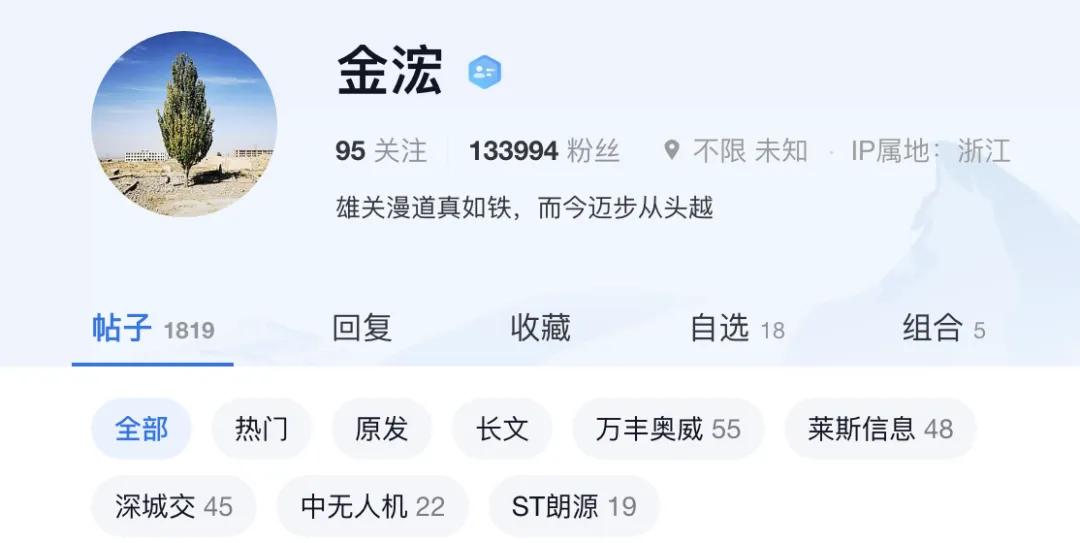
这也是近期公布的第二起自然人因涉嫌操纵证券市场而被处罚案例。 1月19日,中国证监会浙江监管局发布了一份行政处罚决定书。其中显示,在雪球拥有超10万粉丝的博 主"金浤"(金永荣)因涉嫌操纵证券市场,被罚没8325万元,并被采取3年证券市场禁入措施。 图片来 源:智通财经 1月23日,据智通财经报道,中国证监会下发行政处罚决定书(〔2026〕1号)显示,对余韩操纵证券市 场行为进行立案调查。经查明,当事人余韩存在以下违法事实:第一,2019年6月25日至2024年8月16 日,余韩控制使用"陈某某"等67个账户交易"博士眼镜"。第二,操纵期间,余韩通过集中资金优势、持 股优势连续买卖,在自己实际控制的账户之间进行交易等手段操纵"博士眼镜",影响股票交易价格和交 易量。 证监会认为:第一,在案证据足以证明余韩存在操纵"博士眼镜"股票的主观意图。操纵期间,余韩通过 集中资金优势、持股优势连续买卖,在自己实际控制的账户之间进行交易等手段操纵"博士眼镜",影 响"博士眼镜"股票交易价格和交易量。第二,根据在案证据综合认定,操纵期间,余韩控制使用67个证 券账户。本案非当事人控制使用期间的交易数据并未纳入涉案交易数据。第 ...