
Capital Group

Search documents
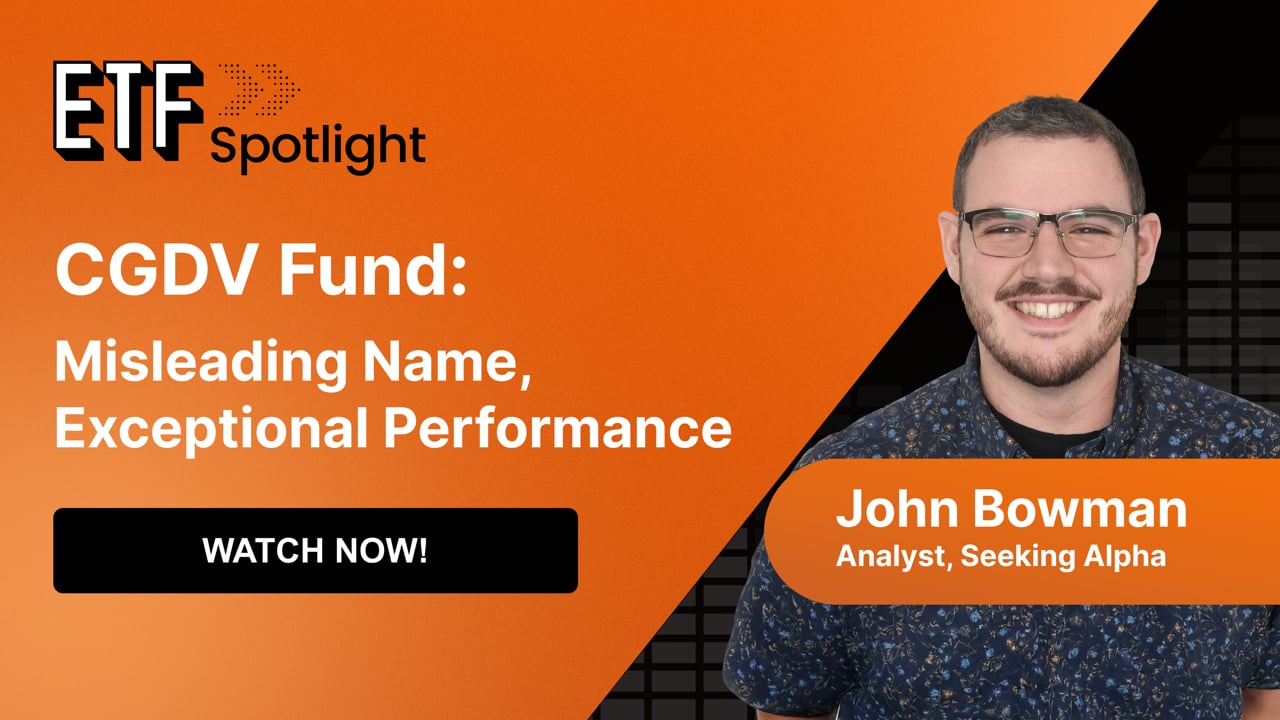
Jack Bowman’s CGDV ETF Breakdown: A “Dividend Value” Fund That Defies Its Label
Seeking Alpha· 2025-12-17 15:30
Core Viewpoint - The Capital Group Dividend Value ETF (CGDV) is described as misleadingly labeled, as it aims to produce a dividend yield higher than the S&P 500 while incorporating growth stocks, which differentiates it from traditional value ETFs [4][6][14]. ETF Overview - CGDV's mandate is to generate a dividend yield exceeding the S&P 500's current yield of approximately 1.3%, with CGDV achieving a yield of around 1.8% [5][11]. - The ETF has performed well since its inception, keeping pace with NASDAQ returns and outperforming traditional value ETFs [5][6]. Investment Strategy - CGDV includes a mix of growth and value stocks, with significant holdings in companies like NVIDIA, which contributes to its performance dynamics [6][10]. - The ETF allocates about 20% to mid-cap stocks and approximately 8-10% to foreign stocks, primarily from developed markets [7][10]. Holdings and Diversification - The top holdings of CGDV include major U.S. companies such as Eli Lilly, Microsoft, and NVIDIA, indicating a focus on large-cap stocks [8][10]. - The ETF is positioned as a way to diversify a core holding, offering slightly more foreign and mid-cap exposure compared to traditional indices [13]. Target Investor Profile - CGDV is suited for investors seeking total returns rather than solely focusing on dividends, appealing to those who are comfortable with some level of risk and potential share liquidation for cash needs [12][13]. - Traditional value investors may find CGDV less appealing due to its growth-oriented approach, which diverges from classic value investing principles [14][19]. Market Outlook - The ETF is not hedged against market downturns, but it has shown resilience during market shocks, indicating a potential for stability [17]. - The overall market outlook remains bullish, with expectations of continued growth driven by lower borrowing costs and expanding profit margins for growth companies [20][21].





10 Dividend ETFs to Buy With $1,000 and Hold Forever -- for Lots of Passive Income
The Motley Fool· 2025-12-15 17:55
Core Insights - Dividend ETFs are effective for generating consistent, passive income by investing in a diversified basket of dividend-paying stocks [1][2] - There are approximately 180 dividend equity ETFs available, making them accessible for investors with a modest initial investment [2] Total Dividend ETFs - WisdomTree U.S. Total Dividend ETF (DTD) invests in dividend-paying companies across the U.S. equity market, weighted by anticipated dollar dividends over the next 12 months, providing broad diversification [4] - Current price of DTD is $85.27, with a 52-week range of $67.09 to $85.86 [6] Dividend Growth ETFs - Vanguard Dividend Appreciation ETF (VIG) targets companies that have raised dividends for at least 10 consecutive years, resulting in a portfolio with a higher concentration of tech stocks [6][11] - iShares Core Dividend Growth ETF (DGRO) requires a five-year track record of dividend growth and a low payout ratio to enhance quality [7] Dividend Quality ETFs - Schwab U.S. Dividend Equity ETF (SCHD) evaluates cash flows, return on equity, dividend growth history, and yield to identify high-quality dividend stocks [8][10] - FlexShares Quality Dividend Index ETF (QDF) screens for profitability and cash flows, optimizing for quality score and dividend yield [9][12] High Dividend Yield ETFs - State Street SPDR Portfolio S&P 500 High Dividend ETF (SPYD) targets the 80 highest-yielding components of the S&P 500, balancing risk through equal weighting [13] - Vanguard High Dividend Yield ETF (VYM) includes the top half of dividend yields from a broad U.S. stock universe, with a current price of $145.58 and a 52-week range of $112.05 to $147.88 [15][17] Conclusion - These dividend ETFs serve as strong foundational elements for building a long-lasting income stream [16]

Swiggy’s $1.1 billion share sale sees demand from Temasek, top funds
BusinessLine· 2025-12-10 14:27
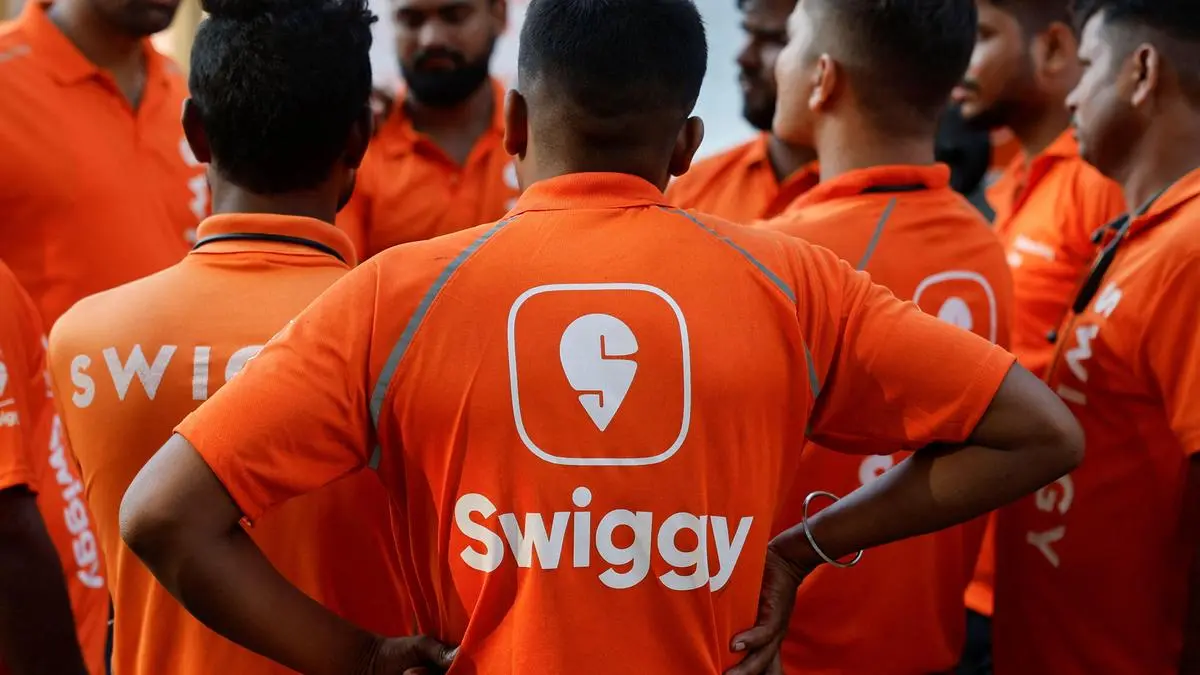
Group 1: Investment and Fundraising - Global investors, including Singapore's Temasek Holdings and Capital Group, are bidding to buy shares in Swiggy Ltd as the company seeks fresh funds a year after its market debut [1] - India's top asset managers, such as SBI Funds Management, ICICI Prudential, and HDFC Asset Management, participated in the $1.1 billion offering, alongside global investors like Fidelity Investments, BlackRock, and Nomura [2] - The share bids are clustered around ₹375 ($4.2) per share, representing a 6.8% discount to Swiggy's last closing price of ₹371 [3] Group 2: Market Context and Competition - The fundraising highlights the rapid expansion of the Indian e-commerce market amid increasing demand, with grocery delivery firms prioritizing growth over margins [4] - Swiggy's stock has declined 25% this year, contrasting with a 9% gain in the benchmark NSE Nifty 50 Index, indicating competitive pressures in the market [4] - Local players are competing against Amazon and Walmart-backed Flipkart to establish extensive networks of neighborhood warehouses and ultra-fast delivery fleets [5] Group 3: Use of Proceeds - In the share sale, Swiggy offered approximately 269.5 million shares, with proceeds intended for expanding and operating its network, including dark stores and warehouses [6] - Swiggy plans to invest in technology and cloud infrastructure, as well as pursue growth opportunities through potential acquisitions [6]
Invesco Teams With LGT on Private Markets for US Retail
Wealth Management· 2025-12-08 15:19
Core Viewpoint - Invesco Ltd. is expanding its presence in private markets by partnering with LGT Capital Partners to offer alternative asset portfolios to US retail and retirement investors [1][2]. Group 1: Partnership Details - The collaboration will focus on private equity, credit, infrastructure assets, and investments in secondary stakes [2]. - This marks Invesco's second partnership since late April, following a collaboration with Barings on private credit funds [2]. Group 2: Market Context - Traditional asset managers have increasingly entered alternative markets over the past year, acquiring boutique firms or forming joint ventures to provide private assets to everyday investors [3]. - Notable partnerships in the industry include Blackstone with Vanguard and Wellington, Apollo with State Street, and Capital Group with KKR [4]. Group 3: Company Profiles - Invesco manages $2.1 trillion in client assets, with over $190 billion in alternative assets primarily in real estate and private debt [4]. - LGT Capital Partners, owned by the Princely Family of Liechtenstein, manages approximately $120 billion in assets [4].


Invesco Teams Up With LGT on Private Equity and Credit for Retail
Yahoo Finance· 2025-12-08 15:19
Core Insights - Invesco Ltd. is expanding its presence in private markets by partnering with LGT Capital Partners to offer alternative asset portfolios for US retail and retirement investors [1][2] - The partnership will focus on private equity, credit, infrastructure assets, and secondary stakes [2] - Invesco's CEO highlighted that private market exposure can provide unique income and growth opportunities [2] Company Developments - This partnership with LGT is Invesco's second collaboration since April, following a partnership with Barings on private credit funds [2] - Invesco manages $2.1 trillion in client assets and has over $190 billion in alternative assets, primarily in real estate and private debt [2][5] - LGT Capital Partners, owned by the Princely Family of Liechtenstein, manages approximately $120 billion in assets [5] Industry Trends - Traditional asset managers are increasingly entering alternative markets, forming joint ventures or acquiring boutique firms to offer private assets to retail investors [3] - Other notable partnerships in the industry include Blackstone with Vanguard and Wellington, and Apollo with State Street [4] - The trend indicates a growing interest in private markets as a source of income and growth for investors [2][3]
近日,全球航运巨头与“船王”都在疯狂下单 VLCC
Sou Hu Cai Jing· 2025-12-07 22:02
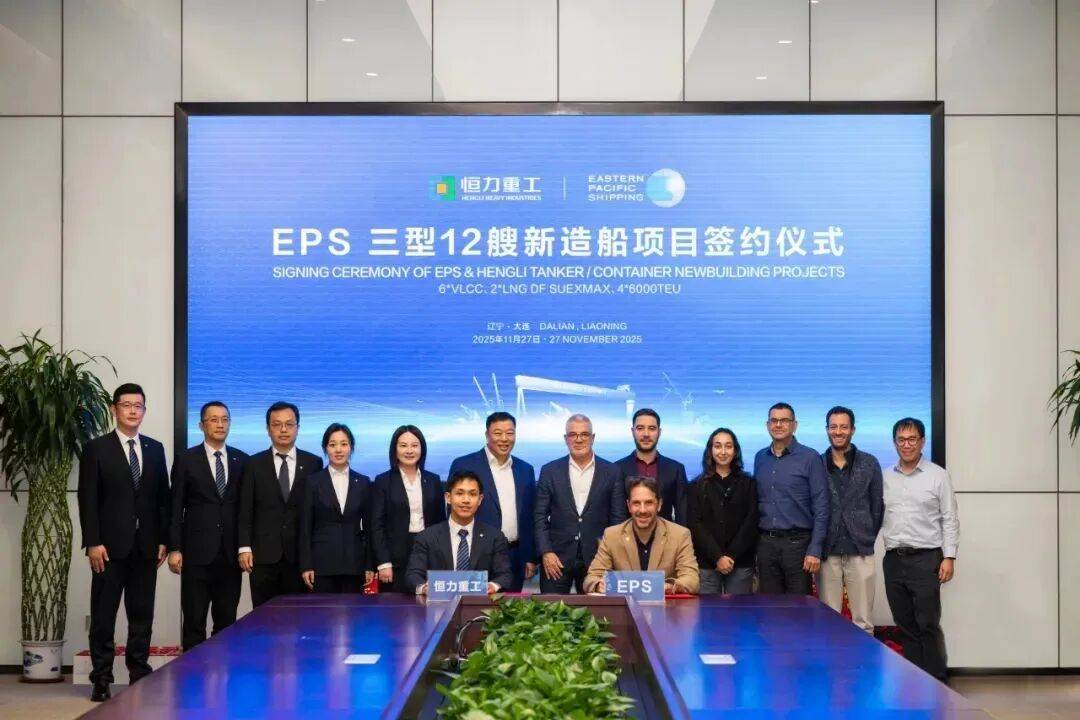
Core Insights - The global VLCC (Very Large Crude Carrier) newbuilding market is experiencing a significant surge, with multiple prominent shipping companies placing orders simultaneously, driven by supply chain cycles, geopolitical energy shifts, and the need to replace aging vessels [1][13]. Group 1: Order Trends - Since July, 38 VLCC new orders have been placed globally, a substantial increase from 12 in the first half of the year, marking a decisive event for the 2025 tanker market [1]. - Idan Ofer's EPS has confirmed an order for 6 VLCCs, totaling between $1.1 billion and $1.6 billion, marking a strong return to the VLCC market after exiting in 2018 [3][4]. - Zodiac Maritime, owned by Eyal Ofer, has also returned to the VLCC market with orders for up to 8 VLCCs and 6 container ships, with a total investment of approximately $1.6 billion [3][4]. Group 2: Market Dynamics - The VLCC spot market has seen day rates exceed $100,000, prompting shipyards to raise newbuilding prices by 5% to 10% [5]. - Ray Car Carriers has doubled its VLCC orders from 4 to 8, indicating a strategic diversification into the VLCC sector [6][7]. - Maran Tankers has signed contracts for 4 VLCCs, marking its return to the market after four years, with a focus on high-end vessel construction [8]. Group 3: Strategic Implications - Trafigura has expanded its VLCC orders to 10, reflecting a strategic bet on the future amid an aging fleet and supply constraints [9]. - Greek shipping companies, including Capital Group and Dynacom, have collectively increased their VLCC orders, signaling a strong market confidence [10]. - Asian shipping giants like HMM and COSCO have also placed significant orders, reinforcing the trend of regional diversification in the VLCC market [11]. Group 4: Structural Forces - The surge in VLCC orders is driven by three structural forces: strong cash flow from high spot rates, the urgent need to replace aging vessels, and tightening emissions regulations necessitating compliant new builds [13][14][15]. - Over 40% of the global VLCC fleet is over 15 years old, indicating a critical replacement phase [14]. - The tightening of carbon emission regulations is pushing shipowners towards high-efficiency and dual-fuel VLCCs, making compliance a necessity for future operations [15]. Group 5: Competitive Landscape - Chinese shipyards, such as Hengli Heavy Industry and Jiangsu Hantong, are positioned as key players in this VLCC wave due to their delivery certainty and cost-effectiveness [15]. - Korean shipyards, including Hanwha Ocean and HD Hyundai, continue to lead in high-end complex vessel construction, solidifying their competitive edge [15].
X @Bloomberg
Bloomberg· 2025-12-05 12:10
In Going Private, our twice-weekly newsletter on private markets, we explore Capital Group's splashy second act https://t.co/zxZEluw5BE ...
Low-Key $3T Investment Firm Is Ready for Its Closeup
Yahoo Finance· 2025-12-04 06:30
LA-based Capital Group manages $3.3 trillion in assets, but the nearly century-old firm has managed to stay out of the spotlight. Not anymore. On Wednesday, Capital Group and investment firm KKR announced two new funds for retail investors, and Bloomberg reports that there are plans to expand the partnership further next year. The new funds blend private and public assets as investors increasingly move money into private markets. SUBSCRIBE: Receive more of our free The Daily Upside newsletter. READ ALSO: ...
12月4日隔夜要闻:美股收高 疲软ADP就业数据提振降息预期 俄美谈判未能取得突破 微软下调A...
Xin Lang Cai Jing· 2025-12-03 22:58
Company - Micron has halted consumer sales of storage products due to a surge in demand for AI chips [3] - OpenAI is set to acquire startup Neptune, which supports AI model training [3] - Apple experiences another executive departure as its top design chief moves to Meta [3] - JD.com is preparing for a Hong Kong IPO with a $424 million business spin-off [3] - Capital Group, a major player in the U.S. fund industry, is undergoing a strategic transformation and is entering the private equity market with KKR [3] - Microsoft's stock has declined following reports of a lowered spending forecast for some AI tools, although the company has not reduced sales targets for its sales personnel [3] Industry - Copper prices have reached new highs, driven by increased demand for deliveries amid supply concerns related to U.S. tariffs [3] - Bond investors have warned the U.S. Treasury that the appointment of Hassett as Fed Chair could pose challenges [3] - The EIA reported a 574,000-barrel increase in U.S. crude oil inventories last week, contrary to expectations of a 2 million barrel decrease [3] - Goldman Sachs traders indicate that U.S. stocks are entering the new year with a tug-of-war dynamic [3] - The U.S. services sector saw its fastest growth in nine months in November, while the price index for payments fell to a six-month low [3] - Shares of Fannie Mae and Freddie Mac rose following U.S. Commerce Secretary Gutnick's commitment to expedite their IPOs [3] - ECB President Lagarde anticipates inflation will remain around 2% in the coming months [3] - The U.S. ADP employment report for November showed an unexpected decrease of 32,000 jobs, raising concerns about a weakening labor market [3]

美国基金业巨头Capital Group推行战略大转型 携KKR高调进军私募市场
Xin Lang Cai Jing· 2025-12-03 18:07
Core Insights - Capital Group, a historically low-profile asset management firm, is undergoing a significant strategic transformation to adapt to the competitive landscape dominated by passive index investing and ETFs [1][11][12] - The company is expanding its ETF offerings and strengthening its partnership with KKR to attract more retail investor funds, marking the most fundamental shift since its founding in 1931 [1][11][12] Company Strategy - Under CEO Mike Gitlin's leadership, Capital Group aims to enhance its visibility and solidify its position among clients while attracting new ones [3][14] - The firm is collaborating with KKR to launch new fund products targeting retail investors, including a target-date retirement fund that combines public and private assets [3][14] - The partnership with KKR is designed to bridge the gap between institutional investors and retail investors, providing diversified investment opportunities [3][14] Market Context - Capital Group has faced net outflows from its stock mutual funds and related products for the past decade, prompting the need for transformation [4][15] - The firm is particularly focused on the private market as a new frontier, recognizing the increasing competition from firms like Apollo and Blackstone [6][17] Cultural Shift - Capital Group is moving away from its historically secretive and unique corporate culture to appeal to retail investors, including promotional activities like a hot air balloon campaign [7][18] - The company has a strong distribution network, serving over 20 million households and approximately 75% of financial advisors in the U.S., which is a significant asset in its new strategy [9][20] Fund Development - The new funds developed in partnership with KKR, including Capital Group KKR Core Plus+ and Capital Group KKR Multi-Sector+, will allocate 60% to public market debt and 40% to private credit [10][21] - The assets under management for the two new funds have already exceeded $500 million [6][17]

