
乐聚机器人

Search documents
人形机器人垂类场景“上岗”倒计时?
Xin Hua Ri Bao· 2025-09-11 23:08
Core Insights - The 2025 World Humanoid Robot Games showcased the capabilities of humanoid robots, with 280 teams from 16 countries participating in various competitions, raising questions about the timeline for their industrial application [1] - The industrialization of humanoid robots hinges on three key factors: technological breakthroughs, cost reduction, and the establishment of application scenarios [1][2] - Predictions indicate that some niche scenarios may see humanoid robots deployed by the end of this year or early next year, but large-scale industrialization faces significant hurdles [1][3] Group 1: Technological Reliability - Humanoid robots are transitioning from basic movements to complex tasks, but core technologies like motion control remain underdeveloped, hindering industrialization [2] - The industry is primarily at L1-L2 stages of intelligence, with only a few leading companies exploring L2 to L3 advancements [2][3] - Achieving a high success rate in industrial applications requires extensive data training, with estimates suggesting a need for millions of data points [3] Group 2: Cost of Hardware and Computing Power - The humanoid robot industry has seen significant growth, with over 160 companies developing platforms and financing exceeding 24 billion yuan by July 2025 [4][5] - Companies are actively working to reduce hardware costs, with some components seeing price reductions of up to 50% compared to last year [5][6] - The industry is focusing on modular designs and data generation to lower training costs and improve efficiency [6] Group 3: Application Scenarios - There is a growing demand for humanoid robots in high-risk industrial scenarios, with predictions of significant advancements in their operational success rates within the next year [7][8] - The service sector is expected to see a transformation with humanoid robots, particularly in commercial and household applications, where there is a higher tolerance for errors [9] - Long-term competition in the humanoid robot ecosystem will be crucial, with various companies opening up their technologies to foster collaboration and innovation [9][10]

抢跑IPO、猛投上下游,谁能赢下人形机器人的资本游戏?
Di Yi Cai Jing· 2025-09-10 13:17
Core Viewpoint - The humanoid robot industry is rapidly preparing for IPOs, with several companies aiming to enter the secondary market, highlighting the competitive landscape for the "first stock" in this sector [1][2]. Group 1: IPO Preparations - Yushu has recently changed its name and is on the verge of an IPO, with expectations to file between October and December 2023 [2]. - At least three other humanoid robot companies in Beijing and Shanghai are also preparing for IPOs, primarily targeting the Hong Kong Stock Exchange [2]. - The urgency for these companies to go public is driven by the need for capital to support growth and development in the humanoid robot sector [2][3]. Group 2: Market Dynamics - The humanoid robot index has increased by 55.90% year-to-date, indicating strong market interest [3]. - Companies like Changsheng Bearing and Aobo Zhongguang have seen significant stock price increases, with gains of over 195% and 240% respectively, reflecting investor enthusiasm for the sector [3]. Group 3: Investment Strategies - Companies are leveraging investments to enhance their valuation narratives, with firms like Zhiyuan establishing funds to invest in early-stage projects within the robotics ecosystem [4]. - Zhiyuan has invested in 15 early-stage projects over the past year, indicating a proactive approach to building a comprehensive investment portfolio [4]. - The dual strategy of investing while securing orders is seen as a way to create an ecological moat, although there are concerns about potential distractions from core business operations [4][12].

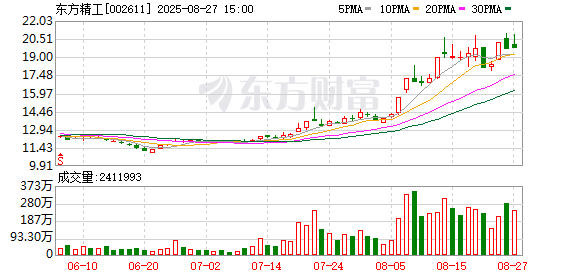
东方精工(002611.SZ)目前持有乐聚机器人6.8329%的股权
Ge Long Hui· 2025-09-10 06:44
Group 1 - The company currently holds a 6.8329% stake in Leju Robotics [1] - A strategic cooperation agreement was signed with Leju Robotics on July 21, 2025, outlining intentions for collaboration [1] - The strategic cooperation includes production and after-sales service of humanoid robots, skills training, application exploration, and market sales [1]

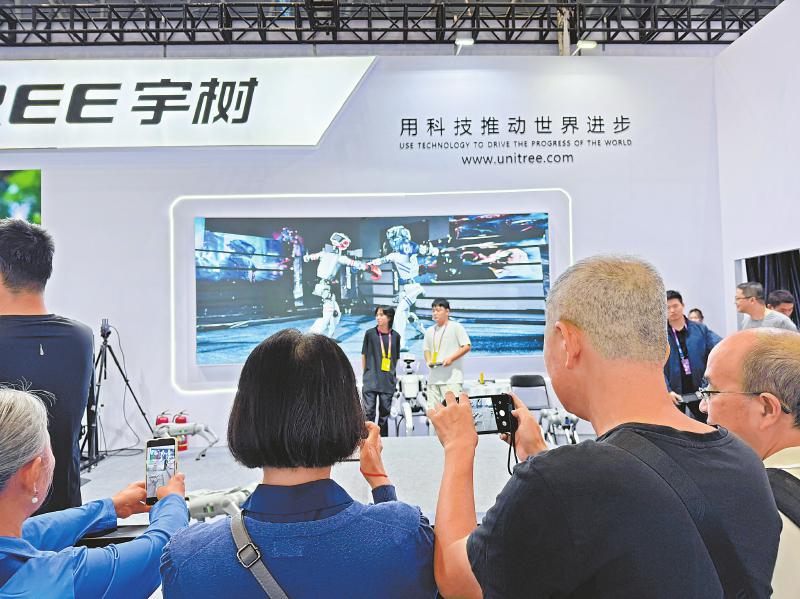
智博会上,智能婚戒、智能宠物牵引绳、智能座舱系统……让人大开眼界 从展品到商品,智能产品的路有多远?
Si Chuan Ri Bao· 2025-09-08 00:27
Core Insights - The World Intelligent Industry Expo showcased various smart products, raising questions about their potential integration into daily life [3] - Companies are focusing on addressing user pain points to evolve their smart products into "explosive" items [4][7] - The automotive industry is undergoing significant transformation driven by artificial intelligence, enhancing vehicles into intelligent mobile entities [6] Group 1: Smart Product Innovations - Luokey Technology launched a high-end smart lock with palm vein recognition, achieving over 8 million units sold last year [4] - Innovations include a smart pet leash with safety features and a smart wedding ring that monitors health metrics, addressing traditional product limitations [5] - Chongqing Qianli Technology's smart cockpit system enhances user experience by integrating navigation with voice commands [5] Group 2: Robotics Industry Challenges - The humanoid robotics sector is still in its early stages, with companies like Yushu Technology acknowledging the gap between current capabilities and household integration [8][10] - Companies are exploring industrial applications for humanoid robots, using them in factories to improve stability and safety before moving to consumer markets [10] - The focus on data collection and AI-driven solutions is evident, with products like dual-arm remote operation robots being developed to meet industry needs [9]

从展品到商品,智能产品的路有多远?
Si Chuan Ri Bao· 2025-09-07 21:59
Core Insights - The World Intelligent Industry Expo showcased various smart products, highlighting the potential for intelligent products to become everyday items if they address user pain points [3][5] - Companies are focusing on user needs to innovate and develop smart products, such as advanced smart locks and intelligent pet leashes, which aim to enhance safety and convenience [4][5] - The automotive industry is undergoing significant transformation driven by artificial intelligence, with companies like Seres Group emphasizing the integration of AI in their products to enhance user experience [4][6] Company Innovations - Luoketech launched a high-end smart lock that utilizes palm vein recognition and includes features like weather alerts and package monitoring, achieving over 8 million units sold last year [3][4] - Chongqing Qianli Technology demonstrated an intelligent cockpit system that uses AI for navigation and user interaction, showcasing the shift from traditional vehicles to smart mobility solutions [4][6] - Companies like Songling Robotics are developing remote-controlled robots for data collection, addressing the industry's need for high-quality data with minimal costs [6][7] Industry Challenges - The humanoid robotics sector is still in its early stages, with companies like Yushu Technology acknowledging the lack of clear commercialization paths and suitable application scenarios [6][8] - Many humanoid robots are currently limited to basic tasks in industrial settings, indicating that they are not yet ready for widespread consumer adoption [8] - The focus on AI-driven solutions in traditional industries, such as construction and manufacturing, is essential for bridging the gap between advanced technology and practical applications [7][8]
乐聚-北大武汉人工智能研究院联合实验室揭牌
Bei Ke Cai Jing· 2025-09-06 10:32
Core Viewpoint - Leju Robotics has signed an agreement with Peking University Wuhan Artificial Intelligence Research Institute to establish a humanoid robot joint laboratory, focusing on overcoming key technological bottlenecks in humanoid robot development and application [1] Group 1: Collaboration and Objectives - The laboratory will concentrate on practical industry needs, aiming to provide solid support for the industrialization of embodied intelligence [1] - The collaboration will leverage Leju's industrialization experience and the research talent from Peking University to create a "research-education-industry" collaborative loop [1] Group 2: Industry Impact and Education - The partnership aims to accelerate the industrialization process of humanoid robots by jointly developing operational models for logistics and industrial scenarios [1] - Additionally, they plan to create benchmark courses and case studies in embodied intelligence education, promoting talent cultivation and results transformation to support the high-quality development of China's robotics industry [1]
港城大等团队突破连续体机器人控制难题,让柔性臂实现毫米级精准定位!
机器人大讲堂· 2025-09-04 11:23
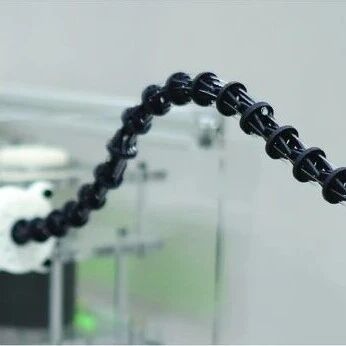
Core Viewpoint - Continuous robots exhibit great potential in fields such as robotic surgery and narrow space detection, but precise control remains a significant challenge. Recent breakthroughs by research teams from City University of Hong Kong and Hefei University of Technology have applied Kalman filtering technology to enhance the online control precision of these robots [1][2]. Group 1: Continuous Robots and Control Challenges - Continuous robots possess infinite degrees of freedom and adaptability, making them difficult to control accurately due to their deformable nature, akin to controlling a cooked noodle [4]. - Traditional rigid-link robots have simpler control mechanisms, while continuous robots face challenges from large deformations, friction effects, and inherent non-linear characteristics [4][5]. - The research team designed a lightweight robot with a complex internal structure, consisting of three flexible segments, each with five spacer disks and one drive disk, weighing only 8.4 grams [5]. Group 2: Control Methodology - The team utilized a piecewise constant curvature (PCC) model for initial control, which, while computationally efficient, resulted in position errors exceeding 1.6 mm and angle errors over 1.4 degrees, unacceptable for high-precision applications [7]. - Instead of developing a more complex model, the team innovatively employed the Kalman filter to allow the robot to self-correct during motion, estimating and compensating for errors in real-time [8][9]. - The control system operates at a frequency of 20 Hz, integrating steps such as obtaining end pose, calculating model Jacobians, estimating and compensating for Jacobian errors, and generating control commands [11]. Group 3: Experimental Validation - The research team conducted three trajectory tracking experiments and two disturbance resistance tests, demonstrating the effectiveness of the new method [12]. - In the first experiment, the root mean square error (RMSE) in the x-direction improved from 1.6 mm to 1.1 mm, and in the y-direction from 2.3 mm to 2.1 mm, showcasing significant enhancements in tracking precision [12][14]. - The second experiment focused on attitude control, achieving a reduction in RMSE from 2.1 degrees to 1.5 degrees, while maintaining position accuracy [14]. - The robustness of the method was further validated through disturbance tests, where the robot maintained performance even under significant load changes [15]. Group 4: Innovation and Future Prospects - The research combines model-driven and data-driven approaches, leveraging the strengths of both to enhance control precision while maintaining computational efficiency [17]. - The method's advantages include no need for offline data collection, high computational efficiency, and robustness against external disturbances, indicating strong potential for practical applications [17]. - Future research directions include incorporating dynamic effects and expanding to three-dimensional motion to improve estimation accuracy and applicability [17].
兆丰股份:公司全资子公司兆煊科创以自有资金5000万元参投玖兆烨熠基金
Zheng Quan Ri Bao Wang· 2025-09-01 09:41
Group 1 - The core point of the article is that Zhaofeng Co., Ltd. (300695) announced its investment in the Jiu Zhao Ye Yi Fund through its wholly-owned subsidiary, Zhaoxuan Technology, with a total investment of 50 million yuan [1] - Zhaoxuan Technology's commitment to the fund amounts to 69.4 million yuan, with an actual payment of 50 million yuan, resulting in a holding percentage of 37.6052% in the fund [1] - The Jiu Zhao Ye Yi Fund currently holds a 6.8529% stake in Leju Robotics, indicating a strategic investment in the robotics sector [1]

东方精工:公司在“人工智能+机器人”领域已有嘉腾机器人、若愚科技、乐聚机器人三个股权投资项目
Mei Ri Jing Ji Xin Wen· 2025-08-27 14:17
Core Viewpoint - The company is actively developing its robotics industry in alignment with national strategic directions, focusing on "Artificial Intelligence + Robotics" and "Controlled Nuclear Fusion Key Structural Materials + Nuclear Power Equipment" [2] Group 1: Investment Strategy - The company has established a strategic investment layout in the robotics sector, with three equity investment projects: Jiateng Robotics, Ruoyu Technology, and Leju Robotics [2] - A strategic cooperation agreement was signed with Leju Robotics on July 21, 2025, to collaborate on humanoid robot production, after-sales service, skills training, and market sales [2] Group 2: Future Plans - The company plans to complete its equity investment in Leju Robotics by the first half of 2025, further solidifying its position in the "Artificial Intelligence + Robotics" field [2] - The company is committed to fulfilling information disclosure obligations regarding the implementation of subsequent cooperation matters in accordance with legal regulations [2]
国家级“AI+”行动意见出台,深圳如何推动“AI+”落地
Nan Fang Du Shi Bao· 2025-08-27 05:31
Core Viewpoint - The State Council of China has issued an opinion to promote the deep integration of artificial intelligence (AI) with various sectors, aiming to reshape production and lifestyle paradigms, and to support the development of a new type of productive force and modernization in China by 2035 [1][2]. Group 1: Policy and Strategic Goals - By 2027, China aims to achieve widespread integration of AI in six key areas, with the application rate of new intelligent terminals exceeding 70% [1][2]. - By 2030, the application rate of AI is expected to exceed 90%, making the intelligent economy a significant growth driver [1][2]. - By 2035, China will fully enter a new stage of intelligent economy and society [1][2]. Group 2: Implementation Areas - The opinion emphasizes six areas for AI integration: technology, industry, consumption, livelihood, governance, and international cooperation [2]. - In technology, there is a focus on accelerating the development and application of large models and enhancing interdisciplinary research capabilities [2]. - In industry, AI will be embedded across all sectors, fostering "intelligent native" enterprises and opening new industrial avenues [2]. - In consumption, new intelligent terminals such as smart connected vehicles and robots will drive consumption upgrades [2]. - In governance, AI will enhance public services and infrastructure, promoting new service models in education, healthcare, and public safety [2]. Group 3: Shenzhen's Role - Shenzhen is positioned as a core engine of the Guangdong-Hong Kong-Macao Greater Bay Area, actively implementing the "AI+" strategy [1][3]. - The city is advancing its computing infrastructure and aims to exceed 80E FLOPS in real-time computing capacity by 2026 [3]. - Shenzhen plans to have over 3,000 AI companies and more than 10 unicorns by 2026, with a target of creating a trillion-yuan AI terminal industry [3]. - The city is also focusing on talent development through partnerships with local universities to foster interdisciplinary talent [3]. Group 4: Industry Growth and Investment - The robot industry in Shenzhen is projected to exceed 200 billion yuan in total output value by 2024, with a year-on-year growth of 12.58% [6]. - The city has seen a significant increase in the number of robot companies, with over 74,000 firms and more than 14,000 new additions this year [6]. - Capital investment in Shenzhen's robot industry is robust, with 72 financing events in 2024, accounting for nearly a quarter of the national total [7]. Group 5: Future Directions - The provincial leadership has outlined three key requirements for Shenzhen's development: enhancing enterprise innovation, expanding application scenarios, and optimizing the innovation ecosystem [7]. - Shenzhen is expected to maintain its leading position in the "AI+" landscape, leveraging its comprehensive industrial chain and proactive policies [7].