LG

Search documents
意大利观察笔记:被中国企业放弃之地
投中网· 2025-10-20 06:45
Core Viewpoint - Italy is perceived as a challenging market for businesses due to its weak consumer spending power, high unemployment, and social unrest, making it less attractive for investment opportunities [4][39]. Group 1: Economic Conditions - Italy's GDP growth has lagged behind the Eurozone average since 1999, leading to a declining per capita productivity and a vicious cycle of economic stagnation [16]. - As of Q2 2025, Italy's employment rate stands at 62.8%, with job opportunities primarily in low-productivity sectors such as construction, retail, and hospitality, benefiting mainly older workers [16][37]. - The average monthly salary in Italy is projected to be around €2,047 before tax, translating to approximately €1,400 to €1,500 after tax, indicating limited disposable income for consumers [37]. Group 2: Social Issues - The influx of immigrants has contributed to social instability in Italy, with many illegal immigrants entering through various maritime routes from North Africa and the Middle East [17][16]. - A significant portion of the population, approximately 23.1%, lives below the poverty line, which is defined as an annual income of €12,363 [38]. Group 3: Market Perception - The Italian market is often described as "chicken ribs" for businesses, characterized by weak consumer power, an aging population, and chaotic social conditions, leading to recommendations against significant investments in this market [39]. - Chinese brands have largely retreated from the Italian market, with only a few like Miniso remaining visible, indicating a lack of confidence in the market's potential [36][34]. Group 4: Cultural Insights - The presence of Korean companies in Italy, such as Samsung and LG, highlights a contrasting success story, as these firms have established a strong foothold in the region over the years [8].


Whirlpool to invest $300M in Ohio plants
Yahoo Finance· 2025-10-16 09:27
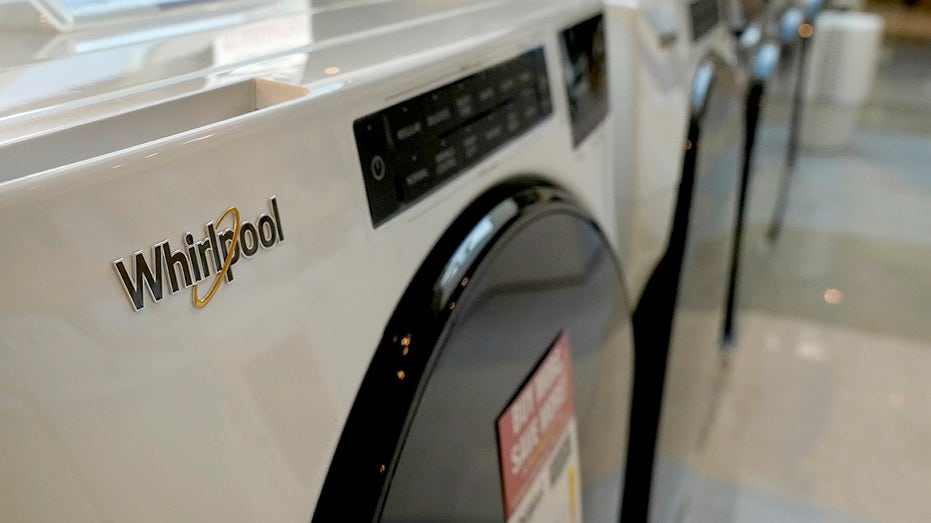
Core Insights - Whirlpool is reinforcing its commitment to domestic manufacturing, claiming to be the only major U.S.-based manufacturer of kitchen and laundry appliances [3][4] - Approximately 80% of Whirlpool's appliances sold in the U.S. are manufactured domestically, significantly higher than its competitors [4] - The company sources 96% of its steel from within the U.S., emphasizing its focus on American manufacturing [4] Competitive Advantage - Whirlpool views its domestic manufacturing footprint as a competitive edge, particularly in the context of recent tariffs and trade policies [5] - The company believes it is positioned as a net winner due to its strong U.S.-based manufacturing operations [5] Market Challenges - Despite its advantages, Whirlpool faces challenges such as a decline in consumer demand and a sluggish housing market impacting appliance sales [6] - The company has made workforce reductions, laying off 250 workers in Iowa and 25 in Michigan, although this is less than initially planned [6] Competitor Landscape - Competitors like LG and Samsung primarily manufacture appliances overseas, while GE Appliances, now owned by Haier, is investing over $3 billion in U.S. operations [7] - GE Appliances is also working to shift production back to the U.S. from Mexico and China [7] Investment Plans - Whirlpool plans to invest $300 million in two laundry manufacturing facilities in Ohio, expecting to create up to 600 new jobs [8] - The Clyde facility is noted as the largest washing machine plant globally, while the Marion factory specializes in dryer production [8] - The investment will be supported by financial assistance from JobsOhio and tax credits from the State of Ohio [8]

Whirlpool CEO says Trump tariffs create 'level playing field' for US manufacturing expansion
Fox Business· 2025-10-15 20:12
Core Insights - Whirlpool Corp. announced a $300 million investment in its Ohio laundry manufacturing facilities to enhance its American manufacturing footprint and increase production of next-generation washers and dryers [1][2] - The investment is expected to create between 400 and 600 jobs in Ohio and support approximately 5,000 additional jobs outside the company [2] - CEO Marc Bitzer emphasized the company's commitment to American manufacturing, stating that tariffs will help level the playing field and improve competitive positioning [3][4] Investment and Economic Impact - The $300 million investment is part of a broader strategy, following $6 billion already invested in U.S. capital expenditures, R&D, and new product development, contributing to a total of $23 billion spent on U.S. operations [9] - Nearly 80% of Whirlpool's products are manufactured domestically, significantly higher than the 25% average of competitors, with 96% of steel used sourced from domestic suppliers [6] - The company views the current tariff policies as a positive factor for future investments, making the economic case for such investments more attractive [7][9] Company Background - Founded over 110 years ago, Whirlpool maintains the largest U.S. manufacturing operations in the home appliance industry, employing 20,000 people in the U.S., including over 14,000 at its 10 manufacturing plants [11] - The investment aims to reinforce the company's commitment to the communities and enhance manufacturing capabilities, ensuring the production of world-class appliances in America [13]
追踪系列之一:全球黑电需求回落,中企份额持续提升
Changjiang Securities· 2025-10-15 14:23
Investment Rating - The report maintains a "Positive" investment rating for the home appliance industry [12]. Core Insights - The global TV market is experiencing a dual decline in both volume and revenue in Q2 2025, with a year-on-year shipment decrease of 2.12% to 47.09 million units and a revenue drop of 10.18% to $20.79 billion, primarily due to falling global average prices and weak demand in mature markets. However, emerging markets show resilient growth, with the Chinese market benefiting from supportive policies [4][10]. - Chinese brands are closing the gap with South Korean leader Samsung, with shipment share differences narrowing to within 3 percentage points. However, there remains a significant gap in premium pricing capabilities [8][10]. - Mini LED technology is becoming a key structural growth driver in the global TV market, with a shipment increase of 162.96% year-on-year, leading to a global penetration rate of 5.90%, dominated by Chinese brands [9][10]. Summary by Sections Market Conditions - In Q2 2025, the global TV market shows a dual decline in shipments and revenue, with shipments down 2.12% to 47.09 million units and revenue down 10.18% to $20.79 billion. The global average price fell by 8.23% to $441.49, indicating a phase of adjustment due to price sensitivity among consumers [21][24]. Competitive Landscape - The market share gap between Chinese brands and South Korean giants like Samsung is narrowing, with Samsung at 16.9%, TCL at 14.7%, and Hisense at 14.3%. However, Samsung's average price remains significantly higher at $741.91 compared to Chinese brands [8][10]. Structural Changes - Mini LED technology is rapidly gaining traction, with shipments reaching 2.78 million units in Q2 2025, a year-on-year increase of 162.96%. China's penetration rate leads globally at 14.93% [9][10]. Investment Recommendations - The report suggests that despite the current phase of adjustment in the industry, Chinese brands like TCL and Hisense are expected to continue their resilient growth, supported by emerging market demand and strategic positioning in high-end and large-screen segments [10][13].

红宝丽:公司硬泡组合聚醚主要客户包括伊莱克斯、三星、LG、美的等
Mei Ri Jing Ji Xin Wen· 2025-10-14 09:49
Core Viewpoint - The company Red Bull (002165.SZ) has disclosed its major clients in the hard foam polyether and is actively engaging with well-known domestic and international enterprises in the appliance and construction sectors [2]. Group 1: Major Clients - The primary clients for the company's hard foam polyether include renowned home appliance manufacturers such as Electrolux, Samsung, LG, Midea, Hisense, Meiling, Changhong, and CIMC [2]. - The company also serves large-scale enterprises in the cement production industry with its isopropanolamine products, indicating a diverse application range [2].

X @Bloomberg
Bloomberg· 2025-10-14 08:15
IPO Market Ranking - India has become the world's fourth-largest IPO market this year [1] IPO Activity - A wave of listings in India, including Tata Capital and LG, has contributed to this ranking [1]
X @Bloomberg
Bloomberg· 2025-10-14 02:00
A wave of listings in India, from Tata Capital to LG, has made the country the world's fourth-largest IPO market this year. What’s next?Join us for a Live Q&A on Oct 14 at 1:45pm IST / 4:15pm HKT https://t.co/naUy1Pm67C https://t.co/IplQM4EHRf ...
当升科技:2025年上半年,公司国际客户占比持续提升
Zheng Quan Ri Bao Wang· 2025-10-13 12:13
Core Viewpoint - The company, Dongsheng Technology, has announced its strong position in the lithium battery supply chain, leveraging its technological advantages to serve major global clients in the electric vehicle sector, with a focus on expanding its international market presence [1] Group 1: Company Performance and Strategy - Dongsheng Technology has established a broad and stable customer base, deeply integrated into the international high-end new energy vehicle and first-tier battery industry [1] - The proportion of international customers is expected to continue increasing by the first half of 2025, supported by strategic agreements with global clients like LG and SK [1] - The company aims to provide competitive differentiated high-end products to enhance its market share [1] Group 2: Market Trends and Opportunities - The European electric vehicle market is showing signs of recovery, with a significant increase in penetration rates [1] - Dongsheng Technology plans to capitalize on market opportunities by meeting local policy requirements in Europe and accelerating the construction of its Finland base [1] - The company is focused on strengthening and consolidating its international business advantages to enhance overall competitiveness [1]

X @Bloomberg
Bloomberg· 2025-10-13 10:00
A wave of listings in India, from Tata Capital to LG, has made the country the world's fourth-largest IPO market this year. What’s next?Join us for a Live Q&A on Oct 14 at 1:45pm IST / 4:15pm HKT https://t.co/naUy1Pm67C https://t.co/iLRZa0TVVG ...
从Figure的10亿美金押注,看人形机器人的“iPhone时刻”与中国供应链的“卖铲”机遇
Xin Lang Cai Jing· 2025-10-13 08:56
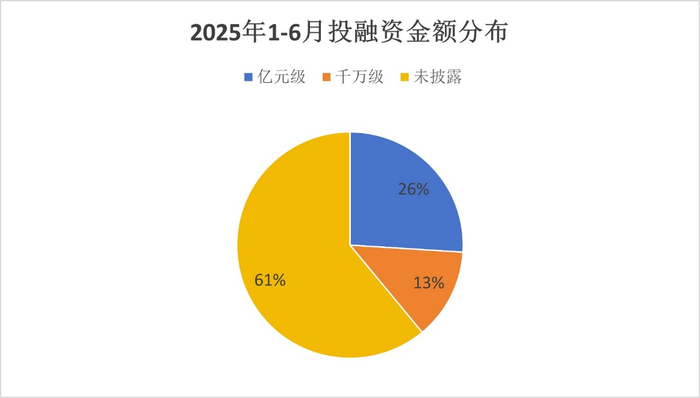
Core Insights - Figure AI, a humanoid robot startup, raised over $1 billion in Series C funding, achieving a valuation of $39 billion, making it one of the most valuable humanoid robot companies globally and setting a new record for single-round financing in the sector [1] - The influx of capital from major tech companies like Nvidia, Intel Capital, and LG signals strong market growth expectations for humanoid robots, which are seen as the ultimate convergence of artificial intelligence and the physical world [3][5] - The humanoid robot market is projected to grow significantly, with China's market expected to increase from 2.76 billion yuan in 2024 to 75 billion yuan by 2029 [5] Industry Trends - The capital surge indicates an impending industrial transformation, with significant financing already reported in the humanoid robot sector in the first half of 2025 [1][3] - The Chinese government is actively promoting the humanoid robot industry through various policies, recognizing it as a key area for future industrial development [8] Market Dynamics - The humanoid robot industry features a complex supply chain, with upstream components like actuators and sensors being crucial for performance, while downstream applications span various sectors including industrial, medical, and service industries [5][11] - The cost of humanoid robots is decreasing rapidly, with domestic companies achieving significant cost advantages in core components, which could facilitate mass production and market penetration [10][18] Investment Opportunities - Investors are encouraged to consider a diversified approach by investing in indices that include leading companies in the humanoid robot supply chain, rather than betting on individual brands [21][23] - The National Robot Industry Index, which includes 50 leading companies in the humanoid robot sector, has shown strong performance, nearly doubling in value over the past year [23][26] Future Outlook - The humanoid robot industry is entering a "golden development period" driven by policy support, technological breakthroughs, commercial viability, and capital investment, reminiscent of the pre-iPhone era in technology [10][19] - As global labor costs rise and demographic changes occur, the commercial value of humanoid robots is becoming increasingly apparent, positioning China as a key player in this industrial revolution [26]