SpaceX

Search documents
Rocket Lab Gains 6%, Virgin Galactic Surges 19%: Is the Space Sector Finally Ready for Its Breakout?
247Wallst· 2026-03-31 14:16
Core Viewpoint - The space sector is experiencing renewed interest, driven by Rocket Lab's strong revenue growth and Virgin Galactic's stock surge, amid speculation surrounding SpaceX's potential IPO at a $1.75 trillion valuation [2][3][6]. Rocket Lab - Rocket Lab reported record Q4 FY2025 revenue of $179.65 million, representing a 36% year-over-year increase, and has a backlog of $1.85 billion, up 73% [2][8]. - The company is guiding Q1 2026 revenue to a range of $185 million to $200 million, indicating continued growth momentum [8]. - Rocket Lab has received approval for the acquisition of Mynaric, a laser communications company, enhancing its capabilities in defense and satellite communications [9]. - Despite today's gains, Rocket Lab's stock is still down 13% year-to-date and has faced a 15.62% decline over the past week [10]. - Analysts have a consensus price target of $89.88 for Rocket Lab, with 10 buy ratings and 5 hold ratings [11]. Virgin Galactic - Virgin Galactic reported a Q4 2025 net loss of $63 million, an improvement from the previous year, and is guiding Q1 2026 free cash flow to a range of -$90 million to -$95 million [12]. - The company aims to commence commercial operations in Q4 2026, with plans to ramp up to 10 or more flights per month by mid-2027 [12]. - Virgin Galactic has recently completed the assembly of its first new spaceship and appointed a chief growth officer, signaling some operational progress [13]. - The stock has seen a 32% decline year-to-date, despite today's 19% gain, indicating a backdrop of significant shareholder value destruction [14]. - Analysts have a consensus price target of $4.08 for Virgin Galactic, with only 2 buy ratings alongside 4 holds and 2 sells [13]. Sector Outlook - The space sector is witnessing a potential breakout, with Rocket Lab showing real revenue growth while Virgin Galactic remains in a pre-commercial phase with negative cash flow [15][17]. - The anticipated SpaceX IPO could serve as a catalyst for institutional investment in space-related equities, impacting both established and speculative companies [6][17]. - There is a 58.5% probability that SpaceX will complete its IPO by June 30, 2026, which could influence market sentiment positively [16].


Elon Musk says the US could be ‘toast’ if AI doesn’t fix America’s $39T nightmare — how to protect your money
Yahoo Finance· 2026-03-31 13:59
Group 1: AI and Space-Based Solutions - Current advancements in AI are heavily reliant on large terrestrial data centers, which face limitations in power and cooling requirements, leading Musk to propose building AI data centers in space as a long-term solution [1] - Musk's initiatives combine various technologies, including rockets, Starlink satellites, and AI, under a valuation of approximately $1.75 trillion, with SpaceX acquiring xAI ahead of a potential IPO [2][6] Group 2: National Debt Concerns - Musk warns that without significant productivity improvements from AI and robotics, the U.S. risks bankruptcy due to its national debt, which currently stands at $38.99 trillion [4][6] - The U.S. paid $1.22 trillion in net interest in fiscal 2025, highlighting the unsustainable nature of the national debt, which exceeds the Defense Department budget [3] Group 3: Economic Implications of AI - Musk suggests that AI could lead to a dramatic increase in the output of goods and services, potentially resulting in deflation, as the money supply may not keep pace with production increases [7] - The rise of automation may threaten millions of jobs, leading to reduced tax revenue and weaker consumer spending, as evidenced by companies like Block, Inc. cutting their workforce by about 40% due to AI efficiencies [8] Group 4: Investment Strategies Amid Economic Uncertainty - Musk advises that owning physical assets, such as real estate or stocks in companies with strong products, is preferable to holding cash during high inflation periods [16][17] - The S&P CoreLogic U.S. National Home Price Index indicates that home prices have increased nearly 50% over the past five years, reinforcing real estate as a long-term hedge against inflation [17]
当 AI 可以做一切,剩下的护城河只有这 5 种
投资实习所· 2026-03-31 13:31
Core Viewpoint - In the AI era, traditional moats are becoming less effective, and only five types of moats are deemed valid: proprietary data with continuous compounding, network effects, regulatory licenses, large-scale capital, and physical infrastructure [1][2]. Group 1: Proprietary Data - The moat of proprietary data is characterized by "live data" generated through operations that continuously produce unique information, as opposed to static data that can be easily replaced [3]. - An example is Orchard AI, which tracks billions of fruits across millions of trees, generating valuable data that cannot be replicated without years of similar operations [3]. Group 2: Network Effects - Network effects enhance the value of a product as more users join, exemplified by DoorDash, where each new driver and restaurant increases the service's overall value [4]. - The challenge of cold start problems is heightened in a competitive landscape with numerous alternatives, making initial liquidity crucial for sustained compounding [4]. Group 3: Regulatory Licenses - Regulatory licenses are essential and cannot be expedited by AI, as they depend on political processes rather than technological advancements [4]. - Industries like defense and banking require lengthy approval processes that AI cannot shorten, indicating that regulatory hurdles remain significant barriers to entry [4]. Group 4: Large-Scale Capital - The ability to raise and deploy large amounts of capital is critical, especially in industries requiring substantial investments, such as chip manufacturing and nuclear power [5]. - The transition from software to physical assets emphasizes the importance of capital, which includes not just money but also institutional trust and long-term relationships [5]. Group 5: Physical Infrastructure - Physical infrastructure, such as factories and data centers, is vital as it generates tangible assets that produce ongoing revenue [5]. - The time required to build and install physical infrastructure cannot be compressed by AI, creating a significant competitive advantage for early movers [5]. Group 6: Time as a Limiting Factor - The five identified moats are underpinned by time constraints that cannot be parallelized, such as user adoption, regulatory approval, and infrastructure development [6]. - Companies that occupy these positions are not only defensible but also continuously widen their competitive gap over time [6]. Group 7: Emerging Considerations - The potential for "trust" and "human attention" to become new moats is acknowledged, as accountability and brand recognition may gain importance in an AI-driven landscape [7]. - The distinction between what is difficult to achieve versus what is difficult to obtain remains crucial in assessing the sustainability of a company's moat [7].

纳指100规则大改:谁在为超级独角兽的泡沫买单?
美股研究社· 2026-03-31 13:15
Core Viewpoint - The article discusses the significant changes in market dynamics due to Nasdaq's rule modifications, which facilitate the rapid entry of "super unicorns" into the market, altering liquidity distribution and risk allocation [1][2]. Group 1: Market Dynamics and Changes - Nasdaq's new index rules are designed to create a fast track for companies like Anthropic, OpenAI, and SpaceX, which are entering the market with valuations in the trillions, fundamentally changing the liquidity distribution logic [1][6]. - The adjustment is not merely an expansion but a systematic arrangement that shifts high-risk assets from the primary market to passive investors in the secondary market, signaling a change in how risks are absorbed [2][6]. - The traditional process of price discovery in the secondary market is being disrupted, as companies can now enter the market as giants without undergoing the typical growth verification process [4][6]. Group 2: Implications for Investors - The new structure means that traditional IPO underpricing benefits are diminishing, replaced by risks for ordinary investors who are effectively providing liquidity for primary market investors' excess returns [7]. - The rapid inclusion of new stocks into indices creates mechanical demand, leading to liquidity being drained from existing stocks and distorting the price discovery mechanism [9][10]. - The shift in index dynamics indicates that the market is becoming a tool for liquidity redistribution rather than a venue for pricing growth, which could lead to a false sense of demand and valuation [10][11]. Group 3: Systemic Risks and Future Outlook - The combination of high valuations for super unicorns and rapid index inclusion suggests a deeper risk structure, where passive funds are absorbing risks without assessing the validity of optimistic cash flow assumptions [11][12]. - Historical patterns indicate that when such structural changes occur, it often signals a phase of institutionalized bubbles, where inflated valuations persist until liquidity can no longer support them [12][14]. - The article warns that as risks become institutionally hidden, their eventual manifestation could be more severe, challenging the integrity of market mechanisms and investor confidence [14].

美股盘前要点 | 三大股指期货均涨超1%!英伟达斥资20亿美元投资迈威尔科技
Ge Long Hui· 2026-03-31 13:03
Group 1 - US stock index futures collectively rose, with Nasdaq futures up 1.18%, S&P 500 futures up 1.15%, and Dow futures up 1.16% [1] - Major European indices also saw gains, with Germany's DAX up 1.39%, UK's FTSE 100 up 0.99%, France's CAC up 0.8%, and the Euro Stoxx 50 up 0.88% [1] - Nvidia invested $2 billion in Mellanox Technologies to collaborate on silicon photonics technology [1] - Citigroup lowered Micron's target price by 17% to $425 due to falling memory prices, while maintaining a "buy" rating and earnings forecast [1] - Morgan Stanley's brokerage platform E*Trade is negotiating to lead the IPO of SpaceX, offering shares to retail investors [1] - American Exchange Group plans to acquire footwear manufacturer Allbirds for $39 million [1] Group 2 - Baidu's autonomous driving service,萝卜快跑, officially launched commercial operations in Dubai [1] - Unilever is reportedly close to reaching a merger agreement with Kraft Heinz, potentially creating a $60 billion food giant [1] - Biogen agreed to acquire Apellis Pharmaceuticals for $5.6 billion, enhancing its portfolio in immunology and rare diseases [1] - Palo Alto Networks CEO made a significant stock purchase of approximately $10 million after several years [1]

The Nasdaq Is Changing Its Index Rules. Here's Why
Seeking Alpha· 2026-03-31 11:30
Group 1: Nasdaq Index Changes - The Nasdaq is evolving its index rules, particularly for the Nasdaq 100, impacting over $600 billion of exchange-traded funds linked to it [3] - The time for newly listed large-cap companies to enter the Nasdaq 100 will be reduced from at least three months to just 15 trading days, allowing for a more timely representation of the market [4] - Industry professionals, including asset managers, support the Fast Entry proposal, which will benefit upcoming IPOs like SpaceX and OpenAI, both expected to have trillion-dollar valuations [4] Group 2: Other Market Developments - The new Nasdaq rules will take effect on May 1, including the removal of the minimum 10% float requirement and adjustments to low-float security weights [5] - Other index providers, such as S&P Dow Jones Indices and FTSE Russell, are also considering changes to accelerate the entry of newly listed companies into their benchmarks, which are linked to $40 trillion of global assets [5] - Global defense spending is expected to increase, and there are ongoing discussions regarding housing shortages and potential reforms in government-sponsored enterprises [6]

Amazon, Delta team up for in-flight Wi-Fi, challenging Musk's Starlink
Reuters· 2026-03-31 11:13
Core Insights - Amazon's Leo satellite internet unit has signed a deal with Delta Air Lines to provide in-flight Wi-Fi on 500 planes starting in 2028, marking its second major partnership in the aviation sector as it competes with Elon Musk's Starlink [1][2][4] Group 1: Competitive Landscape - The partnership intensifies competition between Amazon's satellite internet service and Starlink, which currently leads in satellite deployment and global service [2] - Amazon previously secured a deal with JetBlue to provide Leo service on 25% of its fleet starting in 2027, while other airlines like Southwest have opted for Starlink [3] Group 2: Service Deployment and Investment - Amazon has committed at least $10 billion to its satellite internet initiative, having launched 214 satellites since April 2025, with plans to double its deployment rate through over 20 launches in the next year [5][7] - The commercial service is expected to begin in small regions and expand as the satellite constellation grows, with Amazon currently testing its service with businesses [6] Group 3: Strategic Partnerships - Delta chose Amazon's Leo service due to its existing partnership with Amazon Web Services, enhancing the airline's in-flight Wi-Fi offerings [6][7] - Delta has previously utilized satellite services from Viasat and Hughes across its fleet of approximately 1,200 planes, serving around 163 million members of its SkyMiles program [6]

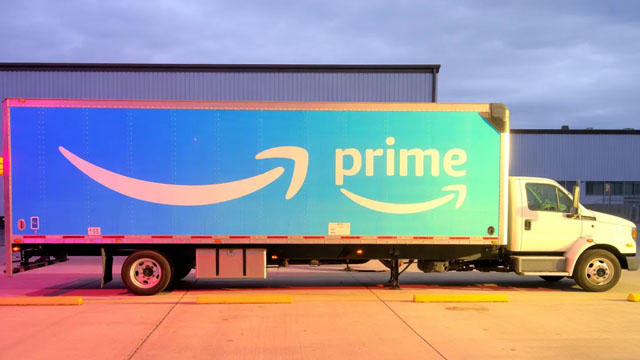
Delta Air Lines taps Amazon Leo for in-flight Wi-Fi as streaming wars heat up
CNBC· 2026-03-31 11:00
Core Insights - Delta Air Lines has partnered with Amazon Leo to provide high-speed satellite internet service on 500 aircraft starting in 2028, enhancing in-flight connectivity options for passengers [1][2] Group 1: Partnership and Technology - Amazon Leo will offer low Earth orbit satellite Wi-Fi, which Delta plans to implement on its domestic-focused, narrow-body aircraft from Boeing and Airbus [2] - Delta's Chief Marketing and Product Officer highlighted the increasing demand for faster internet speeds and more bandwidth among passengers, indicating a shift in consumer expectations [3] Group 2: In-Flight Experience and Commerce - Delta aims to refresh its in-flight technology, including updating movie selections and expanding entertainment libraries, which will create new commerce opportunities [4] - The initial aircraft to feature the new service will include newly ordered Boeing 737 Max 10 planes and older 737s and Airbus A321s, primarily used for domestic routes [4] Group 3: Amazon Leo's Infrastructure - Amazon Leo is developing a satellite constellation of approximately 3,200 low Earth orbit satellites, with around 200 already in orbit and more planned for launch [5][6] - The company has launched an enterprise preview of its service for select businesses, with a broader commercial rollout anticipated [6] Group 4: Competitive Landscape - Other airlines, such as United Airlines and Hawaiian Airlines, have begun using SpaceX's Starlink for in-flight Wi-Fi, indicating a competitive environment in the satellite internet space for airlines [7]


Virgin Galactic Holdings, Inc. (NYSE:SPCE) Earnings and Strategic Update
Financial Modeling Prep· 2026-03-31 09:00
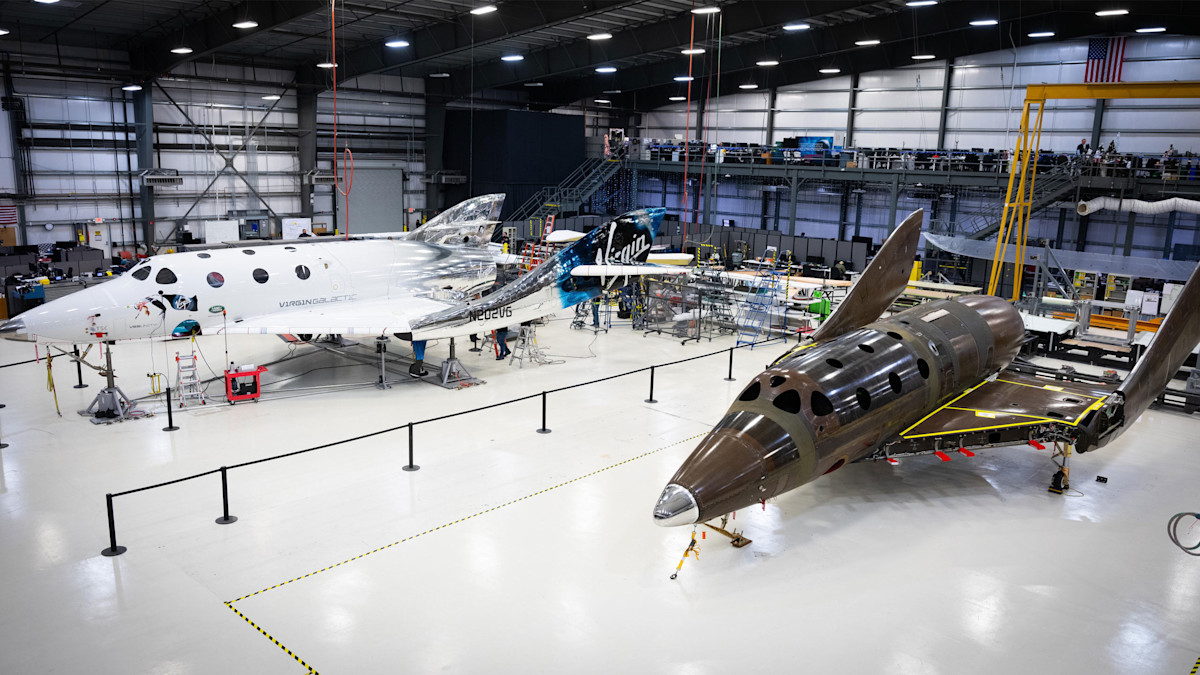
Core Insights - Virgin Galactic is a key player in the commercial spaceflight industry, focusing on suborbital spaceflights for tourists and facing competition from companies like SpaceX and Blue Origin [1] Financial Performance - For Q4 2025, Virgin Galactic reported an earnings per share (EPS) of -$0.98, which was better than the estimated EPS of -$1.04, but the revenue of $312,000 fell short of the estimated $412,500, indicating challenges in meeting market expectations [2][6] - The company experienced a net loss of approximately $62.7 million for the quarter, with an EBITDA of negative $61.8 million, highlighting ongoing financial hurdles [3][6] Strategic Developments - CEO Michael Colglazier noted the near completion of the first SpaceShip assembly, with ground testing scheduled for April 2026, and preparations for rocket motor assembly at the Phoenix factory, set to begin in Q4 2026 [4] - Virgin Galactic is releasing a limited number of Spaceflight Expeditions priced at $750,000 and is shifting fabrication efforts to support the testing and production of a second SpaceShip, expected to enter service between late Q4 2026 and early Q1 2027, reflecting a commitment to expanding commercial offerings [5][6]
York Space and Firefly Are Riding SpaceX's Coattails. Smaller Space Stocks Post Strong Gains.
The Motley Fool· 2026-03-31 08:35
Core Viewpoint - The excitement surrounding the potential IPO of SpaceX has significantly impacted the stock prices of other space companies, particularly York Space Systems and Firefly Aerospace, although this enthusiasm was short-lived [1][3]. Company Summaries - SpaceX is estimated to be a $16 billion-a-year company with an annual profit of approximately $3 billion, making it a dominant player in the space industry with diverse interests [5]. - York Space Systems has a market capitalization of $2.7 billion, generating $386 million in annual profit but incurring losses of $84.5 million and negative free cash flow of $130 million [6]. - Firefly Aerospace has a market cap of $3.8 billion, with revenues just under $160 million and annual losses exceeding $334 million, alongside negative free cash flow of $238 million [8]. Market Dynamics - The initial surge in stock prices for York and Firefly was followed by a decline, indicating volatility and investor uncertainty in the space sector [2][3]. - The anticipated SpaceX IPO may lead investors to favor SpaceX over smaller companies like York and Firefly, potentially harming their stock performance [10][11].