价格发现机制

Search documents
纳指100规则大改:谁在为超级独角兽的泡沫买单?
美股研究社· 2026-03-31 13:15
Core Viewpoint - The article discusses the significant changes in market dynamics due to Nasdaq's rule modifications, which facilitate the rapid entry of "super unicorns" into the market, altering liquidity distribution and risk allocation [1][2]. Group 1: Market Dynamics and Changes - Nasdaq's new index rules are designed to create a fast track for companies like Anthropic, OpenAI, and SpaceX, which are entering the market with valuations in the trillions, fundamentally changing the liquidity distribution logic [1][6]. - The adjustment is not merely an expansion but a systematic arrangement that shifts high-risk assets from the primary market to passive investors in the secondary market, signaling a change in how risks are absorbed [2][6]. - The traditional process of price discovery in the secondary market is being disrupted, as companies can now enter the market as giants without undergoing the typical growth verification process [4][6]. Group 2: Implications for Investors - The new structure means that traditional IPO underpricing benefits are diminishing, replaced by risks for ordinary investors who are effectively providing liquidity for primary market investors' excess returns [7]. - The rapid inclusion of new stocks into indices creates mechanical demand, leading to liquidity being drained from existing stocks and distorting the price discovery mechanism [9][10]. - The shift in index dynamics indicates that the market is becoming a tool for liquidity redistribution rather than a venue for pricing growth, which could lead to a false sense of demand and valuation [10][11]. Group 3: Systemic Risks and Future Outlook - The combination of high valuations for super unicorns and rapid index inclusion suggests a deeper risk structure, where passive funds are absorbing risks without assessing the validity of optimistic cash flow assumptions [11][12]. - Historical patterns indicate that when such structural changes occur, it often signals a phase of institutionalized bubbles, where inflated valuations persist until liquidity can no longer support them [12][14]. - The article warns that as risks become institutionally hidden, their eventual manifestation could be more severe, challenging the integrity of market mechanisms and investor confidence [14].


市场分析:凯文·沃什若被提名为美联储主席 美元有望重新焕发生机
Sou Hu Cai Jing· 2026-01-30 04:24
Core Viewpoint - The assessment of Kevin Warsh's potential leadership at the Federal Reserve is influenced by his past views, which are seen as a positive sign for the U.S. market facing rising risk premiums [1] Group 1: Background and Experience - Warsh served as a Federal Reserve Governor from 2006 to 2011, a period that included the credit boom, the 2008 financial crisis, and the early recovery phase [1] - His comments during this time focused on credibility, restraint, and institutional constraints in shaping monetary policy [1] Group 2: Monetary Policy Views - Warsh has expressed skepticism about maintaining prolonged loose monetary policies and has publicly opposed aggressive balance sheet policies [1] - He has a high tolerance for market volatility if it helps maintain price discovery mechanisms [1] Group 3: Economic and Institutional Leadership - Controlling inflation is viewed by Warsh as a prerequisite for sustainable growth, rather than a variable factor optimized for employment [1] - His recent comments are particularly relevant for the market and the U.S. dollar, reflecting investor concerns about institutional credibility and government risk [1] - Warsh emphasizes that the economic and institutional leadership of the U.S. is fundamental to the dollar's status as a reserve currency, which he believes is a privilege earned through credibility, not a negotiable asset [1]
瓶片短纤数据日报-20260115
Guo Mao Qi Huo· 2026-01-15 03:06
Report Summary 1) Report Industry Investment Rating No information provided. 2) Core View of the Report - The PX market has experienced a rapid increase, mainly driven by speculative funds rather than fundamental changes. The futures market dominates price discovery, showing "irrational exuberance" characteristics. Although there are concerns about bubbles, the PX fundamentals are supported, and the market is expected to remain tight in 2026. The PX - naphtha spread has widened to $360, and the PX - mixed xylene spread has reached $155, improving aromatics extraction economics. The PX market is at a critical point where speculative sentiment and fundamentals are intertwined. Domestic PTA maintains high operation rates, benefiting from stable domestic demand and the resumption of exports to India since the end of November. High gasoline spreads support aromatics. New polyester installations drive high polyester loads, keeping PTA consumption high, and the market's inventory intention increases with a rapidly strengthening basis. Although domestic polyester demand weakens seasonally, polyester factory production cuts are insufficient to form a negative feedback [2]. 3) Summary by Relevant Catalog Price Changes - PTA spot price increased from 5060 to 5075, a change of 15 [2]. - MEG domestic price increased from 3686 to 3711, a change of 25 [2]. - PTA closing price decreased from 5140 to 5116, a change of -24 [2]. - MEG closing price increased from 3815 to 3867, a change of 52 [2]. - 1.4D direct - spun polyester staple fiber price decreased from 6520 to 6510, a change of -10 [2]. - Short - fiber basis increased from 34 to 42, a change of 8 [2]. - 2 - 3 spread decreased from 16 to 18, a change of -2 [2]. - Polyester staple fiber cash flow increased from 240 to 246, a change of 6 [2]. - 1.4D direct - spun and imitation large - chemical fiber spread decreased from 1270 to 1260, a change of -10 [2]. - East China water - bottle chip price increased from 6097 to 6148, a change of 51 [2]. - Hot - filling polyester bottle chip price increased from 6097 to 6148, a change of 51 [2]. - Carbonated - grade polyester bottle chip price increased from 6197 to 6248, a change of 51 [2]. - T32S pure polyester yarn price remained unchanged at 10600 [2]. - T32S pure polyester yarn processing fee increased from 4080 to 4090, a change of 10 [2]. - Polyester - cotton yarn 65/35 45S price remained unchanged at 16600 [2]. - Cotton 328 price increased from 15610 to 15615, a change of 5 [2]. - Polyester - cotton yarn profit increased from 1377 to 1381, a change of 5 [2]. - Primary three - dimensional hollow (with silicon) price remained unchanged at 7210 [2]. - Hollow staple fiber 6 - 15D cash flow decreased from 449 to 428, a change of -21 [2]. - Primary low - melting - point staple fiber price remained unchanged at 7775 [2]. Market Conditions - Short - fiber: The short - fiber main futures dropped 32 to 6470. The price of polyester staple fiber production factories was stable, while traders' prices slightly declined. Downstream buyers purchased as needed, and on - site transactions were cautious. The price of 1.56dtex*38mm semi - bright natural white (1.4D) polyester staple fiber in the East China market was 6370 - 6650 RMB/ton (cash, spot, tax - included, self - pick - up), 6490 - 6770 RMB/ton (cash, spot, tax - included, delivered) in the North China market, and 6430 - 6630 RMB/ton (cash, spot, tax - included, delivered) in the Fujian market [2]. - Bottle chips: The mainstream negotiation price of polyester bottle chips in the Jiangsu and Zhejiang markets was 6140 - 6200 RMB/ton, with the average price increasing by 30 RMB/ton compared to the previous working day. PTA and bottle - chip futures were strong, with strong cost - side support. Most supply - side offers were raised, market spot supplies were tight, the low - end price center continued to move up, and the market negotiation center increased [2]. Operating Rates and Sales Ratios - Direct - spun staple fiber load (weekly) increased from 86.77% to 88.84%, a change of 2.07% [3]. - Polyester staple fiber sales ratio decreased from 80.00% to 72.00%, a change of -8.00% [3]. - Polyester yarn startup rate (weekly) remained unchanged at 66.00% [3]. - Recycled cotton - type load index (weekly) remained unchanged at 51.10% [3].
瓶片短纤数据日报-20260114
Guo Mao Qi Huo· 2026-01-14 02:57
Group 1: Report Industry Investment Rating - No relevant information provided Group 2: Core View - The PX market has experienced a rapid increase, driven mainly by speculative funds rather than fundamental changes. The futures market dominates price discovery, creating an "irrational boom" with self - reinforcing trends. Despite concerns about bubbles, the PX fundamentals are supported, and the market is expected to remain tight in 2026. The PX - naphtha spread has widened to $360, and the PX - mixed xylene spread has reached $155, improving aromatics extraction economics. The PX market is at a critical juncture between speculative sentiment and fundamental tension. Domestic PTA maintains high - level operations, benefiting from stable domestic demand and the resumption of exports to India since the end of November. The high gasoline spread supports aromatics, and new polyester installations keep polyester load and PTA consumption high, with increasing inventory willingness and strengthening basis. Although domestic polyester demand weakens seasonally, polyester factory production cuts are insufficient to form a negative feedback [2] Group 3: Summary by Indicators Price and Spread Indicators - PTA spot price decreased from 5100 on 2026/1/12 to 5060 on 2026/1/13, a decline of 40 [2] - MEG inner - market price dropped from 3734 on 2026/1/12 to 3686 on 2026/1/13, a decrease of 48 [2] - PTA closing price fell from 5142 to 5140, a decline of 2 [2] - MEG closing price decreased by 65, from 3880 to 3815 [2] - 1.4D direct - spinning polyester staple fiber price remained unchanged at 6520 [2] - Short - fiber basis decreased from 38 to 34, a drop of 4 [2] - The 2 - 3 spread increased from 18 to 16, an increase of 2 [2] - 1.4D imitation large - fiber price decreased from 5275 to 5250, a decline of 25 [2] - The price difference between 1.4D direct - spinning and imitation large - fiber increased from 1245 to 1270, an increase of 25 [2] - East - China water - bottle chip price decreased from 6125 to 6097, a decline of 28 [2] - Hot - filling polyester bottle chip price decreased from 6125 to 6097, a decline of 28 [2] - Carbonated - grade polyester bottle chip price decreased from 6225 to 6197, a decline of 28 [2] - Outer - market water - bottle chip price remained unchanged at 810 [2] - T32S pure polyester yarn price remained unchanged at 10600 [2] - T32S pure polyester yarn processing fee remained unchanged at 4080 [2] - Polyester - cotton yarn 65/35 45S price remained unchanged at 16600 [2] - Cotton 328 price increased from 15365 to 15610, an increase of 245 [2] - Polyester - cotton yarn profit decreased from 1469 to 1377, a decline of 93 [2] - Primary three - dimensional hollow (with silicon) price remained unchanged at 7210 [2] - Primary low - melting - point short - fiber price remained unchanged at 7775 [2] Cash Flow and Processing Fee Indicators - Polyester staple fiber cash flow increased from 240 to 246, an increase of 6 [2] - Bottle - chip spot processing fee increased from 514 to 536, an increase of 22 [2] - Hollow short - fiber 6 - 15D cash flow increased from 399 to 449, an increase of 50 [2] Market and Production Indicators - Direct - spinning short - fiber load (weekly) increased from 86.77% to 88.84%, an increase of 2.07 percentage points [3] - Polyester staple fiber production and sales decreased from 87.00% to 80.00%, a decline of 7.00 percentage points [3] - Polyester yarn startup rate (weekly) remained unchanged at 66.00% [3] - Recycled cotton - type load index (weekly) remained unchanged at 51.10% [3] Market Conditions - Short - fiber: The short - fiber main - contract futures decreased by 24 to 6506. In the spot market, polyester staple fiber production factory prices were stable, while trader prices slightly declined. Downstream buyers purchased on - demand, and on - site transactions were limited. The price of 1.56dtex*38mm semi - bright natural - white (1.4D) polyester staple fiber in the East - China market was 6380 - 6650 yuan for cash - on - delivery, tax - included self - pick - up; in the North - China market, it was 6500 - 6770 yuan for cash - on - delivery, tax - included delivery; and in the Fujian market, it was 6440 - 6630 yuan for cash - on - delivery, tax - included delivery [2] - Bottle - chip: The mainstream negotiation price of polyester bottle chips in the Jiangsu and Zhejiang markets was 6100 - 6180 yuan/ton, with the average price increasing by 10 yuan/ton compared to the previous working day. PTA and bottle - chip futures fluctuated upward. The cost - side support was strong. Most supply - side quotes remained stable, with local supplies being slightly tight. The low - end price center shifted slightly upward. The overall market trading atmosphere was light, and the market negotiation center shifted slightly upward [2]
瓶片短纤数据日报-20260112
Guo Mao Qi Huo· 2026-01-12 06:20
Group 1: Report's Investment Rating - No relevant information provided Group 2: Core Viewpoints - Market sentiment is receding, and the PX market has experienced a rapid rise. This surge is mainly driven by speculative funds rather than fundamental changes. The futures market is now leading the price - discovery mechanism, and the trend is self - strengthening. Although there are concerns about bubbles, the PX fundamentals are supported, and the market is expected to remain tight in 2026, driven by new PTA capacity in India and organic demand growth [2] Group 3: Summary by Indicators Price Indicators - PTA spot price decreased from 5070 to 5035, a decrease of 35; MEG inner - market price decreased from 3717 to 3697, a decrease of 20; PTA closing price increased from 5086 to 5108, an increase of 22; MEG closing price increased from 3846 to 3866, an increase of 20 [2] - 1.4D direct - spinning polyester staple fiber price decreased from 6520 to 6515, a decrease of 5; short - fiber basis decreased from 34 to 33, a decrease of 1; 2 - 3 spread remained unchanged at 18 [2] - Polyester staple fiber cash flow increased from 240 to 246, an increase of 6; 1.4D imitation large - chemical fiber price remained unchanged at 5275; the price difference between 1.4D direct - spinning and imitation large - chemical fiber decreased from 1245 to 1240, a decrease of 5 [2] - East China water bottle chip price increased from 6032 to 6062, an increase of 30; hot - filling polyester bottle chip price increased from 6032 to 6062, an increase of 30; carbonated - grade polyester bottle chip price increased from 6132 to 6162, an increase of 30; outer - market water bottle chip price decreased from 805 to 800, a decrease of 5 [2] - Bottle - chip spot processing fee increased from 452 to 519, an increase of 67; T32S pure polyester yarn price remained unchanged at 10500; T32S pure polyester yarn processing fee increased from 3980 to 3985, an increase of 5 [2] - Polyester - cotton yarn 65/35 45S price remained unchanged at 16600; cotton 328 price decreased from 15610 to 15510, a decrease of 100; polyester - cotton yarn profit increased from 1377 to 1418, an increase of 41 [2] - Primary three - dimensional hollow (with silicon) price remained unchanged at 7210; hollow staple fiber 6 - 15D cash flow increased from 430 to 467, an increase of 37; primary low - melting - point staple fiber price remained unchanged at 7775 [2] Market Conditions - Short - fiber: The main short - fiber futures dropped 16 to 6504. In the spot market, polyester staple fiber production factories mainly negotiated prices, while traders' prices declined. Downstream purchasing enthusiasm was poor, and on - site transactions were scarce [2] - Bottle - chip: The mainstream negotiation price of polyester bottle chips in the Jiangsu and Zhejiang markets was 6030 - 6100 yuan/ton, with the average price rising 10 yuan/ton compared to the previous working day. PTA and bottle - chip futures fluctuated, the support from the cost side was average, most supply - side offers were lowered, local supplies were tight, the low - end price center shifted upward, the overall market trading atmosphere was weak, and the market negotiation center moved up slightly [2] Operating Rate and Sales Rate - Direct - spinning short - fiber load (weekly) increased from 86.77% to 88.84%, an increase of 2.07%; polyester staple fiber sales rate increased from 66.00% to 72.00%, an increase of 6.00% [2][3] - Polyester yarn startup rate (weekly) remained unchanged at 66.00%; recycled cotton - type load index (weekly) remained unchanged at 51.10% [2][3]
落基山研究所李婷:在减排问题上不能全都靠买绿证
Xin Lang Cai Jing· 2025-12-19 06:19
Core Insights - The core objective of China's electricity reform is to restore the commodity nature of electricity and promote resource allocation through market-oriented measures, with a focus on sustainable development strategies [2][6]. Group 1: Electricity Reform - China's green electricity reform has absorbed international advanced experiences while also innovating locally, achieving a series of mechanism breakthroughs [2][6]. - The national unified electricity market framework has been largely established, evolving from cross-provincial green electricity purchases five years ago to direct connections for green electricity today [2][6]. - The electricity reform not only drives its own systemic and revolutionary transformation but also serves as a major driving force for the rapid and large-scale development of renewable energy in the country, positioning China as a leader in the global renewable energy system [2][6]. Group 2: Pricing Mechanisms - There is a need to enhance the price discovery mechanism to activate resource allocation, focusing on both consumption and investment sides [3][6]. - Price signals can effectively guide investments and promote technological innovation, creating a "blood transfusion + active blood" value loop that is crucial for the sustainable development of the industry [3][6]. - Smart pricing mechanisms such as time-of-use pricing and real-time pricing depend on technological advancements in load-side response, which can better reflect market supply and demand changes and address the volatility of renewable energy [3][7]. Group 3: Green Certificates - Green certificates are fundamentally market-based trading tools that can enhance secondary market vitality but should not be relied upon as the primary means of emission reduction [7]. - For energy-intensive and large electricity consumers, relying solely on purchasing green certificates for emission reduction is economically unfeasible; substantial emission reductions require concrete transformation actions [7].
苯乙烯期货一日一结算吗
Jin Tou Wang· 2025-12-18 09:34
Core Viewpoint - The implementation of a "daily settlement" system for styrene futures enhances risk control and provides a transparent price discovery mechanism in the market [2] Group 1: Daily Settlement System - The "daily settlement" system allows for daily net settlement of accounts, where profits and losses are calculated based on the closing price of the day [2] - If the margin in an investor's account falls below the maintenance level after settlement, they must replenish the margin before the next trading day to avoid forced liquidation [2] - The settlement price is determined by the weighted average price of the last hour's trading volume, effectively reducing end-of-day manipulation and aligning futures prices closer to spot supply and demand [2] Group 2: Financial Efficiency and Leverage - The daily settlement system translates daily floating profits and losses into actual fund changes, amplifying the leverage effect [2] - With a current margin requirement of approximately 7%, this corresponds to a leverage of 15 times, meaning a price fluctuation of 1 yuan/ton results in an immediate profit or loss of 5 yuan per contract [2] - Effective fund management during trading sessions is crucial due to the immediate impact of price movements on account balances [2] Group 3: Risk Control Measures - Styrene futures also implement additional risk control measures such as price limits, position limits, and large trader reporting, which work in conjunction with the daily settlement system [2] - When prices hit the limit or approach the delivery month, the exchange dynamically adjusts the margin requirements to further reduce the risk of default [2]

突发!因数据中心“罢工”,芝商所全线停摆
Jin Shi Shu Ju· 2025-11-28 07:32
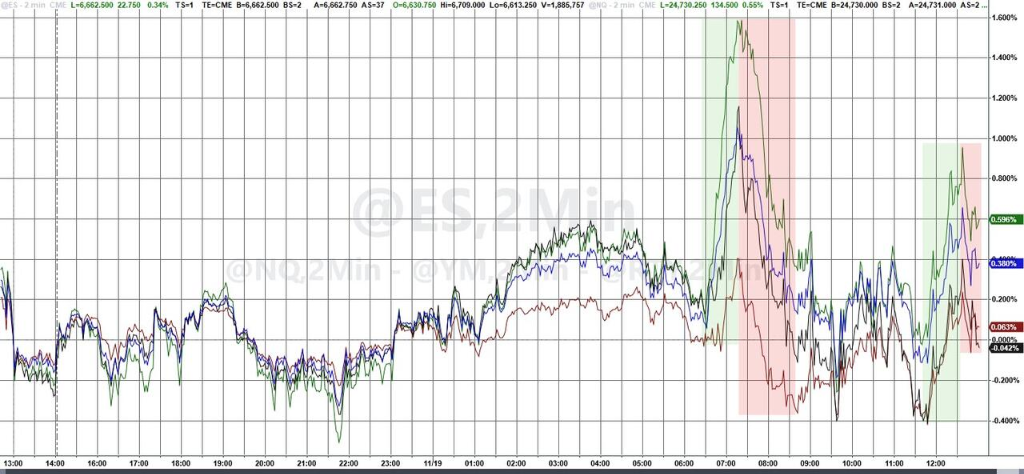
Core Viewpoint - The CME Group's futures and options trading was halted due to a technical failure at the CyrusOne data center, impacting various contracts including WTI crude oil and U.S. Treasury futures [2] Group 1: Technical Issues - The cooling system failure at the CyrusOne data center led to a suspension of trading activities [2] - The technical support team is working to resolve the issue and will update clients on pre-market trading details [2] Group 2: Market Impact - The trading halt affected a wide range of contracts, including U.S. crude oil, gasoline, and palm oil [2] - The last trade for WTI crude oil was recorded at 10:47 AM Beijing time on Friday [2] - Other platforms, such as EBS for forex trading, were also impacted by the suspension [2] Group 3: Market Reactions - Market liquidity was already scarce, and the temporary halt could distort price discovery mechanisms in the Treasury, forex, and commodity markets [2] - There is a significant risk of explosive volatility once trading resumes [2] Group 4: Related Exchanges - The Malaysian exchange reported that all its derivatives products were affected and is collaborating with CME Group to restore services [2] - The benchmark palm oil contract rose by 0.54% to 4,112 ringgit (approximately $995.88) during the trading suspension [2] Group 5: CME Group Overview - CME Group is one of the largest derivatives exchanges globally, covering a wide range of assets from stocks and bonds to currencies and commodities [3] - Key exchanges operated by CME include the Chicago Board of Trade (CBOT), New York Mercantile Exchange (NYMEX), and New York Commodity Exchange (COMEX) [3]

芝商所因故障暂停衍生品交易 恐引发市场波动
Zhi Tong Cai Jing· 2025-11-28 07:10
Core Viewpoint - Chicago Mercantile Exchange (CME) suspended futures and options trading due to technical issues at its data center, specifically a cooling problem at CyrusOne [1] Group 1: Impact on Trading - The suspension affected contracts including U.S. crude oil, gasoline, and palm oil traded on the CME electronic platform during the Asian early trading session following the U.S. Thanksgiving holiday [1] - U.S. Treasury and S&P 500 futures contracts were also impacted by the trading halt [1] - Other platforms, such as the EBS platform used for foreign exchange trading, experienced interruptions due to the suspension [1] Group 2: Market Implications - Charu Chanana, Chief Investment Strategist at Saxo Bank in Singapore, noted that the thin liquidity in the market could lead to distorted price discovery mechanisms for U.S. Treasuries, foreign exchange, and commodities due to the brief halt [1] - There is a significant risk of a wave of volatility as traders may rush to catch up once trading resumes [1] Group 3: CME Overview - CME Group is one of the largest derivatives exchanges globally, covering a wide range of asset classes including equities, bonds, currencies, and commodities [1] - The core exchanges operated by CME include the Chicago Board of Trade, New York Mercantile Exchange, and New York Commodity Exchange [1] - CME Group also holds stakes in other exchanges, including the Gulf Commodity Exchange [1]
浑水CEO:现在不是做空大型科技股的好时机
Hua Er Jie Jian Wen· 2025-11-20 12:02
Group 1 - Nvidia's Q3 performance exceeded expectations, leading to a shift in sentiment among short sellers, with prominent short-seller Carson Block advising against shorting major tech stocks like Nvidia in the current market environment [1] - Despite concerns over a potential bubble in AI stocks, Nvidia's strong revenue forecast and rebuttal of bubble claims helped alleviate market fears, resulting in a more than 6% increase in Nvidia's stock price after hours and a 1.5% rise in Nasdaq 100 futures [1] Group 2 - Block criticized the impact of passive investing on price discovery mechanisms, stating that funds tracking the S&P 500 buy stocks like Nvidia at any price as long as there is capital inflow, disregarding valuation [3] - The dominance of passive investment strategies has significantly weakened the price formation process for individual stocks, particularly for large tech companies [3] Group 3 - While cautious about large tech stocks, Block is monitoring smaller AI-related companies as potential short targets, labeling them as "AI adjacent companies" or "AI impostors" that are capitalizing on the AI trend [4] - Block emphasized that shorting these smaller companies could be risky as long as leaders like Nvidia continue to rise [4]