
科济药业

Search documents
商保创新药目录药品初审名单公布,多款百万抗癌药在列
2 1 Shi Ji Jing Ji Bao Dao· 2025-08-13 05:43
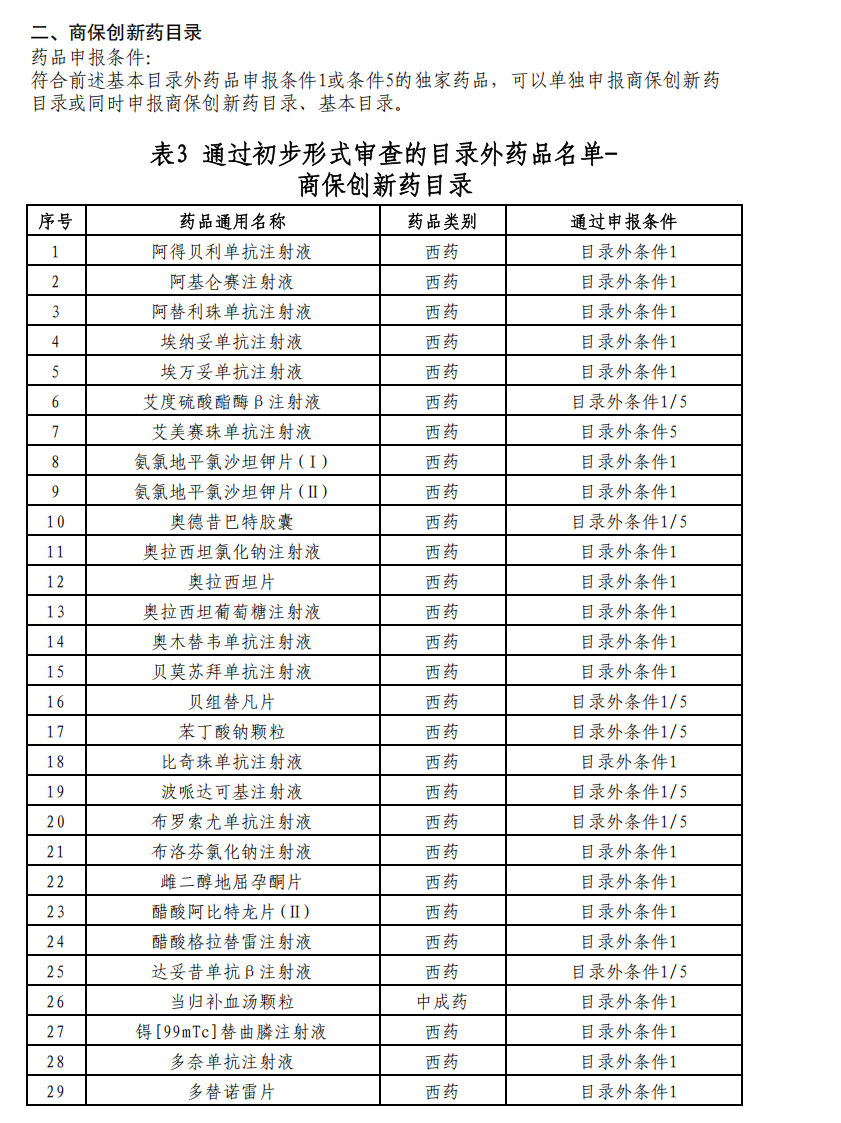
Core Insights - The National Healthcare Security Administration (NHSA) announced the preliminary review results for the 2025 National Basic Medical Insurance, Maternity Insurance, and Work Injury Insurance drug catalog, revealing 534 drugs passed the review, with 121 drugs included in the commercial insurance innovative drug catalog [1][2] Group 1: Drug Catalog Adjustments - The 2025 adjustments mark the first implementation of a "dual-track system," focusing on basic insurance for essential drugs while providing supplementary coverage for "exclusive new drugs" or "rare disease medications" through the commercial insurance innovative drug catalog [1][2] - A total of 718 submissions were received for the basic insurance catalog, with 534 approved, while 141 submissions were made for the commercial insurance catalog, with 121 approved [1][2] - The number of drug names excluded from the catalog increased from 249 in 2024 to 310 [1] Group 2: CAR-T Therapies - CAR-T therapies, which are personalized cancer treatments, have gained attention due to their high costs, with prices exceeding 1 million yuan per injection for several products [1][2] - The commercial insurance catalog will include CAR-T therapies in upgraded coverage plans in various regions, with Shanghai's "Huibao" covering up to 500,000 yuan for patients [2] - Over the past three years, more than 80 lymphoma patients have received treatment through this channel, with total reimbursements exceeding 40 million yuan [2] Group 3: Drug Composition and Approval Process - The approved drugs are predominantly Western medicines, with over 98% representation, and only two traditional Chinese medicines included [3] - Notable cancer drugs include those from major pharmaceutical companies, alongside innovative domestic products like gene therapy for hemophilia B and PD-1 monoclonal antibodies [3] - Passing the preliminary review does not guarantee inclusion in the final catalog, as further expert evaluations and price negotiations are required [3][4] Group 4: Submission Conditions - Unique drugs meeting specific criteria can apply for both the commercial insurance innovative drug catalog and the basic catalog simultaneously [4]


智通港股沽空统计|8月13日
智通财经网· 2025-08-13 00:25
Summary of Key Points Core Viewpoint - The report highlights the top short-selling stocks in Hong Kong, indicating significant short-selling activity in companies like New World Development, Hong Kong Exchanges, and BYD, with notable short-selling ratios and amounts [1][2]. Short-Selling Ratios - New World Development (80016) has the highest short-selling ratio at 100.00% - Hong Kong Exchanges (80388) follows with a short-selling ratio of 94.27% - BYD (81211) has a short-selling ratio of 94.13% [1][2]. Short-Selling Amounts - Alibaba (09988) leads in short-selling amount with HKD 1.546 billion - Tencent (00700) has a short-selling amount of HKD 1.265 billion - Xiaomi (01810) follows with HKD 1.188 billion [1][2]. Deviation Values - Hong Kong Exchanges (80388) has the highest deviation value at 54.37% - New World Development (80016) has a deviation value of 41.90% - Alibaba (89988) shows a deviation value of 39.84% [1][2].



从惠民保到进医保,国产CAR-T创新药还有多远?
Hu Xiu· 2025-08-08 23:10
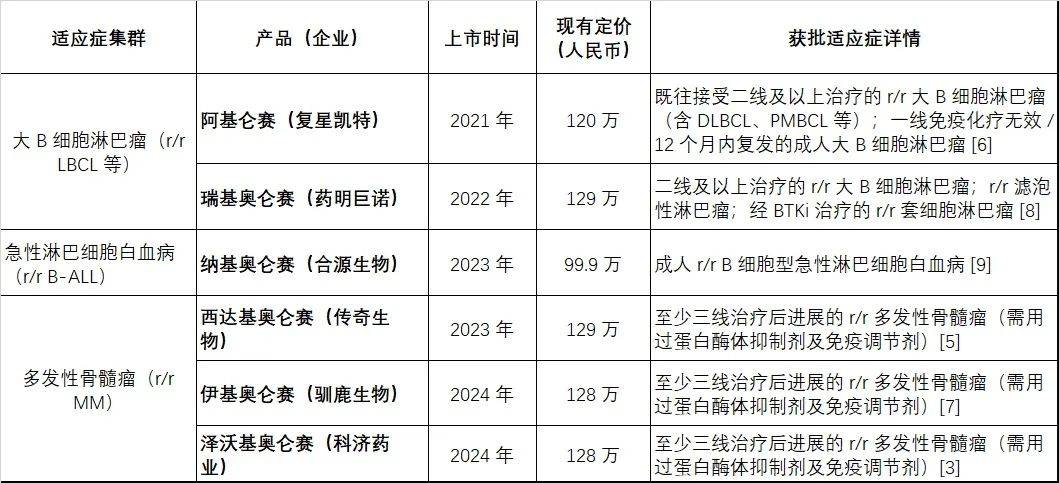
Core Insights - The recent government policies aim to support innovative drugs, including "first launch price protection" for CAR-T therapies, which will not be included in centralized procurement for the first five years post-launch [1] - Despite these policies, the payment challenges for CAR-T therapies remain significant, with prices ranging from 999,000 to 1,290,000 RMB, far exceeding the implicit thresholds of 300,000 RMB for basic medical insurance [1][2] - The focus for the 2025 negotiations will be on the long-term competitiveness of companies, assessing their ability to manage price pressures, cost control, and commercialization efficiency [2] Group 1: CAR-T Products and Pricing - Six CAR-T products will participate in commercial health insurance negotiations in September 2025, but basic medical insurance access is unlikely [3] - The current pricing for the listed CAR-T products is as follows: - Axicabtagene ciloleucel (Fosun Kite): 1,200,000 RMB - Relmacabtagene autoleucel (WuXi AppTec): 1,290,000 RMB - Nanjing Biomedicine's product: 999,000 RMB - Others range from 1,280,000 to 1,290,000 RMB [4] Group 2: Economic Evaluation and Price Pressure - Only three of the six CAR-T products have published cost-effectiveness analysis reports for the Chinese market, which will influence their negotiation positions [5] - The incremental cost-effectiveness ratios (ICER) for these products are as follows: - Axicabtagene ciloleucel: 463,000 RMB/QALY - Relmacabtagene autoleucel: 203,000 RMB/QALY - Other products show varying ICERs, indicating different levels of price pressure [6] Group 3: Competitive Strategies and Market Dynamics - The negotiation dynamics will depend on the companies' ability to demonstrate cost control and effective commercialization strategies [2][14] - Companies like WuXi AppTec and Legend Biotech have competitive advantages due to their existing ICERs being closer to the expected thresholds, while others may need to prove the reliability of unpublished data or offer price concessions [14] Group 4: Future Market Potential and Insurance Access - The potential for CAR-T therapies to enter the insurance market hinges on their ability to lower costs and expand patient access, particularly in the context of solid tumors [16][22] - The expected patient population for blood cancers is approximately 26,000 to 48,000 annually, while solid tumors could see a much larger patient base, enhancing the long-term viability of CAR-T therapies [20][22] Group 5: Key Observations for Investors - The completeness of health economic data will determine the negotiation eligibility for insurance access, while the feasibility of price reductions and commercialization efficiency will influence the speed of market entry [14][15] - The ability to expand hospital coverage and partnerships with health insurance will be critical for companies to achieve rapid market penetration and revenue growth [15]


港股异动 医药股普遍走低 诺诚健华(09969)跌超7% 昭衍新药(06127)跌近6%
Jin Rong Jie· 2025-08-07 05:07
Group 1 - The pharmaceutical sector is experiencing a general decline, with CRO and innovative drug concepts leading the losses. Notable declines include: Innovent Biologics (09969) down 7.68% to HKD 17.54, WuXi AppTec (06127) down 5.88% to HKD 23.06, Tigermed (03347) down 5.6% to HKD 53.1, and Kintor Pharmaceutical (02171) down 5.4% to HKD 19.96 [1] - U.S. President Trump announced plans to introduce new tariffs on pharmaceuticals, with initial "small tariffs" on imported drugs expected to be revealed next week. The tariffs are projected to increase to 150% within a year and potentially reach 250% thereafter, aimed at boosting domestic drug production [1] - Tianfeng Securities expressed confidence in the long-term competitive advantages of the pharmaceutical industry, noting that the innovative drugs and related supply chains are still viewed positively despite potential challenges. The relative certainty of domestic consumption is also seen as improving [1]

医药股普遍走低 诺诚健华跌超7% 昭衍新药跌近6%
Zhi Tong Cai Jing· 2025-08-07 04:00
Group 1 - Pharmaceutical stocks generally declined, with CRO and innovative drug concepts experiencing the largest drops [1] - Notable declines included: Innovent Biologics (09969) down 7.68% to HKD 17.54, Zai Lab (603127) down 5.88% to HKD 23.06, Tigermed (300347) down 5.6% to HKD 53.1, and Kintor Pharmaceutical (02171) down 5.4% to HKD 19.96 [1] - The market is reacting to President Trump's announcement of new tariffs on pharmaceuticals, which will start with a "small tariff" and potentially increase to 150% within a year, and up to 250% thereafter [1] Group 2 - Tianfeng Securities noted that the market remains confident in the long-term competitive advantages of the pharmaceutical industry, despite potential challenges [1] - The innovative drugs and related industry chain are still viewed as promising directions, with increasing certainty in domestic consumption [1]

科济药业(02171) - 截至2025年7月31日止月份之股份发行人的证券变动月报表
2025-08-06 09:30
股份發行人及根據《上市規則》第十九B章上市的香港預託證券發行人的證券變動月報表 截至月份: 2025年7月31日 狀態: 新提交 致:香港交易及結算所有限公司 公司名稱: 科濟藥業控股有限公司 呈交日期: 2025年8月6日 I. 法定/註冊股本變動 | 1. 股份分類 | 普通股 | 股份類別 | 不適用 | | 於香港聯交所上市 (註1) | | 是 | | | --- | --- | --- | --- | --- | --- | --- | --- | --- | | 證券代號 (如上市) | 02171 | 說明 | | | | | | | | | | 法定/註冊股份數目 | | | 面值 | | 法定/註冊股本 | | | 上月底結存 | | | 200,000,000,000 | USD | 0.00000025 | USD | | 50,000 | | 增加 / 減少 (-) | | | | | | USD | | | | 本月底結存 | | | 200,000,000,000 | USD | 0.00000025 | USD | | 50,000 | 本月底法定/註冊股本總額: USD 50 ...
国产CAR-T涌向实体瘤:管线与市场潜力解码
Hu Xiu· 2025-08-06 09:14
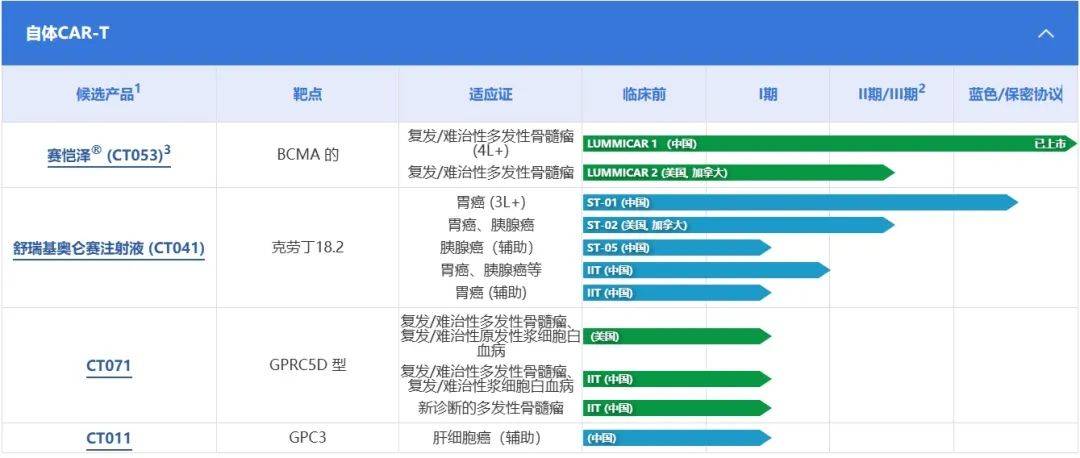
Core Insights - The article emphasizes the need to resolve the contradiction between the high costs of CAR-T therapy and the payment system, which relies on both technological cost reduction and the expansion of research pipelines to access a broader patient market [1] - The focus is on the potential market growth in the solid tumor sector, which could significantly alter the CAR-T market landscape [1] Industry Trends - The global CAR-T research initially focused on hematological tumors, with existing products targeting CD19 and BCMA, covering conditions like non-Hodgkin lymphoma (NHL) and multiple myeloma (MM). The research is now expanding towards solid tumors, with the proportion of clinical trials for solid tumors expected to rise from 15% in 2020 to 30% by 2025 [2][3] - The incidence of solid tumors is significantly higher than that of hematological cancers, indicating a potential exponential growth in the patient population. This growth can help distribute costs through economies of scale and enhance market competitiveness [2] Patient Population Insights - In China, the annual incidence rates for NHL and MM are 6.97 and 1-2 per 100,000 respectively, with approximately 40,000 new cases of DLBCL and 14,000-28,000 new cases of MM each year [2] - For solid tumors, the annual incidence of gastric cancer is between 10-20 per 100,000, with 140,000-280,000 new cases annually, and liver cancer has a similar incidence rate with a potential treatable population of 98,000-196,000 patients per year [3] Technical Challenges - Solid tumors present unique challenges for CAR-T therapies, including tumor microenvironment suppression, antigen heterogeneity, infiltration barriers, and T cell exhaustion [4] Domestic Trends - In China, all six approved CAR-T therapies target hematological tumors, but the proportion of clinical trials for solid tumors is expected to reach 42% by 2024. Key drivers for this shift include technological advancements, policy support, and a large patient base for solid tumors [5] Company Pipeline Analysis - Companies are focusing on expanding their CAR-T pipelines to include solid tumors, with several firms reporting promising clinical trial results and plans for future submissions [6][10][15][20][23][35] - For instance, Kexing Biopharm's Claudin18.2 CAR-T for gastric cancer has shown a 22% objective response rate in Phase II trials, while another company, Yuanqi Bio, reported a 56.5% response rate for GPC3 CAR-T in liver cancer [5][10] Market Potential - The potential market for CAR-T therapies in solid tumors is vast, with estimates suggesting that the annual patient population for gastric and liver cancers alone could reach between 126,000 and 280,000, far exceeding the total for hematological cancers [3][5]
国产创新药突围:谁能先把CAR-T成本砍半?
Hu Xiu· 2025-08-03 03:24
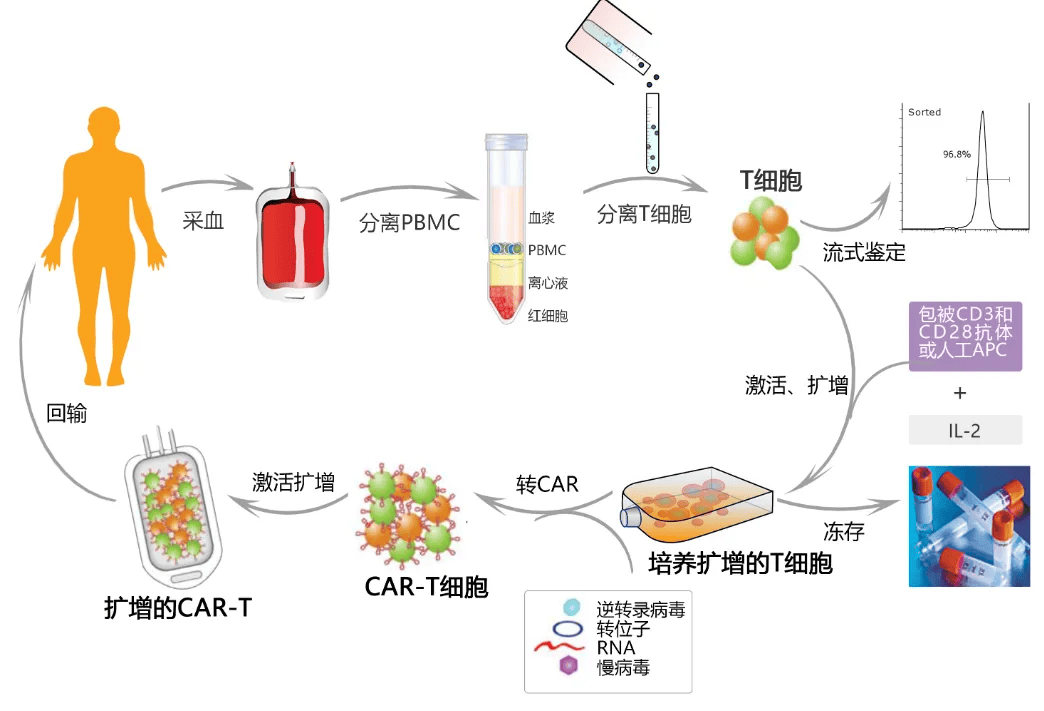
Core Insights - The article discusses the transformative impact of CAR-T therapy in cancer treatment, highlighting its shift from a laboratory concept to a viable treatment option for patients with relapsed/refractory tumors [1] - The Chinese biopharmaceutical sector, particularly in cell therapy, is gaining significant attention from both domestic and international investors, with over $5 billion in business development (BD) transactions in 2024 alone [2] - The analysis aims to decode the investment logic in innovative drugs, focusing on the challenges and opportunities within the cell therapy landscape, particularly CAR-T [3] Industry Overview - The CAR-T market is characterized by a critical contradiction: while the therapy shows significant efficacy, its high costs (often exceeding 1 million yuan per treatment) limit patient access [5][6] - The demand for CAR-T therapy is substantial, with approximately 25,000 new cases of multiple myeloma and 60,000 new cases of non-Hodgkin lymphoma annually in China, yet many patients are deterred by the high costs [5] Payment System Challenges - Commercial health insurance currently supports CAR-T therapy, but only 42% of the available plans explicitly cover CAR-T treatments, with reimbursement rates for pre-existing condition patients being particularly low [6] - For widespread adoption, the cost of CAR-T treatments must drop below 300,000 yuan, which would allow for basic medical insurance coverage [6] Cost Reduction Strategies - The high costs of CAR-T therapy stem from its personalized and high-tech production model, but technological advancements are expected to reduce these costs significantly [9][10] - Key factors influencing cost reduction include: 1. **Vector Technology**: Transitioning from viral to non-viral vectors can reduce costs by 30%-50% [9] 2. **Autologous vs. Allogeneic**: Allogeneic CAR-T can lower costs to one-third or half of autologous CAR-T by enabling batch production [10] 3. **Production Processes**: Automation can reduce production time from over 14 days to about 30 hours, cutting costs by over 40% [11] Investment Analysis Framework - The analysis will evaluate nine CAR-T companies based on several dimensions, including: 1. **Technology Iteration and Cost Control**: Assessing the core technology routes and potential for cost reduction [13] 2. **Market Potential**: Estimating the patient population for various indications [14] 3. **Economic Viability and Market Access**: Identifying which companies are likely to secure market access based on cost control and pipeline potential [15] 4. **International Expansion Opportunities**: Evaluating the potential for products in international markets [16] 5. **Commercialization Capabilities**: Analyzing sales figures, production capacity, and investment relationships [17] Company-Specific Insights - The analysis focuses on nine leading CAR-T companies in China, which are at the forefront of CAR-T development, including those with approved products and those in critical clinical stages [18] - Each company's technology route and cost assessment will be detailed, highlighting their strategies for cost reduction and market positioning [26][30] Future Directions - The article anticipates that the adoption of allogeneic CAR-T technology will significantly reduce costs in the mid-term (2025-2028) and further advancements in non-viral vector technology will continue to drive down costs in the long term [24][25]
科济药业(02171) - 董事会会议召开日期
2025-08-01 04:02
(於開曼群島註冊成立的有限公司) (股份代號:2171) 董事會會議召開日期 科濟藥業控股有限公司(「本公司」,連同其附屬公司及併表聯屬實體統稱「本集 團」)董事會(「董事會」)茲通告謹定於2025年8月14日(星期四)舉行董事會會議, 以考慮及通過本集團截至2025年6月30日止六個月的中期業績,以及處理其他事 項。 香港交易及結算所有限公司、香港聯合交易所有限公司及香港中央結算有限公司對本公告的內 容概不負責,對其準確性或完整性亦不發表任何聲明,並明確表示,概不就因本公告全部或任 何部分內容而產生或因倚賴該等內容而引致的任何損失承擔任何責任。 CARsgen Therapeutics Holdings Limited 科濟藥業控股有限公司 於本公告日期,本公司董事會包括執行董事李宗海博士、王華茂博士及蔣華博 士;非執行董事郭炳森先生、郭華清先生及謝榕剛先生;獨立非執行董事顏光美 博士、趙向可女士及周文博士。 承董事會命 科濟藥業控股有限公司 董事長 李宗海博士 香港,2025年8月1日 ...
恒生指数收盘跌0.15%,恒生科技指数跌0.35%。医药股涨幅居前,药明康德涨约11%,科济药业涨约7%,君圣泰医药-B涨约6%。
news flash· 2025-07-29 08:13
恒生指数收盘跌0.15%,恒生科技指数跌0.35%。医药股涨幅居前,药明康德涨约11%,科济药业涨约 7%,君圣泰医药-B涨约6%。 ...
