贝因美

Search documents
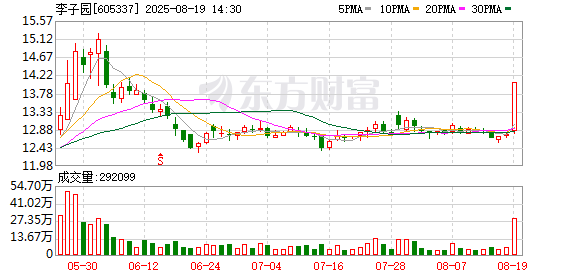
乳业概念震荡走高 李子园涨停
Mei Ri Jing Ji Xin Wen· 2025-08-19 06:29
Group 1 - The dairy industry concept experienced a significant upward trend on August 19, with notable stocks such as Li Ziyuan hitting the daily limit increase [2] - Other companies in the sector, including Zhuangyuan Pasture, Knight Dairy, and Beingmate, also saw their stock prices rise in response to the market movement [2]


贝因美获融资买入0.88亿元,近三日累计买入2.70亿元
Jin Rong Jie· 2025-08-19 01:05
Group 1 - The core point of the article highlights that Beiningmei has seen a significant amount of financing activity, with a total financing buy-in of 0.88 billion yuan on August 18, ranking 764th in the market [1] - Over the last three trading days from August 14 to August 18, Beiningmei recorded financing buy-ins of 0.99 billion yuan, 0.83 billion yuan, and 0.88 billion yuan respectively, indicating a consistent interest from investors [1] - On the same day, the financing repayment amount was 0.87 billion yuan, resulting in a net buy of 52.38 thousand yuan [1] Group 2 - In terms of securities lending, there were no shares sold or net sold on that day, indicating a lack of short-selling activity [2]

嘉必优: 嘉必优生物技术(武汉)股份有限公司2025年半年度报告
Zheng Quan Zhi Xing· 2025-08-18 16:33
Core Viewpoint - The report highlights the financial performance and operational developments of Cabio Biotech (Wuhan) Co., Ltd. for the first half of 2025, showcasing significant growth in revenue and profit, alongside advancements in product offerings and market expansion strategies [1][3]. Company Overview and Financial Indicators - Cabio Biotech is a leading player in the synthetic biology sector, focusing on high-quality nutrient products and innovative solutions for the global nutrition and health market [4]. - The company reported a revenue of approximately 306.73 million yuan, representing a 17.60% increase compared to the same period last year [3]. - The total profit reached approximately 123.16 million yuan, marking a 57.82% increase year-on-year [3]. - The net profit attributable to shareholders was approximately 107.95 million yuan, up 59.01% from the previous year [3]. - The company's total assets increased by 12.31% to approximately 1.84 billion yuan, while net assets rose by 7.64% to approximately 1.63 billion yuan [3]. Main Business and Industry Situation - The company utilizes synthetic biology as a foundational technology to produce essential fatty acids and other bioactive compounds, which are widely used in infant formula, health foods, and personal care products [4][6]. - Key products include ARA (Arachidonic Acid), DHA (Docosahexaenoic Acid), and various oligosaccharides, which are essential for infant development and health [4][6]. - The company has established three production bases that meet international standards and has a comprehensive supply chain covering over 30 countries [4][6]. Market Trends and Opportunities - The Chinese government has implemented policies to encourage childbirth, which is expected to boost the maternal and infant consumption market, positively impacting the demand for ARA and DHA products [7]. - The global Omega-3 market is projected to grow significantly, with a focus on high-purity DHA products, driven by increasing health awareness and aging populations [8][10]. - The company is positioned to benefit from the growing trend of replacing fish oil with algae-derived DHA in various applications, including functional foods and clinical nutrition [10][11]. Technological Advancements and Competitive Edge - Cabio Biotech has developed a robust technological platform that integrates various capabilities in synthetic biology, enhancing its product development and production efficiency [14][16]. - The company has achieved several certifications, including FDA GRAS and EU Novel Food, ensuring the quality and safety of its products [15][16]. - Continuous investment in automation and smart manufacturing systems has improved production efficiency and product quality, solidifying the company's competitive position in the market [16][17].

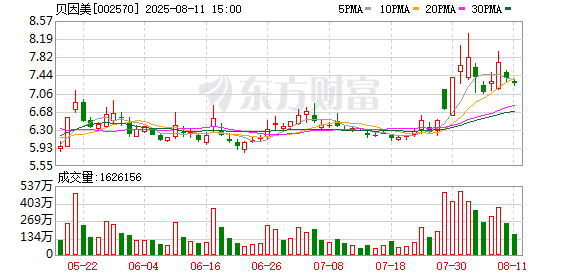
贝因美(002570)8月15日主力资金净流出3147.42万元
Sou Hu Cai Jing· 2025-08-15 12:34
Group 1 - The core viewpoint of the news is that Beiningmei (002570) has shown a slight increase in stock price and a significant growth in net profit for the first quarter of 2025, indicating potential positive performance in the food manufacturing industry [1][3] - As of August 15, 2025, Beiningmei's stock closed at 7.09 yuan, up 0.42%, with a turnover rate of 10.75% and a trading volume of 1.1613 million lots, amounting to 817 million yuan in transaction value [1] - The company's latest quarterly report shows total revenue of 728 million yuan, a year-on-year increase of 1.01%, and a net profit attributable to shareholders of 42.796 million yuan, reflecting a substantial year-on-year growth of 93.87% [1] Group 2 - Beiningmei has a current liquidity ratio of 1.041 and a quick ratio of 0.889, with a debt-to-asset ratio of 58.49%, indicating its financial health and ability to meet short-term obligations [1] - The company has made investments in 41 enterprises and participated in 7 bidding projects, showcasing its active engagement in business expansion and development [2] - Beiningmei holds 2,343 trademark registrations and 64 patents, along with 86 administrative licenses, highlighting its focus on intellectual property and regulatory compliance [2]
国家发钱养娃,有奶粉连夜涨价40%?家长痛斥吃相难看,真相是……
凤凰网财经· 2025-08-14 14:14
Core Viewpoint - The recent implementation of the childcare subsidy policy has led to allegations of price gouging among baby product retailers, with some consumers reporting price increases exceeding 40% for certain brands of milk powder and diapers [1][2][5]. Group 1: Price Increases and Consumer Reactions - Consumers have reported significant price hikes for essential baby products, with some milk powder brands seeing increases of over 60 yuan per can, leading to concerns that the subsidy may not benefit families as intended [2][10]. - A specific example includes a consumer noting that the price of a six-can box of Feihe milk powder increased by 102 yuan, while another reported a price jump for a Beiyinmei milk powder from 191 yuan to 269 yuan, a rise of over 40% [10]. - Diapers have also been implicated in price increases, with brands like Pampers and Baby Care facing scrutiny, as one Baby Care product reportedly increased by 43 yuan, a nearly 16% rise [12]. Group 2: Retailer Responses and Market Dynamics - Despite consumer complaints, major companies like Yili, Feihe, and Beiyinmei have denied any price increases, attributing perceived price changes to adjustments in promotional strategies and differences in online and offline pricing transparency [26][28]. - Retail visits to stores like Leyou and Lijia Baby revealed no immediate price changes, although sales staff indicated that future price adjustments could occur based on manufacturer notifications [23][24]. Group 3: Market Trends and Future Outlook - The willingness of baby product retailers to raise prices may be linked to a recovering birth rate and an upgrade in consumer demand for quality products, as indicated by a report predicting an increase in newborns in 2024 [2][29]. - High brand loyalty among parents, with over 85% showing loyalty to milk powder and over 75% to diapers, suggests that companies may feel secure in raising prices without losing customers [30]. - Companies like Beiyinmei have reported improved financial performance, with a 1.01% increase in revenue and a 93.87% rise in net profit year-on-year, indicating a favorable market environment for baby products [32].

终端价格波动 奶粉市场进入深度调整期
Bei Jing Shang Bao· 2025-08-13 16:24
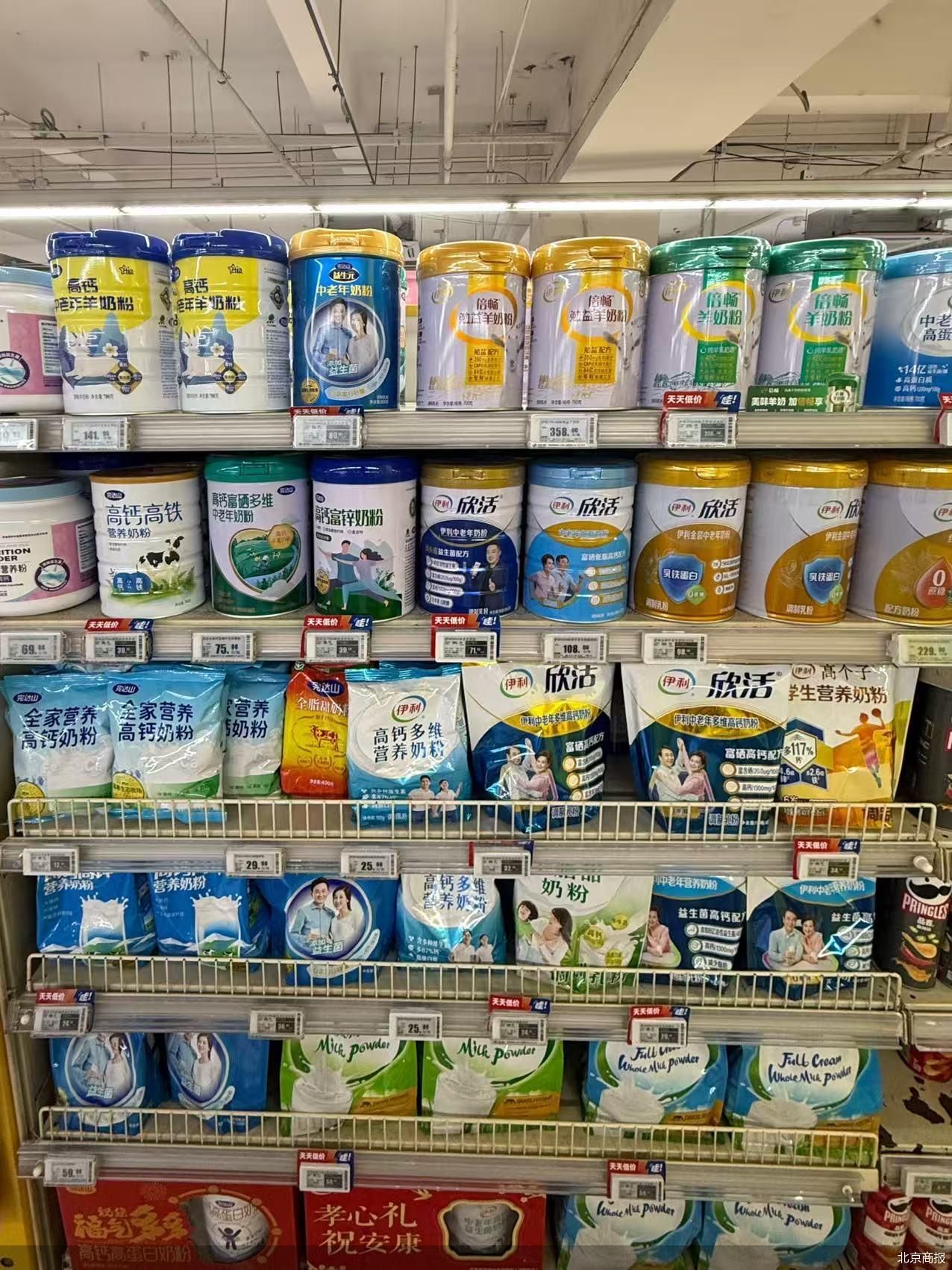
Core Insights - Recent reports indicate a price increase in certain infant formula brands such as Aptamil, Friso, Wyeth, Beingmate, and a2, primarily influenced by promotional activities on platforms [1][3] - Domestic milk powder brands are recovering from a price war over the past four years, while foreign brands are experiencing price increases due to strict control over supply and pricing [1][5] Price Trends - Online channels show significant price fluctuations for premium brands due to promotional activities, with Friso's price ranging from 298 yuan to 356 yuan per can, a difference of 58 yuan [4] - Offline channels, however, reveal stable prices for domestic brands, with promotions making some products cheaper than online prices [4][5] Market Dynamics - The price fluctuations observed are not directly linked to the recent childcare subsidy policy, as domestic brands are gradually recovering from previous price wars [5] - Foreign brands are maintaining higher prices through strict control over supply and have introduced new products at elevated prices [5][6] Raw Material Costs - The increase in prices for foreign milk powder is also attributed to rising costs of international bulk powder raw materials, with New Zealand's whole and skim milk powder prices increasing by 2.1% and 0.4% respectively [6] Competitive Landscape - The ultra-premium market is dominated by foreign companies like Danone and FrieslandCampina, with FrieslandCampina's market share leading among international brands [7] - Danone's growth is driven by a rapid increase in online sales, particularly for its specialized nutrition products [7] E-commerce Impact - The development of cross-border e-commerce has provided favorable conditions for foreign dairy companies, with simplified import processes enhancing consumer access to high-end products [8] - The ultra-premium milk powder market is projected to grow by 4.2% in 2024, becoming a key growth driver for the industry [8] Strategic Directions - Industry experts suggest that dairy companies should focus on three main areas: enhancing high-end product development, strengthening niche market offerings, and optimizing channel strategies [8] - The future competition will shift from product sales to providing comprehensive nutritional solutions throughout the consumer lifecycle [8]
奶粉终端价格波动背后:国产恢复价盘,进口控货控渠
Bei Jing Shang Bao· 2025-08-13 16:23
Core Viewpoint - Recent reports indicate that prices of certain infant formula brands, including Aptamil, Royal FrieslandCampina, Wyeth, Beingmate, and a2, have increased, primarily influenced by promotional activities on platforms and the recovery of domestic milk powder prices after a prolonged price war [1][4] Price Fluctuations - Consumer feedback on social media highlighted price increases for several milk powder brands, although investigations revealed that price changes were largely due to promotional activities rather than consistent price hikes [1][2] - Online channels showed significant price volatility for premium brands, with Royal FrieslandCampina's Stage 3 formula ranging from 298 yuan to 356 yuan per can, a difference of 58 yuan [2] - Offline channels reported stable prices for domestic brands, with promotional offers available in various supermarkets [2] Company Responses - Beingmate publicly stated that there have been no price increases for their products, urging consumers not to spread rumors [3] Market Dynamics - The infant formula market is undergoing a deep adjustment phase, with domestic brands recovering from a price war while foreign brands maintain strict control over pricing and distribution [4] - The demand for ultra-premium formulas containing HMO and A2 protein is rising, with foreign brands leveraging price increases to uphold their high-end image [4] Raw Material Costs - The increase in prices for international bulk powder raw materials, such as whole and skim milk powder from New Zealand, is contributing to the rising costs of foreign brands [5] - Factors such as high European milk prices and inflation are impacting the cost of raw milk, which in turn affects consumer prices [5] Competitive Landscape - Foreign companies like Danone and FrieslandCampina dominate the ultra-premium segment of the infant formula market in China, with FrieslandCampina's market share leading among international brands [7] - Danone reported a 12.9% year-on-year sales growth in its specialized nutrition segment, driven by strong demand for its premium products [7] E-commerce Impact - The development of cross-border e-commerce is providing favorable conditions for foreign dairy companies, with policy adjustments since 2024 facilitating easier access to high-end formulas [8] - The ultra-premium formula market is projected to grow by 4.2% year-on-year, becoming a key growth driver in the industry [8] Strategic Directions - Industry experts suggest that companies should focus on three main areas: enhancing high-end product development, strengthening niche market offerings, and optimizing channel strategies to improve brand loyalty [8] - The future of the dairy industry is expected to shift towards service-oriented models, emphasizing comprehensive nutritional solutions over mere product sales [8]
奶粉终端价格波动背后:国产恢复价盘 进口控货控渠
Bei Jing Shang Bao· 2025-08-13 13:21
Core Insights - Recent reports indicate a price increase in infant formula products from brands such as Aptamil, Royal FrieslandCampina, Wyeth, Beingmate, and a2, primarily influenced by promotional activities on platforms [1][2] - Domestic milk powder brands are recovering from a price war that lasted four years, while foreign brands are experiencing price increases due to strict control over supply and pricing [1][4] Price Fluctuations - Consumer reports on social media highlighted price increases for several milk powder brands, but investigations revealed that price changes were largely due to promotional activities rather than consistent price hikes [2][3] - For instance, the price of Royal FrieslandCampina's formula fluctuated between 298 yuan and 356 yuan per can, showing a price difference of 58 yuan [2] Market Dynamics - The domestic infant formula market is undergoing a deep adjustment phase, with increased consumer demand for high-end products containing HMO and A2 protein [4][6] - Foreign brands have maintained a dominant position in the high-end market, with companies like FrieslandCampina and Danone reporting significant revenue growth driven by their premium product lines [6][7] Raw Material Costs - The increase in prices for foreign milk powder is also attributed to rising costs of international bulk powder raw materials, with New Zealand's whole and skim milk powder prices increasing by 2.1% and 0.4%, respectively [5] - Factors such as high European milk prices and inflation have contributed to the rising costs of raw milk [5] Strategic Focus - Companies are advised to focus on three key areas: enhancing high-end product development, strengthening niche market offerings, and optimizing channel strategies to improve brand loyalty [7] - The future competition in the dairy industry is expected to shift from product sales to providing comprehensive nutritional solutions throughout the consumer lifecycle [7]
追踪|奶粉终端价格波动背后:国产恢复价盘,进口控货控渠
Bei Jing Shang Bao· 2025-08-13 13:08
Core Viewpoint - Recent reports indicate a price increase in infant formula products from brands such as Aptamil, Friso, Wyeth, Beingmate, and a2, primarily influenced by promotional activities on platforms and the recovery of domestic milk powder prices after a prolonged price war [1][3][5]. Price Fluctuations - Consumer feedback on social media highlighted price increases for several milk powder brands, although investigations revealed that price changes were largely due to promotional activities rather than consistent price hikes [3][4]. - Specific brands like Friso showed significant price variability, with prices ranging from 298 yuan to 356 yuan per can over the past six months, indicating a price difference of 58 yuan per can [3]. Market Dynamics - Domestic milk powder brands are recovering from a price war that lasted four years, with current average prices still lower than those in 2019, while foreign brands are maintaining strict control over pricing and distribution [5][6]. - The demand for ultra-premium milk powder, particularly those containing HMO and A2 protein, is increasing, leading foreign brands to raise prices to maintain a high-end image [5][7]. International Influences - The rise in prices for foreign milk powder is also attributed to increased costs of international bulk powder raw materials, with recent auction results showing price increases for whole and skim milk powder from New Zealand [6]. - Factors such as high European milk prices and inflation are contributing to the rising costs of raw milk, impacting the pricing strategies of foreign brands [6]. Competitive Landscape - Foreign companies like Danone and FrieslandCampina are leveraging high-end strategies to dominate the ultra-premium milk powder market in China, with FrieslandCampina reporting a significant revenue increase driven by its premium product lines [7]. - The growth of online sales channels has been a key driver for Danone's brands, with a notable increase in sales attributed to the demand for specialized nutrition products [7]. E-commerce and Future Trends - The development of cross-border e-commerce is providing favorable conditions for foreign dairy companies, with policy adjustments since 2024 aimed at reducing import barriers and enhancing consumer access to high-end products [8]. - Industry experts suggest that companies should focus on high-end product development, market segmentation, and optimizing distribution channels to enhance brand loyalty and competitiveness in the long term [8].
贝因美:公司创新拓展的驱蚊产品涵盖了电蚊香液、驱蚊喷雾等
Mei Ri Jing Ji Xin Wen· 2025-08-12 00:53
Group 1 - The company has developed innovative mosquito repellent products, including electric mosquito repellent liquid and spray, which cater to different demographics and formulations [2] - The company emphasizes the importance of following packaging instructions and professional advice for the use of its products [2]