
BioNTech SE

Search documents
国产创新药出海首付款记录再刷新,辉瑞60.5亿美元引进三生制药双抗
Guo Ji Jin Rong Bao· 2025-05-20 09:05
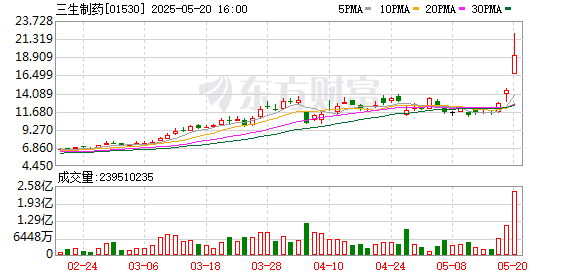
Core Viewpoint - The partnership between Sangfor Biopharma and Pfizer marks a significant milestone in the biopharmaceutical industry, with a total agreement value of up to $60.5 billion for the global development, production, and commercialization rights of SSGJ-707, a dual-target PD-1/VEGF antibody, excluding mainland China [2][5][6]. Group 1: Agreement Details - Sangfor Biopharma retains the rights for SSGJ-707 in mainland China and grants Pfizer an option for commercialization in that region based on agreed financial terms [5][6]. - The agreement includes a non-refundable upfront payment of $1.25 billion and potential milestone payments of up to $4.8 billion based on development, regulatory approval, and sales [5][6]. - Additionally, Sangfor will receive a tiered percentage of sales revenue from the licensed regions and Pfizer will purchase $100 million worth of common stock from Sangfor upon the agreement's effective date [6][5]. Group 2: Product and Clinical Insights - SSGJ-707 is developed using Sangfor's proprietary CLF2 platform and targets both PD-1 and VEGF, showing promising results in clinical trials for non-small cell lung cancer (NSCLC) with high objective response rates (ORR) and disease control rates (DCR) [7]. - The drug has received breakthrough therapy designation from the National Medical Products Administration (NMPA) for first-line treatment of PD-L1 positive locally advanced or metastatic NSCLC and has also gained IND approval from the FDA [7]. Group 3: Company Overview and Financial Performance - Sangfor Biopharma is a leading biopharmaceutical company with over 100 national invention patents and more than 40 marketed products across various therapeutic areas [9]. - The company reported a revenue of 9.11 billion yuan in 2024, a year-on-year increase of 16.5%, with a net profit of 2.09 billion yuan, up 35% [9]. - Key products include the recombinant human thrombopoietin (rhTPO) product, which generated approximately 5.06 billion yuan in sales, reflecting a 20.4% increase [9]. Group 4: Strategic Collaborations and Future Prospects - In 2024, Sangfor has achieved multiple collaborations, including partnerships in the oncology sector to enhance the accessibility of innovative chemotherapy drugs [10]. - The company is focused on leveraging its rich pipeline and early investments in blood, oncology, and autoimmune disease sectors, indicating a promising future as it approaches the NDA (New Drug Application) phase [12].

BioNTech SE(BNTX) - 2025 FY - Earnings Call Transcript
2025-05-16 13:00
Financial Data and Key Metrics Changes - In the fiscal year 2024, the company generated total sales of approximately €2.8 billion, a decline from €3.8 billion in the previous year, primarily due to lower demand for the COVID-19 vaccine [71] - The company reported a pretax loss of €678 million, resulting in a basic and diluted loss per share of €2.777 [73] - Cash and cash equivalents, along with investments and securities, amounted to €17.4 billion at the end of 2024, slightly down from €17.7 billion at the end of 2023 [73] Business Line Data and Key Metrics Changes - The company has over 20 product candidates entering Phase II and Phase III clinical trials, with a particular focus on the bispecific antibody BNT327 [68] - Research and development expenditures accounted for more than 50% of the overall cost structure, emphasizing the company's commitment to breakthroughs in medicine [72] Market Data and Key Metrics Changes - The company maintained a market share of over 50% in the COVID-19 vaccine market, solidifying its leading global position [71] Company Strategy and Development Direction - The company aims to submit its first approval application for a cancer therapy by the end of 2025, with regulatory submissions for various cancers to follow [72] - The strategic acquisition of BioThese is viewed as a significant step to enhance the company's oncology pipeline and capabilities [49][50] Management's Comments on Operating Environment and Future Outlook - The management expressed confidence in the company's strong financial position to continue investing in sustainable value creation and the implementation of its strategy [73] - The company is preparing for potential market launches in oncology, with expectations for several approvals in the coming years [62] Other Important Information - The company plans to adapt its COVID-19 vaccine for the upcoming vaccination season, indicating ongoing commitment to addressing public health needs [56] - The company is also expanding its commercial capacities in oncology to become a fully integrated biopharmaceutical company [61] Q&A Session Summary Question: What are the expected clinical and regulatory milestones for the oncology pipeline? - The company will continue to focus on the development of BNT327 and mRNA cancer immunotherapies, with data expected later this year [61] Question: How is the company addressing the challenges in the cancer treatment landscape? - The company aims to improve treatment outcomes through innovative therapies that target the unique characteristics of individual tumors [38][39]

危中有机最惠国定价(MFN)解读 & 国内创新药出海机遇
2025-05-12 15:16
Summary of Conference Call Notes Industry Overview - The discussion primarily revolves around the pharmaceutical industry, particularly focusing on the impact of the Inflation Reduction Act (IRA) and the opportunities for Chinese innovative drug companies in the global market. Key Points and Arguments 1. **Impact of the Inflation Reduction Act**: The IRA has led to significant price reductions for drugs, with the first batch of 10 drugs seeing price cuts between 38% and 79%. However, the actual ex-factory price only decreased by about 22%, indicating that channel fees account for most of the reductions, which keeps pressure on pharmaceutical companies relatively manageable [1][2][3]. 2. **Opportunities for Chinese Innovative Drug Companies**: The patent cliff and pricing pressures in the U.S. present opportunities for Chinese pharmaceutical companies to expand internationally. By leveraging technological innovation and international collaboration, these companies can alleviate domestic competition and achieve profit growth while avoiding the complexities of the U.S. payment system [1][5][16]. 3. **Growth in License-In Transactions**: The proportion of license-in transactions for Chinese innovative drugs has increased, reaching 32% in 2023. This growth is attributed to the quality of Chinese drugs and their commercial viability overseas, supported by talent, clinical resources, and a me-too innovation model [1][6][7]. 4. **Patent Cliff Challenges**: By 2028, it is estimated that $100 billion in patented drug revenues will face generic competition, leading to a projected sales decline of $32 billion. This situation compels multinational pharmaceutical companies to seek external collaborations and acquisitions to replenish their pipelines [1][8][9]. 5. **Multinational Companies' Strategies**: Large multinational pharmaceutical companies are increasingly relying on external collaborations, with 65% of new products launched between 2015 and 2021 coming from such partnerships. As of June 30, 2024, these companies have approximately $480 billion available for acquisitions, indicating a proactive approach to market pressures [1][9]. 6. **Cost Control Measures**: Following the implementation of the IRA, pharmaceutical companies are optimizing their R&D pipelines and cutting costs. For instance, AstraZeneca has halted certain CNS pipeline projects, highlighting the importance of cost control as a strategic response [3][10]. 7. **Part D Plan Redesign**: The redesign of the Part D plan will significantly impact the high-priced drug market, with a patient out-of-pocket threshold set at $3,100. This redesign aims to distribute high medical costs more equitably and control overall healthcare spending growth [12][13]. 8. **Long-term Trends for Chinese Innovative Drugs**: Chinese innovative drugs are expected to continue gaining market share globally due to their efficiency in R&D, product quality, and cost control. They are likely to play a crucial role in addressing structural challenges faced by multinational companies [17]. Other Important Insights - The complexities of the U.S. payment system and the historical context of drug pricing reforms indicate that the implementation of policies like the MFN may face challenges [2][4]. - The distinction in treatment between small molecules and large molecules under the Biden administration may benefit domestic small molecule innovations, enhancing their international competitiveness [15][16]. - The overall sentiment suggests that while the pharmaceutical industry faces significant challenges, particularly from pricing pressures and patent expirations, there are also substantial opportunities for growth and innovation, especially for Chinese companies looking to expand their global footprint [1][16][17].
报告下载 | BI调查:关税背景下的中国生物技术授权交易活动
彭博Bloomberg· 2025-05-07 08:06
Core Insights - The article discusses the increasing trend of licensing transactions between Chinese biotechnology companies and global pharmaceutical firms amid tense US-China trade relations, with expected growth in transaction volume and upfront payments [2][6]. Group 1: Licensing Activity Trends - A survey indicates that licensing transactions between Chinese enterprises and global pharmaceutical/biotech companies are on the rise, with a median expected transaction volume growth of 5% and a median upfront payment growth of 2.5% in 2024 [6]. - In 2024, it is projected that 43 transactions will be completed, with an average upfront payment of $92.5 million and an average total value of $1.4 billion [6]. Group 2: Preferred Drug Development Platforms - Antibody-drug conjugates (ADCs) remain the most favored drug development technology platform among global pharmaceutical and biotech companies, with 36% of respondents selecting it as their top choice [12]. - Gene therapy ranks second in attractiveness at 16%, followed by bispecific antibodies and T-cell engagers at 15% [12]. - Cell therapies, including CAR-T and CAR-NK, have the lowest appeal at 1%, potentially influenced by the uneven distribution of Chinese enterprises across various treatment fields [12].

BioNTech: mRNA Challenges Amid Regulatory Uncertainty (Rating Downgrade)
Seeking Alpha· 2025-05-06 11:45
Group 1 - The article discusses the analytical approach of Stephen, who combines clinical insight with valuation methods to analyze healthcare and tech stocks [1] - Stephen specializes in scenario-based DCF modeling, sensitivity analysis, and Monte Carlo simulations to identify asymmetric risk-reward opportunities [1] - The focus is on translating complex scientific and market dynamics into actionable investment theses [1] Group 2 - The article emphasizes the importance of independent verification of information and conducting thorough research before making investment decisions [3] - It highlights that past performance is not indicative of future results and that no specific investment recommendations are provided [4]

BioNTech任命Ramon Zapata-Gomez为CFO,自7月1日起生效。(彭博)
news flash· 2025-05-05 13:46
BioNTech任命Ramon Zapata-Gomez为CFO,自7月1日起生效。(彭博) ...
疫苗制造商BioNTech任命诺华高管Ramon Zapata-Gomez为CFO
news flash· 2025-05-05 13:44
疫苗制造商BioNTech任命诺华高管Ramon Zapata-Gomez为CFO 智通财经5月5日电,德国疫苗制造商BioNTech 5月5日宣布,诺华高管Ramon Zapata-Gomez将从7月1日 起接替Jens Holstein担任公司首席财务官,后者将于6月30日退休。 ...
整理:每日美股市场要闻速递(5月5日 周一)
news flash· 2025-05-05 12:54
金十数据整理:每日美股市场要闻速递(5月5日 周一) 重要新闻 1. 当地时间5月4日,美国总统特朗普称,将对所有在外国制作的电影征收100%关税。 2. 高盛(GS.N)重申对黄金的结构性看涨观点,基本预期年底金价为每盎司3700美元,到2026年中期则达 4000美元。 2. 伯克希尔哈撒韦(BRK.A.N、BRK.B.N)董事会投票决定从明年1月1日起任命阿贝尔为首席执行官。 5. Strategy(MSTR.O)在4月28日至5月4日期间以平均95,167美元的价格购买了1895个比特币。 3. BioNTech SE(BNTX.O)一季度营收为1.828亿欧元,一季度EPS为-1.73欧元。 4. 苹果(AAPL.O)开始分四部分发行美元公司债。 个股新闻 1. 微软(MSFT.O)互联网语音和消息服务Skype即将画上句号,结束长达14年的运营。 ...
BioNTech SE(BNTX) - 2025 Q1 - Earnings Call Presentation
2025-05-05 12:04
Oncology Pipeline Updates - BNT327 Phase 2 data in 1L SCLC was presented, and first BNT327+ADC combo data with TROP2-targeting ADC, BNT325/DB-1305 was reported[11] - Phase 1 data for BNT116 in NSCLC was reported[11] - BNT323/DB-1303 is preparing for regulator discussions with planned BLA submission by the end of 2025, pending regulatory feedback[11] - BNT327 combined with chemotherapy indicated encouraging efficacy in 1L TNBC with a confirmed ORR of 738% (95% CI: 580, 861), median PFS of 135 months (95% CI: 94, 193), 12-month OS rate of 808% (95% CI: 653, 899), and 18-month OS rate of 697% (95% CI: 527, 816) in a Phase 1/2 study[34] - BNT327 combined with chemotherapy indicated encouraging efficacy in 1L ES-SCLC with a confirmed ORR of 854% (95% CI: 722, 939), median PFS of 69 months (95% CI: 434, 821), and median OS of 168 months (95% CI: 143, --) in a Phase 2 study[37] - In a Phase 1b/2a study, BNT327 indicated single-agent activity in 1L NSCLC with an ORR of 47%, DCR of 100%, and mPFS of 136 months[45] Financial Results - Total revenues for Q1 2025 were €183 million, compared to €188 million in Q1 2024[52] - Net loss for Q1 2025 was €416 million, compared to €315 million in Q1 2024, with a basic and diluted loss per share of €173 compared to €131[52] - Cash and cash equivalents plus security investments as of March 31, 2025, reached approximately €159 billion, comprising €101849 million cash and cash equivalents, €35420 million current security investments, and €21275 million non-current security investments[11, 52] - Planned FY 2025 total revenues are guided at €17 billion – €22 billion, with R&D expenses between €26 billion – €28 billion and SG&A expenses between €650 million – €750 million[53]
BioNTech SE(BNTX) - 2025 Q1 - Earnings Call Transcript
2025-05-05 12:00
Financial Data and Key Metrics Changes - In Q1 2025, the company reported total revenues of approximately €183 million, a slight decrease from €188 million in Q1 2024, reflecting expected seasonality in the COVID-19 vaccine market [26] - Research and development expenses increased to €526 million in Q1 2025 from €508 million in the prior year, driven by late-stage clinical studies [26] - The net loss for Q1 2025 was €416 million, compared to a net loss of €350 million in Q1 2024, with a basic and diluted loss per share of €1.73 versus €1.31 in the prior year [27][28] Business Line Data and Key Metrics Changes - The oncology segment is advancing with multiple clinical trials, including BNT327 and mRNA cancer immunotherapies, which are expected to establish new standards of care [10][13] - The COVID-19 vaccine franchise remains a significant revenue driver, although the company is preparing for a variant-adapted vaccine rollout [10][26] Market Data and Key Metrics Changes - The company estimates the second-line market for endometrial cancer to be around 10,000 patients in the US and Europe, indicating a sizable market opportunity [40] - The company is diversifying its manufacturing supply base, currently reliant on a China-based CDMO, to mitigate risks associated with tariffs [40] Company Strategy and Development Direction - The company aims to become a fully integrated biopharmaceutical company with a focus on oncology, particularly through combination therapies that exploit synergistic effects [12][13] - Significant investments are being made in clinical development and commercial capabilities to support the launch of BNT323 in oncology, expected as early as 2026 [35] Management's Comments on Operating Environment and Future Outlook - Management acknowledges 2025 as a transition year, focusing on long-term growth strategies while maintaining financial discipline [28] - The company is actively monitoring potential impacts from tariffs and evolving public sentiment regarding vaccines and mRNA technology [30][31] Other Important Information - The company announced the appointment of a new CFO, Ramon Sapater, effective July 1, 2025, as Jens Holstein prepares for retirement [11][32] - The company plans to present multiple updates from its oncology pipeline at the ASCO Annual Meeting, highlighting its commitment to advancing clinical programs [25][36] Q&A Session Summary Question: Addressable population for endometrial cancer launch - The estimated second-line market in endometrial cancer is about 10,000 patients in the US and Europe, indicating a sizable opportunity [40] Question: Impact of tariffs on manufacturing - Manufacturing for BNT323 is currently supplied by China, with plans to diversify supply bases in the coming years [40] Question: Long-term outlook for NSCLC - The company believes both bispecifics and ADCs will play a role in the evolving NSCLC market, with ongoing development in both areas [47][49] Question: COVID-19 vaccine recommendations - The company is tracking upcoming decisions regarding COVID-19 vaccine recommendations and anticipates that vaccination rates will remain stable [52][54] Question: Differences between bispecifics - The company is focusing on a bispecific with PD-L1, which is expected to be superior in the tumor microenvironment, and is exploring various combinations with ADCs [88][90]