顺络电子

Search documents
新凯来参展并有望带来惊喜,看好自主可控、算力需求和端侧AI硬件创新浪潮
INDUSTRIAL SECURITIES· 2025-10-12 10:39
Investment Rating - The report suggests a "Buy" rating for stocks that are expected to outperform the market by more than 15% over the next 12 months [26]. Core Insights - OpenAI has signed approximately $1 trillion in computing power procurement agreements to support its AI models, which will provide over 20 GW of computing power over the next decade, equivalent to the output of 20 nuclear power plants. The estimated cost for deploying each GW of AI computing power is around $50 billion, leading to a total cost of about $1 trillion [3][21]. - The AI wave is driving a surge in computing demand, significantly increasing the value across various segments such as servers, AI chips, optical chips, storage, and PCBs. Key companies to watch include PCB leaders like Huadian and Shenzhen South Circuit, global server ODM leader Foxconn, AI chip designers like Cambricon, and domestic processor leader Haiguang [3][21]. - The successful application of foldable hinges by Honor and OPPO, along with increased investment from Apple, is expected to accelerate the penetration of 3D printing in consumer electronics, marking a potential breakthrough year for 3D printing applications [3][22]. - The report highlights a strong recovery in global OLED panel revenue expected in 2026, supported by robust demand and new production capacity. It suggests focusing on upstream sectors such as passive components, digital SoCs, RF, storage, packaging, and panels [3][19][21]. Summary by Sections Semiconductor Industry - Intel aims to triple its foundry business, emphasizing advanced packaging as a key opportunity amid the AI chip complexity increase [15]. - Germany's semiconductor industry faces setbacks as the government plans to cut €3 billion in subsidies, impacting its competitiveness [15]. AI, IoT, and Automotive Electronics - The U.S. Senate passed a bill requiring Nvidia and AMD to prioritize U.S. companies before exporting to China, aimed at enhancing competitiveness in advanced industries [17]. - Ford has postponed lithium purchases from Liontown due to declining electric vehicle sales, affecting future supply agreements [17]. Innovative Electronics & Wearables - Odders Lab has secured strategic investment to develop AR smart glasses, targeting entertainment and fitness applications [18]. - Samsung is expected to launch screen-equipped smart glasses in early 2026, focusing on ergonomic design and advanced features [18]. Mobile & 5G - Counterpoint Research forecasts a slight decline in global OLED panel revenue in 2025, but a strong rebound is anticipated in 2026 due to demand recovery [19]. Industry Investment Strategy - The report emphasizes the importance of advanced process expansion in domestic semiconductor companies, recommending attention to firms like North Huachuang and Zhongwei [24].
稀有小金属深度路演
2025-10-09 02:00
Summary of the Conference Call on Tantalum and Niobium Metals Industry Overview - Tantalum and niobium metals are benefiting from emerging applications in high-temperature alloys, electronic components, and semiconductor chips, leading to increased product prices and enhanced profitability for companies, resulting in long-term compound growth [2][3] - The domestic tantalum and niobium industry has established a complete supply chain but initially relied on imports; recent years have seen accelerated development [2][4] - Companies like Dongfang Tantalum are improving self-sufficiency rates, reducing costs, and enhancing market competitiveness [2][7] Key Insights and Arguments - The tantalum and niobium industry is expected to maintain strong growth over the next 5-10 years, with steady price increases and significant improvements in corporate profitability, attracting more investor attention [2][8] - Enhancing the self-healing rate of wet-process plants can significantly improve gross margins, with an increase from 50% to 100% typically resulting in a 5%-10% rise in gross margins [2][9] - Tantalum capacitors experienced a decline during the 13th Five-Year Plan but are expected to benefit from growth in military and AI industries during the 14th Five-Year Plan [2][11] - Key players in the semiconductor chip supply chain include SMIC, TSMC, and NVIDIA, with expected compound growth rates of at least 20%-30% [2][16] Additional Important Points - The high-temperature alloy market is benefiting from increased overseas demand for gas turbines, with nickel-based high-temperature alloy additives gradually increasing in usage, providing stable support for the industry [2][19][20] - Tantalum and niobium materials have significant applications across various fields, including tantalum powder and wire in capacitors for AI demands, and niobium in high-temperature alloys and overseas gas turbines [2][22] - The tantalum metal industry did not see significant growth during the 13th Five-Year Plan but is expected to experience a surge in demand and new application scenarios starting in 2023, presenting important opportunities for companies that can upgrade their production capacity [2][23] - Recommended companies for investment in the tantalum metal industry include Dongfang Tantalum and Ximei Resources, which are well-positioned to capitalize on industry trends [2][24][25]
【干货】电感器件行业产业链全景梳理及区域热力地图
Qian Zhan Wang· 2025-10-06 06:09
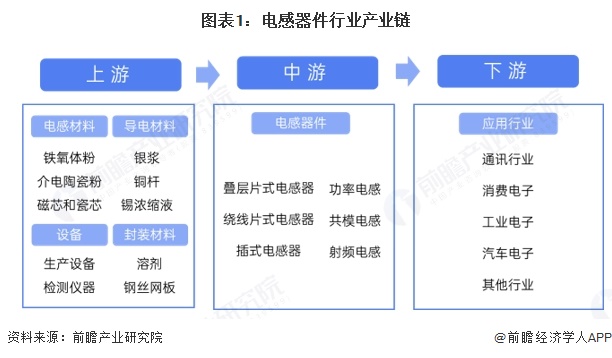
Core Insights - The article provides a comprehensive overview of the inductor component industry, detailing its supply chain, key players, and recent investment trends in China [1][2][12]. Industry Overview - The inductor component industry supply chain consists of upstream materials (ferrite powder, dielectric ceramic powder, magnetic cores, conductive materials), midstream manufacturing (various types of inductors), and downstream applications in electronics, automotive, and communication sectors [1][2]. - Major upstream suppliers include Hengdian East Magnetic, Suzhou Good, and Yunnan Copper, while midstream manufacturers include domestic firms like Sunlord Electronics and MPS Technology, and international players like TDK and Murata [2]. Regional Distribution - Guangdong and Zhejiang provinces are the primary hubs for inductor component companies in China, with 6,850 and 6,390 firms respectively as of August 2025 [5]. - Representative companies in Guangdong include Fenghua Advanced Technology and Sunlord Electronics, while Zhejiang features Yuhang Electronics and Baide Electronics [7]. Key Players and Financials - Notable companies in the industry and their revenue from inductor-related businesses include: - Sunlord Electronics: Revenue of 58.52 billion, accounting for 99.23% of total business [10] - MPS Technology: Revenue of 17.53 billion, accounting for 55.64% [10] - Fenghua Advanced Technology: Revenue of 48.66 billion, accounting for 98.51% [10] - Keleke: Revenue of 38.99 billion, accounting for 83.08% [10] Investment Trends - Recent investments in the inductor sector include: - Alu Technology plans to invest 450 million in a new high-end integrated inductor project in Huizhou, expected to yield a post-tax internal rate of return of 23.34% [13]. - Fenghua Advanced Technology is expanding production capacity for integrated inductors and laminated inductors to meet market demand [12][13]. - Sunlord Electronics has completed a project in Dongguan, projected to become the largest passive component manufacturing base globally, with an expected annual output value of 4.5 billion [13].


2025年中国电感器件行业进出口现状 进出口规模呈现疲软趋势【组图】
Qian Zhan Wang· 2025-10-03 04:11
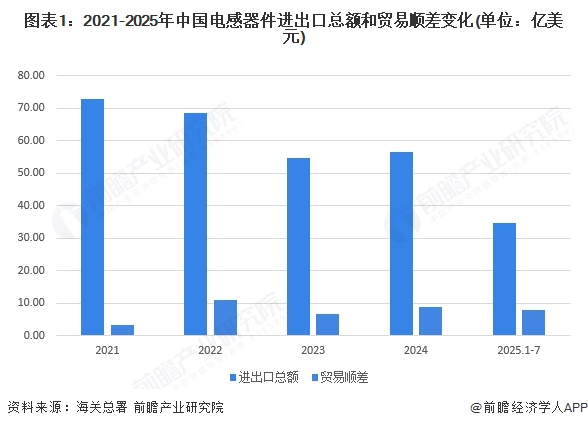
Core Insights - The total import and export value of China's inductive components is projected to increase to $5.655 billion in 2024, representing a year-on-year growth of 3.4% [1] - The trade surplus for inductive components in 2024 is expected to be $890 million, with imports valued at $2.383 billion and exports at $3.272 billion [1] Import Overview - The import value of inductive components in China is forecasted to be $2.383 billion in 2024, showing a decline of 0.7% compared to the previous year [2] - The import quantity is expected to rebound to approximately 170.2 billion units in 2024, reflecting a year-on-year increase of 7.7% [2] - For the first seven months of 2025, the import value is estimated at $1.339 billion, with an import quantity of 97.247 billion units [2] Major Import Sources - Japan is the largest source of inductive component imports, accounting for $760 million in 2024, which is 31.9% of total imports [6] - The Philippines and Vietnam contribute 12.07% and 10.26% respectively to the import market [6] Export Overview - The export value of inductive components is projected to reach $3.272 billion in 2024, marking a year-on-year increase of 6.6% [8] - The export quantity is expected to be 97.820 billion units in 2024, with a year-on-year growth of 14.9% [8] - For the first seven months of 2025, the export value is estimated at $2.124 billion, with an export quantity of 66.644 billion units [8] Major Export Destinations - Hong Kong is the primary destination for inductive component exports, with an expected value of $1.111 billion in 2024, representing 34.05% of total exports [10] - Vietnam ranks second with an export value of $252 million, accounting for 7.70% of total exports [10]


顺络电子跌2.04%,成交额4.86亿元,主力资金净流出5615.05万元
Xin Lang Cai Jing· 2025-09-30 03:36
Core Viewpoint - The stock price of Shunluo Electronics has experienced fluctuations, with a year-to-date increase of 13.72% but a recent decline of 2.82% over the last five trading days [2] Company Overview - Shunluo Electronics, established on September 8, 2000, and listed on June 13, 2007, is located in Longhua District, Shenzhen, Guangdong Province. The company specializes in the research, production, and sales of new electronic components, including chip inductors and chip varistors [2] - The main business revenue composition is 99.13% from chip electronic components and 0.87% from other sources [2] - As of June 30, 2025, the company had 39,400 shareholders, a decrease of 7.57% from the previous period, with an average of 19,220 circulating shares per shareholder, an increase of 8.64% [2] Financial Performance - For the period from January to June 2025, Shunluo Electronics achieved operating revenue of 3.224 billion yuan, representing a year-on-year growth of 19.80%. The net profit attributable to shareholders was 486 million yuan, reflecting a year-on-year increase of 32.03% [2] Dividend Information - Since its A-share listing, Shunluo Electronics has distributed a total of 2.32 billion yuan in dividends, with 869 million yuan distributed over the past three years [3] Shareholding Structure - As of June 30, 2025, the largest circulating shareholder is Hong Kong Central Clearing Limited, holding 50.2593 million shares, a decrease of 8.0397 million shares from the previous period. Other notable shareholders include Xingquan Trend Investment Mixed Fund and Southern CSI 500 ETF, with varying changes in their holdings [3]
顺络电子(002138) - 关于股东部分股份质押及解除质押的公告
2025-09-29 09:15
股票代码:002138 股票简称:顺络电子 编号:2025-076 深圳顺络电子股份有限公司 关于股东部分股份质押及解除质押的公告 本公司及董事会全体成员保证信息披露的内容真实、准确和完整,没有虚 假记载、误导性陈述或重大遗漏。 深圳顺络电子股份有限公司(以下简称"公司")于近日接到公司股东新余市 恒顺通电子科技开发有限公司(以下简称"恒顺通")通知,获悉恒顺通将持有 本公司部分股份办理质押及解除质押业务,现将有关事项公告如下: | 是否为控股 | | | | | | | | | | | | | | | | | --- | --- | --- | --- | --- | --- | --- | --- | --- | --- | --- | --- | --- | --- | --- | --- | | 股东或第一 | 本次解除质押 | 占其所持股 | 占公司总股 | 股东名称 | 起始日 | 解除日期 | 质权人 | | | | | | | | | | 大股东及其 | 股份数量(股) | 份比例 | 本比例 | | | | | | | | | | | | | | 一致行动人 | | | | | | | | ...
顺络电子涨2.30%,成交额3.24亿元,主力资金净流出147.50万元
Xin Lang Cai Jing· 2025-09-29 03:42
Core Viewpoint - Shunluo Electronics has shown a positive stock performance with a year-to-date increase of 16.63% and a significant rise of 29.00% over the past 60 days, indicating strong market interest and potential growth in the electronic components sector [1][2]. Financial Performance - For the first half of 2025, Shunluo Electronics reported a revenue of 3.224 billion yuan, representing a year-on-year growth of 19.80%, while the net profit attributable to shareholders was 486 million yuan, up 32.03% compared to the previous year [2]. - Cumulatively, since its A-share listing, the company has distributed a total of 2.32 billion yuan in dividends, with 869 million yuan distributed over the last three years [3]. Shareholder Information - As of June 30, 2025, the number of shareholders for Shunluo Electronics decreased by 7.57% to 39,400, while the average number of circulating shares per person increased by 8.64% to 19,220 shares [2]. - The top ten circulating shareholders include Hong Kong Central Clearing Limited as the second-largest shareholder with 50.2593 million shares, a decrease of 8.0397 million shares from the previous period [3].
世界新能源汽车大会推动汽车产业智能化发展,500质量成长ETF(560500)整固蓄势
Xin Lang Cai Jing· 2025-09-29 02:27
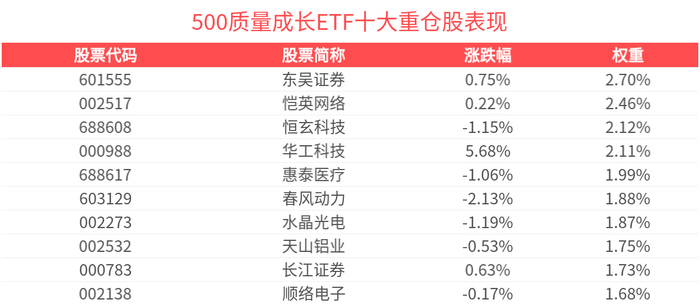
Group 1 - The core viewpoint of the articles highlights the growth and globalization of China's automotive industry, particularly in the context of new energy vehicles and smart technology [1] - The China Automotive Industry is accelerating its globalization, with opportunities and challenges coexisting, as stated by the chairman of Changan Automobile [1] - The share of domestic brands in the passenger car market is expected to exceed 70% by 2025, driven by the acceleration of intelligence and globalization [1] Group 2 - BYD remains the market leader, while brands like Geely and Chery are experiencing double-digit sales growth [1] - New energy vehicles from Huawei and Xiaomi are gaining traction in the high-end market, capturing market share from traditional luxury brands [1] - The year 2025 is anticipated to be a pivotal year for intelligent driving, with high-level intelligent driving features becoming more common in vehicles priced around 200,000 yuan [1] Group 3 - The CSI 500 Quality Growth Index has seen a slight increase of 0.15%, with notable stock performances from companies like Xinquan Co., Ltd. and Keda Li [1] - The top ten weighted stocks in the CSI 500 Quality Growth Index account for 21.48% of the index, with companies like Dongwu Securities and Huagong Technology leading the list [2]

【重磅】院士战略思考:迈向电子陶瓷强国,我们缺什么?怎么干?(划重点)
材料汇· 2025-09-27 15:57
Core Viewpoint - The article discusses the current state and future trends of the electronic ceramics industry, emphasizing the importance of electronic ceramics in the development of passive electronic components and the challenges faced by China in this sector. Group 1: International Development of Electronic Ceramics - Japan and the United States lead the global electronic ceramics industry, with Japan holding over 50% of the market share due to its advanced production technologies [4] - The global market for multilayer ceramic capacitors (MLCC) has reached tens of billions of dollars, growing at an annual rate of 10% to 15% [6] - The main trends in MLCC development include miniaturization, high capacity, and the use of low-cost metals for internal electrodes, with Japan being at the forefront of these technologies [7][8] Group 2: China's Electronic Ceramics Industry - China is a major producer of electronic components, with a significant share in various electronic ceramics, but high-end products are still largely imported [17] - The MLCC industry in China is substantial, yet over half of the production capacity is occupied by foreign and joint ventures [19] - The domestic market for high-end MLCC products is heavily reliant on imports, indicating a lack of advanced technology and self-owned intellectual property [20] Group 3: Key Issues in China's Electronic Ceramics Development - There is a lack of social recognition and support for electronic ceramics compared to semiconductors, leading to insufficient R&D investment [40] - The mechanism for converting research results into industrial applications is inadequate, with a disconnect between academia and industry [41] - The domestic supply chain for electronic ceramics lacks support for independent innovation, with many technologies and standards still reliant on foreign sources [43] Group 4: Strategic Goals and Development Paths - The strategy aims to enhance R&D investment in electronic ceramics, focusing on high-end materials and advanced processing technologies to achieve self-sufficiency [46] - By 2025, the goal is to align closely with the technological levels of the US and Japan, and by 2035, to become a major source of high-end electronic ceramics globally [47] - Key development directions include new generation electronic ceramic components, high-performance MLCC materials, and low-cost piezoelectric ceramics [49][50][53]

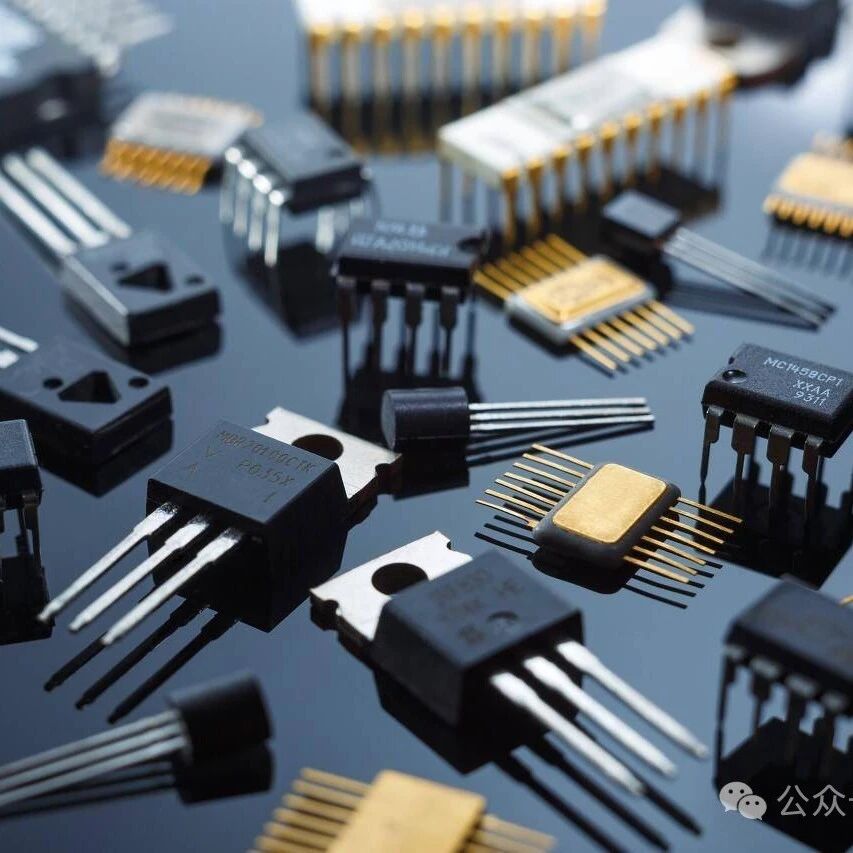
供货AI服务器大厂 多家被动元器件公司加码研发与布局
Ju Chao Zi Xun· 2025-09-27 14:27
Core Insights - The AI server market is expanding rapidly, driven by the need for high-performance computing and the increasing demand for passive components like MLCCs and inductors to support stable AI operations [2][7] - Domestic passive component manufacturers in China, such as SanHuan Group and Shunluo Electronics, are leading in R&D investments and personnel, positioning themselves to capitalize on the AI server market [4][6] R&D Investment - SanHuan Group leads with R&D investment of 29,263.6 million yuan, followed by Shunluo Electronics at 27,730.2 million yuan, and Fenghua Advanced Technology at 12,401.5 million yuan [4] - Other companies' R&D investments include: Maijie Technology (8,180.9 million yuan), Hongda Electronics (6,734.1 million yuan), Huojue Electronics (5,014.4 million yuan), Taijing Technology (2,292.78 million yuan), and Dali Kipu (930.1 million yuan) [4] R&D Personnel - SanHuan Group has the highest number of R&D personnel at 1,877, followed by Shunluo Electronics with 1,354 and Fenghua Advanced Technology with 1,336 [6] - Other companies' R&D personnel counts include: Maijie Technology (568), Hongda Electronics (336), Huojue Electronics (296), Taijing Technology (227), and Dali Kipu (46) [6] Market Progress - SanHuan Group has seen a significant increase in MLCC demand for AI servers, with usage up by over 80% compared to general servers, averaging 3,000 to 4,000 units per server [7] - Shunluo Electronics has developed a new structure tantalum capacitor that is compact and reliable, gaining traction in AI server applications [8] - Fenghua Advanced Technology has made advancements in high-capacity MLCCs and has developed products suitable for high-voltage applications in AI servers [8] - Maijie Technology has successfully designed inductors for high-efficiency power management chips used in AI servers [9] - Taijing Technology has developed a temperature-compensated oscillator for AI data center applications, achieving industry-leading low phase noise performance [9] - Dali Kipu specializes in RF microwave MLCCs and has gained a competitive edge in the domestic market [9] R&D Expense as a Revenue Percentage - In 2025, Shunluo Electronics is projected to have the highest R&D expense as a percentage of revenue at 8.6%, followed by Hongda Electronics at 7.9% and SanHuan Group at 7.1% [10] - Other companies' percentages include: Taijing Technology (5%), Dali Kipu (4.8%), Maijie Technology (4.6%), and Huojue Electronics (2.8%) [10]