汽车产业全球化

Search documents
观车 · 论势 || 10万辆背后的“出海”新范式
Zhong Guo Qi Che Bao Wang· 2026-02-02 10:44
Core Insights - In 2025, Chinese automakers achieved a significant breakthrough in the European market, with monthly sales surpassing 100,000 units for the first time in December, representing a year-on-year increase of over 100% and a market share rise to 9.5% [2] - The total annual sales for Chinese automakers in Europe reached 811,000 units, marking a 99% year-on-year increase and a record market share of 6.1% [2] - This growth signifies a shift from "product export" to "ecosystem establishment," indicating that Chinese automotive industry has successfully moved beyond the low-cost label in global competition [2] Market Strategy - Chinese automakers effectively responded to trade policy changes, particularly the EU's imposition of tariffs on electric vehicles, by pivoting towards plug-in hybrid models that still benefit from lower tariffs [3] - The BYD Seal U plug-in hybrid model led the sales chart in Europe with 73,000 units sold in 2025, demonstrating the effectiveness of this strategic shift [3] - A consensus on pricing mechanisms for electric vehicles between China and the EU in January 2026 further solidified the foundation for future sales growth [3] Localization Efforts - Chinese automakers are deepening their localization efforts in Europe, with significant investments in manufacturing and supply chain setups [4] - BYD is investing €4 billion in a passenger vehicle factory in Hungary, set to begin production in Q2 2026, which will help circumvent EU trade barriers [4] - Partnerships with local firms, such as Xpeng and GAC collaborating with Magna, are facilitating localized production and adaptation to European market needs [4] Product Development - The product offerings from Chinese automakers have significantly improved, with a full range of vehicles now available that meet European market demands [4] - Chinese brands are no longer perceived as low-cost alternatives but are recognized for their technological advantages, offering higher specifications at similar price points [4] - Several Chinese models have received five-star ratings in Euro NCAP safety tests, further enhancing their reputation in the European market [4] Technological Advancements - Chinese automakers have gained a competitive edge through the mastery of core technologies such as CTB body integration and high-energy batteries, which enhance performance and safety [5] - The integration of smart cockpit and intelligent driving features has created a differentiated competitive advantage for Chinese brands [5] - The rise of Chinese automakers is not merely a market competition but represents a complementary and mutually beneficial evolution in the global automotive industry's electrification transition [5]



笃行与锐进 || 2026全球汽车业八大猜想
Zhong Guo Qi Che Bao Wang· 2026-01-09 01:21
Group 1: Global Automotive Trade Tensions - The global automotive industry is facing increased trade tensions, with predictions of further escalation in 2026 due to rising protectionism and unilateral trade measures by various countries [2][3] - The World Trade Organization has significantly lowered its forecast for global goods trade growth in 2026 to 0.5%, while Allianz Trade predicts only 0.6%, both well below the 2.4% expected for 2025 [2][3] Group 2: Slowdown in International Electric Vehicle Sales - The global electric vehicle market is expected to experience a slowdown in sales growth in 2026, with Benchmark Mineral Intelligence reporting a decline in growth rates since November 2025 [4][5] - The U.S. market outlook is particularly bleak, with the cancellation of electric vehicle incentives leading to a significant drop in consumer purchasing intentions [4] - In China, the growth forecast for electric vehicle sales has been revised down from 16% to 14% for 2026, attributed to high base effects and the reintroduction of purchase taxes [5][6] Group 3: Acceleration of Localization by Chinese Automakers - Chinese automakers are accelerating their localization strategies overseas, driven by high export volumes and increasing trade barriers [7][8] - Companies like BYD and Changan are establishing local production facilities in markets such as Thailand and Hungary, indicating a strategic shift from simple vehicle exports to localized production [7][8] Group 4: Transformation of Sino-Foreign Automotive Cooperation - The cooperation model between Chinese and foreign automakers is evolving from "market for technology" to a deeper collaboration focused on technology output and resource sharing [9][10] - Chinese automotive brands are increasingly leading in technology development, with foreign partners seeking to leverage their advancements in electric vehicle technology for global expansion [9][10] Group 5: Commercialization of Robotaxi Services - 2026 is projected to be a pivotal year for the commercialization of Robotaxi services, with advancements in technology and regulatory environments facilitating large-scale operations [11][12] - Companies like Tesla and Waymo are expanding their Robotaxi services, marking a significant step towards widespread adoption [11][12] Group 6: Emergence of Solid-State Batteries - 2026 is recognized as a critical year for the validation of solid-state battery technology, with multiple automakers planning to conduct vehicle testing [13][14] - Chinese automakers are actively pursuing solid-state battery production, with several companies announcing plans for testing and production timelines [13][14] Group 7: Integration of AI in Automotive Industry - The integration of AI models into vehicles is expected to redefine the automotive industry, with significant advancements in smart driving and intelligent cockpit technologies anticipated in 2026 [15][16] - The market for AI-driven automotive services is projected to grow significantly, with estimates suggesting it could exceed 100 billion yuan by 2028 [15][16] Group 8: Rise of Humanoid Robots in Automotive Sector - 2026 is set to be a key year for the mass production and commercialization of humanoid robots by automotive companies, with many firms planning to launch their products [17][18] - Companies like Tesla and Xpeng are leading the charge in humanoid robot development, with plans for large-scale deployment in various sectors [17][18]

行业机构寄望汽车业“十五五”发展
Zhong Guo Qi Che Bao Wang· 2026-01-08 01:19
Core Insights - The automotive industry in China is entering a critical phase of high-quality development during the "14th Five-Year Plan" period, focusing on innovation, globalization, and sustainability [3][4][5]. Group 1: Industry Transformation - The next five years will be pivotal for the automotive industry as it shifts from scale expansion to high-quality development, with a strategic opportunity to seize the global automotive industry's high ground [3]. - The integration of electrification and intelligence technologies is expected to deepen, with new electronic architectures and centralized computing platforms enabling software-defined vehicles [3][4]. - Green and low-carbon initiatives remain a priority, with plans to establish carbon emission accounting systems and product carbon footprint management throughout the lifecycle of vehicles [3][4]. Group 2: Globalization and Market Opportunities - The globalization of the automotive industry is seen as a crucial pathway for becoming a strong automotive nation, with Chinese companies accelerating overseas expansion as their technology and quality improve [3][5]. - The global low-carbon transformation positions new energy vehicles (NEVs) as a key direction, with China holding a 70% share of the global electric vehicle market [5]. - The "Belt and Road" initiative is expected to facilitate automotive exports by providing convenient logistics and cooperation platforms [5]. Group 3: Innovation and Technology - The automotive industry is expected to integrate deeply with new information technologies, smart cities, and artificial intelligence, enhancing the development of supply chains and industry ecosystems [4][19]. - The penetration rate of NEVs is projected to reach around 65% by 2030, driven by national strategic guidance, continuous technological innovation, and improved infrastructure [4][12]. - Significant advancements in battery technology, particularly solid-state batteries, are anticipated, with initial applications expected by 2027 [17]. Group 4: Market Dynamics and Consumer Trends - The automotive market is expected to experience micro-growth with fluctuations, influenced by macroeconomic factors and consumer behavior [9][10]. - NEVs are projected to become the mainstay of the automotive market during the "14th Five-Year Plan," with penetration rates potentially reaching 55%-60% by 2030 [9][10]. - The demand for intelligent vehicles is expected to rise, with innovations such as drone-equipped smart cars likely to emerge [10]. Group 5: Challenges and Regulatory Environment - The automotive industry faces challenges such as tariff barriers and new technology obstacles that could hinder international expansion [5][10]. - The regulatory landscape is shifting, with policies transitioning from purchase incentives to usage management, impacting the market dynamics for NEVs [14][15]. - The industry must adapt to a more competitive environment, focusing on innovation and cost reduction to maintain profitability [22].
云意电气设摩洛哥子公司 完善海外业务布局
Zheng Quan Shi Bao Wang· 2025-12-30 09:33
Core Viewpoint - Company plans to invest $66 million to establish a wholly-owned subsidiary in Morocco, enhancing its overseas business layout and production capabilities [1][3] Group 1: Investment and Expansion - The registered capital for the new subsidiary in Morocco will be $1 million, with operations focused on automotive parts production, manufacturing, and sales [3] - The investment aims to leverage local resources and industry synergies, enhancing the company's competitive strength and sustainable development [1][3] Group 2: Business Performance - In the first three quarters of 2025, the company achieved revenue of 1.666 billion yuan, a year-on-year increase of 7.05%, and a net profit of 331 million yuan, up 7.8% [2] - The automotive market has shown significant growth, with production and sales increasing by 12.5% and 11.4% respectively in the first half of 2025, driven by favorable policies [2] Group 3: Strategic Focus - The company has been focusing on the automotive electronics sector, developing a diverse technology capability matrix, including power TVS design, chip development, and software algorithms [1] - The company is actively enhancing its digital transformation, optimizing production processes, and implementing employee incentive programs to support sustained growth [2]

报告:未来5年中国车企海外份额将占15%~20%
第一财经· 2025-12-22 13:18
Core Viewpoint - By 2030, Chinese automotive companies are expected to achieve overseas sales of 7.5 to 10 million units, with an overseas market share of 15% to 20%. However, a temporary plateau is anticipated in the next two years due to factors such as overseas inventory, localization research and development, and factory construction cycles [3][4]. Group 1: Globalization of Chinese Automotive Industry - The automotive industry has experienced multiple globalization windows, with the current window from 2020 to 2030 presenting opportunities for Chinese companies to lead in smart connectivity and new energy sectors [3]. - In the past five years, the overseas sales share of Chinese automotive brands has rapidly increased, nearly matching that of American and Korean brands, establishing a competitive landscape among the top five automotive powers: China, Japan, South Korea, the U.S., and Europe [4]. Group 2: Export Performance and Market Dynamics - In November, China's automotive exports reached 728,000 units, a year-on-year increase of 48.5%, marking the first month with exports exceeding 700,000 units. For the first eleven months of the year, exports totaled 6.343 million units, up 18.7% year-on-year, with expectations to reach a historical high of 7 million units for the entire year [5]. - The top ten countries for Chinese automotive exports in the first three quarters included the UAE, Mexico, Russia, Belgium, the UK, Brazil, Saudi Arabia, Australia, the Philippines, and Kazakhstan [5]. Group 3: Localization Challenges - To successfully penetrate and establish a foothold in the European market, Chinese automotive companies need to achieve deep localization across the entire value chain, which is essential for building sustainable cost advantages and brand influence [5]. - Current localization rates for Chinese brands are lower compared to other countries, with American brands showing high and variable localization rates, Japanese and European brands exceeding 80%, and Korean brands continuously improving [6]. - Historically, China's auto parts industry focused on cost advantages and pure export trade models, primarily serving European and American manufacturers. However, the current trend is shifting towards collaboration with automotive companies for market expansion, with a more diversified approach to business operations [6].

报告:未来5年中国车企海外份额将占15%~20%
Di Yi Cai Jing· 2025-12-22 12:35
Core Insights - The Chinese automotive industry is expected to experience a temporary plateau in overseas expansion over the next two years due to factors such as overseas inventory, localization R&D, and factory construction cycles, with significant growth anticipated by 2026-2027 [1] - By 2030, Chinese automakers are projected to achieve overseas sales of 7.5 to 10 million units, capturing 15% to 20% of the global market share [1] Group 1 - The report highlights that the automotive industry has undergone several globalization windows, with the current window from 2020 to 2030 presenting opportunities for China in smart connectivity and new energy sectors [1] - In the past five years, the overseas sales share of Chinese automotive brands has rapidly increased, nearly matching that of American and Korean brands, establishing a competitive landscape among China, Japan, Korea, the US, and Europe [2] - In November, China's automotive exports reached 728,000 units, a year-on-year increase of 48.5%, marking the first month with exports exceeding 700,000 units [2] Group 2 - The top ten countries for Chinese automotive exports in the first three quarters of this year include the UAE, Mexico, Russia, Belgium, the UK, Brazil, Saudi Arabia, Australia, the Philippines, and Kazakhstan [2] - To successfully penetrate the European market, Chinese automakers need to achieve deep localization across the entire value chain to build sustainable cost advantages and brand influence [2] - The report indicates that the localization rate of Chinese brands overseas is lower compared to other countries, with American, Japanese, and European brands having localization rates above 80% [3] Group 3 - Historically, China's auto parts industry focused on cost advantages and pure export trade models, primarily serving Western OEMs with traditional components [3] - Currently, China's three-electric and intelligent components are experiencing rapid growth, with the country leading in supply chain technology and efficiency [3] - The expansion strategy for international clients must evolve beyond traditional replacement models to include collaborative efforts among automakers and diversified business approaches [3]
新生态、向未来,2025中国汽车供应链大会在芜湖召开
中汽协会数据· 2025-11-27 02:13
Core Viewpoint - The "2025 China Automotive Supply Chain Conference" emphasizes the importance of collaborative innovation in the supply chain and industry chain as a core element driving high-quality development in the automotive industry during the transition from the 14th Five-Year Plan to the 15th Five-Year Plan [2][6]. Group 1: Conference Overview - The conference was held from November 24 to 26 in Wuhu, Anhui, focusing on supply chain innovation, transformation, and international development in the automotive sector [2]. - The event included various activities such as a government-enterprise matchmaking event, closed-door meetings, an opening ceremony, and multiple thematic meetings [2]. Group 2: Key Insights from Industry Leaders - Industry leaders highlighted the need for innovation, collaboration, and a strong supply chain to achieve high-quality development during the 15th Five-Year Plan [6][8]. - The importance of transforming China's automotive supply chain advantages into localized stability for global market integration was emphasized [8]. Group 3: Industry Reports and Trends - The conference released two authoritative industry reports, including the "2025 China Automotive Supply Chain Development Report," which outlined four key achievements in the automotive parts industry during the 14th Five-Year Plan [13]. - The report indicated that the 15th Five-Year Plan represents a critical window for the development of China's automotive industry, with significant global opportunities and investment prospects [13]. Group 4: Globalization and Strategic Framework - The globalization of the automotive parts industry has shifted from an optional strategy to a necessity, with a focus on helping enterprises expand internationally [15]. - A "5C" globalization strategy framework was introduced, covering compliance, supply chain, capital, brand, and talent, serving as a practical guide for companies aiming to enter global markets [18]. Group 5: Collaborative Efforts and Future Directions - The establishment of a "Supply Chain Expert Database" was announced to address key technological challenges in the supply chain, leveraging industry expertise for development [24]. - The conference facilitated discussions on building a resilient automotive supply chain and fostering collaboration between various stakeholders in the industry [34][38].

“十五五”中国汽车迎关键窗口期——记第二十届中国经济论坛平行论坛
Zhong Guo Qi Che Bao Wang· 2025-11-24 06:55
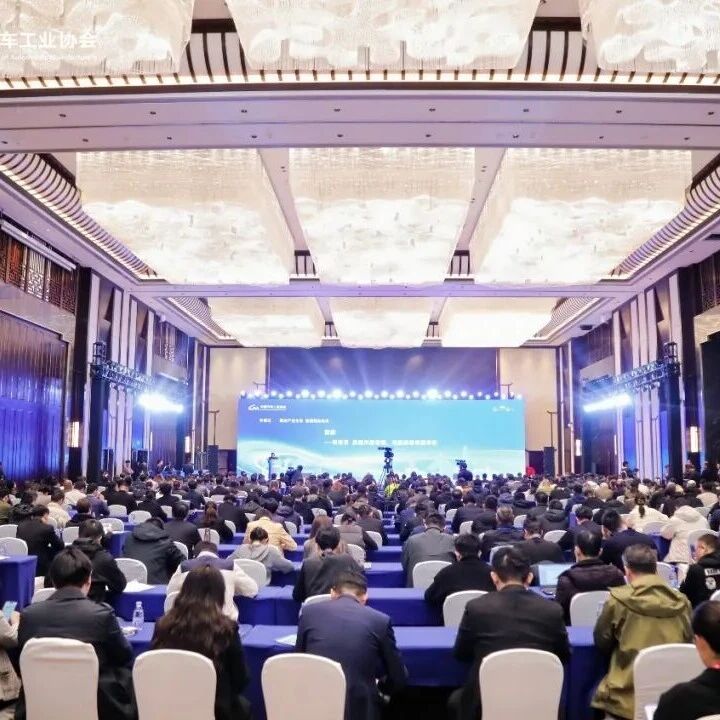
Core Insights - The Chinese automotive industry is entering a critical window period during the "15th Five-Year Plan" (2021-2025), focusing on high-quality development and technological independence [4][5][6] - The industry aims to transition from being a major automotive nation to a strong automotive power, leveraging advancements in electric vehicles and smart technologies [4][5][6] Group 1: Industry Development and Trends - The "14th Five-Year Plan" has seen the Chinese automotive industry achieve significant milestones, transitioning from "catching up" to "keeping pace" in the fields of electrification and intelligent networking [4][5] - The upcoming "15th Five-Year Plan" will emphasize broader innovation, including materials, foundational technologies, and smart chassis applications [5] - The automotive industry is expected to undergo a rapid reshuffling, with competition shifting from single product focus to ecosystem competition [5][6] Group 2: Safety and Regulation - Safety is identified as a fundamental requirement for the healthy and high-quality development of the automotive industry, with ongoing regulatory innovations to address emerging challenges [6] - The National Market Supervision Administration will enhance safety regulations to support the industry's high-quality growth [6] Group 3: Regional Development and Opportunities - Nansha District in Guangzhou is highlighted as a new hub for the automotive industry, particularly in smart and connected vehicles, benefiting from strategic policies and development opportunities [6] - The district aims to leverage technological innovation to drive industry upgrades and foster a collaborative ecosystem [6] Group 4: Globalization and International Cooperation - The "15th Five-Year Plan" is expected to highlight new trends in international cooperation, with a focus on electric vehicle platforms and technologies [7] - The global market for electric vehicles still has significant growth potential, presenting investment opportunities for the Chinese automotive supply chain [7] Group 5: Insurance and Risk Management - The growth of the new energy vehicle market underscores the importance of developing specialized insurance products to support the industry's evolution and enhance vehicle safety [8] - Insurance is seen as a tool to optimize the automotive supply chain and facilitate the global expansion of the Chinese automotive industry [8] Group 6: Strategic Recommendations - Industry leaders emphasize the need for a shift in development mindset, advocating for a collaborative approach to both domestic and international competition [9][10] - There is a call for a focus on quality over scale, with an emphasis on long-term strategies that align with national goals [10] - The industry is encouraged to overcome technological bottlenecks and enhance global competitiveness through innovation and strategic partnerships [10]

汽车视点丨51亿元投资!吉利雷诺巴西“联姻”升级 探索共赢出海新路径
Xin Hua Cai Jing· 2025-11-20 02:10
Core Insights - The collaboration between Geely and Renault in Brazil marks a significant investment of 3.8 billion Brazilian Reais (approximately 5.1 billion RMB) aimed at advancing new energy technology platforms and models in the Brazilian market [1][2][3] - This partnership signifies a shift from mere capital alliance to ecological co-creation, highlighting a new path for Chinese automakers' globalization centered on shared benefits [1][2] Investment Details - Geely has acquired a 26.4% stake in Renault's Brazilian operations, while Renault retains control and will consolidate financial statements [2] - The investment will facilitate the local production of two new models based on Geely's GEA new energy architecture, with plans for market launch in the second half of 2026 [2][3] Local Development Strategy - The partnership will leverage Renault's existing production capacity and distribution network in Brazil, enhancing local manufacturing, supply chain, sales, and service capabilities [3] - Geely's EX5 and EX2 models have already been introduced in Brazil through Renault's network, indicating a successful market entry [3] Broader Global Strategy - This collaboration is part of Geely's broader globalization strategy, which includes previous partnerships in South Korea and the establishment of the HORSE powertrain company [4][5] - The HORSE company aims to develop hybrid and fuel powertrain components, with projected annual revenue of approximately 15 billion Euros [5] Market Impact - The investment is expected to enhance the competitiveness of Brazil's automotive industry and promote decarbonization efforts [3] - The partnership reflects a shift in the cooperation model between Chinese and foreign automakers, moving towards joint ventures and brand co-creation [6]
“十五五”,中国汽车迎核心窗口期!——记第二十届中国经济论坛平行论坛
中国能源报· 2025-11-19 08:30
Core Viewpoint - The article discusses the achievements and future prospects of China's automotive industry during the "14th Five-Year Plan" and the upcoming "15th Five-Year Plan," emphasizing the transition from a major automotive nation to a strong automotive power, driven by high-quality development and technological independence [4][5][7]. Group 1: Achievements and Future Directions - The "14th Five-Year Plan" has seen China's automotive industry achieve historic leaps, with significant advancements in electric vehicles and smart technologies, positioning the industry for a strategic opportunity to enhance its global standing [7][9]. - The "15th Five-Year Plan" aims to further promote high-quality development, with a focus on technological self-reliance and the integration of development and safety [5][11]. - The automotive industry is expected to undergo a rapid reshuffling, transitioning from product competition to ecosystem competition, necessitating localized and cross-sector collaboration [11][22]. Group 2: Safety and Regulatory Framework - Safety is identified as a fundamental support for the healthy and high-quality development of the automotive industry, with ongoing efforts to innovate regulatory policies to address emerging challenges [13][20]. - The National Market Supervision Administration will continue to enhance safety regulations to ensure the industry's high-quality development [13]. Group 3: Globalization and International Cooperation - The article highlights the growing trend of international cooperation in the automotive sector, particularly in the context of electric vehicles, where China's automotive industry is poised to leverage its market scale and supply chain advantages [18][22]. - The global market for electric vehicles still has significant growth potential, and Chinese automotive companies are expected to play a crucial role in the global transition towards electrification [18][20]. Group 4: Innovation and Technological Development - The automotive industry is shifting from imitation to independent innovation, with a focus on core technologies and collaborative innovation between vehicle manufacturers and parts suppliers [25][26]. - The integration of smart and electric technologies is creating a comprehensive ecosystem that positions China as a leader in the global automotive landscape [25][27]. Group 5: Regional Development and Strategic Initiatives - The Nansha District in Guangzhou is highlighted as a new hub for advanced manufacturing in the automotive sector, particularly in smart and connected vehicles, benefiting from strategic policies and development opportunities [15][20]. - The region aims to leverage technological innovation to drive industry upgrades and foster a collaborative development environment [15].