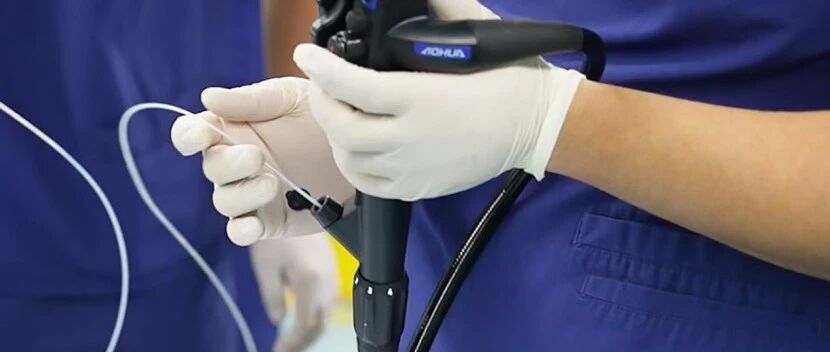
奥林巴斯

Search documents
硬核新品“首发首秀 朝阳区300余家企业开启”进博“时刻
Bei Jing Shang Bao· 2025-11-06 06:43
Core Insights - The 8th China International Import Expo (CIIE) officially opened on November 5, showcasing over 36.7 million square meters of exhibition space with participation from 290 Fortune 500 companies and industry leaders [1][2] - Key companies such as Olympus, Tesla, and Siemens presented their latest innovations, highlighting advancements in medical technology, electric vehicles, and AI-driven solutions [1][2] Group 1: Event Overview - The CIIE serves as a platform for international trade cooperation, allowing companies to showcase products, explore market opportunities, and engage in business negotiations [2] - The event features six major exhibition areas, including medical devices, automotive, technology equipment, consumer goods, agricultural products, and service trade [1] Group 2: Company Highlights - Olympus displayed its innovations in medical technology, including minimally invasive diagnostic and treatment solutions, and plans to launch several "China-made" medical products [1] - Tesla's Cybertruck attracted attention with its unique design and features, while Siemens showcased AI-enabled technologies and sustainable development initiatives [2] Group 3: Economic Impact - Chaoyang District, as Beijing's primary area for foreign trade, has established a strong appeal for global enterprises, with 399 new foreign-funded enterprises set up from January to September 2025, leading the city [3] - The district's actual use of foreign capital reached $1.98 billion during the same period, also ranking first among all districts in Beijing [3] - Chaoyang's total import and export volume for the first nine months of 2025 was 936.13 billion yuan, accounting for 38.9% of the city's total, with both import and export values leading the city [3]
硬核新品”首发首秀 朝阳区300余家企业开启“进博”时刻
Bei Jing Shang Bao· 2025-11-06 06:34
Core Insights - The 8th China International Import Expo (CIIE) officially opened on November 5, showcasing over 36.7 million square meters of exhibition space with participation from 290 Fortune 500 and industry-leading companies [1][2] - The event serves as a platform for international trade cooperation, allowing companies to display their latest products and seek collaboration opportunities [1][2] Group 1: Event Overview - The CIIE features six major exhibition areas including medical devices, automotive, technology equipment, consumer goods, agricultural products, and service trade, along with an innovation incubation area [1] - Key companies such as Olympus, Tesla, and Siemens are presenting their latest innovations, with Olympus focusing on medical technology and Tesla showcasing its Cybertruck [2] Group 2: Economic Impact - Chaoyang District, as Beijing's primary area for foreign trade, has attracted significant foreign investment, with 399 new foreign enterprises established from January to September 2025, leading the city [3] - The district's actual foreign investment reached $1.98 billion during the same period, also ranking first among all districts in Beijing [3] - Chaoyang's total import and export volume for the first nine months of 2025 was 936.13 billion yuan, accounting for 38.9% of the city's total, with both import and export values leading the city [3]


“硬核新品”首秀,北京朝阳300余家企业开启“进博会时间”
Xin Jing Bao· 2025-11-05 14:31
Group 1 - The 8th China International Import Expo (CIIE) opened on November 5, showcasing over 36.7 million square meters of exhibition space with participation from 290 Fortune 500 and industry-leading companies, marking a historical high in both exhibition area and number of exhibitors [2] - Beijing Chaoyang District organized a delegation of over 300 enterprises to participate in the expo, aiming to promote international trade cooperation and share new development opportunities with the world [1][2] - Olympus, Tesla, and Siemens highlighted their latest innovations at the expo, with Olympus focusing on medical technology, Tesla showcasing its Cybertruck, and Siemens presenting digital solutions for sustainable transportation [1] Group 2 - The expo serves as a significant platform for companies to display products, expand markets, enhance communication, and realize value, with Chaoyang District being a key area for international consumption in Beijing [2] - Tesla's Cybertruck, set to be produced by 2026 with an expected cost below $30,000, attracted attention with its unique design [1] - Siemens emphasized its commitment to sustainable development in transportation through innovative digital solutions [1]
硬核新品”首秀,北京朝阳300余家企业开启“进博会时间
Xin Jing Bao· 2025-11-05 14:30
Group 1 - The 8th China International Import Expo (CIIE) opened on November 5, showcasing over 300 enterprises from Beijing Chaoyang District, aiming to enhance international trade cooperation and share new development opportunities in China [1][2] - Olympus, Tesla, and Siemens presented their latest innovations at the expo, with Olympus focusing on medical technology, Tesla showcasing its Cybertruck, and Siemens emphasizing digital solutions for sustainable transportation [1] - The expo features an exhibition area exceeding 367,000 square meters, with participation from 290 Fortune 500 companies, marking a historical high in both exhibition space and number of enterprises [2] Group 2 - The CIIE serves as a significant platform for companies to display products, expand markets, and foster communication, particularly for Chaoyang District as a key economic and consumption area in Beijing [2] - The event includes six major exhibition areas such as medical devices, automotive, and consumer goods, along with an innovation incubation zone [2] - The expo aims to attract more domestic and international partners to Chaoyang, promoting collaboration and shared opportunities arising from the event [2]
澳华内镜(688212):公司业绩符合预期 看好AQ400上市驱动业绩回升
Xin Lang Cai Jing· 2025-11-05 00:40
1. 25Q3 营收端持续环比改善,利润端受产品结构调整和费用端扰动暂时承压。随着国内招标的恢复和 渠道库存影响进一步消化,公司营收端延续双位数环比增长态势。利润端,一方面因产品结构变化导致 毛利率同比下滑,另一方面公司为长期发展战略性加大相关投入,25Q1-3,销售/管理/研发费用率分别 为38.35%/17.37%/26.88%,分别同比增长6.48pct/2.43pct/4.28pct,推进新品的研发进度和上市推广,以 及海外市场的加速拓展;此外,去年同期存在股份支付费用冲回,导致利润基数较高。 2. AQ400 正式发布,核心配套镜体已上市,看好AQ400 放量驱动公司市场份额增长和业绩回升。2025 年9 月公司正式发布AQ400 高端内镜,其对标国际龙头奥林巴斯的最新机型EVIS XI,不仅同样可实现 4K 超高清、扩景深、高光谱染色等功能,还具备3D 成像的差异化优势,有望显著改善成像效果、降低 漏诊和误诊风险。随着25Q4 公司持续推进AQ400 的市场推广和放量,看好高端内镜赋能公司加速突破 三甲市场和市场份额的进一步提升,驱动业绩和利润端迎来双重回升。 盈利预测:我们预计2025-2027 ...

政府采购剑指设备异常低价乱象
21世纪经济报道· 2025-11-04 12:31
Core Viewpoint - The Ministry of Finance has issued a notice to address the issue of abnormally low bids in government procurement, marking a significant shift from a focus on low prices to an emphasis on quality and effectiveness in the medical equipment market [4][7]. Group 1: Government Procurement Reforms - The new regulations aim to combat the persistent issue of low-price bidding in the medical equipment sector, which has been detrimental to product quality and patient safety [9][10]. - The notice introduces a closed-loop system focusing on "source control, process review, and post-responsibility," addressing previous challenges in identifying and managing low-price bids [10][12]. Group 2: Impact on Medical Equipment Market - The introduction of a full lifecycle cost concept in procurement will require consideration of ongoing maintenance and consumable costs, thereby preventing the common practice of low initial bids followed by high consumable prices [12][13]. - The new rules will enhance scrutiny of low-price bids, with specific criteria established to identify and reject bids that are excessively low compared to market averages [12][13]. Group 3: Industry Dynamics and Competition - The reforms are expected to shift the competitive landscape, pushing domestic companies to transition from a price-based strategy to one focused on value [14]. - Foreign brands may benefit from the new emphasis on quality and service, as their technological advantages can be better recognized under the new evaluation criteria [14][15]. Group 4: Innovation and Market Growth - The reduction of low-price competition is anticipated to lead to increased investment in research and development, fostering innovation within the industry [15]. - With a projected budget of 19.6 billion for medical equipment updates, the new policies are expected to direct funds towards high-quality products and services, enhancing the efficiency of public healthcare resource allocation [15].


政府采购剑指设备异常低价:医疗市场生态或迎重构
2 1 Shi Ji Jing Ji Bao Dao· 2025-11-04 09:39
Core Viewpoint - The Ministry of Finance has issued a notice to address the issue of abnormally low bids in government procurement, signaling a shift from a focus on low prices to quality and effectiveness in the medical equipment market [1][3]. Government Procurement Reform - The new draft aims to create a systematic governance framework to tackle the persistent issue of low-price bidding in government procurement, particularly in the medical sector [3][5]. - Pilot programs have been initiated in various free trade zones and cities to address the problem of abnormal low-price bids [3]. Abnormal Low-Price Bidding Issues - The medical equipment sector has seen extreme price reductions, with bids often significantly below market rates, raising concerns about quality and safety [4][5]. - Examples include a bid of 1,000 yuan for a 3 million yuan project, highlighting the risks associated with such low bids [4]. Impact on Industry Competition - Abnormal low-price bidding has led to a decline in the quality of medical equipment and services, affecting patient safety and healthcare outcomes [5]. - The competition has forced some manufacturers to shift focus from R&D to lower-end products, hindering the advancement of domestic brands [5]. New Procurement Guidelines - The draft emphasizes a full lifecycle cost approach, requiring that ongoing maintenance and consumable costs be considered in bid evaluations [6]. - It introduces a two-stage evaluation process for complex equipment, ensuring that quality is prioritized over price [6]. Monitoring and Accountability - The draft outlines clear criteria for identifying abnormal low-price bids, aiming to prevent extreme cases from occurring [7]. - Suppliers will be required to provide cost breakdowns, and the evaluation committee will verify prices against market standards [7]. Market Restructuring - The new regulations are expected to shift market dynamics, concentrating resources on high-quality companies and altering the competitive landscape between domestic and foreign brands [8][9]. - Domestic companies must transition from competing on price to emphasizing value, or risk losing market share [9]. Opportunities for Foreign Brands - Foreign brands may benefit from the new focus on quality and lifecycle costs, allowing them to leverage their technological advantages in the market [10][11]. - The policy changes will require foreign companies to adapt their pricing strategies and enhance local services to maximize their market potential [11]. Innovation and Development - The new policies are anticipated to foster innovation within the industry, encouraging companies to invest in R&D and focus on developing innovative medical devices [11]. - With a significant budget for medical equipment updates, the new regulations will direct funds towards high-quality products and services, promoting a transition to high-quality development in the industry [11].
中金:全球医疗器械市场稳健增长 电生理、RDN等8个细分赛道值得重点关注
智通财经网· 2025-10-23 07:48
Global Medical Device Market Growth - The global medical device market is projected to reach $862.6 billion by 2030, with a CAGR of 5% from 2025 to 2030, driven by factors such as aging population, rising chronic disease prevalence, advancements in medical technology, policy support, and improvements in healthcare systems [1] - In 2025, the market share distribution is expected to be 32% North America, 25% Europe, 8% China, 19% Asia-Pacific, 11% Latin America, and 5% Middle East and Africa [1] - The market segments include high-value consumables (32%), low-value consumables (12%), medical imaging equipment (12%), in vitro diagnostics (13%), and others (31%) [1] Valuation Insights - A review of 15 leading global medical device companies indicates that cardiovascular, medical imaging, surgical, orthopedic, blood glucose management, and neuroscience are key focus areas [2] - Valuation shows significant stratification, with high-growth segment leaders enjoying P/E ratios of 31-57x for 2025, while mature platform companies typically have P/E ratios of 13-18x for 2025 [2] - The core reason for valuation differentiation is the market's expectations of future growth and the perceived technological barriers and sustainable advantages within each segment [2] Innovation-Driven Growth - Eight key segments identified for potential growth include electrophysiology, renal denervation (RDN), complex vascular intervention, structural heart, neuroscience, surgical robotics, endoscopy, and blood glucose management [3] - These areas may experience procedure upgrades or product iterations, or new technologies may unlock unmet market needs, leading to significant commercialization opportunities [3] - Segment leaders can leverage high growth and strong barriers to enjoy long-term premium valuations, while some traditional giants may boost performance and valuation through major product launches [3] Investment Recommendations - Focus on high-growth segments such as cardiovascular, surgical robotics, neuroscience, endoscopy, and blood glucose management [4] - Relevant companies in the supply chain include Boston Scientific (BSX.US), Edwards Lifesciences (EW.US), Intuitive Surgical (ISRG.US), Medtronic (MDT.US), Abbott (ABT.US), Johnson & Johnson (JNJ.US), Stryker (SYK.US), Dexcom (DXCM.US), Olympus, and Terumo [4]
2025年中国一次性胆道镜行业发展背景、市场规模、竞争格局及发展趋势研判:产业规模稳步增长,市场竞争高度集中[图]
Chan Ye Xin Xi Wang· 2025-10-12 01:12
Core Insights - The article discusses the growth and advantages of single-use endoscopes, specifically focusing on single-use biliary endoscopes, which enhance the diagnosis and treatment of biliary diseases through minimally invasive procedures [1][4][5]. Group 1: Industry Overview - Biliary endoscopes allow direct observation of biliary duct lesions and facilitate procedures such as biopsy, stone removal, and dilation of strictures, significantly improving diagnostic and therapeutic efficiency [1][4]. - The global market for single-use biliary endoscopes is projected to grow from $164 million in 2018 to $416 million by 2024, achieving a compound annual growth rate (CAGR) of 16.8% [5][6]. - In China, the market for single-use biliary endoscopes is expected to expand from ¥12 million in 2018 to ¥88 million by 2024, with a remarkable CAGR of 39.9%, outpacing the global market growth [6][8]. Group 2: Market Dynamics - The single-use biliary endoscope market in China is still in its early development stage, characterized by high market concentration, with the top three companies holding 79.4% of the market share and the top five companies accounting for 93.7% [8][9]. - Domestic companies are gaining ground in the single-use biliary endoscope market, with Boston Scientific holding nearly half of the market share, while local firms like Nanwei Medical and Maiketian are rapidly increasing their market presence [8][9]. Group 3: Competitive Landscape - The competitive landscape is currently dominated by a few international medical device companies, but the single-use biliary endoscope sector is seeing a more balanced competition between domestic and international players [8][10]. - The article highlights the emergence of innovative domestic companies focusing on single-use endoscopes, with several products receiving regulatory approval [10][11]. Group 4: Future Trends - The future of the single-use biliary endoscope market is expected to be driven by increased demand for infection control, technological advancements, and supportive policies, leading to rapid global expansion [11][12]. - The integration of AI technology is anticipated to enhance the intelligence of single-use biliary endoscopes, contributing to high-quality medical development [12].


强国有“镜”!3D软镜破局,国产内镜从封锁到领跑
思宇MedTech· 2025-09-30 05:03
Core Viewpoint - The article discusses the challenges and advancements in the high-end endoscope market, highlighting the shift from reliance on foreign brands to the emergence of domestic companies in China, particularly in the development of 3D endoscopes. Group 1: Domestic Breakthroughs - Domestic endoscope companies are moving beyond mere replacement of foreign products to developing their own core components, imaging algorithms, and clinical applications, gradually building their technological capabilities [2] - The transition from electronic endoscopes to 4K technology has been marked by significant breakthroughs in optical structure, image processing chips, and color restoration algorithms [2] - The complete supply chain for core modules such as light sources, image processing chips, and lens materials is increasingly being replaced domestically, leading to a significant reduction in supply chain costs and making high-end technology commercially viable [2] - There is a growing clinical demand for early cancer screening, intraoperative localization, and complex cavity treatments, which necessitates advanced spatial judgment and identification of small lesions, making 3D spatial imaging a necessity [2] - Policy support and funding, as outlined in the "14th Five-Year Plan for Medical Equipment Industry Development," are encouraging domestic medical device companies to innovate [2] Group 2: Technical Challenges - Transitioning from 2D to 3D imaging involves a comprehensive technical challenge across optics, electronics, algorithms, and materials, where each detail's breakthrough is crucial for the clinical application of 3D soft endoscopes [4] - In optical design, achieving dual optical path imaging in a compact head end while ensuring uniform light transmission and precise focusing is essential [4] - High-performance, low-power imaging chips are required to handle real-time processing and transmission of multiple signals [5] - Software algorithms must be developed for high-speed 3D image reconstruction and real-time fusion to ensure that imaging during surgical operations is free from delays and distortions [6] Group 3: Benchmark for Domestic Breakthroughs - Aohua Endoscopy represents a benchmark for domestic endoscope companies, showcasing the transition from follower to innovator, with its 3D ultra-high-definition soft endoscope system AQ-400 marking a significant milestone [9] - The product iteration path from the launch of the AQ-100 in 2013 to the upcoming AQ-400 in 2025 illustrates the continuous breakthroughs in domestic innovation [11] - The success of the 3D soft endoscope transcends being just a new product; it signifies a shift from merely filling gaps to creating new standards, redefining "precise diagnosis and treatment" in endoscopy [13] - The narrative of domestic endoscopes has evolved from being locked out of the market to leading innovation with 3D technology, challenging the notion that high-end endoscopes must be imported [13] - As 3D technology becomes more widespread and more domestic innovations are realized, "Made in China" is expected to occupy a more central position in the global high-end medical device sector [13]