
Arm

Search documents
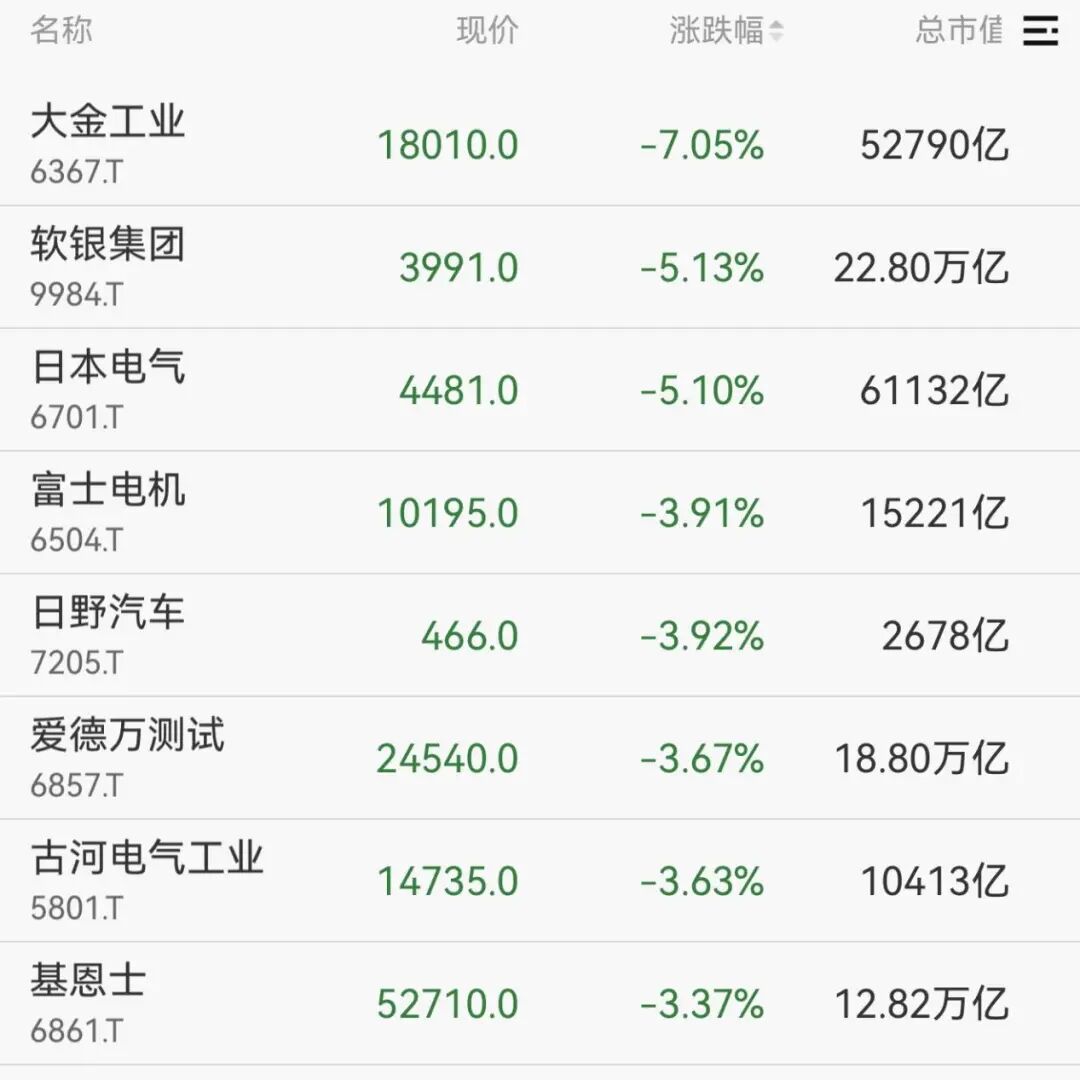
刚刚,开盘大跌
Zhong Guo Ji Jin Bao· 2026-02-05 01:27
Group 1 - The South Korean Composite Index opened down over 2%, with most semiconductor stocks declining, influenced by AMD's disappointing earnings forecast [1] - Major semiconductor companies like Samsung Electronics and SK Hynix saw their stock prices drop over 4% at the opening [1] - In Japan, the Nikkei 225 index initially fell but later turned positive during the trading session [1] Group 2 - SoftBank Group's stock price fell over 5%, with the CEO of Arm stating that SoftBank has no intention of selling Arm shares, anticipating that the data center business will become the largest segment in the coming years, surpassing the mobile business [1] - SoftBank announced that its wholly-owned subsidiary SAIMEMORY has signed an agreement with Intel to advance the commercialization of next-generation high-capacity, high-bandwidth, low-power memory technology, Z-Angle Memory (ZAM) [1] - Other companies such as Daikin Industries, NEC, and Advantest also experienced significant declines in their stock prices [1][2]

存储芯片荒波及手机供应链 高通与Arm业绩指引令市场不安
Ge Long Hui A P P· 2026-02-05 01:23
格隆汇2月5日|高通与Arm的股价在公布季度财报后大幅下跌,主要原因是市场担忧存储芯片短缺将抑 制电子行业的增长。周三晚间的盘后交易中,两家公司的股价跌幅均超过8%。高通作为智能手机处理 器的最大制造商,而Arm则主要依靠手机行业的专利权费,两家公司管理层均发出信号称,存储芯片的 供应限制将制约手机产量。目前人工智能基础设施的史无前例的扩建正导致存储芯片短缺,因为这些组 件能帮助计算机管理数据。制造商目前将产能集中于供应AI数据中心,导致手机组件产能不足。这意 味着最终到达消费者手中的产品将减少,且价格会更高。其他公司也对存储芯片荒敲响了警钟。联发科 本周在电话会议上称该情况正在"演变"。英特尔首席执行官则表示,短缺可能会持续数年,供应商告诉 他,情况要到2028年才会好转。 ...

X @Bloomberg
Bloomberg· 2026-02-05 00:50
Shares of Qualcomm and Arm fell steeply after the semiconductor companies delivered quarterly reports, hurt by concern that a shortage of memory chips will crimp growth in the electronics industry https://t.co/kvfd7t2EAo ...
X @Bloomberg
Bloomberg· 2026-02-04 21:17
Shares of Arm fell after the company delivered a quarterly sales forecast that exceeded most estimates but still failed to meet the loftiest hopes of investors https://t.co/ircMoRtyjU ...
2000亿,孙正义要投出AI史上最大单笔融资
3 6 Ke· 2026-01-28 13:06
Group 1 - SoftBank is negotiating a potential additional investment of up to $30 billion in OpenAI, which could become one of the largest single financings in the AI sector to date [2][7] - If the deal is finalized, SoftBank's stake in OpenAI will increase, following a previous investment of $22.5 billion that raised its ownership to approximately 11% [7][8] - OpenAI is seeking to raise between $50 billion and $100 billion, with a target valuation of $750 billion to $830 billion [7][8] Group 2 - OpenAI has launched a new AI tool named Prism, aimed at researchers, enhancing its capabilities from a general assistant to a foundational infrastructure for scientific discovery [5][13] - Prism is designed as an AI-enhanced research writing and collaboration platform, supporting LaTeX and enabling features like sketch-to-chart conversion [15][16] - The trend indicates a growing focus on AI applications in vertical fields such as science and healthcare, with OpenAI positioning itself as a key player in this transformation [16][19] Group 3 - SoftBank's aggressive investment strategy in AI includes selling $5.8 billion worth of Nvidia shares and reducing stakes in other assets to fund its commitment to OpenAI [8][9] - The rapid pace of investment in AI and automation by SoftBank has raised concerns about its credit rating, particularly if OpenAI's valuation becomes a significant part of its asset structure [11][12] - Analysts suggest that OpenAI's competitive landscape is evolving, with increasing challenges from rivals like Google and Anthropic [12][19]


对话Arm邹挺:2026年物理AI加速 芯片将有这些新进展
2 1 Shi Ji Jing Ji Bao Dao· 2026-01-27 22:54
Core Insights - The AI industry is rapidly evolving, with a focus on "physical AI" as a key area for development, particularly in 2026, which is anticipated to be a significant year for AI applications [1][2] - Arm predicts a new era of intelligent computing by 2026, emphasizing the need for modularity and energy efficiency in AI environments [1][2] - The deployment of physical AI systems is expected to reshape various industries, including healthcare, manufacturing, and transportation, driven by advancements in multimodal models and efficient training pipelines [2][3] Industry Trends - "Physical AI" is recognized as a prominent application scenario, with significant interest from leading chip manufacturers [2] - The industry is currently divided on the technical routes and commercialization progress of physical AI, indicating that large-scale deployment is still some time away [2] - Arm's analysis suggests that breakthroughs in technology will enable the large-scale deployment of physical AI systems, leading to new categories of autonomous devices [2][3] Technical Developments - Arm has established a "physical AI" division to integrate its automotive, robotics, and autonomous device businesses, aiming to create a cohesive AI solution that emphasizes performance, safety, and reliability [3] - The company is addressing the fragmentation in hardware and software technologies that has previously hindered industry progress [4] - Arm's layered solution includes hardware, software, and system-level optimizations to enhance energy efficiency and performance across AI applications [4][5] AI Mobile Technology - Arm is a key player in the current AI smartphone trend, with expectations that high-end smartphones will run large models locally without internet connectivity by 2025 [5][6] - Advances in model compression and architecture design are enabling the development of small language models (SLMs) that can be efficiently deployed on mobile devices [5][6] - The integration of Arm's technologies into major AI frameworks demonstrates its commitment to supporting the evolving AI landscape [7] XR Devices and Applications - XR devices, including AR and VR, are expected to see increased adoption in various sectors, driven by advancements in lightweight design and battery life [8][9] - The deployment of XR devices in enterprise applications will require careful consideration of performance, energy efficiency, and real-time interaction capabilities [9][10] - Arm is focusing on optimizing its architecture and computing capabilities to support the diverse needs of XR applications [10] AI Chip Evolution - The demand for AI chips is evolving, with a growing interest in specialized processors like ASICs and NPUs, which offer distinct advantages for specific applications [11][12] - Arm is enhancing NPU capabilities through heterogeneous architecture collaboration and comprehensive software ecosystem support [12][13] - The trend towards system-level collaborative design for custom chips is reshaping the performance landscape of AI technologies [13][14] Future Outlook - The integration of native AI applications with AI chips is expected to lead to a more interconnected intelligent world, where AI is embedded in devices and systems [14] - The emergence of "fusion AI data centers" is anticipated to maximize AI computing power while minimizing energy consumption and costs [14]
Intel earnings set to test stock rally as Wall Street grows bullish on chipmaker’s AI position
Yahoo Finance· 2026-01-22 14:34
Core Viewpoint - Intel's upcoming earnings report is critical for determining the sustainability of its recent stock gains amid Wall Street's optimism regarding the company's turnaround efforts [1] Group 1: Earnings Expectations - Analysts expect Intel to report a 33% decline in earnings per share (EPS) to $0.09 and a 6% decrease in revenue to $13.4 billion for the fourth quarter, according to Bloomberg consensus estimates [3] - Despite the weak outlook, Intel's stock has risen nearly 12% recently, indicating investor hope that results will be "less bad than feared" [3] Group 2: Market Dynamics - Rising demand for Intel's CPUs from data centers, driven by the growth of AI, has led several investment firms to upgrade their ratings on Intel stock [2] - The launch of Intel's Panther Lake chips for AI PCs has contributed to the positive sentiment surrounding the company [2] Group 3: Competitive Landscape - Intel faces increasing competition from AMD and Arm, which adds pressure to its product business and manufacturing division [4] - The company is the only large-scale, leading-edge US chip manufacturer supported by the federal government and Nvidia, highlighting its strategic importance [4] Group 4: Cost Challenges - Intel is dealing with high costs associated with developing new manufacturing process nodes, which are expected to impact gross margins [4] - Rising costs for memory and storage components could negatively affect demand for systems using Intel processors, potentially harming the company's financial performance [5]

Cadence & Microsoft Redefine Data Center Memory With Advanced Solutions
ZACKS· 2026-01-14 15:01
Core Insights - Cadence Design Systems Inc. (CDNS) has launched the first LPDDR5X 9600Mbps memory IP system for enterprise and data center applications, in partnership with Microsoft, marking a significant advancement in memory architecture [2][9] - The new solution integrates Cadence's LPDDR5X IP with Microsoft's RAIDDR error correction code (ECC) technology, providing high performance, low power consumption, and enhanced reliability [2][3] Product Development - The LPDDR5X system supports 40-bit channels and delivers 9600 Mbps performance while maintaining low power usage and enterprise-grade reliability features similar to DDR5 [5] - Microsoft's RAIDDR ECC technology enhances the reliability of the LPDDR5X system, enabling data center architects to deploy this memory solution at scale without compromising performance or power efficiency [4][3] Market Trends - The demand for LPDDR5X is increasing in data centers due to its energy efficiency and performance in AI and high-performance computing (HPC) workloads [3][8] - Long-term trends such as 5G, hyperscale computing, and autonomous driving are driving design wins for Cadence, while the rise of Generative, Agentic, and Physical AI is increasing computing needs [8] Competitive Landscape - Cadence faces competitive pressure from rivals like Synopsys and Siemens, which may impact pricing power and margins [11] - The company's focus on AI solutions increases exposure to competition and the cyclical nature of AI infrastructure spending [11] Strategic Initiatives - Cadence is expanding its portfolio with next-generation memory IP, including LPDDR6 memory IP expected to operate at 14.4Gbps by July 2025, positioning itself as a key player in future memory subsystems [7] - Collaborations with major players like Qualcomm and NVIDIA are aimed at developing next-generation AI chips for training and inference [8][10]



电子行业周报:英伟达Rubin平台正式发布,台积电2025全年营收创新高-20260112
Donghai Securities· 2026-01-12 09:38
Investment Rating - The report suggests a positive outlook for the semiconductor industry, highlighting structural opportunities in AI computing, AIOT, semiconductor equipment, key components, and rising storage prices [6][7]. Core Insights - The semiconductor industry is experiencing a comprehensive recovery in demand, with TSMC reporting a December revenue of approximately NT$335 billion, a year-on-year increase of 20.4%, and a full-year growth of 31.6%, marking a historical high [6][12]. - NVIDIA's Rubin platform, which integrates six core chips, has been fully mass-produced, significantly reducing the cost of generating tokens to about one-tenth of the previous generation [6][12]. - The report emphasizes the ongoing recovery in the electronics sector, with storage chip prices rising and domestic production efforts exceeding expectations [6][7]. Summary by Sections Industry Overview - The electronics sector is witnessing a strong recovery, with NVIDIA showcasing its Rubin platform at CES 2026, which includes six chips designed for optimal collaboration, enhancing AI deployment efficiency [6][12]. - TSMC's December revenue reflects robust demand driven by AI applications, with a high capacity utilization rate indicating a sustained recovery in the semiconductor industry [6][12]. Market Performance - The report notes that the electronics industry outperformed the broader market, with the Shenzhen and Shanghai 300 Index rising by 2.79% and the Shenwan Electronics Index increasing by 7.74% [21][23]. - Various sub-sectors within the electronics industry showed significant gains, particularly semiconductors (+10.61%) and electronic chemicals (+15.95%) [23][27]. Investment Recommendations - The report recommends focusing on companies benefiting from strong domestic and international demand in the AIOT sector, such as Lexin Technology and Rockchip Technology [7]. - It also highlights opportunities in AI-driven sectors, including computing chips and optical devices, suggesting investments in companies like Cambricon and Source Photonics [7].
AI周报 | 智谱、MiniMax港股上市大涨;商务部回应审查Meta收购Manus
Di Yi Cai Jing· 2026-01-11 02:58
Group 1 - Google's market capitalization surpassed Apple's for the first time since 2019, closing at $3.89 trillion compared to Apple's $3.85 trillion, marking a significant shift in the tech sector [4] - Nvidia's market cap stands at $4.6 trillion, establishing a new ranking of Nvidia, Google, and Apple as the top three companies by market value [4] - The market perceives the shift in rankings as a reflection of differing AI strategies between Google and Apple, with a focus on AI technology reshaping industry dynamics [4] Group 2 - MiniMax and Zhizhu, two AI model companies, saw significant stock price increases upon their Hong Kong listings, with MiniMax rising nearly 110% to a market cap of over HKD 105 billion, while Zhizhu increased over 20% to a market cap of HKD 69.8 billion [2] - The contrasting stock performances suggest differing investor sentiments towards their business models, indicating a preference for consumer-facing (C-end) companies over business-facing (B-end) ones [2] Group 3 - Meta's $2 billion acquisition of Chinese AI startup Manus is under scrutiny by China's Ministry of Commerce to ensure compliance with local laws and regulations regarding technology exports [3] - Manus, founded by Chinese entrepreneur Xiao Hong, gained rapid valuation growth, reaching $500 million after a $75 million funding round, before being targeted for acquisition by Meta [3] Group 4 - xAI, led by Elon Musk, completed a Series E funding round raising $20 billion, doubling its valuation to $230 billion, with participation from top global investors including Nvidia and Cisco [5] - The funding round reflects the ongoing trend of substantial capital inflows into AI startups, with xAI now among the top three highest-valued AI companies [5] Group 5 - Nvidia unveiled its new Rubin platform featuring six new chips, including the Rubin GPU, which boasts performance metrics significantly surpassing previous models, indicating a leap in computational capabilities [7] - The Rubin GPU's performance is five times that of its predecessor, highlighting Nvidia's focus on enhancing AI processing power [7] Group 6 - AMD's CEO emphasized the need for a 100-fold increase in global computing power to meet the growing demand for AI, projecting that active AI users will reach 5 billion by 2030 [8] - The conversation around computational capacity at CES reflects the industry's urgent need to optimize performance to keep pace with AI model growth [8] Group 7 - Lenovo's chairman stated that the AI era will not see a "winner-takes-all" scenario, emphasizing the importance of collaboration across hardware, chip, and AI model companies [9] - Lenovo introduced its personal superintelligent device, Lenovo Qira, and announced a partnership with Nvidia to create an AI cloud super factory [9] Group 8 - OpenAI launched ChatGPT Health, targeting the healthcare market, which is projected to grow significantly, with the global AI healthcare market expected to reach approximately $505.59 billion by 2033 [10] - The integration of health-related functionalities into ChatGPT highlights the increasing demand for AI applications in healthcare [10] Group 9 - TianShu ZhiXin, a domestic AI chip manufacturer, went public in Hong Kong, raising approximately HKD 3.7 billion, with plans to invest in GPU chip development and AI solutions [12] - Despite revenue growth, TianShu ZhiXin has not yet achieved profitability, indicating challenges in the competitive GPU market [12] Group 10 - Arm announced the establishment of a physical AI department, merging its automotive and robotics divisions, aiming to enhance labor efficiency and economic impact through physical AI solutions [14] - The focus on physical AI at CES underscores the growing interest in hardware solutions that interact with the real world [14]

