Khosla Ventures

Search documents
Meet the latest VC judges joining Startup Battlefield 200 at TechCrunch Disrupt 2025
Yahoo Finance· 2025-09-19 14:30
Core Insights - The Startup Battlefield 200 global pitch competition at TechCrunch Disrupt 2025 will take place from October 27–29 in San Francisco, with a $100,000 equity-free prize for the winner [1] - Twenty founders will present their companies, and a panel of expert judges will determine the winner [1] - The competition is described as the "World Series" of pitch competitions, highlighting its significance in the startup ecosystem [2] Judges and Expertise - Jon Chu, a partner at Khosla Ventures, has a strong background in machine learning and enterprise infrastructure, having previously worked at Palantir, Docker, and Facebook [5][6] - Eryk Dobrushkin, a partner at Index Ventures, focuses on investments in artificial intelligence, infrastructure, and robotics, with prior experience at Databricks and Boston Consulting Group [7][8]
一图读懂:谁将拥有新的 OpenAI
Hua Er Jie Jian Wen· 2025-09-17 04:40
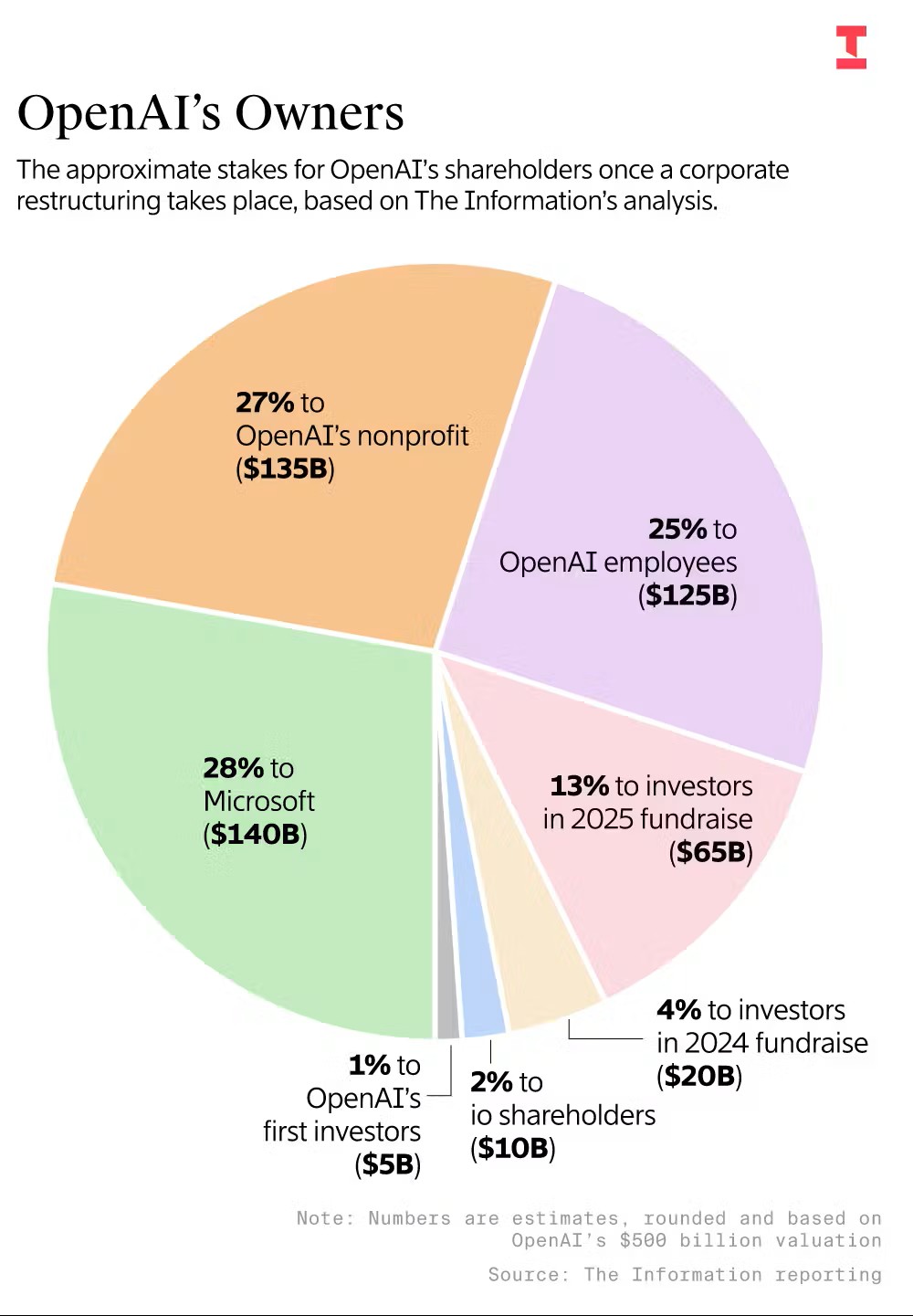
如何获得投资回报?多年来困扰OpenAI投资者的核心问题即将得到解决。 9月17日,据科技媒体The Information报道,OpenAI正通过公司架构重组彻底改变其股权结构,将从非营利性质的有限回报模式转向传统企业 股权制。 据The Information对OpenAI向潜在投资者分享的数据分析,在这项估值5000亿美元的重组计划中,微软作为最大外部支持者将获得约28%股 份,价值约1400亿美元。当前及前任员工将集体持有约25%股份,价值约1250亿美元。 该重组计划仍需微软和两个州检察长批准。一旦获批,包括Thrive Capital和软银在内的新投资者将不再受困于当前的回报上限结构,能够获得 与其巨额投资相匹配的股权收益。 重组后,由软银领投的410亿美元新融资轮投资者将共同持有约13%股份,价值约650亿美元。参与此轮融资的机构包括Founders Fund、红杉 资本、Andreessen Horowitz和Dragoneer Investment Group。 微软获得最大股份 作为OpenAI最重要的战略伙伴,微软在重组后将持有约28%股份,使其成为最大的单一外部股东。 这一持股比例相当 ...


如何在五分钟打动投资人?硅谷传奇投资人20年识人心得
创业邦· 2025-09-16 03:30
Core Insights - The article emphasizes the importance of recognizing extraordinary entrepreneurs and the unique potential of startups in leveraging disruptive technologies like AI [5][9][27] - It discusses the evolutionary dynamics of Silicon Valley's ecosystem compared to China's more distributed innovation landscape, highlighting the competitive advantages of both [6][14] - The article posits that the next wave of trillion-dollar companies is likely to emerge from Silicon Valley due to its adaptive ecosystem and historical accumulation of knowledge [6][12][30] Group 1: Evolutionary Dynamics - The application of Darwinism in the context of Silicon Valley illustrates how natural selection, planned and unplanned variations, and inheritance drive innovation [9][11] - Silicon Valley's history of rapid adaptation and competition fosters a unique environment where startups can thrive and evolve [12][16] - The article suggests that the current AI wave represents a critical phase of radical variation, with significant changes expected every six months between 2025 and 2030 [9][27] Group 2: Investment Philosophy - The investment philosophy of focusing on "people" rather than just ideas is central to the success of venture capital firms like Benchmark [7][39] - The article highlights the importance of building long-term relationships with entrepreneurs, emphasizing that true value comes from deep, supportive partnerships over time [39][41] - It argues that early-stage investments allow for greater flexibility and adaptability, enabling startups to pivot and innovate effectively [50][51] Group 3: Competitive Landscape - The competitive landscape in China is characterized by multiple teams pursuing different strategies within the same company, which fosters innovation and pressure [15][16] - The article notes that while established companies have dominated the market in recent years, the emergence of new business models, particularly in AI, could lead to the rise of several new trillion-dollar companies [26][30] - The potential for creative destruction in the tech industry suggests that even successful companies will eventually be surpassed by new entrants [20][30]

Opendoor brings back its founders and welcomes a new CEO from Shopify—who could earn $2.8 billion if he sends the stock soaring
Yahoo Finance· 2025-09-11 20:58
Core Insights - Opendoor Technologies has appointed Kaz Nejatian as CEO with a compensation package potentially worth $2.78 billion, contingent on significant stock price performance [1][3] - Nejatian's compensation structure emphasizes equity awards tied to stock price, marking a shift from traditional CEO compensation plans [3][4] - The company is returning to a "founder mode" approach, with founders Eric Wu and Keith Rabois taking active roles on the board [2][3] Compensation Structure - Nejatian will receive a $15 million cash award and a $15 million restricted-stock unit award, both vesting in nine months [3] - He will also receive performance-based awards, including 40.9 million shares that vest over five years, contingent on maintaining a stock price of $6.24 or higher [4] - A second performance award includes seven stock price hurdles ranging from $9 to $33, with vesting tied to achieving these price milestones [5] Leadership Changes - The board will include Opendoor's founders, with Rabois appointed as chairman, aiming to reinvigorate the company's "founder DNA and energy" [2][3] - Two directors, Pueo Keffer and Glenn Solomon, have stepped down, indicating a significant leadership reshuffle [2]
Opendoor Names Kaz Nejatian as CEO; Founders Rabois and Wu Rejoin Board
Globenewswire· 2025-09-10 21:30
Nejatian, Chief Operating Officer of Shopify, to Lead Company’s Next Chapter as AI-Powered Real Estate PlatformKeith Rabois and Eric Wu Bring Back Founder DNA to Company with Rabois Appointed ChairmanKhosla Ventures and Wu Investing $40 Million in PIPE Financing SAN FRANCISCO, Sept. 10, 2025 (GLOBE NEWSWIRE) -- Opendoor Technologies Inc. (Nasdaq: OPEN) today announced that Kaz Nejatian, Chief Operating Officer of Shopify, has been appointed Chief Executive Officer and member of the Board of Directors. Co-Fo ...


Exclusive: Homeowner-focused fintech Aven raises $110 million funding round
Yahoo Finance· 2025-09-09 13:00
Aven, a fintech startup known for its home-equity-backed credit cards, has raised $110 million in Series E financing at a $2.2 billion post-money valuation. The San Francisco-based company is one of a growing number of startups focused on helping U.S. consumers take advantage of the estimated $35 trillion in wealth tied up in their homes. Most Read from Fast Company The latest round was led by Khosla Ventures, with participation from existing backers General Catalyst, Caffeinated Capital, GIC, Electric C ...
Serve Robotics Acquires Vayu Robotics to Pioneer AI Foundation Model-Based Autonomy for Last-Mile Delivery
GlobeNewswire· 2025-08-18 11:15
Core Insights - Serve Robotics Inc. has acquired Vayu Robotics, enhancing its position in the autonomous delivery market and leveraging Vayu's AI navigation technology [1][5][11] - The acquisition aims to combine Serve's real-world data with Vayu's AI models to improve navigation capabilities and accelerate deployment in new markets [2][7] Company Overview - Serve Robotics develops AI-powered, low-emission sidewalk delivery robots and has completed tens of thousands of deliveries for partners like Uber Eats and 7-Eleven [12] - Vayu Robotics specializes in urban robot navigation using large-scale AI models and aims to democratize robotics for widespread adoption [11] Strategic Implications - The merger is expected to enhance Serve's autonomy training capabilities and expand its operational environments, potentially increasing revenue and customer growth [7][8] - The integration of Vayu's technology is anticipated to improve safety, reliability, and speed, thereby reducing operational costs [7] Financial Details - The acquisition includes an initial consideration of 1,696,069 shares of Serve's common stock, with a potential future earnout of 560,000 shares based on performance milestones [8][9] - Additional warrants for 4,000,000 shares at an exercise price of $10.36 per share were issued to Khosla Ventures, a key investor in Vayu [8] Leadership and Expertise - Vayu's team, including founders with extensive experience in AI and robotics, will join Serve, bringing valuable insights and expertise [3][4] - Vinod Khosla, a prominent Silicon Valley technologist and Vayu's lead investor, will join Serve's Advisory Board to support its growth [4][6]


比尔盖茨、马云等超级富豪,原来他们都在投资核聚变商业化公司
Sou Hu Cai Jing· 2025-08-01 04:56
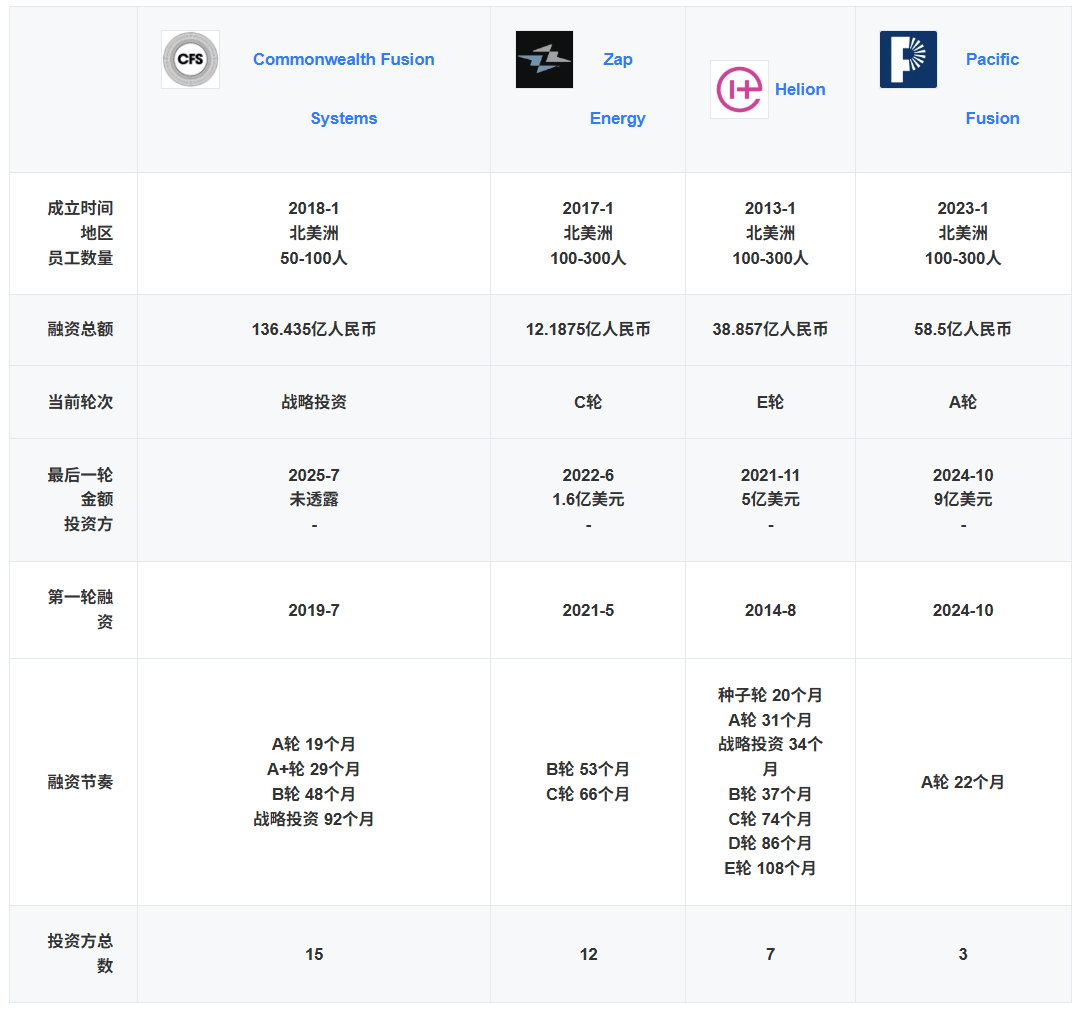
Core Insights - The article highlights the growing investment in nuclear fusion companies in China and the United States, with a total of over 100 billion RMB in funding for 12 domestic companies and approximately 26.9 billion RMB for 9 U.S. companies [1][2]. Domestic Investment Landscape - In China, nuclear fusion commercialization is in its early stages, with significant investments from state-owned enterprises, national funds, and local government capital [1]. - The total funding for domestic nuclear fusion companies has surpassed 100 billion RMB, indicating strong governmental and institutional support [1]. U.S. Nuclear Fusion Companies - The U.S. nuclear fusion sector is marked by 23 publicly disclosed investment events, with a total estimated funding of 26.9 billion RMB [1]. - Key players in the U.S. include Commonwealth Fusion Systems, Pacific Fusion, Helion, and Zap Energy, each securing over 1 billion RMB in funding [1][2]. Commonwealth Fusion Systems (CFS) - CFS, founded in 2018, focuses on commercializing nuclear fusion by leveraging decades of research from MIT [4]. - The company has raised over 2 billion USD, making it the most funded startup in the nuclear fusion sector, with notable investors including Tiger Global, Bill Gates, and Google [6]. Pacific Fusion - Established in 2023, Pacific Fusion has quickly attracted attention, securing 900 million USD in funding led by General Catalyst [9]. - The company focuses on pulse magnetic-driven inertial confinement fusion, utilizing advanced techniques to achieve fusion conditions [8]. Helion - Founded in 2013, Helion has raised approximately 570 million USD, with significant milestones including achieving plasma heating to 100 million degrees Celsius [10][11]. - The company is working on the Polaris project, which aims to demonstrate net electricity production from fusion [11]. Zap Energy - Zap Energy, established in 2017, has made significant progress in funding, completing a 160 million USD Series C round in 2022 [13]. - The company collaborates with Lawrence Livermore National Laboratory to advance its fusion technology [12]. Investment Trends - The article identifies active investors in the nuclear fusion space, including Lowercarbon Capital and Breakthrough Energy Ventures, both focused on climate change solutions [17][18]. - Lowercarbon Capital has made five investments in nuclear fusion companies, while Breakthrough Energy Ventures, founded by Bill Gates, has invested in multiple U.S. firms [17][18]. Global Investment Landscape - Other notable investors include Khosla Ventures, Starlight Ventures, Capricorn Investment Group, and Mithril Capital Management, all of which have shown interest in the nuclear fusion sector [19][21][22]. - Tencent has also participated in funding a European fusion technology company, First Light Fusion, indicating a broader interest in fusion technology beyond domestic investments [22].
X @Bloomberg
Bloomberg· 2025-07-28 16:11
RT Bloomberg Live (@BloombergLive)ICYMI: Vinod Khosla, Founder of Khosla Ventures on why electricity prices are going to rise over the next few years.“The price of electricity will go up - AI is going to be the large consumer of power,” Khsola Ventures' @vkhosla at #BloombergGreen.⏯️ https://t.co/ApZaC2fw70 https://t.co/1PQhUKTJEB ...
“AI伴侣”开测,“AI好友”融资,边缘化的陪伴赛道迎来转机?
3 6 Ke· 2025-07-04 01:23
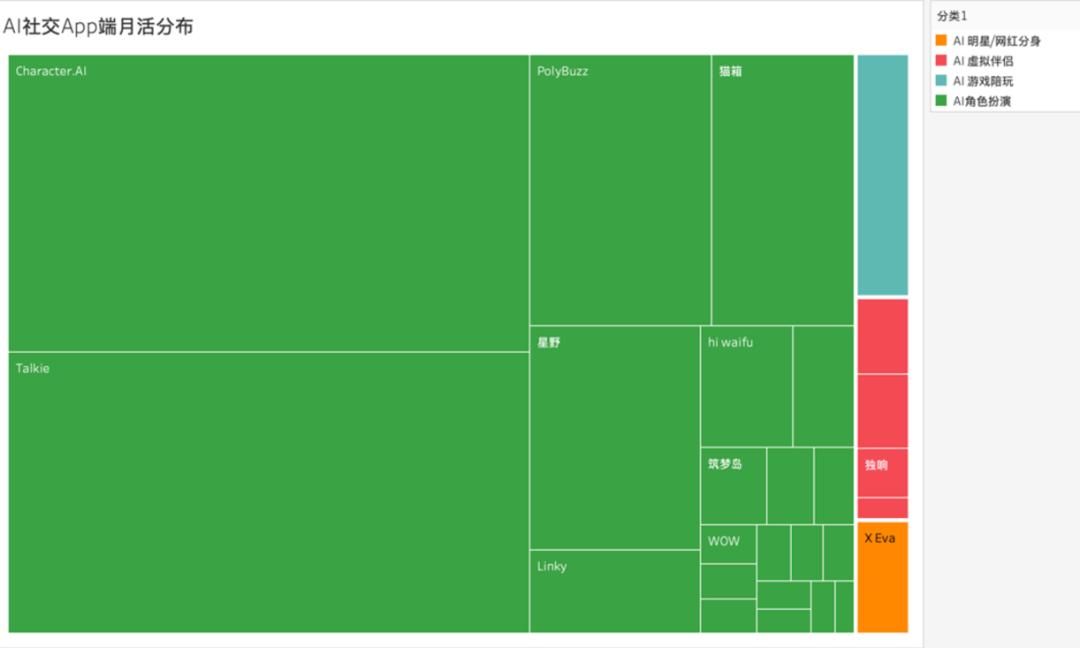
Core Insights - The AI companionship sector is gaining traction despite a downturn in AI social products, with companies like "Tolan" and "EVE" emerging as key players in this niche [1][24] Group 1: Market Trends - AI companionship products are currently underrepresented in the market, with "Tolan" recently completing a $20 million Series A funding round and achieving an annual revenue of $12 million [3][24] - "EVE," a 3D AI companionship product, has gained significant attention, with its promotional video surpassing one million views on Bilibili [3][24] - The AI companionship market has not yet seen a product with monthly active users exceeding one million, indicating a potential for growth [22][24] Group 2: Product Features - "EVE" aims to create a long-term emotional connection with users, moving away from traditional role-playing frameworks to a more integrated companionship experience [4][7] - The product incorporates a memory system with 128 slots, allowing for active and long-term memory capabilities, which is crucial for enhancing user experience [17] - "EVE" features a gamified system with a favorability rating that unlocks new interactions and storylines, enhancing user engagement [18][21] Group 3: User Engagement - "EVE" allows for various interaction methods, including text, voice, and video, mimicking real-life communication between partners [12][14] - The AI companions, Aven and Kiki, are designed to be transparent about their AI nature, fostering a more authentic user experience [8][10] - "Tolan" and "EVE" are both exploring ways to integrate companionship into real-life scenarios, such as providing advice on outfits and study plans [23][25] Group 4: Future Outlook - The year 2025 is anticipated to be pivotal for AI companionship products, with both "Tolan" and "EVE" preparing for broader market entry [22][24] - The shift towards more practical companionship applications suggests a potential expansion of the user base beyond traditional gaming demographics [22][23]