
Luminar

Search documents
X @Bloomberg
Bloomberg· 2025-11-26 18:48
Car sensor supplier Luminar appointed an executive to lead a debt workout after missing several interest payments, in the latest sign of trouble in the auto supplier industry https://t.co/O8hTD99BAa ...
激光雷达先驱,或破产,都怪大客户?
半导体行业观察· 2025-11-18 01:40
Core Viewpoint - Volvo has canceled its five-year contract with Luminar due to Luminar's failure to meet contractual obligations, highlighting the increasing tensions between the two companies and Luminar's precarious financial situation, which may lead to bankruptcy [2][12][15]. Group 1: Luminar's Technology and Market Position - Luminar, founded by Austin Russell in 2012, has developed advanced lidar technology using a 1550nm wavelength, which offers significant advantages in safety and performance for automotive applications [4][6]. - The company claims that its 1550nm lidar can achieve 17 times the photon emission potential and four times the detection range compared to lower wavelength alternatives [6][8]. - Luminar's lidar technology has been integrated into various automotive models, with Volvo being a key partner, which has significantly contributed to Luminar's credibility and market presence [10][11]. Group 2: Financial Performance and Strategic Challenges - In Q3 2025, Luminar reported revenues of $18.7 million, a 20% quarter-over-quarter increase, primarily driven by sensor deliveries and non-recurring engineering revenue [13]. - The CEO emphasized a strategic shift towards non-automotive markets and the importance of LSI photon business, which now accounts for one-third of Luminar's annual revenue [13]. - The uncertainty surrounding the partnership with Volvo has raised concerns about Luminar's future, leading to potential asset sales or business divestitures [13][14]. Group 3: Industry Trends and Competitive Landscape - The global automotive lidar market is projected to grow from $861 million in 2024 to $3.804 billion by 2030, with a compound annual growth rate (CAGR) of 28% [17]. - Chinese lidar manufacturers are gaining market share, with companies like Hesai Technology and RoboSense leading the market, while Western firms face challenges due to higher costs and slower adoption rates [20][21]. - The average price of lidar systems is expected to decrease significantly, with entry-level models projected to cost around $200 post-2025, driven by advancements in technology and increased production [23].

X @TechCrunch
TechCrunch· 2025-11-17 18:04
Luminar is fighting with its biggest customer as bankruptcy threat looms https://t.co/6afjCHm924 ...
MicroVision(MVIS) - 2025 Q3 - Earnings Call Transcript
2025-11-11 22:30
Financial Data and Key Metrics Changes - For Q3 2025, the company reported revenues of $0.2 million, driven by sales in industrial and automotive verticals [18] - The cash burn for the quarter was $16.5 million, including one-time payments related to inventory buildup of Movia L [19] - The company finished the quarter with $99.5 million in cash and cash equivalents, with additional availability under current facilities [21][22] Business Line Data and Key Metrics Changes - The Movia S product is positioned as a low-cost, high-performance sensor, with a target price of $200 for short-range and $300 for long-range applications [15][36] - The company is transitioning customers from Movia L to Movia S, which is expected to be transformational for industrial and warehouse automation markets [17] - The Movia S production launch is planned for Q4 of 2026, with demonstrations currently ongoing with various customers [10][12] Market Data and Key Metrics Changes - The company is experiencing strong interest in its Movia S and tri-lider architecture offerings post-IAA engagements [12] - The defense vertical is being actively pursued, with a new team in Virginia focused on drone-based LiDAR developments [18] - The company anticipates revenue from industrial applications in 2026, with automotive revenue expected to ramp up in 2029 [63] Company Strategy and Development Direction - The company aims to transform the LiDAR industry by moving to solid-state systems and simplifying sensor architecture [6][15] - A strategic investment in Scantinol Photonics is expected to enhance the company's ultra-long-range LiDAR capabilities [16] - The focus is on diversifying revenue streams through targeted investments and maintaining a strong capital structure [22] Management's Comments on Operating Environment and Future Outlook - Management highlighted the need for cost reduction in LiDAR sensors to achieve mass adoption, drawing parallels with the radar industry's evolution [6][7] - The company is confident in its ability to meet cost targets for its products, ensuring profitability while driving volume [55] - The management expressed optimism about the company's competitive positioning against Chinese LiDAR manufacturers through innovation and flexibility [52] Other Important Information - The company is actively managing production commitments with ZF as it prepares for Movia S manufacturing [17] - The leadership team has been strengthened with key hires in sales and engineering to support growth plans [14] - The company is committed to providing updates on the Scantinol acquisition and its impact on product offerings [20] Q&A Session Summary Question: What is the status of the RFQs? - The RFQs are ongoing, with the company following the pace of OEMs as they evaluate new features and systems [49][50] Question: How will the $200 price point be sustainable? - The company has a detailed cost model ensuring that the $200 price point is achievable without compromising margins [54][55] Question: How does the recent upheaval at Luminar affect opportunities with Volvo? - Supplier issues at Luminar may provide opportunities for the company to engage with Volvo for alternative sourcing [60][62] Question: When can revenue be expected from industrial and defense sectors? - Revenue from industrial applications is expected in 2026, while automotive revenue is anticipated to ramp up in 2029 [63] Question: How does Scantinol technology compare with existing products? - Scantinol's technology is complementary to existing products, with different strengths in range and application suitability [71][72]

IPO周报:海创光电终止IPO,首轮问询后停滞超两年
Di Yi Cai Jing· 2025-11-09 03:54
Core Viewpoint - The company, Haichuang Optoelectronics, has experienced a significant decline in performance for 2024, with revenue and net profit expected to drop by 20.75% and 46.56% respectively compared to the previous year [1][2]. Group 1: Financial Performance - Haichuang Optoelectronics reported revenues of 606 million, 833 million, and 661 million yuan for the years 2022, 2023, and 2024 respectively, with net profits of 74 million, 122 million, and 65 million yuan for the same years [1]. - The expected decline in 2024 is attributed to underperformance in the laser radar business and a decrease in industrial laser business revenue due to industry demand weakness and intense competition [2]. Group 2: Business Operations - The company's laser radar revenue is heavily reliant on two major clients, Tudatong and Luminar, which together contributed 78.40% of the revenue from this segment [2]. - Uncertainties in the cooperation with these key clients have emerged, including Tudatong's introduction of a second supplier and Luminar's unstable operations due to underperformance in vehicle deliveries [2][3]. Group 3: Market Position and Governance - The company faces inquiries regarding its market position, share, and ranking in its niche, as well as its role in the supply chain of downstream clients [3]. - The ownership structure of Haichuang Optoelectronics is relatively dispersed, with the controlling shareholder holding only 30.21% of the voting rights, raising concerns about governance stability post-IPO [3].
再裁1/4员工、CFO也跑了,激光雷达明星公司陷危机
汽车商业评论· 2025-11-04 03:25
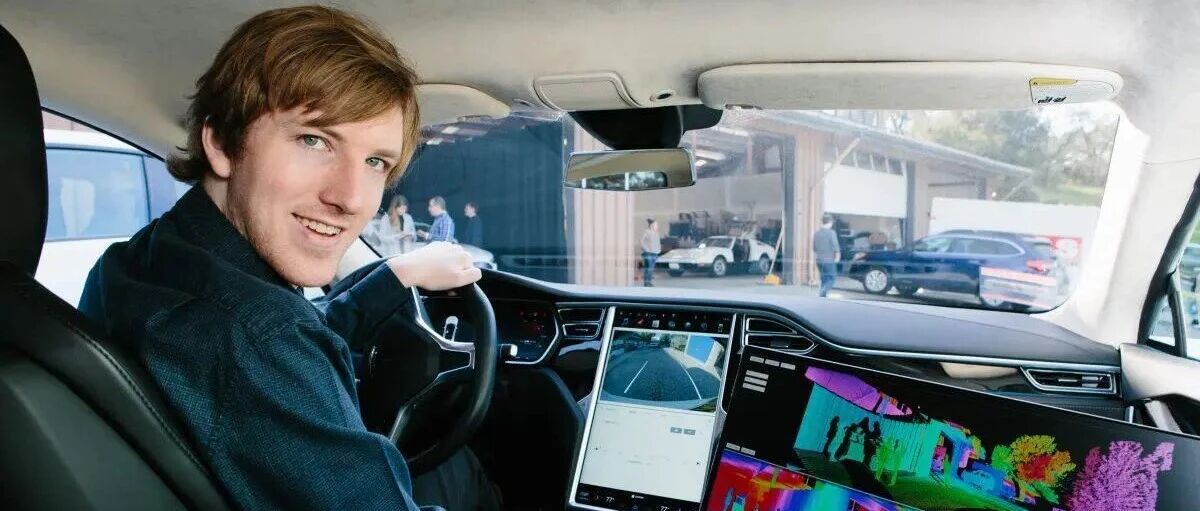
Core Viewpoint - Luminar, a prominent player in the autonomous driving technology sector, is facing significant financial distress, with a cash reserve of approximately $72 million and total debt of $429 million, leading to potential operational challenges and workforce reductions [5][6][36]. Financial Situation - As of October 24, Luminar holds about $72 million in cash and securities, while its total debt stands at $429 million [5]. - The company may run out of cash by Q1 2026 if current spending continues, prompting a 25% workforce reduction [5][19]. - Luminar has missed loan interest payments due on October 15, with a grace period until November 6, raising concerns about potential default [22]. Management Changes - CFO Thomas Fennimore is set to leave on November 13, with the company stating his departure is not due to financial disagreements [5][23]. - Founder Austin Russell was removed as CEO in May due to an undisclosed ethical investigation but remains the largest shareholder and is reportedly seeking to buy back the company [24][27]. Business Challenges - Luminar's partnerships with major automakers like Volvo and Mercedes are under strain, with Volvo delaying the launch of models equipped with Luminar's sensors [13][14]. - The company is facing high R&D and manufacturing costs, selling sensors below production costs, and is in a price war to maintain customer relationships [16][34]. - The overall market for lidar technology is slowing, with projections for the global market size in 2025 revised down to $2 billion from $3.5 billion [38]. Industry Context - Luminar's struggles reflect broader challenges in the lidar industry, where companies are experiencing layoffs and stock price declines amid a shift in market dynamics [37][38]. - The automotive supply chain is reassessing risks, with some projects potentially facing delivery delays [39]. - Despite current challenges, Luminar retains some technological advantages, particularly in its 905 nm wavelength lidar performance [39].
告别「够用」时代,L3 智驾呼唤高性能激光雷达上量
3 6 Ke· 2025-10-22 00:02
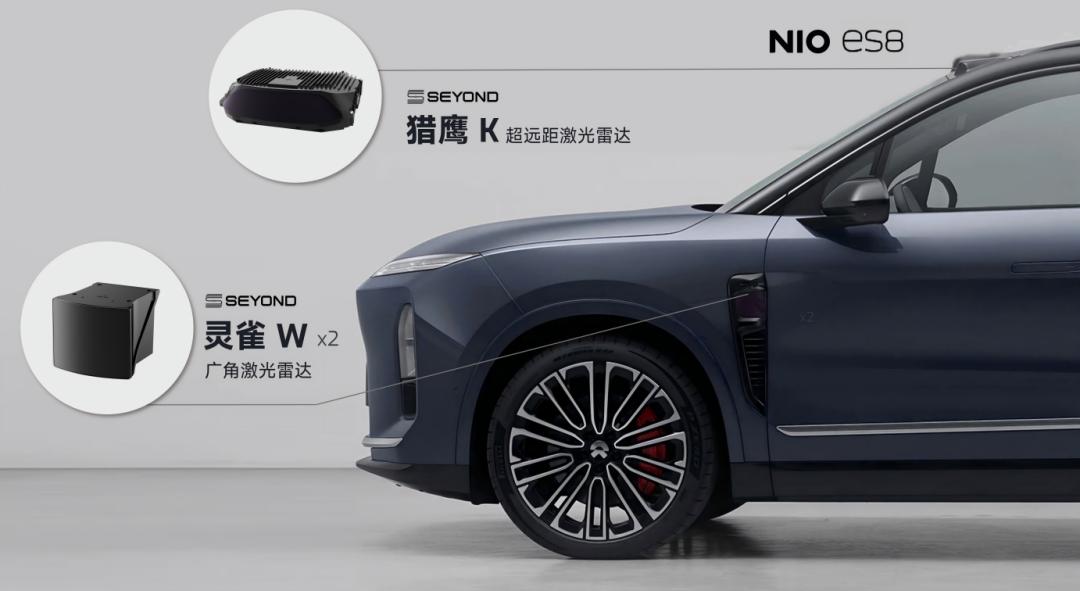
Core Viewpoint - The debate over the optimal approach for intelligent driving technology has concluded, with a consensus on the necessity of a multi-sensor fusion strategy that includes cameras, millimeter-wave radar, and LiDAR [1][3]. Group 1: Technical Insights - The integration of LiDAR is essential for L3 autonomous driving due to its ability to compensate for the limitations of visual perception in extreme lighting conditions [1]. - LiDAR serves as a critical safety component in intelligent driving systems, providing necessary redundancy in perception capabilities [1][4]. - The commercial rollout of L3 autonomous driving will initially focus on highways and urban expressways, where the complexity of scenarios is relatively lower [5][22]. Group 2: Market Dynamics - The transition from L2 to L3 driving systems necessitates a shift in responsibility from human drivers to the system, requiring enhanced reliability and redundancy in perception systems [4][8]. - The demand for high-performance LiDAR has transformed it from an optional component to a prerequisite for L3 autonomous driving [3][19]. - Companies like TuSimple are leading the market with their advanced LiDAR solutions, having achieved significant milestones in mass production and technology validation [18][28]. Group 3: Competitive Landscape - The L3 LiDAR market features three main player categories: leading manufacturers like Hesai and TuSimple, cross-industry players like Huawei, and international firms like Luminar and Innoviz [19][21]. - The competition is shifting from purely technical specifications to a comprehensive evaluation of performance, cost, and mass production capabilities [21][29]. - TuSimple has established a unique position by developing both 1550nm and 905nm LiDAR technologies, creating a complete product matrix for various driving scenarios [26][28].
TechCrunch Mobility: A takeover that might not be hostile
Yahoo Finance· 2025-10-19 16:15
Core Insights - Luminar's founder and CEO, Austin Russell, was pushed out by the board following an ethics inquiry but has made a bid to acquire the company [2][3] - Some members of Luminar's board are reportedly supportive of Russell's return, despite previous actions leading to his resignation [3] - The proposed acquisition may involve Russell AI Labs merging with another automotive tech company [4] Company Developments - Austin Russell has launched a new company, Russell AI Labs, after his departure from Luminar [2] - The board of Luminar has approached Russell about the acquisition, indicating internal support for his return [3] - Russell is exploring options for merging Russell AI Labs with Luminar or another automotive tech company [4] Industry Movements - Beta Technologies is moving forward with its IPO, pricing shares between $27 and $33, aiming to raise up to $825 million and debut with a valuation of approximately $7.2 billion [6] - The SEC has provided new guidance allowing companies in IPO limbo to expedite their processes, which has enabled Beta Technologies and others to proceed with their IPO plans [7]
Ousted Luminar CEO Austin Russell wants to buy the company
TechCrunch· 2025-10-17 13:38
Core Insights - Austin Russell, the billionaire founder of Luminar, is attempting to acquire the lidar manufacturer five months after his removal as CEO due to an ethics inquiry [1][4] - The acquisition plan involves Russell's new company, Russell AI Labs, purchasing 100% of Luminar's Class A Common Stock, with intentions to potentially merge Luminar with a larger automotive technology company to form a unified platform [2][3] Group 1: Acquisition Details - The acquisition proposal was made on October 14, following suggestions from certain Luminar shareholders and board members, though specific names were not disclosed [3] - If the acquisition proceeds, Luminar would remain publicly traded, and Russell may invest in the newly combined entity [2] Group 2: Background Context - Russell's removal as CEO was announced on May 19, coinciding with Luminar's first-quarter earnings report, and was attributed to a "code of business conduct and ethics inquiry" conducted by the board's audit committee [4][5] - Russell has a history of takeover attempts, including a failed bid for Forbes in 2023, which faced complications due to investor follow-through issues and alleged connections to a Russian oligarch [6] Group 3: Current Company Structure - Despite his removal, Russell remains on Luminar's board and was expected to assist the new CEO with transition and technology matters, although he has not signed any SEC filings since his departure [8] - Russell co-founded Russell AI Labs in September, which aims to support transformative AI and technology companies, and has already invested $300 million in an AI company called Emergence [9]

TechCrunch Mobility: Self-driving trucks startup Kodiak goes public and a shake-up at Hyundai’s Supernal
Yahoo Finance· 2025-09-28 16:01
Company Overview - Kodiak AI went public through a merger with Ares Acquisition Corporation II, valuing the startup at approximately $2.5 billion [3] - The company raised $275 million in financing, with $212.5 million from institutional investors, including $145 million in PIPE funding and $62.9 million in trust cash from Ares [2] Business Operations - Kodiak AI is developing autonomous vehicles for various applications, including highway, industrial, and defense uses [3] - The company is focused on unstructured autonomy, particularly in defense logistics and reconnaissance operations [7] Partnerships and Contracts - Gatik, another autonomous vehicle startup, has formed a multi-year partnership with Loblaw, deploying 20 autonomous trucks by the end of 2025 for driverless deliveries in the greater Toronto area [5] - The trucks will operate autonomously across a regional network, picking up products from two distribution centers and delivering to over 300 retail stores [4] Industry Trends - The autonomous vehicle industry is still in its early stages, with significant capital requirements and ongoing developments [6] - Companies are exploring various routes to access public markets, with SPACs being a popular choice for funding [7] Recent Developments - Hyundai's electric air taxi startup Supernal is undergoing a reorganization of its leadership team amid challenges in its air taxi program [9][10] - Battery materials startup Sila has commenced operations at its facility in Moses Lake, Washington, which is the first large-scale silicon anode factory in the West [20]