AT128

Search documents
激光雷达“一哥”交卷!禾赛ADAS主雷达市占率超40%,全年GAAP盈利创行业先河
市值风云· 2026-03-24 14:09
Core Viewpoint - The humanoid robot sector is experiencing a significant surge, with laser radar technology becoming essential for advanced driving systems and robotics applications [1][31]. Group 1: Laser Radar Market Dynamics - Level 3 autonomous driving regulations are being implemented, necessitating reliable perception systems, with laser radar proving indispensable in challenging conditions [4][5]. - Major automotive manufacturers are now equipping flagship models with laser radar, indicating a shift from "whether to use" to "how well to use" this technology [5][6]. - Hesai Technology (NASDAQ: HSAI; HKEX: 2525) holds over 40% market share in the global automotive laser radar sector, significantly outperforming competitors [7][8]. Group 2: Company Performance and Growth - In 2025, Hesai's market share increased by 18 percentage points within 11 months, reflecting strong demand and market penetration [10]. - The company achieved a revenue of 3.03 billion RMB in 2025, marking a 45.8% year-on-year growth and nearly an eightfold increase since 2019 [21][26]. - Hesai is the first laser radar company to achieve profitability, with a GAAP profit of 440 million RMB in 2025, and has maintained positive operating cash flow for three consecutive years [26][29]. Group 3: Technological Advancements - Hesai has adopted a "full-stack self-research" approach, integrating multiple components into a single chip, significantly reducing costs and improving performance [16][19]. - The ATX laser radar, launched in 2025, has seen a 60% reduction in size and a 55% decrease in power consumption compared to its predecessor [17]. - The company holds the highest number of patents in the laser radar field, with 2,071 authorized patents and applications as of the end of 2025 [18]. Group 4: Expansion into Robotics - Hesai is expanding its laser radar applications beyond automotive to include humanoid robots, delivery drones, and industrial automation, with significant orders in these sectors [31][35]. - The company has secured a global supply contract for 10 million units of its JT series laser radar for robotic applications, demonstrating its leadership in the robotics market [31]. - In 2025, Hesai delivered 239,300 laser radars for robotics, a staggering increase of 425.8% year-on-year, outpacing its automotive sector growth [32].



禾赛-W(02525):公司深度报告:乘具身智能之东风,激光雷达由上车走向泛机器人
Guohai Securities· 2026-03-01 15:36
Investment Rating - The report assigns a "Buy" rating for Hesai Technology (02525.HK) as it initiates coverage [1]. Core Insights - The report highlights the transition of LiDAR technology from traditional mechanical optical devices to chip-based components, indicating a trend of lower prices and enhanced performance [8]. - The report identifies key drivers for the increasing penetration of LiDAR, including its safety features, the rise of L3 and L4 autonomous vehicles, and the continuous reduction in LiDAR costs [63][64]. - Hesai's strategic decisions are noted for their foresight, having shifted from air quality detection to the LiDAR market, capturing significant market share in the L4 autonomous driving segment [11][81]. Summary by Sections Current LiDAR Industry Characteristics - The LiDAR market is highly concentrated, with the top four suppliers holding over 99% market share as of 2025 [7]. - LiDAR technology is evolving rapidly, with a shift towards chip integration and lower costs, enhancing performance [8][48]. - The report emphasizes the increasing importance of LiDAR as a safety component in vehicles, with projections indicating that L3 vehicles may require 3-6 LiDAR units per vehicle [63]. Market Competition Landscape - The competitive landscape is dominated by major players like Huawei and Hesai, with Hesai's ATX product offering superior performance at comparable prices [77][78]. - The report notes that the LiDAR market is characterized by strong economies of scale, making it difficult for new entrants to compete effectively [77]. Hesai Company Overview - Hesai has transitioned from an air quality detection company to a leading global LiDAR manufacturer, launching several successful products since its inception in 2014 [81][84]. - The company has strategically positioned itself in the automotive market, with significant revenue contributions from its LiDAR products [85]. - The management team is noted for its balanced ownership and strong technical background, contributing to the company's innovative capabilities [11][84]. Long-term Growth Potential and Current Stock Price - The report forecasts significant revenue growth for Hesai, projecting revenues of 34.09 billion, 49.16 billion, and 60.56 billion RMB for 2025, 2026, and 2027 respectively, with corresponding Non-GAAP net profits of 5.05 billion, 6.91 billion, and 9.53 billion RMB [12]. - Given the company's leadership position in a high-growth sector, a price-to-earnings ratio of 50 is applied, resulting in a target market capitalization of 394 billion HKD [12].
华西证券:首予禾赛-W“买入”评级 全球激光雷达引领者
Zhi Tong Cai Jing· 2025-11-26 01:47
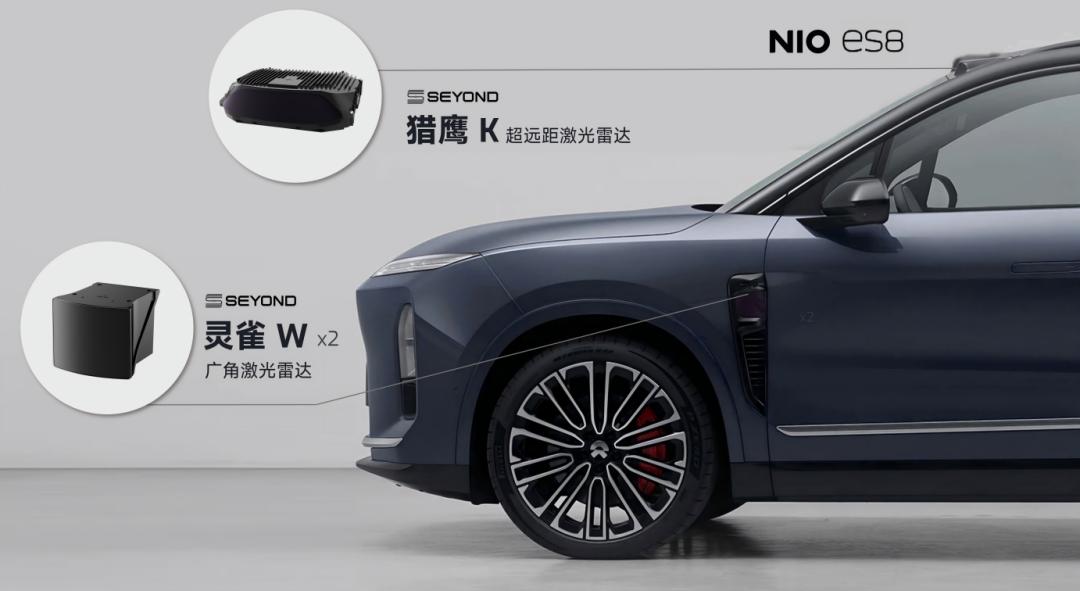
Core Viewpoint - Huazhi Securities initiates coverage on Hesai Technology (02525) with a "Buy" rating, highlighting its position as a global leader in the lidar industry, driven by proprietary ASIC technology and a platform architecture that balances performance, quality, and cost [1] Group 1: Company Overview - Hesai Technology, established in 2014, went public in the US in 2023 and plans to list in Hong Kong in 2025. Its products are widely used in advanced driver-assistance systems (ADAS) for passenger and commercial vehicles, as well as in autonomous vehicles and various robotic applications [1] - The company has secured partnerships with 22 major OEMs for 120 vehicle models in the ADAS sector, ranking first in production volume. In the robotics market, it achieved a monthly shipment of over 20,000 units and holds over 55% market share in the autonomous taxi sector [1][4] Group 2: Market Potential - The global lidar market is projected to grow from $1.6 billion in 2024 to $17.1 billion by 2029, with a CAGR of 61.2% from 2024 to 2029 [1] - The ADAS lidar market is expected to expand from $1 billion in 2024 to $12 billion by 2029, with a CAGR of 63.6% [2] - The robotics lidar market is forecasted to grow from $600 million in 2024 to $5.1 billion by 2029, with a CAGR of 53.6% [2] Group 3: Technological and Product Advantages - Hesai is the only lidar company that has independently developed all key components, including lasers, detectors, and signal processors, enhancing product performance and reducing manufacturing complexity and costs [3] - The company’s proprietary technology allows for a comprehensive lidar product portfolio that meets automotive safety standards while balancing performance, quality, and cost [4] - Key products such as the AT128, ATX, XT series, and Pandar series demonstrate industry-leading specifications in detection range, point cloud frequency, angular resolution, power consumption, and size [4]

禾赛25Q3跟踪报告:全年指引上调,26年出货量持续高增
CMS· 2025-11-19 09:03
Investment Rating - The report maintains a "Recommended" rating for the industry, indicating a positive outlook for the sector's fundamentals and expected performance exceeding the benchmark index [5]. Core Insights - The company, Hesai (HSAI.O), reported a revenue of 795 million yuan for Q3 2025, representing a year-over-year increase of 47.5%, marking six consecutive quarters of growth [2][23]. - The company has adjusted its full-year guidance, projecting total revenue for 2025 to be between 3 billion to 3.2 billion yuan, with a GAAP net profit forecast of 350 million to 450 million yuan [3][25]. - The company achieved a significant milestone by delivering over 1 million laser radars in the first three quarters of 2025, maintaining the leading market share in the ADAS sector [3][20]. Summary by Sections Revenue Performance - In Q3 2025, the company achieved a revenue of 795 million yuan, a 47.5% increase year-over-year, driven by the standardization of onboard laser radar and expansion in the robotics sector [2][24]. - For the first three quarters of 2025, total revenue reached 2.027 billion yuan, reflecting a 49.3% year-over-year growth [2]. Profitability Metrics - The gross margin for Q3 2025 was reported at 42.1%, slightly down from the previous year, but expected to remain around 40% in Q4 [2][24]. - The GAAP net profit for Q3 2025 was 256 million yuan, marking a historical high and surpassing the annual profit target ahead of schedule [2][20]. Market Position and Delivery Volume - The company delivered 441,400 laser radars in Q3 2025, a year-over-year increase of 228.9%, with ADAS laser radar deliveries reaching 380,800 units [3][20]. - The company holds a dominant market share in the ADAS sector, with a reported market share of 46% as of August 2025, significantly higher than its competitors [3][20]. Future Outlook - For Q4 2025, the company expects net revenue to be between 1 billion to 1.2 billion yuan, with year-over-year growth projected between 39% to 67% [3][25]. - The company anticipates total laser radar deliveries for 2025 to reach approximately 1.6 million units, with expectations for 2026 to see deliveries between 2 million to 3 million units [3][25][28]. Strategic Developments - The company has secured significant contracts with major ADAS clients, with all models from its top two clients in 2026 expected to be equipped with Hesai laser radars [4][21]. - The successful IPO in September 2025 raised 614 million USD, marking the largest IPO in the laser radar industry, which will enhance the company's financial foundation and support future growth initiatives [20][22].
告别「够用」时代,L3 智驾呼唤高性能激光雷达上量
3 6 Ke· 2025-10-22 00:02
Core Viewpoint - The debate over the optimal approach for intelligent driving technology has concluded, with a consensus on the necessity of a multi-sensor fusion strategy that includes cameras, millimeter-wave radar, and LiDAR [1][3]. Group 1: Technical Insights - The integration of LiDAR is essential for L3 autonomous driving due to its ability to compensate for the limitations of visual perception in extreme lighting conditions [1]. - LiDAR serves as a critical safety component in intelligent driving systems, providing necessary redundancy in perception capabilities [1][4]. - The commercial rollout of L3 autonomous driving will initially focus on highways and urban expressways, where the complexity of scenarios is relatively lower [5][22]. Group 2: Market Dynamics - The transition from L2 to L3 driving systems necessitates a shift in responsibility from human drivers to the system, requiring enhanced reliability and redundancy in perception systems [4][8]. - The demand for high-performance LiDAR has transformed it from an optional component to a prerequisite for L3 autonomous driving [3][19]. - Companies like TuSimple are leading the market with their advanced LiDAR solutions, having achieved significant milestones in mass production and technology validation [18][28]. Group 3: Competitive Landscape - The L3 LiDAR market features three main player categories: leading manufacturers like Hesai and TuSimple, cross-industry players like Huawei, and international firms like Luminar and Innoviz [19][21]. - The competition is shifting from purely technical specifications to a comprehensive evaluation of performance, cost, and mass production capabilities [21][29]. - TuSimple has established a unique position by developing both 1550nm and 905nm LiDAR technologies, creating a complete product matrix for various driving scenarios [26][28].
爽过华为理想,中国智驾的大赢家出现了
3 6 Ke· 2025-09-26 08:37
Core Insights - The article argues that the real winner in China's intelligent driving sector is Hesai Technology, rather than major car manufacturers like Huawei or Li Auto [1][2]. Group 1: Market Position and Performance - Hesai Technology is the leading supplier of LiDAR components, holding a 33% market share in China's automotive LiDAR installations as of the first half of 2025, with 284,000 units shipped [2][3]. - The company went public on the Hong Kong Stock Exchange on September 16, 2025, becoming the first LiDAR company to have a dual listing in both the U.S. and Hong Kong, with a market capitalization of HKD 36.3 billion on its first trading day [3]. - In Q2 2025, Hesai reported revenue of CNY 710 million, a year-on-year increase of 53.9%, and achieved a net profit of CNY 44.1 million, marking it as the first publicly listed LiDAR company to achieve quarterly profitability [5]. Group 2: Historical Context and Challenges - Founded in 2014, Hesai initially struggled in a niche market, facing financial difficulties until it pivoted to the passenger vehicle LiDAR sector [6][7]. - The company experienced four consecutive years of losses from 2019 to 2022, and its stock price fell by over 85% after its NASDAQ listing in February 2023 [7]. Group 3: Market Dynamics and Consumer Perception - The demand for LiDAR has surged due to the increasing complexity of urban driving scenarios, with Hesai's AT128 model being competitively priced at around USD 350, making it a popular choice among manufacturers [8][10]. - A survey indicated that 59% of car owners believe LiDAR is safer than pure vision systems, reflecting a growing consumer preference for LiDAR technology [11]. - Hesai's products are marketed as high-resolution, with the latest "True 800-line" LiDAR offering superior clarity and detection capabilities, which aligns with consumer needs in complex driving environments [13][14]. Group 4: Competitive Landscape - Despite Hesai's success, some companies, notably Tesla and XPeng, have adopted a vision-based approach, arguing that visual systems can achieve similar or superior performance without the complexity of integrating LiDAR [19][24]. - XPeng has shifted from being a proponent of LiDAR to exploring a vision-only strategy, indicating a significant change in the competitive landscape [22][24]. Group 5: Future Outlook - Hesai's sales momentum is strong, with a projected annual shipment of 1.2 to 1.5 million units, reflecting a year-on-year increase of 238% in the first half of 2025 [33]. - The company has secured contracts with 24 global OEMs and a significant order from a leading U.S. Robotaxi firm, further solidifying its market position [33].
2025中概股回港最大IPO,全球激光雷达第一股禾赛科技登陆港交所!
Sou Hu Cai Jing· 2025-09-16 06:22
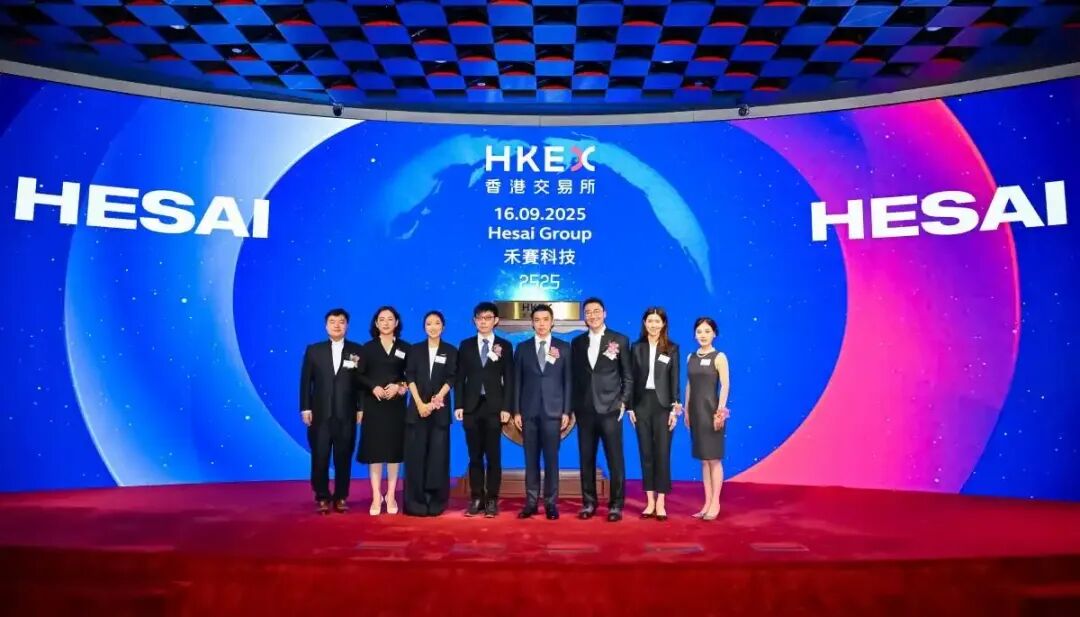
Core Viewpoint - Hesai Technology, a leading global lidar company, officially listed on the Hong Kong stock market on September 16, achieving a market capitalization exceeding HKD 36 billion with an opening share price of HKD 244.0 [1][3] Group 1: Market Position and Achievements - Hesai Technology is the first lidar company to achieve a dual primary listing in both the US and Hong Kong, marking a significant milestone in the global lidar industry [3] - The company holds the leading position in the global lidar market, with a 33% market share in the automotive lidar sector, ranking first in revenue [4] - In the ADAS lidar market, Hesai has maintained the top market share, and in the L4 autonomous driving lidar sector, it leads with a 61% market share, partnering with eight of the top ten L4 autonomous driving companies [4] Group 2: Financial Performance - For the full year of 2024, Hesai achieved a revenue of RMB 2.08 billion, becoming the only publicly listed lidar company to report a profit, with a positive operating cash flow of RMB 63 million and a net cash flow of RMB 1.3 billion [4] - In Q2 2025, the company reported a revenue of RMB 710 million, a year-on-year increase of 53.9%, and a net profit of RMB 44.1 million, marking a significant turnaround from a net loss of RMB 72.1 million in the same period last year [5] - The total lidar delivery volume in Q2 2025 reached 352,095 units, a year-on-year increase of 306.9%, with a total of 547,913 units delivered in the first half of 2025, up 276.2% year-on-year [5] Group 3: Technological and Production Capabilities - Hesai has a strong focus on R&D, with over 70% of its employees dedicated to this area, holding 1,928 patents in core lidar technology, and being a leader in overseas patent layout [8][12] - The company operates the Maxwell Manufacturing Center, the first integrated R&D and manufacturing center for lidar, with an annual production capacity exceeding 2 million units and a 100% automation rate in core production processes [8][12] - Hesai has established partnerships with seven of the top ten global automotive manufacturers and nine of the top ten automotive companies in China, ensuring a stable order flow [8] Group 4: Growth in Robotics Sector - The robotics sector has emerged as a second growth engine for Hesai, with the company leading in the 3D lidar delivery volume in the Chinese robotics market [9] - As of May 30, 2025, the cumulative delivery of Hesai's JT series robotic lidar surpassed 100,000 units, achieved in less than five months since its launch [9] - Hesai is actively collaborating with leading companies in the robotics field to build a comprehensive lidar ecosystem, covering various applications such as unmanned delivery and logistics automation [10] Group 5: Standardization and Industry Influence - Hesai is the first lidar company to achieve full-stack self-research in digital single-photon platform technology, breaking the reliance on imported chips [11] - The company has played a significant role in establishing international standards for lidar, enhancing China's influence in this field [13] - On April 2025, Hesai led the formulation of the national standard for automotive lidar, filling a gap in domestic technical standards [13]

禾赛科技通过港交所聆讯:即将成为「全球激光雷达回港上市第一股」
IPO早知道· 2025-08-31 13:54
Core Viewpoint - HeSai Technology is positioned as a leading global developer and manufacturer of LiDAR products, showcasing strong technological capabilities and rapid revenue growth, with an upcoming dual listing in Hong Kong [2][4]. Group 1: Technological Strength and Product Development - HeSai Technology focuses on the design, development, manufacturing, and sales of advanced LiDAR products, which are widely used in various applications including autonomous vehicles and robotics [4]. - The company has established a dedicated chip R&D team since 2017, achieving the highest integration rate of self-developed chips in the industry starting from 2023, indicating its technological leadership [4][5]. - The fourth generation of self-developed chips optimizes LiDAR functionality and performance by integrating seven key components, making HeSai the only company in the industry to develop all these components independently [5]. - The company has successfully launched four generations of self-developed chips since October 2020, significantly enhancing product performance and reducing production costs [5][6]. Group 2: Product Line and Market Recognition - HeSai Technology has developed a strong product line, including the AT, ET, and JT series, which have gained market recognition and secured mass production orders shortly after their launch [7]. - The flagship product AT128, launched in July 2021, is the first vehicle-grade long-range LiDAR product utilizing self-developed chip technology [6]. Group 3: Operational Efficiency and Cost Management - The innovative platform architecture introduced by HeSai Technology has reduced operational costs and improved product development efficiency by allowing component sharing across different product series [10]. - The company has adopted a self-manufacturing model, enhancing cost efficiency, quality control, and supply chain resilience, which has become a significant competitive advantage [10]. Group 4: Revenue Growth and Market Position - HeSai Technology has experienced rapid growth in shipment volume and revenue, with confirmed shipments of approximately 80,400 units in 2022, 222,100 units in 2023, and projected 501,900 units in 2024 [11]. - The company's net revenue reached RMB 1,202.7 million in 2022, RMB 1,877.0 million in 2023, and RMB 2,077.2 million in 2024, with a 46.3% year-on-year increase in Q1 2025 [11]. - HeSai is recognized as the largest global LiDAR supplier by revenue for 2022, 2023, and 2024, and became the first company to exceed 100,000 units shipped in a single month by December 2024 [11]. Group 5: Industry Growth and Future Outlook - The global LiDAR industry is projected to grow from USD 300 million in 2020 to USD 1.6 billion in 2024, with a compound annual growth rate (CAGR) of 57.8%, and expected to reach USD 17.3 billion by 2029 [12]. - HeSai Technology is well-positioned to capitalize on the rapid growth of the LiDAR market, leveraging its technological and manufacturing expertise to strengthen its global market leadership and expand into the robotics sector [13].
新股消息 | 禾赛科技通过聆讯:全球激光雷达回港上市第一股
智通财经网· 2025-08-31 13:31
Core Viewpoint - The LiDAR industry is experiencing significant growth driven by advancements in autonomous driving, smart transportation, and robotics, with Hesai Technology poised to capitalize on this opportunity through its upcoming IPO in Hong Kong [1]. Group 1: Company Overview - Hesai Technology is a leading global provider of 3D LiDAR solutions, focusing on the design, development, manufacturing, and sales of advanced LiDAR products [2]. - The company has established a strong product matrix that includes applications in passenger and commercial vehicles, robotics, smart agriculture, and port automation [2][4]. - Since its inception, the company has prioritized independent research and development of key LiDAR components, achieving the highest integration rate of self-developed chips in the industry starting from 2023 [2][3]. Group 2: Technological Advancements - Hesai's fourth-generation self-developed chip optimizes LiDAR functionality and performance by integrating all seven key components, making it the only company in the industry to independently develop all these components [3]. - The company has successfully launched four generations of self-developed chips since October 2020, each enhancing product performance and significantly reducing production costs [3][4]. Group 3: Market Performance - The company has experienced rapid growth in shipment volume and revenue, with approximately 80,400 units shipped in 2022, 222,100 units in 2023, and projected shipments of 501,900 units in 2024 [6]. - Hesai's net revenue reached RMB 1,202.7 million in 2022, RMB 1,877.0 million in 2023, and RMB 2,077.2 million in 2024, with a 46.3% year-on-year increase in Q1 2025 [7]. - The company is recognized as the largest global LiDAR supplier by revenue for 2022, 2023, and 2024, and became the first to exceed 100,000 units shipped in a single month by December 2024 [7]. Group 4: Industry Growth - The global LiDAR market is projected to grow from USD 300 million in 2020 to USD 1.6 billion in 2024, with a compound annual growth rate (CAGR) of 57.8%, and is expected to reach USD 17.3 billion by 2029, with a CAGR of 61.7% [7]. - The Chinese LiDAR market is significantly outpacing other regions in terms of market size and growth rate [7]. Group 5: Future Outlook - Hesai Technology aims to leverage its technological and manufacturing expertise to strengthen its leading position in the global LiDAR market and expand its footprint in the robotics sector [8].
降本99.5%后,禾赛进入新周期
3 6 Ke· 2025-08-29 07:28
Core Viewpoint - Hesai Technology has reported a significantly better-than-expected Q2 performance, achieving a revenue of 7.1 billion yuan, a year-on-year increase of 53.9%, and a net profit of 44.1 million yuan, surpassing its GAAP profitability target [1][2]. Financial Performance - In Q2, Hesai's stock price surged by 9.73% following the earnings announcement, and the stock has increased fivefold since its low in November last year [2]. - The company aims for full-year GAAP profitability after achieving its first GAAP profit in Q4 last year [2]. - The total delivery of Hesai's LiDAR units reached 352,100 in Q2, a staggering year-on-year increase of 306.9% [3]. Market Position - Hesai holds a 33% market share in the main LiDAR segment, maintaining its position as the leading supplier [3]. - The company has seen a significant increase in deliveries of its ADAS products, with a total of 303,564 units delivered in Q2, up 275.8% year-on-year [3]. Cost Reduction and Technology Advancement - The cost of LiDAR has decreased by 99.5% since its inception, with the introduction of solid-state LiDAR technology marking a turning point [4][5]. - The introduction of chip-based LiDAR has further reduced costs to around 1,000 yuan per unit [6]. - Hesai's self-developed chips have reduced the cost of the transmitter and receiver circuits by 70% and 80%, respectively [9]. Industry Trends - The penetration rate of LiDAR in new energy passenger vehicles reached 17% in June, indicating a shift from early adopters to mainstream market acceptance [10]. - The robot industry has significantly contributed to Hesai's growth, with robot LiDAR deliveries increasing by 743.6% year-on-year in Q2 [11]. Future Outlook - The global market for robots using LiDAR is projected to reach 10 billion yuan by 2029, with an estimated 5 million robots expected to be in use [13]. - The company anticipates a revenue growth of 44% to 69% year-on-year for the full year of 2025, driven by strong demand in both the ADAS and robotics sectors [15]. - The recent stock price surge and high valuation reflect investor confidence in Hesai's leadership in the LiDAR market and its growth potential in the robotics sector [16].