Workday

Search documents
Thrive Raises New $10B Fund | OpenAI Buys OpenClaw | Stripe at $140B: Is Adyen Wildly Undervalued?
20VC with Harry Stebbings· 2026-02-19 15:00
Jason Lemkin is one of the leading SaaS investors of the last decade with a portfolio including the likes of Algolia, Talkdesk, Owner, RevenueCat, Saleloft and more. Rory O’Driscoll is a General Partner @ Scale where he has led investments in category leaders such as Bill.com (BILL), Box (BOX), DocuSign (DOCU), and WalkMe (WKME), among others. ----------------------------------------------- Timestamps: 00:00 Intro 00:42 Anthropic's $30B Raise at $380B 05:53 Why SaaS Stocks Keep Getting Crushed 20:53 Wall St ...


Interact Expands its Employee Experience Platform with New AI‑Native Features and Workday Integration
Globenewswire· 2026-02-18 13:00
Core Insights - Interact has launched its 2026 Winter capabilities aimed at enhancing internal communication by providing strategic intelligence instead of just status updates [1][6] - The company has been recognized as a leader in the 2026 ClearBox Consulting Intranet and Employee Experience Platforms Report, highlighting its mature product and significant innovation, particularly in AI [2] Product Features - The introduction of Ask Analytics allows internal communicators to link their efforts to business outcomes by using natural language questions to gather evidence for performance discussions [3] - New features such as Workday Integration and the Executive Assistant Agent are designed to reduce busy work and improve employee focus on high-impact tasks [4] - The Listen to Content feature enables employees to listen to updates, while Live Streaming enhances leadership communication, and auto-generated Video Captions and Transcriptions improve accessibility [5] Company Vision - The CEO of Interact emphasizes that employee experience platforms should support a wide range of employee needs, aiming to unify these needs in a single system that enhances performance and reduces friction [6]


通胀降温难抵AI忧虑,美股三大指数周线齐跌,中概股涨跌不一
Feng Huang Wang· 2026-02-13 22:20
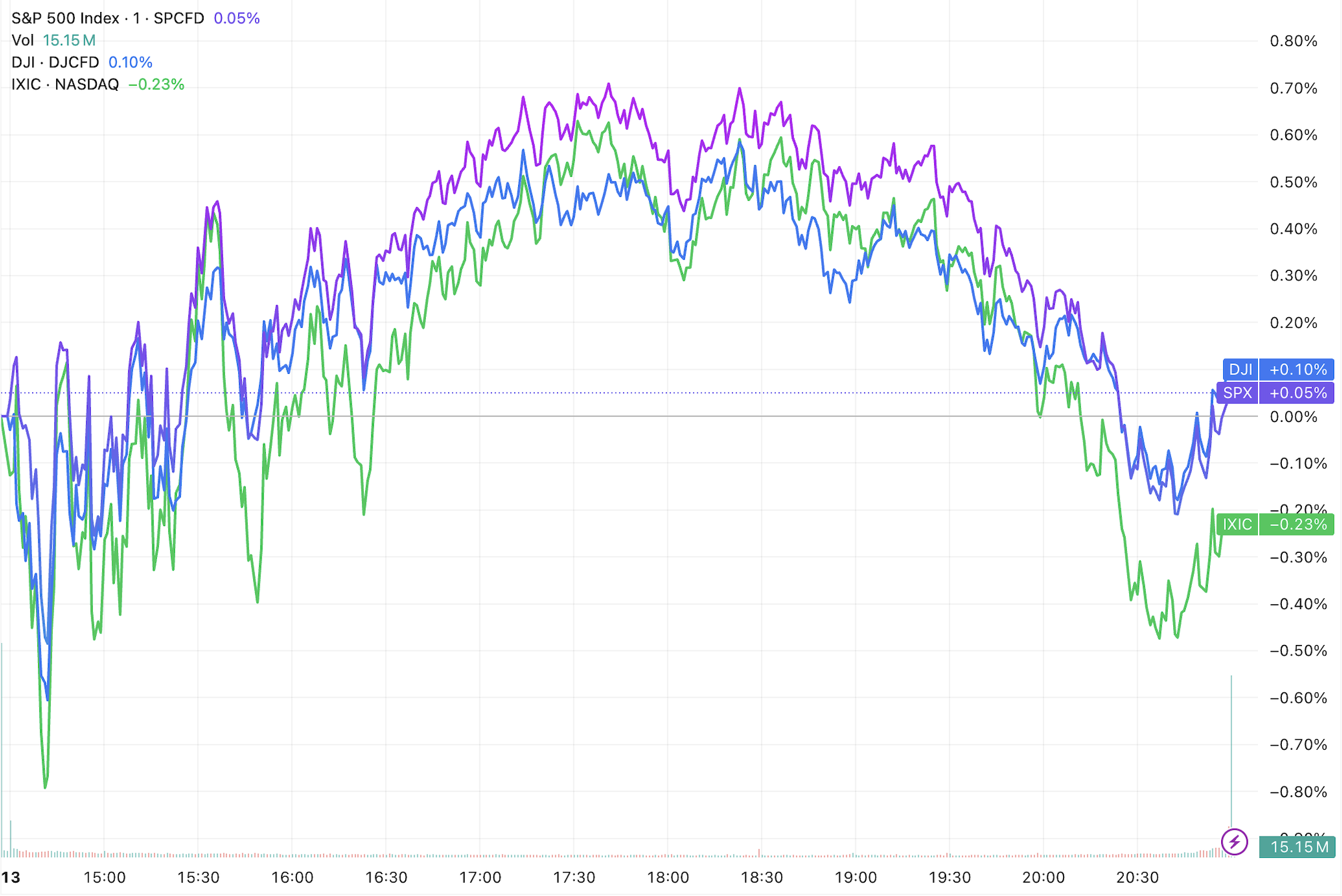
Market Overview - The three major indices showed mixed performance, with the Dow Jones up 0.10% at 49,500.93 points, the S&P 500 up 0.05% at 6,836.17 points, and the Nasdaq down 0.22% at 22,546.67 points [2] - Concerns over AI disruption led to market volatility, affecting various sectors including software, real estate, trucking, and financial services [5] - Notable declines included Charles Schwab down 10.8%, Morgan Stanley down 4.9%, and software company Workday down 11% [5] Inflation Data - The U.S. Bureau of Labor Statistics reported a 2.4% year-over-year increase in January CPI, with a 0.2% month-over-month rise, both below market expectations [2] - Core CPI, excluding volatile food and energy prices, rose 2.5% year-over-year and 0.3% month-over-month, aligning with market expectations [2] Company News - SpaceX is reportedly considering a dual-class share structure for its upcoming IPO, allowing certain shareholders, including Elon Musk, to maintain control despite lower ownership stakes [6] - Anthropic appointed former General Motors executive Chris Liddell to its board as it prepares for a potential IPO in 2026, indicating openness to going public by the end of this year [9] - Following the merger with xAI, Musk's team is exploring financing options to reduce high-interest debt, which has accumulated to nearly $18 billion, in preparation for a potential IPO [10] - Moderna reported fourth-quarter revenue of $678 million, a 30% year-over-year decline, with a loss of $2.11 per share compared to a loss of $2.91 per share in the same period last year [11]
From software to real estate, US sectors gripped by AI scare trade
BusinessLine· 2026-02-13 18:10
Market Overview - Wall Street is experiencing significant disruption concerns due to AI, leading to a sell-off in various sectors, particularly software companies, which has resulted in sharp losses in U.S. stocks this week [1][2]. Software Sector - The S&P 500 Software & Services index has lost approximately $2 trillion in value since its peak in October, with half of this loss occurring in the past two weeks due to fears that AI could disrupt traditional subscription and enterprise tools [2]. - Notable declines in the Nasdaq 100 include Atlassian down 47%, Intuit down 40%, and Workday down 33% [4]. - The U.S. software sector is facing its worst drawdown in over three years, impacting alternative asset managers with exposure to software-related loans, with firms like Ares, Blackstone, and KKR seeing declines between 13% and 24% this year [5]. Financial Brokerage, Data Analytics & Legal Services - The financial industry, especially brokerages and data analytics firms, has been negatively affected after Altruist introduced AI-enabled tax planning features, raising fears about the viability of their business models [6]. - Shares of brokers such as LPL Financial and Charles Schwab fell over 7%, while S&P Global's shares dropped more than 25% in February, marking its worst month since 2009 [7]. Real Estate Services - Commercial real estate and investment managers have suffered as investors shift away from high-fee, labor-intensive business models perceived as vulnerable to AI disruption, with CBRE Group and Jones Lang LaSalle each dropping about 12% [8]. Insurance Sector - Insurance stocks have experienced a significant decline, with the S&P 500 insurance index falling 3.9% on a single day, its largest drop since mid-October, following the release of an AI-powered comparison tool by Insurify [10]. - Shares of Willis Towers Watson have decreased by 15% this week, while Aon and Arthur J. Gallagher fell by 9% and 15%, respectively [11]. Trucking & Logistics - The trucking and logistics sector saw unexpected declines, with stocks like Landstar System and C.H. Robinson dropping sharply after Algorhythm Holdings reported a significant increase in freight volumes without a corresponding rise in operational headcount [13].


Does the AI trade have a "dark side"? Plus, White House crypto adviser discusses the CLARITY Act
Yahoo Finance· 2026-02-13 16:21
TGIF. I'm Yahoo Finance executive editor Brian Sazi. And now I'm getting some friendly heat from you all on X on an X video I posted today pre 6 a.m. There is that video right there. Uh it was actually live. I began rolling around 5:30 a.m. from inside Yahoo Finance HQ with a full stream of consciousness on the software stock crash. Some of you appear to not have liked that I called this a crash in software stocks. How else could you characterize it? I mean, give me a break. I'm not being alarmist here. Wor ...

X @Sei
Sei· 2026-02-12 22:42
RT Sei (@SeiNetwork)Get paid, now.@usetoku is bringing instant stablecoin payroll to Sei — integrated directly into ADP, Workday, and systems employers already use.Payroll is a $50T market that crawls through pending screens and 2 day waits.With Toku on Sei, payroll settles in under a second. https://t.co/5GfdW71WPM ...
Bitcoin searching for its next big catalyst, plus how McDonald's is unlocking value for customers
Yahoo Finance· 2026-02-12 17:16
Good morning. I'm Yiani executive editor Brian Zazi coming to you straight from [music] our newsroom in New York City. It's a darn busy morning for markets and for me I'm declaring today hot take Thursday.Here's what's up in the investing world. One so much chatter on X about whether to begin buying crashed out software stocks like Salesforce [music] workday service. Now retail investors appear game to catch falling knives.Look at [music] this rapid buying retail investors are doing of software stocks per n ...

X @Sei
Sei· 2026-02-12 17:00
Get paid, now.@usetoku is bringing instant stablecoin payroll to Sei — integrated directly into ADP, Workday, and systems employers already use.Payroll is a $50T market that crawls through pending screens and 2 day waits.With Toku on Sei, payroll settles in under a second. https://t.co/5GfdW71WPM ...
AI vs SaaS:先卖再问,市场只“卖对了一半”?
华尔街见闻· 2026-02-12 09:55
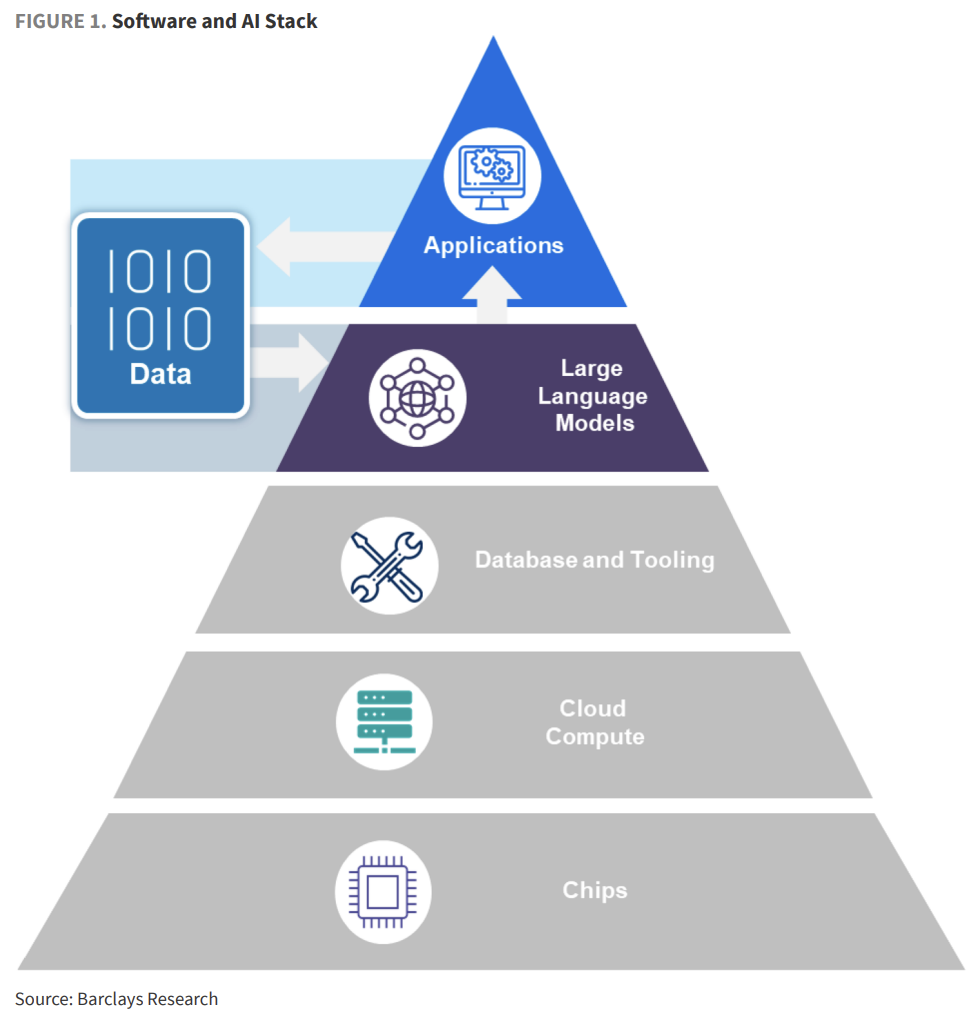
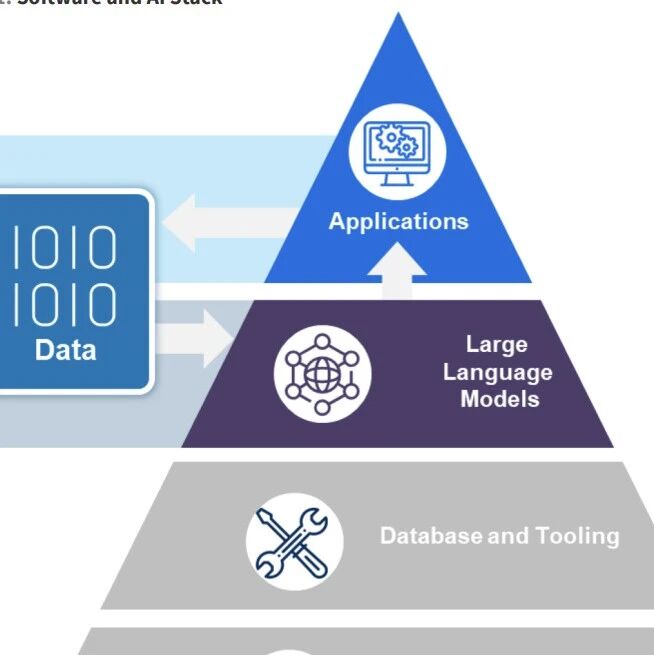
Core Viewpoint - Barclays highlights a critical technological distinction: AI tools are indeed encroaching on the application layer of SaaS companies, but they cannot shake the foundational "system of record" infrastructure, which is the core moat for companies like Salesforce and SAP [1][2]. Group 1: Impact of AI on SaaS Companies - The recent release of products like Claude Cowork by Anthropic has led to a significant decline in enterprise software stocks, with Salesforce and Workday dropping over 40% in the past 12 months [2]. - Investors are confused about the boundaries of AI capabilities, leading to a panic sell-off as they believe new AI tools will completely replace traditional SaaS software, resulting in a zero valuation for legacy companies [2][3]. - Barclays' report argues that a simplistic "one-size-fits-all" logic does not apply to most enterprise software companies [3]. Group 2: AI Capabilities and Limitations - Generative AI excels in pattern recognition and "draft generation," but its probabilistic nature poses fundamental limitations, particularly in scenarios requiring absolute accuracy [5]. - Traditional software operates on deterministic rules, ensuring consistent outputs, while AI software is probabilistic and cannot guarantee the same level of consistency [5][6]. - This indicates that AI operates at a higher level of abstraction and is not a direct replacement for traditional software [6]. Group 3: Mispriced Software Companies - Barclays identifies three categories of enterprise software companies that have been mispriced during the sell-off, starting with system of record companies like Salesforce, which provide critical data requiring certainty [9]. - SAP's position is even more secure, as it manages essential business data and workflows that cannot be handled by advanced generative AI models [9][10]. - The report suggests that AI will not replace these systems but will increase their importance, as AI agents will create more data touchpoints, raising the complexity that system records need to manage [10]. Group 4: Additional Misjudged Investment Opportunities - Besides system of record companies, Barclays points out two other categories that have been misjudged: beneficiaries of AI agents and AI computing providers [11]. - Companies like JFrog, Snowflake, and MongoDB may see increased usage due to the demand for more code and data driven by AI expansion [11]. - There is a logical contradiction in the market's reaction; if AI is powerful enough to disrupt the software industry, the demand for computing power should surge, yet companies like Oracle and CoreWeave have also faced significant sell-offs [11]. Group 5: Reevaluation of Software Sector Valuations - The market correction is deemed necessary for the application layer of enterprise software, which has long enjoyed inflated valuations due to controlling both infrastructure and interface [15]. - If AI technologies can overlay on system records, they may begin to erode the pricing power of SaaS companies [15]. - Barclays concludes that the era of easy high profits for bloated application layers may be over, but this does not signify the end of the entire industry [15][16]. Group 6: Market Sentiment and Future Outlook - The indiscriminate nature of the current sell-off indicates that investors with limited understanding of the software industry are making decisions based on extreme viewpoints [16]. - As understanding of AI capabilities and SaaS business models deepens, the market may reprice companies incorrectly categorized as "AI victims" [16].
AI vs SaaS:先卖再问,市场“卖对了一半”?
Hua Er Jie Jian Wen· 2026-02-12 08:24
Core Insights - The recent release of Anthropic's products has triggered a significant sell-off in enterprise software stocks, revealing an overreaction in the market regarding AI threats [1][3] - Barclays highlights that while AI tools are encroaching on the application layer of SaaS companies, they do not threaten the foundational "system of record" infrastructure, which is crucial for companies like Salesforce and SAP [1][3] Group 1: Market Reaction and Misunderstandings - The release of Claude Cowork by Anthropic has been described as the tipping point for the decline in enterprise software stocks, with Salesforce and Workday seeing over a 40% drop in the past year [3] - Investors are confused about the capabilities of AI, mistakenly believing that new AI tools will completely replace traditional SaaS software, leading to a devaluation of established companies [3][12] - Barclays' report argues that the simplistic view of AI as a total replacement for software does not apply to most enterprise software companies [3] Group 2: AI Capabilities and Limitations - Generative AI excels in pattern recognition and initial draft generation but has fundamental limitations due to its probabilistic nature, making it less effective in scenarios requiring absolute accuracy [4][5] - Traditional software operates on deterministic rules, ensuring consistent outputs, while AI software functions probabilistically, lacking guaranteed consistency [5][6] Group 3: System of Record Companies - Barclays identifies three categories of enterprise software companies that have been mispriced during the sell-off, starting with system of record companies like Salesforce and SAP, which provide critical data requiring certainty [7][8] - SAP's position is particularly strong, as it manages essential business data and workflows that generative AI cannot handle effectively [7][8] - The report suggests that AI will not replace these systems but will instead increase their importance as AI creates more data touchpoints [8] Group 4: Misjudged Investment Opportunities - Besides system of record companies, Barclays points out two other categories that are misjudged: beneficiaries of AI agents and AI computing providers, which may see increased demand due to AI expansion [9] - There is a contradiction in the market logic; if AI is powerful enough to disrupt the software industry, the demand for computing power should rise, yet companies like Oracle and CoreWeave have also faced sell-offs [9] Group 5: Application Layer Challenges - The market's panic is not entirely unfounded, as SaaS companies have struggled with poor user interfaces, high prices, and security vulnerabilities, leading to customer dissatisfaction [10] - Companies like Klarna are moving away from traditional SaaS products in favor of smaller firms, utilizing AI tools to build their own applications, which highlights a genuine threat to the SaaS model [10] Group 6: Future Market Dynamics - The current market correction is seen as necessary, as SaaS companies have enjoyed inflated valuations by controlling both infrastructure and interface [11] - The emergence of AI technologies that can operate above system records may erode the pricing power of SaaS companies, indicating a shift in the profitability landscape [11] - As understanding of AI capabilities and SaaS business models deepens, the market may begin to re-evaluate companies incorrectly labeled as "AI victims," while those relying on poor application layers may face continued valuation pressure [12]