中国石油

Search documents
Venezuela tells China oil prices won't be set by the U.S., seeks to reassure investment after Maduro capture
CNBC· 2026-02-04 08:54
Core Viewpoint - Venezuela has assured China that its oil pricing will remain independent of U.S. influence, emphasizing the security of Chinese investments in the country [2][5]. Oil Pricing and U.S. Influence - Venezuelan ambassador to China, Remigio Ceballos, stated that Venezuela will not adhere to U.S. arrangements regarding oil pricing, asserting the right to make independent decisions based on international market prices [3][4]. - Reports indicated that the U.S. was considering exerting control over Venezuela's state-run oil company, PDVSA, potentially lowering prices to $50 per barrel [2][3]. China-Venezuela Relations - China has condemned the U.S. military actions against Venezuela and reaffirmed its commitment to the partnership with Venezuela, which is based on mutual trust [4][5]. - Ceballos emphasized that Chinese investments in Venezuela, including those in the petroleum sector, will continue unaffected by external pressures [5][6]. Chinese Investments in Venezuela - China National Petroleum Corporation has joint ventures with PDVSA, and China Concord Resources Corp. plans to invest over $1 billion in a Venezuelan oil project, aiming for a production target of 60,000 barrels per day by the end of 2026 [6]. - Despite Venezuela's significant oil reserves, its crude output has been hindered by mismanagement and U.S. sanctions [6]. U.S. Actions and Responses - The Trump administration has promoted U.S.-led reforms to boost oil production and attract foreign investment in Venezuela, which is seen as beneficial for both the country and American consumers [7]. - The U.S. has returned $500 million from an initial oil sale to Venezuela and is reportedly moving to ease sanctions to revive the energy sector [8]. Diplomatic Developments - Following the military operation against Maduro, the U.S. reportedly urged Venezuela to sever economic ties with China and other nations, although Trump later indicated that Chinese investment would be welcomed [9]. - Chinese President Xi Jinping expressed a commitment to working with Latin American countries, emphasizing the importance of sovereignty and development goals [10].



收盘速递 | 成交额超1亿元,石化ETF(159731)上涨0.60%,连续20天净流入
Xin Lang Cai Jing· 2026-02-04 07:41
Group 1 - The core viewpoint of the articles indicates that the petrochemical industry is experiencing a positive trend, driven by factors such as the exit of European production capacity and supportive domestic growth policies, which are expected to improve the global supply landscape and enhance the long-term outlook for the industry [1][2] Group 2 - As of February 4, 2026, the China Petroleum Industry Index (H11057) increased by 0.41%, with key stocks like Sinopec rising by 3.17% and Shanghai Petrochemical by 2.94% [1] - The Petrochemical ETF (159731) saw a price increase of 0.60%, reaching 1.01 yuan, with a trading volume of 1.65 billion yuan and a turnover rate of 9.66% [1] - Over the past 20 days, the Petrochemical ETF has experienced continuous net inflows, with a peak single-day inflow of 348 million yuan, totaling 1.457 billion yuan [1] - The latest share count for the Petrochemical ETF reached 1.7 billion, marking a one-year high, while its total scale reached 1.707 billion yuan, also a one-year high [1] - The top ten weighted stocks in the China Petroleum Industry Index account for 55.71% of the index, with major companies including Wanhua Chemical and China Petroleum [2]

化工行业ETF易方达(516570)上涨0.37%,成交额超4000万元
Xin Lang Cai Jing· 2026-02-04 07:36
Core Viewpoint - The chemical industry ETF managed by E Fund has shown positive performance, with significant inflows and growth in both scale and shares, reflecting strong investor interest in the sector [1][2]. Group 1: Index Performance - As of February 4, 2026, the China Petroleum Industry Index (H11057) increased by 0.41%, with key stocks like Sinopec rising by 3.17% and Wanhua Chemical by 3.09% [1]. - Over the past two weeks, the E Fund chemical industry ETF has accumulated a rise of 0.55%, ranking in the top half among comparable funds [1]. Group 2: Liquidity and Trading Volume - The E Fund chemical industry ETF had a turnover rate of 3.05% during the trading session, with a transaction volume of 48.77 million yuan [1]. - The average daily trading volume over the past week reached 160 million yuan [1]. Group 3: Fund Size and Shares - The latest size of the E Fund chemical industry ETF reached 1.595 billion yuan, marking a one-year high [1]. - The total shares of the ETF have also reached 1.466 billion, which is a one-year high [1]. Group 4: Net Inflows - The E Fund chemical industry ETF has seen continuous net inflows for 13 days, with the highest single-day net inflow reaching 391 million yuan, totaling 1.371 billion yuan in net inflows [1]. - The average daily net inflow stands at 105 million yuan [1]. Group 5: Top Holdings - As of January 30, 2026, the top ten weighted stocks in the China Petroleum Industry Index account for 55.71% of the index, including companies like Wanhua Chemical and Sinopec [2].


煤炭板块强势领涨!煤炭ETF涨超7%,能源ETF广发涨超5%、能源ETF涨超4%
Ge Long Hui· 2026-02-04 07:26
Group 1: Market Performance - The coal sector is experiencing strong gains, with several coal stocks such as Yanzhou Coal, China Coal, and Shanxi Coking Coal hitting the 10% daily limit up, driving the coal ETF up over 7% [1] - The coal ETF, with a fund size of 8.85 billion yuan, closely tracks the China Coal Index and covers the entire coal industry chain, significantly lowering investment barriers and research costs [1] Group 2: Supply and Demand Dynamics - Due to a cold wave, energy demand has surged as residents require heating, prompting local governments to enhance energy supply measures, including stabilizing coal production and increasing natural gas reserves [1] - Indonesia has suspended spot coal exports following a government plan to significantly reduce production quotas, which could lead to job losses and mine closures according to industry associations [2] Group 3: Investment Outlook - The investment logic for coal stocks remains unchanged, with institutional holdings at low levels and healthy chip structures, indicating a favorable environment for investment [2] - The tightening of supply-side policies is expected to reverse the oversupply situation in the coal industry, with a focus on high-dividend, low-valuation stocks as investment opportunities [3][4] - The current low prices of thermal and coking coal provide room for price rebounds, supported by seasonal demand and supply-side production cuts [4]
US refiners struggle to absorb sudden surge in Venezuelan crude oil imports
BusinessLine· 2026-02-04 07:11
Core Viewpoint - U.S. Gulf Coast oil refiners are facing challenges in absorbing a surge of Venezuelan crude shipments following a $2 billion supply deal between Caracas and Washington, leading to price pressures and unsold volumes [1][2]. Group 1: U.S. Demand and Supply Dynamics - Soft U.S. demand poses an early challenge for the U.S. administration's plans to increase Venezuelan oil imports, especially after the capture of President Nicolas Maduro [2]. - Venezuelan oil exports to the U.S. nearly tripled to 284,000 barrels per day (bpd) last month, but refiners are struggling to find buyers due to high prices compared to Canadian heavy grades [5][4]. - Before sanctions in 2019, the U.S. was importing around 500,000 bpd of Venezuelan oil, but exports dropped to zero by mid-2025 [6]. Group 2: Refiners' Capacity and Pricing - Phillips 66 can process approximately 250,000 bpd of Venezuelan crude, but competitive pricing is essential for these grades to replace other heavy oil sources [7]. - Venezuelan heavy oil is currently offered at about $9.50 per barrel below benchmark Brent, while Canadian WCS crude is trading at a discount of about $10.25 per barrel under Brent [4][5]. Group 3: Export and Trading Developments - Chevron increased its Venezuelan oil exports to 220,000 bpd in January from 99,000 bpd in December, but must manage storage or marketing for excess production [8]. - Vitol and Trafigura exported around 12 million barrels (approximately 392,000 bpd) from Venezuelan ports in January, primarily to Caribbean storage terminals, with much of it still unsold [10][11]. - Total Venezuelan oil exports rose to nearly 800,000 bpd last month, up from 498,000 bpd in December, with the U.S. now controlling Venezuela's oil sales following Maduro's capture [11]. Group 4: International Trade Relations - The U.S. has allowed China to purchase Venezuelan oil under conditions that prevent "unfair, undercut" pricing, but China has halted purchases while assessing the situation [12]. - A potential new market for Venezuelan oil could emerge from India, as a recent trade deal may lead to increased imports of Venezuelan oil [13].


港股石油股午后走高,中国石油化工股份(00386.HK)、中国海洋石油(00883.HK)、中国石油股份(00857.HK)均涨超2%。
Jin Rong Jie· 2026-02-04 05:46
Group 1 - The core viewpoint of the article highlights that Hong Kong oil stocks experienced an afternoon rally, with significant gains observed in major companies [1] Group 2 - China Petroleum & Chemical Corporation (00386.HK) saw its stock price increase by over 2% [1] - CNOOC Limited (00883.HK) also reported a rise of more than 2% in its stock value [1] - China National Petroleum Corporation (00857.HK) experienced a similar increase, with its shares up by over 2% [1]
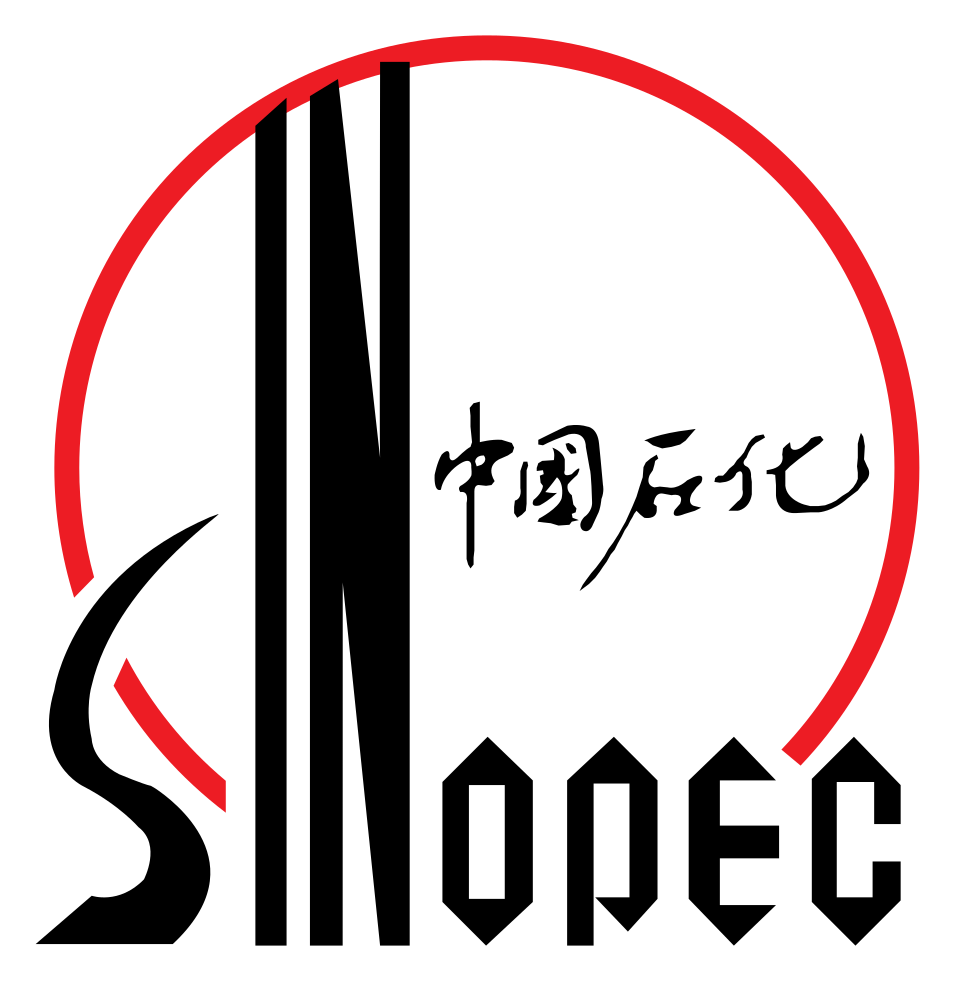

石油ETF(561360)开盘涨1.42%,重仓股中国石油涨2.01%,中国海油涨1.98%
Xin Lang Cai Jing· 2026-02-04 04:56
Group 1 - The core viewpoint of the article highlights the performance of the Oil ETF (561360), which opened with a gain of 1.42% at 1.431 yuan on February 4 [1] - Major holdings of the Oil ETF include China National Petroleum Corporation, which rose by 2.01%, China National Offshore Oil Corporation by 1.98%, and Sinopec by 0.79% [1] - The Oil ETF's performance benchmark is the CSI Oil and Gas Industry Index return, managed by Guotai Fund Management Co., Ltd., with a return of 41.01% since its establishment on October 23, 2023, and a return of 14.47% over the past month [1] Group 2 - The article lists other notable stocks within the Oil ETF, including Jereh Group (up 0.98%), China Merchants Energy Shipping (up 1.56%), Guanghui Energy (up 1.30%), COSCO Shipping Energy (up 0.82%), Hengli Petrochemical (up 1.82%), Rongsheng Petrochemical (up 0.79%), and Intercontinental Oil and Gas (up 2.24%) [1]


成交额超2000万元,化工行业ETF易方达(516570)连续13天净流入
Xin Lang Cai Jing· 2026-02-04 04:47
Core Viewpoint - The chemical industry ETF, E Fund (516570), has shown mixed performance with a slight decline of 0.46% recently, while the underlying index, the China Petroleum Industry Index (H11057), has also seen a minor drop of 0.16% as of February 4, 2026 [1]. Group 1: Index Performance - As of February 4, 2026, the China Petroleum Industry Index (H11057) decreased by 0.16% [1]. - The leading stocks in the index included China Petroleum, which rose by 3.02%, and Shanghai Petrochemical, which increased by 1.63% [1]. - The worst performers were Guangdong Hongda, which fell by 4.17%, and Zhongfu Shenying, which dropped by 2.11% [1]. Group 2: ETF Performance - The E Fund chemical industry ETF (516570) had a recent price of 1.09 yuan, with a two-week cumulative increase of 0.55%, ranking it in the top half of comparable funds [1]. - The ETF recorded a turnover rate of 1.84% during the trading session, with a total transaction volume of 29.4586 million yuan [1]. - The ETF's total assets reached 1.595 billion yuan, marking a one-year high [1]. Group 3: Fund Flows - Over the past 13 days, the E Fund chemical industry ETF has experienced continuous net inflows, with a peak single-day inflow of 391 million yuan, totaling 1.371 billion yuan in net inflows [1]. - The average daily net inflow for the ETF was 105 million yuan [1]. Group 4: Top Holdings - As of January 30, 2026, the top ten weighted stocks in the China Petroleum Industry Index accounted for 55.71% of the index, including Wanhua Chemical and China Petroleum [2].
能源央企负责人激励收入公布!
中国能源报· 2026-02-04 03:52
Core Viewpoint - The article discusses the incentive compensation for executives of major state-owned enterprises in the energy sector in China for the 2022-2024 term, highlighting the amounts allocated to various leaders within these companies [1][3][4]. Group 1: Central Enterprises and Their Incentive Compensation - The State-owned Assets Supervision and Administration Commission (SASAC) has released the incentive compensation details for executives of central enterprises, which include companies like China National Petroleum Corporation (CNPC), China Petroleum & Chemical Corporation (Sinopec), and State Grid Corporation of China [1][3]. - The incentive compensation consists of annual salary and term incentive income, with the latter being distributed every three years [1]. Group 2: Individual Executive Compensation - For CNPC, the chairman Dai Houliang is set to receive an incentive income of 86.21 million RMB for the 2022-2024 term [3]. - In Sinopec, chairman Ma Yongsheng's incentive income is 84.81 million RMB, while other executives like Zhao Dong and Zhang Shaofeng have amounts of 83.23 million RMB and 75.35 million RMB respectively [4]. - China National Offshore Oil Corporation (CNOOC) chairman Wang Dongjin will receive 86.06 million RMB, with other executives like Zhou Xinhai and Huojian receiving 49.43 million RMB and 76.86 million RMB respectively [5]. Group 3: Summary of Other Major Enterprises - State Grid Corporation of China chairman Zhang Wei will receive 78.17 million RMB, while other executives like He Zhongwen and Jiang Changliang will receive 48.54 million RMB and 70.14 million RMB respectively [7]. - China Southern Power Grid's chairman Meng Zhenping is set to receive 83.54 million RMB, with other executives like Qian Chaoyang receiving 26.35 million RMB [10]. - China Huaneng Group's chairman Wenshu Gang will receive 63.47 million RMB, while other executives like Zhang Wenfeng and Dong Jianling will receive 39.02 million RMB and 67.79 million RMB respectively [11]. Group 4: Additional Notable Executives - In China Datang Corporation, chairman Zou Lei will receive 80.02 million RMB, while Liu Mingsheng and Zhang Chuanjiang will receive 44.23 million RMB and 17.78 million RMB respectively [12]. - China Huadian Corporation's chairman Jiang Yi will receive 63.24 million RMB, with other executives like Ye Xiangdong receiving 84.32 million RMB [14]. - National Energy Investment Group's former chairman Wang Xiangshi received 16.46 million RMB for his term, while other executives like Feng Laifa and Xu Xinfeng will receive 60.97 million RMB and 39.94 million RMB respectively [18].


【行业深度】一文洞察2026年中国沥青行业发展前景及投资趋势研究报告
Sou Hu Cai Jing· 2026-02-04 02:20
Core Viewpoint - The demand for asphalt in China remains strong due to ongoing economic development and infrastructure construction, but the industry is entering a new phase characterized by supply surplus and limited capacity growth [2]. Group 1: Industry Overview - The asphalt industry in China has seen a steady increase in production capacity, reaching 79 million tons in 2023, with an annual increase of 8 million tons, representing a growth of 11.27% year-on-year [2]. - The average operating rate of refineries has remained low at around 50%, indicating a persistent supply surplus in the domestic asphalt market [2]. - The production profit for asphalt is expected to drop to its lowest point in recent years in 2024, which will further inhibit refineries from increasing production capacity [2]. Group 2: Demand and Supply Factors - The overall demand for asphalt is projected to decline due to local fiscal pressures and stricter approvals for infrastructure projects [2]. - Potential implementation of a consumption tax policy could significantly increase production costs, further weakening the willingness of refineries to expand production [2]. Group 3: Industry Development History - The asphalt industry in China began to develop significantly in the 1980s with the construction of high-grade highways, leading to increased demand for asphalt [7]. - The "Twelfth Five-Year Plan" period saw rapid development in various transportation modes, which further stimulated the asphalt industry [7]. - The "Thirteenth Five-Year Plan" period is characterized by a focus on supporting major national strategies, indicating a broad market potential for the asphalt industry [7]. Group 4: Industry Chain - The upstream of the asphalt industry chain includes raw materials such as coal, emulsifiers, modifiers, and petrochemicals [9]. - The midstream involves the production and manufacturing of asphalt, while the downstream applications include highways, waterproof building materials, municipal road construction, and airport construction [9]. Group 5: Future Outlook - The asphalt industry is expected to face stagnation in capacity growth due to multiple factors, including declining demand and rising production costs [2]. - The continuous expansion of the highway network and periodic maintenance needs will provide stable and sustained market demand for the asphalt industry in the future [14].