益丰药房

Search documents
药易购陷“无效增长”困局:用户、订单、客单价全线上扬 唯独利润暴跌163%
Hua Xia Shi Bao· 2025-08-21 09:47
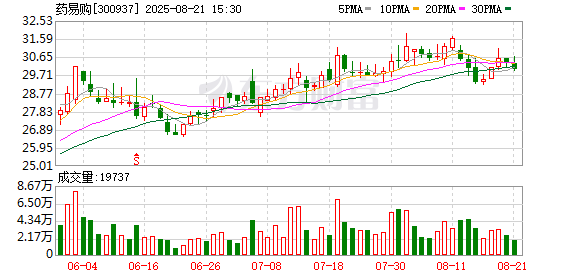
Core Viewpoint - The company, Yaoyigou, known as the "first stock of pharmaceutical e-commerce," is facing severe challenges amid deep industry transformations, including pressure from the "Seven Unifications" policy and intense competition in the outpatient market [2][3]. Financial Performance - Yaoyigou's revenue growth has been consistently weak since its IPO, with growth rates declining from 21.87% in 2021 to -1.12% in 2024, entering a negative growth phase [3]. - In the first half of 2025, the company's revenue fell by 3.06% year-on-year to 2.157 billion yuan, and the net profit turned into a loss of 7.6144 million yuan, a decline of 162.95% [3][11]. - The company's performance showed a drastic quarterly change, with a profit of 4.1837 million yuan in Q1 2025, followed by a loss exceeding 11.79 million yuan in Q2 2025 [3]. Business Segments - The TOB business remains the main revenue source, accounting for over 97% of total revenue, with B2B e-commerce revenue declining by 15.61% to 1.441 billion yuan [5][6]. - Digital distribution revenue grew by 23.52% to 2.349 billion yuan, but overall TOB business still saw a year-on-year decline of 2.22% [5][6]. - The TOC business showed a mixed performance, with online retail revenue surging by 225.87% to 56.969 million yuan, but its contribution to overall revenue remained minimal at 1.3% [5][6]. Market Challenges - The company is experiencing a "growth without revenue" dilemma, where key metrics in e-commerce have improved, yet total revenue has decreased by 5.89% [8][9]. - The increase in user base is primarily among small retailers and long-tail demand groups, which have lower transaction values and bargaining power, exacerbated by policies that compress drug price margins [9]. - The company faces structural challenges common in the pharmaceutical e-commerce sector, indicating a need for transformation from traditional distribution models to specialized service providers [9]. Stock Performance - Since its IPO, Yaoyigou's stock price has been on a downward trend, with a cumulative decline of 79.79% from its peak of 150 yuan per share shortly after listing [10]. Cost Structure - The company's financial struggles are compounded by rising operational costs, with sales expenses increasing by 46.25% to 164 million yuan, management expenses up by 6.94%, and financial expenses rising by 12.72% [11]. - Research and development expenses have decreased significantly, down 39.73% to 5.619 million yuan, reflecting a lack of effective implementation of its R&D strategy [11].


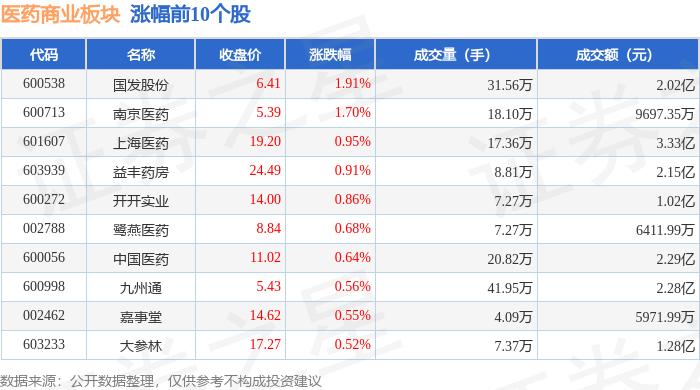
医药商业板块8月21日涨0.27%,国发股份领涨,主力资金净流出2.77亿元
Zheng Xing Xing Ye Ri Bao· 2025-08-21 08:30
Market Overview - The pharmaceutical commercial sector increased by 0.27% on August 21, with Guofang Co., Ltd. leading the gains [1] - The Shanghai Composite Index closed at 3771.1, up 0.13%, while the Shenzhen Component Index closed at 11919.76, down 0.06% [1] Stock Performance - Guofang Co., Ltd. (600538) closed at 6.41, up 1.91% with a trading volume of 315,600 shares and a transaction value of 202 million yuan [1] - Nanjing Pharmaceutical (600713) closed at 5.39, up 1.70% with a trading volume of 181,000 shares and a transaction value of 96.97 million yuan [1] - Shanghai Pharmaceuticals (601607) closed at 19.20, up 0.95% with a trading volume of 173,600 shares and a transaction value of 333 million yuan [1] - Yifeng Pharmacy (603939) closed at 24.49, up 0.91% with a trading volume of 88,100 shares and a transaction value of 215 million yuan [1] Capital Flow - The pharmaceutical commercial sector experienced a net outflow of 277 million yuan from institutional investors, while retail investors saw a net inflow of 293 million yuan [2] - The data indicates that institutional investors are withdrawing capital, while retail investors are increasing their investments in the sector [2] Individual Stock Capital Flow - Nanjing Pharmaceutical saw a net inflow of 16.81 million yuan from institutional investors, while retail investors had a net outflow of 4.14 million yuan [3] - Yifeng Pharmacy experienced a net inflow of 15.49 million yuan from institutional investors, with a net outflow of 23.62 million yuan from retail investors [3] - China National Pharmaceutical (600056) had a net inflow of 8.93 million yuan from institutional investors, while retail investors had a negligible net inflow of 0.12 million yuan [3]




关店潮来了!零售药店谋变
Zheng Quan Shi Bao Wang· 2025-08-21 02:56
Core Viewpoint - The retail pharmacy industry in China is entering a phase of negative growth by 2025, with a significant number of store closures and a shift in focus towards health services rather than just product sales [1][2][3] Group 1: Industry Growth and Challenges - The retail pharmacy sector has seen a 50% increase in store numbers over the past seven years, but the growth has reversed, with a net decrease of approximately 3,000 stores in the first quarter of 2025 [2][3] - The total market size for pharmaceuticals in China is projected to decline for the first time, with a forecast of 1.97 trillion yuan in 2024, reflecting a mere 0.9% growth in 2023 [2][3] - The median revenue growth for eight listed pharmacy companies is only 4.7%, while median profit has decreased by 32.9% year-on-year [2][3] Group 2: Market Dynamics and Strategic Responses - Many retail pharmacies are slowing down on new store openings, with a notable increase in the proportion of franchise stores to enhance market share [3] - The concentration of the top 100 retail chains has risen to 53%, indicating a trend towards consolidation in the industry [3] - The DTP (Direct to Patient) market is expanding, with a projected sales scale of 89.3 billion yuan in 2024, growing by 17.2% [4][5] Group 3: Opportunities for Innovation and Diversification - Despite declines in traditional categories like Chinese medicine and medical devices, the sales of biological products have surged by 17.7%, indicating a potential growth area for the industry [3][4] - There is a growing demand for personalized healthcare services, with over 85% of chronic disease patients expecting medication guidance and over 75% seeking disease awareness education [5][6] - Retail pharmacies are encouraged to explore partnerships with companies in beauty and health supplements, as well as to adopt a more diversified approach to meet evolving consumer needs [6][7]
闭店潮下零售药店谋变 靠前服务拓展价值点
Zheng Quan Shi Bao· 2025-08-20 18:30
Core Viewpoint - The retail pharmacy industry in China is entering a phase of negative growth by 2025, with a significant number of store closures and a shift in focus towards health services rather than just product sales [1][2][3] Industry Overview - The retail pharmacy sector has seen a 50% increase in store numbers over the past seven years, but the total number of pharmacies has now dropped below 700,000, marking the beginning of negative growth [2][3] - In Q1 2025, approximately 3,000 pharmacies closed, indicating a trend that may continue as the market contracts [2][3] Market Dynamics - The overall market size for pharmaceuticals in China is projected to decline for the first time, with a forecasted sales figure of 1.97 trillion yuan in 2024, reflecting a year-on-year decrease [2] - The competition among pharmacies has intensified due to a shrinking market, leading to a median revenue growth of only 4.7% among eight listed pharmacy companies, while median profit has decreased by 32.9% [2] Strategic Responses - Some retail pharmacies are slowing down their expansion plans, while others are increasing their franchise operations to boost market share [3] - The concentration of the top 100 pharmacy chains has risen to 53%, indicating a trend towards consolidation in the industry [3] Opportunities for Innovation - Despite declines in various product categories, the sales of biopharmaceuticals have surged by 17.7%, suggesting a potential growth area for the industry [3][4] - The DTP (Direct to Patient) market is expanding, with a projected sales growth of 17.2% in 2024, highlighting a shift towards more personalized patient care [4][5] Collaboration and Diversification - There is a growing interest from innovative pharmaceutical companies to collaborate with retail pharmacies, particularly in the DTP sector, to enhance patient services [5][6] - Retail pharmacies are exploring diversification into beauty and health products, with potential market opportunities reaching trillions [6][7] Future Outlook - The industry is expected to evolve from a product-centric model to a health-centric approach, driven by increasing health demands and innovations in drug supply [7][8] - The existing network of nearly 700,000 pharmacies provides a unique opportunity to enhance health service delivery across the country [7]
医药商业板块8月20日涨0.05%,益丰药房领涨,主力资金净流出3.77亿元
Zheng Xing Xing Ye Ri Bao· 2025-08-20 08:41
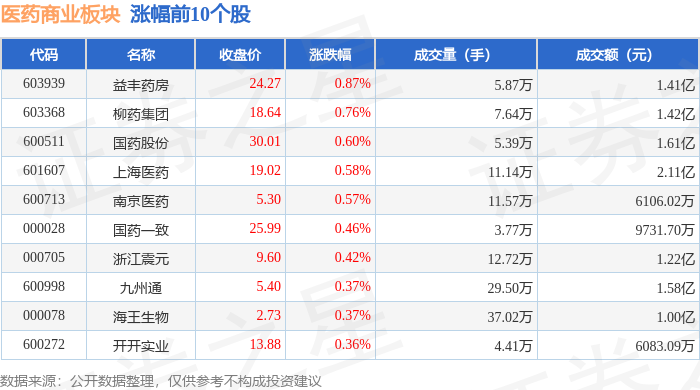
Market Overview - The pharmaceutical commercial sector increased by 0.05% on August 20, with Yifeng Pharmacy leading the gains [1] - The Shanghai Composite Index closed at 3766.21, up 1.04%, while the Shenzhen Component Index closed at 11926.74, up 0.89% [1] Stock Performance - Yifeng Pharmacy (603939) closed at 24.27, up 0.87% with a trading volume of 58,700 shares and a turnover of 141 million yuan [1] - Other notable performers include: - Liuyuan Group (603368) at 18.64, up 0.76% [1] - China National Pharmaceutical Group (600511) at 30.01, up 0.60% [1] - Shanghai Pharmaceuticals (601607) at 19.02, up 0.58% [1] - Nanjing Pharmaceutical (600713) at 5.30, up 0.57% [1] Capital Flow - The pharmaceutical commercial sector experienced a net outflow of 377 million yuan from institutional investors, while retail investors saw a net inflow of 367 million yuan [2] - Notable capital flows include: - Yifeng Pharmacy had a net outflow of 9.79 million yuan from institutional investors [3] - Heavy Drug Holdings (000950) saw a net inflow of 7.45 million yuan from institutional investors [3] - Drug Easy Purchase (300937) had a net inflow of 3.82 million yuan from institutional investors [3]


益丰药房股价微涨0.8% 自助售药机新规引行业热议
Jin Rong Jie· 2025-08-19 17:48
Company Overview - Yifeng Pharmacy's stock price reached 24.06 yuan as of August 19, 2025, with an increase of 0.19 yuan, representing a 0.8% rise [1] - The trading volume on the same day was 94,200 hands, with a transaction value of 227 million yuan, and a fluctuation of 2.35% [1] - The company operates in the pharmaceutical retail and health management services sector, covering multiple provinces and cities across China [1] Industry Insights - Recent discussions have emerged regarding the management regulations for self-service medicine dispensing machines, with some proposals allowing prescription drug collection through these machines [1] - This potential policy change raises concerns among traditional pharmacies about cost competition and medication safety [1] - Industry experts believe that if these regulations are implemented, they could pose challenges to the operational models of traditional pharmacies [1] Financial Activity - On August 19, 2025, Yifeng Pharmacy experienced a net inflow of 14.72 million yuan in main funds, with a cumulative net inflow of 24.02 million yuan over the past five days [1]
政府搭桥破融资难题 企业获贷启发展新篇
Sou Hu Cai Jing· 2025-08-19 16:16
Core Insights - The article highlights the successful acquisition of a 10 million yuan credit loan by Jiuzhou Traditional Chinese Medicine Development Co., which was facilitated by the local Science and Technology Bureau, showcasing the importance of government support in addressing financing challenges for small and medium-sized enterprises [1][5][9]. Group 1: Company Overview - Jiuzhou Traditional Chinese Medicine, a subsidiary of Jiuzhoutong Pharmaceutical Group, has been operating in Macheng for 13 years and is a key supplier for major companies like Yifeng Pharmacy and Liangpinpuzi, with projected sales exceeding 107 million yuan in 2024 [3][9]. - The company aims to capitalize on the health consumption trend by developing new products such as milk dates and red date sesame walnut cakes, but faced financial constraints for upgrading production facilities [3][5]. Group 2: Financing Process - The local Science and Technology Bureau identified Jiuzhou Traditional Chinese Medicine's financing needs and provided assistance by interpreting credit loan policies and helping to organize the company's commercial credit assets [5][7]. - The Bureau acted as a liaison between the company and Everbright Bank, streamlining the loan application process, which typically takes months, to just 15 working days, with a lower interest rate compared to traditional loans [7][9]. Group 3: Impact of Financing - The 10 million yuan credit loan has already had a positive impact, increasing the storage area by 40% and doubling food production capacity with the new cleanroom and automated production line [9]. - In the first half of the year, the company's output value reached 58 million yuan, reflecting a 6% year-on-year growth, attributed to the support from the Science and Technology Bureau [9][10]. Group 4: Broader Initiatives - The Science and Technology Bureau is actively working to alleviate financing difficulties for small and medium-sized enterprises in Hubei Province, having organized multiple large-scale bank-enterprise matchmaking events and facilitated over 63 companies in securing a total credit of more than 250 million yuan [9][10].
一纸文件征求意见 药店老板们睡不着觉了
Mei Ri Jing Ji Xin Wen· 2025-08-19 15:21
Core Viewpoint - The introduction of self-service medicine dispensing machines has raised concerns among traditional pharmacy owners about competition and safety, particularly regarding the dispensing of prescription medications [1][9][10]. Summary by Relevant Sections Self-Service Machines and Regulations - A draft regulation in City A allows self-service machines to dispense prescription and Class A non-prescription drugs, causing anxiety among pharmacy owners who fear they cannot compete with the lower operational costs of these machines [1][9]. - The self-service machines can operate with significantly lower costs, estimated at a few thousand yuan annually, compared to the nearly 20,000 yuan monthly labor costs for traditional pharmacies [1][12]. Industry Concerns - Pharmacy owners express worries that self-service machines could lead to unsafe medication practices, as they may bypass the necessary checks by licensed pharmacists [10][11]. - The lack of regulatory clarity on how prescription medications will be dispensed through these machines adds to the uncertainty and fear of potential misuse [9][10]. Cost and Competition - The operational cost disparity between traditional pharmacies and self-service machines is stark, with traditional pharmacies facing high labor and rental costs, while self-service machines require minimal investment [12][17]. - The ability to deploy multiple self-service machines quickly gives them a competitive edge over traditional pharmacies, which require significant investment and time to establish [18][20]. Market Dynamics - The self-service machine model could disrupt the traditional pharmacy market, as it allows e-commerce platforms to dominate both the distribution and sales of medications [22]. - Some pharmacy owners have attempted to implement self-service machines but found them unprofitable due to low sales volumes and high operational costs [21][23]. Future Implications - The potential widespread adoption of self-service machines could render traditional pharmacies less competitive, leading to significant changes in the retail pharmacy landscape [20][27]. - Industry experts suggest that while self-service machines can enhance convenience and efficiency, strict regulations and safety measures must be in place to protect consumers [11][27].
药店老板们睡不着觉了
Hu Xiu· 2025-08-19 12:24
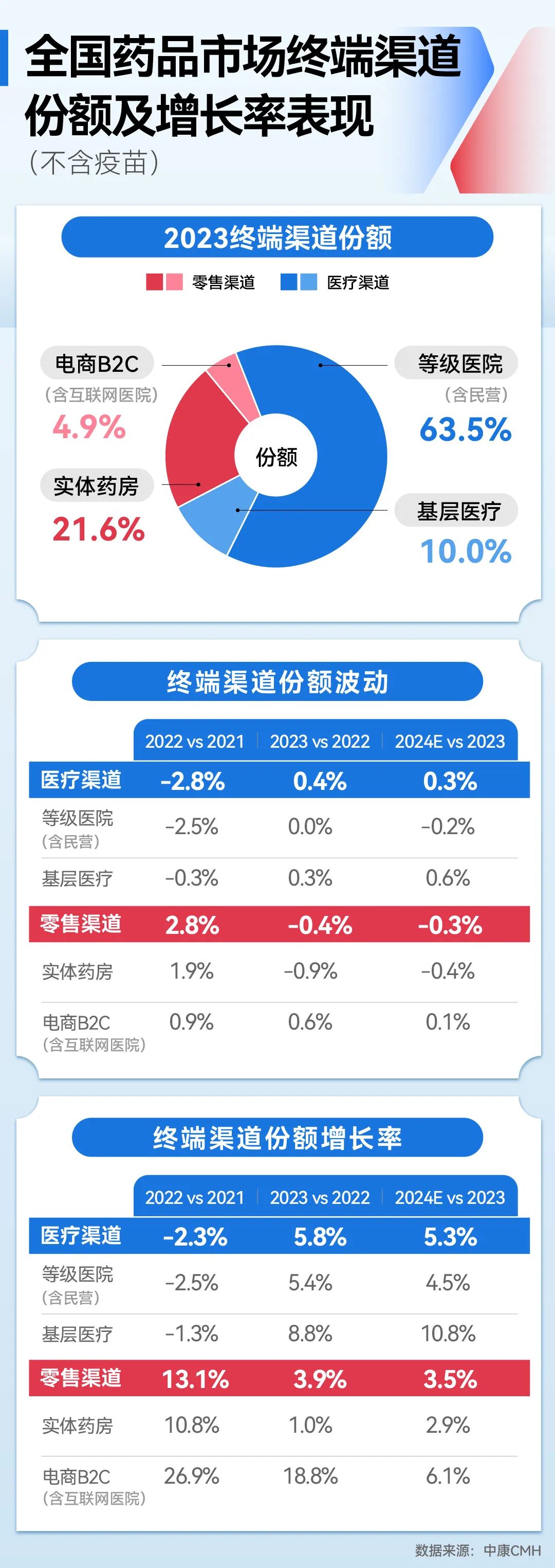
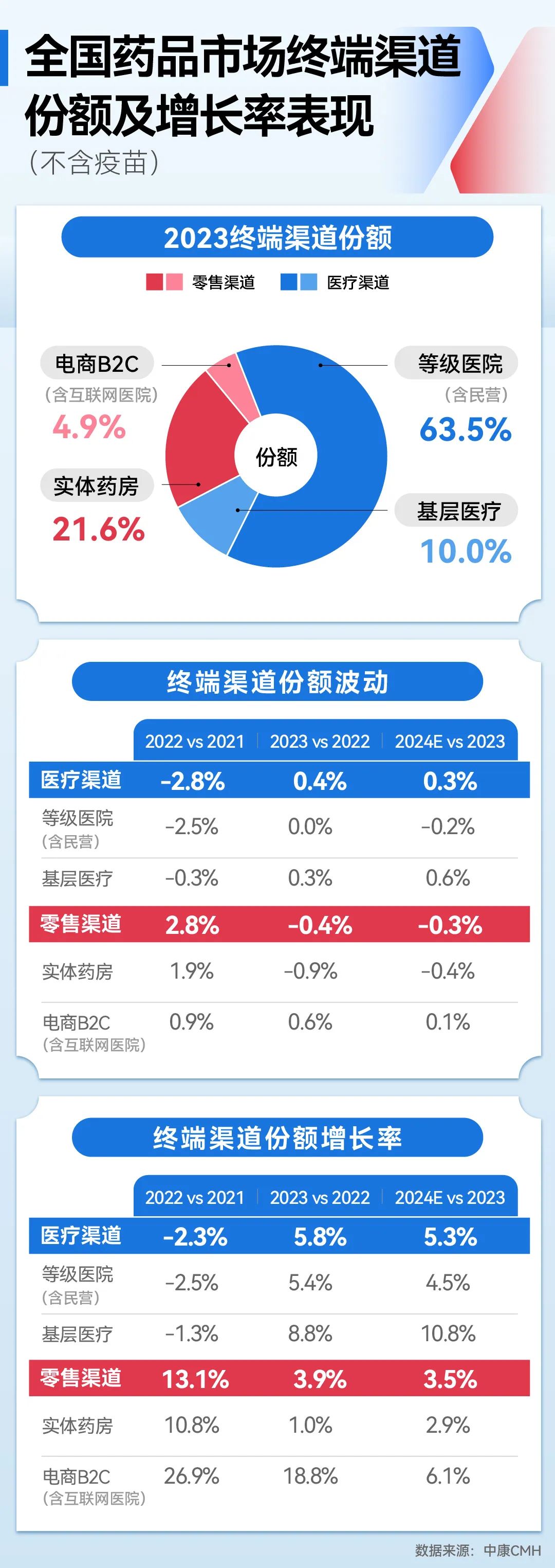
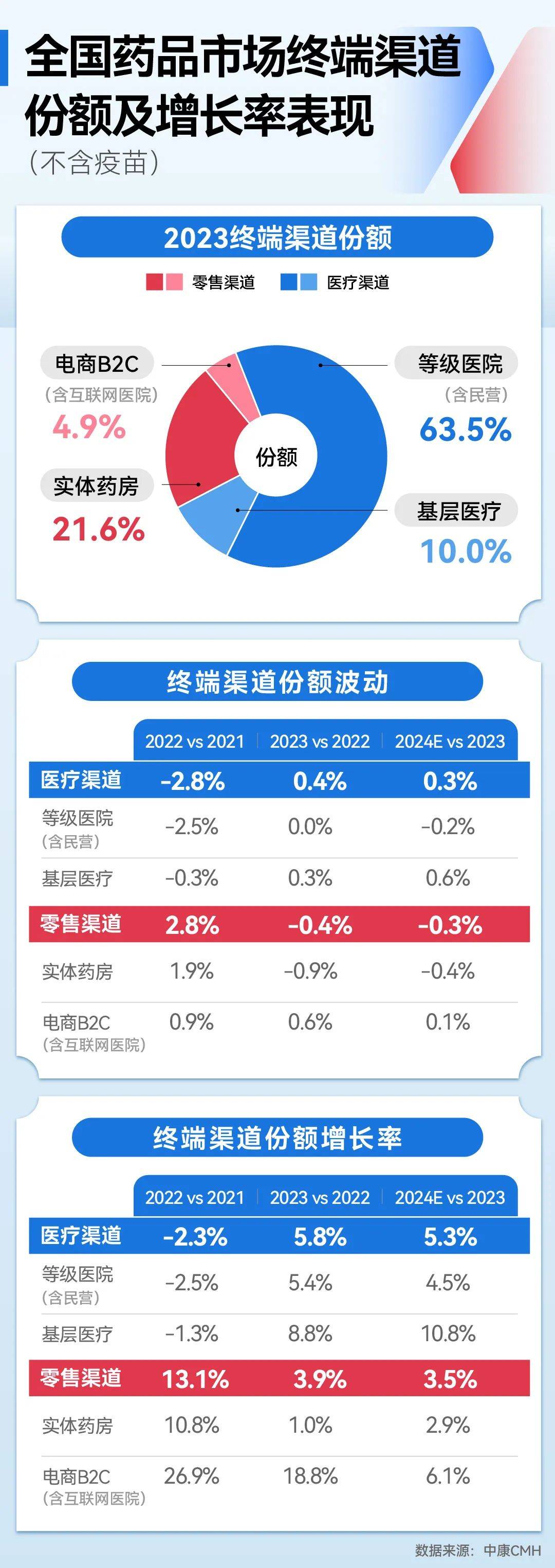
Core Viewpoint - The introduction of self-service medicine vending machines is raising concerns among traditional pharmacies about competition and regulatory compliance, particularly regarding the sale of prescription drugs [5][12][14]. Group 1: Market Trends and Data - The retail pharmacy sector is experiencing a decline in growth, with physical pharmacies projected to see a decrease of 0.4% from 2023 to 2024, following a drop of 0.9% from 2022 to 2023 [3]. - E-commerce B2C channels, including internet hospitals, are showing growth, with a 26.9% increase in 2022 compared to 2021, and an 18.8% increase in 2023 compared to 2022 [4]. - The self-service vending machines can hold over a thousand types of medications and are designed to meet the 24-hour medication needs of consumers, addressing the "last mile" issue in drug purchasing [5][7]. Group 2: Regulatory Environment - The Beijing regulations specify that self-service machines can only sell Class B non-prescription drugs (OTC), which has led to concerns about the potential for these machines to dispense prescription medications without proper oversight [9][10]. - The National Medical Products Administration has stated that self-service machines are not allowed to sell prescription drugs, emphasizing the need for regulatory compliance in the distribution of medications [13]. Group 3: Industry Concerns - Pharmacy operators are worried that self-service machines could operate without licensed pharmacists, leading to potential safety risks in medication dispensing [15][18]. - The operational costs for traditional pharmacies, including the need for licensed pharmacists, are significantly higher compared to the low overhead of self-service machines, which could create an uneven playing field [20][23]. - The rapid deployment of self-service machines could disrupt the traditional pharmacy model, as they can be set up quickly and at a lower cost compared to opening new physical locations [24][26]. Group 4: Economic Implications - The cost of maintaining a licensed pharmacist in a physical pharmacy can add approximately 20,000 yuan per month, while self-service machines do not incur such costs, leading to competitive disadvantages for traditional pharmacies [20][23]. - The profitability of self-service machines is questioned, as some operators report low revenue compared to the initial investment required for the machines [29][30]. - The potential for self-service machines to take over the market raises concerns about the sustainability of traditional pharmacies, especially in densely populated urban areas where competition is already fierce [34][35].
一纸文件征求意见,药店老板们睡不着觉了
3 6 Ke· 2025-08-19 11:53
Core Viewpoint - The introduction of self-service medicine dispensing machines is causing significant concern among traditional pharmacy owners, as these machines can potentially sell prescription drugs without the need for licensed pharmacists, leading to competitive disadvantages for brick-and-mortar stores [1][11][14]. Summary by Relevant Sections Self-Service Machines and Regulations - A draft regulation in A City allows self-service machines to dispense prescription and Class A non-prescription drugs, raising alarms among pharmacy owners about competition from e-commerce platforms [1][11]. - The self-service machines can operate at a fraction of the cost of traditional pharmacies, with estimates suggesting annual operating costs of only a few thousand yuan compared to nearly 20,000 yuan for a single pharmacy's labor costs [1][18]. Market Dynamics and Competition - The self-service machines are seen as a threat to traditional pharmacies, which are already struggling with high operational costs, including rent and staffing [22][25]. - The ability to set up multiple machines quickly and at low cost gives e-commerce platforms a significant advantage over traditional pharmacies, which require substantial investment to open new locations [23][26]. Safety and Regulatory Concerns - Experts express concerns about the safety of dispensing prescription drugs without the oversight of licensed pharmacists, as the machines could bypass necessary checks and balances [11][14][17]. - Current regulations in other cities, like Beijing, restrict self-service machines to non-prescription drugs, highlighting the need for careful consideration of safety and compliance [10][11]. Financial Viability of Self-Service Machines - Some pharmacy owners have attempted to implement self-service machines but found them unprofitable, with revenues failing to cover costs associated with the machines [26][27]. - The high initial investment and ongoing operational costs of self-service machines make them less appealing compared to traditional staffing solutions in densely populated areas [31]. Future Implications for the Industry - If the self-service machine model proves successful in A City, it could significantly disrupt the traditional retail pharmacy landscape, making it difficult for them to compete [24][25]. - The industry must find a balance between innovation and safety, ensuring that the introduction of self-service machines does not compromise patient care [25][31].