重庆银行

Search documents
2025绿色金融生态大会在渝开幕
Zheng Quan Shi Bao Wang· 2025-11-27 22:54
Core Insights - The 2025 Green Finance Ecological Conference opened in Chongqing, focusing on "Green Transformation and Biodiversity Finance Empowering Beautiful China" with over 200 experts and representatives from financial institutions and enterprises attending [1] - Chongqing is the only provincial-level comprehensive green finance reform and innovation pilot zone in China, enhancing its service chain in "standard systems, financial products, project libraries, trading platforms, and information disclosure" to support green development [1] - The Chongqing Green Finance Ecological Innovation Alliance was established, launching the first batch of "Chongqing Green and Transformation Investment and Financing Opportunity List" and "Chongqing Green and Transformation Financial Service Product List" [1] Financial Initiatives - The People's Bank of China Chongqing Branch and the Chongqing Municipal Financial Office jointly released the "Chongqing Financial Support for Biodiversity Protection Action Joint Initiative" [2] - Various associations, including the Chongqing Banking Association and Insurance Association, launched initiatives to promote green consumption and low-carbon development [2] - New projects in ecological corridors, ecological tourism, and ecological fisheries were announced, showcasing the comprehensive strength and collaborative advantages of Chongqing's green finance reform and innovation [2] Financial Performance - As of now, the balance of green loans in Chongqing has exceeded 1 trillion yuan, with a growing product system including green investments, green bonds, and green insurance [3] - The conference aims to leverage Chongqing's role as a demonstration zone for green finance reform and innovation, promoting systemic and product innovation to contribute to national green finance development [3]


固定收益深度研究:转债择时择券策略宝典
Guohai Securities· 2025-11-27 11:33
Core Insights - The report establishes a systematic investment framework for convertible bonds focusing on "when to buy" and "what to buy," addressing market volatility and optimizing risk-return ratios [4] - The framework aims to provide investors with a replicable and trackable path for convertible bond allocation, combining the defensive attributes of bonds with the growth potential of stocks [4] Timing Strategies - Two effective timing strategies are proposed: - Equity-Debt Spread Timing: This strategy quantifies the relationship between the return of the CSI 500 index and the yield of 10-year government bonds, providing objective thresholds for position adjustments. The backtest accuracy rate is 68.64%, making it suitable for capturing equity characteristics [5] - Sentiment Index Driven Timing: This strategy uses implied volatility from the options market as a sentiment gauge, achieving a timing success rate of 63.53% when combined with the Z-Score standardization method and 74.39% with the IV change threshold method [5] Selection Strategies - Five mainstream selection strategies are evaluated and improved to enhance portfolio return-risk ratios: - Dual Low Strategy: Balances stability and elasticity, achieving a cumulative return of 95.25% from 2019 to October 2025 [6] - Factor Triple Low Strategy: Introduces fundamental factors like stock Alpha to optimize selection criteria, yielding a cumulative return of 192.54% and an annualized return of 47.98% [6] - Momentum + Dual Low Strategy: Captures market sentiment's upward inertia, with a cumulative return of 65.53% and an annualized return of 15.89% [8] - Barbell Strategy: Combines equity and debt-oriented convertible bonds to balance offense and defense in varying market conditions [8] - High Price Low Premium Strategy: Demonstrates effectiveness in trending markets with a cumulative return of 205.53% and an annualized return of 36.63% [8] Convertible Bond Recommendations - The report provides a list of convertible bonds to focus on, categorized by various strategies, including balanced, equity-oriented, and those meeting the improved dual low criteria [9] Strategy Applicability and Market Conditions - The report details the performance characteristics and applicable market environments for each strategy, indicating that the equity-debt spread timing strategy may face significant drawdowns in extreme market volatility, while the dual low strategy shows stable performance across different equity market conditions [10] Future Allocation Outlook - Looking ahead, investors are advised to flexibly allocate between defensive convertible bonds and high-dividend growth-oriented convertible bonds to capture structural investment opportunities while controlling drawdowns [11]
城商行板块11月27日涨0.69%,青岛银行领涨,主力资金净流入7276.85万元
Zheng Xing Xing Ye Ri Bao· 2025-11-27 09:07
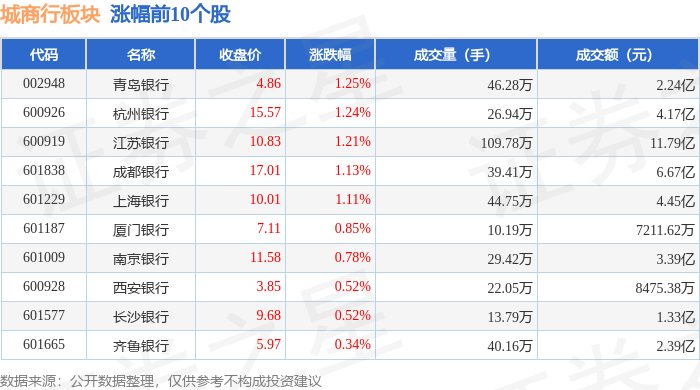
Core Insights - The city commercial bank sector experienced a rise of 0.69% on November 27, with Qingdao Bank leading the gains [1] - The Shanghai Composite Index closed at 3875.26, up 0.29%, while the Shenzhen Component Index closed at 12875.19, down 0.25% [1] Stock Performance Summary - Qingdao Bank (002948) closed at 4.86, up 1.25% with a trading volume of 462,800 shares and a transaction value of 224 million [1] - Hangzhou Bank (600926) closed at 15.57, up 1.24% with a trading volume of 269,400 shares and a transaction value of 417 million [1] - Jiangsu Bank (616009) closed at 10.83, up 1.21% with a trading volume of 1,097,800 shares and a transaction value of 1.179 billion [1] - Chengdu Bank (601838) closed at 17.01, up 1.13% with a trading volume of 394,100 shares and a transaction value of 667 million [1] - Shanghai Bank (601229) closed at 10.01, up 1.11% with a trading volume of 447,500 shares and a transaction value of 445 million [1] - Xiamen Bank (601187) closed at 7.11, up 0.85% with a trading volume of 101,900 shares and a transaction value of 72.116 million [1] - Nanjing Bank (6000009) closed at 11.58, up 0.78% with a trading volume of 294,200 shares and a transaction value of 339 million [1] - Xi'an Bank (600928) closed at 3.85, up 0.52% with a trading volume of 220,500 shares and a transaction value of 84.754 million [1] - Changsha Bank (601577) closed at 9.68, up 0.52% with a trading volume of 137,900 shares and a transaction value of 133 million [1] - Qilu Bank (601665) closed at 5.97, up 0.34% with a trading volume of 401,600 shares and a transaction value of 239 million [1] Capital Flow Analysis - The city commercial bank sector saw a net inflow of 72.7685 million from institutional investors, while retail investors experienced a net inflow of 16.4028 million [2] - The sector faced a net outflow of 89.1713 million from speculative funds [2] Individual Stock Capital Flow - Jiangsu Bank (600919) had a net inflow of 75.1851 million from institutional investors, while it faced a net outflow of 38.3807 million from speculative funds [3] - Shanghai Bank (601229) saw a net inflow of 33.6962 million from institutional investors, with a net outflow of 37.6450 million from speculative funds [3] - Qilu Bank (601665) had a net inflow of 23.2129 million from institutional investors, while it faced a net outflow of 7.1943 million from speculative funds [3] - Chengdu Bank (601838) experienced a net inflow of 21.6104 million from institutional investors, with a significant net outflow of 68.9418 million from speculative funds [3] - Hangzhou Bank (600926) had a net inflow of 17.6667 million from institutional investors, while it faced a net outflow of 41.0399 million from speculative funds [3]



城商行板块11月26日跌0.59%,南京银行领跌,主力资金净流出1.47亿元
Zheng Xing Xing Ye Ri Bao· 2025-11-26 09:05
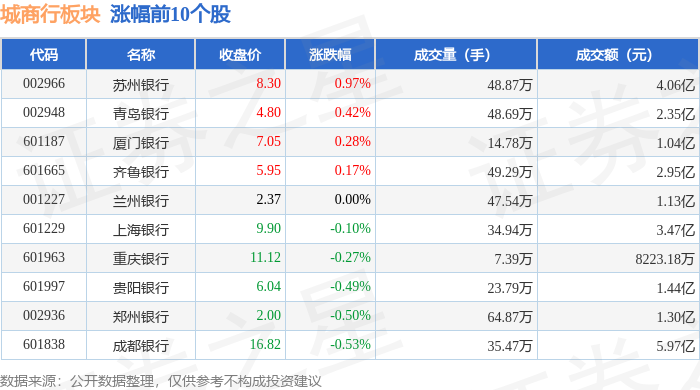
Market Performance - The city commercial bank sector declined by 0.59% on November 26, with Nanjing Bank leading the drop [1] - The Shanghai Composite Index closed at 3864.18, down 0.15%, while the Shenzhen Component Index rose by 1.02% to 12907.83 [1] Individual Stock Performance - Suzhou Bank closed at 8.30, up 0.97% with a trading volume of 488,700 shares and a transaction value of 406 million yuan [1] - Nanjing Bank closed at 11.49, down 1.29% with a trading volume of 514,300 shares and a transaction value of 592 million yuan [2] - Chengdu Bank closed at 16.82, down 0.53% with a trading volume of 354,700 shares and a transaction value of 597 million yuan [2] Capital Flow Analysis - The city commercial bank sector experienced a net outflow of 147 million yuan from institutional investors, while retail investors saw a net inflow of 152 million yuan [2] - Among individual stocks, Suzhou Bank had a net outflow of 31.27 million yuan from institutional investors, while Nanjing Bank saw a net inflow of 27.56 million yuan [3]



智通港股投资日志|11月25日
智通财经网· 2025-11-24 16:02
智通财经APP获悉,2025年11月25日,港股上市公司投资日志如下: | 类别 | | 公司 | | --- | --- | --- | | | 图达通 | | | | (招股中) | | | | 海伟股份 | | | 新股活动 | (招股中) | | | | 量化派 | | | | (定价日) | | | | GC CONSTRUCTION | | | | 蔚来-SW | | | | 建业实业 | | | | 智中国际 | | | | NIRAKU | | | 业绩公布日 | 俊裕地基 | | | | 思博系统 | | | | 周大福 | | | | 小马智行-W | | | | 宾仕国际 | | | | 原生态牧业 | | | | 西普尼 | | | | 连达科技控股 | | | | 金粤控股 | | | | 安徽皖通高速公路 | | | 股东大会召开日 | 皇朝家居 | | 业绩公布日 分红派息 中国再保险 重庆银行 工商银行 首都信息 宏利金融-S (除净日) 鹰美 (除净日) 美亨实业 (除净日) 亚太资源 (除净日) 中信建投证券 (除净日) 重庆机电 (派息日) ...
地方上市银行高管,频频增持自家银行股份
Xin Lang Cai Jing· 2025-11-24 13:25
Core Viewpoint - Regional banks have seen significant increases in shareholding by executives and institutional investors throughout the year, indicating growing confidence in these financial institutions [1] Group 1: Executive Shareholding Increases - Several regional banks, including Nanjing Bank, Wuxi Bank, Suzhou Bank, Lanzhou Bank, Chengdu Bank, Chongqing Bank, Qingdao Bank, and Xiamen Bank, have reported increases in shareholding by executives and institutional shareholders [1] - Su Nong Bank's management team, including President Wang Liang and Vice Presidents Fei Haibin and Geng Zhi, plans to increase their A-share holdings by no less than 1.8 million yuan within six months starting from November 11, 2025 [1] - Qilu Bank has disclosed that its executives have collectively increased their holdings by approximately 3.15 million yuan, which accounts for 90% of the planned increase amount [1] Group 2: Institutional Shareholding Increases - Qingdao Bank has announced that its shareholder, Qingdao Guoxin Financial Holdings Group Co., Ltd., has recently increased its H-share holdings through the Hong Kong Stock Connect, raising its total shareholding to 15.42%, making it the largest shareholder of the bank [1]
24家A股银行将现金分红超2600亿元
2 1 Shi Ji Jing Ji Bao Dao· 2025-11-24 12:56
Core Viewpoint - The recent surge in stock prices of major Chinese banks is driven by their mid-term dividend announcements, with a total cash dividend amounting to 2637.90 billion yuan for 2025, indicating significant investment potential in the banking sector [2][4]. Dividend Announcements - As of November 24, 2025, 24 A-share listed banks have disclosed their mid-term dividend plans, with a total cash dividend of 2638 billion yuan [4]. - Notably, seven banks, including Industrial Bank, Changsha Bank, and Ningbo Bank, are implementing mid-term dividends for the first time since their listings [2]. - The six major state-owned banks are expected to distribute over 2046 billion yuan in dividends [5]. Dividend Yield - The average dividend yield for listed banks as of November 24 is 4.48%, with 12 banks yielding over 5% and 26 banks exceeding 4% [6]. - Specific banks like Bank of Communications and China Construction Bank have dividend yields of 4.18% and 3.93%, respectively [6]. Shareholder and Executive Buybacks - There has been a notable increase in share buybacks by major shareholders and executives of listed banks, signaling positive market sentiment [8]. - For instance, Chengdu Bank's major shareholders have collectively bought approximately 34.25 million shares, investing 6.11 billion yuan from August 27 to November 21 [8]. - Nanjing Bank reported that foreign shareholder BNP Paribas increased its stake by over 128 million shares, raising its ownership to 18.06% [9]. Overall Market Sentiment - The banking sector has seen a net increase in holdings exceeding 9 billion yuan, with significant buybacks from shareholders and executives across multiple banks [10]. - The proactive buyback activities reflect confidence in the banks' future strategies and growth prospects, with the banking sector ranking second in shareholder buybacks this year, only behind the transportation sector [10].




24家A股银行将现金分红超2600亿元
21世纪经济报道· 2025-11-24 12:38
Core Viewpoint - The recent surge in stock prices of major banks in China is driven by their mid-term dividend announcements, with a total cash dividend amounting to 2638 billion yuan for 2025, indicating significant value potential in the banking sector [2][3][4]. Dividend Announcements - As of November 24, 2025, 24 A-share listed banks have disclosed their mid-term dividend plans, with a total cash dividend of 2638 billion yuan, including first-time mid-term dividends from seven banks [2][4]. - Notably, Wuxi Bank announced a cash dividend of 0.11 yuan per share, totaling 2.41 billion yuan, with the ex-dividend date on November 25, 2025 [4]. - Hangzhou Bank plans to distribute a cash dividend of 0.38 yuan per share, amounting to 27.55 billion yuan, reflecting a 24.10% increase from the previous year [4]. Dividend Yields - The average dividend yield for listed banks as of November 24 is 4.48%, with 12 banks yielding over 5% and 26 banks over 4% [5]. - Major banks like Bank of Communications and Agricultural Bank of China have lower yields, ranging from 3% to 4.18% [5]. Shareholder and Executive Buybacks - There has been a notable increase in share buybacks by major shareholders and executives, signaling positive market sentiment [7][8]. - For instance, Chengdu Bank's major shareholders increased their holdings by approximately 34.24 million shares, investing 611 million yuan [7]. - The banking sector has seen a total of 126.30 billion yuan in buybacks this year, ranking second among industry sectors [8]. Market Performance and Outlook - The banking sector has experienced a net increase in holdings exceeding 90 billion yuan, with significant support for stock prices from shareholder buybacks [6][9]. - Analysts suggest that the upcoming long-term capital allocation period at year-end will further enhance the market performance of bank stocks [9].



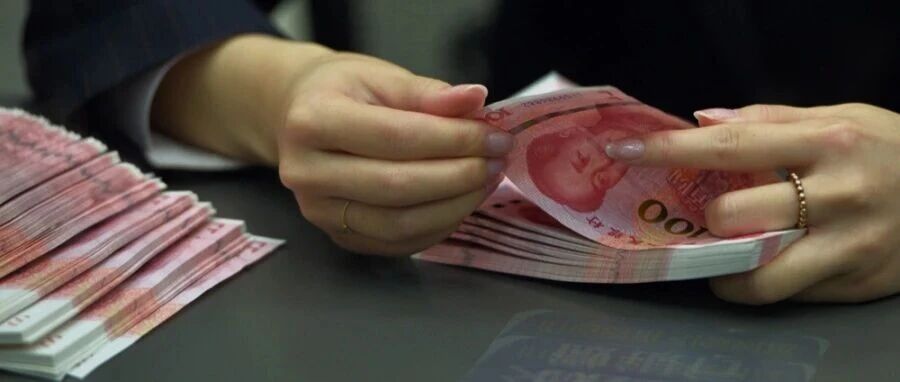
《中国金融》|金融赋能“特”产绘就塞上江南新盛景
Sou Hu Cai Jing· 2025-11-24 09:56
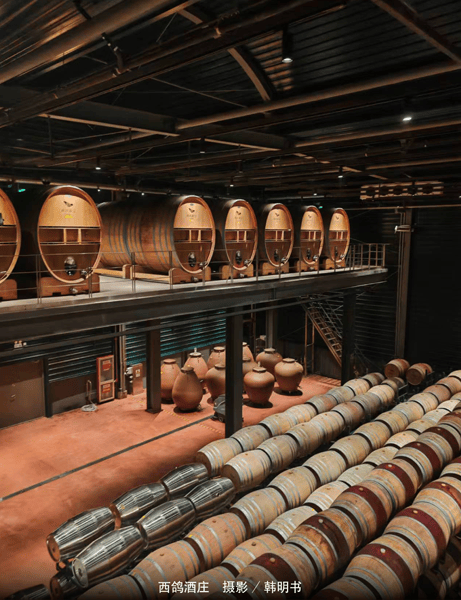
Core Insights - The article highlights the significant role of financial support in promoting the development of specialty industries in Ningxia, particularly focusing on wine, goji berries, and beef cattle, which are integral to the region's economic growth and ecological restoration [1][19]. Group 1: Wine Industry - Ningxia's Helan Mountain region is recognized as a "golden zone" for grape cultivation due to its favorable climate and soil conditions, leading to the production of award-winning wines [2][3]. - Financial institutions, particularly Ningxia Bank, have provided crucial funding to wineries like Lilan Winery, enabling them to grow from barren land to flourishing vineyards, with loans totaling 9 million yuan for operational needs [3][6]. - The establishment of a long-term financing service mechanism for small and micro enterprises in the wine sector has been initiated to support the growth of the industry [3][4]. Group 2: Goji Berry Industry - Goji berries are a key driver of rural economic growth in Ningxia, with the region's unique conditions producing high-quality berries, particularly from Zhongning County [9][10]. - The financial sector has been actively involved in enhancing the supply chain for goji berries, with initiatives aimed at improving financial services for the entire industry, including the establishment of a supply chain financial support system [9][10]. - The goji berry industry has seen significant growth, with 40 leading enterprises and 36,600 farmers forming a community of interests, contributing to the local economy [9][10]. Group 3: Beef Cattle Industry - The beef cattle industry in Ningxia is evolving through a model that integrates leading enterprises, cooperatives, and farmers, enhancing the value chain and promoting high-quality development [17][18]. - Companies like Rongqiao Fenglin have established comprehensive ecosystems for beef production, providing support to farmers from breeding to market [18][19]. - Financial backing has been essential for the growth of the beef cattle sector, facilitating the establishment of sustainable farming practices and improving the livelihoods of local farmers [17][19]. Group 4: Clean Energy and Data Centers - Ningxia is developing as a hub for cloud computing and data centers, with significant investments in clean energy to support the growing energy demands of these facilities [13][14]. - The region's renewable energy capacity reached 41.32 million kilowatts by the end of 2024, with financial institutions like the National Development Bank providing substantial loans to support clean energy projects [14][16]. - Innovative financing mechanisms are being implemented to ensure the stability of energy supply for data centers, contributing to the region's digital economy [14][16].
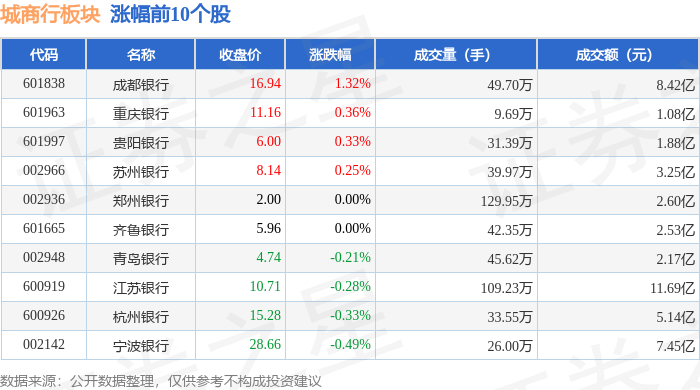
城商行板块11月24日跌0.54%,上海银行领跌,主力资金净流入5649.9万元
Zheng Xing Xing Ye Ri Bao· 2025-11-24 09:12
Core Viewpoint - The city commercial bank sector experienced a decline of 0.54% on November 24, with Shanghai Bank leading the drop, while the overall market indices showed slight increases [1][2]. Group 1: Market Performance - The Shanghai Composite Index closed at 3836.77, up 0.05%, and the Shenzhen Component Index closed at 12585.08, up 0.37% [1]. - The city commercial bank sector's individual stock performance varied, with Chengdu Bank rising by 1.32% to a closing price of 16.94, while Shanghai Bank fell by 1.70% to 9.84 [1][2]. Group 2: Trading Volume and Turnover - Chengdu Bank had a trading volume of 497,000 shares and a turnover of 842 million yuan, while Shanghai Bank had a trading volume of 655,100 shares and a turnover of 649 million yuan [1][2]. - The overall net inflow of funds in the city commercial bank sector was 56.49 million yuan, with retail investors showing a net outflow of 70.16 million yuan [2][3]. Group 3: Fund Flow Analysis - Chengdu Bank saw a net inflow of 97.44 million yuan from major funds, while retail investors had a net outflow of 51.42 million yuan [3]. - Suzhou Bank experienced a net inflow of 40.11 million yuan from major funds, but a net outflow of 32.86 million yuan from retail investors [3].