NVIDIA

Search documents
Itron and Norgesnett to Launch Grid Edge Project in Nordic Region
ZACKS· 2025-04-07 14:47
Core Insights - Itron, Inc. is collaborating with Norgesnett to implement the first edge computing deployment in the Nordic region, utilizing Itron's Grid Edge Intelligence portfolio to modernize the electricity grid [1][2] Group 1: Partnership and Deployment - The partnership aims to enhance visibility and control across the distribution system, supporting Norgesnett's Advanced Metering Infrastructure (AMI) strategy [2] - The initiative will commence in early 2026 with the deployment of 10,000 distributed intelligence (DI)-enabled smart endpoints [4] - The collaboration will provide Norgesnett access to Itron's broader ecosystem, enabling tailored applications for grid modernization [4] Group 2: Technological Advancements - The DI-enabled endpoints will facilitate two-way communication, allowing for remote updates and real-time energy data management [5] - The project aligns with Nordic Innovation's 2030 vision for sustainability and interconnectedness, enabling real-time data analysis to prevent outages and transformer overloads [6] Group 3: Market Context and Growth Drivers - Norway's energy sector is nearly 100% renewable, with electric vehicles (EVs) constituting 96% of new car registrations as of January 2025, positioning the country as a leader in clean energy adoption [3] - Itron's Grid Edge Intelligence platform is experiencing growth due to factors such as data center demand, reindustrialization, and the electrification of transportation and homes [7] - The total backlog for Itron at the end of the fourth quarter was $4.7 billion, indicating strong market demand for grid resiliency and automation solutions [7] Group 4: Financial Performance - Itron's 2024 bookings reached $2.7 billion, resulting in a book-to-bill ratio of 1:11, with a significant portion of the backlog consisting of grid-edge intelligence platform content [8] - The company anticipates 2025 revenues to be between $2.4 billion and $2.5 billion, reflecting a flat year-over-year growth at the midpoint [8]



比亚迪电子:Auto+AI to drive earnings growth-20250402
信达国际· 2025-04-02 14:23
Investment Rating - The report maintains a "BUY" rating for BYD Electronic with a target price of HKD 48.84, representing a potential upside of 22.6% from the current price of HKD 39.85 [6][17]. Core Insights - BYD Electronic's FY24 results showed a revenue growth of 36.4% to RMB 177.3 billion, while net profit increased by 5.5% to RMB 4,265 million, although net profit was approximately 6% below consensus due to lower than expected gross margin and higher costs [1][16]. - The company is expected to benefit from the increasing demand for generative AI smartphones, which is projected to drive a new replacement cycle in the smartphone market starting in 2024 [5][16]. - BYD Electronic's automotive intelligent segment revenue surged by 45.5% YoY to RMB 20.5 billion, indicating strong growth potential in the automotive sector [13][16]. Summary by Sections Financial Performance - FY24 revenue reached RMB 177.3 billion, up 36.4% YoY, while net profit was RMB 4,265 million, a 5.5% increase YoY [1][21]. - Gross margin decreased by 1.1 percentage points YoY to 6.9%, below the consensus estimate of 7.6% [1][16]. Business Segments - The assembly and components segments experienced significant growth, with assembly service revenue increasing by 26% YoY and components revenue soaring 1.6x YoY to approximately RMB 35.6 billion [3][12]. - The IoT segment faced challenges, with revenue slipping YoY due to pressures in the energy storage business [2][11]. Market Trends - The global smartphone shipment grew approximately 2.4% YoY in 4Q24, with a notable 37% QoQ increase in shipments from US clients due to new flagship launches [1][3]. - Generative AI smartphones are expected to account for a significant portion of total smartphone shipments, with projections of 234 million units in 2024 and a CAGR of 100% from 2023 to 2027 [5][16]. Future Outlook - BYD Electronic anticipates continued revenue growth in the IoT and automotive segments, projecting revenue to exceed RMB 50 billion and RMB 65 billion by FY25E and FY26E, respectively [15][16]. - The company is focusing on diversifying its business strategy, which is expected to enhance sales and earnings visibility in the long run [16][17].
Alphabet: Leading The AI Race
Seeking Alpha· 2025-03-29 15:28
Group 1 - Google's Gemini 2.5 Pro AI has established itself as a superior model in the AI industry, surpassing all existing models since the release of ChatGPT in 2022 [1] - The release of Gemini 2.5 Pro marks a significant shift in the competitive landscape of AI technologies, indicating Google's strong position in the market [1] Group 2 - The article highlights the expertise of a DevOps Engineer with extensive knowledge in AI tools and applications, emphasizing the importance of hands-on experience in the field [1] - The engineer is pursuing advanced AWS machine learning certifications to enhance their expertise, reflecting the ongoing demand for skilled professionals in AI and machine learning [1]


Chiplet,刚刚开始!
半导体行业观察· 2025-03-29 01:44
Core Viewpoint - The management of chip resources is becoming a significant and multifaceted challenge as chips move beyond proprietary designs of large manufacturers and interact with other elements in packaging or systems [1] Group 1: Chiplet Market Dynamics - The chiplet market is currently dominated by monopolistic suppliers, with approximately 95% to 99% of the market controlled by one or a few suppliers adhering to specific specifications [3] - There are three main markets for small chips: exclusive markets, local ecosystems, and open markets, with local ecosystems consisting of five to seven companies collaborating on interoperability [3][6] - Major system and processor suppliers have effectively utilized chiplet approaches to enhance performance and reduce costs through increased computational density [1][3] Group 2: Design and Interoperability Challenges - Many companies are struggling with interoperability and generality, often starting their work from within the chip rather than from a system perspective [2] - The complexity of integrating third-party chips into systems is a significant challenge, requiring time and effort to resolve [1][2] - The need for a common system bus across all chipsets is emphasized, as it adds complexity for IP suppliers who must adapt to changing customer needs [2][3] Group 3: Resource Management and Optimization - Effective resource management is crucial as poor management can lead to performance bottlenecks, increased development costs, and challenges in power consumption [1] - The industry is transitioning from exclusive ecosystems to local ecosystems, with companies seeking the best methods for chip construction [6] - Simplifying chip design through partitioning based on technology can help manage complexity and improve performance [6][7] Group 4: Future Directions and Innovations - The chip industry is beginning to explore open chip economies, allowing for plug-and-play capabilities from multiple suppliers within a single package [11][12] - There is a growing recognition of the need for robust verification IP to ensure interoperability among chiplets, which is currently lacking in the industry [9][10] - The challenge of managing thousands of chips in a single package requires a comprehensive approach to resource management and system integration [12]
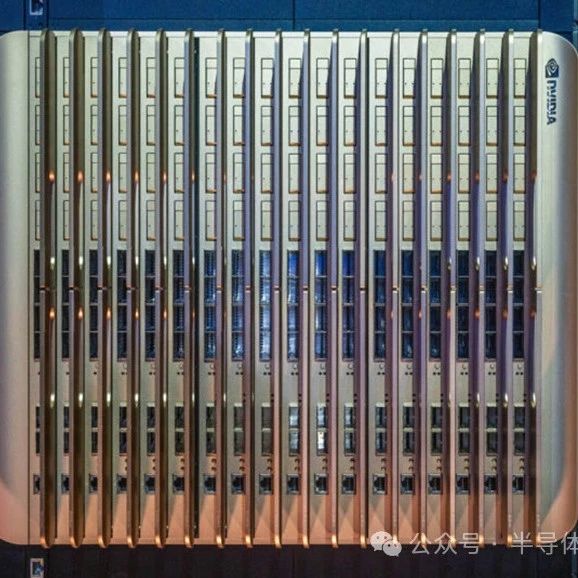
NVIDIA Rubin NVL576 Kyber 中板,非常巨大
半导体行业观察· 2025-03-29 01:44
Core Viewpoint - NVIDIA is leveraging a new midplane design in its next-generation AI server, the Rubin NVL576, to enhance computing density and efficiency in the competitive AI server market [1][6]. Group 1: Design Innovations - The NVIDIA Rubin NVL576, codenamed "Kyber," features a new rack design that removes the cable box and relocates fans and power supplies outside the rack to increase computing density [1]. - The new midplane design includes 18 columns and 4 rows of connectors, allowing for improved internal connectivity [5]. - Liquid cooling is employed throughout the rack, enabling the midplane design without the need for airflow considerations, which traditionally limited density [6]. Group 2: Performance Enhancements - The new design allows for a significant increase in copper interconnect coverage, which can save substantial power and enhance optical reliability [8]. - The updated backplane design facilitates more silicon connections through copper interconnects within the same rack, which is essential for the next generation of AI clusters [8].

Should You Hold on to APLD Stock Despite its 24% Dip in 3 Months?
ZACKS· 2025-03-28 16:40
Core Viewpoint - Applied Digital Corporation (APLD) has experienced a significant decline in stock price, dropping 23.5% over the past three months, contrasting with a 4% growth in the broader Finance sector. Despite this short-term struggle, the long-term growth potential for APLD remains strong, suggesting that holding the stock may be beneficial for investors [1][4][18]. Group 1: Reasons for Decline - The recent decline in APLD's stock price is attributed to broader market weaknesses rather than company-specific issues, particularly following the release of a competitive AI model by Chinese startup DeepSeek that requires less powerful hardware [4][5]. - A widespread sell-off in tech stocks in February, driven by fears of escalating trade tensions and slowing economic growth, has also impacted APLD, leading to valuation corrections for companies benefiting from the AI boom [6]. Group 2: Valuation and Financial Performance - APLD is currently trading at a premium, indicated by a Value Score of F, and maintains a high forward 12-month price-to-earnings (P/S) ratio compared to the industry, despite the recent stock price drop [7]. - The data center segment, which provides services primarily for crypto mining, accounted for 83% of APLD's total revenues in fiscal 2024. The company is benefiting from a surge in Bitcoin prices, which increased over 23% in the past year [9][10]. - The Zacks Consensus Estimate for APLD's fiscal 2025 revenues is projected at $526.57 million, reflecting a year-over-year growth of 111.2%, with earnings estimated at 64 cents per share, indicating a growth of 181% [12]. Group 3: Strategic Developments - APLD is nearing completion of a lease agreement for a 100 MW facility at the Ellendale HPC campus, which is designed for high-performance computing applications, including AI. The company is also expanding its capacity to 400 MW with additional buildings [11]. - APLD has established partnerships with major companies such as Super Micro Computer, Hewlett Packard Enterprise, and NVIDIA, enhancing its capabilities in high-performance server and storage solutions for AI applications [15][16][17].


6 Ultra SWANs Potentially Set To Soar In 2025
Seeking Alpha· 2025-03-28 11:00
Group 1 - The article discusses the investment group The Dividend Kings, which aims to help investors safeguard and grow their money through high-quality dividend investments [2] - The team of analysts associated with The Dividend Kings provides resources such as model portfolios, buy ideas, and company research reports to assist members in making informed investment decisions [2] - The article emphasizes the importance of intelligent investing in dividend stocks, highlighting the community aspect where readers can learn from each other [2] Group 2 - The article includes a disclosure stating that the author has a beneficial long position in shares of companies like BAM, AMZN, and NVDA, indicating a vested interest in these stocks [2] - It clarifies that the opinions expressed may not reflect those of Seeking Alpha as a whole, and that the analysts involved may not be licensed or certified by any regulatory body [3]


英特尔,又放弃一颗芯片?
半导体芯闻· 2025-03-28 10:01
如果您希望可以时常见面,欢迎标星收藏哦~ 来源:内容来自半导体芯闻综合,谢谢。 据报道,英特尔已取消其基于 Xe2 的高端 Arc Battlemage"BMG-G31" GPU,该 GPU 原本将用 于游戏显卡。 英特尔似乎正凭借 Battlemage Xe2 芯片退出高端游戏 Arc GPU 领域。据报道,该公司之前一直 在研发VRAM 高达 24 GB 的高端解决方案,并在Shipping Manifestos中发现了几种变体。蓝队 还重申了其对独立 GPU 领域的承诺,并表示将继续在该平台内进行"战略投资"。 根据可靠内部人士和泄密者@Jaykihn0的最新报告,该公司似乎已大幅改变了其独立 GPU 计划。 据说高端 Battlemage BMG-G31 GPU 或多或少已经停产,自 2024 年第三季度以来一直如此。我 们确实看到一些芯片在 2024 年底前出货,但看起来这些可能只是为了测试或评估目的,而零售发 布的计划早就被取消了。 BMG-G31 GPU 芯片应该比 B580 和 B570 显卡上的 G21 更大。据报道,它将配备大约 24-32 个 Xe2 核心、256 位内存总线和 16 G ...

GPU又赢了?苹果临阵倒戈!
半导体行业观察· 2025-03-28 01:00
Core Viewpoint - Apple's decision to purchase approximately $1 billion worth of NVIDIA's GB300 NVL72 GPU cluster servers marks a significant shift in its AI strategy, acknowledging the advantages of the GPU ecosystem and generative AI paradigm over its self-developed chips [1][3][21]. Group 1: Apple's Shift to NVIDIA - Apple has historically relied on its self-developed chips, achieving great success with its Apple Silicon series in mobile and edge computing [3]. - The recent order for NVIDIA's GPUs indicates Apple's recognition of the GPU ecosystem's superiority in the generative AI space, driven by urgent market demands for high-performance computing [3][4]. - Analysts suggest that Apple plans to order around 250 NVL72 servers, with each server costing between $3.7 million and $4 million, totaling nearly $1 billion [3]. Group 2: Implications of Siri's Performance - Siri's declining competitiveness against rivals like Google Assistant and Alexa has prompted Apple to reassess its AI hardware strategy [4][5]. - The anticipated updates to Siri have been delayed, reflecting the challenges Apple faces in enhancing its AI capabilities [4][5]. Group 3: Generative AI and Market Dynamics - The rise of generative AI has redefined user expectations for intelligent assistants, shifting from simple command execution to intelligent collaboration [5]. - Apple's investment in NVIDIA GPUs is speculated to support the development of an Apple LLM, enhance Siri, and integrate AI into various applications [5][6]. Group 4: GPU vs. ASIC - The choice of NVIDIA's GPUs over self-developed ASICs highlights the critical importance of time and performance in the AI race, with NVIDIA's established ecosystem providing immediate solutions [8][16]. - NVIDIA's GPUs have become the de facto standard for training large language models (LLMs), showcasing their performance and ecosystem maturity [8][11]. - The high cost of NVIDIA GPUs, which have surged to $90,000 each, reflects their dominant market position, with NVIDIA reporting a revenue of $39.3 billion and a gross margin exceeding 70% [8][9]. Group 5: Future Outlook - Despite the current preference for NVIDIA GPUs, Apple may still pursue a hybrid strategy, utilizing NVIDIA for model training while relying on its own chips for inference [6][19]. - The ongoing competition between ASICs and GPUs suggests that while ASICs may face challenges now, they are not entirely out of the picture for future applications [19][21].

Agentic AI Set to Transform Industries in 2025: 4 Stocks to Watch
ZACKS· 2025-03-27 17:25
Core Insights - Agentic AI is expected to experience significant growth in 2025, marking a shift towards more autonomous decision-making systems in various industries [1][2] - The agentic AI market is projected to reach $7.28 billion in 2025 and grow to $41.32 billion by 2030, indicating a compound annual growth rate (CAGR) of 41.48% [8] Industry Trends - Key trends in agentic AI include autonomous decision-making, AI virtual assistants, and improved customer engagement, which will enhance task automation and human capabilities across sectors [2] - Industries such as healthcare, finance, logistics, and manufacturing will particularly benefit from AI solutions that combine autonomy with human oversight for complex decision-making [2][4][5] Company Developments - UiPath is leading in agentic AI innovation, with 90% of IT executives recognizing its potential to improve business processes, and 77% planning to invest in it [9] - Zoom Communications is expanding its agentic AI capabilities to enhance user productivity through advanced AI skills and multi-step task execution [12][13] - NVIDIA is enhancing agentic AI through its Blackwell Ultra GPUs and Llama models, which improve performance for enterprise applications [14][15] - Microsoft is utilizing agentic AI to address cybersecurity challenges, introducing agents that autonomously manage critical security issues [17][18] Performance Metrics - Organizations using agentic AI have reported a 35% reduction in decision-making time, a 42% improvement in resource allocation efficiency, and a 28% increase in employee satisfaction [7]