DeepMind

Search documents
Google allows users to personalize their Gemini conversations with new features
CNBC· 2025-03-13 18:01
Group 1 - Google has introduced new personalization features for its Gemini chatbot, allowing it to reference users' Google Search histories for better recommendations, which is an opt-in feature [1] - Users can now connect various apps such as Calendar, Notes, Tasks, and Photos to Gemini, enhancing its functionality [2] - The company aims to strengthen its position in the competitive AI industry, with a focus on scaling Gemini for consumer use in the upcoming year [3] Group 2 - Google launched open-source Gemma 3 models for developers, capable of analyzing text, images, and short videos, which the company claims to be "the world's best single-accelerator model" [4] - New AI models, Gemini Robotics and Gemini Robotics-ER, were introduced, both operating on Gemini 2.0, which is described as the company's "most capable" AI to date [6]



能折纸,还会灌篮!谷歌发布机器人基座大模型,大幅强化机器人通用性
硬AI· 2025-03-13 11:19
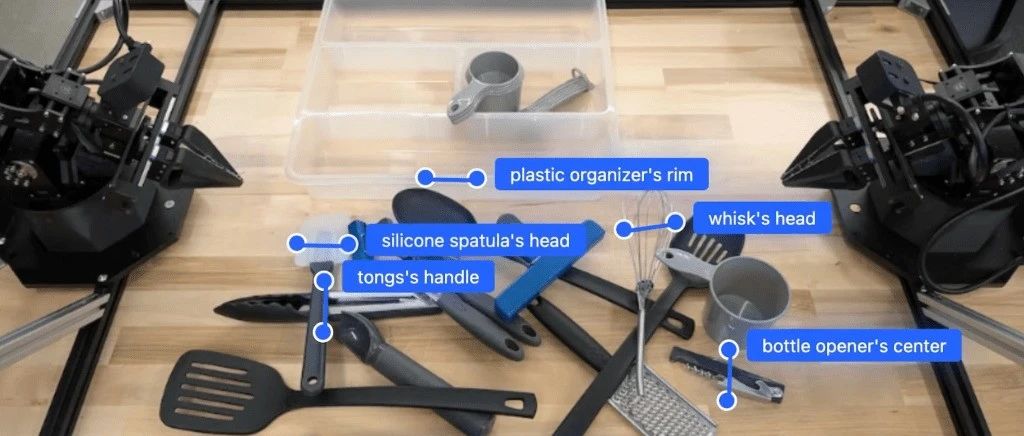
Core Viewpoint - The release of Google's DeepMind's new AI model, Gemini Robotics, marks a significant milestone in the development of general-purpose robots, enhancing their ability to adapt to complex environments and perform challenging tasks [1][9]. Group 1: Technological Advancements - The new AI model allows robots to perform tasks such as folding paper, organizing desks, and even dunking a mini basketball, showcasing its advanced capabilities [3][4][6]. - The Gemini Robotics model is reported to have double the versatility of previous models, representing a major leap towards general-purpose robotics [9]. - The model is trained using Google's Gemini 2.0 language model, endowing robots with three key abilities: environmental adaptability, instruction comprehension, and operational flexibility [10]. Group 2: Market Potential - Analysts predict a significant market expansion for humanoid robots, with an estimated annual sales of 1 million units by 2030 and a total ownership of 3 billion units by 2060, equating to 0.3 robots per person [13]. - Major tech companies, including Tesla and OpenAI, are racing to develop AI capabilities for robots, indicating a competitive landscape in the robotics sector [13]. - NVIDIA's CEO has stated that this technology could create a market worth trillions of dollars, potentially leading to the largest tech industry in history [13].

中国金融大模型发展白皮书:开启智能金融新时代
国际数据· 2025-03-13 06:30
Investment Rating - The report does not explicitly provide an investment rating for the industry. Core Insights - AI large models have become a crucial component of new productive forces, significantly enhancing production efficiency, optimizing resource allocation, and reducing production costs, thereby supporting high-quality development for enterprises [3][4]. - The financial industry is leading in the research and application of AI large models, with investments projected to reach 19.694 billion yuan in 2024 and 41.548 billion yuan by 2027, marking a growth of 111% [4][25]. - The application of AI large models in the financial sector faces unique challenges, including high demands for data quality, inference accuracy, and compliance with regulatory standards [4][26]. Summary by Sections Chapter 1: Overview of AI Large Model Development - AI large models are integral to the new productive forces, driving significant advancements in digital transformation across various sectors [12]. - Major global regions, including the US, China, Japan, and the EU, are intensifying their efforts in AI large model innovation and application [13][15]. Chapter 2: Focus on the Financial Industry - The financial sector is at the forefront of AI large model investment and application, with a focus on enhancing operational efficiency and compliance [4][25]. - Financial institutions face higher requirements for data governance, model governance, and compliance applications compared to other sectors [26][27]. Chapter 3: Progress in Implementation - The application of generative AI in the financial industry is progressing from simple to complex scenarios, with key areas including payment clearing, intelligent investment research, and fraud monitoring [6][39]. - Financial institutions are advised to adopt a phased approach in selecting and implementing AI applications, focusing on internal operations before expanding to customer-facing services [58]. Chapter 4: Application Paths and Key Capabilities - Financial institutions can choose different paths for implementing AI large models based on their strategic goals, business needs, and resource capabilities [71]. - The report emphasizes the importance of building a robust data value chain management system to ensure high-quality data for AI applications [7].
速递|Google推出新AI模型,Gemini Robotics可实现多硬件机器人语音操控
Z Potentials· 2025-03-13 04:02
Core Insights - Google DeepMind has launched a new AI model named Gemini Robotics aimed at enabling robots to interact with objects and navigate environments [1] - The model has demonstrated capabilities in executing tasks based on voice commands, such as folding paper and placing glasses in a case [1] - Gemini Robotics is designed to be applicable across various robotic hardware and connects what robots "see" with possible actions [1] - The model has shown impressive performance in environments not covered by training data during testing [1] - A streamlined version called Gemini Robotics-ER has been released for researchers to train their own robot control models [1] - DeepMind has also introduced a benchmark named Asimov to assess the risks associated with AI-driven robots [1]
两会焦点研读:2025年中美AI企业对比分析:新质生产力崛起,AI+背后中美差距几何?
Tou Bao Yan Jiu Yuan· 2025-03-12 12:04
Investment Rating - The report does not explicitly provide an investment rating for the industry Core Insights - The report highlights the significant advancements in AI technology and applications in both China and the United States, emphasizing the competitive landscape and the unique strengths of each country in various AI sectors [3][10][33] Summary by Sections AI Infrastructure Analysis - The United States leads in cloud computing technology, while China excels in localized service advantages [10][18] - American companies are at the forefront of algorithm innovation, whereas Chinese firms demonstrate strong application innovation capabilities [10][18] - China holds a substantial market share in data centers, accounting for one-fourth of the global market, with rapid growth potential [25] AI Technology Analysis - Chinese visual AI companies are showing robust momentum, establishing unique advantages in the market [33] - The United States has a deep accumulation of knowledge graph technology, while China leads in commercializing these technologies [33] - Chinese companies are rapidly iterating and innovating in AI model applications, gradually closing the gap with international standards [40] AI Application Analysis - Chinese humanoid robots are emerging as strong competitors, showcasing significant advancements in technology [58] - Chinese AI glasses are gaining market share, with domestic manufacturers pulling ahead of overseas competitors [58] - The AI smartphone market is being reshaped by Chinese manufacturers, who are innovating in various AI applications [58] - In smart home technology, the U.S. focuses on high-end solutions, while China emphasizes comprehensive smart home integration [58][62] Industry Solutions - In the financial sector, U.S. companies excel in payment solutions and investment platforms, while Chinese firms lead in mobile payments and AI healthcare applications [71][76] - The U.S. is at the forefront of autonomous driving technology, while Chinese companies are leveraging local market advantages for rapid application [77] - Chinese AI healthcare companies are making significant strides in medical imaging analysis, while U.S. firms lead in drug discovery and health management [82] - In retail, Chinese companies are innovating in e-commerce through AI, while U.S. firms focus on optimizing the entire shopping experience [83]
“实习生也月入过万”,AI行业严重缺人
虎嗅APP· 2025-03-09 09:30
Core Viewpoint - The article highlights the intense demand for AI talent in the industry, leading to significant salary increases and a competitive job market for AI-related positions [2][3][4]. Group 1: Salary Trends and Job Opportunities - AI industry salaries are notably high, with DeepSeek offering annual salaries starting at approximately 500,000 yuan, and some positions exceeding 1.76 million yuan [6][7]. - Nearly one-third (30.97%) of top AI job postings have annual salaries above 500,000 yuan, indicating a trend of high compensation in the sector [7][17]. - The demand for AI talent is reflected in the recruitment strategies of major companies like Alibaba and Tencent, which are actively hiring for AI-related roles [23][24]. Group 2: Talent Shortage and Market Dynamics - There is a significant talent shortage in the AI field, with a predicted demand for 6 million skilled AI professionals by 2030, while the supply is expected to be only 2 million, resulting in a 4 million shortfall [22]. - The AI talent shortage is exacerbated by high entry barriers and the need for candidates to possess both technical skills and industry knowledge [27][29]. - Companies are struggling to find qualified candidates, with reports indicating that only 1 in 400 applicants for certain AI roles meet the necessary qualifications [26][27]. Group 3: Future Outlook and Industry Challenges - The article discusses the optimistic outlook for the AI industry, despite potential challenges such as funding requirements and the uncertainty of technology implementation [36][38]. - The competitive landscape among tech giants is leading to resource allocation challenges, as companies develop multiple teams for similar AI projects [37]. - The narrative emphasizes that while there may be some market bubbles, the overall momentum and investment in AI are expected to drive significant advancements in the field [38][39].

Microsoft reportedly ramps up AI efforts to compete with OpenAI
TechCrunch· 2025-03-07 21:22
Group 1 - Microsoft is intensifying its competition with OpenAI by developing its own AI models and exploring alternatives for products like Copilot [1][2] - The company has created AI "reasoning" models that are comparable to OpenAI's o1 and o3-mini, amid rising tensions due to OpenAI's refusal to share technical details [1] - Microsoft has developed a family of models called MAI, which are competitive with OpenAI's offerings, and is considering providing them through an API later this year [2] Group 2 - Microsoft has invested approximately $14 billion in OpenAI and is diversifying its AI strategy by hiring industry experts like Mustafa Suleyman from DeepMind [3] - The company is testing alternative AI models from xAI, Meta, Anthropic, and DeepSeek as potential replacements for OpenAI technology in its Copilot product [2]


Manus解读,AI Agent与AI应用观点更新
2025-03-07 07:47
Summary of Manus AI Conference Call Industry and Company Overview - The conference call discusses Manus AI, which utilizes a multi-agent system architecture to enhance user experience and optimize workflows, distinguishing itself from traditional single-chain reasoning models. This innovation is beneficial for cloud service providers and computing power suppliers [2][3][6]. Core Insights and Arguments - **Potential in Enterprise Services**: Manus AI has significant potential in enterprise services, particularly in automating complex workflows, similar to the success of RPA company UiPath, indicating high value in automation within enterprises [2][4][5]. - **AI Agent Technology Framework**: The AI Agent framework consists of four components: tools, memory, planning, and action. Recent advancements have improved long-text interaction capabilities, achieving a planning level of 60-80%, although it still relies on specific workflows [2][13]. - **Shift to AI as a Service**: The future trend is moving from "Model as a Service" to "AI as a Service," where human interaction with information increasingly depends on AI, potentially leading to a multi-agent oligopoly [2][17]. - **High Operational Costs**: Manus incurs high operational costs, with each request costing approximately $2, while Cloud 3.5's token cost is $15 per million tokens, indicating a high demand for processing large volumes of information [3]. Application Potential - **Strong Engineering Capability**: Manus demonstrates strong engineering capabilities, focusing on functional implementation rather than just foundational models. This positions it well for enterprise service applications [4][7]. - **Challenges in Personal Assistant Agents**: The commercialization of personal assistant agents faces challenges due to the broad nature of personal scenarios, with major companies focusing on user engagement and traffic entry points [4][24]. - **To B Market Focus**: AI Agent products in the To B market are tailored to specific scenarios, making them easier to commercialize compared to the To C market, which is more diffuse [26]. Impact on Related Industries - **Beneficial for Related Industries**: The release of Manus has positively impacted various related industries, including cloud service providers, computing power suppliers, and companies developing virtual browser environments [6][28]. - **Infrastructure Challenges**: The industry faces infrastructure challenges, including high data interaction costs and increased demand for computing power, which is essential for the development of AI applications [28][33]. User Experience and Commercial Value - **User Recognition**: Manus products have gained some user recognition, but actual user experience has not met the high expectations set by media claims, indicating challenges in achieving significant commercial value in open domains [7][8]. - **Investment Considerations**: Investors should monitor the sustainability of AI technology trends and user experiences post-invitation acquisition, as 2025 is seen as a pivotal year for AI technology implementation [8]. Competitive Landscape - **Venus's Unique Features**: Venus integrates multiple capabilities, including control fusion and MCP technology, allowing it to execute complex tasks with high user experience without frequent user intervention [20][21]. - **Market Competition**: The market is expected to see more similar AI applications, with a focus on democratization rather than high pricing, as companies strive to leverage new technologies effectively [22][23]. Future Directions - **Emerging Product Forms**: Future products may include code-driven solutions combined with virtual browsers, enhancing efficiency and effectiveness in enterprise settings [27]. - **Long-term Development of AI Agents**: The development of AI agents is expected to bifurcate into personal assistant and enterprise service types, with personal assistants having higher long-term potential despite short-term commercialization challenges [24][26]. This summary encapsulates the key points discussed in the Manus AI conference call, highlighting the company's innovative approach, market potential, and implications for the broader AI industry.
「实习生也月入过万」,这一行业严重缺人
36氪· 2025-03-05 13:17
Core Viewpoint - The article emphasizes the intense competition for AI talent in the tech industry, highlighting the significant salary increases and recruitment efforts by major companies to attract skilled professionals [3][4][5]. Group 1: AI Talent Demand and Salary Trends - Major tech companies are aggressively recruiting AI talent, with Alibaba and Tencent opening hundreds of positions in their AI divisions [4][27]. - DeepSeek, a unicorn company, has attracted attention for offering salaries starting at approximately 500,000 yuan, with some positions exceeding 1.76 million yuan annually [6][7]. - Nearly one-third of AI job postings have annual salaries above 500,000 yuan, indicating a widespread trend of high compensation in the AI sector [7][19]. Group 2: Job Market Dynamics for IT Professionals - Traditional programmers are feeling threatened by AI advancements, prompting many to seek opportunities in AI-related roles, with potential salary increases of 30% upon transitioning [10][14]. - The demand for AI professionals is expected to grow significantly, with predictions indicating a sixfold increase in the need for skilled AI personnel by 2030, while the supply will fall short by 4 million [25][28]. Group 3: Recruitment Challenges and Talent Shortage - The AI talent market is characterized by a high demand-supply gap, with a talent shortage index of 3.24 indicating a significant scarcity of qualified candidates [29]. - Companies face challenges in finding candidates with the necessary skills and experience, as many applicants lack the comprehensive knowledge required for core AI roles [32][34]. - The gap between educational programs and industry needs results in a shortage of qualified AI professionals, despite the increasing number of AI-related academic courses [34]. Group 4: Future Outlook and Industry Sentiment - The article suggests a positive outlook for the AI industry, with increasing recognition of its potential as a new wave of technological revolution [43]. - Despite potential market bubbles, the influx of resources and talent into the AI sector is expected to foster genuine technological advancements [44][45].

“实习生也月入过万”,这一行业严重缺人
盐财经· 2025-03-04 10:45
Group 1 - The market is experiencing a significant demand for AI talent, with major internet companies actively seeking both top-tier and foundational employees in the AI sector [2][12][20] - Companies like Alibaba and Tencent are ramping up recruitment efforts, with Alibaba's AI To C business opening hundreds of positions and Tencent's AI assistant also launching a large-scale hiring initiative [2][3] - High salaries are becoming a common trend in the AI industry, with positions like deep learning researchers offering salaries exceeding 1.76 million yuan annually, and many roles seeing salaries above 500,000 yuan [4][5][13] Group 2 - The rapid development of AI is causing traditional programmers to feel threatened, prompting them to seek opportunities in AI-related fields, with salary increases of around 30% being common for successful transitions [10][11][18] - The demand for AI talent is projected to grow significantly, with McKinsey predicting a sixfold increase in the need for skilled AI professionals in China by 2030, leading to a talent gap of 4 million [18][20] - Companies are facing challenges in finding qualified candidates, as many applicants lack the necessary skills and experience, highlighting a mismatch between educational training and industry needs [23][25] Group 3 - The AI industry is characterized by a competitive landscape, with companies competing for talent and offering attractive compensation packages, including stock options and high salaries [28][31] - Despite the promising outlook for AI, there are concerns about potential market bubbles and the sustainability of certain AI startups, as evidenced by layoffs in some companies [29][30] - The evolving nature of the AI job market is leading to a greater emphasis on interdisciplinary skills, with a need for professionals who understand both AI technology and its application in various business contexts [25][27]