
国家开发银行

Search documents
全市场发行超6200亿元 中小银行加速入局科创债
经济观察报· 2025-07-05 08:34
Core Viewpoint - The issuance of technology innovation bonds (科创债) has gained momentum, with various banks participating actively, indicating a strong market response to the supportive policies introduced for these bonds [2][6][12]. Group 1: Issuance Overview - As of July 3, 2025, a total of 419 technology innovation bonds have been issued, with an aggregate issuance scale exceeding 620 billion yuan, highlighting the growing interest in this financial instrument [2]. - Among the issuers, banks have emerged as the main players, having issued 27 bonds with a total scale of over 220 billion yuan [2][3]. Group 2: Bank Participation - Large banks lead in issuance scale, while small and medium-sized banks are also entering the market, with 11 banks participating in the issuance process [3][4]. - The issuance scale of city commercial banks and rural commercial banks collectively reached 391 billion yuan, with notable contributions from banks like Beijing Bank (80 billion yuan) and Shanghai Bank (50 billion yuan) [6][7]. Group 3: Interest Rates and Credit Ratings - The credit ratings of the issuers are predominantly high, with most banks rated AAA, except for one rated AA+ [3][7]. - The interest rates for technology innovation bonds vary, with large banks offering rates between 1.17% and 1.65%, while small and medium-sized banks have higher rates, with some reaching up to 1.95% [3][10]. Group 4: Fund Utilization - The funds raised through technology innovation bonds are primarily directed towards supporting technology loans and investing in bonds issued by technology innovation enterprises, creating a synergistic effect [11]. - Major banks have consistently used the proceeds for "issuing technology loans," while some also invest in technology innovation enterprises' bonds [11]. Group 5: Future Trends - The market is expected to see innovations in bond products and an expansion of issuing entities, with banks likely to introduce more flexible bond terms to cater to the specific needs of technology enterprises [12]. - There is a growing emphasis on technology finance as a strategic focus for banks, particularly among small and medium-sized banks, which may accelerate their participation in the technology innovation bond market [12].






先行先试!湖州将打造全国绿色金融能力建设基地
Zheng Quan Shi Bao Wang· 2025-07-04 16:13
2015年12月,湖州成为国内首个绿色金融改革创新试验区申报城市。2017年6月,湖州获批成为全国首 批绿色金融改革创新试验区(下称试验区),并率先将绿色金融列为长期发展战略,在制度标准、组织 机构、产品服务、政策激励、金融科技等方面先行先试。试验区建设8年以来,湖州已累计形成74项全 国首创性试点成果,绿色信贷年均增长41%,绿色信贷余额占全部贷款比重超33%,高于全国平均近20 个百分点。 打造绿色金融能力建设基地不仅是提升湖州绿色金融集聚辐射能力的重大战略举措,也是推动湖州绿色 金融改革纵深发展的有力支撑。 在7月4日上午由中国金融学会绿色金融专业委员会、湖州市人民政府、浙江省金融学会主办的绿色金融 改革创新交流会上,中国人民银行研究局局长王信代为宣读中国人民银行副行长陆磊的主旨演讲时表 示,以"湖州经验"为代表的一系列可复制可推广经验,相当一部分成功实践传播和复制到我国多个地 方,乃至其他国家和地区。下阶段,人民银行将继续支持和指导绿色金融区域改革创新工作。 "我们将建立专门的工作协调机制,强化政策资金投入,打造金融业态集聚平台,营造一流的金融生态 环境和营商环境,争取为绿色金融赋能高质量发展探索更多 ...
科创债全市场发行超6200亿元 中小银行加速入场
Jing Ji Guan Cha Wang· 2025-07-04 09:54
Core Insights - The launch of the Science and Technology Innovation Bonds (科创债) has attracted various participants, with a total issuance of 419 bonds amounting to over 620 billion yuan as of July 3, 2025 [2] - Large banks are leading the issuance, while small and medium-sized banks are also entering the market, increasing the number of issuers to 11 [2] - The credit ratings of the issuers are predominantly high, with most rated AAA, and the interest rates for small and medium-sized banks are higher compared to large banks [2][4] Issuance Overview - As of June 30, 2025, policy banks and state-owned banks are the main issuers, with the China Development Bank issuing 3 bonds totaling 20 billion yuan, and major state-owned banks collectively issuing 1.1 billion yuan [4] - The issuance scale of various banks includes 550 billion yuan from joint-stock banks and 391 billion yuan from city and rural commercial banks [4][5] - The issuance of floating-rate bonds has also been noted, with Sichuan Bank issuing the first floating-rate 科创债 [5] Interest Rates - The overall interest rates for 科创债 are relatively low, with the weighted average interest rate for commercial banks decreasing by 5 basis points [6] - The lowest rates are observed in the China Development Bank's bonds, with rates as low as 1.17% for short-term bonds [6] - Small and medium-sized banks face higher issuance rates, with some reaching up to 1.95% [6] Fund Utilization - The funds raised through 科创债 are primarily directed towards supporting technology loans and investing in bonds issued by technology innovation enterprises [7] - Major banks have a consistent focus on issuing 科创债 for technology loan disbursement, while some joint-stock and city commercial banks also invest in technology innovation bonds [7] Future Trends - There is potential for innovation in bond products and expansion of issuers in the 科创债 market, with banks likely to introduce more flexible bond terms [8] - Small and medium-sized banks are expected to design issuance plans that align with local industry characteristics and technology enterprise funding needs [8]



债市阿尔法:浮息债全解:利率变局中的攻守之道
Guoxin Securities· 2025-07-04 08:48
1. Report Industry Investment Rating No information about the report industry investment rating is provided in the given content. 2. Core Viewpoints of the Report - The scale of floating - rate bonds in China is still small. As of the end of 2024, the outstanding amount of floating - rate bonds was 52.01 billion yuan, accounting for 0.3% of the total bond balance [34]. - The valuation of floating - rate bonds is based on the discounted cash flow method (DCF), and the difficulty lies in predicting future coupon payments and selecting the discount rate [2][54]. - The change in the benchmark interest rate is inversely related to the bond value. The farther the valuation date is from the reset date, the greater the impact of interest rate changes on the bond value. The term spread is also inversely related to the bond value when the benchmark interest rate is constant, and the impact on the bond price needs to be observed in combination with the benchmark interest rate [2]. - Floating - rate bonds are more resistant to decline in a bear market and weaker in a bull market compared to fixed - rate bonds [2]. - The floating - rate bonds imply that the 1 - year LPR will first decline and then rise in the next three years, and the implied interest - rate cut expectation of floating - rate bonds of China Development Bank is stronger than that of Agricultural Development Bank bonds [3]. - Considering the expiration of US tariff exemptions and the appreciation of the RMB, an additional 10 - 20BP interest - rate cut is expected in the second half of the year, and the decline of 1YLPR in the second half of the year is likely to be higher than the implied value of floating - rate bonds [4][99]. 3. Summary According to the Directory 3.1 China's Floating - Rate Bond Historical Changes - The issuance scale of floating - rate bonds has fluctuated and increased, with significant shrinkage in the past three years. It has experienced three rounds of expansion and adjustment, with the peak issuance scale reaching 64.16 billion yuan in 2021, and the average issuance scale from 2022 - 2024 being only 16.34 billion yuan [14][17]. - The benchmark interest rate has changed from single to diversified, from the 1 - year fixed - deposit interest rate at the beginning to various types such as SHIBOR, LPR, and DR [20][21]. - Policy - bank bonds and asset - backed securities (ABS) have alternately dominated. Since 2022, policy - bank bonds have become the main type again [26]. - The issuance term has evolved from being highly concentrated (7 - 10 years) to gradually dispersed and then re - concentrated (2 - 3 years) [28][30]. 3.2 China's Floating - Rate Bond Current Situation - As of the end of 2024, the outstanding amount of floating - rate bonds was 52.01 billion yuan, accounting for 0.3% of the total bond balance. By bond type, the top three are policy - bank bonds, ABS, and non - financial corporate credit bonds. By benchmark interest rate, the top three are the 1 - year loan prime rate (LPR), the 7 - day inter - bank pledged repo rate, and the 5 - year loan prime rate (LPR). By issuance term, the top three are 2 - 3 years, over 10 years, and 7 - 10 years [34]. 3.3 Floating - Rate Bond Valuation Method - The valuation of floating - rate bonds is based on the DCF method, which discounts future coupon payments and principal to the current point in time. The difficulty lies in predicting future coupon payments and selecting the discount rate [54]. - The China Foreign Exchange Trade System simplifies the valuation formula by assuming that the benchmark interest rate remains unchanged after the valuation date, but this method does not reflect the market's expectation of future interest rates [56]. 3.4 Theoretical Analysis of Factors Affecting the Investment Value of Floating - Rate Bonds - The change in the benchmark interest rate is inversely related to the bond value. When the benchmark interest rate rises, the bond value falls, and vice versa. The farther the valuation date is from the reset date, the greater the impact of interest rate changes on the bond value [2][66]. - When the benchmark interest rate is constant, the term spread is inversely related to the bond value. The impact on the bond price needs to be observed in combination with the benchmark interest rate [72]. 3.5 Comparison between Floating - Rate Bonds and Fixed - Rate Bonds - In a rising - interest - rate environment, both floating - rate bonds and fixed - rate bonds will decline in price, but the decline of floating - rate bonds is smaller. In a falling - interest - rate environment, the price increase of fixed - rate bonds is greater than that of floating - rate bonds [78]. 3.6 Current Pricing Investigation of Floating - Rate Bonds - By studying the price changes of floating - rate bonds, the market's expectation of future monetary - policy trends can be inferred. The floating - rate bonds imply that the 1 - year LPR will first decline and then rise in the next three years, and the implied interest - rate cut expectation of floating - rate bonds of China Development Bank is stronger than that of Agricultural Development Bank bonds [3][83]. 3.7 Analysis of the Value of Floating - Rate Bonds from Future Interest - Rate Adjustment Range and Rhythm - Considering the expiration of US tariff exemptions and the appreciation of the RMB, an additional 10 - 20BP interest - rate cut is expected in the second half of the year, and the decline of 1YLPR in the second half of the year is likely to be higher than the implied value of floating - rate bonds. The allocation value of floating - rate bonds in the second half of the year may be lower than that of fixed - rate bonds [4][99]. - Four interest - rate cut scenarios are simulated, and the interest - rate increase rhythms at which the allocation values of floating - rate and fixed - rate bonds are in equilibrium are fitted for each scenario [100].
科创债发行规模超6200亿元 逾七成评级AAA
Zheng Quan Shi Bao· 2025-07-03 18:52
Core Viewpoint - The issuance of technology innovation bonds (referred to as "Sci-Tech Bonds") has seen a significant increase since the policy was implemented in May, with a total issuance exceeding 620 billion yuan by early July, primarily driven by state-owned enterprises [1][2]. Group 1: Issuance Overview - As of July 3, a total of 419 Sci-Tech Bonds have been issued, with a total issuance scale surpassing 620 billion yuan [1]. - Central state-owned enterprises (SOEs) and local SOEs are the main issuers, accounting for 49.90% and 36.18% of the total issuance, respectively [1]. - The average rating of issuers has remained high, with 74.70% of the bonds rated AAA since May 7 [1]. Group 2: Industry Participation - Banks have emerged as the primary issuers of Sci-Tech Bonds, with 23 banks issuing a total of 224.1 billion yuan [1]. - Notable issuers include China Construction Bank with 30 billion yuan, and several other major banks each issuing 20 billion yuan [1]. Group 3: Expansion to Smaller Banks - In June, smaller banks such as Chongqing Bank and Nanjing Bank began participating in the issuance of Sci-Tech Bonds [2]. - Various private equity investment institutions have also started issuing Sci-Tech Bonds, supported by recent credit enhancement measures [2]. Group 4: Interest Rates and Comparisons - The issuance rates for many Sci-Tech Bonds have reached historical lows for the issuers, benefiting from a low-interest-rate environment and policy support [2]. - AAA-rated Sci-Tech Bonds have a weighted average issuance rate significantly lower than that of non-Sci-Tech bonds of the same rating, with differences ranging from 2 to 47 basis points across various issuer types [2]. Group 5: Market Support for SMEs - The Sci-Tech Bond market indirectly supports small and medium-sized technology enterprises through funding from financial institutions and large SOEs [3]. - The long-term health of the bond market will require a more diversified range of issuers and enhanced credit accessibility for lower-rated entities [3].

持续放量!科创债发行规模超6200亿元
Zheng Quan Shi Bao· 2025-07-03 15:04
Core Insights - The issuance of technology innovation bonds (referred to as "Sci-Tech Bonds") has surged since the policy was implemented in May, with a total of 419 bonds issued and a cumulative issuance scale exceeding 620 billion yuan [1][3][2] - Central and local state-owned enterprises dominate the issuance landscape, accounting for nearly 86% of the total issuance, while private and public enterprises contribute a smaller share [3][4] - The introduction of various support mechanisms and the expansion of issuing entities are expected to enhance the effectiveness of the bond market in supporting technological innovation [1][3] Issuance Scale and Participants - As of July 3, the total issuance scale of Sci-Tech Bonds reached 624.9 billion yuan, with central state-owned enterprises issuing 311.8 billion yuan (49.9%) and local state-owned enterprises issuing 226.1 billion yuan (36.2%) [3][4] - The banking sector has emerged as a key player, with 23 banks issuing a total of 224.1 billion yuan in Sci-Tech Bonds, led by China Construction Bank with 30 billion yuan [4][5] Interest Rates and Cost Advantages - The current low-interest environment has resulted in generally lower issuance rates for Sci-Tech Bonds, with some bonds achieving historical lows for their issuers [7] - For AAA-rated bonds, the average issuance rate is significantly lower than that of non-Sci-Tech bonds of the same rating, indicating a cost advantage for issuers in the Sci-Tech sector [7] Funding Utilization - The funds raised through Sci-Tech Bonds are primarily directed towards supporting technology loans and investments in technology innovation companies, optimizing asset allocation for banks and investment firms [10] - Private equity firms are utilizing Sci-Tech Bonds as a new funding avenue, allowing them to replace earlier investments with low-cost, long-term capital [10][11] Policy Impact and Future Outlook - The new policies surrounding Sci-Tech Bonds facilitate easier access to funding for technology enterprises, particularly benefiting small and medium-sized enterprises by lowering the barriers to bond issuance [11] - The encouragement of long-term bond issuance aligns with the funding needs of technology innovation, ensuring stable financial support for R&D and business expansion [11]
持续放量!科创债发行规模超6200亿元
证券时报· 2025-07-03 14:54
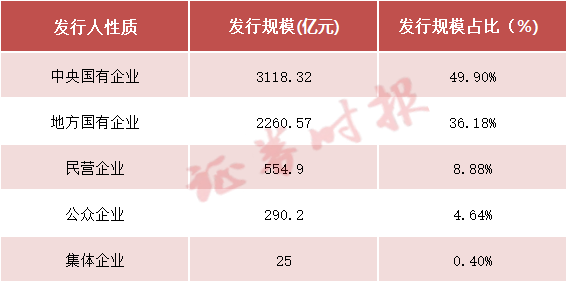
债市"科技板"下科创债落地以来,各类主体发行科创债热情持续高涨。 Wind数据显示,自5月份科技创新债券(简称"科创债")相关政策落地以来,截至7月3日,全市场已发行 419只科创债,发行规模超6200亿元。其中,银行作为科创债重要的新增发行主体,目前已发行27只科创 债,发行规模超2200亿元。 业内人士指出,科创债2.0时代扩容发行主体,并完善一系列配套支持机制,推动市场进一步扩容,债券 市场支持科技创新的质效将有效提升。 发行规模突破6200亿元 5月7日,中国人民银行、中国证监会联合发布《关于支持发行科技创新债券有关事宜的公告》(以下简称 《公告》),从丰富科技创新债券产品体系和完善科技创新债券配套支持机制等方面,对支持科技创新债 券发行提出多项重要举措。 自5月7日以来,科创债发行持续放量。Wind数据显示,截至7月3日,债市"科技板"下科创债已发行419 只,发行规模达6248.98亿元。 从发行人的性质来看,中央国企和地方国企是科创债发行的主力。截至目前,中央国有企业发行科创债 3118.32亿元,占比49.90%;地方国有企业发行科创债2260.57亿元,占比36.18%;民营企业、公众企 业 ...

国开行发行185天期债券,规模20亿元,发行利率1.3208%,预期1.3000%,投标倍数3.31倍,边际倍数1.25倍;国开行发行7年期债券,规模20亿元,发行利率1.6499%,预期1.6700%,投标倍数5.89倍,边际倍数1.03倍。
news flash· 2025-07-03 02:35
Group 1 - The China Development Bank issued a 185-day bond with a scale of 2 billion yuan and an issuance rate of 1.3208%, which was lower than the expected rate of 1.3000%, with a bid-to-cover ratio of 3.31 times and a marginal ratio of 1.25 times [1] - The China Development Bank also issued a 7-year bond with a scale of 2 billion yuan and an issuance rate of 1.6499%, which was lower than the expected rate of 1.6700%, with a bid-to-cover ratio of 5.89 times and a marginal ratio of 1.03 times [1]
★科创债"扩容"热潮涌动 机构企业抢滩发行总额超百亿
Zheng Quan Shi Bao· 2025-07-03 01:56
Core Viewpoint - The People's Bank of China and the China Securities Regulatory Commission have announced support for the issuance of technology innovation bonds, expanding the range of issuers to include financial institutions, technology companies, private equity investment institutions, and venture capital institutions [1][2] Group 1: Issuance Plans - Major financial institutions such as the China Development Bank, Industrial and Commercial Bank of China, and Industrial Bank have announced plans to issue technology innovation bonds, with total issuance expected to reach 200 billion yuan from the China Development Bank and 100 billion yuan from the Industrial Bank [1] - As of May 8, 36 companies have announced plans to issue technology innovation bonds with a total scale of 21 billion yuan, while 14 companies have registered for issuance with a total scale of 18 billion yuan [1][2] - Securities firms have also responded actively, with announcements for a total of up to 17.7 billion yuan in technology innovation bonds, including plans from major firms like CITIC Securities and China Merchants Securities [2] Group 2: Funding Utilization - The funds raised from the issuance of technology innovation bonds will primarily support the development of technology innovation businesses, including investments in national technology innovation demonstration enterprises and manufacturing champions [1][3] - Specific allocations include 70% of funds from Guotai Junan being directed towards supporting technology innovation sectors such as integrated circuits, artificial intelligence, and renewable energy [3] Group 3: Market Impact and Trends - The inclusion of financial institutions as issuers of technology innovation bonds is expected to enhance market vitality and expand the market for technology innovation bonds, facilitating better funding support for technology innovation [2][4] - Data indicates that the issuance scale of technology innovation bonds is projected to exceed 1.2 trillion yuan in 2024, reflecting a year-on-year growth of 59% [3] - The average issuance interest rate for 5-year AAA-rated technology innovation bonds is expected to remain lower than that of ordinary corporate bonds, indicating a favorable financing environment for issuers [3][5]




★额度5000亿元 央行设立服务消费与养老再贷款
Zhong Guo Zheng Quan Bao· 2025-07-03 01:56
Group 1 - The People's Bank of China (PBOC) has established a "Service Consumption and Elderly Refinance" tool to encourage financial institutions to increase support for key service consumption areas and the elderly industry [1][2] - The total refinancing quota for this initiative is set at 500 billion yuan, with an annual interest rate of 1.5% and a maximum term of 3 years [1] - The policy will be executed until the end of 2027, involving 26 national financial institutions that can independently decide on loan issuance based on risk [1][2] Group 2 - The focus of current economic policy in China is on expanding domestic demand and boosting consumption, with service consumption being a key area for consumption upgrade [2] - The new refinancing tool is part of an innovative measure by the PBOC to support consumption and is designed to work in coordination with fiscal and other industry policies [2]