海尔智家

Search documents
破解供需错配,北大国发院首提“生活经济”
Sou Hu Cai Jing· 2026-01-29 10:34
Core Insights - The concept of "life economy" is introduced as a potential driver for boosting domestic demand in China [1][3] - The report indicates that China's economy has entered a phase of "dual circulation and high-quality development," shifting consumer demand from mere availability to quality and personalization [3][4] Group 1: Economic Transition - The traditional manufacturing model focusing on scale and standardization struggles to meet real consumer needs, leading to supply-demand mismatches and low-price competition [3] - The life economy allows consumers to become "product managers," addressing the supply-demand mismatch effectively [3] Group 2: Consumer Engagement - Platforms like Xiaohongshu generate significant consumer data, with over 9 million daily posts and 70 million comments, reflecting real consumer demand [3] - Decentralized algorithms on these platforms enhance the visibility of niche products, benefiting small businesses and individual entrepreneurs [3] Group 3: Brand Collaboration - Brands are increasingly engaging in "co-creation" with consumers to enhance innovation accuracy and reduce market trial costs [4] - Examples include Haier's washing machine developed from user wishes on social media and Lissome's dishwashing machine that underwent 103 iterations based on user feedback [4] Group 4: Policy Support - The rise of the life economy is supported by policy direction and technological innovation, with the 2024 Central Economic Work Conference prioritizing consumption and domestic demand expansion [4] - The emphasis on domestic demand as a leading role in 2025 further provides policy backing for the development of the life economy [4]

海尔智家(06690.HK)1月29日耗资2060万元回购80.7万股A股
Ge Long Hui· 2026-01-29 10:06
相关事件 格隆汇1月29日丨海尔智家(06690.HK)公告,1月29日耗资2060万元回购80.7万股A股。 海尔智家(06690.HK)1月29日耗资2060万元回购80.7万股A股 海尔智家(06690.HK)1月28日耗资654万元回 购26万股A股 ...
海尔智家(06690)1月29日斥资2060.12万元回购80.7万股A股
智通财经网· 2026-01-29 10:00
智通财经APP讯,海尔智家(06690)发布公告,于2026年1月29日,该公司斥资人民币2060.12万元回购 80.7万股A股。 ...
海尔智家(06690) - 翌日披露报表
2026-01-29 09:56
表格類別: 股票 狀態: 新提交 公司名稱: 海爾智家股份有限公司 呈交日期: 2026年1月29日 如上市發行人的已發行股份或庫存股份出現變動而須根據《香港聯合交易所有限公司(「香港聯交所」)證券上市規則》(「《主板上市規則》」)第13.25A條 / 《香港聯合交易所有限公司GEM證券 上市規則》(「《GEM上市規則》」)第17.27A條作出披露,必須填妥第一章節 。 FF305 翌日披露報表 (股份發行人 ── 已發行股份或庫存股份變動、股份購回及/或在場内出售庫存股份) | 第一章節 | | | | | | | | --- | --- | --- | --- | --- | --- | --- | | 1. 股份分類 | 普通股 | A 股份類別 | | 於香港聯交所上市 | 否 | | | 證券代號 (如上市) | 600690 | 說明 | 每股面值人民幣1元之普通股(A股) (於上海證券交易所上市) | | | | | A. 已發行股份或庫存股份變動 | | | | | | | | | | 已發行股份(不包括庫存股份)變動 | | 庫存股份變動 | | | | 事件 | | 已發行股份(不包括庫存 ...
北大国发院发布生活经济报告,生活社区让更多新需求被看见
Sou Hu Wang· 2026-01-29 09:05
Core Insights - The concept of "life economy" has been introduced, indicating a shift from fragmented consumption to a systematic economic form that can stimulate domestic demand [1][3] - The life economy is seen as a key driver for enhancing domestic circulation and promoting high-quality development [1][4] Group 1: Definition and Characteristics of Life Economy - The life economy is defined as the expression, connection, and stimulation of individual life needs through digital technology, leading to a positive interaction between supply and demand [3] - It emphasizes the return to the essence of life, addressing the transformation of supply-demand contradictions, and highlights the role of digital technology as an "accelerator" and "translator" in matching supply and demand [3][9] - The life economy aims to create a dual circulation system of demand and supply, reshaping the innovation ecosystem on the supply side [3] Group 2: Role of Digital Platforms - Xiaohongshu (Little Red Book) is identified as a core carrier of the life economy, generating over 9 million posts and 70 million comments daily, with 200 million users seeking purchase advice monthly [6] - The platform's user-generated content (UGC) fosters a community that captures and stimulates personalized and diversified demands, creating a complete ecosystem for the life economy [9] - The decentralized algorithms on digital platforms allow long-tail supply to gain precise exposure, enhancing the survival space for small businesses and individual entrepreneurs [8] Group 3: Policy Recommendations and Future Outlook - The report suggests four policy recommendations to further develop the life economy: encouraging the development of life economy, strengthening online-offline collaboration, deepening the "co-creation" mechanism, and proactively integrating AI [9] - The rise of the life economy is seen as a result of policy guidance and technological innovation, with the 2024 Central Economic Work Conference emphasizing the importance of boosting consumption and expanding domestic demand [9][10] - The life economy represents a paradigm shift from "production-driven consumption" to "demand-driven supply innovation," embedding consumption within individual life scenarios and emotional experiences [10]
白色家电板块1月29日涨2.42%,美的集团领涨,主力资金净流出1.69亿元
Zheng Xing Xing Ye Ri Bao· 2026-01-29 09:03
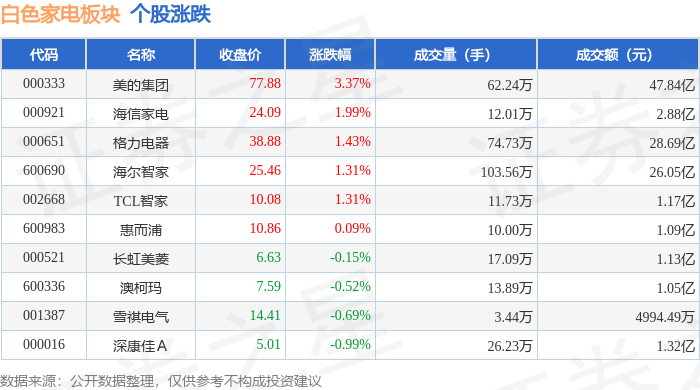
Group 1 - The white goods sector increased by 2.42% on January 29, with Midea Group leading the gains [1] - The Shanghai Composite Index closed at 4157.98, up 0.16%, while the Shenzhen Component Index closed at 14300.08, down 0.3% [1] - Midea Group's stock price rose by 3.37% to 77.88, with a trading volume of 622,400 shares and a transaction value of 4.784 billion yuan [1] Group 2 - The white goods sector experienced a net outflow of 169 million yuan from institutional investors and 195 million yuan from speculative funds, while retail investors saw a net inflow of 364 million yuan [3] - Midea Group had a net inflow of 24.2 million yuan from institutional investors, while it faced a net outflow of 28.4 million yuan from speculative funds [3] - Gree Electric experienced a net outflow of 119 million yuan from institutional investors and a net inflow of 138 million yuan from retail investors [3]

山东省政协委员谭丽霞:建议开放AI+大健康场景 加速医工科技创新转化|聚焦2026山东两会
Jing Ji Guan Cha Wang· 2026-01-29 07:47
Core Insights - The article discusses the proposal by Tan Lixia, Vice Chairman of Haier Group, to enhance the medical and health industry in Shandong Province through the transformation of medical technology achievements and the establishment of an AI + health ecosystem [2][3]. Group 1: Medical Technology Transformation - The proposal emphasizes the need to open AI + health scenarios and create an international hub for technology transformation, aiming to accelerate the conversion of medical technology achievements and strengthen the health industry in Shandong [2]. - Shandong has unique advantages in the biomedicine sector, including numerous national medical centers and innovation platforms, but faces challenges in bridging the gap between clinical discoveries and engineering research [3]. - The long chain of medical technology innovation involves multiple sectors and is characterized by long cycles, high risks, and significant funding needs, leading to many research achievements remaining dormant [3]. Group 2: Innovation Platforms - The "Haiyi Hui" platform, established in 2024, aims to address the challenges in the medical technology industry by linking various resources and enhancing innovation conversion efficiency [4]. - The platform has gathered over 60 research institutions and medical organizations, including more than 100 experts, to create a replicable model for the health industry [4]. - Within a year of its establishment, the platform has reduced the average project cycle from technology to product by over 30%, achieving clinical conversion for over 10 groundbreaking technologies [5]. Group 3: Policy Recommendations - The proposal calls for the establishment of a medical health industry ecological innovation demonstration zone in Qingdao, integrating successful models from "Haiyi Hui" with provincial industrial strategies [7]. - It suggests building a provincial health management big data platform to leverage real-world data for disease prevention and innovative drug development, while advocating for broader access to AI + health scenarios [7][6]. - The overarching goal is to position Shandong as a world-class industrial ecosystem in the health sector, with "China Health Bay" as a key representative of new productive forces in healthcare [7].

北大国发院发布生活经济报告:促进消费要关注个体的需求
Sou Hu Cai Jing· 2026-01-29 04:45
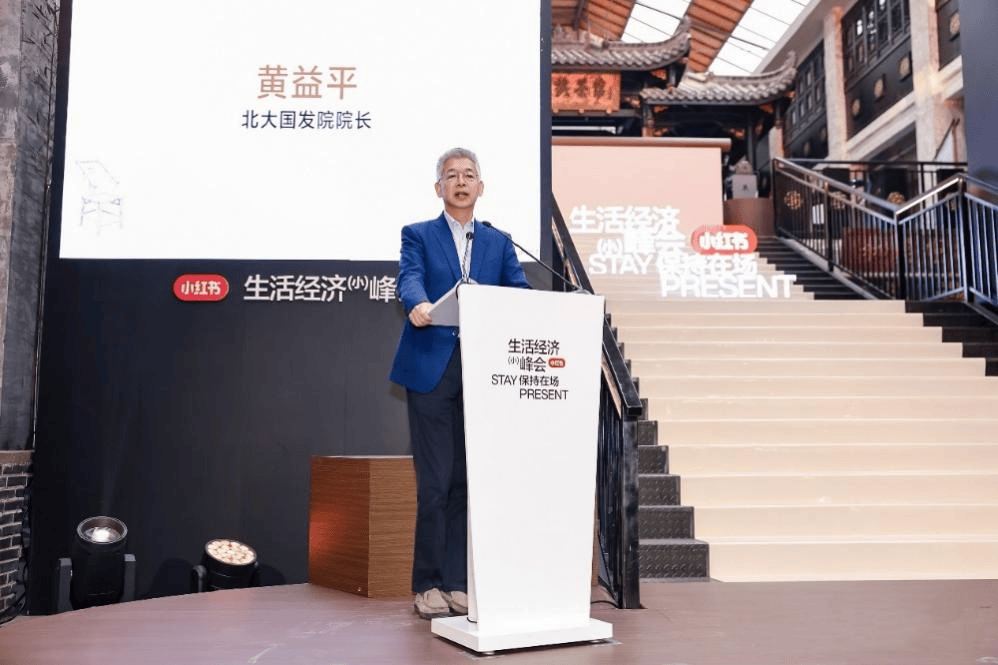
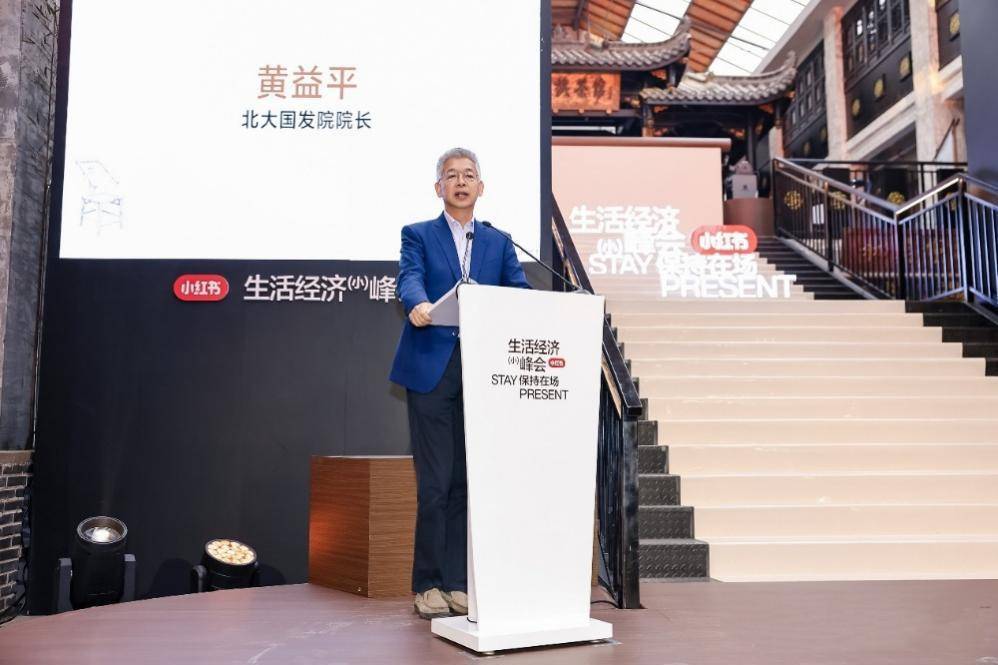
极目新闻通讯员周菲 实习生严梓欣金芷瑶周嘉宇 2026年1月28日,在小红书"保持在场·生活经济小峰会"上,北京大学国家发展研究院发布《2026生活经济报告》(以下简称《报告》),首次提出"生活经 济"的概念。指出生活经济正从零散消费现象升级为系统性经济形态,有望成为破解当前提振内需的重要抓手,而小红书凭借对生活场景的深度链接,已成 为生活经济发展的核心载体与典型案例。 全国政协委员尹艳林、北京大学国家发展研究院院长黄益平等嘉宾结合宏观政策与微观实践,解读了生活经济对扩大内需、推动高质量发展的重要意义,指 出"生活经济"有望成为激活国内大循环内生动力的关键抓手之一。 报告首提生活经济概念 《报告》梳理我国经济发展历程发现,当前正进入"双循环与高质量发展"阶段,居民需求从"有没有"转向"好不好",并且呈现出多元化、差异化、个性化特 征。但与此同时,传统供给体系不能有效识别并满足真实个体需求,导致竞争回到"最低价"这一单维度,从而产生内卷。 在这样的背景下,北大国发院报告首次明确"生活经济"的核心定义:生活经济是指个体的生活需求通过数字技术被表达、连接和激发,形成供需良性互动和 增长的经济形态。 尹艳林强调,党的 ...
AI应用侧进展及新兴家电智能化前景
2026-01-29 02:43
Summary of Key Points from Conference Call Industry Overview - The conference call discusses advancements in AI applications, particularly in the smart home appliance sector, and the implications for various companies involved in this space [1][2][4]. Core Insights and Arguments - **AI Application Progress**: Significant advancements in AI applications are expected by 2026, with a shift from intellectual pursuits to practical applications. Model upgrades will enhance environmental interactions and application capabilities across various scenarios [2][3]. - **Multimodal Technology**: The average benchmark score for multimodal applications is currently 40, with expectations to reach 80, which will further open up visual-related scenarios [2][6]. - **Hardware Evolution**: In the AI era, hardware is transitioning from data transporters to data producers, making soft-hard integration applications crucial. Companies that can capture data production sources will have a competitive advantage [4][5]. - **Collaboration Preferences**: Large model enterprises prefer to collaborate with companies that can record diverse data, such as those producing AI glasses or smart recording devices, and those with integrated software and hardware capabilities [5][11]. - **Smart Home Appliances**: Major appliance manufacturers like Midea and Haier are integrating AI to enhance user experience and safety, with innovations leading to increased product value and market competitiveness [8][9]. Additional Important Insights - **Emerging Product Categories**: New product categories, such as AI headphones and robotic devices, are gaining traction, driven by advancements in AI technology and multimodal capabilities [9][11]. - **Investment Opportunities**: Current market conditions present a favorable environment for investors, particularly in companies like Anker and 9号, which have low valuations (around 16-17 times) and strong growth potential (over 20% growth rate expected) [12][14]. - **Long-term Growth Potential**: The integration of AI applications is expected to significantly enhance product functionalities and market appeal, providing substantial opportunities for companies to innovate and capture market share [10][13][14]. Conclusion - The conference highlights the transformative impact of AI on the smart appliance industry, emphasizing the importance of innovation, collaboration, and investment in emerging technologies and products. Companies that adapt to these changes are likely to thrive in the evolving market landscape [1][2][9][14].
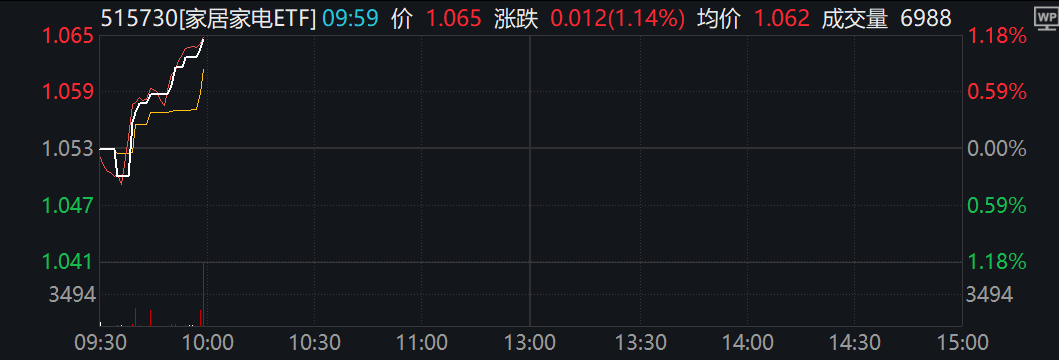
深圳发布未来三年消费行动新计划,家居家电ETF(515730)活跃
Sou Hu Cai Jing· 2026-01-29 02:32
Group 1 - The core viewpoint of the news highlights a strong performance in the home appliance sector, with the Zhongzheng Home Appliance Index rising by 1.02% and key stocks like Taili Technology and Shangpin Home furnishing showing significant gains [1][3] - The Shenzhen Municipal Market Supervision Administration and other departments have launched a three-year action plan (2026-2028) to optimize the consumption environment, focusing on promoting home consumption and enhancing the smart home industry ecosystem [3] - Data from Bohai Securities indicates that by 2025, the retail sales of furniture are expected to grow by 14.6%, and home appliances by 11.0%, significantly outpacing the overall retail sales growth of 3.7% due to government policies supporting consumption [3][4] Group 2 - The home appliance sector is expected to see marginally improving fundamentals in 2026, supported by national subsidies, easing trade tensions, and favorable export conditions, with the sector's valuation at historical lows [3][4] - The first home appliance ETF (515730) tracks the Zhongzheng Home Appliance Index and includes leading companies such as Midea Group and Gree Electric, covering various consumer scenarios and investing in the "smart living ecosystem" [4]