
TotalEnergies SE

Search documents
Serica Energy to acquire bp’s interest in Culzean field in North Sea
Yahoo Finance· 2025-10-14 09:20
Core Viewpoint - Serica Energy has agreed to acquire bp's entire stake in the P111 and P2544 licences in the UK central North Sea, which includes a significant interest in the Culzean gas condensate field, marking a strategic expansion for the company [1][2]. Financial Details - The acquisition involves an upfront payment of $232 million (£174.89 million) in cash, with additional payments contingent on successful exploration outcomes and potential changes to the UK fiscal regime [2]. - Serica plans to finance the acquisition through interim cash flows from the Culzean interest and existing financial resources, including a $525 million Reserve Based Lending facility [6]. Operational Insights - The Culzean field is noted for its high production capacity, with net production of approximately 25,500 barrels of oil equivalent per day (boepd) delivered to bp in the first half of 2025 [5]. - The field has remaining net proved and probable reserves estimated at 33 million barrels of oil equivalent as of January 1, 2025, making it the largest gas field on the UK Continental Shelf by production [5]. Strategic Implications - Completion of the transaction is expected to significantly enhance Serica's production and cash flows, positioning the company favorably within the UK gas market [3]. - The deal is subject to a 30-day pre-emption period, allowing existing partners TotalEnergies and NEO NEXT the right to acquire bp's interest under the same terms [3][4]. Timeline - The deal is anticipated to be completed around the end of 2025 [4]. Company Background - Serica Energy is an independent oil and gas company with a diverse portfolio of assets on the UK Continental Shelf, primarily focused on production from the Bruce, Keith, and Rhum fields in the Northern North Sea [6][7].

Non-OPEC oil supply to start declining at $60 per barrel, TotalEnergies CEO says
Reuters· 2025-10-14 09:06
Core Viewpoint - Oil production from non-OPEC producers is expected to decline if oil prices drop to $60 per barrel, according to TotalEnergies CEO Patrick Pouyanne [1] Group 1 - TotalEnergies CEO Patrick Pouyanne highlighted the critical price point of $60 per barrel for oil, indicating that below this level, production from outside OPEC will start to decrease [1]


What ExxonMobil's Comeback in Iraq Really Means
Yahoo Finance· 2025-10-13 18:00
Core Insights - ExxonMobil's recent signing of a heads of agreement with Iraq's Oil Ministry marks a significant return of Western firms to Iraq, following its high-profile exit due to trust issues and corruption concerns [2][4] - The withdrawal of ExxonMobil and other Western firms was symptomatic of broader issues in Iraq's oil sector, including corruption and governance challenges, which have hindered the country's oil potential for decades [2][4] - The new agreement indicates a potential shift in the geopolitical landscape, with the West aiming to reassert its influence in Iraq and the Middle East [2][3] Summary by Sections ExxonMobil's Withdrawal and Return - ExxonMobil's exit from Iraq involved critical projects like the Common Seawater Supply Project (CSSP) and the West Qurna 1 oil field, driven by a breakdown in trust over risk/reward balance and corruption practices [1][2] - The recent agreement suggests that ExxonMobil has received assurances regarding cohesion, security, and streamlined processes from Iraq's government, which are crucial for its operations [2][4] Corruption and Governance Issues - Transparency International's reports highlighted Iraq's severe corruption issues, including embezzlement, procurement scams, and bureaucratic bribery, which have severely limited effective governance [2][4] - The U.S. firms are now required to have all agreements vetted by U.S. legal and accounting firms to ensure compliance and mitigate risks associated with corruption [1][2] Development of the Majnoon Oil Field - ExxonMobil's new focus will be on the Majnoon oil field, which has an estimated 38 billion barrels of oil in place and is one of Iraq's largest oil fields [5] - The field has a history of production challenges but has the potential for significant output increases, with a previous plateau production commitment of 1.8 million barrels per day [5] - The Majnoon field's development is strategically important as it is shared with Iran, potentially limiting Iranian oil exports under international sanctions [4][5]

Eni and Petronas Target 2026 Launch for Southeast Asia Gas Venture
Yahoo Finance· 2025-10-13 15:57
Core Insights - Eni is advancing its Southeast Asian expansion with a major gas joint venture with Petronas, set to launch in 2025, aimed at transforming regional energy supply and enhancing production portfolios for both companies [1][3] Group 1: Joint Venture Details - The merger of upstream assets between Eni and Petronas in Malaysia and Indonesia is expected to produce up to 500,000 barrels of oil equivalent (boe) per day at full capacity, with reserves of around 3 billion boe and exploration potential of 10 billion boe [2] - The partnership is anticipated to enhance energy security in Southeast Asia and create jobs and infrastructure in both Malaysia and Indonesia [3] Group 2: Strategic Goals - Eni's Chief Operating Officer confirmed that the venture should be operational by next year, aligning with Eni's goal to expand its liquefied natural gas (LNG) business, with gas projected to constitute 60% of Eni's total hydrocarbon production by 2030 [4] - Eni is also progressing with its Vaca Muerta LNG project in Argentina, aiming for exports to commence between late 2029 and early 2030, which will help expand its global LNG portfolio to 20 million tonnes per annum (MTPA) by the end of the decade, up from 13 MTPA in 2024 [5] Group 3: Regional Context - The collaboration between Petronas and Eni is part of a broader trend of new deals in Southeast Asia, including Petronas' agreements with TotalEnergies to explore Malaysian offshore gas blocks with over 4 trillion cubic feet of reserves, reinforcing Malaysia's position as a key gas hub for Asia [6]

曾日赚斗金,今勒紧裤带!油价走弱下石油巨头的“分红盛宴”即将散场?
智通财经网· 2025-10-13 06:59
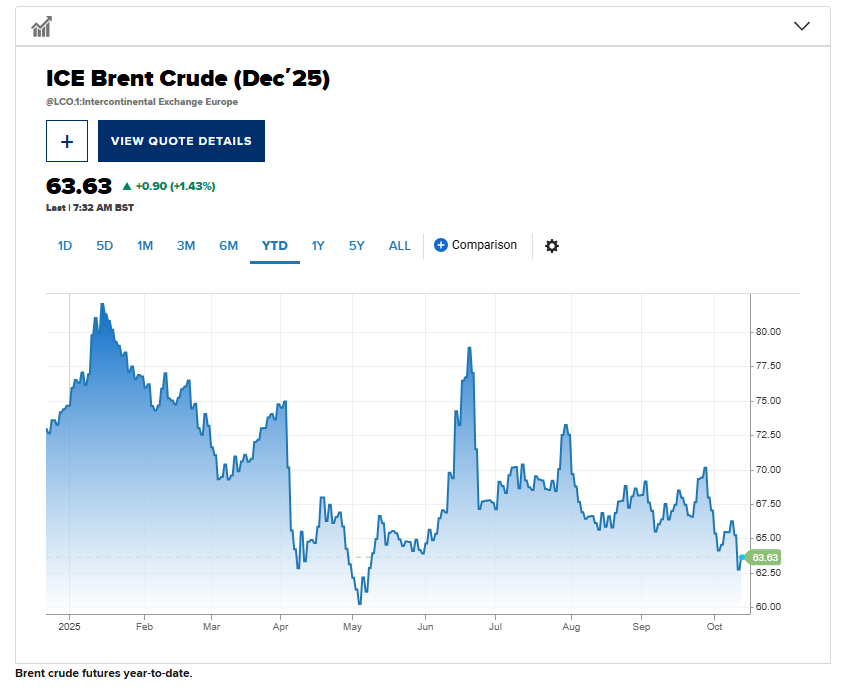
Core Viewpoint - Energy giants are facing tough decisions as oil prices weaken, leading to expected pressure on shareholder returns in the coming months [1] Group 1: Company Actions - Major oil companies, including ExxonMobil, Chevron, Shell, and BP, are implementing layoffs and cost-cutting measures in response to the industry downturn [1] - These companies previously enjoyed significant profits, with the five major Western oil companies collectively earning nearly $200 billion in profits in 2022 due to soaring fossil fuel prices [1] - A high proportion of cash flow from operations, reaching up to 50%, has been allocated to shareholder returns in recent quarters [1] Group 2: Strategic Adjustments - BP has already adjusted its strategy, and Total has announced plans to reduce shareholder returns, indicating a likely trend among other oil giants [2] - Analysts suggest that cutting stock buybacks may be a more feasible option than reducing dividends, as dividends are considered core returns for investors [2] - Saudi Aramco's earlier dividend cut due to uncertain oil price prospects has made other private oil companies cautious about similar actions [2] Group 3: Market Outlook - Analysts highlight three core issues for oil giants: whether to incur debt to maintain shareholder returns, reduce stock buybacks, or cut drilling activities, each carrying its own risks [3] - Despite earlier pessimism regarding oil prices, the market has shown resilience, stabilizing around $65 to $70 per barrel, although prices have recently dipped below this range [3][4] - The upcoming quarterly earnings reports from Total, Shell, ExxonMobil, Chevron, and BP will provide insights into how these companies plan to adjust their shareholder return policies in light of the weakening commodity prices [4]


行业聚焦:全球DOT4制动液市场头部企业份额调研(附Top 10 厂商名单)
QYResearch· 2025-10-13 05:31
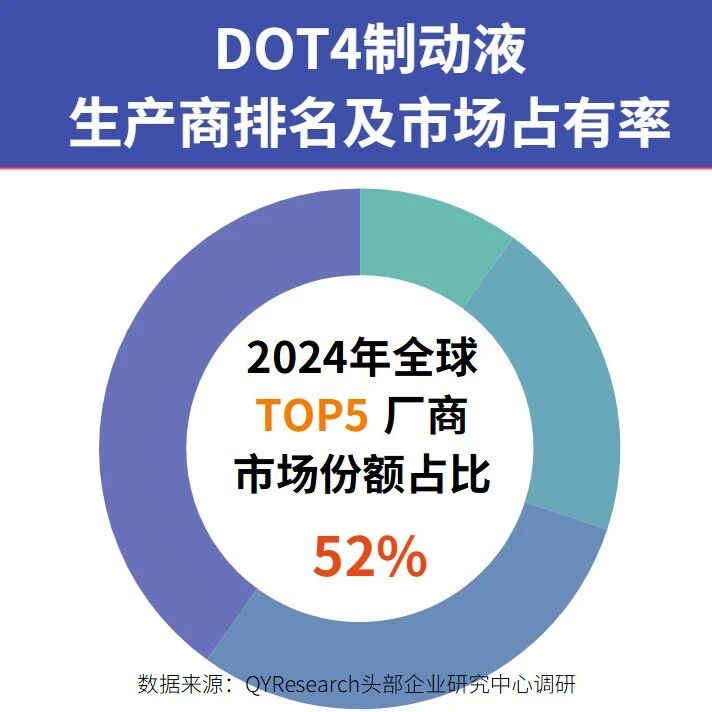
DOT4 制动液( DOT4 Brake Fluid )产品简介 DOT4 制动液是一种醇醚型合成制动液,具有比 DOT3 制动液更高的干湿沸点,可承受更高的温度而不沸腾,从而提供更稳定、安全的制动性能。它主要由乙 二醇等醇醚类物质和硼酸酯组成,具有良好的润滑、防锈、防腐蚀性能,并对橡胶和金属的腐蚀性很小,适用于需要更高制动性能的现代汽车和重负荷车辆。 DOT4 制动液( DOT4 Brake Fluid )产品图片 全球趋势与驱动因素 : 全球 DOT4 制动液市场稳步增长,主要受益于汽车保有量增加和售后需求扩张。电动化趋势推动高性能制动液需求(如低导电性配 方),亚太地区成为最大消费市场。技术升级聚焦高干湿沸点、环保和长效寿命,满足严苛安全标准。 政策法规带来的机遇与挑战 : 环保法规(如 REACH )推动无铜、生物基等环保型制动液研发,但成本压力增大。各国安全标准升级(如 FMVSS116 )倒逼 产品性能提升,同时为合规企业创造技术壁垒红利。碳中和大趋势亦驱动可再生原料应用。 根据 QYResearch 最新调研报告显示,预计 2 0 31 年全球 双离合变速箱油 市场规模将达到 18.09 亿美元 ...
Big Oil forced to confront some tough choices as 'monster profits' fade into memory
CNBC· 2025-10-13 05:12
Core Viewpoint - Energy supermajors are facing significant challenges due to a weaker crude price environment, leading to potential pressure on shareholder payouts in the coming months [1][2]. Group 1: Industry Trends - U.S. and European oil majors, including Exxon Mobil, Chevron, Shell, and BP, have begun cutting jobs and reducing costs in response to an industry downturn, marking a shift from the previous years of high profits [2][3]. - In 2022, the five largest Western oil companies reported nearly $200 billion in combined profits due to soaring fossil fuel prices following geopolitical events [2]. - The cash returns as a percentage of cash flow from operations (CFFO) have reached as high as 50% for several energy companies recently, indicating a trend of high shareholder returns [3]. Group 2: Financial Strategies - Analysts suggest that cutting buybacks is preferable to reducing dividends, as dividends are seen as more critical to investors [4][7]. - BP and TotalEnergies have announced plans to reduce shareholder returns, reflecting a necessary adjustment to the current market conditions [4][5]. - The potential for crude prices to fall into the $50 range next year, coupled with rising global inventories, is prompting oil companies to consider cost reductions and capital spending cuts [5][6]. Group 3: Market Outlook - Despite concerns, the current state of Big Oil is not as dire as initially expected, with oil prices remaining relatively resilient in the $65 to $70 per barrel range for a period [11][12]. - Recent trading data shows Brent crude futures at $64.97 per barrel and West Texas Intermediate futures at $61.24, indicating a slight decline [12]. - The upcoming earnings reports from major companies like TotalEnergies, Shell, Exxon Mobil, Chevron, and BP will be crucial in assessing the impact of the weaker commodity price environment on shareholder distributions [13][14].
资产配置周报:关注财报季的业绩基本面驱动,把握科技、资源主线-20251012
Donghai Securities· 2025-10-12 14:21
Core Viewpoints - Focus on the performance fundamentals driven by the earnings season, emphasizing technology and resource sectors [7][8] Global Asset Review - Global stock markets mostly declined during the week of October 10, with the Nikkei 225 leading gains due to policy expectations from Japan's new ruling party president, while major markets erased gains from the holiday period due to US-China trade tensions [11][12] - Major commodity futures saw gold and aluminum prices rise, while crude oil and copper prices fell; the US dollar index increased, leading to depreciation of major non-USD currencies [11][12] Domestic Equity Market Review - In the domestic equity market for the week ending October 10, cyclical stocks outperformed financials, consumption, and growth sectors, with an average daily trading volume of 25,869 billion yuan, up from 21,743 billion yuan [16] - Among the 31 primary industries tracked, 17 sectors rose while 14 fell, with notable gains in non-ferrous metals (+4.44%), coal (+4.41%), and steel (+4.18%), while media (-3.83%), electronics (-2.63%), and electric equipment (-2.52%) saw significant declines [18] Interest Rates and Exchange Rates - The liquidity environment is expected to remain loose, supported by seasonal fiscal spending and cash inflows post-holiday, despite pressures from tax payments and policy tool expirations [9][19] - The yield on 10Y US Treasury bonds decreased to 4.05%, while the yield on 10Y Chinese government bonds fell to 1.846%, indicating a trend of declining yields amid rising risk aversion [12][43] Commodity Tracking - As of October 10, WTI crude oil prices fell to $58.90 per barrel, a decrease of 3.3% from the previous week, while US crude oil production increased to 13.629 million barrels per day [25] - Gold prices reached a new high of $4,017.85 per ounce, driven by safe-haven demand amid ongoing US government shutdown and trade tensions [41][42] - Refined copper prices increased, with SHFE electrolytic copper settling at 86,285 yuan per ton, up 4.3% week-on-week, reflecting strong demand in construction and electrical sectors [51]
ESG热点周聚焦(10月第2期):工信部启动2025年度绿色工厂推荐工作
Guoxin Securities· 2025-10-12 12:15
Core Insights - The report highlights the integration of technology and policy adjustments in the ESG landscape, with companies like Nestlé and Mars opposing the EU's delay on forest deforestation regulations, and Microsoft signing a 20-year solar energy agreement in Japan to accelerate clean energy transition in Asia-Pacific [2][6] - Record green capital deployment is noted, with Brookfield raising $20 billion to establish the largest global energy transition fund, and Goldman Sachs' Verdalia raising $780 million to expand biogas infrastructure in Southern Europe [2][8] - The report discusses the launch of the ISO 17298 standard for biodiversity, which aims to help organizations assess their biodiversity impacts and risks, aligning with global sustainability goals [16] International ESG Events - Companies are actively enhancing environmental responsibilities, as seen with the collaboration of over 20 firms, including Nestlé and Mars, against the EU's forest deforestation law delay [6][7] - Diginex's acquisition of Matter for $13 million aims to enhance ESG data integration and AI analysis capabilities, reflecting a trend towards technological innovation in ESG practices [7] - The EU's delay in implementing the CSRD for non-EU companies is intended to reduce administrative burdens and enhance competitiveness, with the new timeline pushing the reporting requirements to 2027 [15][14] Domestic ESG Developments - The report notes significant advancements in carbon neutrality practices in China, including the operation of the first large-capacity sodium-ion energy storage station and the integration of a 648 MW wind power project in Brazil, which is expected to reduce carbon emissions by 2.12 million tons annually [20] - The Ministry of Industry and Information Technology has initiated a green factory recommendation program to strengthen energy conservation and carbon reduction in manufacturing [20] - The establishment of 490 national-level green factories in Guangdong showcases the province's leadership in promoting sustainable manufacturing practices [20]





美欧能源协议因何备受非议?
Jing Ji Ri Bao· 2025-10-11 23:28
Core Viewpoint - The ongoing debate surrounding the US-EU energy agreement highlights significant skepticism from Europe regarding the feasibility and economic implications of the deal, which is valued at $750 billion over three years, with concerns that it may lead to increased energy costs for European manufacturers [1][6]. Group 1: EU's Energy Trade Commitments - The EU's commitment to purchase $250 billion worth of US energy products annually is deemed unrealistic, as current data indicates that the total energy import value for the EU in 2024 is projected to be $433 billion, with less than $80 billion coming from the US, falling short of the agreement's targets [2][3]. - The EU faces a significant shortfall in crude oil imports from the US, needing to increase its current imports by over three times to meet the agreement's requirements, which could raise procurement costs by at least 30% [2][3]. Group 2: Challenges in LNG Supply - Although the US has become the main LNG supplier to the EU, accounting for 45.3% of the market share, the projected annual LNG procurement for 2024 would only reach $46.5 billion to $58 billion, far below the $250 billion target [3][4]. - The global LNG market is limited, with a total size slightly above $200 billion, making it impossible for the EU to meet the agreement's demands without consuming the entire global LNG trade volume [3][4]. Group 3: Structural Constraints on US Energy Supply - The US faces structural limitations in LNG export capacity, with a projected export volume of 11.9 billion cubic feet per day in 2024, which is insufficient to meet the EU's increased demand [4][5]. - The US would need to redirect 80% of its global energy exports to the EU to fulfill the agreement, which contradicts market dynamics as US exporters currently prioritize the more profitable Asian market [4][5]. Group 4: Infrastructure and Transportation Limitations - The US has only six operational LNG export terminals, all running at full capacity, and the global fleet of LNG carriers is limited, with a significant portion already under long-term contracts, creating a transportation capacity gap that cannot be quickly resolved [5][6]. - The need for an additional 200 LNG carriers to meet the agreement's transportation demands highlights the impracticality of the deal in the short to medium term [5][6]. Group 5: Political and Economic Implications - The energy agreement reflects complex political negotiations within the EU and aims to alleviate tensions in transatlantic trade relations exacerbated by US tariffs on key European industries [5][6]. - The EU's energy import costs are expected to rise by 57%, translating to an additional €680 per household annually, indicating the heavy economic burden of the agreement [6].