
罗氏

Search documents
行业聚焦:全球过敏类疾病靶向药物市场头部企业份额调研(附Top 10 厂商名单)
QYResearch· 2025-10-31 10:48
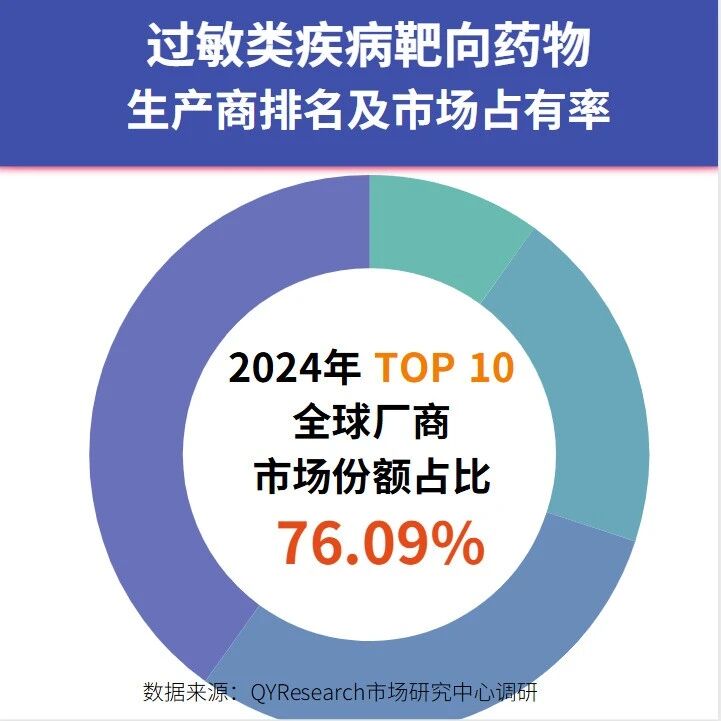
Core Viewpoint - The targeted drug market for allergic diseases is rapidly evolving due to increased understanding of immune pathways and the rising burden of allergic diseases globally, with a focus on precision medicine and innovative therapies [3][4]. Group 1: Definition and Overview - Allergic diseases affect approximately 25% of the global population, with type 2 immune pathway abnormalities being a significant factor in their development [2]. - Targeted drugs, including biologics and small molecule inhibitors, are becoming mainstream in the treatment of allergic diseases, showing better efficacy and safety compared to traditional therapies [2][3]. Group 2: Market Development - The market for targeted drugs is expanding from monoclonal antibodies to a diverse range of biologics and small molecule inhibitors, with several products already approved for conditions like asthma and atopic dermatitis [4]. - Major pharmaceutical companies and emerging biotech firms are actively participating in this market, driving innovation and expanding treatment indications [4]. Group 3: Future Trends - Future drug development will focus on new mediators related to allergic inflammation, such as IL-33, and will integrate precision medicine approaches to enhance treatment efficacy [5]. - The market is expected to see a rise in small molecule therapies and oral treatments, providing more convenient administration options [5]. Group 4: SWOT Analysis - Strengths include a solid scientific foundation based on advances in immunology and molecular biology, leading to effective targeted therapies [6]. - Opportunities arise from the increasing prevalence of allergic diseases and the potential for new targets and combination therapies [8]. Group 5: Market Size and Competition - The global market for targeted drugs for allergic diseases is projected to reach approximately $37.15 billion by 2024, with a compound annual growth rate (CAGR) of 16.07% [10]. - Major manufacturers like Sanofi, AbbVie, and Novartis hold about 76.09% of the market share, with IL-4R being the leading product type [12][14]. Group 6: Regional Market Insights - North America leads the market due to advanced healthcare systems and high patient awareness, while Europe shows strong growth supported by regulatory frameworks [20]. - Emerging markets, particularly in Asia, are experiencing rapid growth due to rising prevalence and expanding healthcare coverage [20].

Here's My Favorite Passive Income Investment
Yahoo Finance· 2025-10-31 09:45
Core Insights - International stocks have become a favorable investment option in 2025, with the Vanguard International High Dividend Yield ETF returning 29.6% year to date, outperforming the S&P 500's 15.6% return [2][7] - The weakening dollar has contributed to the improved performance of international investments, making overseas holdings more valuable in dollar terms [8] Fund Overview - The Vanguard International High Dividend Yield ETF comprises 1,531 stocks from 40 countries, focusing on above-average dividend yields, with a current yield of 3.95%, significantly higher than the S&P 500's yield [4][7] - The fund's asset allocation includes approximately 42% in financials, with industrials, energy, and consumer staples making up an additional 24% [5] Valuation Comparison - The valuation gap between U.S. stocks and international stocks is notable, with the S&P 500 trading at around 29 times earnings compared to the ETF's valuation near 13 times for similar profit profiles [6]
医药BD旺季来临,机构资金或悄然布局,医药相关ETF备受关注
Sou Hu Cai Jing· 2025-10-31 08:12
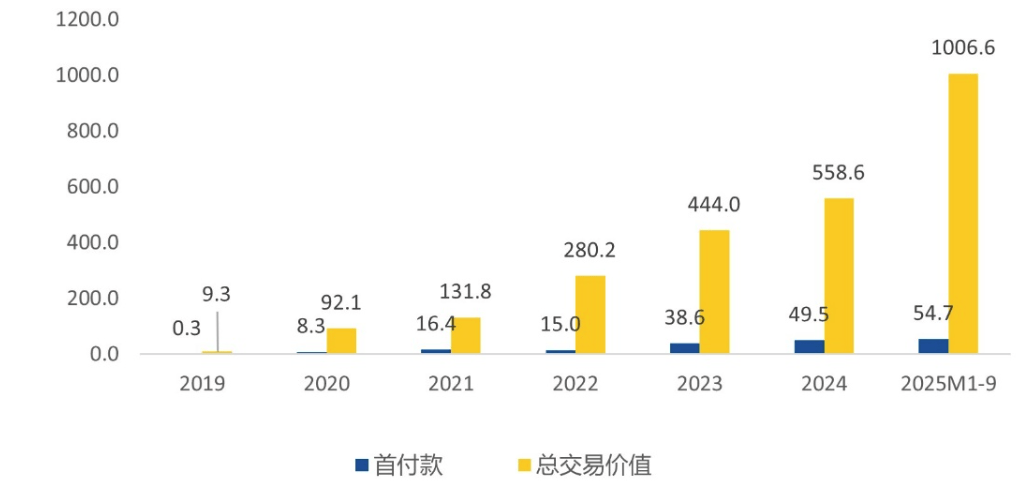
Group 1 - The pharmaceutical sector has been experiencing fluctuations since September, following a strong rally, and is currently undergoing a rotation adjustment. The question arises whether the sector is worth attention after a valuation decline and if there is still growth logic [1] - The fundamentals supporting the innovative drug sector may continue to strengthen in Q4, with multiple catalysts on the horizon that could further release industrial development momentum [1] Group 2 - The policy environment for the pharmaceutical industry is improving, with the National Healthcare Security Administration and the National Health Commission jointly releasing measures to support high-quality development of innovative drugs, providing comprehensive support across five key areas [2][4] - The implementation of ICH guidelines in China is promoting more efficient and scientific drug evaluation processes, enhancing regulatory confidence [2] Group 3 - The upcoming peak season for business development (BD) transactions is expected to see increased activity, with historical data indicating that October and November are high-frequency periods for such transactions [5] - A significant deal was struck on October 8, with Innovent Biologics making a $100 million upfront payment, marking the beginning of Q4's BD activity [5] - On October 22, Innovent Biologics and Takeda Pharmaceuticals announced a global strategic collaboration worth up to $11.4 billion, setting a record for BD transaction amounts among Chinese innovative drug companies [6] Group 4 - The valuation of the pharmaceutical sector shows a significant gap from its recent five-year price peak, indicating potential for recovery [9] - The proportion of public equity funds heavily invested in the pharmaceutical sector has increased to 12.2%, suggesting that there is still room for growth compared to the historical average of 13.7% [9] - Excluding pharmaceutical-themed funds, the proportion of public equity funds in the sector is at a historical low of 6.44%, indicating potential for significant inflow of new capital if market interest increases [9] Group 5 - For ordinary investors, investing in individual innovative drug stocks poses challenges due to the need for specialized tracking capabilities across various aspects such as pipelines, clinical trials, and regulations. Therefore, considering ETFs that cover industry leaders may be a more effective strategy [10]
A股画风突变!这个“散户最爱”的板块已连涨10个月
Mei Ri Jing Ji Xin Wen· 2025-10-31 07:33
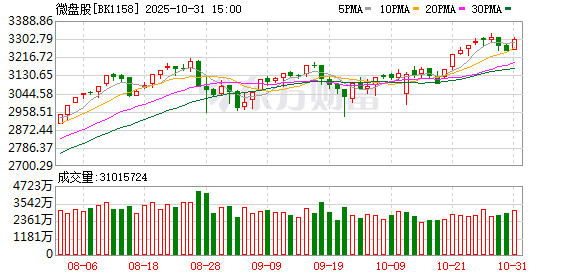
Market Overview - The three major indices weakened, with the Shanghai Composite Index down 0.81% and the ChiNext Index down 2.31% [2] - The computing hardware industry chain showed a significant pullback, particularly in CPO and memory sectors, while AI applications, innovative pharmaceuticals, and consumer concepts performed strongly [2] - Approximately 3,800 stocks rose, with a total trading volume of 2.35 trillion yuan, a decrease of 114.5 billion yuan from the previous trading day [2] Monthly Performance - The Shanghai Composite Index increased by 1.85% for the month, briefly surpassing 4,000 points, marking a ten-year high, while the ChiNext Index fell by 1.56% [2] - The North China 50 Index performed well, with a monthly increase of over 3.5% [2] Market Sentiment - There is a noticeable divergence in performance between indices and individual stocks, with a significant number of stocks rising despite the overall index decline [2] - Recent trends indicate a shift from large-cap stocks to smaller-cap stocks, as investors seek opportunities in smaller, high-growth companies [4] Sector Performance - The WenDe Microcap Index has shown strong performance in November historically, with a cumulative increase of 77% year-to-date [8] - The Microcap Index has recorded positive monthly performance for ten consecutive months, indicating strong market expectations for the upcoming month [8] Investment Opportunities - Analysts suggest that the current market environment favors smaller stocks, particularly during the earnings vacuum period in November, which historically sees strong performance from micro-cap stocks [6] - The focus on innovative pharmaceuticals is heightened due to the introduction of a "commercial insurance innovative drug directory" mechanism in national negotiations [15] - AI applications are gaining traction, particularly with the release of OpenAI's Sora2 model, which enhances video creation capabilities and social media integration [16] Sector Highlights - The biotechnology sector showed strong gains, with biopharmaceuticals up 4.09% and innovative drugs up 3.35% [14] - The solid-state battery sector is expected to see growth due to advancements in technology and production requirements, presenting investment opportunities [17]
Corporate venture firms stepped in for drug startups during biotech funding pullback
Yahoo Finance· 2025-10-31 06:45
Core Insights - The prolonged slowdown in biotechnology startup funding has created opportunities for corporate venture firms to invest in privately held companies [1] - Corporate venture activity has surged in 2025, with firms like Novo Holdings, Eli Lilly, and Sanofi being among the most active investors [2][3] Corporate Venture Activity - Novo Holdings has participated in 18 private venture rounds in 2025, leading among tracked firms, while Eli Lilly and Sanofi Ventures have each contributed to 13 rounds [2] - Corporate venture investors are increasingly important to the biotech ecosystem, with many pharmaceutical companies, including Pfizer, Novartis, Roche, and Johnson & Johnson, having venture arms that fund early-stage life science companies [3] Funding Sources and Strategies - Unlike traditional biotech investors, corporate venture arms utilize capital from their parent corporations, allowing for a long-term investment strategy rather than a focus on quick returns [4] - Companies like Lilly and Novo Nordisk have gained significant revenue from their GLP-1 medicines, providing them with more capital for investments [5] Market Dynamics - The presence of corporate venture firms enhances the attractiveness of young drug companies to other investors, with a report indicating that at least 70% of biopharma IPOs since 2022 included a corporate venture investor, all raising at least $50 million [6]


2025年全球及中国重组蛋白行业政策、产业链、市场规模、重点企业及趋势研判:政策利好推动行业发展,重组蛋白国产替代进程加速[图]
Chan Ye Xin Xi Wang· 2025-10-31 01:20
Core Insights - The recombinant protein industry in China, despite its late start, has rapidly developed due to continuous support from national industrial policies, leading to significant breakthroughs in technology, production processes, and quality control [1][15] - The market for recombinant proteins is expected to grow steadily, driven by increased investment in innovative drug research, rising demand for precision medicine, and the expansion of downstream application scenarios [1][15] Industry Overview - Recombinant proteins are proteins obtained through genetic engineering and cell engineering, essential for the development and production of biopharmaceuticals, cell immunotherapy, and diagnostic reagents [4] - The industry has experienced three stages: the initial stage (1970-1990), rapid development (1990-2000), and transformation and upgrading (2000-present) [8][9] Market Growth - The market size of China's recombinant protein industry is projected to grow from 5.1 billion yuan in 2015 to 27 billion yuan in 2024, with a compound annual growth rate (CAGR) of 20.34% [1][15] - The global recombinant protein market is expected to increase from $7 billion in 2015 to $18.5 billion in 2024, with a CAGR of 11.4% [13][14] Policy Support - The Chinese government has implemented various policies to encourage technological innovation and market expansion in the biopharmaceutical sector, including funding support for research and expedited drug approval processes [9][10] Industry Chain - The upstream of the recombinant protein industry includes raw materials and equipment, while the midstream consists of recombinant protein products, and the downstream includes customers such as research institutions and pharmaceutical companies [10] Competitive Landscape - The recombinant protein market is characterized by a diverse and dynamic competitive landscape, with major multinational pharmaceutical companies like Pfizer, Roche, and Novartis leading the market, while numerous small and medium-sized enterprises focus on innovative technologies [16][17] Development Trends - The industry is moving towards high-end products, focusing on complex structures and high-value proteins, with an emphasis on product activity, purity, and consistency [18] - Intelligent technologies, including AI and machine learning, are expected to enhance research and production processes, improving efficiency and product quality [19][20] - Chinese recombinant protein companies are increasingly participating in global competition, aiming to meet international standards and establish a strong global presence [21]


BIIB Beats on Q3 Earnings & Sales, Stock Down on Lowered '25 EPS View
ZACKS· 2025-10-30 19:06
Core Insights - Biogen reported Q3 2025 adjusted EPS of $4.81, exceeding the Zacks Consensus Estimate of $3.89, with an 18% year-over-year increase [1][11] - Total revenues for the quarter reached $2.53 billion, a 3% increase year-over-year, driven by strong sales growth of new drugs [2][11] Financial Performance - Product sales amounted to $1.85 billion, up 4% year-over-year, with anti-CD20 therapeutic program revenues rising 11% to $494 million [3][11] - Contract manufacturing and royalty revenues fell 35% year-over-year to $151 million, while Alzheimer's collaboration revenues increased to $43 million from $19 million [4][5] Drug Sales and Growth - Biogen's MS revenues totaled $1.06 billion, a 1% increase on a reported basis, with Vumerity sales up 36% year-over-year to nearly $215 million [7][11] - Tecfidera sales declined 28% to $168 million, while Tysabri sales rose 6% to $432 million [8][11] - Rare disease drug Skyclarys generated $133 million in sales, a 30% increase year-over-year [12][11] Cost Management - Adjusted R&D expenses decreased 7% year-over-year to $432 million, while adjusted SG&A expenses rose 6% to $592 million [16][11] Guidance and Future Outlook - Biogen raised its sales guidance for 2025, expecting approximately flat or 1% growth in constant currency terms [17][11] - Adjusted EPS guidance was lowered from $15.50-$16.00 to $14.50-$15.00 due to anticipated costs from business development transactions [19][11] Strategic Developments - Biogen resubmitted a regulatory filing for a higher dose of Spinraza, with a decision expected by April 3, 2026 [20][21] - The company completed enrollment in late-stage studies for litifilimab, with data readouts expected in the second half of 2026 [22][11] Market Position - Despite competitive pressures on MS drugs and Spinraza, Biogen's new products are positioned to drive long-term growth [27][11] - The company aims to build a multi-franchise portfolio with significant revenue potential from key pipeline products [27][11]


脑机接口行业把握:技术突破与临床应用加速,侵入式与非侵入式并行驱动(2025.10.20-2025.10.24)
Huafu Securities· 2025-10-29 13:13
Group 1 - The core viewpoint of the report highlights the explosive growth of the global Brain-Computer Interface (BCI) industry in the fields of neuroengineering and medical rehabilitation during 2023-2024, driven by collaborative innovations in both invasive and non-invasive technologies [3][8] - Significant advancements in BCI technology include improvements in hardware and software optimization, with the latest AFE achieving a CMRR of 140 dB and system-level CMRR exceeding 80 dB [8] - Clinical applications of BCI are expanding to address conditions such as stroke, spinal cord injury, ALS, and depression, with invasive systems providing precise interventions for severe cases and non-invasive systems enhancing accessibility [9] Group 2 - The report reviews the performance of the pharmaceutical sector from October 20 to October 24, noting that the medical services and pharmaceutical commercial sectors had the highest gains, with increases of 3.94% and 2.27% respectively [10] - The report indicates that the biopharmaceutical and traditional Chinese medicine sectors experienced declines of -0.69% and -0.85% respectively during the same period [10][12] - The report emphasizes the strong performance of the innovative drug sector, with 22 innovative drug-themed funds achieving a net asset value growth rate exceeding 50% year-to-date, reflecting the increasing competitiveness of Chinese innovative drugs globally [28][29]
荃信生物-b(02509):QX031N授权罗氏,自免双抗价值持续兑现
China Post Securities· 2025-10-29 11:20
Investment Rating - The report maintains a "Buy" rating for the stock, expecting a relative increase of over 20% compared to the benchmark index within six months [14]. Core Insights - The report highlights a global exclusive collaboration and licensing agreement between the company and F. Hoffmann-La Roche Ltd for the self-developed long-acting dual antibody QX031N, which targets TSLP and IL-33, potentially offering new treatment options for respiratory diseases like COPD and asthma [4][5]. - The agreement includes an upfront payment of $75 million and up to $995 million in milestone payments, reflecting the company's innovative capabilities and the market potential of the self-immune field [5][6]. - The company is recognized as a leader in domestic self-immune innovative drugs, with a mature pipeline entering a monetization phase and ongoing collaborations with global giants to expand market reach [8]. Company Overview - Latest closing price: HKD 25.26 - Total shares: 2.27 billion, with a market capitalization of HKD 57 billion - 52-week high/low: HKD 36.50 / HKD 5.95 - Debt-to-asset ratio: 80.94% - Price-to-earnings ratio: -27.3 [3]. Financial Projections - Expected revenue growth rates for 2025-2027 are 123%, 98%, and -33%, respectively, with EPS projected at -0.72, 0.48, and -0.72 CNY per share [8][10]. - The company anticipates a significant increase in operating income, with projections of HKD 354 million in 2025 and HKD 703 million in 2026, before a decline to HKD 473 million in 2027 [10][11].
第十一批国家药品集采中选产品价差缩小;荃信生物与罗氏达成授权交易 | 医药早参
Mei Ri Jing Ji Xin Wen· 2025-10-28 23:22
Group 1: National Drug Procurement - The 11th batch of national drug centralized procurement includes 55 drugs, covering common medications in areas such as anti-infection, anti-allergy, anti-tumor, blood sugar, blood pressure, and blood lipid reduction [1] - The average price difference of selected products has significantly narrowed compared to previous batches, indicating a more competitive environment [1] - Measures such as excluding products with a scale below 100 million yuan from procurement and setting "anchor prices" have been implemented to maintain a reasonable selection rate and promote rational competition among companies [1] Group 2: Xingqi Eye Pharmaceutical - Xingqi Eye Pharmaceutical reported a revenue of approximately 1.904 billion yuan for the first three quarters, a year-on-year increase of 32.27% [2] - The net profit attributable to shareholders reached approximately 599 million yuan, reflecting a substantial year-on-year growth of 105.98% [2] - The increase in revenue is primarily driven by the sales growth of eye drop products, showcasing the company's strong market competitiveness in a challenging environment [2] Group 3: Novartis - Novartis reported a total revenue of 41.196 billion USD for the first three quarters, representing an 11% year-on-year growth [3] - Revenue from the Chinese market for the same period reached 3.2 billion USD, with a year-on-year growth of 5% [3] - The company has ten blockbuster products with cumulative sales exceeding 1 billion USD, indicating solid market competitiveness despite a slowdown in growth in China [3] Group 4: Qianxin Biotech and Roche - Qianxin Biotech announced a global exclusive licensing agreement with Roche for its self-developed long-acting dual antibody QX031N, receiving an upfront payment of 75 million USD [4] - The agreement includes potential milestone payments of up to 995 million USD and tiered royalties on future product sales [4] - This collaboration highlights Qianxin Biotech's R&D competitiveness and the recognition of Chinese innovative pharmaceutical companies by multinational firms, potentially attracting more capital to the Chinese innovation drug sector [4] Group 5: Haili Biotech - Haili Biotech responded to a regulatory inquiry regarding its semi-annual report, explaining the high accounts receivable due to industry pressures and efforts to maintain core customer relationships [5] - The company indicated that the increase in accounts receivable is a strategic move, but it may pose long-term risks if collections are ineffective [5] - Investors are advised to closely monitor the company's accounts receivable management and industry conditions to assess its long-term investment value [5]
