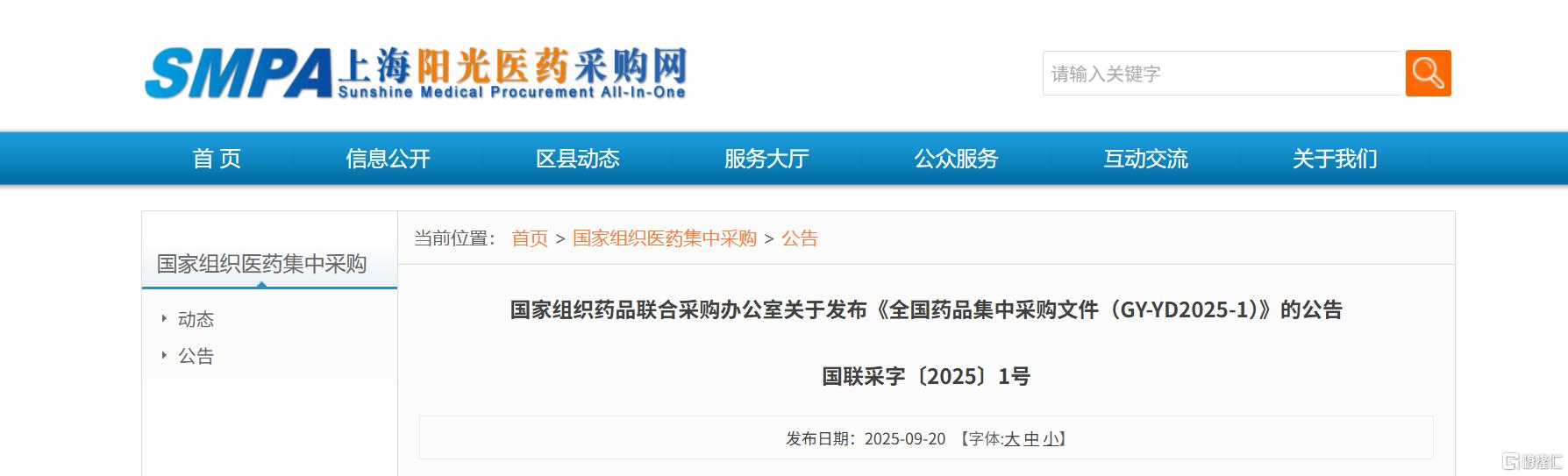
国家药品集采

Search documents
深度|316种国家集采药品接续采购开标,覆盖26个治疗领域
Di Yi Cai Jing· 2026-02-13 08:55
Core Viewpoint - The recent round of national drug procurement has resulted in 4,163 products from 1,020 companies being shortlisted, covering 316 commonly used drugs across 26 therapeutic areas, with only 21 original drugs winning bids, representing less than 10% of the total [1][2]. Group 1: Procurement Details - The procurement aims to reduce drug prices and patient burdens while reallocating saved healthcare funds to innovative drugs that provide significant clinical value [2]. - The procurement process was led by the medical insurance bureaus of Jiangsu, Henan, and Guangdong provinces, with a high selection rate of 93% among participating companies [2]. - The results of this procurement are expected to be implemented by the end of March 2026, with a procurement cycle lasting until the end of 2028 [2]. Group 2: Original Drug Participation - The original drugs selected include various formulations such as Fosinopril and Acarbose, with companies like Bristol-Myers Squibb and Sanofi involved [3]. - Several original drugs that had previously won bids in earlier rounds, such as Gefitinib and Clopidogrel, did not participate in this round, allowing generic competitors to dominate [4][3]. - The absence of original drugs in the procurement reflects a trend where original drugs face significant competition from generics post-patent expiration, leading to a decline in sales and profits [6]. Group 3: Market Dynamics - The "patent cliff" phenomenon has led to original drugs experiencing substantial sales and profit declines once their patents expire, which was previously mitigated by high prices and market share [6]. - Some original drug companies have reduced or dissolved their sales teams for products affected by procurement policies, yet many still find market opportunities outside public hospital settings [7]. - Cross-national pharmaceutical companies are increasingly focusing on innovative drug development while divesting mature product lines to local firms [8][9]. Group 4: Future Outlook - The Chinese government is implementing policies to support the development of innovative drugs, which is expected to expand the overall pharmaceutical market [10].



316种国家集采药品接续采购开标,原研药中标的比例不到一成
Di Yi Cai Jing· 2026-02-12 22:50
Core Viewpoint - The recent round of national drug procurement has resulted in 4,163 products from 1,020 companies being shortlisted, covering 316 commonly used drugs across 26 therapeutic areas, with only 21 original drugs selected, representing less than 10% of the total [1][2]. Group 1: Procurement Details - The procurement aims to reduce drug prices and patient burdens while reallocating saved healthcare funds to innovative drugs [2]. - The procurement process involved 51,000 medical institutions, with a high selection rate of 93% and an average of 14 companies selected per product [2][3]. - The results of this procurement are expected to be implemented by the end of March 2026, with a procurement cycle lasting until the end of 2028 [2]. Group 2: Original Drug Participation - The selected original drugs include various formulations from companies like Bristol-Myers Squibb, Sanofi, and Bayer, with some previously shortlisted in earlier rounds [3]. - Notable original drugs that did not participate in this round include AstraZeneca's gefitinib and Sanofi's clopidogrel, which had previously been selected [4][3]. Group 3: Market Dynamics - The phenomenon known as "patent cliff" has led to significant declines in sales and profits for original drugs post-patent expiration, making it challenging for them to maintain market share without substantial price reductions [6]. - Some original drug companies have reduced or dissolved their sales teams for products affected by procurement policies, yet many still find market opportunities outside public hospital procurement [7]. - Cross-national pharmaceutical companies are increasingly focusing on innovative drug development while divesting mature product lines to local firms [8][9].


316种国家集采药品接续采购开标,原研药中标的比例不到一成
第一财经· 2026-02-12 14:56
Core Viewpoint - The recent round of national drug procurement in China has resulted in 1,020 companies winning bids for 4,163 products, covering 316 commonly used drugs across 26 therapeutic areas, with original research drugs making up less than 10% of the selected products [3][5]. Group 1: Procurement Results - The procurement process involved a high participation rate, with a selection rate of 93% and an average of 14 companies winning bids for each product [5]. - The selected original research drugs include various formulations such as oral and injectable forms, with notable companies like Merck, Sanofi, and Bayer involved [6]. - Some original research drugs that previously won bids in earlier rounds did not secure selection in this round, indicating a shift in market dynamics [6][7]. Group 2: Market Dynamics - The introduction of national drug procurement has led to significant price reductions for original research drugs, which now face competition from generics, resulting in a phenomenon known as the "patent cliff" [9]. - Despite the challenges, many original research drugs maintain a presence in the market, particularly in outpatient settings, leveraging brand strength [10]. - Some multinational pharmaceutical companies are divesting mature product lines to focus on innovative drug development, reflecting a strategic shift in response to the evolving market landscape [11][12].
深度|316种国家集采药品接续采购开标,原研药中标的比例不到一成
Di Yi Cai Jing· 2026-02-12 13:49
Core Viewpoint - The recent round of national drug procurement has resulted in 4,163 products from 1,020 companies being shortlisted, with only 21 original drugs selected, indicating a significant shift in the pharmaceutical market dynamics in China [1][2]. Group 1: Drug Procurement Overview - The new round of procurement involves 316 commonly used drugs across 26 therapeutic areas, including anti-infection, anti-tumor, and cardiovascular treatments [1]. - The procurement process has a high selection rate of 93%, with an average of 14 companies winning bids for each product [2]. - The results of this procurement are expected to be implemented by the end of March 2026, with a procurement cycle lasting until the end of 2028 [2]. Group 2: Impact on Original Drugs - Original drugs are facing challenges in maintaining high profits and market share post-patent expiration due to increased competition from generic drugs [6]. - Some original drugs, despite not being selected in the procurement, continue to find market opportunities outside public hospitals due to their brand strength [1][7]. - The absence of original drugs in the procurement does not equate to their market exit; they may still be prescribed in specific hospital settings [7]. Group 3: Market Dynamics and Strategies - The phenomenon known as "patent cliff" is causing significant declines in sales and profits for original drugs once their patents expire [6]. - Many original drug companies are reducing or dissolving their sales teams for products affected by the procurement policies [7]. - Some multinational pharmaceutical companies are divesting mature product lines to focus on innovative drug development and market entry [8][9][10].
昂利康:部分产品拟中选国家药品接续采购
Zhi Tong Cai Jing· 2026-02-11 10:49
Core Viewpoint - The company, Anglikang (002940.SZ), has announced its participation in the national organized procurement for the continuation of products whose agreements have expired, with some of its products expected to be selected in the upcoming procurement process [1] Group 1 - The company is involved in the national organized procurement for the first to eighth batches of products whose agreements have expired [1] - The continuation procurement office released the proposed selection results on February 10, 2026, indicating that some of the company's products are likely to be selected [1]
机构“抄底”跨国药企资产
3 6 Ke· 2025-11-29 10:30
Core Insights - Recent trend shows multinational pharmaceutical companies selling parts of their businesses in China to investment firms rather than to industry peers, indicating a shift in investment strategy [1][2] - The divestiture is driven by profit pressures from national procurement and healthcare cost control policies, leading to a reevaluation of asset structures by these companies [2][5] - Investment firms are increasingly acting as industry operators, leveraging their capital and operational expertise to unlock value in mature assets acquired from multinational firms [8][9] Group 1: Recent Transactions - Bristol-Myers Squibb (BMS) is selling 60% of its stake in China-based Shanghai BMS Pharmaceutical to Hillhouse Capital, with the deal expected to close in early 2026 [1] - Bayer is selling the intellectual property and global commercial rights of its antibiotic Avelox to Sequoia China, with completion anticipated in the first quarter of 2026 [1] - Earlier, UCB sold its mature product business in China to Kangqiao Capital and other investment firms, marking a trend of capital firms acquiring pharmaceutical assets [2] Group 2: Market Dynamics - Multinational pharmaceutical companies face significant profit pressure due to policies like national procurement, which has led to a decline in profit margins and market share for original drugs against local generics [2][5] - The market for original drugs is shrinking as local companies gain ground in the generic drug sector, leading to a strategic shift for multinationals to divest non-core assets [5][10] - Investment firms are capitalizing on this trend by acquiring mature products and leveraging their operational capabilities to enhance value [8][9] Group 3: Strategic Shifts - The divestiture of assets is part of a broader strategic realignment for multinational companies, focusing on innovation and local market integration rather than traditional sales models [11][12] - Companies are increasingly investing in local R&D and production capabilities, with significant investments announced by firms like AstraZeneca and Roche in recent months [12] - The evolving landscape suggests a dual competitive structure where multinationals focus on innovative drugs while investment firms specialize in mature product markets [9][10]
双鹭药业(002038) - 002038双鹭药业投资者关系管理信息20251124
2025-11-24 09:20
Group 1: Company Performance and Market Impact - The company's main business revenue decreased by 15.40% year-on-year in the first three quarters of 2025, influenced by significant price drops in key products due to national drug procurement policies [3][4] - Products entering national procurement saw price reductions exceeding 50%, while those in provincial and local procurement experienced an average price drop of around 15% [3] - Key products like Lenalidomide and Metronidazole have dropped out of the top ten revenue-generating products, indicating a shift in the company's revenue sources [3] Group 2: New Product Developments - Recent new products that won national procurement include Voriconazole tablets and Vildagliptin tablets, which are becoming mainstay products for the company [4] - The company has also introduced a unique dosage form of Nitroglycerin spray, which has good market potential and is now available for purchase [7][9] - The company is developing several new drugs, including GLP-1 formulations for diabetes treatment, which are in the final stages of clinical research [11] Group 3: Investment Activities - The company invested 10 million yuan in Changfeng Pharmaceutical in 2010, which is now valued at nearly 500 million yuan following its listing on the Hong Kong Stock Exchange [5] - The company holds a 20% stake in Beijing Hengtai Kang Pharmaceutical Technology Co., which is developing a unique probiotic lozenge [7] - The company prefers equity investments in promising firms rather than acquisitions, to avoid burdening its operational focus [12] Group 4: Sales and Marketing Strategies - The company has shifted from a primarily hospital-based sales model to include e-commerce platforms, with online sales increasing year by year [10] - Efforts are being made to enhance product market penetration and expand sales channels, particularly through partnerships with various pharmaceutical sales platforms [10] Group 5: Future Outlook - The company anticipates that the impact of price reductions from national procurement will weaken if no major products enter procurement in the near future [12] - There is a need for increased R&D efforts and faster product launches to boost main business revenue moving forward [12]

第十一批国家药品集采中选产品价差缩小;荃信生物与罗氏达成授权交易 | 医药早参
Mei Ri Jing Ji Xin Wen· 2025-10-28 23:22
Group 1: National Drug Procurement - The 11th batch of national drug centralized procurement includes 55 drugs, covering common medications in areas such as anti-infection, anti-allergy, anti-tumor, blood sugar, blood pressure, and blood lipid reduction [1] - The average price difference of selected products has significantly narrowed compared to previous batches, indicating a more competitive environment [1] - Measures such as excluding products with a scale below 100 million yuan from procurement and setting "anchor prices" have been implemented to maintain a reasonable selection rate and promote rational competition among companies [1] Group 2: Xingqi Eye Pharmaceutical - Xingqi Eye Pharmaceutical reported a revenue of approximately 1.904 billion yuan for the first three quarters, a year-on-year increase of 32.27% [2] - The net profit attributable to shareholders reached approximately 599 million yuan, reflecting a substantial year-on-year growth of 105.98% [2] - The increase in revenue is primarily driven by the sales growth of eye drop products, showcasing the company's strong market competitiveness in a challenging environment [2] Group 3: Novartis - Novartis reported a total revenue of 41.196 billion USD for the first three quarters, representing an 11% year-on-year growth [3] - Revenue from the Chinese market for the same period reached 3.2 billion USD, with a year-on-year growth of 5% [3] - The company has ten blockbuster products with cumulative sales exceeding 1 billion USD, indicating solid market competitiveness despite a slowdown in growth in China [3] Group 4: Qianxin Biotech and Roche - Qianxin Biotech announced a global exclusive licensing agreement with Roche for its self-developed long-acting dual antibody QX031N, receiving an upfront payment of 75 million USD [4] - The agreement includes potential milestone payments of up to 995 million USD and tiered royalties on future product sales [4] - This collaboration highlights Qianxin Biotech's R&D competitiveness and the recognition of Chinese innovative pharmaceutical companies by multinational firms, potentially attracting more capital to the Chinese innovation drug sector [4] Group 5: Haili Biotech - Haili Biotech responded to a regulatory inquiry regarding its semi-annual report, explaining the high accounts receivable due to industry pressures and efforts to maintain core customer relationships [5] - The company indicated that the increase in accounts receivable is a strategic move, but it may pose long-term risks if collections are ineffective [5] - Investors are advised to closely monitor the company's accounts receivable management and industry conditions to assess its long-term investment value [5]
福安药业:公司积极参与国家药品集采的同时,努力开拓市场
Zheng Quan Ri Bao Zhi Sheng· 2025-09-26 09:36
Core Viewpoint - The company aims to actively participate in national drug procurement while optimizing its product structure and enhancing its core competitiveness to maintain stable development in response to industry policy changes [1]. Group 1 - The company announced on September 26 that it will respond to industry policy changes [1]. - The company plans to actively engage in national drug procurement [1]. - The company is focused on market expansion and improving its product structure to increase risk resistance [1]. Group 2 - The company aims to enhance its core competitiveness [1]. - The company strives to achieve stable development amidst changing industry dynamics [1].

聚焦国家药品集采:10月21日开标在即,碳酸氢钠注射液市场品牌与区域偏好大揭秘
Ge Long Hui· 2025-09-24 18:38
Core Viewpoint - The National Drug Centralized Procurement Office has announced the new centralized procurement document, emphasizing principles of clinical stability, quality assurance, prevention of collusion, and reduction of competition pressure in the pharmaceutical industry [1][3]. Summary by Sections Centralized Procurement Announcement - The announcement requires participating drugs to obtain valid domestic registration by September 28 and complete information submission on the National Medical Insurance Service Platform, with the bidding ceremony scheduled for October 21, 2025 [1]. Changes in Procurement Rules - The new procurement rules introduce a "benchmark price" for the same drug category, set at 50% of the average unit comparable price of validly declared companies and the higher value of the lowest unit comparable price. Companies can qualify for selection if their bid is below 1.8 times the benchmark price, a shift from the previous model that focused solely on the lowest price [3]. Participation and Reporting - A total of 46,359 medical institutions participated in the reporting, with 77% reporting by brand name and 23% by generic name. The drug list remains unchanged with 55 varieties, but mainstream specifications and prices have been noted [3]. Sodium Bicarbonate Injection Reporting - The total reported quantity of sodium bicarbonate injection across 31 provinces reached 71.5665 million units, with unspecified brands accounting for 47.45% of the total [5][9]. Manufacturer Performance - Among the specified brands, six manufacturers reported over 1 million units, with Shijiazhuang Fourth Pharmaceutical Company leading at 9.6542 million units, followed by Hebei Tiancai Pharmaceutical Co., Ltd. at 5.6166 million units [7][9]. Regional Preferences - Regional preferences for manufacturers are evident, with Yunnan showing a strong preference for Hebei Tiancai Pharmaceutical, while Shijiazhuang Fourth Pharmaceutical has a balanced national coverage [9][10]. Market Dynamics Ahead of Bidding - As the bidding date approaches, the market dynamics for sodium bicarbonate injection are expected to shift, influenced by brand preferences and the flow of unspecified brands, with companies that possess capacity, quality, and clinical recognition likely to emerge as winners in this round of procurement [10].