
OPPO

Search documents
展示广东制造实力 传递品牌价值
Nan Fang Du Shi Bao· 2026-01-14 23:14
Core Viewpoint - Guangdong's manufacturing industry is evolving, with a strong emphasis on quality and innovation, positioning itself as a global leader in various sectors, including smart home appliances, food production, and beauty products [12][16][20]. Industry Overview - Guangdong accounts for approximately 30% of the global smart home appliance market, with significant contributions from companies like Gree and Skyworth [12][20]. - The province's cross-border e-commerce has expanded 66 times over the past nine years, holding over one-third of the national market share [13]. - By 2027, Guangdong aims for its food industry output to exceed 1.5 trillion yuan, with mooncake production leading the nation [14]. Ecosystem and Collaboration - Guangdong's manufacturing ecosystem includes 31 major manufacturing categories, with 15 being the largest in the country, fostering a collaborative environment that enhances efficiency and innovation [15][16]. - The textile and apparel sector has developed micro-ecosystems that allow for rapid production cycles, exemplified by a one-day turnaround from design to delivery [15]. - In consumer electronics, the "one-hour industrial circle" around Dongguan enables quick assembly of mobile phone components, supporting brands like Huawei and OPPO [15]. Technological Innovation - The integration of AI into manufacturing processes is transforming user experiences, with companies focusing on personalized solutions rather than just standardized products [17][19]. - Gree's smart factories and Skyworth's AI-driven product recommendations illustrate the shift towards technology that enhances daily life [18]. Global Expansion Initiatives - The "Guangdong Goods Going Global" initiative aims to strengthen market presence and brand recognition, particularly for small and medium enterprises [20][21]. - Experts suggest that enhancing brand image and leveraging high-tech innovations are crucial for Guangdong's global competitiveness [21]. Future Outlook - Guangdong's manufacturers are encouraged to harness traditional cultural elements alongside technological advancements to create unique products that resonate globally [21]. - The combination of a robust industrial ecosystem, innovative technologies, and rich cultural heritage positions Guangdong to redefine its global market presence [21].





全国4成工业机器人8成服务机器人是广货
Nan Fang Du Shi Bao· 2026-01-14 23:14
Core Viewpoint - "Classic Guanghuo" is undergoing a transformation into "Tech Guanghuo," characterized by higher value and stronger core competitiveness, driven by technological innovation in Guangdong [2]. Group 1: Transformation of Guanghuo - Guangdong's industrial economy has evolved from a "world factory" to a "global innovation hub," leveraging technology to enhance its position in the global value chain [2]. - The province is focusing on future sectors such as biomanufacturing, low-altitude economy, and humanoid robots, marking a shift towards high-tech products [2]. Group 2: High-Tech Product Presence - Guangdong accounts for 40% of the country's industrial robots, 80% of service robots, 18% of integrated circuits, and 70% of global consumer drones, showcasing its significant role in high-tech manufacturing [3]. - Among 104 industrial products tracked by the National Bureau of Statistics, Guangdong holds over 10% share in 44 products and over 20% in 23 products [3]. Group 3: Smartphone Industry - Guangdong is the leading region for smartphone production in China, with one in three smartphones sold globally being manufactured by Guangdong enterprises [4]. - The province's smartphone industry is marked by strong technological innovation, particularly in core technologies such as chips, fast charging, and foldable screens [4]. - Companies like Huawei have broken foreign monopolies in high-end chips, while OPPO has introduced rapid charging technology that can charge a 4000mAh battery to 41% in just 5 minutes [4]. Group 4: AI Integration in Smartphones - Major brands in Guangdong, including Huawei and OPPO, are accelerating the integration of AI models into smartphones, marking a new phase in the industry [5]. - The Huawei Pura 80 series and vivo's X100 series are examples of smartphones utilizing advanced AI capabilities, with the latter being the first to run a 100 billion parameter model on a mobile device [5]. Group 5: Empowering Traditional Industries - Guangdong's manufacturing sector includes 31 major economic categories, with 15 ranking first nationally, indicating a robust industrial base [6]. - The textile and apparel industry in Guangdong is undergoing digital transformation, with significant advancements in smart manufacturing leading to increased efficiency [6]. - Companies like Xinlang Textile are innovating in functional fabrics, achieving a 40% increase in sales for outdoor functional clothing, significantly outpacing industry averages [7]. Group 6: R&D and Innovation - Guangdong is promoting R&D and innovation among enterprises, with companies like Yida Textile investing over 200 million yuan annually in research and development [8]. - The establishment of national-level technology centers and research stations supports the high-end transformation of traditional industries [8]. Group 7: Export Growth - Guangdong's high-tech products are experiencing strong export growth, with a 13.3% increase in high-tech product exports in the first half of 2025 [9]. - The successful export of autonomous cleaning robots by Pudutech to markets like ASEAN and the EU highlights the province's growing international presence [9].


粤产“手机天团”图鉴:全球十大顶流,广东独占五席
2 1 Shi Ji Jing Ji Bao Dao· 2026-01-14 23:13
一代人有一代人的广货记忆。近10余年间,智能手机崛起为最强的广货爆款,不仅风靡全球,更悄然推 动着广东制造的生态进化。全球每卖出三台手机,就有一台是广东制造。 全球手机江湖群雄并起,但前十强品牌中广东独占5席。Vivo、传音、OPPO、荣耀、华为——广东手 机"五虎将"各凭绝技纵横天下,共同谱写"新广货"商业传奇。 华为身怀"鸿蒙心法"与"麒麟内功"双重绝技,以技术创新筑起护城河;vivo练就"影像玄功",深谙"得年 轻人者得天下"的市场哲学,于细节处彰显匠心;OPPO精通 "普惠剑法",以高性价比为利刃,不断开 辟疆土;荣耀手握"场景轻功",精于重构交互与生态,以实用体验快速赢得用户;传音则身怀"海外秘 功",驰骋非洲市场,稳握半壁江山。 广东"手机天团"之所以能征善战,离不开背后强大的功法秘笈——广东手机产业链和创新链。"五虎 将"绝世武功,正是广东产业生态共同练就的结晶。从芯片到系统,无数配套企业不断攻坚技术、持续 创新产品,才构成了这套武学的修炼根基。 广货以新独步江湖,源源不断的AI眼镜、无人机、智能穿戴等"新广货"正加速走向全球,彰显出强大的 市场活力与供应链韧性,演绎着广东制造业深度融入并不断向 ...
最强广货爆款
2 1 Shi Ji Jing Ji Bao Dao· 2026-01-14 23:13
一代人有一代人的广货记忆。近10余年间,智能手机崛起为最强的广货爆款,不仅风靡全球,更悄然推 动着广东制造的生态进化。全球每卖出三台手机,就有一台是广东企业制造。 全球手机江湖群雄并起,但前十强品牌中广东独占5席。vivo、传音、OPPO、荣耀、华为——广东手 机"五虎将"各凭绝技纵横天下,共同谱写"新广货"商业传奇。 华为身怀"鸿蒙心法"与"麒麟内功"双重绝技,以技术创新筑起护城河;vivo练就"影像玄功",深谙"得年 轻人者得天下"的市场哲学,于细节处彰显匠心;OPPO精通 "普惠剑法",以高性价比为利刃,不断开 辟疆土;荣耀手握"场景轻功",精于重构交互与生态,以实用体验快速赢得用户;传音则身怀"海外秘 功",驰骋非洲市场,稳握半壁江山。 广东"手机天团"之所以能征善战,离不开背后强大的功法秘籍——广东手机产业链和创新链。"五虎 将"绝世武功,正是广东产业生态共同练就的结晶。从芯片到系统,无数配套企业不断攻坚技术、持续 创新产品,才构成了这套武学的修炼根基。 一部手机里,95%的零部件可以在东莞的"一小时通勤圈"内配齐。立讯精密、海思半导体、领益智造、 德赛电池……这些"隐秘而伟大"的制造先锋,以先进制 ...
“新广货”彰显中国智造全球竞争力
2 1 Shi Ji Jing Ji Bao Dao· 2026-01-14 22:54
Group 1 - The core viewpoint of the articles highlights the significant growth of China's foreign trade, with a total import and export value reaching 45.47 trillion yuan in 2025, marking a 3.8% year-on-year increase, and maintaining its position as the world's largest goods trading nation [1] - Guangdong province plays a crucial role in China's foreign trade, consistently accounting for over 20% of the national total, showcasing its evolution from labor-intensive manufacturing to a competitive global brand cluster [1][2] - The participation of over 530 companies from Guangdong at the CES in Las Vegas illustrates the province's transformation from "manufacturing" to "intelligent manufacturing," emphasizing its strong competitive edge in the global market [1] Group 2 - The globalization of "Guangdong goods" reflects the province's deep integration into the global value chain, transitioning from imitation to independent research and brand development [2] - Major companies like OPPO and vivo have over 60% of their sales from overseas, while DJI holds approximately 70% of the global consumer drone market, indicating Guangdong's significant presence in international markets [2] - The export of industrial robots from China is projected to grow by 48.7% in 2025, with the Greater Bay Area contributing about one-third of the national export volume [2] Group 3 - Guangdong enterprises are leading the trend of establishing overseas production bases, with companies like BYD and Midea setting up factories in various countries, indicating a shift from being the "world's workshop" to becoming a "nurturing ground for multinational enterprises" [3] - The new "Guangdong goods" integrate advanced technology, sustainability, and cultural elements, resulting in high-value, intelligent products that compete on quality, technology, and brand rather than just price [3] - The story of Guangdong exemplifies China's transition towards becoming a "global innovation workshop," driven by innovation and efficiency honed in a large domestic market [3]


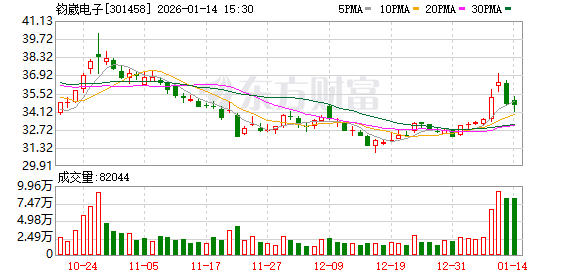
钧崴电子:深耕电子元器件领域 开拓AI算力业务
Zhong Guo Zheng Quan Bao· 2026-01-14 22:52
Core Insights - The electronic components industry is accelerating towards high-end and intelligent iterations, with Junwei Electronics focusing on precision resistors and fuses in passive components, aiming to increase market share through technology-driven strategies and deep cooperation with leading clients [2][3] Group 1: Business Performance - In the first three quarters of 2025, Junwei Electronics achieved revenue of 573 million yuan, a year-on-year increase of 18%, and a net profit attributable to shareholders of 114 million yuan, up 25.27% [3] - The rapid growth in performance is attributed to product upgrades and successful client expansion in the consumer electronics sector, including securing positions in the supply chains of major companies like Vivo, OPPO, Huawei, and Honor [3][4] Group 2: Market Trends and Future Outlook - The consumer electronics and home appliance markets are expected to maintain moderate recovery, driven by the continuous penetration of AI technology, with significant growth potential in mobile devices and wearables [4] - Junwei Electronics is optimistic about the long-term development prospects of these markets, having established a solid foundation and steadily increasing market share [4] Group 3: New Product Lines and Innovations - Junwei Electronics is actively developing core current sensor technologies, including fluxgate, Hall effect, and tunnel magnetoresistance (TMR) sensors, to transition into a comprehensive current sensing solution provider [6] - The company aims to enhance its value and customer loyalty in industrial, automotive, and renewable energy sectors through these innovations [6] Group 4: International Expansion - Junwei Electronics is accelerating its global market expansion, having established wholly-owned subsidiaries in the US and Japan, and is focusing on increasing its presence in overseas markets [7] - The acquisition of FLAT, a Japanese thin-film resistor manufacturer, is expected to enhance the company's capabilities and accelerate its international business development [7] Group 5: Strategic Focus - The company plans to continue deepening its expertise in precision resistors and fuses while expanding applications in new energy vehicles, photovoltaic storage, and smart terminals [8] - Junwei Electronics will increase R&D investment to develop intelligent current detection solutions, aiming to become a leading global provider of comprehensive current sensing technology services [8]
21社论丨“新广货”彰显中国智造全球竞争力
2 1 Shi Ji Jing Ji Bao Dao· 2026-01-14 22:25
Group 1 - In 2025, China's total foreign trade import and export value reached 45.47 trillion yuan, a year-on-year increase of 3.8%, maintaining its position as the world's largest goods trading nation [1] - Guangdong province accounted for over 20% of the national total in foreign trade, showcasing its role as a stabilizing force in the sector [1] - The transformation of Guangdong's manufacturing from labor-intensive to competitive global brands is highlighted by its strong presence at the CES, with over 530 companies participating [1] Group 2 - The globalization of "Guangdong goods" reflects the province's deep integration into the global value chain, evolving from imitation to independent research and brand development [2] - Major companies like OPPO and vivo have over 60% of their sales from overseas, while DJI holds about 70% of the global consumer drone market [2] - By mid-2025, China is projected to surpass the U.S. as the largest source of foreign direct investment, with a notable shift towards establishing overseas production bases [2] Group 3 - Guangdong enterprises are leading the trend of establishing overseas factories, with companies like BYD and Midea setting up production bases in various countries [3] - The new "Guangdong goods" integrate advanced technology and sustainable practices, moving from price competition to a focus on quality, technology, and brand [3] - The rise of "Guangdong goods" indicates a significant trend where innovations and efficiencies developed in the domestic market are reshaping the global manufacturing landscape [3]
特朗普称将“观望”伊朗局势发展,欧洲多国敦促其公民离伊;油价跳水,白银涨破92美元;与辉同行遭打假;携程回应被立案调查丨每经早参
Mei Ri Jing Ji Xin Wen· 2026-01-14 22:02
Group 1 - The U.S. stock market saw a collective decline, with the Dow Jones down 0.08%, Nasdaq down 1%, and S&P 500 down 0.53%. Major tech stocks like Oracle and Broadcom fell over 4%, while Intel rose over 3% [4] - The Federal Reserve's Beige Book indicated that 8 out of 12 Federal Reserve districts experienced slight to moderate economic growth, with a slightly optimistic outlook for future activity [4] - International oil prices saw a significant drop, with WTI crude oil down 1.61% to $59.95 per barrel and Brent crude down 1.53% to $64.47 per barrel [4] Group 2 - The Ministry of Finance, the State Taxation Administration, and the Ministry of Housing and Urban-Rural Development announced a tax refund policy for individuals selling their homes and purchasing new ones within a year, effective from January 1, 2026, to December 31, 2027 [6] - A meeting was held by the Ministry of Industry and Information Technology to address the issue of "price wars" in the new energy vehicle industry, emphasizing the need for fair competition and quality-driven innovation [7] - The Ministry of Finance conducted a video conference to promote a package of policies aimed at boosting domestic demand through fiscal and financial collaboration [8] Group 3 - Canadian Prime Minister Carney arrived in Beijing for his first official visit to China in eight years [9] - Shanghai's government announced a plan to implement key technology research projects in the field of autonomous driving, focusing on the development of advanced hardware and software solutions [9] - The People's Bank of China will conduct a 900 billion yuan reverse repurchase operation to maintain liquidity in the banking system [10] Group 4 - Ctrip announced it will cooperate with regulatory authorities regarding an investigation into alleged monopolistic practices [15] - Guangzhou Cha Li Group addressed reports of a 200 million yuan salary arrears, stating that most employee salaries have been paid, and they are working on settling outstanding payments for former employees [16] - Boeing reported that it secured nearly 1,200 commercial aircraft orders in 2025, surpassing Airbus for the first time since 2018 [17] Group 5 - Huawei is projected to reclaim the top position in China's smartphone market by 2025, according to IDC, with total shipments expected to be around 285 million units, a slight decline of 0.6% year-on-year [20] - Haidilao announced a change in CEO, with founder Zhang Yong returning to the role, indicating a strong intent to address challenges faced by the company [28]




深耕电子元器件领域 开拓AI算力业务
Zhong Guo Zheng Quan Bao· 2026-01-14 20:51
Core Viewpoint - The electronic components industry is accelerating towards high-end and intelligent iterations, with Junwei Electronics focusing on precision resistors and fuses in passive components, aiming to enhance market share through technology-driven strategies and deep cooperation with leading clients [1] Group 1: Business Growth Strategy - Junwei Electronics plans to expand into AI computing, automotive electronics, and photovoltaic energy storage over the next three years while continuing to invest in R&D and strategic investments to develop new product lines such as sensors [1][2] - The company achieved revenue of 573 million yuan in the first three quarters of 2025, representing an 18% year-on-year increase, and a net profit of 114 million yuan, up 25.27% year-on-year [1] Group 2: Market Position and Client Expansion - The growth in performance is attributed to product upgrades and successful client expansion in the consumer electronics sector, including securing positions in the supply chains of Vivo, OPPO, Huawei, and Honor [2] - Junwei Electronics has established a solid foundation in the consumer electronics and home appliance markets, with a steady increase in market share and strengthened competitive barriers [2] Group 3: New Product Lines and Technological Development - The company is focusing on developing core current sensor technologies such as fluxgate, Hall effect, and tunnel magnetoresistance (TMR) sensors, which are seen as key directions for strategic upgrades [3] - Junwei Electronics aims to provide complete current sensing solutions, transitioning towards becoming a "current sensing solution provider" to enhance value and customer loyalty in industrial, automotive, and new energy sectors [3] Group 4: International Market Expansion - The company is accelerating its global market layout, leveraging wholly-owned subsidiaries in the US and Japan, and plans to increase efforts in overseas markets [4] - In 2025, Junwei Electronics acquired 100% of FLAT, a Japanese thin-film resistor manufacturer, to enhance its global manufacturing flexibility and diversify its brand and product offerings [4] Group 5: Future Collaborations and Innovations - Junwei Electronics plans to establish a joint venture with a subsidiary of Placo New Materials to achieve deep integration of technology, customers, and manufacturing capabilities in the magnetic materials and inductive products market [5] - The company will continue to deepen its focus on precision resistors and fuses, enhance product performance and manufacturing processes, and expand applications in new energy vehicles, photovoltaic energy storage, and smart terminals [5]
去年中国智能手机市场出货约2.85亿台 华为登顶
Zheng Quan Ri Bao· 2026-01-14 15:42
Core Insights - The global smartphone market experienced a 2.3% year-on-year growth in Q4 2025, reaching 336.3 million units, with total shipments for the year at 1.26 billion units [1] - In China, smartphone shipments in 2025 were approximately 285 million units, a decline of 0.6% year-on-year, with Huawei regaining the top position in market share [1] - The smartphone industry is expected to face challenges in 2026, including rising costs and market share pressures, leading to potential reshuffling among domestic manufacturers [1] Market Performance - Huawei led the Chinese smartphone market in 2025 with shipments of 46.7 million units, followed closely by Apple and Vivo with 46.2 million and 46.1 million units, respectively [1] - The top five manufacturers (Huawei, Apple, Vivo, Xiaomi, and OPPO) accounted for 79.4% of the total market share in China, indicating intensified competition [1] Market Trends - Mid-to-high-end brands dominated the shipment rankings, reflecting a trend towards increased market concentration and consumer willingness to pay for differentiated experiences [2] - The storage market is expected to see price increases of 40% to 50% in Q1 2026, further impacting the cost structure of smartphone manufacturers [2] Strategic Responses - Apple is adopting a "more quantity for less price" strategy, while Chinese manufacturers are targeting the ultra-high-end market with new product launches [3] - Companies are reducing shipments of low-end models to maintain profitability amid rising costs [3] Innovation and Growth - The integration of artificial intelligence into smartphones is becoming a key focus for manufacturers, with new models emphasizing AI capabilities as core selling points [4] - Companies like Huawei, Vivo, and Xiaomi are investing in AI and collaborating with internet giants to establish differentiated advantages in the AI ecosystem [4] Industry Adaptation - The Chinese smartphone industry is adjusting to export market fluctuations by establishing overseas factories and transitioning to high-tech, high-value core segments [6] - The resilience of the Chinese smartphone market is evident in its shift from pursuing scale benefits to exploring technological advantages [6]

