
卫材

Search documents
中新健康丨2025年国谈收官 “天价抗癌疗法”或迎支付破局
Zhong Guo Xin Wen Wang· 2025-11-05 11:13
Core Insights - The National Medical Insurance Negotiation concluded on November 4, with 120 companies participating, involving 127 off-list drugs and 24 drugs for commercial insurance innovation [1] Group 1: Introduction of Commercial Health Insurance Innovation Drug Directory - The "Commercial Health Insurance Innovation Drug Directory" was introduced for the first time this year, building on the existing medical insurance directory adjustment mechanism [2] - A total of 121 drug names passed the formal review for the commercial health insurance innovation drug directory, with 79 drugs applying for both the basic medical insurance and the commercial health insurance directories [2] Group 2: CAR-T Therapy and Pricing Negotiations - The high-priced CAR-T therapies are highlighted as a significant focus in the commercial health insurance innovation drug directory [4] - Five CAR-T therapies have passed the formal review for the commercial insurance directory, with three also applying for the basic medical insurance directory [5] - The only CAR-T therapy priced below one million yuan is the one from Huyuan Biotechnology, priced at 999,000 yuan per injection, and negotiations for this therapy have reportedly gone smoothly [5][6] Group 3: Market Dynamics and Future Implementation - The introduction of the commercial health insurance innovation drug directory is seen as a key step to break the payment deadlock, potentially lowering patient out-of-pocket expenses and expanding the patient population [6] - The new basic medical insurance drug directory and the first commercial health insurance innovation drug directory are expected to be released in early December, with implementation starting on January 1 of the following year [6]
2025年国谈落幕:双目录同步 创新药目录降价建议区间或为15%~50%
Di Yi Cai Jing· 2025-11-04 02:49
Core Insights - The national medical insurance negotiation for 2025 has introduced a dual-directory system, marking a significant change in the negotiation process for innovative drugs and commercial insurance [1][2][15] - The negotiation process for innovative drugs has seen a price reduction range suggested by the National Medical Insurance Administration (NMIA) of 15% to 50%, with a focus on the CAR-T drugs [3][4] - The introduction of the innovative drug directory is expected to create a more sustainable market payment mechanism for new drugs, with companies needing to reassess their product positioning and market strategies [15] Summary by Sections National Medical Insurance Negotiation - The negotiation took place from October 30 to November 3, 2025, with the first three days dedicated to the national medical insurance directory and the last two days for the commercial insurance innovative drug directory [1] - This year marks the first introduction of an innovative drug directory, which has altered the negotiation dynamics for drug pricing [1][15] Price Negotiation Mechanism - The NMIA has introduced a new price negotiation mechanism for innovative drugs, allowing for price discussions between drug companies and commercial insurance [1][3] - Companies have been advised to consider a price reduction of 15% to 50% during negotiations, with some expressing skepticism about achieving reductions below 15% [3][4] CAR-T Drugs - CAR-T drugs have been a focal point in the negotiations, with successful negotiations reported for some products, such as the CAR-T drug from HeYuan Biotech priced at 999,000 yuan [3][4] - A limited number of CAR-T drugs are expected to be included in the innovative drug directory, with estimates suggesting around 20 drugs may be approved [1][3] Commercial Insurance Dynamics - The dual-directory negotiation allows companies to choose between reporting to the basic medical insurance directory, the innovative drug directory, or both, creating strategic options for different companies [2][10] - The commercial insurance market has shown limited interest in covering rare disease drugs due to their high costs and small patient populations, which may affect their inclusion in the innovative drug directory [14][15] Focus on ADC and Bispecific Antibodies - ADC (Antibody-Drug Conjugates) and bispecific antibodies remain key focus areas in the negotiations, with several innovative drugs vying for inclusion in the directories [8][10] - Companies are adopting varied strategies based on their market positioning, with some prioritizing the basic medical insurance directory for broader market access, while others focus on maintaining high-end product positioning through the innovative drug directory [10][11]
2025年国谈落幕:双目录同步,创新药目录降价建议区间或为15%~50%
Di Yi Cai Jing· 2025-11-04 02:45
Core Insights - The national medical insurance negotiation concluded with significant changes, including the introduction of an innovative drug directory and a new price negotiation mechanism involving both domestic and foreign pharmaceutical companies [1][15] - The negotiation focused on price reductions ranging from 15% to 50%, with a particular emphasis on CAR-T therapies, which are expected to have a limited number of entries in the innovative drug directory [1][3][15] Group 1: Innovative Drug Directory - The innovative drug directory negotiation was a first, allowing for a new pricing negotiation mechanism between pharmaceutical companies and commercial insurance [1][15] - The number of drugs entering the innovative drug directory is expected to be limited, with estimates suggesting around 20 drugs may be included [1][3] - CAR-T therapies are a focal point, with successful negotiations reported for some products, indicating a competitive landscape for pricing [3][4] Group 2: Pricing Strategies - Pharmaceutical companies are presented with options to report under different categories, influencing their pricing strategies and negotiation approaches [2][10] - The negotiation dynamics reveal a split in strategies, with some companies prioritizing market share through price reductions, while others aim to maintain premium pricing for innovative products [10][11] - The expected price reductions for CAR-T therapies are under scrutiny, with some companies indicating that achieving a reduction below 15% may be challenging [3][4] Group 3: Commercial Insurance Impact - The introduction of the innovative drug directory is seen as a potential game-changer for how CAR-T therapies are covered under commercial insurance, although the actual impact remains to be seen [5][15] - There is skepticism regarding the inclusion of rare disease drugs in the commercial insurance directory, as insurers are less inclined to cover high-cost, low-volume medications [14][15] - The overall goal of the negotiations is to establish a sustainable market-based payment mechanism for innovative drugs, leveraging both public and commercial insurance [15]
跨国生物医药企业座谈会在园区举行
Su Zhou Ri Bao· 2025-10-16 00:35
Core Insights - The multinational biopharmaceutical enterprise symposium held in Suzhou Industrial Park aims to enhance collaboration between government and enterprises, focusing on the development of the biopharmaceutical industry [1] Group 1: Industry Development - Biopharmaceuticals and health are key strategic emerging industries in Suzhou, with the industrial park ranking among the top in China's biopharmaceutical industry competitiveness [1] - The symposium serves as a platform for communication to deepen government-enterprise collaboration and promote open innovation and high-quality development in the biopharmaceutical sector [1] Group 2: Government Initiatives - Wu Qingwen, the Deputy Secretary of the Municipal Party Committee and Mayor, emphasized the growing competitiveness of Suzhou's biopharmaceutical industry over nearly 20 years, highlighting improved enterprise development and resource support [1] - The "Global Innovation Cooperation Partner Program for Multinational Biopharmaceutical Enterprises" was launched, with the first batch of participating companies signing agreements during the event [2]
核医学投资价值分享
2025-10-14 14:44
Summary of Nuclear Medicine Investment Value Sharing Industry Overview - The nuclear medicine market is experiencing significant growth, particularly driven by successful commercialization of products like Bloviate. [1][3] - The overseas nuclear medicine market is projected to reach $1.4 billion in revenue for Novartis in 2024, representing a 42% year-over-year increase. [1][3] - The PSMA diagnostic drug market is expected to reach $1.9 billion, with a corresponding 525,000 treatment sessions anticipated by 2025. [1][7] Key Points and Arguments - **Overseas Market Growth**: Novartis's core products, Provenge and Lutathera, have shown significant growth, with Provenge expected to exceed $5 billion in peak revenue. [3][5] - **Domestic Market Development**: The domestic nuclear medicine market is entering a commercialization phase, with new drugs like Fluorobetaine for AD diagnosis launched and expected approvals for Provenge and Lutathera in Q4. [1][5] - **RDC Market Potential**: The Radiopharmaceutical Drug Conjugates (RDC) market is projected to reach $3.7 billion in 2024, with total estimates around $4-5 billion, comparable to the early stages of Antibody Drug Conjugates (ADC). [1][6] - **RDC vs. ADC**: RDC is structurally similar to ADC, replacing cytotoxic payloads with radionuclides, making it suitable for targeted radiotherapy. [1][7][10] Additional Important Insights - **Clinical Development**: Domestic companies like East China and Hengrui are advancing to clinical stages, narrowing the gap with international counterparts. [3][11] - **Market Trends**: The nuclear medicine sector is expected to maintain strong growth, with several catalysts anticipated in the near future, including new product approvals and market entries. [2][13] - **Investment Opportunities**: Companies like East China and Yuanda Pharmaceutical are highlighted as potential investment opportunities due to their low valuations and promising R&D progress. [2][14] Conclusion - The nuclear medicine industry is poised for substantial growth, driven by both domestic and international developments, with significant investment opportunities emerging as new products and companies enter the market. [2][13]

新元素药业IPO:痛风王牌产品商业化价值兑现面临挑战 估值低于市场IPO前夕股东平价转让股权
Xin Lang Zheng Quan· 2025-10-11 08:05
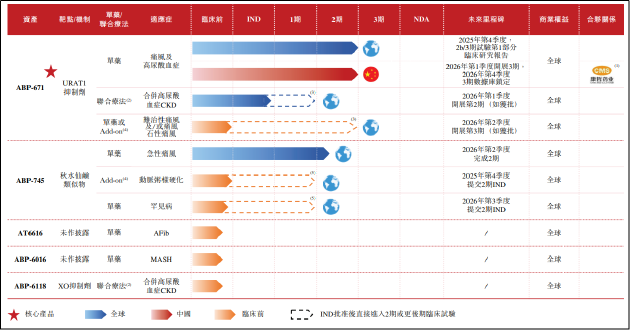
Core Viewpoint - New Element Pharmaceutical Co., Ltd. is preparing for an IPO on the Hong Kong Stock Exchange, focusing on innovative treatments for gout and related metabolic diseases, but faces challenges such as delayed R&D, intensified competition, and difficulties in commercializing its products [1][2]. Group 1: Company Overview - New Element Pharmaceutical specializes in the full-process care of gout patients, addressing issues related to hyperuricemia, chronic and acute gout, and gout stone dissolution [2]. - The company has two clinical-stage products (ABP-671 and ABP-745) and several preclinical projects (AT6616, ABP-6016, ABP-6118) in its pipeline [2][4]. Group 2: Product Details - The core product, ABP-671, is a URAT1 inhibitor designed to treat gout and hypertension-related hyperuricemia, showing better safety and selectivity compared to traditional drugs [4]. - ABP-671 is currently undergoing Phase 2b/3 clinical trials in both the U.S. and China [4]. Group 3: Competitive Landscape - New Element's competitive advantage is not significant, as it faces strong competition from established drugs and other emerging therapies [4][6]. - Major competitors include SHR4640, which is expected to launch in China in December 2024, and other URAT1 inhibitors that are advancing rapidly in clinical trials [6]. Group 4: Financial Performance - The company has reported significant losses, with net profits of -0.97 billion, -4.34 billion, and -1.65 billion for 2023, 2024, and the first half of 2025, respectively, totaling nearly 7 billion in losses over two and a half years [7]. - As of June 2025, the company had cash and cash equivalents of approximately 55 million, with total financial assets of 2.26 billion and fixed deposits of 209 million [7]. Group 5: Valuation and Market Position - New Element has raised a total of 1.078 billion through five rounds of financing, with its valuation increasing from 107 million in 2017 to 3.052 billion in 2025, despite lacking substantial revenue [9]. - The company's market-to-research ratio is approximately 9.03 times, significantly lower than the median of 27.5 times for other unprofitable biotech firms listed in Hong Kong [9].

医保目录和商保目录“双报”观察:今年79款药品“双报”,背后是必进的决心?
Di Yi Cai Jing· 2025-09-24 02:29
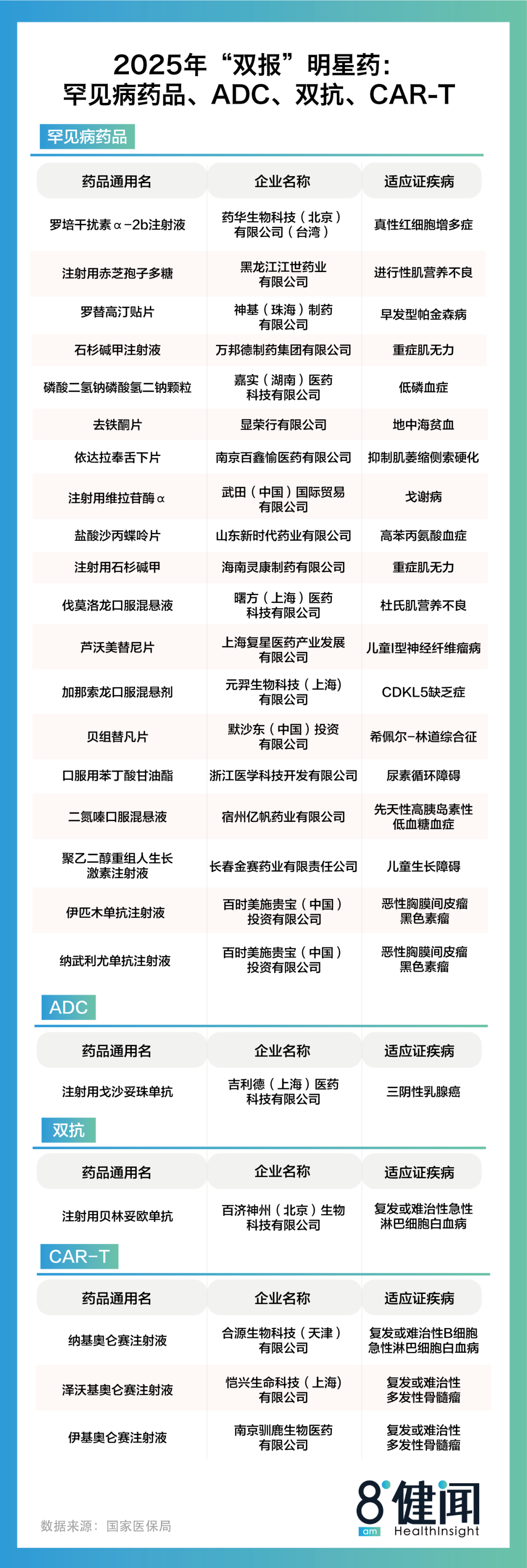
Core Insights - The National Healthcare Security Administration (NHSA) announced the review results for the 2025 National Basic Medical Insurance (BMI) catalog and the first version of the commercial health insurance innovative drug catalog, marking a critical phase in the "dual catalog" adjustment process [1] - In the first year of the "dual catalog" discussions, 534 products passed the initial review for the BMI catalog, while 121 drugs were included in the commercial insurance innovative drug catalog, with over 60% of the 121 drugs being "double reported" [1][2] - The "double reported" drugs reflect the pharmaceutical companies' uncertain mindset regarding drug pricing negotiations in the BMI process, with high-priced drugs often targeting commercial insurance while others focus on BMI [2][3] Group 1: Drug and Company Analysis - A total of 79 drugs from 74 companies were "double reported," with 4 companies reporting two or more drugs, indicating a competitive landscape among pharmaceutical firms [1][3] - The "double reported" drugs include various categories, such as 19 rare disease drugs and 3 CAR-T therapies, showcasing a diverse range of therapeutic areas [1][5] - The highest annual treatment cost among the "double reported" drugs is approximately 1.5 to 2 million yuan for a rare disease drug from Takeda, highlighting the financial implications for both companies and patients [8][9] Group 2: Market Dynamics and Strategies - The "double reporting" strategy is seen as a low-cost strategic exploration for companies, allowing them to gauge market responses without significant investment [3][4] - Companies are motivated to participate in both catalogs to avoid being at a disadvantage if competitors succeed in securing listings in one while they do not [3][4] - The overall pass rate for the commercial insurance innovative drug catalog is estimated to be below 30%, indicating a challenging environment for companies seeking approval [4][9] Group 3: Insights on Rare Diseases and CAR-T Therapies - Rare disease drugs face significant hurdles in entering the BMI catalog, with only 13 out of 48 rare disease drugs passing the initial review in 2024, suggesting a low success rate [9][10] - CAR-T therapies are viewed as having a better chance of entering the commercial insurance catalog, with companies adjusting their strategies based on past experiences in BMI negotiations [10][11] - The pricing strategies for CAR-T drugs reflect a calculated approach, with companies aware of the need to control costs to meet BMI requirements while also targeting commercial insurance [10][11] Group 4: Cross-National Company Participation - Among the "double reported" drugs, 14 are from 10 multinational companies, indicating a strong interest from global players in the Chinese market [20][21] - The competitive landscape includes multiple drugs targeting similar conditions, leading to a scenario where companies are closely monitoring each other's submissions [22][23] - The performance of these drugs in commercial health insurance products, particularly in the context of "惠民保" (Hui Min Bao), has been promising, providing a potential pathway for future approvals [26][28]


专家谈失眠治疗:患者不需要“谈药色变”
Bei Ke Cai Jing· 2025-09-23 03:12
Core Insights - The forum highlighted the increasing prevalence of insomnia in China, with a sleep disturbance rate of 48.5% among individuals aged 18 and above, and the number of adults suffering from insomnia rising from 250 million in 2016 to 270 million in 2020, projected to reach 330 million by 2030 [2][3] Group 1: Insomnia Treatment Developments - The approval of two innovative insomnia medications in China marks the beginning of the Dual Orexin Receptor Antagonist (DORA) era in insomnia treatment [1][4] - Traditional insomnia medications have significant side effects, including daytime drowsiness and cognitive decline, while DORA medications offer effective treatment with improved safety profiles [4][6] Group 2: Market Opportunities - The sleep economy in China is projected to grow from 534.93 billion yuan in 2024 to 658.68 billion yuan by 2027, indicating a strong growth trend [5] - The DORA drug market is still developing, with only three DORA insomnia medications approved globally, and several Chinese pharmaceutical companies are actively entering this market [6]
失眠患者迎来新一代创新药,但只有新药还不够
Di Yi Cai Jing· 2025-09-15 09:53
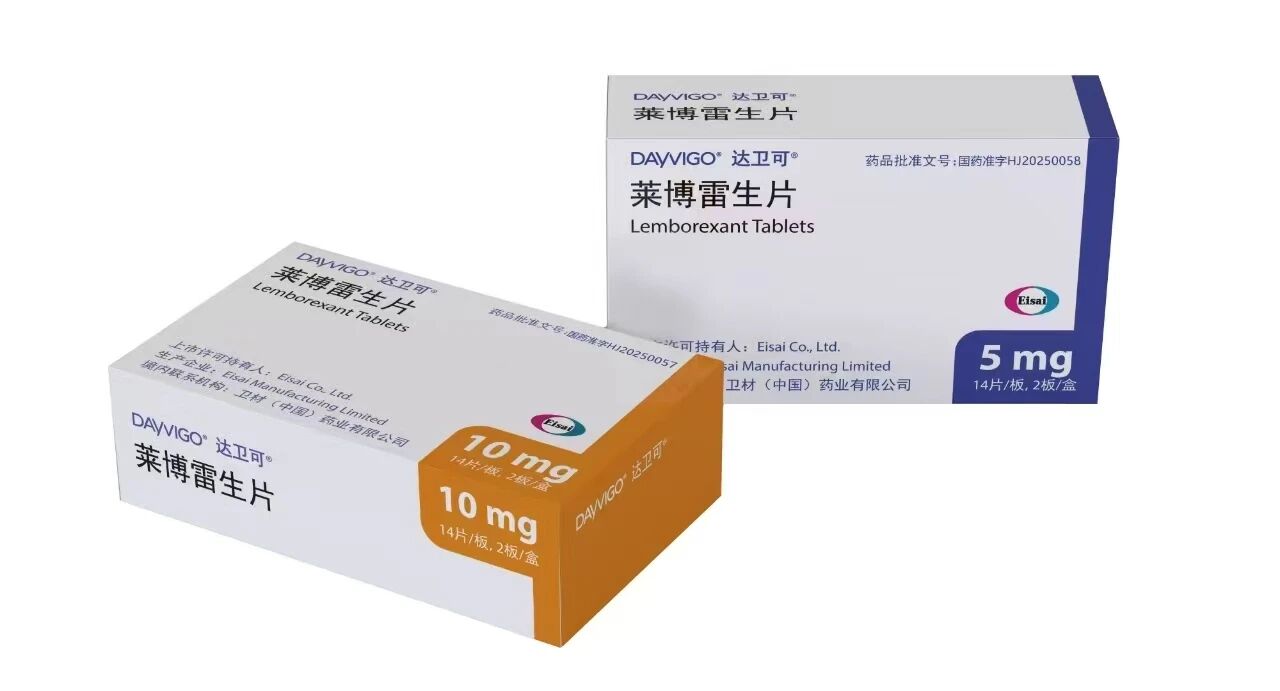
Core Insights - The launch of the new insomnia drug, Lemborexant (brand name: Dazai Ke), on e-commerce platforms in early August exceeded expectations, selling over 8,000 boxes on the first day [1] - Lemborexant is the first dual orexin receptor antagonist approved in China, marking a significant innovation in the insomnia treatment market after a decade without new drugs [1][3] - The drug is not classified as a controlled substance, allowing for easier access and fewer restrictions for patients [3] Company Performance - Lemborexant achieved a projected global sales figure of $370 million in 2024, leading its category [1] - The drug has received positive market feedback in over 20 countries, particularly in Japan, where it holds a 40% market share in the prescription sleep aid market [3] Market Demand - There is a high demand for effective insomnia treatments among patients, particularly those suffering from chronic sleep issues due to work-related stress [3][9] - The company recognizes the need for better management of sleep disorders and aims to improve accessibility and treatment standardization for insomnia patients [3][14] Regulatory and Clinical Considerations - Lemborexant's mechanism of action allows for a more natural sleep induction with fewer side effects, distinguishing it from traditional sedative medications [3][10] - The company emphasizes the importance of proper medication use and gradual transition from older medications to avoid withdrawal symptoms [12][13] Future Directions - The company plans to focus on sleep health as a key business area, with ongoing research for new drugs targeting sleep-related issues [17] - There are efforts to push for Lemborexant's inclusion in health insurance to reduce patient costs and expand market access [18]
失眠患者迎来新一代创新药 但只有新药还不够
Di Yi Cai Jing· 2025-09-15 00:09
Core Insights - The launch of the new insomnia drug, Lemborexant (brand name: Dazai Ke), on e-commerce platforms in early August saw over 8,000 boxes sold on the first day, surprising the company [1] - Lemborexant is the first dual orexin receptor antagonist approved in China, marking a significant innovation in the insomnia treatment market after a decade without new drugs [1][2] - The drug has achieved a global sales forecast of $370 million in 2024, leading its category [1] - The drug's success in China was unexpected, as the company initially focused on the hospital market, but demand from e-commerce channels proved strong [1] Market Potential - There are hundreds of millions of people in China suffering from sleep disorders, indicating a vast potential market for insomnia treatments [2] - Lemborexant is not classified as a controlled substance, allowing easier access for patients compared to traditional sedative medications [2] Patient Experience - A patient named Li Wei, who has struggled with insomnia for years, reported positive experiences with Lemborexant, noting improved sleep quality without significant side effects [9] - However, not all patients have had the same success, with some experiencing difficulties in adjusting to the new medication [9] Treatment Guidelines - The treatment of insomnia requires a tailored approach, considering various underlying conditions and the need for proper medication management [10] - The company emphasizes the importance of rational drug use and gradual transitions from traditional medications to Lemborexant to avoid withdrawal symptoms [10][12] Healthcare System Challenges - There is a lack of specialized clinics for sleep disorders in China, making it difficult for patients to receive appropriate care [14] - The government is promoting the establishment of sleep clinics, with a goal for widespread availability by 2027, but challenges remain in integrating multidisciplinary approaches [14] Future Directions - The company plans to focus on sleep health management, aiming to expand market access for Lemborexant and develop new drugs targeting other sleep-related issues [15] - Collaboration with healthcare providers and institutions is encouraged to enhance clinical experience and public awareness regarding sleep health [15]