
脑虎科技

Search documents
马斯克量产预告 脑机接口迎商业化元年?
Sou Hu Cai Jing· 2026-01-09 01:31
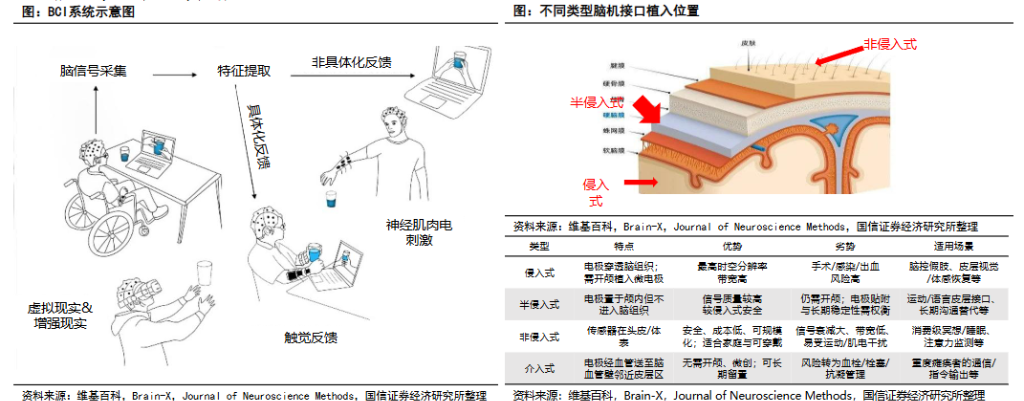
Core Viewpoint - Elon Musk's Neuralink plans to start mass production of brain-machine interfaces by 2026, marking a significant step towards the commercialization of this technology [2] Industry Developments - The brain-machine interface sector in China is accelerating, with the country becoming the second to enter clinical trials for invasive brain-machine interfaces after the United States [2] - In 2025, there were 24 financing events in the domestic brain-machine interface field, a 30% year-on-year increase [3] - Hubei Province has set a price for invasive brain-machine interface medical services at approximately 6,552 yuan, indicating a move towards making this technology more accessible [3] Technology and Market Segmentation - Brain-machine interfaces serve as a bridge between the brain and external devices, with three main technological approaches: invasive, non-invasive, and semi-invasive [4][5] - The largest market segment for brain-machine interfaces is currently in healthcare, accounting for over 56% of applications, particularly for neurological diseases like epilepsy and Parkinson's [6] - McKinsey predicts that the global market for medical applications of brain-machine interfaces could reach $40 billion by 2030 and $145 billion by 2040 [6] Investment Opportunities - While the brain-machine interface sector shows promise, most companies are still far from profitability, with significant time needed for medical applications to gain approval [7] - Instead of focusing on individual companies, it may be more prudent to consider the broader medical device industry, particularly through medical device ETFs that encompass leading firms in this space [8]

马斯克的中国竞对,一把融了20亿
创业邦· 2026-01-09 00:08
Core Viewpoint - The article discusses the significant financing of 2 billion RMB for BrainCo, positioning it as a leading player in the non-invasive brain-computer interface (BCI) sector, contrasting it with Neuralink's invasive approach, highlighting the ongoing technological rivalry in the BCI industry [5][18]. Financing and Growth - BrainCo completed a financing round of approximately 2 billion RMB, led by IDG and Huaden International, making it the second-largest BCI company in terms of funding globally, after Neuralink [5][18]. - Since 2019, BrainCo has completed four financing rounds, accumulating a total of 4.684 billion RMB [15]. Technology Pathways - BrainCo focuses on non-invasive BCI technology, utilizing devices like EEG caps to collect signals, which offers safety and ease of acceptance, while facing challenges in signal precision [6][12]. - Neuralink represents the invasive BCI route, which involves surgical implantation of electrode arrays in the brain, allowing for high-resolution signal collection but poses risks and ethical concerns [5][12]. Product Development and Market Position - BrainCo has developed several products, including smart prosthetics and sleep regulation devices, with some receiving FDA and CE certifications for international sales [6][14]. - The company achieved a milestone in 2022 by producing 100,000 units of a portable high-precision BCI product, breaking the long-standing experimental phase in the industry [14]. Competitive Landscape - The BCI market is characterized by three main technological pathways: invasive, semi-invasive, and non-invasive, each balancing performance, safety, and accessibility differently [20][22]. - Non-invasive BCIs, led by companies like BrainCo, dominate the market, accounting for approximately 82% of the BCI market share, while invasive technologies hold about 18% [22].

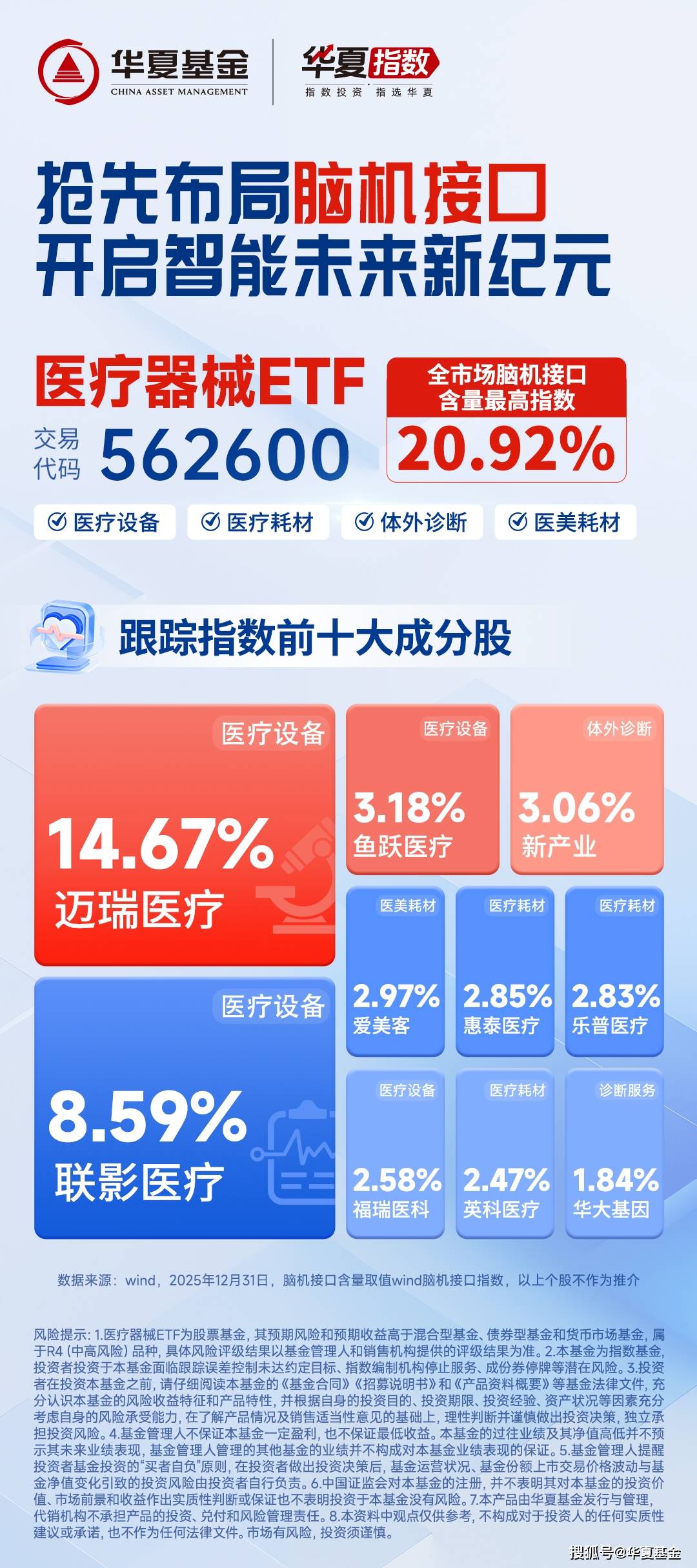
力合科创:公司未投资脑虎科技
Zheng Quan Ri Bao Wang· 2026-01-08 13:43
证券日报网讯1月8日,力合科创(002243)在互动平台回答投资者提问时表示,微灵医疗是公司的参股 企业,主要从事医疗级全植入式无线脑机接口系统研发;公司未投资脑虎科技。 ...

力合科创(002243.SZ):公司未投资脑虎科技
Ge Long Hui· 2026-01-08 10:37
格隆汇1月8日丨力合科创(002243.SZ)在投资者互动平台表示,公司未投资脑虎科技。 ...
力合科创:微灵医疗是公司的参股企业,公司未投资脑虎科技
Mei Ri Jing Ji Xin Wen· 2026-01-08 10:06
每经AI快讯,有投资者在投资者互动平台提问:请问公司关联的微灵医疗与脑虎科技是否涉及脑机接 口相关技术? 力合科创(002243.SZ)1月8日在投资者互动平台表示,微灵医疗是公司的参股企业,主要从事医疗级 全植入式无线脑机接口系统研发;公司未投资脑虎科技,敬请您注意投资风险。 (记者 张海妮) ...
中科信息(300678.SZ):与强脑科技、脑虎科技暂无合作
Ge Long Hui· 2026-01-08 07:52
Core Viewpoint - The company, Zhongke Information (300678.SZ), has clarified that it has no collaboration with Qiangnao Technology and Nao Hu Technology, focusing instead on its partnership with the Suzhou Institute of Nano-Tech and Nano-Bionics of the Chinese Academy of Sciences to develop brain-like intelligence and smart medical applications [1] Group 1 - The company is collaborating with the Suzhou Institute of Nano-Tech and Nano-Bionics to establish a research center for brain-like intelligence and smart medical applications [1] - The partnership aims to conduct research on key technologies and innovative applications in various medical fields [1] - The focus areas include clinical auxiliary diagnosis and treatment, clinical scientific research, and regional health and wellness applications [1] Group 2 - The company plans to develop high-end intelligent medical and rehabilitation equipment, high-end smart wearable devices, and clinical research and auxiliary diagnosis systems and equipment [1] - These products are aimed at promoting domestic innovation in the medical technology sector [1]
连续涨停!多家上市公司紧急回应 多数强调业务尚处早期
Shang Hai Zheng Quan Bao· 2026-01-07 00:44
Core Viewpoint - The brain-computer interface (BCI) sector is experiencing a surge in investor interest, driven by technological breakthroughs and product approvals in China, alongside Elon Musk's announcement of mass production of BCI products by Neuralink within the year [1][3]. Industry Developments - The BCI industry is in a high-growth phase, supported by technological advancements, policy backing, and collaborative expectations within the robotics ecosystem, with projections indicating the global BCI medical application market could reach $40 billion by 2030 and $145 billion by 2040 [3]. - Recent breakthroughs include the first clinical trial of a fully implanted, wireless BCI product by Brain Tiger Technology, which offers hope for patients with severe paralysis [3][4]. Company Responses - Multiple A-share listed companies have responded to the heightened interest in the BCI sector, with announcements detailing their business progress in this area [1][6]. - Xiangyu Medical reported a 44% cumulative increase in stock price, emphasizing its focus on non-invasive BCI technology, while acknowledging that its products have not yet achieved significant sales [6][9]. - Weisi Medical also clarified that its BCI products are in the early market cultivation stage and primarily focus on non-invasive technologies, with limited revenue contribution [9][10]. Strategic Collaborations - Companies are actively forming partnerships to enhance their BCI capabilities. Baiyang Pharmaceutical announced a collaboration with Capital Medical University to establish a joint laboratory focused on neuroscience and BCI research [11]. - Kefu Medical disclosed investments in non-invasive BCI robotics and implantable BCI companies, aiming for business synergy [11]. Technological Innovations - Companies like Sanbo Brain Science are making progress with their BCI technologies, including the development of a flexible microelectrode system for brain signal acquisition [12]. - In the semiconductor sector, companies are producing specialized chips for high-precision measurement of biological signals, which are essential for BCI applications [13]. Market Recognition - Domestic BCI products are gaining international recognition, with Shenzhou Rehabilitation's spinal interface product receiving breakthrough therapy designation from the FDA, marking a significant achievement for Chinese companies in the BCI field [4].
连续涨停!多家上市公司紧急回应
Shang Hai Zheng Quan Bao· 2026-01-06 22:57
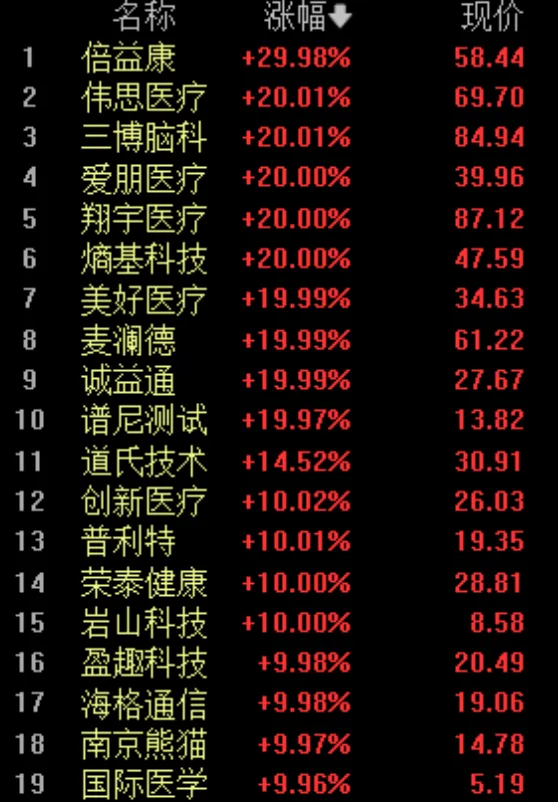
Core Insights - Elon Musk announced plans for mass production of brain-computer interface (BCI) products within the year, igniting investor enthusiasm in the BCI sector [1] - Recent technological breakthroughs and product approvals in China's BCI industry have bolstered confidence in its growth [1] Market Performance - The BCI sector experienced a surge, with multiple companies hitting their daily price limits, including BeiYikang with a 69% increase over two days [1] - Notable stock performances include: - BeiYikang: +29.98% at 58.44 - WeiSi Medical: +20.01% at 69.70 - Sanbo Brain Science: +20.01% at 84.94 - AiPeng Medical: +20.00% at 39.96 - Xiangyu Medical: +20.00% at 87.12 [2] Technological Advancements - The BCI technology is transitioning from laboratory research to clinical and industrial applications, driven by technological breakthroughs and policy support [3] - McKinsey predicts the global BCI medical application market could reach $40 billion by 2030 and $145 billion by 2040 [3] - Domestic companies like Brain Tiger Technology have achieved significant milestones, including the first clinical trial of a fully implanted, wireless BCI product [3][4] Company Developments - Several A-share listed companies have responded to the heightened interest in BCI, emphasizing their early-stage involvement in the sector [5][10] - Xiangyu Medical reported a 44% cumulative increase in stock price and highlighted its focus on non-invasive BCI technologies [6][9] - WeiSi Medical and Sanbo Brain Science both noted that their BCI products are still in the early stages of market development, with limited revenue contribution [9][10] Collaborative Efforts - Companies are forming partnerships to advance BCI research, such as Baiyang Pharmaceutical's collaboration with Capital Medical University [11] - Kuofu Medical has invested in non-invasive BCI robotics and previously in implantable BCI companies, indicating a strategic approach to market entry [11] Industry Participation - Various sectors, including semiconductors and new materials, are leveraging their technological strengths to capitalize on BCI opportunities [12][13] - Companies like Yiwai Lithium Energy and Lens Technology are collaborating with leading BCI firms to enhance their product offerings [13]
海外准备量产,国内脑机接口进度到哪了?
Hua Er Jie Jian Wen· 2026-01-06 13:02
Core Insights - The brain-computer interface (BCI) industry is transitioning from "scientific experiments" to "commercialization," with Neuralink planning large-scale production by 2026, igniting market expectations [1] - China is accelerating its progress in the BCI field through supportive policies and technological breakthroughs, with significant investments being made in the sector [1][12] - The market is characterized as a "0 to 1" incremental market, driven by short-term sentiment from Neuralink's production expectations and favorable domestic policies [1] Investment Landscape - Strong Brain Technology recently completed approximately 2 billion yuan in financing, marking the second-largest funding round in the BCI sector after Neuralink [1] - Investors are advised to focus on companies with core technological advantages, such as self-developed chips and flexible electrodes, as well as those that can achieve commercial closure in rehabilitation and consumer electronics [1] Technology Comparison - The BCI technology landscape is divided into invasive, semi-invasive, and non-invasive routes, each with distinct differences in signal quality, safety, and commercialization timelines [2] - Invasive methods, like those used by Neuralink, involve surgical implantation of electrodes for high-resolution signal acquisition but come with high costs and long development cycles [5] - Non-invasive methods utilize external sensors for signal collection, offering lower costs and safety but facing challenges with signal attenuation [8] Competitive Landscape - The U.S. leads in invasive BCI technology by 2-5 years, while China is catching up, particularly in non-invasive applications where both countries are on par [9][11] - Chinese companies are making significant strides in clinical trials, with several achieving notable milestones in both invasive and non-invasive technologies [12] Company Developments - Companies like BrainCo and Huashan Hospital have completed pioneering clinical trials in invasive BCI systems, demonstrating the ability to control devices through thought [12][13] - Strong Brain Technology has received FDA and CE certifications, positioning itself as a leader in the commercialization of BCI products [12] - Other companies, such as Beijing Chip Intelligence and ZhiDian Medical, are also advancing in the invasive BCI space, with various clinical trials and product developments underway [13][14] Regulatory Environment - The Chinese government has included BCI in its national strategic emerging industries, with plans for independent billing standards and industry regulations to facilitate commercialization [11]



50亿元资金涌入,脑机接口正加速驶来丨每日研选
Shang Hai Zheng Quan Bao· 2026-01-06 00:30
Core Viewpoint - The brain-computer interface (BCI) sector is experiencing a resurgence with over 5 billion yuan in funding, driven by Elon Musk's announcement of mass production in 2026, alongside policy support, technological advancements, and promising market prospects [1][2]. Group 1: Policy Support - The National Healthcare Security Administration issued guidelines in March 2025 for pricing new BCI technologies, indicating a clear policy direction for long-term development [1]. - In July 2025, multiple government departments released implementation opinions to promote innovation in the BCI industry, aligning with the "14th Five-Year Plan" which identifies BCI as a new economic growth point [1]. Group 2: Technological Breakthroughs - 2025 is viewed as a pivotal year for clinical validation of invasive BCIs, with significant milestones such as the first domestic fully implanted, wireless, and functional BCI product completing its first clinical trial [2]. - Leading companies like Neuralink are advancing technology iterations and automated surgical solutions, aiming to overcome traditional invasive device limitations and reduce costs [2]. Group 3: Market Potential - The immediate application of invasive technology will focus on critical medical needs such as paralysis and speech loss, but the long-term potential extends to becoming a core interface for human-computer interaction, integrating with AI and robotics [2]. - The evolution from a "therapeutic tool" to an "interactive platform" is a key factor attracting investment and increasing sector valuations [2]. Group 4: Investment Opportunities - Focus on core segments of the supply chain, particularly high-performance, flexible implanted electrodes and low-power, high-throughput specialized chips [4]. - Non-invasive technology companies that have achieved commercialization in specific areas like rehabilitation and sleep monitoring are also worth attention due to their validated business models [4]. - Companies with integrated capabilities in device development, algorithm optimization, and clinical resource integration should be prioritized [5]. - Attention should be given to companies that can create synergies between traditional businesses and BCI, as well as those located in key BCI industry clusters [5].