Nvidia

Search documents
Here's what Cramer is watching in the week ahead, including U.S.-Iran tensions
CNBC· 2026-02-28 00:00
Core Viewpoint - February was a challenging month for tech stocks, particularly Nvidia, which experienced significant declines despite strong quarterly performance and positive forward guidance [1][2]. Company Summary - Nvidia shares fell nearly 6.7% for the week, with a total decline of 7.3% in February and 5% year-to-date, primarily due to concerns over the sustainability of capital expenditure plans from its major tech clients rather than issues directly related to Nvidia [2]. Industry Summary - The S&P 500 and Nasdaq indices saw declines of 0.4% and nearly 1% respectively for the week, with monthly declines of nearly 1% for the S&P 500 and 3.4% for the Nasdaq, marking the worst performance since March 2025 [3]. - Geopolitical factors, particularly regarding Iran and potential U.S. military action, may influence market direction in the coming week, with oil prices rising approximately 17% year-to-date amid concerns over supply disruptions [4].


三大指数本周收跌 英伟达(NVDA.US)续跌4.16% 现货白银涨超6.2%
Zhi Tong Cai Jing· 2026-02-27 23:49
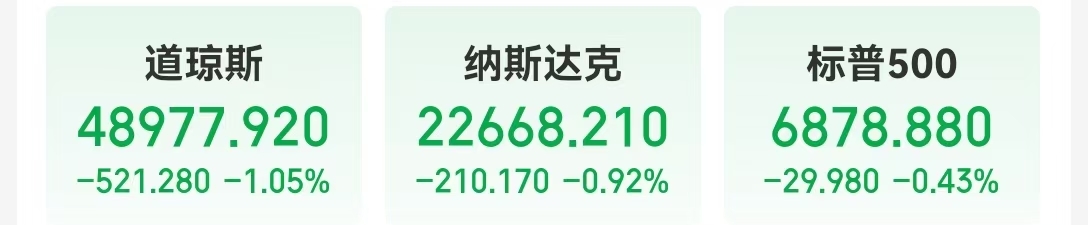
周五,三大指数收跌,本周均录得跌幅。本周道指下跌1.31%,纳指下跌0.95%,标普500指数下跌 0.44%。美国劳工统计局报告称,1月份美国批发价格指数以快于预期的速度上涨,这给通胀正在缓解 的希望泼了冷水。剔除波动较大的食品和能源价格后,核心生产者价格指数(PPI)经季节性调整后环比 上涨0.8%,高于12月份0.6%的涨幅,也远超道琼斯普遍预测的0.3%的涨幅。 周五是二月份最后一个交易日,本月三大指数涨跌不一,道指小幅上涨0.17%,为连续第10个月录得涨 幅。纳指下跌3.38%,标普500指数下跌0.87%。 【美股】截至收盘,道琼斯指数收盘下跌521.28点,跌幅1.05%,报48977.92点;标普500指数下跌29.98 点,跌幅0.43%,报6878.88点;纳斯达克综合指数下跌210.17点,跌幅0.92%,报22668.21点。英伟达 (NVDA.US)延续昨日跌势,收盘跌4.16%,CoreWeave(CRWV.US)收跌18.51%,戴尔科技(DELL.US)收 涨21.93%。 【欧股】德国DAX30指数涨12.44点,涨幅0.05%,报25290.14点;英国富时100指数涨6 ...


Buy the Dip in Nvidia Stock After Q4 Earnings, or is it Too Soon?
ZACKS· 2026-02-27 23:45
Core Viewpoint - Nvidia reported impressive Q4 results with sales of $68.12 billion and EPS of $1.62, reflecting year-over-year growth of 73% and 82% respectively, yet the stock has declined over 6% post-report due to investor concerns about the sustainability of the AI boom and concentration risks [1][2]. Financial Performance - Q4 sales reached $68.12 billion, with an EPS of $1.62, marking significant year-over-year increases of 73% and 82% [1]. - For fiscal 2027, Nvidia provided a revenue guidance of $78 billion, exceeding analysts' expectations of $72.8 billion, indicating at least 73% year-over-year growth and 12% sequential growth [6]. - EPS estimates for FY27 and FY28 have increased over 3% in the past week, with a projected annual earnings leap of 60% in FY27 and a further 20% increase in FY28 to $9.13 per share [8]. Market Concerns - Analysts express skepticism regarding the sustainability of AI spending by hyperscalers, questioning whether the pace of AI monetization justifies the current expenditures [3]. - Nvidia's revenue is heavily reliant on data centers, with 90% coming from five major cloud providers, raising concerns about potential order slowdowns from these customers [4]. - Increased competition from AMD and the development of in-house AI accelerators by major hyperscalers like Alphabet and Amazon pose risks to Nvidia's market position and profit margins [5]. Valuation Metrics - Nvidia is currently trading near its lowest forward P/E valuation in a decade, offering a discount compared to its historical median of 45X and below its peak of 118X [10]. - The stock is trading at a slight premium to the S&P 500 and below the Zacks Semiconductor-General Industry average of 27X [10]. Conclusion - Despite concerns regarding AI sustainability, Nvidia continues to show strong demand and structural dominance in the market, suggesting that it remains a compelling investment opportunity [13]. - The positive trend in EPS revisions supports a strong buy rating for Nvidia stock [14].
隔夜美股 | 三大指数本周收跌 英伟达(NVDA.US)续跌4.16% 现货白银涨超6.2%
智通财经网· 2026-02-27 23:37
智通财经APP获悉,周五,三大指数收跌,本周均录得跌幅。本周道指下跌1.31%,纳指下跌0.95%,标 普500指数下跌0.44%。美国劳工统计局报告称,1月份美国批发价格指数以快于预期的速度上涨,这给 通胀正在缓解的希望泼了冷水。剔除波动较大的食品和能源价格后,核心生产者价格指数(PPI)经季节 性调整后环比上涨0.8%,高于12月份0.6%的涨幅,也远超道琼斯普遍预测的0.3%的涨幅。 特朗普发文呼吁最高法院重审或再审其关税政策案。美国总统特朗普在社交平台发文表示,美国最高法 院最近关于关税的裁决可能会让数百亿美元回流到那些多年来一直在"剥削"美国的国家和公司,而根据 这个裁决,他们实际上可能会继续这样做,甚至在更高的水平上。我相信最高法院并没有考虑到这一 点!那些利用我们几十年、获得了不该得到的数十亿美元的国家和公司,现在竟然有资格获得一个前所 未有的"不义之财",这实在是让人失望,至少可以这么说。本案是否有可能重审或再审? 美国企业2月披露回购计划达2330亿美元 创历年同期新高。根据Birinyi Associates汇编的数据,美国企 业2月已披露2330亿美元股票回购计划,创历年2月最高水平,为 ...
道指深夜跳水超500点,美股半导体下挫,英伟达跌超4%,国际油价飙升3%,特朗普不满意伊核谈判进展
2 1 Shi Ji Jing Ji Bao Dao· 2026-02-27 23:19
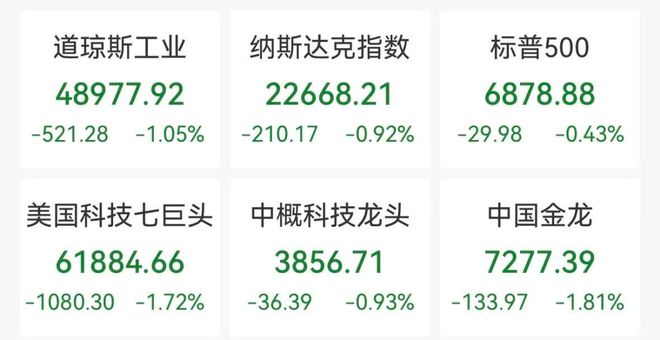
记者丨金珊 吴斌 编辑丨黎雨桐 周五(2月27日),美国三大股指全线收跌,道指跌1.05%,标普500指数跌0.43%,纳指跌0.92%。 | 道琼斯工业 | 纳斯达克指数 | 标普500 | | --- | --- | --- | | 48977.92 | 22668.21 | 6878.88 | | -521.28 -1.05% | -210.17 -0.92% | -29.98 -0.43% | | 美国科技七巨头 中概科技龙头 | | 中国金龙 | | 61884.66 | 3856.71 | 7277.39 | | -1080.30 -1.72% | -36.39 -0.93% -133.97 -1.81% | | 大型科技股多数下跌,其中,英伟达继昨日大跌5%后,再次跌超4%,分析师们仍越来越担心英伟达依 赖少数几家被称为"超大规模云服务商"的大型数据中心运营商,以及OpenAI等AI初创企业。Visible Alpha研究主管Melissa Otto表示,英伟达面临"很多担忧",涉及其所依赖的大型科技公司和初创企业客 户如何为数千亿美元的AI基础设施支出提供资金。()。此外,苹果跌逾3%,微软跌 ...
苹果跌超3%,英伟达市值蒸发超1.2万亿元!金、银、原油,全线上涨!什么情况?
Mei Ri Jing Ji Xin Wen· 2026-02-27 22:37
美国KBW银行指数跌近5%,创去年4月来最大单日跌幅。大型科技股多数下跌,英伟达跌超4%,苹果跌逾3%,微软跌超2%,特斯拉、Meta跌超1%;奈 飞涨超13%,创2023年10月以来最佳单日表现;谷歌涨超1%,亚马逊小幅上涨。高盛跌逾7%,摩根士丹利跌超6%,富国银行、花旗集团跌超5%,美国银 行跌超4%。戴尔科技涨约22%,创2024年3月份以来最大单日涨幅。Block涨近17%,创2022年以来最大单日涨幅。 英伟达市值一夜蒸发1871亿美元(约合人民币12832亿元)。 尽管营收增长且第一季度前景好于预期,但英伟达连续两日的下跌凸显了市场对人工智能热潮下高估值个股的担忧。 据媒体报道,德意志银行策略师称:"盈利惊喜的规模已不及市场在2023~2024年所习惯的水平,且由于市场对人工智能交易的普遍怀疑正在加剧,这些利 好并未起到太大支撑作用。" Block公司宣布裁员4000人(裁减近一半员工),赌注在于AI能够提高生产力,这一举动加剧了上述风险。截至收盘,Block涨16.76%。 利弗莫尔中概股龙头指数收跌1.26%。成分股中,阿特斯太阳能跌超11%,NEGG、爱奇艺跌超6%,世纪互联、欢聚跌超5% ...




美股三大指数集体收跌:道指跌逾1%,英伟达跌超4%
Feng Huang Wang· 2026-02-27 22:23
美国1月PPI同比增长2.9%,预估为增长2.6%,前值为增长3%。美国1月PPI环比增长0.5%,预估为增长 0.3%,前值为增长0.5%。 2月28日,美股三大指数集体收跌,道指跌1.05%,本周累跌1.31%,2月份累涨0.17%,月线10连涨;纳 指跌0.92%,本周累跌0.95%,2月份累跌3.38%;标普500指数跌0.43%,本周累跌0.44%,2月份累跌 0.87%。 纳斯达克中国金龙指数跌1.81%。爱奇艺跌超6%,世纪互联跌超5%,蔚来跌超4%,唯品会、陆金所跌 超3%;金山云涨逾6%,网易有道涨逾2%。 美国KBW银行指数跌近5%,创去年4月来最大单日跌幅。 大型科技股多数下跌,英伟达跌超4%,苹果跌逾3%,微软跌超2%,特斯拉、Meta跌超1%;奈飞涨超 13%,创2023年10月以来最佳单日表现;谷歌涨超1%,亚马逊小幅上涨。 高盛跌逾7%,摩根士丹利跌超6%,富国银行、花旗集团跌超5%,美国银行跌超4%。戴尔科技涨约 22%,创2024年3月份以来最大单日涨幅。Block涨近17%,创2022年以来最大单日涨幅。 全球要闻 美国1月PPI同比增长2.9% 预估为增长2.6% 历经近 ...
Your Post-Earnings AI Playbook
Investor Place· 2026-02-27 22:00
For years, legendary investor Louis Navellier has called NVIDIA’s earnings report the “grand finale” of earnings season. And this week, NVIDIA delivered what most companies would consider a blowout grand finale… beating on revenue, earnings, and guidance.Yet the stock fell…In today’s Friday Digest takeover, Louis explains why that reaction may be the real story. When expectations get stretched to extremes, even great news can trigger selling. And according to Louis, what just happened is a key signal that w ...
业绩创纪录超预期,英伟达股价为何仍在下跌?
Xin Lang Cai Jing· 2026-02-27 21:37
英伟达公布第四财季业绩超预期后,股价连续两个交易日大幅下跌。该股本周累计下跌6.65%,在2月 份下跌7.29%,今年迄今下跌4.99%。 英伟达一个季度赚了430亿美元,尽管摩根士丹利的约瑟夫·摩尔称这是芯片公司历史性的业绩与指引双 超预期,英伟达股价在周四开盘后仍下跌超过4%。英伟达的营收比预期高出约30亿美元,其指引也比 分析师此前的模型高出约50亿美元。 这种程度的超预期或许是可以预见的,因为英伟达的超大规模客户最近提高了资本支出预测,表明对芯 片的投入将持续不断。 摩尔表示,尽管股价反应平淡令人惊讶,但笼罩英伟达股票的争议"本质上都是长期性的"。 尽管资本支出预测上调,投资者一直担心人工智能支出的可持续性,摩尔表示,从目前的所有投资来 看,超大规模企业的自由现金流生成似乎"面临巨大压力"。 他并不那么担心。他说,超大规模企业正在要求更多的算力。虽然成本是一个挑战,但需求来自于向推 理(即运行AI模型)的转变,这最终会转化为收入。 摩尔在周四的报告中表示,长期"看起来相当不错"。 摩尔认为,对英伟达股价更大的催化剂可能是其CEO黄仁勳即将在摩根士丹利科技会议上的主题演讲, 以及该芯片制造商在3月份举办 ...
NVIDIA vs. Broadcom: The Smarter AI Stock to Buy for March 2026
ZACKS· 2026-02-27 21:00
Core Insights - March has historically been a strong month for the stock market, with AI stocks showing impressive gains, particularly NVIDIA and Broadcom, both of which reported strong quarterly earnings [1][7]. NVIDIA - NVIDIA reported record fiscal fourth-quarter 2026 revenues of $68.1 billion, a 73% increase year over year and a 20% increase sequentially, driven by its data center segment which generated $62.3 billion, up 75% year over year [1][2]. - The company projects fiscal first-quarter 2027 revenues of $78 billion, reflecting strong demand for data center products and confidence in global AI adoption [2]. - NVIDIA maintains exceptional gross margins, reporting a non-GAAP gross margin of 75.2% in the fiscal fourth quarter, with expectations to remain near 75% in the upcoming quarter [2][12]. - NVIDIA's shares are more attractively priced, trading at 25.14 times forward earnings compared to Broadcom's 31.38 times [10][12]. Broadcom - Broadcom reported record fiscal fourth-quarter 2025 revenues of $18 billion, a 28% increase year over year, primarily driven by a 74% increase in AI semiconductor revenues [3][4]. - The company expects AI semiconductor revenues to double year over year in the fiscal first quarter 2026 to $8.2 billion, with overall revenues projected at $19.1 billion, indicating another 28% year-over-year increase [4]. - Broadcom's fiscal fourth-quarter adjusted EBITDA was $12.2 billion, representing 68% of revenues, with guidance for the first quarter remaining high at 67% [5]. - The company generated $7.47 billion in free cash flow, equivalent to 41% of its revenues, providing flexibility for debt repayment, reinvestment, and shareholder rewards [6]. Comparative Analysis - Both companies exhibit strong quarterly results and confidence in future growth, with NVIDIA showing dominance in hyperscale AI and Broadcom demonstrating high margins and cash flow [7][8]. - Broadcom's debt-to-equity ratio stands at 76.3%, significantly higher than NVIDIA's 6.3%, indicating greater financial risk for Broadcom [8]. - NVIDIA is positioned as the superior buy due to its dominant data center leadership, lower debt levels, and attractive valuation [12].