
KKR

Search documents
星巴克扛不住了?
虎嗅APP· 2025-03-02 23:57
Core Viewpoint - Starbucks is facing significant challenges in the Chinese market, leading to rumors of potential business sales and major layoffs, reflecting the need for strategic changes to ensure future success [1][4][12]. Group 1: Layoffs and Business Challenges - Starbucks announced a global layoff of approximately 1,100 employees, marking the largest in its history, with the last major layoff occurring nearly seven years ago [1][7]. - The company is experiencing a decline in revenue and profitability, with Q1 2025 revenue at $9.398 billion, a year-over-year decrease of 0.3%, and net profit down 23.8% to $781 million [7][10]. - Despite not laying off employees in China, the company is still facing operational challenges, including a significant drop in same-store sales [7][9]. Group 2: Market Position and Competition - Starbucks' market share in China has been eroded from over 60% in 2018 to approximately 40% by 2024, largely due to the rise of local competitors like Luckin Coffee and Manner Coffee [8][18]. - The company has seen a decline in same-store sales, with a notable drop of 6% in Q1 2025, influenced by a 4% decrease in average selling price and a 2% drop in transactions [10][18]. - The competitive landscape has shifted, with local brands appealing to younger consumers through lower pricing strategies, which Starbucks has struggled to match [20][23]. Group 3: Potential Sale and Strategic Partnerships - There are rumors of potential buyers for Starbucks China, including KKR, FountainVest, PAG, and China Resources, indicating a possible shift in ownership or operational strategy [2][17]. - Starbucks is considering a franchise model as a potential solution to its challenges, similar to its strategies in other emerging markets [12][13][16]. - The valuation of Starbucks China is under scrutiny, with estimates exceeding $1 billion, despite declining financial performance [18][19]. Group 4: Strategic Adjustments and Future Directions - Starbucks is attempting to adapt its strategy by focusing on digital transformation and local product innovation, but these efforts have not yet reversed the downward trend in sales [9][24]. - The company has introduced new store formats and membership reforms to enhance customer engagement, but these changes have yet to yield significant improvements [24][25]. - The new CEO, Brian Niccol, is expected to implement strategies that have previously revitalized other brands, emphasizing the need for effective leadership in navigating current market challenges [25][26].



Apollo Names Shimpei Kanzaki as Japan Global Wealth Head
Globenewswire· 2025-03-02 23:00
Core Insights - Apollo has appointed Shimpei Kanzaki as Managing Director and Head of Japan Global Wealth, bringing over 20 years of experience in alternative investments and wealth management [1][2] - The company aims to expand its presence in Japan following successful growth in Hong Kong and Singapore, focusing on building partnerships with local distributors [2] - Apollo's investment philosophy emphasizes investor alignment and aims to provide clients with access to private market strategies, which offer potential excess returns and diversification benefits [2][3] Company Overview - Apollo is a high-growth global alternative asset manager with approximately $751 billion in assets under management as of December 31, 2024 [3] - The firm specializes in providing excess returns across the risk-reward spectrum, from investment-grade credit to private equity [3] - Apollo's retirement services business, Athene, focuses on helping clients achieve financial security through a suite of retirement savings products [3]


星巴克中国“自救”
21世纪经济报道· 2025-02-28 23:52
Core Viewpoint - Starbucks is undergoing significant reforms, including layoffs and operational changes, to improve efficiency and accountability while shifting focus back to the North American market [2][8][10]. Group 1: Layoffs and Operational Changes - Starbucks plans to cut 1,100 positions and several vacant roles to streamline operations and reduce complexity [2]. - This is the first round of layoffs since 2018, aimed at simplifying operations and menu offerings [2]. - The company is also reducing certain blended beverage products to enhance operational efficiency [2]. Group 2: Starbucks China and Potential Sale - Starbucks China is not currently facing layoffs, but there are ongoing rumors about the potential sale of its Chinese operations [4][5]. - Several private equity firms, including KKR and PAG, are reportedly interested in acquiring stakes in Starbucks China [4]. - Starbucks is exploring strategic partnerships to sustain growth in China, with a valuation of over $1 billion for its Chinese operations [7]. Group 3: Financial Performance - In Q4 2024, Starbucks reported revenue of $9.398 billion, a slight decline of 0.3% year-over-year, with net profit down 23.8% to $781 million [8]. - The U.S. market significantly impacted overall performance, with revenue of $6.605 billion, a 1% decline despite a 4% increase in store count [9]. - Same-store sales in the U.S. fell by 4%, with transaction volume down 8% [9]. Group 4: Market Dynamics and Competition - Starbucks is facing increased competition from local brands like Luckin Coffee and Kudi, which are gaining market share in major cities [13][14]. - Luckin Coffee reported a revenue of 9.61 billion RMB in Q4 2024, a 36.1% increase year-over-year, highlighting its strong growth compared to Starbucks [13]. - Kudi Coffee's strategy of offering coffee at 9.9 RMB has proven successful, with the company reporting profitability since May 2024 [14][15]. Group 5: Strategic Adjustments in China - Starbucks China is implementing a "self-rescue" initiative under new leadership, focusing on product innovation and new store formats [18][19]. - The introduction of the "Multi-Store Community" model aims to enhance operational efficiency by allowing one manager to oversee multiple locations [19]. - Despite these efforts, the ongoing sale discussions may impact employee morale and the company's commitment to its workforce [21][22].
KKR(KKR) - 2024 Q4 - Annual Report
2025-02-28 21:28
Market Risks and Investment Activities - KKR's investment activities are subject to significant market risks, including interest rate volatility and credit spreads, which can impact net gains from investment activities [1031]. - As of December 31, 2024, a hypothetical 10% decrease in the fair value of investments would lead to a corresponding change in net gains (losses) from investment activities, significantly affecting carried interest [1045]. - KKR's insurance segment is exposed to market volatility, particularly in interest rates and equity prices, affecting its liabilities and investment portfolio [1031]. - The company faces risks related to geopolitical developments, natural disasters, and intense competition in the investment management industry [23]. - KKR's reliance on third-party service providers introduces additional operational risks, including cybersecurity and data security breaches [23]. Financial Performance and Metrics - Total revenues for 2024 reached $21.88 billion, a significant increase of 50.9% compared to $14.50 billion in 2023 [1121]. - Net income attributable to KKR & Co. Inc. was $3.08 billion in 2024, down from $3.68 billion in 2023, reflecting a decrease of 16.4% [1122]. - The company reported net premiums of $7.90 billion in 2024, a substantial increase from $1.98 billion in 2023, marking a growth of 299.5% [1121]. - Basic earnings per share decreased to $3.47 in 2024 from $4.24 in 2023, a decline of 18.2% [1122]. - The company experienced unrealized losses on available-for-sale securities of $189.28 million in 2024, contrasting with unrealized gains of $2.09 billion in 2023 [1124]. Assets and Liabilities - Total assets increased to $360,099,411 as of December 31, 2024, up from $317,294,194 in 2023, representing a growth of approximately 13.5% [1109]. - Total liabilities grew to $298,114,719 in 2024, up from $258,915,282 in 2023, indicating an increase of approximately 15.1% [1110]. - Policy liabilities associated with market risk benefits increased to $185,205,366 in 2024 from $160,058,271 in 2023, reflecting a growth of approximately 15.7% [1110]. - The company’s cash and cash equivalents in the insurance segment decreased to $6,343,445 in 2024 from $11,954,675 in 2023, a decline of approximately 46.9% [1109]. Risk Management and Governance - The Board of Directors oversees KKR's governance, with five standing committees focused on risk management and compliance [1032]. - Global Atlantic's risk management includes maintaining adequate capital and liquidity resources to honor obligations to policyholders under stress scenarios [1041]. - The company has established various committees to manage enterprise risks, including market, operational, and regulatory risks [1033]. - KKR's organizational structure allows for certain exemptions from corporate governance requirements, which may impact shareholder rights [25]. Investment Valuation and Fair Value Measurements - Fair value measurements are based on observable market prices or derived from such prices, with varying levels of management estimation and judgment applied [1166]. - KKR utilizes a hierarchical disclosure framework for measuring financial instruments at fair value, categorized into Level I, II, and III based on market price observability [1167]. - Level III financial instruments require significant management judgment due to unobservable pricing inputs, including private equity investments and certain structured securities [1170][1180]. - KKR applies a minimum 5% illiquidity discount to private equity investments, which may be adjusted based on specific factors affecting the investment's marketability [1183]. Changes in Equity and Stockholder Information - Total stockholders' equity for KKR & Co. Inc. increased to $23,651,568 in 2024 from $22,858,694 in 2023, representing a growth of about 3.5% [1129]. - The number of common shares outstanding at the end of 2024 was 888,232,174, an increase from 885,005,588 shares in 2023, indicating a rise of approximately 0.3% [1129]. - KKR & Co. Inc. declared common stock dividends of $0.690 per share in 2024, totaling $612,068, compared to $0.650 per share in 2023, which totaled $563,285 [1129]. Tax and Regulatory Considerations - KKR analyzes its tax filing positions in all U.S. federal, state, local, and foreign tax jurisdictions where it is required to file income tax returns [1222]. - Deferred tax assets are recorded in Other Assets and are reduced by a valuation allowance when it is more likely than not that some portion will not be realized [1220]. - The total tax benefit recognized for equity-based compensation was $126.7 million, $51.3 million, and $65.4 million for the years ended December 31, 2024, 2023, and 2022, respectively [1215].

谁能买下星巴克中国?
创业邦· 2025-02-28 09:50
以下文章来源于零售商业财经 ,作者RBF团队 零售商业财经 . 新零售的思想者,新商业的参与者,新财经的见证者,中国零售大商业领域影响力媒体。 来源丨零售商业财经( ID:Retail-Finance ) 作者丨Annie 图源丨图虫创意 近日,一则关于星巴克中国可能出售股权的消息搅动了全球咖啡市场。 2月25日,据多家媒体报道,国际私募基金KKR、方源资本、太盟投资集团,以及中国本土企业华润集团、美团等均被列为潜在买家。目前,交易的具体架构仍 在磋商中,并可能随谈判进程动态调整。 对于将出售中国业务的说法,星巴克方面没有正面否定,而几名潜在买家则对于这一消息并未给予回应。 事实上,这场涉及全球咖啡巨头在华命运转向的传闻,恰逢星巴克全球宣布裁员1100人、星巴克中国业绩承压的关键节点。当"第三空间"的缔造者开始考虑战略 撤退,这场跨国品牌本土化的终极实验,正将中国消费市场的深层变革推至聚光灯下。 令人好奇的是,在这场资本与商业的博弈中,究竟谁能买下星巴克中国?华润、美团等潜在买家的入场,又将如何改写中国咖啡市场的格局? 潜在买家之华润集团 "全渠道优势"与本土化基因 华润集团作为最受关注的潜在买家,其商业版图 ...
抛离库迪击败星巴克 瑞幸四季度盈利倍升
BambooWorks· 2025-02-28 00:52
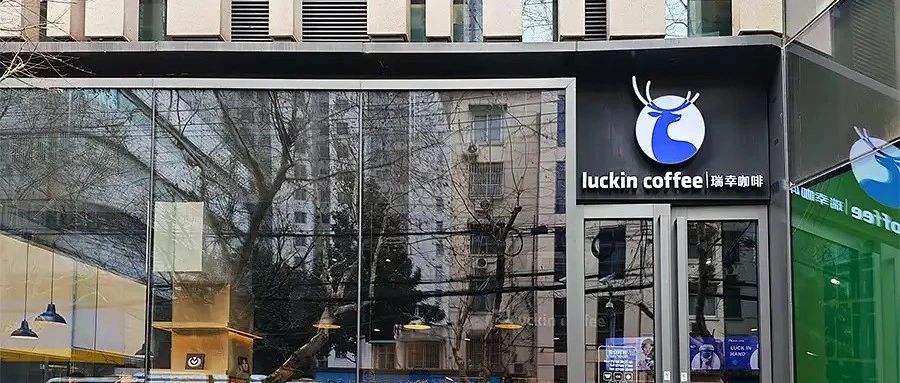
Core Insights - Luckin Coffee has solidified its leading position in the competitive Chinese coffee market, achieving significant growth in both operating and net profits in Q4, while Starbucks is struggling to maintain its market share [1][4][7] Group 1: Luckin Coffee Performance - In Q4, Luckin Coffee reported a revenue increase of 36.1% year-on-year to 9.6 billion yuan (approximately 1.3 billion USD), with operating profit soaring by 368% to 995 million yuan and net profit rising by 184% to 841 million yuan [1][2] - Same-store sales for Luckin Coffee continued to decline but at a reduced rate, from -13.1% in the previous quarter to -3.4%, with a positive trend noted in December [2] - The company is investing in supply chain and production facilities, with plans for international expansion starting in Singapore and targeting the U.S. market [6] Group 2: Starbucks Challenges - Starbucks reported a mere 1% year-on-year revenue growth in China for the last three months, with same-store sales declining by 6%, contrasting with a 10% increase in the same period last year [4] - The average transaction volume decreased by 2%, a stark contrast to a 21% increase in the previous year, as consumers shifted towards lower-priced options like those offered by Luckin and Kudi Coffee [4] - Starbucks is actively seeking strategic partners to revitalize its struggling Chinese business, which is valued at approximately 1 billion USD [4] Group 3: Market Dynamics - The coffee market in China is projected to reach a valuation of 16 billion USD by 2025, significantly lower than the 90 billion USD market in the U.S., indicating substantial growth potential [5] - Kudi Coffee, a low-cost competitor, aims to reach 50,000 stores by 2025, leveraging partnerships with retail chains to expand rapidly [6] - Despite Luckin Coffee's growth, its valuation remains lower than Starbucks, with a market cap of 8.4 billion USD and a P/E ratio of 24, compared to Starbucks' 130 billion USD valuation and a P/E ratio of 37 [7][8]

因价格战担忧,星巴克中国中资买方仅两家
阿尔法工场研究院· 2025-02-27 10:31
Core Viewpoint - The article discusses the significant strategic shift of Starbucks in China, driven by intense competition from local brands like Luckin Coffee and Kudi Coffee, which have rapidly reshaped the market landscape through aggressive pricing strategies [1][10]. Group 1: Starbucks' Strategic Shift - Starbucks is reportedly considering selling a stake in its China business, with multiple bidders including KKR, China Resources Group, and Meituan entering the fray [2][3]. - The potential sale is part of a broader strategy to adapt to the changing dynamics of the Chinese coffee market, where local brands have gained substantial market share [9][10]. - Starbucks aims to complete the transaction by the end of 2025, with ongoing negotiations focusing on the sale proportion and franchise agreements [5][6]. Group 2: Market Performance and Challenges - In fiscal year 2024, Starbucks' global revenue was $36.2 billion (approximately 262.75 billion RMB), with a year-on-year growth rate slowing to 1%, and net profit declining by 8.82% to $3.761 billion (approximately 27.30 billion RMB) [9]. - Starbucks' China revenue for fiscal year 2024 was $2.958 billion (approximately 21.47 billion RMB), down 1.4% year-on-year, with same-store sales and average transaction value both declining by 8% [9]. - Despite opening 790 new stores, the company fell short of its goal to reach 9,000 stores by 2025, indicating challenges in maintaining growth in the competitive landscape [9]. Group 3: Competitive Landscape - The rise of local brands like Luckin Coffee, which has surpassed Starbucks in market leadership, highlights the intense price competition in the Chinese coffee market [10]. - Local brands offer significantly lower prices, attracting price-sensitive consumers, which has forced Starbucks to implement promotional strategies while trying to maintain its premium positioning [10]. - The article suggests that Starbucks' potential partnership with local firms could provide valuable market insights and resources to better cater to local consumer preferences [17]. Group 4: Implications of the Potential Sale - The introduction of strategic partners or a franchise model could lead to a more asset-light operational approach for Starbucks, reducing fixed costs and operational risks while establishing a stable revenue stream [17]. - The potential sale could accelerate industry consolidation and transformation in the Chinese coffee market, increasing competitive pressure on local brands [18]. - Starbucks' localization strategy may serve as a model for other international brands, emphasizing the need for deeper adaptation to the Chinese market [19].

星巴克中国要被卖了?
虎嗅APP· 2025-02-26 10:20
Core Viewpoint - Starbucks is facing significant challenges in the Chinese market, leading to speculation about a potential sale of its operations in the region, with various private equity firms and strategic partners showing interest [1][4][5]. Group 1: Valuation and Sale Speculation - Starbucks' valuation in China could exceed $1 billion if a franchise agreement is reached, amidst ongoing discussions about the sale of its Chinese operations [7][8]. - The company has been in talks with multiple private equity firms since the second half of 2024 regarding strategic options for its Chinese business [5][6]. - The pressure from activist investors has prompted Starbucks to reassess its strategy in China, indicating a willingness to explore partnerships or sales [6][8]. Group 2: Market Position and Competition - Starbucks has historically dominated the Chinese coffee market, holding nearly 50% market share in 2014 and expanding to over 7,000 stores by 2023 [10][12]. - Recent years have seen a decline in Starbucks' market position, losing its status as the top coffee brand in China due to increased competition and changing consumer preferences [11][12]. - The rise of local brands and a shift in consumer behavior towards more affordable options have contributed to Starbucks' declining market share [11][12]. Group 3: Leadership Changes and Strategic Initiatives - The appointment of a new CEO, Brian Niccol, marks a pivotal moment for Starbucks, as he is tasked with revitalizing the brand and addressing challenges in the Chinese market [15][16]. - Niccol's previous experience in leading companies through crises positions him as a key figure in Starbucks' potential restructuring or sale of its Chinese operations [15][16]. - The establishment of a Chief Growth Officer position within Starbucks China reflects the urgency to innovate and attract younger consumers [12][13].
KKR Real Estate Finance: Discount To Book Value Could Tighten Further
Seeking Alpha· 2025-02-24 21:01
Core Insights - KKR Real Estate Finance (NYSE: KREF) has experienced a significant increase of 22% over the past year, with the stock market aiming to close the gap to a book value of $14.76 per share at the end of fiscal Q4 2024 [1] Group 1: Company Performance - The stock market's daily price fluctuations contribute to substantial long-term wealth creation or destruction [1] - KREF's focus on long-term wealth creation includes targeting undervalued yet high-growth companies, high-dividend stocks, REITs, and green energy firms [1]

中金:中银策2024第七章:银行背景风投、并购贷与私募贷:交叠处的创新收益与金融风险权衡分析
CICC· 2025-02-24 02:46
Investment Rating - The report does not explicitly provide an investment rating for the industry Core Insights - The integration of banks into the venture capital market is a practical choice that aligns with innovative financial logic, allowing banks to engage in bank-affiliated venture capital (BVC), acquisition loans, and private credit, which enhances the efficiency of credit support during capacity expansion phases [1][3][4] - BVC typically operates through bank-controlled affiliated institutions, differing significantly in behavior and preferences from independent venture capital (IVC), corporate venture capital (CVC), and government-backed venture capital (GVC) [1][4][19] - The balance between innovation benefits and systemic financial risks is crucial, suggesting that banks should control the scale of their involvement in venture capital to avoid excessive expansion that could lead to financial instability [2][4][5] Summary by Sections Section 1: BVC and Acquisition Loans - BVC and acquisition loans can enhance the efficiency of venture capital exits and improve the overall innovation financing mechanism within capital markets [1][4][39] - The report emphasizes that banks' participation in the venture capital market can facilitate smoother transitions from capital market-led financing to bank financing, particularly during the initial success of industrial innovation [1][4][39] Section 2: Characteristics of BVC - BVC is characterized by a preference for later-stage investments, shorter holding periods, and lower equity stakes compared to IVC, reflecting banks' risk-averse nature [4][25][37] - The investment behavior of BVC is influenced by the need to establish beneficial relationships with portfolio companies to support core banking activities, such as lending [4][33][37] Section 3: Role of Acquisition Loans - Acquisition loans, particularly leveraged buyouts (LBOs), play a significant role in enhancing the production efficiency of acquired companies and improving innovation outputs, such as patent citations [39][43][44] - The report highlights that banks can benefit from participating in LBO transactions by establishing business relationships with private equity firms, which can lead to future lending opportunities [39][46]