
荣耀

Search documents
粤产“手机天团”图鉴:全球十大顶流,广东独占五席
2 1 Shi Ji Jing Ji Bao Dao· 2026-01-14 23:13
一代人有一代人的广货记忆。近10余年间,智能手机崛起为最强的广货爆款,不仅风靡全球,更悄然推 动着广东制造的生态进化。全球每卖出三台手机,就有一台是广东制造。 全球手机江湖群雄并起,但前十强品牌中广东独占5席。Vivo、传音、OPPO、荣耀、华为——广东手 机"五虎将"各凭绝技纵横天下,共同谱写"新广货"商业传奇。 华为身怀"鸿蒙心法"与"麒麟内功"双重绝技,以技术创新筑起护城河;vivo练就"影像玄功",深谙"得年 轻人者得天下"的市场哲学,于细节处彰显匠心;OPPO精通 "普惠剑法",以高性价比为利刃,不断开 辟疆土;荣耀手握"场景轻功",精于重构交互与生态,以实用体验快速赢得用户;传音则身怀"海外秘 功",驰骋非洲市场,稳握半壁江山。 广东"手机天团"之所以能征善战,离不开背后强大的功法秘笈——广东手机产业链和创新链。"五虎 将"绝世武功,正是广东产业生态共同练就的结晶。从芯片到系统,无数配套企业不断攻坚技术、持续 创新产品,才构成了这套武学的修炼根基。 广货以新独步江湖,源源不断的AI眼镜、无人机、智能穿戴等"新广货"正加速走向全球,彰显出强大的 市场活力与供应链韧性,演绎着广东制造业深度融入并不断向 ...
最强广货爆款
2 1 Shi Ji Jing Ji Bao Dao· 2026-01-14 23:13
一代人有一代人的广货记忆。近10余年间,智能手机崛起为最强的广货爆款,不仅风靡全球,更悄然推 动着广东制造的生态进化。全球每卖出三台手机,就有一台是广东企业制造。 全球手机江湖群雄并起,但前十强品牌中广东独占5席。vivo、传音、OPPO、荣耀、华为——广东手 机"五虎将"各凭绝技纵横天下,共同谱写"新广货"商业传奇。 华为身怀"鸿蒙心法"与"麒麟内功"双重绝技,以技术创新筑起护城河;vivo练就"影像玄功",深谙"得年 轻人者得天下"的市场哲学,于细节处彰显匠心;OPPO精通 "普惠剑法",以高性价比为利刃,不断开 辟疆土;荣耀手握"场景轻功",精于重构交互与生态,以实用体验快速赢得用户;传音则身怀"海外秘 功",驰骋非洲市场,稳握半壁江山。 广东"手机天团"之所以能征善战,离不开背后强大的功法秘籍——广东手机产业链和创新链。"五虎 将"绝世武功,正是广东产业生态共同练就的结晶。从芯片到系统,无数配套企业不断攻坚技术、持续 创新产品,才构成了这套武学的修炼根基。 一部手机里,95%的零部件可以在东莞的"一小时通勤圈"内配齐。立讯精密、海思半导体、领益智造、 德赛电池……这些"隐秘而伟大"的制造先锋,以先进制 ...
钧崴电子:深耕电子元器件领域 开拓AI算力业务
Zhong Guo Zheng Quan Bao· 2026-01-14 22:52
Core Insights - The electronic components industry is accelerating towards high-end and intelligent iterations, with Junwei Electronics focusing on precision resistors and fuses in passive components, aiming to increase market share through technology-driven strategies and deep cooperation with leading clients [2][3] Group 1: Business Performance - In the first three quarters of 2025, Junwei Electronics achieved revenue of 573 million yuan, a year-on-year increase of 18%, and a net profit attributable to shareholders of 114 million yuan, up 25.27% [3] - The rapid growth in performance is attributed to product upgrades and successful client expansion in the consumer electronics sector, including securing positions in the supply chains of major companies like Vivo, OPPO, Huawei, and Honor [3][4] Group 2: Market Trends and Future Outlook - The consumer electronics and home appliance markets are expected to maintain moderate recovery, driven by the continuous penetration of AI technology, with significant growth potential in mobile devices and wearables [4] - Junwei Electronics is optimistic about the long-term development prospects of these markets, having established a solid foundation and steadily increasing market share [4] Group 3: New Product Lines and Innovations - Junwei Electronics is actively developing core current sensor technologies, including fluxgate, Hall effect, and tunnel magnetoresistance (TMR) sensors, to transition into a comprehensive current sensing solution provider [6] - The company aims to enhance its value and customer loyalty in industrial, automotive, and renewable energy sectors through these innovations [6] Group 4: International Expansion - Junwei Electronics is accelerating its global market expansion, having established wholly-owned subsidiaries in the US and Japan, and is focusing on increasing its presence in overseas markets [7] - The acquisition of FLAT, a Japanese thin-film resistor manufacturer, is expected to enhance the company's capabilities and accelerate its international business development [7] Group 5: Strategic Focus - The company plans to continue deepening its expertise in precision resistors and fuses while expanding applications in new energy vehicles, photovoltaic storage, and smart terminals [8] - Junwei Electronics will increase R&D investment to develop intelligent current detection solutions, aiming to become a leading global provider of comprehensive current sensing technology services [8]

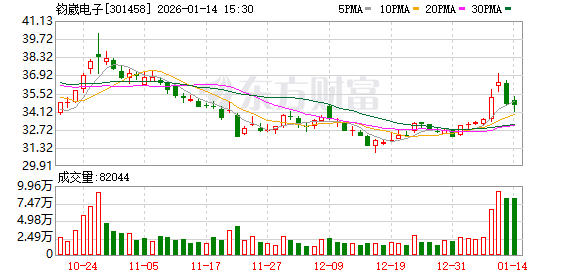
深耕电子元器件领域 开拓AI算力业务
Zhong Guo Zheng Quan Bao· 2026-01-14 20:51
Core Viewpoint - The electronic components industry is accelerating towards high-end and intelligent iterations, with Junwei Electronics focusing on precision resistors and fuses in passive components, aiming to enhance market share through technology-driven strategies and deep cooperation with leading clients [1] Group 1: Business Growth Strategy - Junwei Electronics plans to expand into AI computing, automotive electronics, and photovoltaic energy storage over the next three years while continuing to invest in R&D and strategic investments to develop new product lines such as sensors [1][2] - The company achieved revenue of 573 million yuan in the first three quarters of 2025, representing an 18% year-on-year increase, and a net profit of 114 million yuan, up 25.27% year-on-year [1] Group 2: Market Position and Client Expansion - The growth in performance is attributed to product upgrades and successful client expansion in the consumer electronics sector, including securing positions in the supply chains of Vivo, OPPO, Huawei, and Honor [2] - Junwei Electronics has established a solid foundation in the consumer electronics and home appliance markets, with a steady increase in market share and strengthened competitive barriers [2] Group 3: New Product Lines and Technological Development - The company is focusing on developing core current sensor technologies such as fluxgate, Hall effect, and tunnel magnetoresistance (TMR) sensors, which are seen as key directions for strategic upgrades [3] - Junwei Electronics aims to provide complete current sensing solutions, transitioning towards becoming a "current sensing solution provider" to enhance value and customer loyalty in industrial, automotive, and new energy sectors [3] Group 4: International Market Expansion - The company is accelerating its global market layout, leveraging wholly-owned subsidiaries in the US and Japan, and plans to increase efforts in overseas markets [4] - In 2025, Junwei Electronics acquired 100% of FLAT, a Japanese thin-film resistor manufacturer, to enhance its global manufacturing flexibility and diversify its brand and product offerings [4] Group 5: Future Collaborations and Innovations - Junwei Electronics plans to establish a joint venture with a subsidiary of Placo New Materials to achieve deep integration of technology, customers, and manufacturing capabilities in the magnetic materials and inductive products market [5] - The company will continue to deepen its focus on precision resistors and fuses, enhance product performance and manufacturing processes, and expand applications in new energy vehicles, photovoltaic energy storage, and smart terminals [5]
又一家A+H公司招股,引入高通、江西国控、豪威集团等为基石
Zheng Quan Shi Bao Wang· 2026-01-14 14:29
Group 1: Company Overview - Longqi Technology is a leading global provider of smart products and services, offering solutions for renowned smart product brands and leading technology companies, including product research, design, manufacturing, and support [2] - The company has established a diverse product portfolio covering smartphones, AIPC, automotive electronics, tablets, smartwatches/wearables, and smart glasses, serving a wide range of core clients such as Xiaomi, Samsung, Lenovo, Honor, OPPO, and vivo [2] - According to Frost & Sullivan, Longqi Technology is the second-largest consumer electronics ODM manufacturer globally, with a market share of 22.4% based on ODM shipment volume in 2024, and the largest smartphone ODM manufacturer with a market share of 32.6% [2] Group 2: Financial Performance - Longqi Technology's revenue for the years 2022 to 2024 and the first nine months of 2025 were 29.343 billion RMB, 27.185 billion RMB, 46.382 billion RMB, and 31.332 billion RMB respectively, with corresponding net profits of 562 million RMB, 603 million RMB, 493 million RMB, and 514 million RMB [3] Group 3: Recent Developments - The company has initiated an A+H listing, launching a global offering of 52.2591 million shares, with a maximum share price of 31.00 HKD, and expects to raise approximately 1.521 billion HKD, with 40% allocated for expanding production capacity and 20% for R&D [1] - Longqi Technology has secured a domestic leading client's AI glasses project, indicating early market entry and long-term strategic partnerships, with optimistic sales growth projected for AI glasses in 2025 compared to 2024 [3] - The company has attracted several notable cornerstone investors, including Qualcomm Ventures LLC, Jiangxi Guokong, and Well Semiconductor Hong Kong, with total subscriptions amounting to approximately 440.2 million HKD, representing about 27.17% of the global offering [1]

OpenAI押注耳机市场,AI巨头意在何处?
Xin Lang Cai Jing· 2026-01-14 13:29
Core Insights - OpenAI is developing an AI headset named Sweetpea to compete with Apple's AirPods, aiming to enhance user experience and intelligence in consumer electronics [2][4] - The entry into the headphone market is part of OpenAI's strategic expansion into hardware, driven by the need for dedicated devices to unlock AI's potential [3][12] Group 1: Product Development and Features - Sweetpea is expected to feature advanced capabilities, including a custom chip for voice commands, potentially replacing iPhone operations and directly controlling Siri [4][10] - The design of Sweetpea is unique, utilizing metal materials and an "eggstone" shape, which may help it stand out in a crowded market [4][5] - The estimated material cost for Sweetpea is high, potentially comparable to that of a smartphone, indicating a likely premium price point for consumers [5] Group 2: Market Context and Competition - The wireless headphone market is saturated, with major players like Apple, Sony, and Bose focusing on sound quality and noise cancellation, making OpenAI's entry a significant shift in competition dynamics [7][8] - OpenAI's entry could challenge Apple's ecosystem, which currently holds about 30% of the global true wireless headphone market [8] - Traditional audio brands face challenges in differentiating their products as the competition shifts from audio quality to AI-driven features and personalized services [9] Group 3: Strategic Implications and Future Trends - OpenAI's move into the headphone market reflects a broader trend towards the physical embodiment of AI, aiming to create a new paradigm of human-AI interaction [12][13] - The success of AI headsets like Sweetpea could lead to a proliferation of AI-enabled devices across various sectors, including health monitoring and home services [13] - The integration of AI into everyday devices raises ethical considerations regarding privacy and the impact on human behavior, necessitating new design principles and regulatory frameworks [13]

中国手机厂商撑起全球六成市场,海外出货结构进入重构期
Di Yi Cai Jing· 2026-01-14 12:41
Core Insights - The overseas expansion of Chinese manufacturers continues, but the competitive strategies and target price segments are undergoing significant changes [1][2][4] - The global smartphone industry is entering a new structural adjustment cycle, driven by rising storage chip prices and supply chain costs [1][6] Market Trends - According to IDC, global smartphone shipments are projected to grow by 2.3% year-on-year in Q4 2025, reaching 1.26 billion units, with an annual growth of 1.9% [1] - The growth is primarily driven by high-end models, foldable phones, and consumers' anticipation of future price increases [1][2] - Apple and Samsung are the fastest-growing manufacturers among the top five, with year-on-year growth rates of 6.3% and 7.9%, respectively, increasing their combined market share to 39% from 37% in 2024 [2] Competitive Landscape - Chinese manufacturers are facing structural pressures as the market shifts towards higher price segments, which have traditionally been their stronghold in overseas markets [2][4] - Honor is noted as the fastest-growing Chinese manufacturer overseas, with a year-on-year growth of approximately 55% in the first three quarters of 2025, focusing on the $300 to $500 price range [4][5] - Other Chinese brands like OPPO and Xiaomi are also adjusting their strategies to target mid-range markets, with OPPO moving from entry-level products to more mid-range offerings [5] Cost and Supply Chain Challenges - The uncertainty in 2026 is largely centered around costs and supply chain issues, particularly the volatility in storage prices [6][7] - Counterpoint Research predicts a 40% to 50% increase in storage chip prices in Q1 2026, with further increases expected in Q2 [6] - The rising costs of components are significantly impacting the pricing and sales of low-end models, making the business model for sub-$100 devices increasingly fragile [7]

时隔五年后,华为手机重返第一
Hua Er Jie Jian Wen· 2026-01-14 11:25
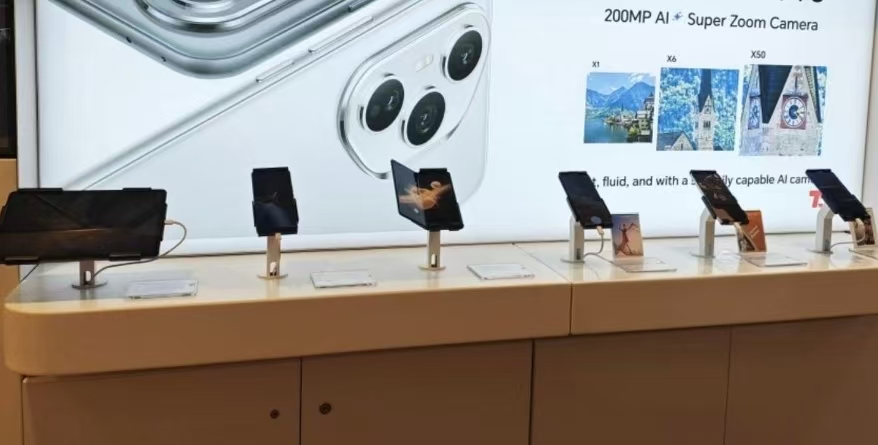
Core Insights - Huawei has regained the top position in the Chinese smartphone market with a market share of 16.4% in 2025, marking its return to the number one spot for the first time since 2020 [2][4] - The overall smartphone market in China is facing challenges, with a projected shipment volume of approximately 285 million units in 2025, reflecting a year-on-year decline of 0.6% [2][4] - Huawei's resurgence is attributed to a combination of technological advantages, product line restructuring, and a strong focus on high-end market segments [2][3] Market Dynamics - The competitive landscape is intense, with Huawei's market share closely contested by Apple, Vivo, Xiaomi, and OPPO, all of which have market shares ranging from 15.2% to 16.2% [4][5] - Huawei's growth strategy includes a diverse product structure, with high-end models like the Mate and Pura series recovering market share from Apple, while mid-range models like the Nova series appeal to a broader consumer base [3][4] - Despite regaining the top position, Huawei's performance in the latter half of 2025 showed signs of weakness, ranking third and fourth in the third and fourth quarters, respectively [4] Competitive Pressures - Apple and Xiaomi have also shown strong performance in the high-end market, with their new models experiencing significant sales growth of 22% and 21% year-on-year, respectively [5] - Honor, once a competitor to Huawei, has struggled to maintain its market position following Huawei's return to the 5G market, leading to a decline in its market presence [5][6] - Other brands like Vivo, Xiaomi, and OPPO are feeling increased pressure, prompting strategic moves such as OPPO's integration of the Realme brand to enhance competitiveness [6] Future Outlook - While Huawei has reclaimed its market leadership, it still faces significant challenges, including a substantial gap from its historical peak market share of 46% and ongoing pressures from rising component costs [7] - The smartphone market is expected to experience further declines in shipment volumes in 2026, indicating a challenging environment ahead for all manufacturers [7]
IDC:2025年Q4 vivo中国市场出货1200万台,排名第二
Feng Huang Wang· 2026-01-14 10:08
Core Insights - The report by IDC indicates that the Chinese smartphone market is expected to see a slight decline in shipments, with approximately 75.78 million units expected in Q4 2025, representing a year-on-year decrease of 0.8% [1] - Apple leads the market in Q4 2025, followed by vivo, OPPO, Huawei, and a tie between Honor and Xiaomi in fifth place [1] - For the entire year of 2025, the Chinese smartphone market is projected to ship around 285 million units, down 0.6% year-on-year [1] - The top five brands in terms of annual shipments in China for 2025 are Huawei, Apple, vivo, Xiaomi, and OPPO, with Honor falling out of the top five [1] - Globally, the total smartphone shipments are expected to reach approximately 1.26 billion units in 2025, reflecting a year-on-year growth of 1.9% [1] - The global smartphone shipments for Q4 2025 are projected to be 336.3 million units, showing a year-on-year increase of 2.3% [1]


南财快评|从广货到“新广货” 为何全球爆款频出?
2 1 Shi Ji Jing Ji Bao Dao· 2026-01-14 09:00
Core Viewpoint - The "Guangdong Products Going Global" spring campaign will kick off a series of promotional activities aimed at showcasing the diverse charm of Guangdong manufacturing, highlighting its evolution from traditional goods to advanced technology products like smart appliances and drones [1][2]. Group 1: Geographic and Trade Advantages - Guangdong's geographic location provides significant advantages for trade, facilitating industrialization and attracting foreign investment, which are foundational for the success of Guangdong products [2]. - The historical success of Guangdong products is attributed to its trade structure, which evolved from initial processing trades to attracting foreign capital and advanced manufacturing techniques, laying the groundwork for Guangdong's economic development [2]. Group 2: Technological Advancements and Industry Evolution - The current competitive edge of Guangdong products is driven by smart manufacturing, moving from traditional appliances to innovative products like smart glasses and drones, reflecting a shift towards intelligent production [3]. - Guangdong has established nine trillion-yuan industrial clusters, with projected revenues exceeding 19 trillion yuan by 2025, and is home to over 800,000 industrial enterprises, leading the nation in industrial output [3]. Group 3: Traditional and Emerging Industries - Traditional industries remain crucial for Guangdong's economic foundation, with significant contributions to the production of consumer electronics, such as televisions and air conditioners, and advancements in production efficiency through technology [4]. - Guangdong is a major hub for the smartphone industry, producing a significant portion of the world's smartphones and achieving breakthroughs in semiconductor technology, which supports the ongoing innovation in the sector [5]. Group 4: Future Prospects - Initiatives like "Smart Electric Guangdong," "Fashion in Guangdong," and "Guangdong Quality Products" are set to enhance the technological capabilities of Guangdong products, ensuring continuous innovation and market expansion [5].