Samsung

Search documents
中美存储芯片竞赛的五个关键问题-Asia Semiconductors_ Five questions on the US-China memory chip race
2025-12-16 03:26
Summary of Key Points from the Conference Call on the Memory Chip Industry Industry Overview - The report focuses on the **memory chip industry**, particularly in the context of the **US-China technology competition** and its implications for **AI applications** and **semiconductor supply chains** [1][2][3][4][5][6][9]. Core Insights and Arguments 1. **Importance of Memory Chips for AI**: - High-bandwidth memory (HBM) chips are essential for AI due to their capacity to handle large data volumes quickly. Major players include **Samsung**, **SK Hynix**, and **Micron** [2][12][14]. 2. **US Export Restrictions**: - The US imposed a ban on HBM exports to China in December 2024, reflecting a shift in strategy from focusing on advanced GPUs to recognizing the strategic importance of memory chips [3][17][22]. 3. **China's Adaptation to Restrictions**: - Chinese chipmakers are increasing imports of legacy memory chips and modifying US chips to comply with restrictions. However, they face challenges in developing HBM products due to reliance on foreign chipmaking equipment [4][5][34]. 4. **Obstacles for China's HBM Development**: - A significant barrier is China's dependence on foreign suppliers for advanced chipmaking equipment, particularly lithography machines. Domestic manufacturers are improving but still lag behind global leaders [5][57][58]. 5. **Impact of US-China Tensions on Asian Memory Chipmakers**: - South Korea remains the leading memory chip producer, while ASEAN countries are attracting investments and expanding capacity. Japan, although not dominant, is a key supplier of chipmaking equipment [6][9][64][74]. 6. **Memory Chip Supply Squeeze**: - The ongoing US-China tensions are expected to exacerbate a memory chip supply squeeze, affecting electronics producers who may struggle to secure supplies for the upcoming year [7][88]. Additional Important Insights 1. **Shift in Semiconductor Strategy**: - The US semiconductor strategy has evolved from a "small yard, high fence" approach under the Biden administration to a "larger yard, lower fence" under the Trump administration, allowing for more negotiation space [19][22]. 2. **China's Memory Chip Imports**: - Despite restrictions, China's memory chip imports have surged, with nearly half sourced from South Korea. This indicates the continued demand for legacy chips among Chinese tech firms [34][39]. 3. **Long-term Self-reliance Goals**: - China aims for greater self-reliance in semiconductor production, with companies like Huawei playing a pivotal role in developing domestic capabilities [40][43]. 4. **Geopolitical Risks and Market Dynamics**: - The geopolitical landscape is shifting, with US restrictions potentially backfiring by inadvertently boosting some Chinese tech firms as they gain market share without US competition [27][45]. 5. **Investment Trends in ASEAN**: - Countries like Singapore and Malaysia are becoming critical hubs for semiconductor production, with significant investments from global firms like Micron, which is expanding its facilities in these regions [66][69]. 6. **Price Increases for Electronics**: - The supply squeeze is leading to rising prices for memory chips, which could result in higher costs for end consumers of electronic devices [87][88]. This summary encapsulates the critical aspects of the memory chip industry as discussed in the conference call, highlighting the interplay between geopolitical tensions, technological advancements, and market dynamics.



Smartphone of the year selection is here. Watch the full video with picks from across our newsroom
The Verge· 2025-12-15 17:01
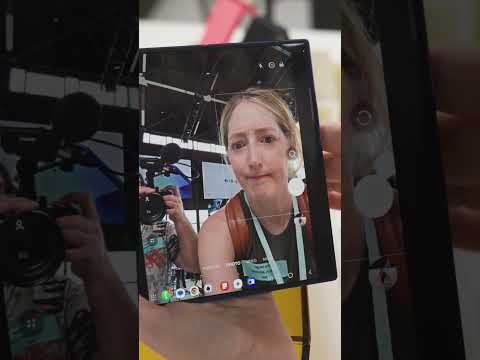
Product Analysis - The Samsung Galaxy Z Fold 7 stands out for its thin and light design, making it feel less bulky than other folding phones [1] - The phone's design represents a shift towards prioritizing a slim profile, contrasting with approaches that emphasize durability [2] - The device is considered beautiful and special, offering an amazing user experience that hints at the future of phone design [2][3] Market Considerations - The $2,000 price point is a significant consideration for potential buyers [2] - The camera quality is not as high as mainstream phones, representing a trade-off for the foldable form factor [2] - The phone lacks dust resistance, unlike some competitors like the Pixel 10 Pro Fold, making it less practical in certain environments [2][3]

Hesai Recognized as the Only Lidar Company on Morgan Stanley's "Humanoid Tech 25" of Global Robotics Leaders
Prnewswire· 2025-12-15 14:00
Core Insights - Hesai Technology has been recognized by Morgan Stanley as the only lidar company in the "Humanoid Tech 25" list, highlighting its influence in the robotics sector [1][4] - The report emphasizes that the robotics era is already in progress, with reliable perception being essential for the effective operation of robots [2] - Lidar technology is crucial for providing accurate 3D spatial perception, which is necessary for the functionality of 1.4 billion robots expected by 2050 [3] Company Positioning - Hesai has achieved significant milestones, including being the first automotive lidar company to exceed 2 million cumulative deliveries and maintaining the top market share for ADAS main lidar for nine consecutive months [4] - The company has developed four generations of proprietary ASICs, which enhance product reliability and manufacturing scalability, with production capabilities of one lidar every 10 seconds [4] - Hesai's JT-series mini 360° 3D robotics lidars have surpassed 200,000 cumulative deliveries, indicating strong market validation and adoption across various sectors [5] Industry Outlook - The demand for lidar units is projected to increase nearly 300 times from 2025 levels to support the perception needs of the anticipated 1.4 billion robots by 2050 [3] - Global robot hardware revenues are expected to reach $25 trillion by 2050, marking robotics as a significant computing and industrial platform [7] - As robotics applications expand, Hesai is positioned to play a foundational role in the development of the next generation of robotics and embodied AI [6]


Microsoft's AI advantage isn't all about OpenAI — and Wall Street loves it
Yahoo Finance· 2025-12-15 12:00
Core Insights - Microsoft has made significant investments in OpenAI, totaling approximately $13 billion, viewing AI as a transformative platform akin to Windows in personal computing [1][3] - The partnership provides Microsoft with preferential access to advanced AI models, while OpenAI benefits from Microsoft's infrastructure and funding [2][6] - Analysts predict Microsoft's market cap could reach $5 trillion by 2026, driven by its AI initiatives [4][5] Investment and Partnership Dynamics - The relationship began with a $1 billion investment in 2019, positioning Microsoft as a key player in the AI landscape [3] - OpenAI is currently valued at $500 billion, with Microsoft holding a 27% stake, but the future value of this stake is uncertain [6][14] - The revised partnership allows both companies to diversify their collaborations, with OpenAI pursuing deals with other cloud providers [18][19] AI Integration and Product Development - Microsoft has integrated AI across its product suite, including Azure, Office, and consumer products like Bing and Edge, enhancing its competitive edge [7][8] - The Copilot suite exemplifies this integration, providing generative AI tools across various applications [8][22] - Analysts highlight that Microsoft's AI revenue is primarily driven by its own Azure services rather than its stake in OpenAI [15][16] Future Outlook and Market Position - Microsoft's strategy includes developing its own AI capabilities while maintaining a partnership with OpenAI, allowing for tailored solutions for a diverse customer base [11][12] - The company is expected to invest $80 billion in AI infrastructure through fiscal 2025, with potential for a $500 billion joint venture with OpenAI and other partners by 2029 [26][28] - Analysts remain optimistic about Microsoft's position in the AI market, citing its extensive portfolio and the potential for agentic AI to unlock new opportunities [22][23]

全球内存:近期上涨后还有上行空间吗-Global Memory_ Any upside left after the recent rally_
2025-12-15 01:55
Summary of Global Memory Industry Conference Call Industry Overview - The focus is on the memory industry, specifically DRAM and NAND sectors, with key players including Samsung, SK hynix, Micron, and KIOXIA [1][2][12]. Key Insights Memory Price Projections - An imminent capital expenditure (capex) increase is expected to "normalize" memory prices starting late CY2026, with new supply anticipated to soften prices [2][15]. - DRAM prices are projected to rise until late CY2026, after which they will begin to decline towards pre-surge levels by late CY2027 [20][21]. Margin Expectations - Cost reductions are expected to maintain elevated margins, with DRAM gross margins projected to peak at 77% in 4QCY26, dipping to 62% in 4QCY27, marking this cycle as potentially the best ever [3][27]. Company Ratings and Price Targets - **Samsung, SK hynix, and Micron**: All rated as Outperform with revised price targets set at KRW 130,000, KRW 650,000, and US$ 270 respectively, reflecting strong demand and pricing visibility [4][12][34]. - **KIOXIA**: Rated Underperform with a price target of JPY 7,000, indicating a 26% downside due to competitive pressures and unclear demand linkage with AI [6][13][37]. Competitive Landscape - Chinese competitors, CXMT and YMTC, are expected to gain market share but not enough to shift the market from shortage to oversupply in the near term [7]. - DRAM industry capex is expected to rise by 40% in CY2026, while NAND capex will increase but remain below historical levels [8]. Investment Implications - The investment outlook remains positive for Samsung, SK hynix, and Micron, with significant upside potential based on strong conventional memory pricing forecasts [12][34]. - KIOXIA's valuation is deemed too high relative to its growth prospects, especially in light of increased competition [6][37]. Additional Considerations - Historical trading behaviors suggest that it may be premature to exit investments in memory stocks, as prior cycles indicate that stock prices often peak after memory prices [5][37]. - The memory sector is characterized by high volatility and sensitivity to macroeconomic conditions, necessitating cautious investment strategies [9]. Financial Projections - Significant growth in book value per share is anticipated for Samsung (59%), SK hynix (189%), and Micron (139%) over the next two years, driven by robust pricing cycles [40][41][46]. - KIOXIA's book value per share is expected to expand by 244%, but its valuation remains a concern [50]. This summary encapsulates the critical insights and projections from the conference call, highlighting the dynamics of the memory industry and the positioning of key players.
全球硬件 -AI 眼镜:下一类快速增长的边缘设备-Global Hardware AI Glasses the Next Fast-Growing Edge Device
2025-12-15 01:55
Summary of AI Glasses Market and Key Players Industry Overview - The AI glasses market is projected to grow significantly, with shipments expected to reach approximately 112 million units by 2030, reflecting a compound annual growth rate (CAGR) of 105% from 2024 to 2030 [1][2][18] - Market revenues are forecasted to reach US$40 billion by 2030, with a CAGR of 112% during the same period [1][2][18] - The market is characterized by evolving technology and increasing competition among major tech companies [2][50] Key Players and Market Share - **EssilorLuxottica-Meta** is expected to maintain market leadership with a projected share of around 31% by 2030, down from over 90% in 2024 [1][2][18] - **Google** is anticipated to capture approximately 27% of the market share, followed by **Apple** at around 16% [1][2][18] - Other notable players entering the market include **Snap**, **Samsung**, **Tencent**, and **ByteDance**, indicating a trend towards collaboration between tech companies and fashion brands [2][50][61] Technological Insights - Optical components are critical for AI/AR glasses, potentially accounting for 40-70% of the overall bill of materials (BOM) for fully-featured smart glasses [3][28][39] - The complexity of AI capabilities and interaction design will influence hardware development, with a focus on lightweight, power-efficient semiconductor solutions [32][33] - Current dominant players in the semiconductor space include **Qualcomm**, which is expected to remain a key supplier for smart glasses [3][32] Development Challenges - Key challenges in smart glasses development include semiconductor limitations, battery life, design aesthetics, operating systems, display technology, and eyewear distribution channels [32][33][34][36][37] - The need for stylish designs and compatibility with prescription lenses is crucial for mass adoption, as traditional eyewear companies leverage their distribution networks [37][38] Market Catalysts and Risks - Anticipated product launches from major tech companies in 2026 are seen as potential catalysts for market growth, alongside quarterly shipment updates, particularly from Meta [5][50] - Risks include potential oversupply in the supply chain if production increases ahead of demand, which could lead to downward pressure on prices [5] Future Outlook - The AI glasses market is expected to evolve into a mainstream product category by 2026, with significant advancements in features and functionalities [2][50][61] - Companies like **Meta** and **Apple** are focusing on integrating AI capabilities into their products, with Apple reportedly prioritizing AI smart glasses over mixed reality headsets [61][62] - The partnership between **EssilorLuxottica** and **Meta** is highlighted as a strategic advantage, combining fashion expertise with technological innovation [55][56] Conclusion - The AI glasses market is poised for rapid growth, driven by technological advancements and strategic partnerships among key players. The success of these products will depend on overcoming development challenges and effectively addressing consumer needs for design and functionality.




存储半导体月度报告 - 2025 年 12 月版:行情加速升温-Memory Semis Monthly-December '25 Edition Going into overdrive
2025-12-15 01:55
ab 11 December 2025 Global Research Memory Semis Monthly December '25 Edition: Going into overdrive 4Q25 and 1Q26 DDR contract pricing could be much stronger than expected With 4Q25 memory contract pricing negotiations now completed, we revise up our forecast for DDR contract pricing to +35% QoQ (was +21%), and for NAND +20% (was +15%). We believe customers are trying to secure 1Q26 contract pricing in earnest, with further potential upside. We now forecast blended 1Q26 DDR contract pricing to increase 30% ...
How ASML's Lithography Machines Shape the AI Chip Industry
Youtube· 2025-12-14 06:00
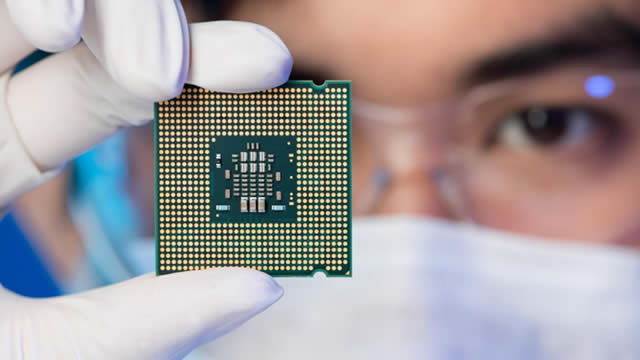
Core Insights - ASML is a pivotal company in the semiconductor industry, specializing in lithography machines essential for advanced chip manufacturing [1][2] - The company has developed the extreme ultraviolet (EUV) lithography machine, which is crucial for producing smaller and more powerful chips [3][4] - ASML's technology enables chipmakers to fit billions of transistors onto compact silicon wafers, supporting the ongoing demand for increased computing power [4][5] Company Overview - ASML was founded in 1984 as a joint venture between Philips and ASM International, starting in modest facilities in the Netherlands [1][2] - It is currently the only company capable of producing the advanced lithography machines necessary for the most sophisticated semiconductor manufacturing [2] Technology and Innovation - The EUV lithography machine, ASML's flagship product, costs over $300 million and is comparable in size to a double-decker bus while weighing as much as a Boeing 747 [3] - This machine utilizes ultraviolet light to create microscopic patterns on silicon wafers, enabling the production of chips with unprecedented transistor density [4] Industry Context - ASML plays a central role in the global chip supply chain, with major semiconductor firms like NVIDIA, AMD, and Micron relying on its technology for chip design and manufacturing [4][5] - The company’s machines are essential for foundries such as TSMC and Samsung, which produce advanced semiconductors primarily in Asia [5] Market Dynamics - The semiconductor industry faces the challenge of adhering to Moore's Law, which predicts that computing power will double approximately every two years, necessitating continuous advancements in lithography technology [6] - ASML's innovations are critical to maintaining this trajectory of growth and technological advancement in the industry [6]

How ASML's Lithography Machines Shape the AI Chip Industry
Bloomberg Technology· 2025-12-14 06:00
Company Overview - ASML started as a 50/50 joint venture between Philips and ASM International in 1984 [1] - ASML is the sole company capable of manufacturing machines for printing the tiniest circuits on advanced chips [2] - ASML's extreme ultraviolet (EUV) lithography machine costs over $300 million, weighs as much as a Boeing 747, and contains over 100,000 parts [3] Technological Advancement - EUV lithography uses ultraviolet light to etch microscopic patterns onto silicon wafers [4] - EUV machines from ASML are essential for manufacturing the most advanced semiconductors [5] - The industry aims to pack more computing power into less space, aligning with Moore's Law [5][6] Industry Position - ASML's early growth was accelerated by companies like Intel, Texas Instruments, and AMD [2] - ASML is at the center of the global chip supply chain, with firms like NVIDIA, AMD, and Micron designing chips [4] - Foundries like TSMC and Samsung rely on ASML's EUV machines for manufacturing advanced semiconductors [5]
A look back on the "Taylor Swift economy" post-Eras Tour, what to expect from Micron earnings
Yahoo Finance· 2025-12-12 22:40
[music] Hello and welcome to Asking for a Trend. I'm Jared Blickery. For the next half [music] hour, we're breaking down the trends of today that'll move stocks tomorrow.There's a lot to keep track of, [music] so we're focusing on what you need to know to get ahead of the curve. Here are some of the trends we're going to be diving into. It was a [music] down day on Wall Street as fresh headlines about Oracle's data center buildout spooked investors.But there was one bright spot. Sharers of Wealthfront jumpi ...