Perplexity

Search documents
人工智能初创公司Perplexity 5月搜寻量高达7.8亿次,按月增20%
news flash· 2025-06-06 06:27
Core Insights - Perplexity's AI search engine is experiencing remarkable growth, with search volume reaching 780 million in May, a 20% month-over-month increase, potentially leading to 1 billion queries per week within a year [1] - The daily query volume has surged from 3,000 at the company's inception in 2022 to 30 million currently [1] - The development of the Comet browser is seen as a crucial growth driver for Perplexity, as many users are dissatisfied with traditional browsers like Google Chrome [1] - The CEO criticized Google's AI assistant as a "terrible product," accusing the tech giant of repeatedly launching similar AI features without delivering real value to users [1]
AI搜索飙升!Perplexity披露数据:5月搜索量达7.8亿次,环比增长超20%
Hua Er Jie Jian Wen· 2025-06-06 03:22
Group 1 - Perplexity, an AI search engine, processed 780 million queries in May, achieving over 20% month-over-month growth [1] - Daily queries have surged from 3,000 at the company's inception in 2022 to 30 million currently, indicating significant user adoption [1] - The CEO projects that if the current growth rate is maintained, the company could handle 1 billion queries per week within a year [1] Group 2 - The company is developing the Comet browser, which is seen as a key driver for growth, aiming to transform AI from a passive responder to an active executor [1][2] - Comet is described as a "cognitive operating system," intended to fundamentally change how users interact with the internet [2] - The browser will allow tracking of user activities outside the application to support high-end advertising sales, similar to Google's early strategy [2] Group 3 - Despite the ambitious vision, the company faces challenges such as technological implementation difficulties, user habit resistance, and competition from giants like Google and Microsoft [3]
Google's Black Swan Event and a 25% Loss: ETFs to Consider
ZACKS· 2025-06-04 17:31
Core Viewpoint - Alphabet's shares have experienced significant volatility in 2025, reflecting broader market trends, with a notable 37% increase in 2024 followed by an 8.9% rise in early 2025, before a sharp decline of around 30% in February due to escalating trade tensions [1][2]. Company Performance - By April 2025, Alphabet's shares rebounded, gaining 17% as of June 2, following easing trade tensions, and the company holds a Zacks Rank 3 (Hold) with a strong Growth Score of A [2]. - The company faces uncertainty due to ongoing antitrust legal proceedings, with the Department of Justice concluding arguments that could have significant implications for Alphabet [3][4]. Legal Challenges - Alphabet lost a landmark antitrust case in August 2024, with a ruling that it illegally monopolized the search engine market, leading to potential drastic consequences for the company [4]. - Analysts predict that if a divestiture of the Chrome browser is ordered, Alphabet's shares could drop by 15% to 25%, and its earnings per share (EPS) could decrease by up to 30% due to Chrome's substantial user base of 4 billion and its contribution of 35% to Alphabet's search revenues [4][5]. Settlement and Compliance - Alphabet has agreed to a $500 million settlement to change its compliance structure as part of a resolution to a shareholder lawsuit alleging antitrust violations, with additional legal fees potentially reaching $80 million [7]. Investment Opportunities - The legal developments surrounding Alphabet are expected to create short-term volatility in its shares, prompting interest in ETFs with significant exposure to the company [8]. - Several ETFs with notable exposure to Alphabet include: - IShares Global Comm Services ETF with 11.97% exposure and an asset base of $415.5 million [9]. - Fidelity MSCI Communication Services Index ETF with 12.50% exposure and an asset base of $1.49 billion [11]. - Vanguard Communication Services ETF with 12.49% exposure and an asset base of $4.74 billion [12]. - MicroSectors FANG+ ETN with 9.74% exposure and an asset base of $445.9 million [13]. - Communication Services Select Sector SPDR Fund with 8.71% exposure and an asset base of $21.82 billion [14].



来自400位设计师的深度调研:两家海外VC深度解析设计行业的AI应用全景图 | Jinqiu Select
锦秋集· 2025-06-04 14:21
Core Insights - The article discusses how AI is reshaping the design industry, highlighting the challenges and opportunities for designers in adapting to this technological shift [2][3]. Group 1: Embracing the AI Era - Insight 1: AI is releasing its maximum value in the early stages of design, with 72% of designers believing it enhances ideation and 68% finding it reduces repetitive tasks [3][5]. - Insight 2: AI tools are widely adopted in the exploration phase, with 84% of designers using them, marking a shift away from "blank page anxiety" [7][19]. - Insight 3: Research efficiency has significantly improved, with AI reducing the time needed for client interview analysis from 8-16 hours to just 1-3 hours [10][12]. Group 2: AI's Impact on Design Processes - Insight 4: The emergence of "Vibe Coding" allows designers to generate functional code prototypes through natural language, streamlining the design process [14][16]. - Insight 5: AI's influence diminishes as the design process progresses, with only 39% of designers believing AI strengthens execution and 28% using it for layout exploration [17][19]. - Insight 6: The integration of AI tools is fragmented, with 24.8% of designers seeking stronger UI/UX generation capabilities [21][23]. Group 3: Challenges in AI Adoption - Insight 7: Designers exhibit a dual attitude of enthusiasm for trying AI tools but caution in their adoption due to fragmentation and high switching costs [24][25]. - Insight 8: Collaboration remains a significant shortcoming, with only 8-12% of designers believing AI has improved team collaboration [30][33]. - Insight 9: The speed of AI adoption varies significantly across company sizes, with 52% of early-stage startups integrating AI compared to only 23% of public companies [34][37]. Group 4: The Future of Design in the AI Age - Insight 10: The value of human creativity is becoming more pronounced as AI lowers design barriers, leading to concerns about homogenization in design [39][40]. - Insight 11: Successful AI-native companies prioritize design as a core competitive advantage, achieving revenue milestones faster than traditional SaaS companies [41][42]. - Insight 12: Designers are encouraged to evolve from specialists to generalists, integrating technical skills and creative judgment to remain competitive [48][49].

AI 趋势报告
小熊跑的快· 2025-06-04 09:13
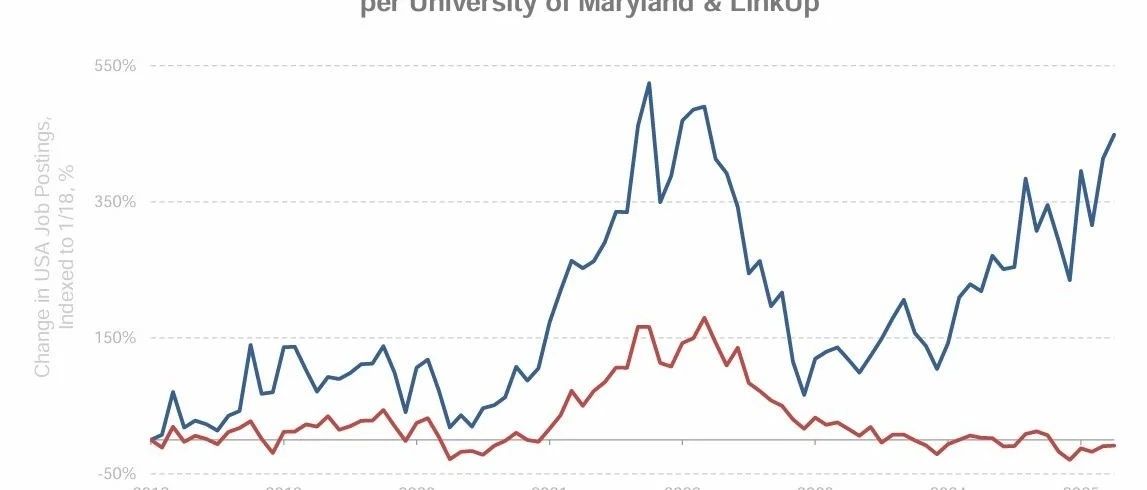
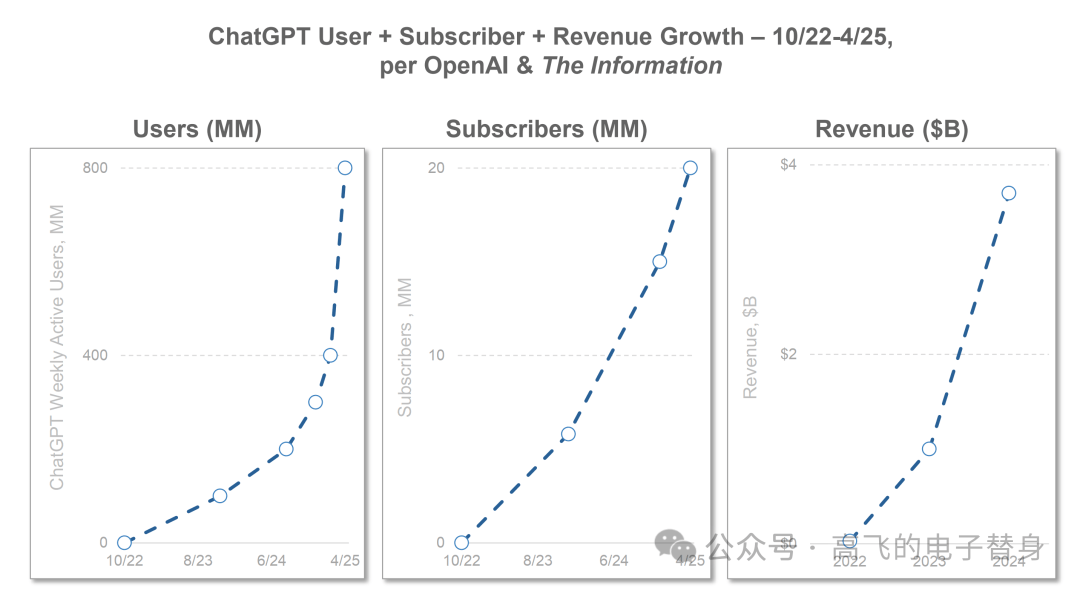
Group 1 - ChatGPT's weekly active users are projected to reach 800 million by April 2025, with an 8-fold increase in the last 17 months, showcasing a rapid growth rate compared to previous foundational technologies [1] - The AI ecosystem of NVIDIA indicates that developers, startups, and applications have grown by over 100% in four years [3] - The expected household penetration rate of AI in the U.S. is projected to reach 50% within approximately three years, significantly shorter than previous technological eras [4] Group 2 - From July 2023 to April 2025, the average time spent daily by U.S. active users on the ChatGPT application increased by 202%, with session counts rising by 106% and average session duration growing by 47% [8] - Capital expenditures of six major tech companies (Apple, NVIDIA, Microsoft, Alphabet, Amazon, and Meta) are projected to grow by 21% annually from 2014 to 2024, driven by the need for more data centers and faster network infrastructure [10] - The free cash flow of these six tech companies has increased by 263% over the past decade, reaching $389 billion, while cash reserves have grown by 103% to $443 billion [13] Group 3 - The training costs for AI models have surged by 2400 times over the past eight years, while inference costs have dropped by 99.7% in two years [15] - GPU energy consumption has decreased by 100,000 times over the past decade, contributing to rapid performance improvements in AI models [21] Group 4 - The adoption rate of AI tools among developers is expected to rise from 44% to 63% between 2023 and 2024, with significant increases in token processing by Google and Microsoft Azure AI Foundry [23] - Revenue from foundational models is growing rapidly, with OpenAI generating $3.7 billion, Anthropic $2 billion, and Perplexity $120 million [30] Group 5 - The competition in large-scale AI multimodal models has seen a 1150% increase in models released over the past two years, with significant growth in language and vision models as well [34] - The performance gap between closed and open-source models is narrowing, with Chinese models emerging as strong competitors [38] - China's AI response times are significantly faster than those of the Internet in 1995, with both the U.S. and China leading in large language model capabilities [43] Group 6 - AI is increasingly being integrated into the physical world, with Tesla's full self-driving mileage increasing approximately 100 times in 33 months and Waymo capturing 27% of the San Francisco ride-hailing market in 20 months [45] Group 7 - The next generation of billions of new internet users will engage with the internet through multimodal AI assistants, bypassing traditional web and app layers [56] Group 8 - AI job postings have increased by 448% from 2018 to 2025, while non-AI positions have decreased by 9% [60]

互联网女皇玛丽·米克尔刚发布了一份340页的《人工智能趋势报告》,这里总结了10个核心观点
Sou Hu Cai Jing· 2025-06-02 11:20
Group 1: AI Development and Trends - The pace of AI development and adoption is unprecedented, with OpenAI's ChatGPT reaching 800 million weekly active users by April 2025, achieving 90% of its user base outside North America within three years, compared to 23 years for the internet [5][8] - The report highlights a significant increase in user engagement, with the percentage of American adults using ChatGPT rising from 18% in July 2023 to 37% by January 2025, and daily usage time increasing by 202% in just 21 months [9] - The construction of data centers has surged, with private data center construction in the U.S. experiencing an annualized growth rate of 49% over the past two years, while global data center electricity consumption has grown at an average rate of 12% per year since 2017 [12] Group 2: Economic and Competitive Landscape - AI is witnessing unprecedented capital investment, with major AI companies like OpenAI projected to have revenues of $3.7 billion in 2024, while their computing-related expenses may reach approximately $5 billion [16] - The competition in the AI sector has intensified, with the number of large-scale multimodal models released increasing by 1150% over the past two years, and the performance of open-source models rapidly catching up to proprietary models [18][21] - The report draws parallels between the current AI investment frenzy and historical technology cycles, such as the 19th-century railroad boom and the internet bubble, highlighting the potential for market corrections [16][37] Group 3: Societal Impact and Workforce Transformation - AI is reshaping the workforce, with job postings related to AI increasing by 448% in the U.S. over the past seven years, while non-AI IT job postings have decreased by 9% [32] - The report emphasizes that while AI may automate certain jobs, it will also create new opportunities, requiring workers to adapt to new roles that involve supervising and collaborating with AI systems [32] - The influence of AI is extending beyond digital realms into physical applications, with autonomous vehicles like Tesla's FSD achieving significant mileage growth and AI-driven systems transforming various industries [22][25] Group 4: Geopolitical Dynamics - The race for AI supremacy has become a central focus of geopolitical competition, particularly between the U.S. and China, with AI technology now seen as a key component of national power [36] - China's rapid advancements in AI, including a significant increase in the number of large-scale AI systems, position it as a formidable competitor to the U.S. in the global AI landscape [21] - The report highlights the importance of intellectual property protection and technology security, noting that countries like China are actively working to absorb and replicate U.S. AI technologies [36]
State-Of-The-Art Prompting For AI Agents
Y Combinator· 2025-05-30 14:00
Prompt Engineering & Metaprompting - Metaprompting is emerging as a powerful tool, likened to coding in 1995 due to the evolving nature of the tools [1] - The best prompts often start by defining the role of the LLM, detailing the task, and outlining a step-by-step plan, often using markdown-style formatting [1] - Vertical AI agent companies are exploring how to balance flexibility for customer-specific logic with maintaining a general-purpose product, considering forking and merging prompts [1] - An emerging architecture involves defining a system prompt (company API), a developer prompt (customer-specific context), and a user prompt (end-user input) [1] - Worked examples are crucial for improving output quality, and automating the process of extracting and ingesting these examples from customer data is a valuable opportunity [2] - Prompt folding allows a prompt to dynamically generate better versions of itself by feeding it examples where it failed [2] - When LLMs lack sufficient information, it's important to provide them with an "escape hatch" to avoid hallucinations, either by allowing them to ask for more information or by providing debug info in the response [2] Evaluation & Model Personalities - Evals are considered the "crown jewels" for AI companies, essential for understanding why a prompt was written a certain way and for improving it [3] - Different LLMs exhibit distinct personalities; for example, Claude is considered more steerable, while Llama 4 requires more steering and prompting [5] - When using LLMs to generate numerical scores, providing rubrics is best practice, but models may interpret and apply these rubrics with varying degrees of rigidity and flexibility [5] Founder Role & Forward Deployed Engineer - Founders need to deeply understand their users and codify these insights into specific evals to ensure the software works for them [3] - Founders should act as "forward deployed engineers," directly engaging with users to understand their needs and rapidly iterate on the product [4] - The forward deployed engineer model, combined with AI, enables faster iteration and closing of significant deals with large enterprises [5]

TripAdvisor(TRIP) - 2025 FY - Earnings Call Transcript
2025-05-29 13:00
Financial Data and Key Metrics Changes - The company reported a good quarter with durable travel consumer intent observed until early May [4][5] - There is a focus on long-term growth in travel despite macroeconomic volatility [4][5] - The company is monitoring cancellations and pricing closely, with no significant changes noted up to the reporting date [8][10] Business Line Data and Key Metrics Changes - The experiences category remains a mainstay of travel budgets, with a bifurcation observed between upper and lower-end consumers [6][7] - The meta business has shown strong pricing performance, indicating resilience even in choppy market conditions [12][14] - The company is combining meta with booking in its app, which is expected to enhance user engagement and monetization [14][15] Market Data and Key Metrics Changes - The company is well-positioned to serve both domestic and international travelers, adapting to changing consumer preferences [22][23] - There is a diversification in inventory, particularly in the experiences space, which is crucial for catering to various traveler mindsets [22][24] Company Strategy and Development Direction - The company aims to be the most trusted source for travel and experiences, focusing on authenticity and trust in an AI-driven world [26][27] - Each business segment has its own distinct strategy, with a focus on engagement and monetization [27][30] - The company is investing in marketing and product development to stabilize the hotel category and accelerate experiences [20][21][30] Management's Comments on Operating Environment and Future Outlook - Management acknowledges the uncertainties in the macro environment but remains optimistic about the travel sector's growth [4][10] - The company is focused on leveraging AI to enhance user experience and engagement, which is expected to drive higher conversion rates [55][56] - There is confidence in the potential for TripAdvisor to stabilize and return to modest growth by 2026 [101][102] Other Important Information - The company is exploring partnerships and collaborations to enhance its offerings and market presence [41][43] - The Fork, a subsidiary, is experiencing double-digit growth and is positioned strongly in the European dining market [84][86] Q&A Session Summary Question: How does the company view the impact of macroeconomic factors on travel? - The company closely tracks macroeconomic uncertainty and focuses on long-term growth, noting that travel intent remains strong despite volatility [4][5] Question: What is the strategy regarding direct booking within the app? - The company finds direct booking and meta products to be complementary, aiming to enhance user experience across categories [16][17] Question: How does the company plan to leverage AI in its offerings? - The company is developing an AI-led travel planner that utilizes user-generated content and first-party data to enhance recommendations and user engagement [54][56] Question: What is the outlook for the experiences category amid increasing competition? - The company views the interest from competitors as validation of the category's potential and believes there is room for multiple players [74][75] Question: What is the strategy for The Fork in the European market? - The Fork is focused on growing its presence in Europe, leveraging technology to enhance both B2C and B2B offerings [80][84]

Google搜索转型,Perplexity入不敷出,AI搜索还是个好赛道吗?
Founder Park· 2025-05-27 12:20
Core Viewpoint - The article discusses the transformation of Google's search business towards AI-driven search modes, highlighting the challenges faced by traditional search engines in the face of emerging AI technologies and competition from Chatbot-integrated platforms [4][24]. Group 1: Google's AI Search Transformation - Google announced the launch of its AI Mode powered by Gemini, which allows for natural language interaction and structured answers, moving away from traditional keyword-based searches [2][4]. - In 2024, Google's search business is projected to generate $175 billion, accounting for over half of its total revenue, indicating the significant financial stakes involved in this transition [4]. - Research suggests that Google's search market share has dropped from over 90% to between 65% and 70% due to the rise of AI Chatbots, prompting the need for a strategic shift [4][24]. Group 2: Challenges for AI Search Engines - Perplexity, an AI search engine, saw its user visits increase from 45 million to 129 million, a growth of 186%, but faced a net loss of $68 million in 2024 due to high operational costs and reliance on discounts for subscription revenue [9][11]. - The overall funding for AI search products has decreased, with only 10 products raising a total of $893 million from August 2024 to April 2025, compared to 15 products raising $1.28 billion in the previous period [11][12]. - The competitive landscape for AI search engines has worsened, with many smaller players struggling to secure funding and differentiate themselves from larger companies [11][12][25]. Group 3: Shift Towards Niche Search Engines - The article notes a trend towards more specialized search engines, focusing on specific industries or use cases, as general AI search engines face increasing competition from integrated Chatbot functionalities [13][25]. - Examples of niche search engines include Consensus, a health and medical search engine, and Qura, a legal search engine, both of which cater to specific professional audiences [27][30]. - The overall direction for AI search engines is towards being smaller, more specialized, and focused on delivering unique value propositions to specific user groups [13][26]. Group 4: Commercialization Challenges - The commercialization of AI search remains a significant challenge, with Google exploring ways to integrate sponsored content into its AI responses while facing potential declines in click-through rates for traditional ads [43]. - The article emphasizes the need for AI search engines to deliver more reliable and usable results, either through specialized information or direct output capabilities, to remain competitive [43][24].

Google不革自己的命,AI搜索们也已经凉凉了?
创业邦· 2025-05-24 03:10
Core Viewpoint - Google is transitioning to AI-driven search modes to address the competitive threat posed by AI chatbots, which have significantly reduced its market share in search from over 90% to an estimated 65%-70% [7][9][31]. Group 1: Google and AI Search Transition - Google announced the launch of its AI Mode, powered by Gemini, which allows for natural language interaction and structured answers, moving away from traditional keyword-based searches [4][7]. - In 2024, Google's search business is projected to generate $175 billion, accounting for over half of its total revenue, highlighting the financial stakes involved in this transition [7]. - The urgency for Google to adapt stems from the increasing competition from AI chatbots that are capturing user traffic, prompting a strategic shift in its search approach [7][9]. Group 2: Market Dynamics and Competitor Analysis - The AI search engine Perplexity saw its user traffic grow from 45 million to 129 million, a 186% increase, but faced significant financial challenges, including a net loss of $68 million in 2024 [9][12]. - The overall funding for AI search products has decreased, with only 10 products raising a total of $893 million from August 2024 to April 2025, compared to 15 products raising $1.28 billion in the previous period [15][16]. - The competitive landscape is shifting, with established players like Google and Perplexity facing pressure from new entrants and the need for differentiation in a crowded market [31][32]. Group 3: Emerging Trends in AI Search - The trend is moving towards smaller, more specialized AI search engines that cater to specific industries or use cases, rather than attempting to replicate a general search engine like Google [17][31]. - New AI search products are focusing on niche areas such as health, law, and video content, which may provide a competitive edge against generalist platforms [34][51]. - The integration of reasoning models in AI search products is expected to enhance user experience and reduce inaccuracies, a significant improvement over previous models that struggled with "hallucination" issues [26][30]. Group 4: Financial and Operational Challenges - The financial viability of AI search startups is under scrutiny, as many are unable to convert user engagement into sustainable revenue, leading to a cautious investment environment [31][53]. - Google is exploring monetization strategies for its AI search, but there are concerns that the new AI formats may reduce click-through rates for traditional search ads [53].